
The Vibrant Colors of Holi: Unraveling the Festival of Spring in Ancient India

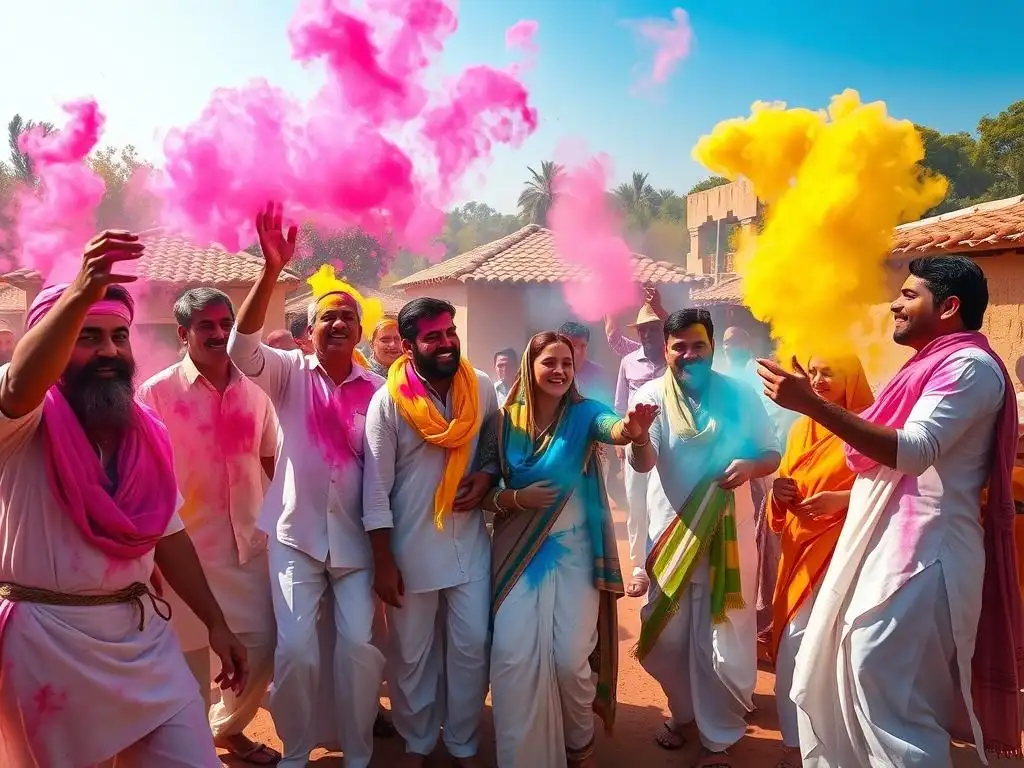
Welcome to Ancient India History, where we invite you to journey through the vibrant tapestry of one of the world's oldest civilizations! Here, we delve into the rich traditions and cultural legacies that have shaped India's past. In our featured article, "The Vibrant Colors of Holi: Unraveling the Festival of Spring in Ancient India," we explore the fascinating Holi festival traditions that have endured the test of time.
Discover how this joyous celebration not only signifies the arrival of spring but also reflects the profound beliefs and communal spirit of ancient Indian society. Are you ready to uncover the colorful stories behind this enchanting festival? Let’s dive in!
The festival of Holi, also known as the Festival of Colors, is one of the most cherished celebrations in India, steeped in rich history and cultural significance. Celebrated primarily in the spring, Holi marks the transition from winter to summer, symbolizing the arrival of new life, warmth, and prosperity. As we delve into the Holi festival traditions in ancient India, we uncover a tapestry of rituals, beliefs, and communal bonding that have transcended generations.
Originating from ancient myths and legends, the festival is intertwined with various stories, including the celebration of the victory of good over evil. Holi is not merely a festival; it is an experience that fosters unity, joy, and the spirit of togetherness among communities. Through vibrant colors, music, and dance, participants express their emotions, cultivate relationships, and honor the rich cultural heritage of India. This article aims to explore the multifaceted traditions of Holi as practiced in ancient India, shedding light on its significance and evolution over time.
The Historical Roots of Holi
Holi's origins can be traced back to several ancient texts and scriptures that document its practices and beliefs.
- Hindu Mythology:
- The story of Prahlada and Holika is central to the festival. Prahlada, a devotee of Lord Vishnu, defied his father Hiranyakashipu's orders, leading to Holika's attempt to burn him. Instead, she perished in the flames while Prahlada emerged unscathed. This tale symbolizes the triumph of devotion and faith over tyranny.
- Agricultural Significance:
- Holi coincides with the harvest season, celebrating the abundance of crops. Farmers express gratitude to the gods for the bountiful harvest, with rituals that include offerings and community feasting.
Traditional Celebrations of Holi
The ways in which Holi has been celebrated in ancient India vary across regions, each with its unique customs and rituals.
- Rangoli and Colors:
- The vibrant colors used during Holi are derived from natural sources such as flowers and herbs. In ancient times, these colors not only represented joy but also served medicinal purposes.
- Music and Dance:
- Traditional songs and dances, often performed in groups, bring communities together. Instruments like dhol (drum) create an infectious rhythm that encourages participation.
Symbolism of Holi
The festival's symbolism extends beyond mere festivities, embodying deep philosophical and cultural meanings.
- Unity and Brotherhood:
- Holi breaks down social barriers, allowing people from different backgrounds to come together in celebration. The act of throwing colors represents forgiveness and the dispelling of negativity.
- Spiritual Renewal:
- The festival serves as a reminder to cleanse the soul and renew one's commitment to goodness, much like the vibrant colors that wash over everything, revitalizing the spirit.
Conclusion
As we explore the Holi festival traditions in ancient India, it becomes evident that this festival is not just a day of joy and colors but a profound expression of cultural values, historical narratives, and communal harmony. Understanding the rich traditions of Holi allows us to appreciate its role in shaping the identity of ancient Indian civilizations and its continuing legacy in modern times.
This article will further delve into specific customs, regional variations, and the evolution of Holi, providing a comprehensive understanding of this vibrant celebration.
- What is the significance of the Holi festival in ancient India?
- How was Holi celebrated in ancient Indian civilizations?
- What are the key traditions associated with Holi in ancient times?
- Did Holi have any historical connections to ancient deities?
- How has the celebration of Holi evolved from ancient to modern times?
Introduction to Holi Festival Traditions in Ancient India
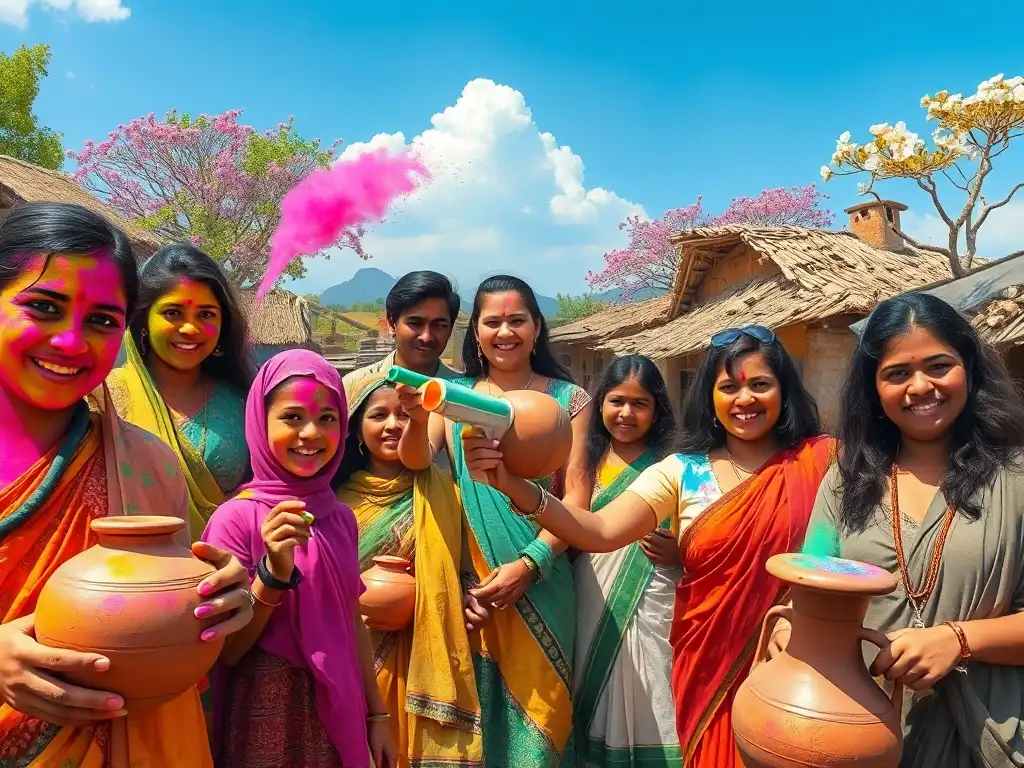
Overview of Holi and Its Significance in Ancient Culture
Holi, often referred to as the Festival of Colors, has deep roots in ancient Indian traditions, embodying themes of love, renewal, and the triumph of good over evil. This vibrant festival is celebrated with great enthusiasm across India, marking the arrival of spring and the end of winter. The origins of Holi can be traced back to various ancient texts and practices, making it a fusion of mythological tales and cultural heritage.
The earliest references to Holi can be found in texts such as the Puranas, where the legend of Prahlada and Holika is narrated. This story symbolizes the victory of devotion and righteousness over tyranny, enriching the festival's significance. Additionally, Holi is associated with the playful and mischievous antics of Lord Krishna and Radha, further cementing its place in the cultural consciousness of ancient India.
The festival served not just as a religious observance but also as a social unifier, breaking down barriers between different castes and communities. During Holi, people would come together, forgetting past grievances, and fostering a sense of camaraderie and joy. This aspect of communal harmony is crucial to understanding the traditions associated with Holi in ancient India.
The Role of Colors in Holi Celebrations
Colors are at the heart of Holi celebrations, symbolizing the vibrancy of life and the beauty of nature. The use of colored powders, known as gulal, has a rich history that dates back to ancient practices. Traditionally, these colors were made from natural sources, such as flowers, herbs, and spices.
- Red: Represents love and fertility.
- Yellow: Symbolizes knowledge and learning.
- Green: Represents harmony and freshness.
- Blue: Associated with Lord Krishna, symbolizing the divine.
The act of throwing colors at one another during Holi is deeply symbolic. It represents the shedding of inhibitions and the celebration of unity. In ancient times, this practice was not merely recreational; it was believed to have medicinal properties, as many natural colors were derived from plants with healing attributes.
Moreover, the colors of Holi also reflect the changing seasons. The vibrant hues echo the blooming of flowers and the lushness of nature during spring, reinforcing the connection between the festival and the natural world.
Connection of Holi with Spring and Agricultural Cycles
Holi marks the onset of spring, a season that signifies rebirth and renewal in the agricultural calendar. In ancient India, this transition was of utmost importance, as it heralded the end of the winter harvest and the beginning of preparations for the upcoming agricultural cycle.
Farmers would celebrate Holi as a way to express gratitude for the bounty of the previous harvest and to pray for prosperity in the coming season. This connection to agriculture is reflected in traditional practices that varied by region. For instance, in northern India, people would celebrate with bonfires known as Holika Dahan, symbolizing the burning away of negativity and the welcoming of new life.
The significance of Holi in relation to agricultural cycles can be observed through various local customs, such as:
- Folk songs and dances: Celebrations often include traditional songs that praise the earth and fertility.
- Community feasts: These gatherings foster a spirit of sharing and gratitude among participants.
- Rituals for good harvest: Specific prayers and rituals are performed to ensure a fruitful agricultural year.
In essence, Holi serves as a vibrant reminder of the interconnectedness between cultural traditions, the natural environment, and human life, making it a cornerstone of ancient Indian civilization.
Historical Origins of the Holi Festival in Ancient India
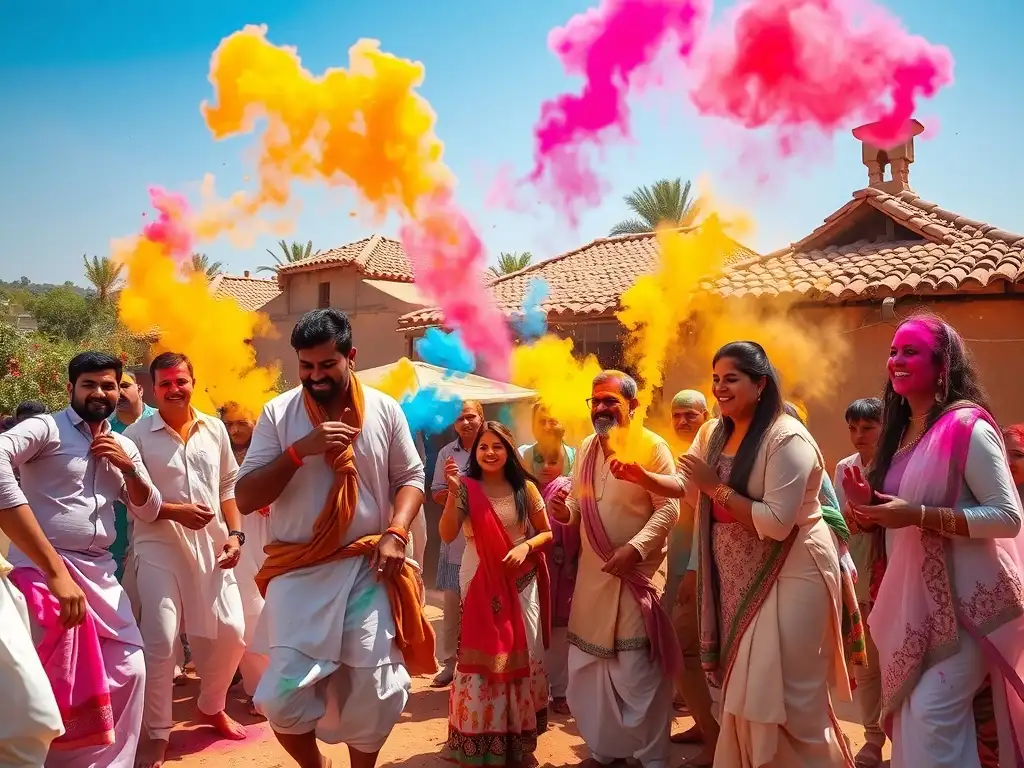
Ancient Texts and References to Holi Traditions
The origins of the Holi festival can be traced back to ancient Indian texts, which provide valuable insights into its significance and practices. One of the earliest references to Holi is found in the Puranas, particularly in the Bhagavata Purana, which narrates the divine love story of Lord Krishna and Radha. The festival symbolizes the arrival of spring and the joyous celebration of love, with Krishna's playful antics of coloring Radha and the gopis (milkmaids) serving as the foundation for the vibrant festivities.
Another significant mention comes from the Rigveda, one of the oldest sacred texts of India, where it speaks of the "Holika" fire, representing the victory of good over evil. This event is commemorated through the ritual of burning the Holika effigy, which symbolizes the destruction of negative forces. Such references not only highlight the festival's religious undertones but also its deep-rooted cultural significance.
Evolution of Holi Celebrations Through the Ages
Holi has evolved significantly from its ancient roots to its contemporary celebrations. In ancient times, Holi was predominantly a ritualistic and agricultural festival, celebrated by communities to mark the end of winter and the onset of spring. The festival was characterized by the throwing of colored powders and water, but it also held a deeper significance tied to agricultural fertility and the renewal of life.
As centuries passed, especially during the Gupta Empire (circa 320-550 CE), Holi began to incorporate more celebratory elements, evolving into a social festival that brought together people from diverse backgrounds. The introduction of music, dance, and feasting transformed Holi into a vibrant event that fostered unity and communal harmony. The festival's joyous spirit became a means to bridge social divides, paving the way for modern practices where people of all ages and backgrounds participate in the festivities.
Influence of Regional Variations on Holi Practices
The Holi festival is celebrated with unique regional variations across India, each reflecting the local customs and traditions. For example:
- Northern India: In regions like Uttar Pradesh, where Krishna's legends are most prominent, the festival includes Lathmar Holi, where women playfully beat men with sticks, symbolizing the playful rivalry between Krishna and the gopis.
- Western India: In Maharashtra, the festival is marked by the traditional Holi Puran Poli, a sweet flatbread, and the practice of Dahi Handi, where teams form human pyramids to break a pot of buttermilk hung high above.
- Southern India: In states like Karnataka, the celebration is more subdued, focusing on the ritualistic aspects, where people perform poojas (prayers) and share sweets rather than the exuberant throwing of colors.
These regional nuances not only enrich the festival's diversity but also emphasize the cultural tapestry of ancient India, making Holi a truly pan-Indian celebration that continues to thrive through its colorful and joyous traditions.
Traditional Practices and Rituals of Holi in Ancient India
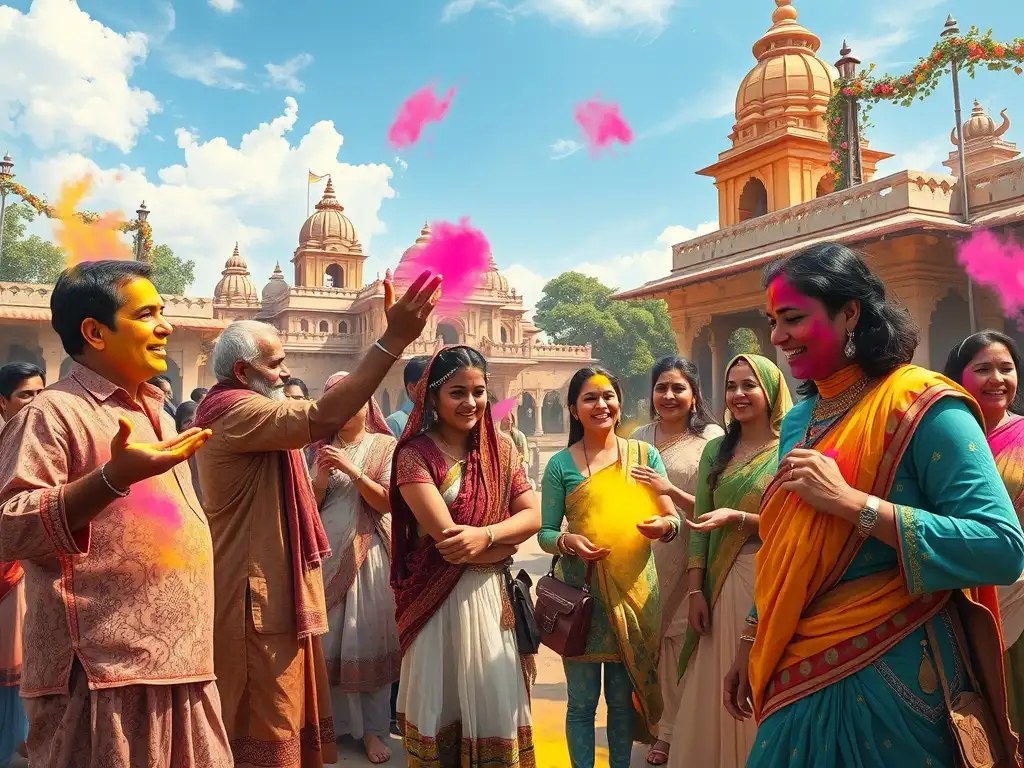
Preparatory Rituals Leading to the Holi Festival
The Holi festival in ancient India was not merely a day of celebration but a culmination of various preparatory rituals that spanned several days. These rituals were steeped in symbolism and community participation, reflecting the vibrant tapestry of ancient Indian culture.
- Holika Dahan: Perhaps the most significant ritual was Holika Dahan, which took place the night before Holi. This involved the burning of a bonfire symbolizing the victory of good over evil. The ritual commemorated the legend of Prahlad and Holika, where Prahlad's devotion to Lord Vishnu saved him from being burned alive. The community would gather around the bonfire, sing traditional songs, and perform prayers, establishing a sense of unity.
- Collecting Colors: In the days leading up to Holi, families would gather natural ingredients to create vibrant colors. Flowers, turmeric, and other plant-based materials were dried and crushed to make powders known as "gulal." This process engaged the entire community, promoting cooperation and camaraderie.
- Preparation of Water: Water was a crucial element in the Holi celebrations. Traditionally, pots filled with colored water were prepared and stored, ready to be used during the festivities. This preparation involved creative designs, such as decorating the pots with flowers and leaves, adding an artistic touch to the celebrations.
Symbolic Use of Colors and Their Meanings
Colors played a pivotal role in the festivities of Holi, each hue carrying its own significance and cultural symbolism. The use of colors during Holi is a reflection of ancient Indian beliefs and their connection to nature and spirituality.
- Red: Often associated with love and fertility, red was believed to invoke the blessings of the goddess Kamadeva. In ancient texts, it was linked to the vitality of spring and the rejuvenation of life.
- Yellow: This color represented knowledge and learning, often associated with the deity Saraswati. The use of yellow, particularly from turmeric, symbolized purity and the arrival of the spring season.
- Green: Green was emblematic of new beginnings and growth. It mirrored the lush greenery that accompanied the spring season and served as a reminder of the agricultural bounty.
- Blue: Often associated with the god Krishna, blue represented divinity and immortality. The playful nature of Krishna during Holi was reflected in the use of blue powders, celebrating his mischievous spirit.
Each color was not just a visual delight but a representation of deeper meanings, fostering a sense of connectedness among participants and with nature.
Traditional Foods and Sweets Associated with Holi
Food plays an integral role in the Holi celebrations, with traditional sweets and dishes that enhance the festive spirit. The culinary aspects of Holi are as diverse as the regions of India, each contributing its unique flavors and recipes.
- Gujiya: This sweet dumpling, filled with a mixture of khoya (reduced milk), sugar, and nuts, is a staple during Holi. Its crescent shape symbolizes prosperity and is often prepared in large quantities to share with family and friends.
- Thandai: A refreshing drink made from a blend of milk, nuts, and aromatic spices, thandai is traditionally consumed during Holi. It is often infused with bhang (cannabis), which is believed to enhance the festive experience and promote joy.
- Dahi Bhalla: This savory dish consists of lentil dumplings soaked in yogurt and topped with tamarind chutney and spices. It represents the communal aspect of Holi, as families come together to prepare and enjoy this dish.
- Puran Poli: A sweet flatbread stuffed with a mixture of jaggery and lentils, puran poli is commonly made during Holi, showcasing the richness of regional culinary traditions.
These traditional foods not only tantalize the taste buds but also serve as a means of bringing people together, reinforcing the communal spirit that is at the heart of the Holi festival.
The Role of Community Gatherings in Holi Celebrations
Community gatherings during the Holi festival were integral to its celebrations in ancient India, serving as a key mechanism for social cohesion and cultural exchange. These gatherings often took place in public spaces, such as village squares or temples, where people from different backgrounds came together to partake in vibrant festivities.
- Inclusivity of the Celebrations: Holi was marked by the participation of all social classes, transcending barriers of caste and economic status. Everyone, regardless of their social standing, would engage in the festivities, symbolizing unity and equality.
- Cultural Exchange: These gatherings also encouraged the exchange of cultural practices and stories. People would share traditional sweets, perform folk dances, and sing songs that celebrated the arrival of spring. This cultural amalgamation enriched the community's identity and reinforced shared values.
The communal aspect of Holi was further highlighted by the preparation for the festival, which included collective activities such as gathering flowers and preparing colored powders. Such collaborative efforts fostered a sense of belonging and anticipation, enhancing the overall spirit of the festival.
Holi as a Festival of Forgiveness and Reconciliation
Holi, often referred to as the festival of colors, also served as a significant occasion for forgiveness and reconciliation. This aspect of the festival was deeply rooted in the ethos of ancient Indian society, where interpersonal relationships were highly valued.
- Symbolic Acts of Forgiveness: During Holi, individuals would approach one another to forgive past grievances, often marked by the act of applying color on each other as a symbol of renewed relationships. This practice of forgiving not only mended personal rifts but also helped in restoring harmony within the community.
- Religious Narratives: The tales surrounding Holi, such as the legend of Prahlad and Holika, emphasized themes of good triumphing over evil and the importance of compassion. These narratives served as moral lessons that encouraged individuals to let go of animosities and embrace a spirit of love and friendship.
By promoting forgiveness, Holi played an essential role in strengthening social ties and fostering a more harmonious society. The festival was a reminder that no matter the conflicts, there was always an opportunity for reconciliation and renewal among community members.
Holi's vibrant celebrations were not merely about colors and joy; they were instrumental in fostering social bonds within ancient societies. The festival acted as a catalyst for building relationships and reinforcing communal ties.
- Inter-Generational Bonds: Young and old came together during Holi, allowing for the transmission of traditions and stories through generations. Elders would narrate the significance of the festival, while younger participants energized the celebrations with their enthusiasm, creating a rich tapestry of communal interactions.
- Strengthening Neighborhood Ties: Neighbors often joined forces in preparations for the festival, whether it was sourcing materials for colored powders or organizing feasts. The cooperative spirit of Holi encouraged individuals to engage with one another, thereby nurturing stronger neighborhood relations.
In essence, Holi served as a vital social framework that not only celebrated the arrival of spring but also reinforced the interconnectedness of individuals within ancient Indian communities. Through shared experiences and collective joy, the festival contributed to a deeper sense of identity and belonging, making it a cornerstone of cultural heritage.
Myths and Legends Surrounding Holi Festival Traditions
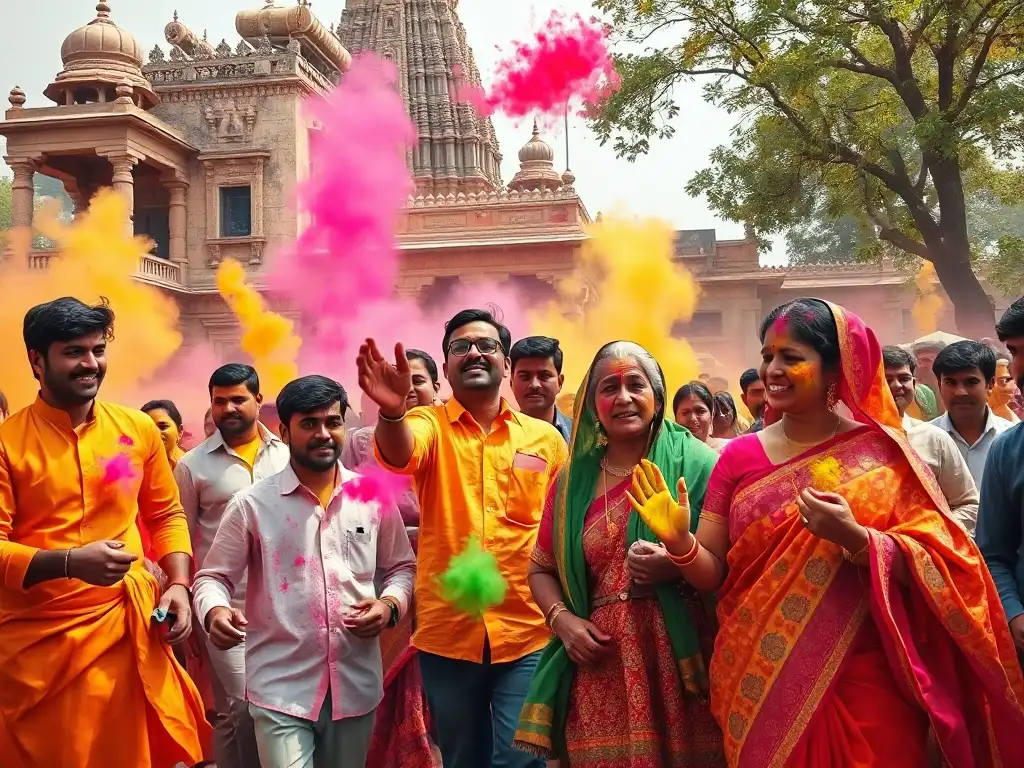
The Story of Holika and Prahlad
The festival of Holi is steeped in rich mythology, with one of its most significant tales being that of Holika and Prahlad. This legend is rooted in the Hindu epic, the Bhagavata Purana, and narrates the story of a young prince named Prahlad, who was an ardent devotee of Lord Vishnu. His father, King Hiranyakashipu, was a powerful demon who sought to be worshipped as a god and was vehemently opposed to Vishnu.
In his misguided rage, Hiranyakashipu tried to kill Prahlad for his unwavering devotion. To achieve this, he enlisted the help of his sister Holika, who was blessed with a boon that made her immune to fire. The plan was to have Holika sit in a blazing fire with Prahlad in her lap, believing that he would perish while she remained unharmed.
However, the legend takes a dramatic turn; as the fire raged, Holika's protective boon failed her, and she was consumed by the flames. Prahlad, on the other hand, emerged unscathed, protected by his devotion to Vishnu. This tale symbolizes the triumph of good over evil and is celebrated during Holi through the ritual of burning Holika, which is known as Holika Dahan, typically conducted on the night before Holi.
Other Mythological Tales Celebrated During Holi
Apart from the tale of Holika and Prahlad, several other mythological stories are intertwined with the celebration of Holi. One such story is that of Radha and Krishna, which exemplifies the playful and joyous spirit of Holi. The legend describes how young Krishna, who was dark-skinned, became envious of Radha’s fair complexion and playfully colored her face with hues of different colors to match his own. This act of playful color application is often reenacted during Holi, symbolizing love, joy, and the onset of spring.
Another significant tale is that of Shiv and Parvati, where the colors signify the divine love and union between Lord Shiva and Goddess Parvati. Their celebration of Holi with vibrant colors showcases the festive spirit of togetherness and companionship.
These stories not only enrich the cultural tapestry of Holi but also emphasize the themes of love, devotion, and the victory of good over evil, making the festival a vibrant reflection of ancient Indian traditions.
The Impact of Myths on Holi Traditions and Practices
The myths surrounding Holi have a profound impact on the traditions and practices associated with the festival. Each story reinforces the core values celebrated during Holi—love, unity, and the triumph of good over evil.
Key Influences on Holi Practices:
- Rituals: Many Holi rituals, such as the burning of Holika and the throwing of colored powders, are direct manifestations of these myths. The burning of Holika symbolizes the destruction of evil, while the playful throwing of colors reflects the joyous spirit of love and friendship.
- Community Engagement: The myths encourage communal participation in the festivities. The reenactment of stories through dances, songs, and plays fosters a collective spirit among participants, breaking social barriers and promoting harmony.
- Cultural Expressions: The stories inspire artistic expressions, including folk songs, dances, and paintings that capture the essence of the festival. These cultural elements are passed down through generations, ensuring the preservation of the rich traditions associated with Holi.
The myths and legends surrounding the Holi festival contribute significantly to its vibrant celebrations. They not only provide a deeper understanding of the festival's origins but also serve as a reminder of the timeless values that continue to resonate within the diverse fabric of ancient Indian culture.
Modern-Day Reflections of Ancient Holi Traditions
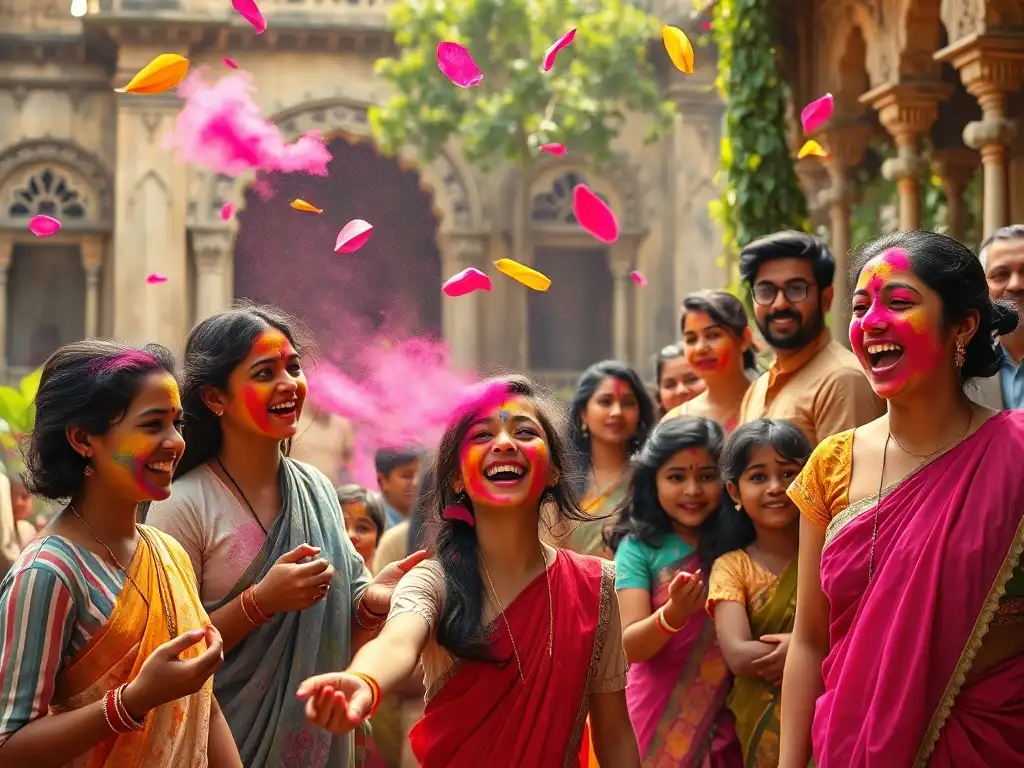
Continuity of Ancient Practices in Contemporary Celebrations
The Holi festival traditions in ancient India have significantly influenced modern celebrations, showcasing a remarkable continuity of practices that date back centuries. Many contemporary rituals can be traced to their ancient roots, emphasizing the festival's timeless nature.
- Ritualistic Bonfires: One of the most prominent traditions is the lighting of bonfires, known as Holika Dahan, which symbolizes the victory of good over evil. This ancient practice commemorates the legend of Prahlada and Holika, a tale that resonates with the values of devotion and faith.
- Colorful Celebrations: The use of colors during Holi is perhaps the most iconic aspect of the festival. In ancient times, natural dyes extracted from flowers and herbs were used to create vibrant powders. Today, while synthetic colors are common, many still prefer eco-friendly options, reflecting a commitment to preserving the environment, akin to the sustainable practices of ancient Indian communities.
- Traditional Music and Dance: Folk songs and dances that were part of ancient Holi celebrations continue to be integral to modern festivities. These performances not only entertain but also foster community bonds, echoing the collective spirit that characterized historical celebrations.
How Holi Festival Traditions Have Transformed Over Time
While the essence of Holi has remained intact, various influences have led to significant transformations in its celebration over time.
- Cultural Syncretism: As India evolved, so did its festivals. The incorporation of regional variations and influences from different cultures has enriched Holi. For instance, in some parts of India, local myths and stories are woven into the celebrations, creating unique interpretations that blend ancient traditions with contemporary narratives.
- Urbanization and Modernization: Urban settings have transformed how Holi is celebrated. In cities, public events and large gatherings have replaced intimate family celebrations, highlighting a shift from localized to more widespread observances. Community involvement has increased, with neighborhoods coming together to organize events, reminiscent of ancient communal celebrations.
- Commercialization of Holi: The commercialization of the festival has introduced new elements, such as themed parties and social media-driven celebrations. While this has made Holi more accessible, it also raises questions about preserving the authenticity of ancient traditions amidst marketing and consumerism.
The Global Influence of Ancient Indian Holi Celebrations
The Holi festival traditions in ancient India have transcended borders, gaining global recognition and inspiring celebrations worldwide.
- Cultural Exchange: With the Indian diaspora spreading across the globe, traditional Holi celebrations have adapted to new cultures while maintaining their core essence. Cities like New York, London, and Sydney now host vibrant Holi festivals, blending traditional practices with local customs, thus facilitating a rich cultural exchange.
- Awareness of Indian Culture: The global celebration of Holi has increased awareness and appreciation of Indian culture and traditions. It serves as a platform for promoting understanding of ancient Indian values, such as community, love, and the triumph of good over evil.
- Participation in Global Festivals: Various international festivals now include Holi-themed events, showcasing the festival's universal appeal. These events often attract diverse audiences, encouraging participation from people of various backgrounds, further enhancing the global tapestry of Holi celebrations.
The Holi festival traditions in ancient India continue to thrive in modern times, reflecting a dynamic interplay between continuity and change. As it evolves, Holi remains a testament to the rich cultural heritage of India, celebrating community, joy, and the spirit of spring.
Conclusion: The Enduring Legacy of Holi Festival Traditions in Ancient India
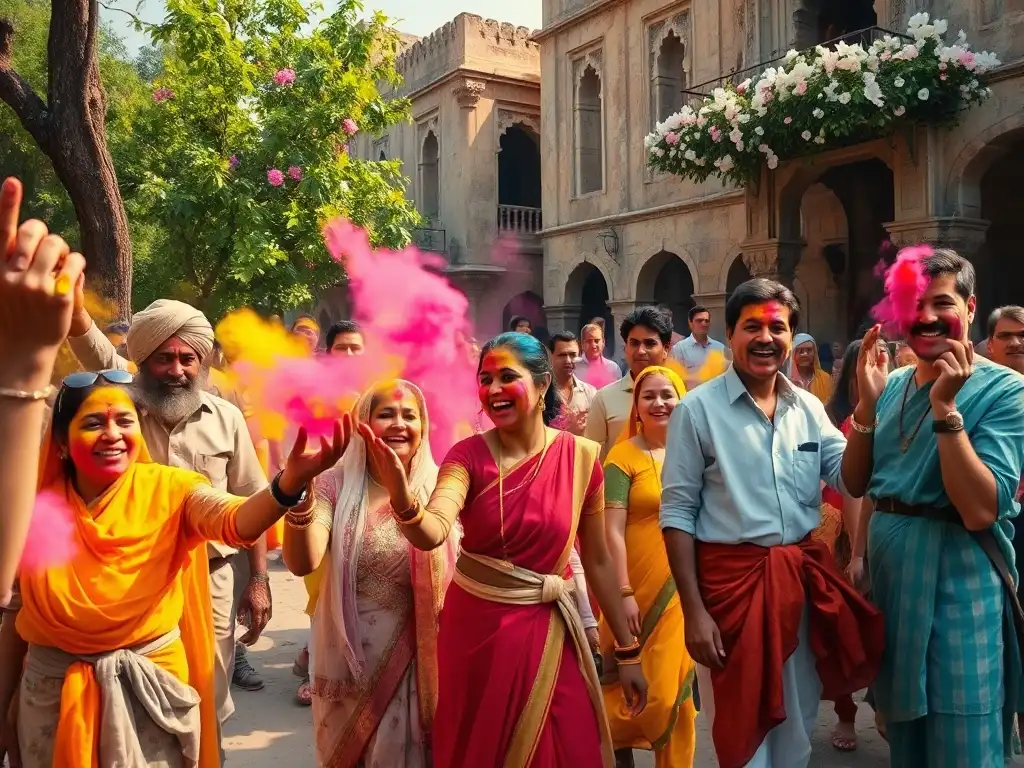
Summary of Holi's Importance in Ancient and Modern Contexts
The Holi festival, often referred to as the Festival of Colors, holds a significant place in both ancient and contemporary Indian culture. Its roots can be traced back to various mythological narratives, particularly the tale of Prahlada and Holika, symbolizing the victory of good over evil. In ancient India, Holi was not merely a celebration of spring; it also served as a means to foster community ties and promote social equality.
During the Vedic period, Holi was celebrated with the use of natural colors derived from flowers and herbs. This practice not only enriched the festivities but also reflected the ancient Indians' deep connection with nature. The festival was marked by singing, dancing, and communal feasting, allowing people from different walks of life to come together, transcending social barriers.
In modern contexts, Holi continues to embody these values, evolving yet retaining its core essence. The vibrant colors symbolize joy, love, and the arrival of spring, while the festival promotes harmony among diverse communities. The traditions of Holi have also been embraced globally, making it a symbol of India's rich cultural heritage.
Future of Holi Celebrations and Their Cultural Significance
As we look towards the future, the Holi festival traditions in ancient India are poised to continue evolving while preserving their cultural significance. With globalization and increased intercultural exchange, Holi is gaining popularity beyond Indian borders. International celebrations of Holi are becoming common, often incorporating local customs and practices, which enrich the festival's global appeal.
However, there is a growing concern about the commercialization of Holi. As traditional practices give way to modern interpretations, it becomes essential to strike a balance between preserving authenticity and embracing innovation. Future celebrations can benefit from a renewed focus on sustainable practices, such as using eco-friendly colors and promoting awareness about the festival's historical roots.
The enduring legacy of Holi festival traditions in ancient India not only highlights the festival's importance in fostering community bonds and cultural identity but also sets the stage for its continued relevance in a rapidly changing world. The vibrant celebration of Holi serves as a reminder of our shared humanity and the joy that comes from unity in diversity.
References for Further Reading on Holi Festival Traditions in Ancient India
Suggested Books and Articles on Ancient Indian Festivals
When exploring the vibrant Holi festival traditions in ancient India, a variety of books and articles serve as essential resources for readers looking to deepen their understanding. Here are some notable suggestions:
-
"Festivals of India" by N. S. Ramaswamy
This book provides a comprehensive overview of various Indian festivals, including Holi. It delves into the historical context, rituals, and significance of each celebration, making it a valuable reference for understanding Holi's place in Indian culture.
-
"The Hindu Festivals" by K. K. Dutta
Dutta's work focuses on the religious and cultural significance of Hindu festivals, with specific chapters dedicated to Holi. It offers insights into the mythological stories associated with the festival and its evolution over the centuries.
-
"Celebrating the Spirit of India: A Guide to Festivals and Traditions" by R. Sharma
This guidebook highlights key festivals of India, including Holi, emphasizing regional variations and practices. It is particularly useful for understanding how Holi has been celebrated across different states and communities.
-
"Holi: The Festival of Colors" - Article in the Journal of Indian Culture
This scholarly article discusses the sociocultural aspects of Holi, tracing its origins and how it has transformed into a modern celebration while retaining its ancient roots.
-
"Colors of Joy: The Significance of Holi in Indian Society" - Research Paper
This paper analyzes the broader implications of Holi within Indian society, examining its role in promoting social harmony and cultural integration.
Notable Academic Studies on Holi and Its Cultural Impact
Several academic studies have explored the Holi festival traditions in ancient India, providing in-depth analyses of its cultural significance and social impact. Here are a few key studies to consider:
-
"Rituals and Community: Analyzing Holi Through Ethnographic Studies" by A. Mishra
This ethnographic study focuses on how Holi functions as a community-building event. It highlights the shared experiences of participants and the festival's role in fostering social bonds.
-
"The Evolution of Holi: From Ancient Traditions to Contemporary Celebrations" by R. Gupta
Gupta's research traces the historical development of Holi, examining ancient texts and archaeological findings that shed light on its origins and transformations through the centuries.
-
"Colors, Water, and Identity: The Cultural Politics of Holi" by P. Verma
This study explores the interplay between cultural identity and the practices associated with Holi. It discusses how the festival serves as a medium for expressing cultural pride and collective identity among various communities.
-
"Holi in Historical Literature: A Study of Ancient Texts" by S. Rao
Rao's work analyzes references to Holi in ancient Indian literature, providing insights into how the festival was perceived and celebrated in historical contexts.
-
"The Role of Mythology in Holi Celebrations" by K. Patil
This paper discusses the mythological narratives that surround Holi, emphasizing their significance in shaping the traditions and rituals associated with the festival.
By engaging with these resources, readers can gain a comprehensive understanding of the Holi festival traditions in ancient India, exploring its rich history, cultural significance, and impact on society.
Frequently Asked Questions
What is the significance of the Holi festival in ancient India?
The Holi festival symbolizes the arrival of spring and the victory of good over evil. It is celebrated with vibrant colors, representing joy and renewal.
How was Holi celebrated in ancient Indian civilizations?
In ancient India, Holi was celebrated with traditional rituals, including bonfires and throwing colored powders. The festival fostered community bonding and enjoyment among people.
What are the key traditions associated with Holi in ancient times?
Key traditions included singing, dancing, and the playful throwing of colors. These activities emphasized the spirit of togetherness and joy during the festival.
Did Holi have any historical connections to ancient deities?
Yes, Holi is often linked to myths involving deities like Krishna and Radha, symbolizing their playful love. These stories enriched the festival's cultural significance in ancient traditions.
How has the celebration of Holi evolved from ancient to modern times?
While the core themes of joy and community remain, modern celebrations have incorporated new elements and expanded globally, making Holi a vibrant event celebrated worldwide.
Final Reflection: Embracing the Spirit of Holi Through Time
The vibrant colors of Holi not only celebrate the arrival of spring but also serve as a powerful reminder of the rich traditions that have shaped our cultural landscape. Today, as we navigate a world often divided by differences, the essence of Holi—unity, joy, and the triumph of good over evil—resonates more than ever. This festival invites us to reflect on our shared humanity and the beauty that arises when we come together in celebration.
Holi's impact extends beyond mere festivities; it has woven itself into the very fabric of our social interactions and cultural expressions. The traditions of Holi, rooted in ancient India, continue to inspire communities worldwide, fostering connections and promoting inclusivity. As we participate in the joyous throwing of colors, we embody the spirit of togetherness that transcends boundaries. Colors are the smiles of nature,
and through Holi, we are reminded to embrace the diversity that enriches our lives.
As you reflect on the lessons of Holi, I encourage you to carry this spirit of celebration into your daily life. Consider how you can infuse your interactions with joy, kindness, and a sense of community. Let the vibrant colors of Holi inspire you to break down barriers and cultivate connections, not just during the festival but throughout the year. Embrace the transformative power of this ancient tradition and allow it to guide you in creating a more harmonious world.
Celebrate the Spirit of Holi Today!
Thank you for diving into the colorful world of Holi and uncovering the rich traditions of this ancient festival. As you've discovered, Holi is not just a celebration of colors, but a symbol of love and joy that transcends generations. Now, it’s time to bring that spirit into your life!
Here’s how you can embrace the joy of Holi and share its vibrancy with others:
- Join a local Holi celebration: Look for events in your area and immerse yourself in the festivities. Experience the colors, music, and community firsthand!
- Host a colorful gathering: Create your own Holi-inspired gathering with friends and family. Encourage everyone to share stories of their favorite Holi memories.
- Spread awareness: Share what you’ve learned about Holi on social media. Use the hashtag #VibrantHoli to inspire others to explore the significance of this beautiful festival.
What colorful memories or traditions from Holi do you cherish the most? Let’s celebrate this vibrant festival of colors together!