
The Vedas as a Source of Ethical Guidance in Ancient India


Welcome to Ancient India History, where we delve into the fascinating tapestry of ancient Indian civilizations, rich in culture and profound wisdom. In our featured article, "The Vedas as a Source of Ethical Guidance in Ancient India," we invite you to explore the profound ethical teachings encapsulated in the Vedas—an ancient treasure trove that has shaped moral frameworks for centuries. What insights do these sacred texts offer on the human experience? Join us as we uncover the timeless lessons of the Vedas and their enduring significance in the realm of ancient Indian religions. Your journey through history begins here!
- Introduction to the Vedas and Their Ethical Teachings in Ancient India
- Historical Context of the Vedas in Ancient India
- Key Ethical Teachings Found in the Vedas
- The Vedas' Impact on Hindu Ethics and Morality
- Case Studies of Vedic Ethical Teachings in Practice
- Critiques and Interpretations of Vedic Ethical Teachings
- Conclusion: The Enduring Legacy of Vedas Ethical Teachings in Ancient India
- Further Reading and Resources on Vedas and Ethical Guidance
- Frequently Asked Questions
- Final Reflection: The Enduring Wisdom of the Vedas in Ethical Guidance
- Embrace Ethical Wisdom: Apply the Teachings of the Vedas Today!
Introduction to the Vedas and Their Ethical Teachings in Ancient India
The Vedas, a collection of ancient sacred texts, are not only revered as the foundational scriptures of Hinduism but also serve as a profound source of ethical guidance in ancient India. Composed in Sanskrit, these texts encapsulate a vast array of knowledge, from rituals and hymns to philosophical insights and moral directives.
As we explore the Vedic literature, we uncover the intricate tapestry of ethical teachings that shaped the moral framework of ancient Indian society. This article delves into the significance of the Vedas as a source of ethical guidance, examining how their teachings influenced behavior, societal norms, and spiritual practices throughout ancient India.
Overview of the Vedas as Sacred Texts
The Vedas are divided into four primary collections: the Rigveda, Samaveda, Yajurveda, and Atharvaveda. Each of these texts serves a unique purpose and contributes to the overall understanding of Vedic wisdom:
- Rigveda: The oldest of the Vedas, it consists of hymns that praise various deities and articulate the spiritual aspirations of the people.
- Samaveda: Known as the "Veda of Chants," it focuses on melodies and is primarily used in rituals, emphasizing the importance of music in spiritual practice.
- Yajurveda: This text is a manual for rituals, providing instructions on the performance of various sacrifices and ceremonies.
- Atharvaveda: Distinct from the other three, it includes hymns, spells, and incantations, reflecting the day-to-day life and concerns of the common people.
The Vedas are not merely religious texts; they encapsulate a comprehensive worldview that encompasses cosmology, philosophy, and ethics. The ethical teachings embedded in these scriptures offer profound insights into concepts such as dharma (righteousness), karma (action), and moksha (liberation), which are pivotal in shaping the moral compass of individuals and society at large.
Importance of Ethical Teachings in Ancient Indian Society
Ethical teachings derived from the Vedas played a crucial role in guiding the behavior and decision-making processes of individuals within ancient Indian society. These teachings can be categorized into several key principles:
- Dharma: The concept of duty and righteousness that emphasizes moral obligations towards oneself, family, and society. Adhering to one's dharma was considered essential for maintaining cosmic order and social harmony.
- Ahimsa: The principle of non-violence, which became a cornerstone of ethical conduct, influencing various aspects of life, from personal interactions to governance.
- Satya: The value of truthfulness, which was highly regarded in both personal and communal life, fostering trust and integrity among individuals.
- Sewa: The concept of selfless service, encouraging individuals to act in the interest of society without expecting rewards.
These ethical teachings were not just theoretical; they were practiced and celebrated in various aspects of life, influencing everything from law and governance to daily interactions among individuals. By providing a moral framework, the Vedas helped cultivate a sense of responsibility, compassion, and community among people, establishing principles that resonate even in contemporary discussions of ethics.
Through a deeper understanding of the Vedas and their ethical teachings, we can appreciate the richness of ancient Indian philosophy and its enduring impact on modern ethical thought.
Historical Context of the Vedas in Ancient India

The Composition and Timeline of the Vedas
The Vedas, considered the oldest sacred texts of Hinduism, were composed over a vast timeline, spanning several centuries. Scholars generally agree that the Vedas were created between 1500 BCE and 500 BCE, coinciding with the late Vedic period. The four primary Vedas— Rigveda, Yajurveda, Samaveda, and Atharvaveda—are collections of hymns, rituals, and philosophical teachings.
- Rigveda: The oldest of the Vedas, composed around 1500–1200 BCE, consists of 1,028 hymns dedicated to various deities.
- Yajurveda: Developed around 1200–800 BCE, it contains prose mantras and instructions for rituals.
- Samaveda: Created during 1000–800 BCE, this Veda focuses on melodies and chants associated with sacrifices.
- Atharvaveda: The youngest, dating to around 800–600 BCE, includes hymns for domestic use, healing, and rites of passage.
The oral tradition played a crucial role in preserving these texts before they were transcribed in the early centuries of the Common Era. This oral transmission ensured the accuracy and reverence of the texts, as they were recited and memorized by generations of scholars.
Cultural and Religious Significance of the Vedas
The Vedas are not only religious scriptures but also cultural cornerstones that shaped various aspects of ancient Indian life. Their ethical teachings and philosophical insights laid the foundation for many social and cultural practices.
- Spiritual Authority: The Vedas were regarded as śruti, meaning "that which is heard," highlighting their divine origin and authority. This status placed them at the core of Hindu religious practices and beliefs.
- Ritual and Sacrifice: Detailed instructions for rituals and sacrifices in the Vedas underscore their importance in maintaining the cosmic order ( ṛta). The performance of these rituals was believed to uphold dharma (moral order) and ensure prosperity.
- Philosophical Inquiry: The Vedas also promote philosophical exploration. The Upanishads, which are part of the Vedic corpus, delve into metaphysical questions concerning the nature of reality, the self ( ātman), and ultimate truth ( Brahman). These discussions paved the way for later philosophical schools in India.
The Vedas’ teachings on ethics and morality emphasize virtues like truthfulness ( satya), non-violence ( ahimsa), and self-discipline ( tapas), which have significantly influenced the moral landscape of ancient Indian society.
Influence of the Vedas on Ancient Indian Civilization
The impact of the Vedas extends far beyond religious practices; they have profoundly influenced various aspects of ancient Indian civilization, including law, governance, and social structure.
- Social Stratification: The Vedic texts contributed to the establishment of the varna system, which categorized society into four main classes: Brahmins (priests), Kshatriyas (warriors), Vaishyas (traders), and Shudras (laborers). This stratification was justified through Vedic teachings, shaping the social and political dynamics of ancient India.
- Legal Framework: The ethical principles derived from the Vedas formed the basis for Dharmaśāstras, ancient legal texts that governed social conduct and justice. The notion of dharma provided guidelines for righteous living, influencing legal and moral codes.
- Cultural Practices: The Vedas have also influenced art, literature, music, and dance in ancient India. They inspired various forms of expression, with many artistic endeavors reflecting Vedic themes, stories, and rituals.
The Vedas serve as a vital source of ethical guidance in ancient India, shaping not just religious beliefs but the very fabric of society itself. Their teachings continue to resonate within the cultural and spiritual landscape of India today.
Key Ethical Teachings Found in the Vedas

The Vedas, comprising four principal texts – the Rigveda, Samaveda, Yajurveda, and Atharvaveda – are among the oldest sacred scriptures of ancient India. They not only encompass hymns and rituals but also profound ethical teachings that guide human behavior and societal norms. The ethical teachings found in the Vedas profoundly shaped the moral framework of ancient Indian society, influencing everything from personal conduct to governance. Here, we explore some of the key ethical concepts presented in these texts.
Dharma: The Concept of Righteousness in Vedic Texts
Dharma, often translated as righteousness or moral duty, is a central tenet in Vedic literature. It signifies the ethical path that individuals must adhere to in accordance with their role in society, which is determined by factors such as age, caste, and profession.
- Definition and Significance: Dharma is not merely a set of rules but a dynamic concept that embodies duty, law, and order. It integrates the principles of truth, justice, and social responsibility, urging individuals to act in ways that maintain cosmic order and societal harmony.
- Vedic References: The Rigveda emphasizes the importance of dharma through hymns that invoke the deities to uphold moral order. For instance, it is often stated that "Rita," or cosmic order, is upheld through dharmic actions. This reflects the belief that personal righteousness contributes to the universal balance.
- Dharma in Practice: The Vedas suggest that individuals should perform their duties without attachment to the fruits of their actions. This principle is further elaborated in later texts, influencing the development of concepts such as varna (social class) and ashrama (stages of life).
The Role of Karma in Ethical Decision-Making
Karma, meaning "action" or "deed," is another foundational ethical principle derived from the Vedic teachings. It posits that every action has consequences, which can be either immediate or deferred, impacting not just the individual but also the larger community.
-
Karma and Moral Responsibility: The Vedas articulate that individuals are responsible for their actions and the outcomes that arise from them. This fosters a sense of accountability and encourages ethical behavior, as one's actions directly influence their present and future circumstances.
-
Types of Karma: Vedic literature distinguishes between three types of karma:
- Sanchita: Accumulated past actions.
- Prarabdha: Actions currently being experienced.
- Kriyamana: Actions that are being performed in the present moment.
Understanding these types allows individuals to navigate their lives with awareness of the ethical impact of their choices.
-
Implications for Society: The concept of karma promotes social justice and equity, as it emphasizes that one's current status is a result of past actions, thereby encouraging people to live virtuously to create positive outcomes.
Ahimsa: The Principle of Non-Violence in Vedic Philosophy
Ahimsa, or non-violence, is a significant ethical principle found within the Vedic texts. It advocates for the avoidance of harm towards all living beings and is deeply rooted in the idea of compassion and respect for life.
- Philosophical Underpinnings: The Vedas promote an understanding that all life forms are interconnected. Thus, causing harm to any being disrupts the natural order and is contrary to dharma.
- Ahimsa in Practice: While the Vedic texts do not explicitly outline ahimsa as a universal command, they encourage respectful and compassionate treatment of others. This principle later became more pronounced in texts such as the Upanishads and the Mahabharata.
- Cultural Impact: Ahimsa influenced various schools of Indian philosophy and is a cornerstone of Hindu, Buddhist, and Jain ethics. It has played a pivotal role in shaping social movements, most notably in the 20th century with leaders like Mahatma Gandhi, who adopted non-violence as a strategy for social and political change.
The Vedas present a rich tapestry of ethical teachings that not only serve individual moral development but also underpin the social fabric of ancient India. Concepts such as dharma, karma, and ahimsa continue to resonate in contemporary ethical discussions, illustrating the enduring relevance of Vedic philosophy in guiding moral conduct and societal values.
The Vedas' Impact on Hindu Ethics and Morality

Influence on Hinduism's Moral Framework
The Vedas, as the foundational scriptures of Hinduism, serve as a cornerstone for the ethical and moral framework that guides the lives of millions. Composed in ancient India, these texts encompass a wealth of knowledge, including hymns, rituals, and philosophical teachings that collectively influence the moral compass of Hindu society.
- Core Ethical Principles:
- The Vedas emphasize Dharma, often translated as 'righteousness' or 'duty', which forms the basis of ethical behavior. It encourages individuals to act in accordance with their roles within society, whether as a student, householder, or ascetic.
- Another significant principle is Ahimsa (non-violence), which promotes compassion towards all living beings. This tenet has profound implications in the moral teachings of Hinduism, influencing vegetarianism and peaceful coexistence.
- Rituals and Ethics:
- The Vedic rituals, or Yajnas, reinforce ethical living by intertwining spiritual practices with moral duties. Performing these rituals is seen as a way to maintain cosmic order and uphold social responsibilities, thereby fostering an ethical society.
- Social Hierarchy and Ethics:
- The Vedas also address the concept of Varna (social classes), providing a framework for social duties and responsibilities. While this aspect has been subject to criticism and reinterpretation, its roots in ethical teachings can still be traced back to the Vedic texts.
Overall, the Vedas offer a comprehensive ethical framework that influences not just spiritual beliefs but also societal norms and personal conduct within Hindu culture.
Vedic Teachings and Their Reflection in Modern Hindu Practices
The ethical teachings of the Vedas have transcended time, leaving a profound impact on modern Hindu practices. These teachings manifest in various forms, from daily rituals to broader societal values.
- Daily Rituals:
- Many Hindus engage in daily prayers and rituals that are rooted in Vedic traditions. For example, the practice of Sandhya Vandana, which involves reciting Vedic mantras at dawn and dusk, is a reflection of the commitment to maintaining spiritual discipline and ethical living.
- Festivals and Community Values:
- Festivals such as Diwali and Makar Sankranti often incorporate Vedic principles of light over darkness and the celebration of harvest, respectively. These occasions serve as reminders of ethical values such as gratitude, generosity, and community welfare.
- Educational Institutions:
- The teachings of the Vedas continue to influence modern Hindu educational systems, where the study of Vedic texts is encouraged. Institutions often promote ethics derived from Vedic philosophy, such as respect for elders and the importance of truth.
- Social Movements:
- Contemporary social movements, including those advocating for environmental sustainability, draw upon Vedic teachings that emphasize the interconnectedness of life and the duty to protect the Earth.
The ethical teachings of the Vedas are not merely historical artifacts but living principles that shape modern Hindu practices and societal values.
Comparison of Vedic Ethics with Other Ancient Philosophical Systems
Vedic ethics can be compared with other ancient philosophical systems, revealing both similarities and distinctions in moral principles and ethical frameworks.
- Vedic Ethics vs. Ancient Greek Philosophy:
- While Vedic ethics focuses on Dharma and fulfilling one's social roles, ancient Greek philosophy, particularly the teachings of Socrates, emphasized the pursuit of virtue and knowledge as the highest good. Both systems value the pursuit of a good life, but their approaches differ in cultural context and emphasis.
- Vedic Ethics vs. Confucianism:
- Confucianism, like Vedic ethics, places a strong emphasis on social harmony and duty. Both systems advocate for respect towards elders and the importance of community. However, Vedic teachings incorporate a spiritual dimension that includes the relationship with the divine, whereas Confucianism is more focused on social relationships and ethics.
- Vedic Ethics vs. Buddhism:
- Buddhism shares certain ethical principles with Vedic teachings, such as Ahimsa, but diverges in its approach to self and suffering. While Vedic texts often emphasize the importance of fulfilling one's duties within societal roles, Buddhism encourages the renunciation of worldly attachments to achieve enlightenment.
While Vedic ethics shares common ground with other ancient philosophical systems, its unique integration of spiritual and social dimensions sets it apart, contributing to its enduring significance in the ethical landscape of ancient and modern India.
Case Studies of Vedic Ethical Teachings in Practice

Historical Examples of Vedic Teachings Applied in Governance
The Vedas, as the foundational texts of Hindu philosophy, provided not only spiritual guidance but also ethical frameworks that influenced governance in ancient India. The principles derived from the Vedas were integral to the decision-making processes of rulers, shaping laws and societal norms.
One notable example is the reign of Emperor Ashoka (c. 268–232 BCE), who, after his conversion to Buddhism, incorporated many Vedic ethical teachings into his governance. His edicts emphasized Dharma (righteousness) and Ahimsa (non-violence), reflecting the moral teachings of the Vedas. Ashoka's policies promoted welfare and justice, showcasing a practical application of Vedic ethics. He established hospitals, facilitated trade, and built roads, all aimed at the betterment of society.
Another significant case is found in the Artha Shastra, attributed to Kautilya (Chanakya), a treatise on statecraft that draws heavily from Vedic thought. In this text, Kautilya articulates strategies for effective governance while emphasizing the importance of Sattva (purity) and Raja (leadership qualities). His pragmatic approach to governance illustrates how Vedic ethical teachings could be harmonized with realpolitik, ensuring stability and prosperity within the realm.
Personal Narratives of Ethical Dilemmas and Resolutions in Vedic Context
The Vedic texts are rich with narratives that explore ethical dilemmas faced by individuals, offering insights into moral reasoning and resolution based on Vedic teachings. These stories often reflect the complex interplay of duty (Dharma), personal desires, and societal expectations.
One compelling narrative is that of King Harishchandra, renowned for his unwavering commitment to truth and justice. Faced with the dire choice of sacrificing his kingdom or lying, Harishchandra chose to uphold the truth, demonstrating the Vedic principle of Satya (truthfulness) at all costs. His story serves as an ethical exemplar, illustrating how adherence to Vedic teachings can lead to personal suffering yet ultimately results in spiritual rewards and societal respect.
Another poignant example is the tale of Draupadi from the Mahabharata, whose ethical dilemma during the dice game reflects the complexities of Dharma in personal and public spheres. Draupadi's insistence on her honor and dignity, despite overwhelming odds, highlights the Vedic teaching that individuals must stand firm in their ethical beliefs, even when faced with societal pressure. Her resolution of the conflict speaks to the importance of integrity and righteousness, echoing the Vedic scriptures' emphasis on moral courage.
These historical examples and personal narratives illustrate the profound impact of Vedic ethical teachings in ancient India. They not only guided rulers in governance but also provided frameworks for individuals facing moral dilemmas, thereby reinforcing the relevance of the Vedas in the ethical landscape of ancient Indian society.
Critiques and Interpretations of Vedic Ethical Teachings

The Vedic texts, while revered as foundational scriptures in Hinduism, have been the subject of extensive critiques and interpretations regarding their ethical teachings. Scholars and theologians have debated the nuances of these texts, examining their moral implications and the ways in which they can be applied to contemporary ethical dilemmas.
One of the primary critiques stems from the hierarchical social structure reflected in the Vedas, particularly the Varna system. Critics argue that the rigid classification of society into distinct classes—Brahmins, Kshatriyas, Vaishyas, and Shudras—may promote inequality and injustice. This social stratification raises questions about the universality of the ethical principles espoused in the Vedic texts. For instance, while the Vedas advocate for righteousness (dharma), the application of this principle can vary significantly across different social strata.
Furthermore, some interpretations suggest that the rituals and sacrifices prescribed in the Vedas may overshadow the ethical dimensions of their teachings. Critics contend that the focus on ritualistic practices may detract from the core ethical messages, emphasizing external actions over internal moral development. This has led to a call for a re-examination of the Vedas, urging modern followers to prioritize ethical living over ritualistic adherence.
Scholarly Perspectives on Vedic Ethics
Scholarly perspectives on Vedic ethics are diverse, with various interpretations emerging from different philosophical schools of thought. Some scholars emphasize the Vedas as a comprehensive ethical framework that encompasses duty, truth, and righteousness. They argue that the Vedic texts provide a moral compass that can guide individuals towards virtuous living.
The concept of dharma, a central tenet in Vedic literature, is often highlighted as a guiding principle for ethical conduct. Scholars like R. C. Zaehner and David Kinsley have explored how dharma transcends mere duty, embodying the idea of living in harmony with the cosmos and one's own nature. This holistic view of ethics emphasizes that ethical behavior is not just about following rules but about aligning oneself with the greater order of existence.
Moreover, the Upanishads, which are philosophical extensions of the Vedic texts, offer deeper insights into ethical teachings. They promote ideas such as ahimsa (non-violence) and satya (truthfulness), which are considered essential for personal and social harmony. Researchers argue that these ethical principles, rooted in the Vedas, resonate with contemporary values and can inform modern ethical discussions.
Debates Surrounding the Relevance of Vedic Teachings Today
The relevance of Vedic ethical teachings in today's world is a topic of ongoing debate among scholars, theologians, and practitioners. Some argue that the teachings remain vital, offering timeless wisdom applicable to modern ethical challenges. For instance, the emphasis on communal harmony and individual responsibility can guide contemporary discussions on social justice and environmental ethics.
Conversely, there are voices that question the applicability of certain Vedic principles in the context of modern society. Critics point to the challenges posed by caste-based distinctions and the potential for misinterpretation of texts that were written in a vastly different historical and cultural context. This has led to calls for a critical re-evaluation of Vedic ethical teachings, advocating for an approach that acknowledges historical injustices while still cherishing the core values of the texts.
The discourse surrounding the Vedas' ethical teachings in ancient India remains rich and complex. As scholars and practitioners continue to explore these texts, they contribute to a deeper understanding of their ethical implications and their potential relevance in contemporary society. The ongoing dialogue reflects a dynamic interaction between ancient wisdom and modern ethical considerations, ensuring that the Vedas' teachings evolve while remaining rooted in their historical context.
Conclusion: The Enduring Legacy of Vedas Ethical Teachings in Ancient India
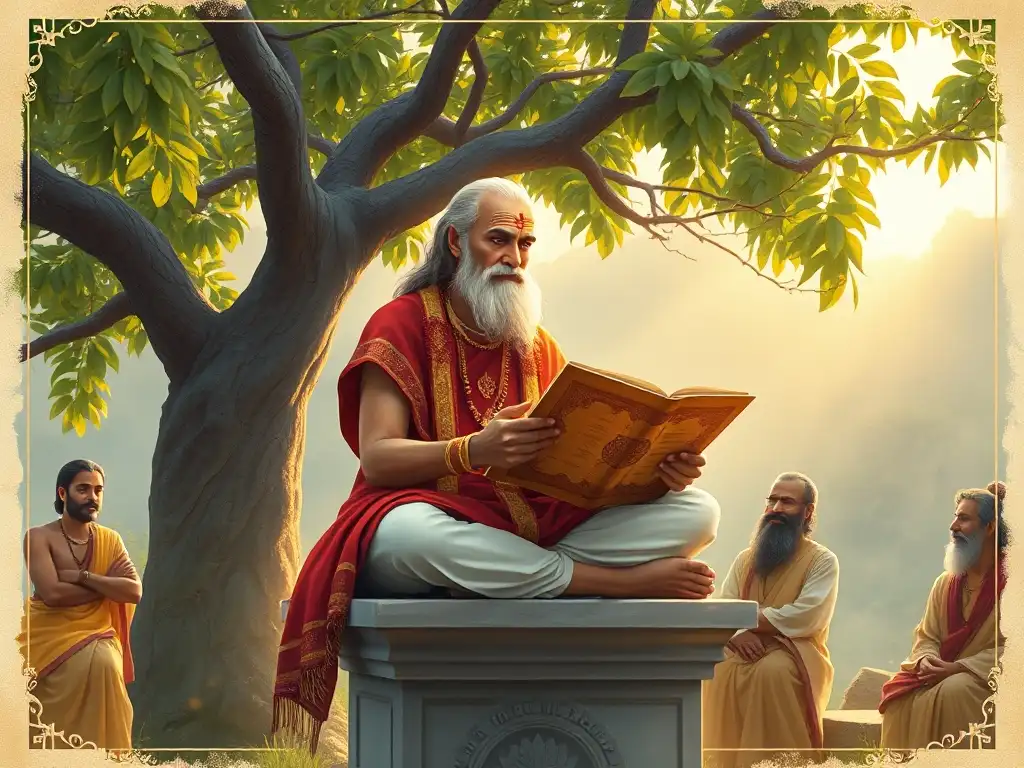
Summary of Key Insights
The Vedas, as foundational scriptures of ancient Indian civilization, serve not only as religious texts but also as comprehensive sources of ethical guidance. The ethical teachings embedded within the Vedas emphasize Dharma, which refers to the moral order and duty that governs individual behavior and societal norms. Key insights from the Vedic texts include:
- Principles of Righteousness: The Vedas delineate various principles that underpin ethical behavior, such as truthfulness ( Satya), non-violence ( Ahimsa), and compassion ( Karuna). These values form the bedrock of personal and communal ethics in ancient Indian society.
- Role of Rituals: Rituals described in the Vedas are not merely ceremonial but are deeply interwoven with ethical teachings, fostering a sense of responsibility towards oneself and the community. The performance of these rituals is seen as a means to uphold societal and cosmic order.
- Interconnectedness of Life: The Vedic texts underscore the interconnectedness of all beings, promoting a vision of harmony within nature and among individuals. This perspective encourages a balanced approach to ethical living, emphasizing stewardship of the environment and respect for all forms of life.
- Guidance for Leaders: The Vedas also provide ethical guidelines for rulers and leaders, advocating for just governance that prioritizes the welfare of the people. This includes the concept of Rajadharma, which involves the moral responsibilities of kingship and leadership.
The Vedas' Continued Relevance in Contemporary Ethical Discussions
In today's rapidly changing world, the ethical teachings of the Vedas continue to resonate, influencing contemporary ethical discussions across various domains. Here are key areas where their relevance is particularly pronounced:
- Environmental Ethics: The Vedic emphasis on the interconnectedness of life informs current debates on environmental sustainability. The principle of stewardship found in Vedic texts encourages a respectful and sustainable relationship with nature, which is increasingly important as society grapples with climate change and ecological degradation.
- Social Justice: The teachings on Dharma provide a framework for understanding justice and equity in modern contexts. The Vedas advocate for the protection of the vulnerable and marginalized, promoting a sense of social responsibility that aligns with contemporary movements for social justice.
- Personal Ethics: Individuals today can draw upon the Vedic principles of truthfulness, non-violence, and compassion to navigate personal ethical dilemmas. These teachings serve as a guide for making morally sound decisions in personal and professional life.
- Leadership and Governance: The Vedic notions of ethical leadership continue to inspire contemporary political thought. Leaders who embody the principles of Rajadharma can foster trust and integrity within their communities, promoting governance that is accountable and just.
The Vedas' ethical teachings in ancient India not only laid the groundwork for moral conduct in their time but also continue to offer valuable insights for addressing modern ethical challenges. Their enduring legacy is a testament to the timeless nature of wisdom that transcends cultures and eras.
Further Reading and Resources on Vedas and Ethical Guidance
Recommended Texts on Vedic Philosophy
Delving into the ethical teachings of the Vedas requires a solid foundation in Vedic texts themselves. Here are some recommended texts that provide comprehensive insight into Vedic philosophy and ethical guidance:
- Rigveda: As the oldest of the Vedas, the Rigveda consists of hymns that reflect the moral and ethical values of ancient Indian society. Its verses often emphasize truth (Satya), righteousness (Dharma), and the importance of community.
- Sama Veda: This Veda focuses on melodies and chants, which were integral to rituals. While it may not provide explicit ethical teachings, the rituals it outlines are rooted in the moral fabric of Vedic society.
- Yajur Veda: This text offers instructions for rituals and sacrifices, highlighting the significance of ethical conduct in performing these rites. It underscores concepts like self-discipline and the duty (Dharma) of individuals in society.
- Atharva Veda: Unlike the other three Vedas, the Atharva Veda includes spells and incantations but also contains philosophical discussions that touch upon ethics, health, and social welfare.
- Upanishads: Often viewed as the culmination of Vedic thought, the Upanishads delve deeper into metaphysical concepts and provide a more profound ethical framework, discussing the nature of reality (Brahman) and the self (Atman).
Online Resources for Studying the Vedas and Hindu Ethics
In addition to printed texts, there are numerous online resources available for those interested in exploring the Vedas and their ethical teachings further:
- Digital Veda Library: Many institutions have digitized Vedic texts, making them accessible to scholars and enthusiasts alike. Websites like the Digital Library of India offer a wealth of resources in multiple languages.
- Online Courses: Platforms such as Coursera and edX provide courses on Hindu philosophy and Vedic studies, often taught by esteemed scholars in the field. These courses typically include discussions on ethics and moral teachings derived from the Vedas.
- YouTube Lectures: There are several channels dedicated to Vedic philosophy where scholars share insights into the ethical teachings of the Vedas. Look for lectures by professors from reputed universities.
- Academic Journals: Journals such as the Journal of Hindu Studies often publish articles focusing on Vedic texts and their implications for ethics and morality in contemporary society.
- Forums and Discussion Groups: Online communities on platforms like Reddit or Facebook can serve as valuable spaces for exchanging ideas and interpretations regarding Vedic ethics. Engaging with others can deepen your understanding and provide diverse perspectives.
Utilizing these resources will enhance your grasp of the Vedas’ ethical teachings and their significance in ancient Indian culture, providing a well-rounded exploration of this profound subject.
Frequently Asked Questions
What are the Vedas?
The Vedas are a collection of ancient texts that serve as the foundation of Hindu philosophy, rituals, and spiritual guidance in ancient India.
How did the Vedas influence ethical teachings in ancient India?
The ethical teachings in the Vedas emphasize dharma (moral duty), promoting values such as truth, non-violence, and compassion, which shaped the moral framework of ancient Indian society.
Are the Vedas still relevant today?
Yes, the Vedas' ethical teachings continue to resonate in modern times, influencing contemporary Indian culture, philosophy, and spiritual practices.
What are the main themes of Vedic ethical teachings?
The main themes include the importance of dharma, the pursuit of truth, the value of self-discipline, and the concept of universal harmony among all living beings.
How did the Vedas contribute to the development of Indian civilization?
The Vedas laid the groundwork for social norms, ritual practices, and philosophical thought, significantly contributing to the cultural and ethical development of ancient Indian civilizations.
Final Reflection: The Enduring Wisdom of the Vedas in Ethical Guidance
The Vedas, as a foundational text of ancient India, continue to resonate with contemporary society, reminding us of the timeless nature of their ethical teachings. In an age where moral dilemmas abound and ethical frameworks are often questioned, the principles articulated in the Vedas offer a beacon of guidance. Their teachings emphasize virtues such as truth, non-violence, and compassion, which are as relevant today as they were thousands of years ago. The wisdom of the Vedas is not merely historical; it is a living legacy that challenges us to reflect on our own ethical practices.
The influence of the Vedas extends beyond the realm of spirituality; they have shaped the cultural and social landscape of India and beyond. Their teachings have inspired generations to pursue righteousness and justice, fostering a sense of community and shared values. As we navigate the complexities of modern life, the Vedas remind us of the importance of ethical living. The Vedas are not just texts; they are a way of life that guides us toward harmony and balance.
This ongoing relevance underscores the need for a deeper understanding of these ancient teachings in our quest for ethical clarity.
As we conclude this exploration of the Vedas and their ethical teachings, I invite you to reflect on how these ancient principles can inform your own life. Consider how the values of truth, compassion, and integrity can shape your decisions and interactions with others. Embrace the opportunity to integrate these teachings into your daily practices, fostering a more ethical and harmonious existence. Let the wisdom of the Vedas inspire you to not only seek personal growth but also contribute positively to the world around you.
Embrace Ethical Wisdom: Apply the Teachings of the Vedas Today!
Thank you for diving into the profound teachings of the Vedas and exploring their role as a source of ethical guidance in ancient India. You've gained valuable insights into how these ancient texts can inform our moral compass today. Now, it's time to carry this wisdom forward!
Here are some practical steps you can take to integrate these teachings into your life:
- Reflect on a Vedic principle that resonates with you and commit to practicing it this week. Whether you choose the principle of non-violence or truthfulness, select one to embody in your daily actions.
- Share your journey! Post about your experiences with Vedic ethics on social media or discuss them with friends to spark a dialogue about the relevance of ancient wisdom in our modern lives.
- Explore further — seek out local or online classes that delve deeper into Vedic studies and connect with a community interested in these profound teachings.
How do you plan to incorporate the wisdom of the Vedas into your daily life to create positive change?