
The Role of Tradition and Modernity in the Evolution of Hindu Philosophy

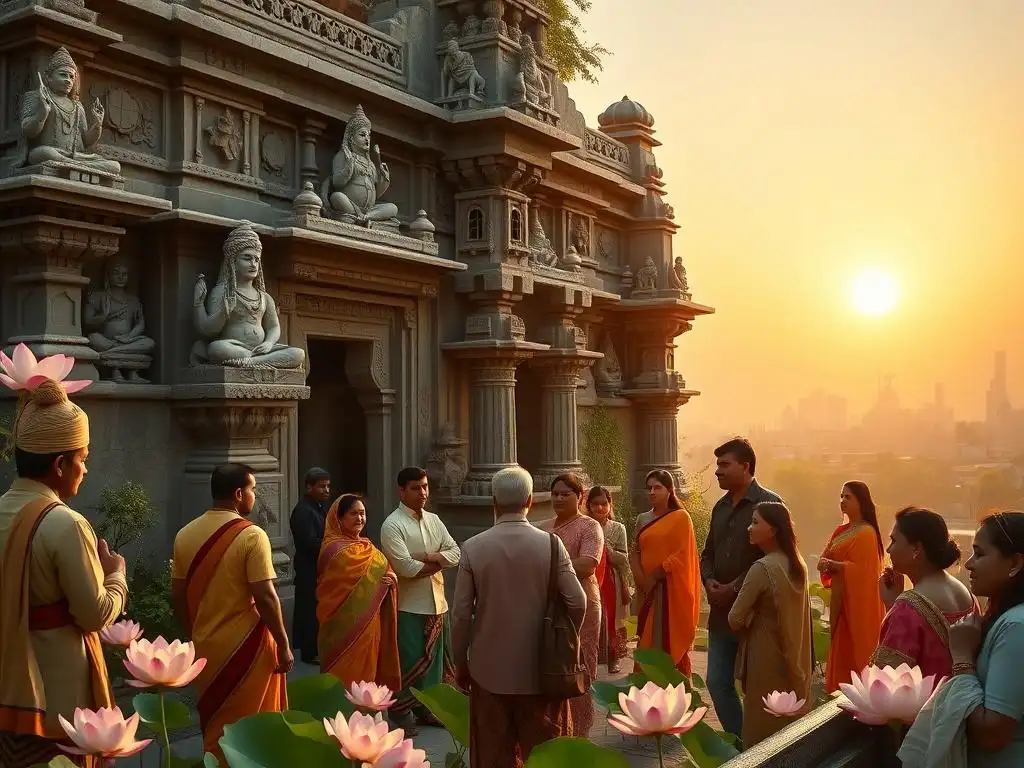
Welcome to Ancient India History, where we embark on a fascinating journey through the rich tapestry of ancient Indian civilizations. Here, you will uncover the profound evolution of Hindu philosophy—a journey shaped by the delicate interplay between tradition and modernity. As you delve into our featured article, "The Role of Tradition and Modernity in the Evolution of Hindu Philosophy," prepare to explore how ancient beliefs have transformed and influenced contemporary thought. Join us as we unravel the mysteries of this profound philosophical evolution and inspire your curiosity to learn more about the cultural legacy that continues to resonate today.
Introduction to Hindu Philosophy Evolution History
Hindu philosophy, a profound and intricate tapestry woven over millennia, encapsulates the spiritual and intellectual pursuits of one of the world's oldest religions. Its evolution reflects a dynamic interplay between tradition and modernity, shaping not only the beliefs of millions but also contributing significantly to global philosophical discourse.
This article delves into the history of Hindu philosophy, exploring how its foundational concepts have been preserved and transformed through time, influenced by various cultural, social, and historical contexts. By examining the evolutionary trajectory of Hindu philosophy, we can gain a deeper understanding of its enduring relevance and adaptability in contemporary society.
Overview of Hindu Philosophy
Hindu philosophy encompasses a wide range of thoughts and ideas, primarily categorized into six orthodox schools (darshanas):
- Nyaya: Logic and epistemology
- Vaisheshika: Atomism and metaphysics
- Samkhya: Enumeration and dualism
- Yoga: Practices for spiritual discipline
- Mimamsa: Ritualistic and ethical practices
- Vedanta: Philosophical conclusions derived from the Upanishads
Each of these schools contributes to a holistic understanding of existence, ethics, and the ultimate reality (Brahman). Notably, Hindu philosophy emphasizes the concept of Dharma (moral law), which serves as a guiding principle for ethical conduct and social responsibility.
Significance of Tradition and Modernity in Philosophy
The evolution of Hindu philosophy is marked by the delicate balance between preserving traditional teachings and adapting to modern influences. Tradition provides a foundation of established beliefs and practices, while modernity introduces critical thinking and new perspectives. This dynamic interplay has led to:
- Revival of Ancient Texts: Scholars and practitioners often revisit ancient scriptures to extract relevant teachings for contemporary issues.
- Integration of New Ideas: The incorporation of Western philosophical concepts has led to novel interpretations of Hindu thought, fostering dialogue between different ideological frameworks.
- Cultural Resilience: The adaptability of Hindu philosophy amidst changing societal norms demonstrates its enduring strength and relevance.
Historical Context of Hindu Philosophy
Origins of Hindu Philosophy in Ancient India
The roots of Hindu philosophy can be traced back to the Vedic period (circa 1500-500 BCE), where the early texts, known as the Vedas, laid the groundwork for philosophical inquiry. These texts introduced key concepts such as Rta (cosmic order) and Brahman, which would later evolve into more nuanced philosophical discussions. The Upanishads, composed during the later Vedic period, mark a significant turning point, as they delve deeper into metaphysical questions and the nature of reality, paving the way for subsequent philosophical developments.
Key Texts Influencing Hindu Philosophy Evolution
Several pivotal texts have shaped the evolution of Hindu philosophy throughout history. These include:
| Text | Description | Period |
|---|---|---|
| Vedas | The oldest sacred texts, foundational to Hindu beliefs. | 1500-500 BCE |
| Upanishads | Philosophical treatises exploring the nature of reality. | 800-200 BCE |
| Bhagavad Gita | A dialogue addressing duty, righteousness, and the self. | 2nd century BCE |
| Yoga Sutras | Texts outlining the philosophy and practice of yoga. | 2nd century BCE |
| Brahma Sutras | Philosophical conclusions of the Upanishads. | 200 CE |
These texts not only reflect the philosophical discourse of their time but also serve as pivotal reference points for understanding the ongoing evolution of Hindu philosophy. Each text contributes uniquely to the dialogue on ethics, metaphysics, and spirituality, illustrating how tradition and modernity have coalesced over time.
The Influence of Tradition on Hindu Philosophy
Hindu philosophy has been deeply influenced by its rich traditions, which span thousands of years. These traditions are woven into the fabric of spiritual practices, rituals, and teachings that have shaped the beliefs and values of Hindu thought. The roots of Hindu philosophy can be traced back to ancient texts, including the Vedas, Upanishads, and the epics like the Mahabharata and Ramayana. These foundational texts not only provide insights into metaphysical questions but also emphasize moral and ethical living, contributing significantly to the evolution of philosophical thought within Hinduism.
Tradition plays a crucial role in preserving the philosophical discourse, offering a continuity that has allowed various schools of thought to flourish. The emphasis on oral transmission of knowledge in ancient India ensured that teachings were preserved and adapted through generations. This continuity has allowed for a rich dialogue between various philosophical systems, including Samkhya, Yoga, Nyaya, Vaisheshika, Mimamsa, and Vedanta. Each school has added layers of complexity to Hindu philosophy while remaining anchored in traditional values.
Core Concepts Rooted in Tradition
At the heart of Hindu philosophy are core concepts such as Dharma (duty/righteousness), Karma (action and its consequences), Moksha (liberation), and Atman (soul). These principles have been integral to the philosophical discourse and are deeply embedded in traditional practices and rituals.
- Dharma encompasses not only ethical obligations but also the cosmic law that governs the universe. It encourages individuals to live in harmony with their responsibilities towards family, society, and the cosmos.
- Karma introduces a system of moral cause and effect, emphasizing that every action has consequences that affect one's future, thus encouraging ethical behavior.
- Moksha represents the ultimate goal of human life, the liberation from the cycle of birth and rebirth (samsara). It is achieved through self-realization and understanding of the true nature of reality.
- Atman signifies the innermost essence of individuals, which is considered eternal and divine. The realization of Atman as one with Brahman (the universal soul) is a central theme in Advaita Vedanta and other philosophical schools.
These concepts have been foundational in guiding the moral and ethical frameworks within Hindu society and continue to influence contemporary interpretations of Hindu philosophy.
Historical Figures and Their Contributions
Throughout history, numerous philosophers have contributed to the evolution of Hindu philosophy, grounding their ideas in traditional thought while also paving the way for new interpretations. Key figures include:
- Adi Shankaracharya (788–820 CE): A proponent of Advaita Vedanta, Shankaracharya emphasized non-dualism and the idea that the individual soul (Atman) is identical to the ultimate reality (Brahman). His commentaries on the Upanishads and the Bhagavad Gita helped consolidate the philosophical foundations of Hindu thought.
- Ramanuja (1017–1137 CE): A significant figure in the Vishishtadvaita (qualified non-dualism) school, Ramanuja argued for a personal God and the importance of devotion (bhakti). His teachings emphasized the relationship between the individual soul and God, which became a cornerstone of later devotional movements.
- Madhvacharya (1238–1317 CE): The founder of the Dvaita (dualism) school, Madhvacharya introduced the concept of difference between the individual souls and the supreme reality, advocating a theistic interpretation of Hindu philosophy.
These philosophers not only built upon the traditional foundations of Hindu thought but also challenged and redefined them, leading to a dynamic evolution of philosophical discourse.
The Impact of Modernity on Hindu Philosophy
The advent of modernity brought significant changes to Hindu philosophy, prompting a re-evaluation of traditional beliefs and practices. The encounter with Western ideas, technological advancements, and socio-political changes influenced how Hindu thinkers approached ancient texts and their relevance in contemporary society. As a result, Hindu philosophy evolved to address new challenges and aspirations, leading to a synthesis of traditional and modern ideas.
Modern Hindu philosophers began to reinterpret foundational concepts in light of contemporary issues, advocating for a philosophy that is both relevant and adaptable. This evolution has allowed Hindu thought to engage with global philosophical discourses, fostering an environment of dialogue and exchange.
The Encounter with Western Philosophical Ideas
The interaction with Western philosophical traditions during the colonial period had a profound impact on Hindu philosophy. Thinkers such as Swami Vivekananda and Mahatma Gandhi were instrumental in integrating Western ideals of democracy, rationalism, and individual rights with traditional Hindu beliefs.
- Swami Vivekananda (1863–1902) emphasized the universality of Vedantic principles, advocating for a synthesis of Eastern spirituality and Western rationality. His speeches at the Parliament of the World's Religions in 1893 showcased the richness of Hindu thought while addressing modern concerns.
- Mahatma Gandhi (1869–1948) applied Hindu philosophical principles, particularly those of non-violence (ahimsa) and truth (satya), in the realm of social and political activism. His approach to resistance against colonial rule was deeply rooted in traditional values, yet it resonated with modern concepts of justice and human rights.
This blending of ideas has allowed Hindu philosophy to expand its horizons and engage with global philosophical currents, enriching its own tradition while remaining grounded in its roots.
Contemporary Issues Addressed by Modern Hindu Philosophers
Modern Hindu philosophers continue to engage with pressing contemporary issues, addressing topics such as environmental ethics, gender equality, social justice, and the challenges posed by globalization.
- Environmental Ethics: Many contemporary thinkers argue that traditional Hindu values, such as reverence for nature and the interconnectedness of all living beings, can inform modern environmental movements. The principle of Ahimsa extends to caring for the environment, advocating for sustainable practices.
- Gender Equality: Modern scholars are re-evaluating traditional texts and practices that have historically marginalized women. By emphasizing the egalitarian aspects of Hindu philosophy, they advocate for a reinterpretation that promotes gender equality and women's empowerment.
- Social Justice: Philosophers are also addressing caste dynamics and advocating for social justice within the framework of Dharma, emphasizing that the principles of equality and respect for all individuals are crucial in contemporary society.
These modern interpretations of Hindu philosophy illustrate its dynamic nature, showcasing how tradition and modernity can coexist and inform one another in the ongoing evolution of Hindu thought.
The Dynamic Relationship Between Tradition and Modernity
Hindu philosophy has historically thrived on the interplay between tradition and modernity. This dynamic relationship has shaped not only the fundamental tenets of Hindu thought but also its adaptability to changing socio-cultural contexts. Tradition in Hindu philosophy encompasses a vast array of texts, rituals, and beliefs that have been passed down through generations, forming the bedrock of its teachings. Modernity, on the other hand, introduces new ideas, technologies, and worldviews that challenge and often enrich traditional paradigms.
The essence of this relationship lies in the recognition that tradition is not static; it is continually interpreted and reinterpreted. Modern thinkers often revisit classical texts, extracting relevant insights that resonate with contemporary issues. This reciprocal interaction fosters a philosophy that is both rooted in historical context and responsive to present-day realities.
Moreover, the global exchange of ideas in an increasingly interconnected world has further amplified this relationship. As Hindu philosophy meets diverse philosophical traditions, it evolves, integrating concepts from Western philosophy, science, and other global spiritual practices, thus creating a richer tapestry of thought.
Synthesis of Traditional and Modern Philosophical Ideas
The synthesis of traditional and modern philosophical ideas has led to a vibrant discourse within Hindu philosophy. Traditional texts such as the Vedas, Upanishads, and the Bhagavad Gita have been pivotal in establishing foundational concepts like Dharma (duty), Karma (action), and Moksha (liberation). Modern philosophers, however, have expanded on these ideas, exploring their implications in contemporary ethical dilemmas, social justice, and environmental issues.
For instance, the integration of ecological concerns within the framework of Dharma reflects a modern understanding of the interconnectedness of all life, aligning traditional values with contemporary environmental philosophies. Thinkers like Swami Vivekananda and more recent philosophers such as A. P. J. Abdul Kalam have emphasized the relevance of traditional wisdom in addressing modern challenges, advocating for a synthesis that honors both the past and the present.
This synthesis is not merely theoretical; it manifests in practical applications, such as the incorporation of meditation and yoga into modern wellness practices, which are deeply rooted in ancient traditions yet widely accepted in contemporary society. Thus, the dialogue between tradition and modernity continues to enrich Hindu philosophy, making it relevant and applicable in diverse contexts.
Challenges in Balancing Tradition with Modernity
Despite the fruitful interaction between tradition and modernity, several challenges arise in balancing these two forces. One significant challenge is the potential for misinterpretation or oversimplification of traditional texts when viewed through a modern lens. The complexity and depth of ancient philosophies can sometimes be lost in translation, leading to a diluted understanding that fails to capture the original intent.
Additionally, the rapid pace of modernization can lead to a disconnect from traditional values. As society embraces new technologies and ideas, there is a risk that essential teachings of Hindu philosophy may be overshadowed or neglected. This tension is particularly evident in discussions around ethics, where traditional teachings may conflict with modern values, such as gender equality or social justice.
Furthermore, the globalization of culture can result in the commodification of Hindu practices, where ancient traditions are repackaged for mass consumption, diverting from their authentic meanings. This raises questions about the authenticity and integrity of Hindu philosophy as it adapts to modern contexts.
Conclusion: The Future of Hindu Philosophy
The future of Hindu philosophy appears to be one of continued evolution, driven by the ongoing dialogue between tradition and modernity. As society grapples with complex global issues, the teachings of Hindu philosophy provide a rich reservoir of insights and solutions that can be adapted to meet contemporary needs.
Predictions for the Evolution of Hindu Philosophy
Looking forward, we can anticipate a deeper engagement with interdisciplinary approaches that incorporate insights from science, psychology, and sociology into the discourse of Hindu philosophy. This evolution may also see the reinterpretation of traditional concepts in light of global challenges such as climate change, digital ethics, and mental health, making Hindu philosophy a vital player in contemporary philosophical discussions.
Moreover, the rise of digital platforms allows for broader dissemination and discussion of philosophical ideas, enabling a global audience to engage with Hindu philosophy in diverse ways. This could lead to innovative interpretations that reflect the experiences and values of a younger, more interconnected generation.
The Continuing Relevance of Tradition and Modernity in Philosophical Discourse
The relevance of tradition and modernity in the discourse of Hindu philosophy cannot be overstated. As philosophical inquiries continue to intersect with real-world problems, the rich legacy of Hindu thought offers timeless wisdom that can guide ethical decision-making and personal development.
The ability of Hindu philosophy to adapt while maintaining its core principles ensures its place in contemporary discussions. By fostering a respectful dialogue between the teachings of the past and the realities of the present, Hindu philosophy not only honors its roots but also embraces the potential for growth and transformation in the face of modern challenges. Through this ongoing engagement, it remains a dynamic and impactful force in the evolution of philosophical thought.
References and Further Reading
The evolution of Hindu philosophy is a vast and intricate subject, drawing from a rich tapestry of texts, commentaries, and scholarly analyses. To gain a deeper understanding of this multifaceted topic, it is essential to explore both classical texts and contemporary interpretations. Below are some valuable resources that provide insights into the development of Hindu philosophical thought through the ages.
Recommended Texts on Hindu Philosophy Evolution History
-
The Upanishads
A foundational set of texts in Hindu philosophy, the Upanishads explore metaphysical questions and concepts of the self (Atman) and the ultimate reality (Brahman). Their philosophical inquiries laid the groundwork for subsequent schools of thought.
-
Bhagavad Gita
This 700-verse Hindu scripture is part of the Indian epic Mahabharata and presents a dialogue between Prince Arjuna and Lord Krishna. It addresses the moral and philosophical dilemmas faced by individuals, emphasizing duty (dharma) and devotion (bhakti).
-
Yoga Sutras of Patanjali
This seminal text outlines the philosophy and practice of yoga, emphasizing mental discipline, meditation, and ethical living. It is crucial for understanding the evolution of spiritual practices in Hinduism.
-
Advaita Vedanta: A Philosophical Introduction by Eliot Deutsch
This book delves into the non-dualistic school of Vedanta, offering a comprehensive overview of its key teachings and historical context, which have significantly influenced modern Hindu philosophy.
-
The Philosophy of the Upanishads by S. Radhakrishnan
Radhakrishnan's work provides an insightful analysis of the philosophical ideas presented in the Upanishads, connecting them to contemporary thought and their enduring relevance.
-
Hindu Philosophy: A Beginner’s Guide by David R. Kinsley
This accessible guide introduces the major philosophical systems within Hinduism, exploring their historical development and key concepts, making it suitable for newcomers to the subject.
Online Resources for Exploring Hindu Philosophical Ideas
-
Stanford Encyclopedia of Philosophy
A highly regarded online resource that offers in-depth articles on various topics in philosophy, including detailed entries on Hindu philosophical systems, key figures, and historical contexts.
-
Internet Encyclopedia of Philosophy
This resource provides accessible articles on Hindu thought, covering a range of topics from classical texts to contemporary philosophical debates, ideal for both students and scholars.
-
Hinduism Today
An online magazine that explores various aspects of Hinduism, including its philosophy, culture, and practices. It features articles, interviews, and insights from contemporary thinkers in the field.
-
The British Library: Sacred Texts
The British Library's digital collection includes translations and commentaries on key Hindu texts, allowing readers to explore the primary sources of Hindu philosophy online.
-
YouTube Channels: The School of Life and Philosophy Tube
These channels often feature videos discussing philosophical ideas, including those rooted in Hindu philosophy, presented in an engaging and accessible manner for a modern audience.
By engaging with these texts and resources, readers can gain a comprehensive understanding of how tradition and modernity have influenced the evolution of Hindu philosophy throughout history.
- Introduction to Hindu Philosophy Evolution History
- Historical Context of Hindu Philosophy
- The Influence of Tradition on Hindu Philosophy
- The Impact of Modernity on Hindu Philosophy
- The Dynamic Relationship Between Tradition and Modernity
- Conclusion: The Future of Hindu Philosophy
- References and Further Reading
- What is the main focus of the article?
- How does Hindu philosophy relate to ancient Indian civilizations?
- What are some key contributions of ancient Indian thinkers to Hindu philosophy?
- How has modernity impacted the evolution of Hindu philosophy?
- Why is the evolution of Hindu philosophy important to understand?
Frequently Asked Questions
What is the main focus of the article?
The article explores the interplay between tradition and modernity in the evolution of Hindu philosophy, tracing its development from ancient texts to contemporary interpretations.
How does Hindu philosophy relate to ancient Indian civilizations?
Hindu philosophy is deeply rooted in ancient Indian civilizations, with its principles and ideas shaped by historical contexts, cultural practices, and significant texts such as the Vedas and Upanishads.
What are some key contributions of ancient Indian thinkers to Hindu philosophy?
Ancient Indian thinkers made significant contributions to Hindu philosophy through concepts of dharma, karma, and moksha, influencing both spiritual practices and ethical frameworks in society.
How has modernity impacted the evolution of Hindu philosophy?
Modernity has introduced new perspectives and interpretations, encouraging a dialogue between traditional beliefs and contemporary issues, thus reshaping the understanding and practice of Hindu philosophy.
Why is the evolution of Hindu philosophy important to understand?
Understanding the evolution of Hindu philosophy is crucial for appreciating the rich cultural heritage of India and how it continues to influence both spiritual and philosophical discourses today.
Final Reflection: Embracing the Dance of Tradition and Modernity in Hindu Philosophy
The evolution of Hindu philosophy is a testament to the dynamic interplay between tradition and modernity, illustrating how ancient wisdom continues to resonate in our contemporary world. As we navigate the complexities of modern life, the teachings and principles rooted in Hindu philosophy offer profound insights that remain relevant today. The ongoing dialogue between these two forces not only enriches our understanding of the past but also shapes our approach to the future.
Cultural and social landscapes are continually influenced by the rich tapestry of Hindu philosophy, which encourages us to reflect on our values and beliefs. This philosophy, with its deep roots in tradition, invites us to explore the essence of existence while adapting to the changing tides of modernity. As Mahatma Gandhi once said, "> The best way to find yourself is to lose yourself in the service of others." This quote encapsulates the enduring relevance of Hindu philosophy, reminding us that the wisdom of the past can guide our actions and decisions in the present.
As you ponder the lessons of Hindu philosophy and its evolution, consider how these teachings can inspire you in your own life. Reflect on the balance between honoring tradition and embracing modernity, and think about how you can integrate these principles into your daily practices. By doing so, you not only honor the rich history of Hindu philosophy but also contribute to its ongoing evolution, ensuring that its wisdom continues to illuminate the path for generations to come.
Embrace the Fusion of Tradition and Modernity!
Thank you for diving into the fascinating world of Hindu philosophy with us! We hope you gained valuable insights into how tradition and modernity intertwine, shaping beliefs and practices throughout history. Now it’s time to take that knowledge and put it into action!
Here are some practical steps you can take to deepen your understanding and engage further with this topic:
- Reflect and Journal: Spend some time journaling your thoughts on how traditional beliefs influence your current worldview. Consider creating space for modern interpretations that resonate with you!
- Start a Discussion: Share your insights with friends or online communities. Initiate a conversation about the balance between tradition and modernity in philosophical frameworks.
- Explore Further: Dive deeper into related texts or attend a local lecture or workshop that discusses the fusion of ancient traditions with contemporary beliefs.
What unique blend of tradition and modernity inspires your own philosophical perspective? Share your thoughts with us!