
The Maurya Empire and Its Influence on Modern Indian Politics

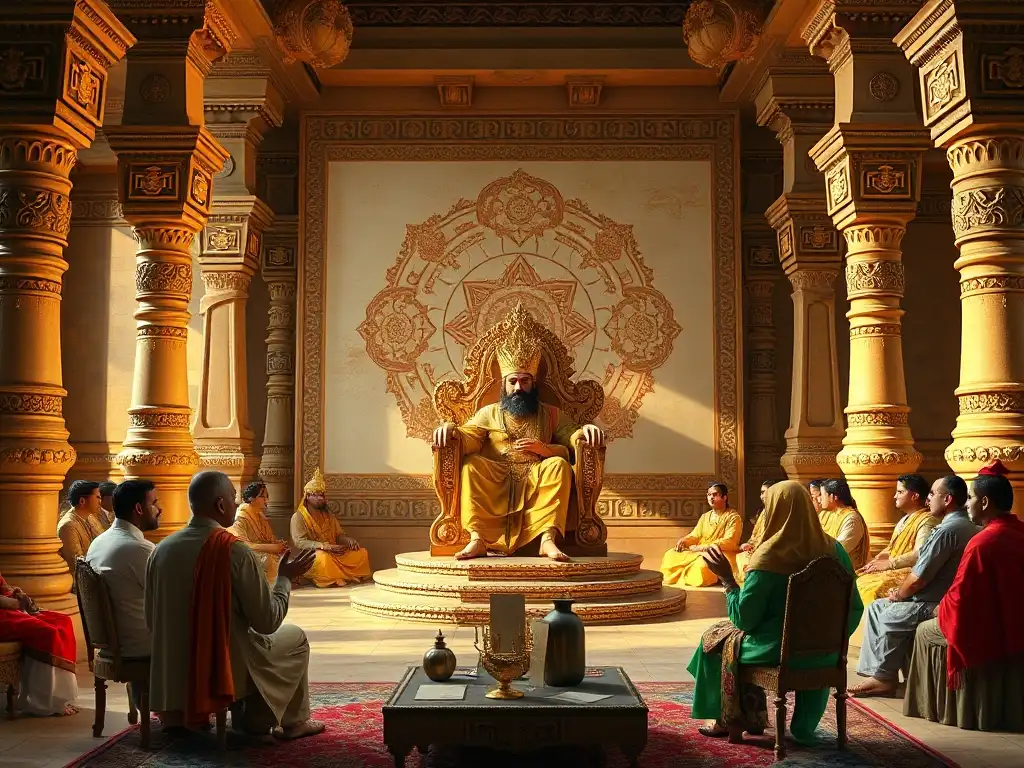
Welcome to Ancient India History, where we invite you to embark on a fascinating journey through the rich tapestry of ancient Indian civilizations. From the remarkable innovations of the Indus Valley to the profound cultural legacies of the Gupta Empire, our website is dedicated to unveiling the stories that shaped a nation. In our featured article, "The Maurya Empire and Its Influence on Modern Indian Politics," we delve into how the political strategies and philosophies of the Maurya Empire continue to resonate in today's governance.
Curious about how ancient wisdom informs modern leadership? Join us as we explore the intricate connections that bind past and present, and discover the enduring impact of these ancient empires on contemporary society.
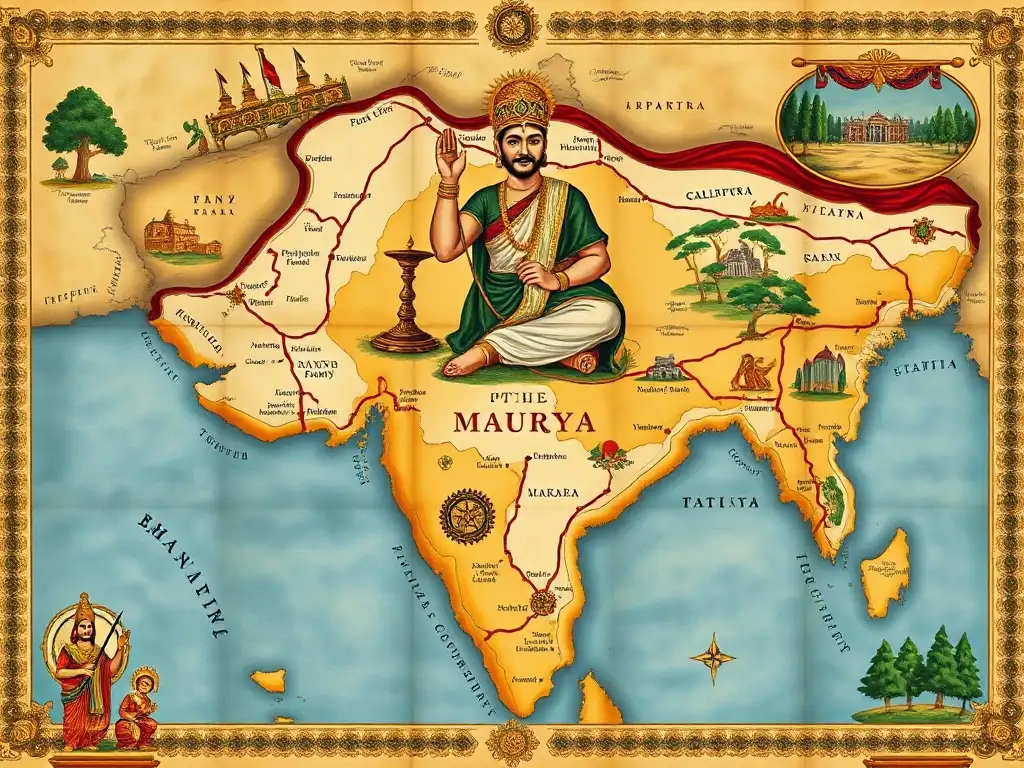
The Maurya Empire, one of the most significant and influential empires in ancient India, serves as a critical focal point for understanding the foundations of modern Indian politics. Established in the 4th century BCE, this empire not only marked a period of unprecedented political unity and administrative achievement but also laid the groundwork for political thought and governance that resonates through Indian history to this day.
As we explore the intricate layers of the Maurya Empire, we will uncover how its sophisticated political structures and key figures continue to shape contemporary political practices and ideologies in India. Through this exploration, we will also highlight the lasting influence of the Maurya Empire on modern political discourse, including concepts of governance, authority, and social responsibility.
Introduction to the Maurya Empire
Overview of the Maurya Empire's Historical Context
The Maurya Empire emerged following the decline of the fragmented kingdoms of the pre-Mauryan era, notably the Nanda Empire. Founded by Chandragupta Maurya in 322 BCE, the empire reached its zenith under the reign of Ashoka the Great, who expanded its territory across most of the Indian subcontinent. The Maurya Empire is often celebrated for its remarkable administrative systems, military conquests, and the promotion of trade and culture. Its capital, Pataliputra, became a vibrant center of learning and governance, reflecting the empire's sophistication.
Key Figures of the Maurya Empire
The Maurya Empire was characterized by several key figures whose contributions were instrumental in shaping its legacy.
- Chandragupta Maurya: The empire's founder, he is remembered for unifying the Indian subcontinent and establishing a centralized government.
- Ashoka the Great: Perhaps the most renowned Mauryan ruler, Ashoka is celebrated for his promotion of Buddhism and his commitment to non-violence and moral governance after the Kalinga War.
- Chanakya (Kautilya): A brilliant strategist and philosopher, Chanakya played a crucial role in Chandragupta's rise to power and authored the Arthashastra, a seminal text on political science and economics.
The Political Structure of the Maurya Empire
Centralized Administration and Governance
The Maurya Empire is notable for its centralized system of governance, which allowed for efficient administration across vast territories. The emperor held supreme power, supported by a council of ministers who advised on matters of state. This hierarchical structure facilitated the implementation of laws and policies, ensuring stability and order throughout the empire.
Role of the Mauryan Bureaucracy
The Mauryan bureaucracy was sophisticated and well-organized, comprising various departments responsible for different aspects of governance, such as revenue collection, law enforcement, and public works. This bureaucracy played a pivotal role in maintaining the empire's infrastructure and promoting economic prosperity, which in turn reinforced the authority of the emperor.
Importance of Political Philosophy in the Maurya Empire
The political philosophy during the Maurya Empire, particularly as articulated in Chanakya's Arthashastra, emphasized the importance of pragmatism in governance. This work laid out strategies for statecraft, including realpolitik, diplomacy, and the necessity of a strong military. The ideas presented in this text continue to influence modern political thought in India, particularly regarding the balance of power and ethical governance.
Through this examination of the Maurya Empire's political structures and key figures, we can appreciate how its influence extends into modern Indian politics, providing a framework for understanding governance, authority, and the interplay of power in contemporary society.
Key Contributions of the Maurya Empire to Political Thought
The Maurya Empire, which flourished from 322 to 185 BCE, is often regarded as one of the most significant ancient Indian empires. Its contributions to political thought laid a robust foundation for governance in India and have continued to resonate through the ages. The Mauryan rulers, particularly Chandragupta Maurya and his grandson Ashoka, introduced innovative concepts that shaped political discourse and practices.
One of the empire's key contributions was the establishment of a centralized administration that emphasized the importance of a strong and efficient government. This model of governance was characterized by the delegation of authority to local officials, ensuring that the needs of diverse regions within the empire were met. Furthermore, the Maurya Empire is credited with the codification of laws and the introduction of legal systems that aimed to maintain social order and justice.
Additionally, the Mauryan political ideology encompassed the interplay between moral duty (dharma) and statecraft, which has influenced subsequent political philosophies in India. This integration of ethics into governance is a hallmark of Mauryan political thought, setting a precedent for future rulers and policymakers.
Concepts of Dharma and Governance
At the heart of Mauryan political philosophy was the concept of dharma, which refers to moral duty, righteousness, and ethical conduct. For the Mauryan rulers, governance was not merely a matter of power and authority but also of upholding moral principles. This idea was particularly championed by Ashoka, who believed that a ruler's legitimacy stemmed from their commitment to dharma.
Ashoka's reign marked a significant shift in how governance was perceived. He promoted the notion that rulers should act as guardians of their subjects' welfare, emphasizing non-violence and compassion. His edicts, inscribed on rocks and pillars across the empire, articulated the importance of dharma in governance, advocating for social justice, religious tolerance, and the welfare of all beings.
This moral framework has had a lasting impact on Indian political thought, influencing contemporary discussions on ethical governance. The principles of dharma continue to resonate in modern political discourses, advocating for leaders to prioritize the well-being of their constituents over mere authority.
Legal Systems and Their Evolution
The Maurya Empire played a pivotal role in the evolution of legal systems in ancient India. Under Chandragupta Maurya, the administration recognized the necessity of laws to regulate society effectively. The legal framework established during this period laid the groundwork for future legal thought in India.
The Mauryan legal system was characterized by its codification and enforcement of laws that addressed various aspects of daily life, including property rights, family matters, and criminal justice. The use of written laws, as opposed to oral traditions, marked a significant advancement, ensuring that legal standards were accessible and transparent.
Moreover, Ashoka's focus on justice and ethical governance led to the promotion of humanitarian laws, which aimed to protect the rights and dignity of individuals. This approach not only enhanced social order but also fostered a sense of accountability among rulers and officials.
The Mauryan legal legacy can be seen in the subsequent development of Indian law, where the principles of justice, equality, and ethical conduct continue to play a crucial role in the legal systems of modern India.
Influence of Ashoka’s Edicts on Modern Governance
Ashoka's edicts are considered seminal documents in the history of Indian governance, reflecting his vision of a just and ethical society. These edicts, inscribed on pillars and rocks throughout the empire, served as public announcements of his policies and moral philosophy. They emphasized values such as truth, non-violence, and compassion, which have profound implications for modern governance.
The principles articulated in Ashoka's edicts resonate with contemporary governance models that prioritize human rights and social justice. They provide a framework for ethical leadership that is increasingly relevant in today's political landscape. For instance, the emphasis on public welfare and accountability in Ashoka's governance reflects the ideals of participatory democracy that are central to modern political thought.
Furthermore, Ashoka's commitment to religious tolerance and harmony among diverse communities is particularly relevant in today's multicultural societies. His policies encourage leaders to adopt an inclusive approach, fostering dialogue and cooperation among different groups.
The Maurya Empire’s Influence on Modern Indian Politics
The influence of the Maurya Empire on modern Indian politics is profound and multifaceted. The principles established during this period continue to shape political ideologies and governance practices in contemporary India.
Reflection of Mauryan Principles in Contemporary Governance
Modern Indian governance reflects several key principles derived from the Maurya Empire. The emphasis on centralized administration and local governance mirrors the Mauryan model, where authority was effectively delegated to local officials. This structure aims to address the complexities of governing a diverse and populous nation.
Additionally, the Mauryan pursuit of dharma as a guiding principle resonates in the Indian Constitution, which enshrines values such as justice, liberty, equality, and fraternity. These values echo the moral responsibilities articulated by Ashoka, emphasizing the importance of ethical leadership in contemporary political discourse.
Moreover, the commitment to social welfare and the promotion of human rights, inspired by Ashoka's reign, are integral to modern Indian policies. Government initiatives aimed at poverty alleviation, education, and healthcare reflect a continuity of the Mauryan ethos of prioritizing the well-being of citizens.
The Maurya Empire's contributions to political thought and governance have left an indelible mark on modern Indian politics, providing a rich foundation for contemporary leaders and policymakers to draw upon.
Comparative Analysis: Maurya Empire and Other Ancient Indian Dynasties
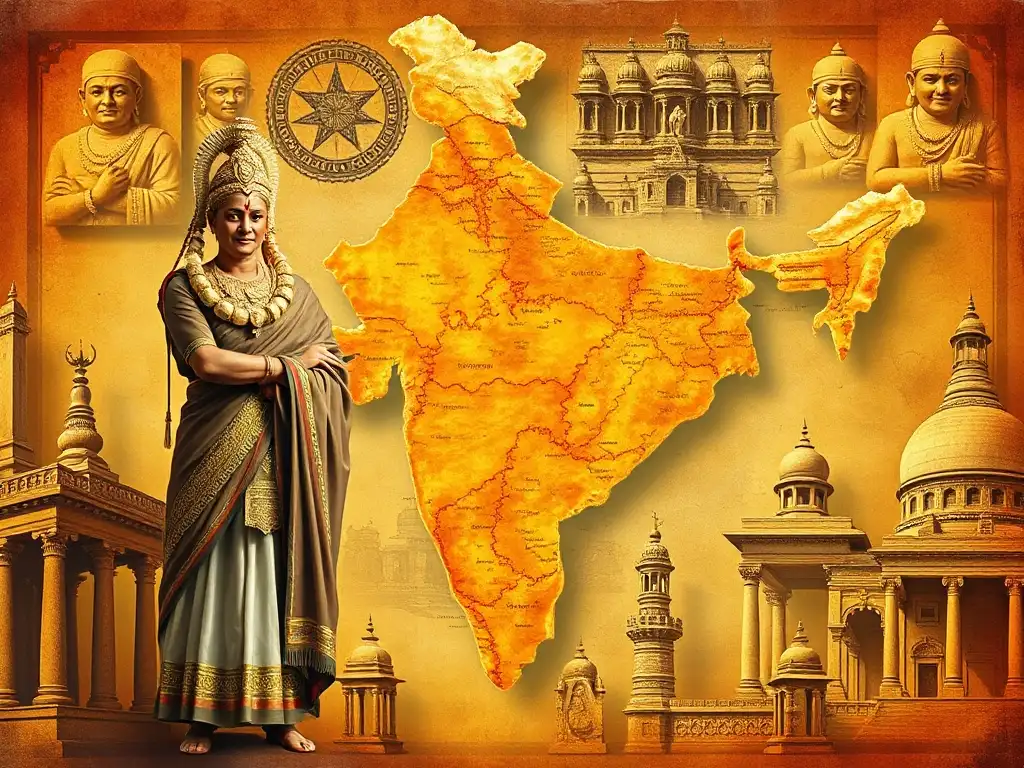
The Maurya Empire, established in 322 BCE by Chandragupta Maurya, stands as a significant period in ancient Indian history, epitomizing power, administration, and culture. A comparative analysis with other prominent dynasties, such as the Gupta Empire and the Mauryan predecessors like the Nanda Dynasty, reveals unique features and similarities that shaped not only the regional politics of their time but also left a lasting impact on contemporary governance structures.
The Mauryan dynasty introduced a centralized bureaucracy characterized by a well-defined administrative hierarchy and a robust system of governance that was more systematic than that of the Nanda Dynasty, which preceded it. The Nandas were known for their wealth and military prowess but lacked the cohesive administrative structure that the Mauryas perfected.
In contrast, the Gupta Empire (c. 320–550 CE), often referred to as the Golden Age of India, showcased a more decentralized form of governance. The Gupta rulers delegated authority to local chieftains and village councils, which allowed greater regional autonomy but often resulted in a less unified political structure compared to Maurya’s centralized approach.
Political Structures: Maurya vs. Gupta Empires
The political structures of the Maurya and Gupta Empires exhibit distinct characteristics that highlight their governance philosophies and administrative capabilities. The Maurya Empire is renowned for its effective centralized governance, which was largely influenced by Kautilya's Arthashastra, a treatise on statecraft. This work emphasized the importance of a strong, centralized authority, surveillance, and a well-organized bureaucracy that included officials responsible for taxation, law enforcement, and resource management.
In contrast, the Gupta Empire adopted a more feudal system. While it maintained a central authority, the Gupta rulers often relied on a network of local governors and nobility, granting them significant autonomy. This decentralized approach allowed for regional adaptation and cultural diversity but sometimes led to fragmentation, especially during times of crisis. The differences in political structures reflect how each empire addressed the challenges of governance in their respective eras, impacting how modern political systems in India draw from these ancient precedents.
Influence of Other Empires on Modern Political Systems
The political systems of the Maurya Empire and its successors were not developed in isolation; rather, they were influenced by interactions with other ancient civilizations, such as the Persian and Hellenistic empires. The Mauryan administration integrated various administrative practices, notably from the Persian satrap system, which inspired the centralization of power and the implementation of provincial governance.
Furthermore, the Maurya Empire's diplomatic strategies and military organization were influenced by encounters with Alexander the Great and his Hellenistic successors. This blend of ideas facilitated the evolution of governance in ancient India, which ultimately shaped the foundations of modern political systems. The principles of diplomacy, statecraft, and governance that emerged during this time resonate with contemporary political theories, highlighting the enduring legacy of these ancient empires in shaping modern Indian politics.
Legacy of the Maurya Empire in Today’s Political Landscape
The legacy of the Maurya Empire continues to be felt in today’s Indian political landscape, particularly in the areas of governance, administration, and political ideology. The principles of effective governance and the importance of a centralized administration that were emphasized during the Maurya period have found echoes in modern Indian political practices. The emphasis on strong leadership, as exemplified by figures like Ashoka, serves as a model for contemporary political figures aiming to unify and govern a diverse nation.
The Mauryan emphasis on welfare and public administration, exemplified by Ashoka's focus on the Dhamma, continues to influence modern governance in India. Policies aimed at social welfare, education, and healthcare can trace their philosophical roots back to the ideals propagated during the Maurya Empire.
The Relevance of Mauryan Political Ideals in Modern India
Mauryan political ideals, particularly those articulated by Kautilya in the Arthashastra, remain relevant in contemporary Indian politics. The concepts of statecraft, diplomacy, and economic management outlined in this ancient text inform modern political strategies and economic policies. The emphasis on pragmatism in governance, balancing moral considerations with realpolitik, resonates with current political dynamics in India, where leaders often navigate complex socio-political landscapes.
Moreover, the Mauryan approach to law and justice, with a focus on ethical governance and accountability, has established a framework that continues to be pertinent in the discourse on governance and legal systems in India today. The enduring influence of Mauryan political philosophy reflects a historical continuity in the quest for effective governance in a diverse and populous nation.
Case Studies of Political Leaders Inspired by the Maurya Empire
Several modern Indian political leaders have drawn inspiration from the governance principles and political philosophies of the Maurya Empire. For instance, leaders like Jawaharlal Nehru and Sardar Vallabhbhai Patel have been known to reference the administrative strategies of the Mauryas while forming the foundational structures of modern India.
Additionally, contemporary politicians often invoke Ashoka's commitment to non-violence and social welfare in their policies and public statements. The principle of inclusive governance, as practiced during the Maurya period, encourages current leaders to prioritize the welfare of all citizens, reflecting a continuity of Mauryan ideals in modern governance.
By examining these case studies, one can see how the Maurya Empire's influence on politics persists, shaping the aspirations and policies of modern Indian leaders as they address the challenges of governance in today's world.
Conclusion: The Lasting Impact of the Maurya Empire on Indian Politics
The Maurya Empire, which flourished from 322 to 185 BCE, laid the foundation for political structures and governance that resonate in modern Indian politics. Under the leadership of its most notable ruler, Ashoka, the empire established a centralized administration that effectively managed a vast and diverse territory. The principles of governance, such as justice, welfare, and moral responsibility, promoted during this era, continue to influence contemporary political ideologies in India.
The Maurya Empire's embrace of diplomacy, military strategy, and public welfare initiatives set a precedent for future governance. The empire's legal frameworks and emphasis on ethical rule have echoes in today's political discourse, where the values of transparency, accountability, and social justice remain paramount. As contemporary leaders draw inspiration from Ashoka’s policies, especially his commitment to non-violence and public welfare, the Maurya Empire's influence on politics endures, shaping a more equitable society.
Summary of Key Points on Maurya Empire Influence
- Centralized Governance: The Maurya Empire introduced a highly organized and centralized system of administration, which has influenced the structure of modern Indian government.
- Legal and Ethical Frameworks: Ashoka's emphasis on dharma and ethical governance laid the groundwork for the legal principles that guide contemporary Indian law.
- Public Welfare Initiatives: The focus on social welfare and public health during the Maurya period is reflected in modern policies aimed at improving the quality of life for citizens.
- Diplomatic Strategies: The empire's diplomatic engagements and alliances demonstrate the importance of strategic relationships, a tactic still relevant in current political frameworks.
- Cultural Integration: The Maurya Empire's ability to integrate diverse cultures continues to serve as a model for managing India's multicultural society today.
Final Thoughts on the Relevance of Ancient Political Systems Today
The political systems established during the Maurya Empire serve as a crucial reference point for understanding contemporary governance in India. The principles of strong leadership, ethical governance, and social responsibility that emerged during this period are not merely historical artifacts but are actively engaged in the ongoing development of India's political landscape.
As modern India grapples with challenges such as social inequality and political corruption, revisiting the lessons from the Maurya Empire can provide valuable insights. The emphasis on collective welfare, as championed by Ashoka, resonates with current movements advocating for inclusive governance and community development. Thus, the legacy of the Maurya Empire persists, reminding us of the profound connections between ancient political wisdom and modern governance.
- Introduction to the Maurya Empire
- The Political Structure of the Maurya Empire
- Key Contributions of the Maurya Empire to Political Thought
- The Maurya Empire’s Influence on Modern Indian Politics
- Comparative Analysis: Maurya Empire and Other Ancient Indian Dynasties
- Political Structures: Maurya vs. Gupta Empires
- Legacy of the Maurya Empire in Today’s Political Landscape
- Conclusion: The Lasting Impact of the Maurya Empire on Indian Politics
- What was the significance of the Maurya Empire in ancient India?
- How did the Maurya Empire influence modern Indian politics?
- Who were the notable leaders of the Maurya Empire?
- What role did Ashoka play in shaping political ideology?
- How does the Maurya Empire's influence manifest in contemporary Indian governance?
Frequently Asked Questions
What was the significance of the Maurya Empire in ancient India?
The Maurya Empire, established in 322 BCE, was significant for its political unification of the Indian subcontinent and for establishing a centralized administration that influenced future governance.
How did the Maurya Empire influence modern Indian politics?
The political structures and administrative practices from the Maurya Empire laid the groundwork for democratic principles and governance systems seen in modern Indian politics today.
Who were the notable leaders of the Maurya Empire?
Chandragupta Maurya, the founder, and Ashoka, known for his promoting non-violence and Buddhism, are two notable leaders whose policies greatly impacted both ancient and modern political thought.
What role did Ashoka play in shaping political ideology?
Ashoka's edicts promoted moral governance and social welfare, which have been influential in the development of ethical political practices and governance philosophies in modern India.
How does the Maurya Empire's influence manifest in contemporary Indian governance?
The centralized governance and policies of the Maurya Empire can be observed in modern India’s bureaucratic structure, law-making processes, and political organization.
Final Reflection: The Enduring Legacy of the Maurya Empire in Modern Indian Politics
The influence of the Maurya Empire on contemporary Indian politics is not just a historical footnote; it is a living testament to the power of governance, unity, and cultural identity. As we navigate the complexities of modern political landscapes, the principles established during the Maurya period—centralized governance, legal frameworks, and social welfare—continue to resonate. The Maurya Empire serves as a reminder that the foundations of effective leadership and societal cohesion are timeless and essential for any thriving democracy.
Culturally and socially, the echoes of the Maurya Empire can be felt in the fabric of Indian society today. The emphasis on ethical governance and the welfare of the populace laid down by leaders like Ashoka has shaped the moral compass of political discourse in India.
As we witness the ongoing evolution of political ideologies and practices, it is crucial to remember that "the greatness of a nation and its moral progress can be judged by the way its animals are treated," a quote attributed to Ashoka that underscores the importance of compassion in governance. This perspective invites us to reflect on how the values of the past can guide our present and future.
As we conclude this exploration of the Maurya Empire's influence on politics, I invite you to reflect on your role in shaping the political landscape of today. Consider how the lessons from this ancient empire can inspire you to advocate for ethical leadership and social responsibility in your community.
Whether through civic engagement, informed voting, or simply fostering discussions about governance, each of us has the power to contribute to a more just and equitable society. Let the legacy of the Maurya Empire motivate you to be an active participant in the ongoing story of Indian politics, ensuring that its rich history informs our collective future.
Unleash the Echoes of History: Shape the Future!
Thank you for exploring the profound impact of the Maurya Empire on modern Indian politics! By delving into the intricacies of this ancient civilization, you've gained valuable insights into how its principles and governance continue to resonate today. Now, it’s time to take these inspirations and apply them to your own journey.
Here are some practical steps you can take:
- Engage with local history: Visit museums or participate in historical tours that celebrate India's rich heritage, allowing you to connect the dots between history and contemporary governance.
- Join a community discussion: Participate in forums or social media groups dedicated to Indian history and politics, where you can share insights and learn from others who are passionate about this subject.
- Create a project: Launch a blog or a community initiative that explores and discusses modern political issues through the lens of historical influences, sparking meaningful conversations.
How do you think the lessons from the Maurya Empire can shape the political landscape of today? Share your thoughts below!