
The Vedas and Their Contribution to Ancient Indian Science


Welcome to Ancient India History, where we embark on an enlightening journey through the rich tapestry of ancient Indian civilizations. Dive into the profound contributions of the Vedas, the sacred texts that not only shaped spiritual thought but also laid the foundation for remarkable advancements in science and philosophy. As we unravel the intricate relationship between these ancient scriptures and their impact on the scientific landscape of their time, you'll discover insights that echo through the ages.
Join us as we explore the Vedas and their contribution to ancient Indian science, sparking a deeper understanding of our shared heritage. Your adventure into the past begins here—read on to unveil the wisdom of the ancients!
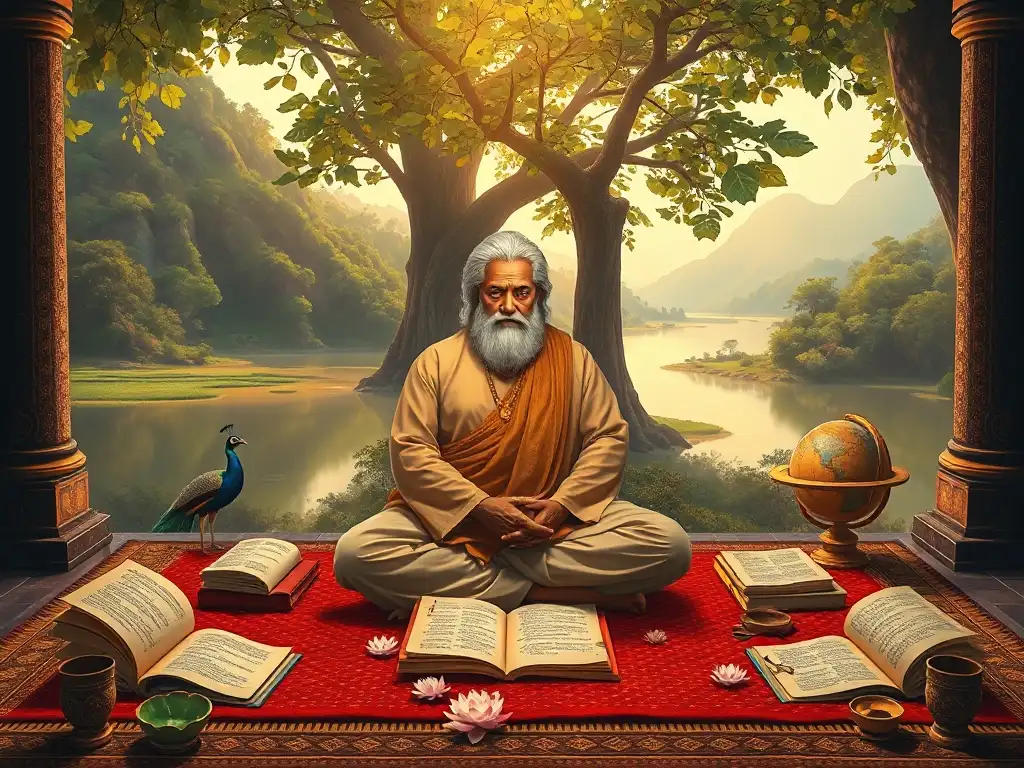
The Vedas are among the oldest sacred texts known to humanity, serving as a cornerstone for understanding ancient Indian civilization's religious, philosophical, and scientific thought. Comprising a vast body of knowledge, these texts are not merely religious hymns but also a repository of scientific insights that have significantly influenced various fields, including mathematics, astronomy, and medicine.
Their contributions to ancient Indian science are profound, showcasing a remarkable blend of spirituality and empirical inquiry that has shaped the Indian cultural landscape for millennia. In exploring the Vedas, we uncover a rich tapestry of ideas that not only reflect the beliefs of the time but also demonstrate an advanced understanding of the natural world, making them essential to the study of ancient Indian history and science.
Introduction to the Vedas
Overview of the Vedas and Their Significance
The Vedas, composed in Sanskrit, are a collection of texts that comprise four main texts: the Rigveda, Samaveda, Yajurveda, and Atharvaveda. Each Veda serves distinct purposes, ranging from hymns of praise and ritual instructions to philosophical inquiries. These texts are revered not only in Hinduism but are also pivotal in understanding the evolution of Indian thought and the broader spectrum of ancient sciences. The significance of the Vedas extends beyond their religious context; they encapsulate an extensive understanding of the cosmos, human life, and the laws of nature, offering insights that continue to inspire contemporary scientific exploration.
Historical Context of the Vedas in Ancient India
The Vedas are believed to have been composed during the Vedic period, which is generally dated from around 1500 BCE to 500 BCE. This era was marked by the development of early Indian society, characterized by a complex social structure, burgeoning philosophical thought, and the establishment of rituals that would later define Hindu practices.
The historical context of the Vedas reveals a society that was deeply engaged in understanding its environment through observation and reflection. This period laid the groundwork for significant advancements in various fields, including mathematics, astronomy, and medicine, all of which found early expression within Vedic texts.
The Vedas: Structure and Composition
Different Types of Vedas: Rigveda, Samaveda, Yajurveda, Atharvaveda
The four Vedas each have unique characteristics and functions:
- Rigveda: The oldest of the Vedas, it consists of hymns dedicated to various deities and is rich in philosophical and cosmological concepts.
- Samaveda: Known as the "Veda of melodies," it comprises chants and melodies that are integral to Vedic rituals.
- Yajurveda: This Veda provides prose mantras and instructions for rituals, acting as a guide for priests during ceremonies.
- Atharvaveda: Distinct from the other three, it contains hymns, spells, and incantations that reflect more on daily life and folk practices.
Each Veda contributes uniquely to the corpus of ancient Indian knowledge, highlighting different aspects of life and the natural world.
The Role of Vedic Texts in Ancient Indian Society
The Vedic texts played a crucial role in shaping ancient Indian society, influencing not only religious practices but also social norms and scientific thought. They served as a foundation for rituals and ceremonies, establishing a framework for social order. Furthermore, the principles outlined in the Vedas fostered a culture of inquiry and exploration that encouraged advancements in various scientific domains. The emphasis on observation and documentation in the Vedic texts laid the groundwork for future developments in mathematics, astronomy, and medicine, reflecting a sophisticated understanding of the world that resonates through the ages.
Contributions of the Vedas to Ancient Indian Science
The Vedas, the oldest sacred texts of Hinduism, are a treasure trove of knowledge that lays the foundation for various branches of science in ancient India. These texts, composed in Sanskrit, encompass a wide range of subjects including mathematics, astronomy, medicine, and environmental science. Their teachings not only reflect the scientific inquiries of the time but also illustrate the profound connection between spirituality and scientific thought in ancient Indian civilization. The contributions of the Vedas to ancient Indian science are vast and multifaceted, influencing various fields that continue to be relevant even today.
Astronomy and Mathematics in the Vedas
The Vedas contain significant astronomical information, particularly in the texts known as the Jyotisha, which focuses on the science of celestial bodies. The Rigveda, for example, mentions celestial phenomena, including the movements of the sun and the moon, which were critical for developing a calendar system. Ancient Indian astronomers calculated the length of the solar year to be approximately 365.25 days, showcasing a remarkable understanding of timekeeping.
Moreover, the Vedas laid the groundwork for mathematics, particularly in the areas of arithmetic and geometry. The concept of zero, which is fundamental to modern mathematics, has its roots in ancient Indian texts. The Sulba Sutras, associated with the Vedic tradition, contain rules for constructing altars that require geometric precision, demonstrating an advanced understanding of spatial reasoning and measurement. Thus, the Vedic contributions to astronomy and mathematics not only enriched ancient Indian science but also influenced later developments in these fields globally.
Medicine and Ayurveda: Vedic Foundations
The Vedas are instrumental in the establishment of Ayurveda, the ancient Indian system of medicine. The Atharvaveda, in particular, is a key text that outlines various medicinal herbs, treatments, and rituals aimed at promoting health and wellness. It emphasizes the importance of balance in bodily functions, which is central to Ayurvedic philosophy.
The Vedic texts also discuss various diseases and their cures, illustrating an early understanding of health and illness. Concepts such as the three doshas (Vata, Pitta, and Kapha) were foundational in categorizing individual health conditions and tailoring treatments accordingly. This holistic approach not only reflects a deep understanding of human physiology but also the interconnectedness of body, mind, and spirit in achieving well-being. The principles of Ayurveda derived from the Vedas continue to be practiced and revered today, showcasing their lasting impact on health sciences.
Agriculture and Environmental Science in the Vedas
Agriculture, a cornerstone of ancient Indian civilization, is deeply rooted in the teachings of the Vedas. The Rigveda contains hymns that describe agricultural practices, seasonal cycles, and the significance of various crops. The Vedic texts emphasize the relationship between humans and nature, advocating for sustainable farming practices that honor the earth.
The concept of environmental science is also present in the Vedas, as they promote the idea of coexisting harmoniously with nature. Rituals and practices outlined in these texts reflect an awareness of ecological balance, encouraging responsible stewardship of natural resources. This Vedic understanding of agriculture and environmental science laid the groundwork for sustainable practices that still resonate with modern ecological movements.
Philosophical and Metaphysical Contributions
The Vedas are not only scientific texts but also profound philosophical works that explore metaphysical concepts and the nature of existence. Their teachings address fundamental questions about life, consciousness, and the universe, contributing significantly to Indian philosophy.
The Vedas and the Concept of the Universe
One of the most striking contributions of the Vedas is their exploration of the cosmos. The concept of Brahman, or the ultimate reality, is central to Vedic philosophy. The Vedas describe the universe as an interconnected web of existence, where everything is part of a greater whole. This holistic view transcends mere scientific inquiry, delving into the spiritual dimensions of the universe.
The Vedic texts also introduce the idea of cyclical time, where the universe undergoes endless cycles of creation, preservation, and dissolution. This cyclical understanding aligns with modern scientific theories regarding the nature of the universe, reflecting an advanced level of philosophical thought that predates contemporary cosmology.
The Nature of Reality According to Vedic Philosophy
The Vedas articulate a complex understanding of reality that encompasses both the physical and metaphysical realms. The notion of Maya, or illusion, is a recurring theme, suggesting that the material world is transient and deceptive. This philosophical insight encourages individuals to seek deeper truths beyond the physical manifestations of reality.
Furthermore, the Vedic texts propose that the ultimate goal of human life is to attain self-realization and unity with Brahman. This pursuit of knowledge and understanding fosters a scientific spirit that encourages inquiry and exploration, making the Vedas a cornerstone of not only ancient Indian science but also of philosophical thought that continues to inspire seekers of truth across generations.
Comparing Vedic Science to Other Ancient Civilizations

The Vedas, as the foundational texts of ancient Indian civilization, present a unique approach to science that contrasts sharply with the methodologies of other ancient civilizations. While civilizations like Egypt and Greece made significant strides in various scientific fields, Vedic science encompasses a holistic view of knowledge that integrates spirituality, philosophy, and empirical observation. This comparison highlights the distinctiveness of Vedic contributions and their profound impact on the scientific discourse of the time.
Vedic Contributions vs. Ancient Egyptian Science
Ancient Egyptian science is often characterized by its advancements in mathematics, medicine, and engineering, particularly in the construction of monumental architecture such as the pyramids. The Egyptians utilized a systematic approach to geometry and astronomy, which served practical purposes in agriculture and navigation. In contrast, Vedic science, while also practical, focused heavily on the philosophical underpinnings of nature and existence.
The Vedas introduced concepts such as sankhya (enumeration) and jyotisha (astrology), which intertwined mathematical and astronomical principles with spiritual inquiries. For example, the Vedic texts detail the movements of celestial bodies and their influence on earthly events, emphasizing a cosmic relationship that was not as pronounced in Egyptian thought. Additionally, the medicinal knowledge reflected in the Atharva Veda, with its herbal remedies and rituals, showcases a more holistic understanding of health that integrates mind, body, and spirit, contrasting with the more empirical practices seen in ancient Egyptian medicine.
Vedic Knowledge in Relation to Ancient Greek Philosophy
The philosophical inquiries of the ancient Greeks, particularly those of Plato and Aristotle, laid the groundwork for Western scientific thought. Greek philosophers emphasized rationalism and empirical observation, seeking to explain natural phenomena through logic and debate. In this regard, Vedic knowledge shares some similarities, particularly in its pursuit of understanding the nature of reality and existence.
However, while Greek philosophy often separated science from spirituality, the Vedas maintained an intrinsic connection between the two. Concepts such as Dharma (duty/righteousness) and Karma (action and consequence) in the Vedic texts provide a moral context to scientific exploration, suggesting that true knowledge must consider ethical implications. Furthermore, the Upanishads, which are part of the Vedic literature, delve deeply into metaphysical questions, exploring the essence of consciousness and the universe, thereby influencing later philosophical discourse in both Eastern and Western traditions.
Legacy of Vedic Science in Modern India
The legacy of Vedic science continues to resonate in contemporary India, influencing various modern fields and cultural practices. This enduring impact is evident in the resurgence of interest in traditional knowledge systems, scientific methodologies rooted in Vedic principles, and the integration of spirituality into daily life.
Revival of Vedic Knowledge in Contemporary Science
In recent years, there has been a notable revival of Vedic knowledge within the context of modern science. Researchers and scholars are increasingly exploring the scientific principles encapsulated in the Vedas, particularly in fields such as mathematics, astronomy, and medicine. For instance, the mathematical concepts found in the Vedas, such as the decimal system and zero, have been recognized for their groundbreaking contributions to mathematics.
Moreover, initiatives aimed at integrating Vedic principles into contemporary scientific research promote a holistic approach to understanding natural phenomena. This revival is not merely an academic exercise; it is also a response to the challenges posed by modern science, where the need for ethical considerations and sustainable practices is becoming increasingly urgent.
Influence on Modern Indian Culture and Practices
The influence of Vedic science extends beyond academia into the cultural fabric of modern India. Traditional practices such as Ayurveda, a holistic system of medicine rooted in Vedic texts, continue to thrive, offering alternative health solutions that emphasize balance and harmony. Additionally, rituals and festivals often draw upon Vedic philosophies, celebrating the interconnectedness of life and the cosmos.
Cultural expressions, including music, dance, and art, frequently reflect Vedic themes, showcasing the ongoing relevance of these ancient texts. Furthermore, the resurgence of interest in yoga and meditation can be traced back to Vedic teachings, emphasizing the importance of self-awareness, mindfulness, and the pursuit of knowledge as a lifelong journey.
The Vedas' contributions to ancient Indian science not only laid the foundations for various disciplines but also established a rich legacy that continues to shape modern Indian thought and practice. The interplay between Vedic principles and contemporary scientific exploration exemplifies the enduring value of this ancient wisdom in addressing contemporary challenges.
Conclusion: The Enduring Relevance of Vedic Contributions
The Vedas, as the foundational texts of Hindu philosophy and spirituality, have made profound and lasting contributions to ancient Indian science. Their teachings not only encompass the metaphysical aspects of existence but also delve into practical applications that have influenced various fields such as mathematics, astronomy, medicine, and philosophy. The intricate understanding of natural phenomena and the human condition reflected in the Vedic texts exemplifies a sophisticated approach to science that was ahead of its time.
The methodologies and insights derived from the Vedas continue to inspire contemporary researchers and scholars, emphasizing the importance of a holistic approach to knowledge. The emphasis on observation, experimentation, and the interconnectedness of all forms of life in Vedic literature promotes a sustainable worldview that is increasingly relevant in today’s rapidly changing environment. As we explore the depths of ancient Indian science, it becomes evident that the Vedas are not merely historical texts, but living documents that continue to inform and shape scientific inquiry.
Summary of Key Contributions of the Vedas to Ancient Indian Science
The contributions of the Vedas to ancient Indian science can be categorized into several key areas:
- Mathematics: The Vedic texts introduced concepts such as zero, the decimal system, and advanced arithmetic operations. The Sulba Sutras, for instance, provided geometric principles used in constructing altars, showcasing early applications of mathematics in engineering.
- Astronomy: The Vedas contain extensive observations of celestial bodies, detailed calendars, and principles of timekeeping. The Jyotisha (astrology) portions of the Vedas offered frameworks for understanding planetary motions and eclipses, laying groundwork for future astronomical studies.
- Medicine: The Atharva Veda includes references to medicinal herbs and healing practices, forming a basis for Ayurveda, one of the oldest systems of medicine in the world. This text emphasizes the holistic connection between the body, mind, and environment.
- Philosophy and Metaphysics: Vedic philosophy introduced concepts such as the nature of existence (Brahman), consciousness, and the universe's interconnectedness. These ideas have influenced not only scientific thought but also ethical and metaphysical inquiries into the nature of reality.
Through these contributions, the Vedas have played a pivotal role in shaping the scientific landscape of ancient India, reflecting a deep understanding of both theoretical and practical aspects of science.
The Importance of Preserving Vedic Knowledge Today
Preserving Vedic knowledge is crucial for several reasons:
- Cultural Heritage: The Vedas represent a significant aspect of India’s cultural and spiritual heritage. Understanding and preserving these texts helps maintain a connection to the past, enriching contemporary cultural identity.
- Interdisciplinary Insights: The Vedic texts intertwine science, philosophy, and spirituality, offering interdisciplinary insights that can inform modern disciplines. As we face complex global challenges, integrating ancient wisdom with contemporary science can lead to innovative solutions.
- Sustainable Practices: The ecological wisdom embedded in Vedic teachings promotes sustainable living practices. By applying these principles, societies can work towards a more sustainable future that respects both nature and humanity.
- Educational Value: Incorporating Vedic knowledge into educational curricula can foster critical thinking, scientific inquiry, and ethical reasoning among students. This educational approach can cultivate a generation equipped to tackle future challenges with a balanced perspective.
Preserving Vedic knowledge is not only about safeguarding ancient texts but also about recognizing their ongoing relevance in a rapidly evolving world. The Vedas continue to offer valuable lessons that can guide humanity towards a more enlightened and harmonious existence.
- Introduction to the Vedas
- The Vedas: Structure and Composition
- Contributions of the Vedas to Ancient Indian Science
- Philosophical and Metaphysical Contributions
- Comparing Vedic Science to Other Ancient Civilizations
- Legacy of Vedic Science in Modern India
- Conclusion: The Enduring Relevance of Vedic Contributions
Frequently Asked Questions
What are the Vedas in ancient Indian history?
The Vedas are a collection of ancient Indian texts that form the foundation of Hindu philosophy and spirituality, encompassing hymns, rituals, and philosophical teachings.
How did the Vedas contribute to ancient Indian science?
The Vedas significantly influenced ancient Indian science by laying the groundwork for astronomy, mathematics, and medicine through their texts on cosmology and natural phenomena.
What role did the Vedas play in shaping Indian culture?
The Vedas played a crucial role in shaping cultural practices, rituals, and social structures, establishing a framework for religious and philosophical thought in ancient India.
Are the Vedas still relevant in modern times?
Yes, the Vedas continue to be relevant today, providing insights into ancient knowledge systems and influencing contemporary spiritual practices and philosophies.
What is the significance of the Vedic period in ancient Indian civilization?
The Vedic period marked a significant transition in ancient Indian civilization, characterized by the development of language, literature, and a deeper understanding of nature and the universe.
Final Reflection: The Enduring Legacy of the Vedas in Ancient Indian Science
The Vedas stand as monumental texts that not only shaped the spiritual landscape of ancient India but also laid the groundwork for scientific inquiry and understanding. Their contributions to fields such as mathematics, astronomy, and medicine resonate profoundly in today's world, where the quest for knowledge continues to drive innovation and discovery. The wisdom encapsulated in these ancient scriptures reminds us that the pursuit of truth is timeless and universal.
Culturally and socially, the Vedas have influenced generations, fostering a deep appreciation for the interconnectedness of science and spirituality. Their teachings encourage a holistic view of the universe, where empirical observation and metaphysical inquiry coexist. As Albert Einstein once said, "> A human being is a part of the whole called by us universe, a part limited in time and space.
He experiences himself, his thoughts and feeling as something separated from the rest—a kind of optical delusion of his consciousness." This perspective echoes the Vedic philosophy that emphasizes unity and the search for deeper truths, shaping not only scientific thought but also our understanding of existence itself.
As we reflect on the contributions of the Vedas to ancient Indian science, let us embrace the lessons they impart. Consider how you can integrate this ancient wisdom into your own life and pursuits. Whether through fostering a sense of curiosity, embracing interdisciplinary learning, or seeking harmony between knowledge and spirituality, the Vedas invite us to explore the world with open hearts and minds. In doing so, we honor their legacy and contribute to a future where science and spirituality enrich one another, guiding us toward a more profound understanding of ourselves and the universe.
Unlock the Wisdom of the Vedas Today!
Thank you for taking the time to explore the profound contributions of the Vedas to ancient Indian science! By delving into this rich heritage, you've uncovered a treasure trove of knowledge that shaped not only India but the world. Now, it's time to put that inspiration into action!
Here are a few simple steps you can take to deepen your understanding and share this wisdom:
- Dive Deeper: Read a Vedic text or a commentary by a renowned scholar to expand your perspective on ancient science.
- Join the Conversation: Engage with fellow enthusiasts on forums or social media groups dedicated to ancient wisdom and scientific principles.
- Spread the Knowledge: Share this article with friends and family to ignite interest in the Vedas and their significance in our lives today.
Which insights from the Vedas resonate with you the most, and how can you apply them in your daily life to create a meaningful impact?