
The Influence of the Pali Canon: Key Figures Behind Its Preservation

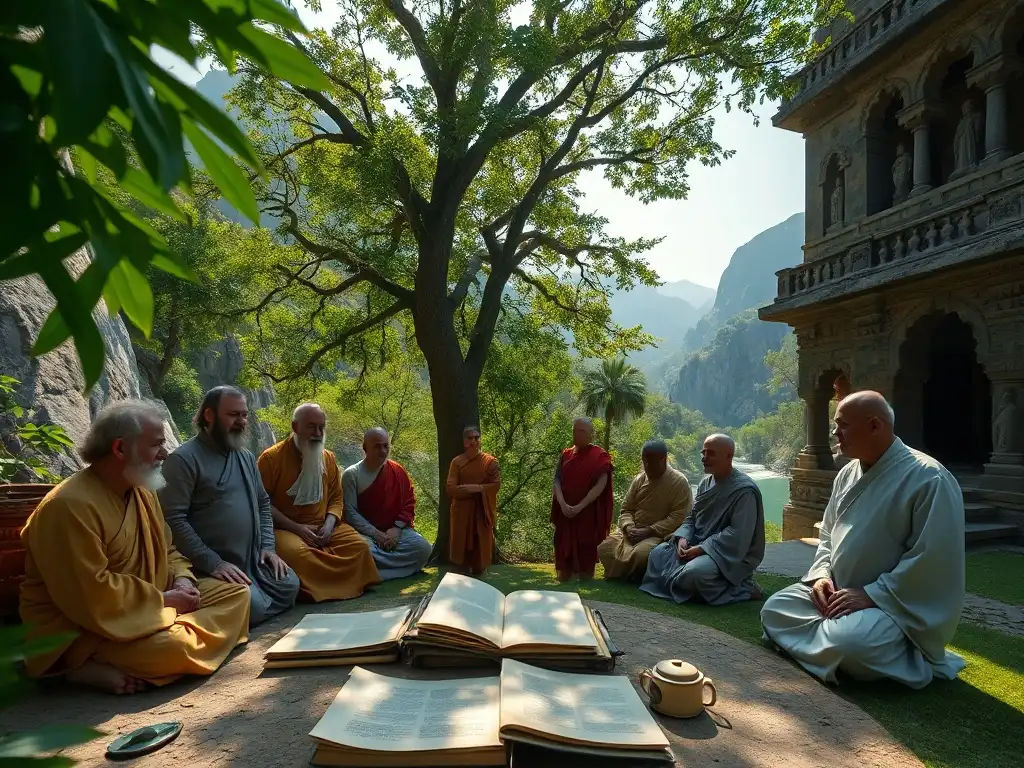
Welcome to Ancient India History, where we embark on a fascinating journey through the rich tapestry of ancient Indian civilizations. Today, we delve into the pivotal role of the Pali Canon preservation in India, a remarkable testament to the enduring legacy of Buddhist teachings. Discover the key figures and their incredible influence in safeguarding these ancient texts, shaping not just religious thought but the very fabric of Indian culture.
What secrets do these texts hold? Join us as we unravel the stories behind their preservation and explore the profound impact they've had on the spiritual landscape of India. Your adventure into the depths of ancient wisdom begins here!

Introduction to the Pali Canon
The Pali Canon, also known as the Tipitaka, stands as one of the most significant collections of scriptures in the Buddhist tradition. Its preservation in India is a testament to the profound impact of ancient Indian civilizations on the evolution of Buddhism and its teachings.
This article delves into the key figures who played a pivotal role in the preservation of the Pali Canon, highlighting their contributions and the historical context in which they operated. Understanding the nuances of Pali Canon preservation in India not only enriches our knowledge of Buddhism but also illuminates the interconnectedness of religion, culture, and history in ancient Indian society.
What is the Pali Canon?
The Pali Canon is a comprehensive collection of texts that form the doctrinal foundation of Theravada Buddhism. It is divided into three "baskets" (pitaka):
- Vinaya Pitaka: Rules and regulations for monastic discipline.
- Sutta Pitaka: Discourses attributed to the Buddha and his close disciples.
- Abhidhamma Pitaka: Philosophical and doctrinal analyses.
The Pali language, in which these texts were originally composed, serves as a critical link to understanding the teachings of the Buddha. The Pali Canon is revered for its direct connection to the historical Buddha, Siddhartha Gautama, and is essential for scholars and practitioners alike.
Importance of the Pali Canon in Buddhism
The Pali Canon holds immense significance within Buddhism for several reasons:
- Authenticity: It is considered the earliest complete record of the Buddha's teachings.
- Guidance: It provides comprehensive guidance on ethical conduct, meditation practices, and philosophical insights.
- Cultural Heritage: It is a vital part of the cultural heritage of countries where Theravada Buddhism is practiced, influencing art, literature, and education.
The preservation of the Pali Canon has ensured that the teachings of the Buddha remain accessible to future generations, fostering a continuous tradition of learning and spiritual development.
Overview of Pali Canon Preservation in India
The preservation of the Pali Canon in India was influenced by various historical, cultural, and religious factors. Key figures, such as monks, scholars, and royal patrons, contributed to its safeguarding and dissemination. Their efforts included:
- Oral Traditions: Initially, the teachings were transmitted orally, ensuring their accuracy before being written down.
- Scriptural Translations: With the spread of Buddhism, translations into other languages helped preserve its teachings.
- Monastic Institutions: Monasteries served as crucial centers for the study and preservation of the Pali texts.
This multifaceted approach to preservation highlights the collaborative efforts of various stakeholders in maintaining the integrity of the Pali Canon throughout history.
Historical Context of the Pali Canon
Origins of the Pali Canon
The origins of the Pali Canon can be traced back to the early centuries following the Buddha's enlightenment around the 5th century BCE. Initially, teachings were transmitted orally among his followers. After the Buddha's death, the First Buddhist Council was convened, leading to the formal compilation of the teachings, marking the beginning of the Pali Canon's formation.
The Role of Ancient Indian Civilizations in Buddhism
Ancient Indian civilizations played a crucial role in the development and dissemination of Buddhism. The Mauryan Empire, particularly under Emperor Ashoka, was instrumental in promoting Buddhist teachings across India and beyond. Ashoka's edicts, which emphasized moral conduct and the support of monastic communities, facilitated the growth of Buddhism and the preservation of its texts.
The Spread of Buddhism and Its Texts in Ancient India
Buddhism spread rapidly throughout ancient India and later to other parts of Asia. The establishment of monastic universities, such as Nalanda and Takshashila, became centers of learning where the Pali Canon was studied and preserved. These institutions attracted scholars and monks from various regions, further contributing to the richness of Buddhist literature and its teachings.
By understanding the historical significance and preservation efforts surrounding the Pali Canon, we can appreciate the dedication and influence of key figures in ensuring that this foundational text continues to inspire and guide countless individuals in their spiritual journeys.
Key Figures in the Preservation of the Pali Canon
The preservation of the Pali Canon, a collection of scriptures central to Theravada Buddhism, owes much to a number of key figures and communities throughout history. These individuals and groups played crucial roles in ensuring that the teachings of the Buddha were meticulously recorded, transmitted, and safeguarded against the ravages of time, political turmoil, and cultural shifts. Their contributions are indispensable in the study of Buddhism and the understanding of its evolution in ancient India and beyond.
The Role of Monastic Communities
Monastic communities were pivotal in the preservation of the Pali Canon. After the death of the Buddha, it was the monks who took on the responsibility of memorizing and reciting his teachings. These communities, particularly the Sangha, operated as centers of learning and spiritual practice, where the oral tradition flourished. The monks dedicated themselves to rigorous training to ensure the accuracy of the teachings being passed down.
The First Council, convened shortly after the Buddha's death, is a significant event in this context. During this council, prominent monks, including Mahakasyapa, gathered to compile and standardize the teachings, thus laying the groundwork for the Pali Canon. This emphasis on oral transmission helped maintain the integrity of the texts, as monks would regularly recite and verify each other's recitations.
Prominent Scholars and Their Contributions
Several prominent scholars emerged throughout history who significantly contributed to the preservation and interpretation of the Pali Canon. Notable figures include:
- Buddhaghosa: A 5th-century scholar and commentator, Buddhaghosa played a crucial role in synthesizing and interpreting the teachings of the Pali Canon. His work, the Visuddhimagga (Path of Purification), not only elucidated the texts but also provided a framework for understanding Buddhist doctrine and practice.
- Dhammapala: Another important figure, Dhammapala, was known for his commentaries on the Visuddhimagga and various other Pali texts. His contributions helped preserve the understanding of the Pali Canon and facilitated its transmission across generations.
- The Sri Lankan Monastic Tradition: Monks in Sri Lanka, particularly during the Anuradhapura period, played an instrumental role in safeguarding the Pali Canon. They established monastic universities, such as the one in Mahavihara, which became hubs of scholarship and learning.
Methods of Preservation of the Pali Canon
The methods employed for the preservation of the Pali Canon were diverse and adaptive to the challenges faced over centuries. These methods not only involved oral traditions but also included the use of written texts and institutional support to ensure the continuity of the teachings.
Oral Tradition and Its Impact on Preservation
The oral tradition was the cornerstone of the Pali Canon's preservation for centuries. Monks would memorize extensive passages and engage in recitation, which created a robust system of checks and balances to maintain accuracy. The practice of chanting was not merely a memorization technique; it was also a spiritual exercise that fostered deep connections to the teachings.
This oral tradition served multiple purposes:
- Community Engagement: Regular communal chanting sessions reinforced the teachings within the community and encouraged participation in the preservation process.
- Adaptability and Resilience: The oral tradition allowed for adaptations in various cultural contexts, ensuring that the teachings remained relevant and accessible to diverse audiences.
Manuscript Copying and Scriptural Accuracy
With the advent of writing, the Pali Canon began to be transcribed into manuscripts. This transition to written form was crucial for safeguarding the texts, especially as oral traditions faced challenges during periods of political instability or external invasions.
Monastic scribes meticulously copied texts by hand, often working within scriptural standards that prioritized accuracy. Techniques such as:
- Use of Palis: The Pali script became a standardized form for recording the texts, contributing to the uniformity and clarity of the Canon.
- Cross-verification: Scribes would often cross-check their work against existing manuscripts, ensuring that errors were minimized and the integrity of the texts was upheld.
The Role of Temples and Monasteries in Safeguarding Texts
Temples and monasteries emerged as sanctuaries for the preservation of the Pali Canon. These institutions provided not only a physical space for the texts but also a community dedicated to their study and dissemination.
Key aspects of their roles included:
- Storage and Protection: Temples housed manuscripts in secure environments, protecting them from environmental damage and political upheaval.
- Educational Institutions: Many monasteries became centers of learning where monks were trained in the Pali language and scriptural interpretation, ensuring a continuous flow of knowledge and expertise.
- Cultural Continuity: By integrating the Pali Canon into rituals and daily practices, these institutions helped maintain its relevance within the broader cultural and religious landscape of ancient India.
The preservation of the Pali Canon in India is a testament to the dedication and resilience of various key figures and communities throughout history. From monastic practices to scholarly contributions, these efforts have ensured that the teachings of the Buddha continue to inform and inspire generations.
Challenges Faced in the Preservation of the Pali Canon

The preservation of the Pali Canon has been a complex journey fraught with numerous challenges throughout history. These obstacles have stemmed from various factors, including historical threats to its textual integrity, the impact of political and cultural changes, and modern challenges that continue to affect its preservation efforts. Understanding these challenges is crucial in recognizing the resilience of the Buddhist tradition and the importance of the Pali Canon in the spiritual lives of practitioners.
Historical Threats to Textual Integrity
Historically, the Pali Canon faced significant threats that jeopardized its integrity. One of the primary concerns was the oral tradition that preceded its written form. As the teachings of the Buddha were transmitted orally, the risk of misinterpretation and distortion was prevalent. Even slight variations in pronunciation or phrasing could lead to considerable changes in meaning.
The advent of foreign invasions, such as the arrival of the Greeks and later the Islamic conquests, further complicated matters. During these periods, Buddhist monasteries, which served as vital centers for preserving Buddhist texts, faced destruction and loss. Many manuscripts were lost, burned, or taken away, leading to gaps in the transmission of the Pali Canon. The efforts to standardize and compile the texts were challenged by these external threats, necessitating a continuous struggle to maintain the authenticity of the teachings.
The Impact of Political and Cultural Changes
Political and cultural upheavals also played a crucial role in the preservation of the Pali Canon. As Buddhism began to decline in India, particularly around the 12th century, many of its texts became less prioritized. The rise of other religions, such as Hinduism and Islam, led to a gradual neglect of Buddhist scriptures, including the Pali Canon.
Moreover, the changing cultural landscape influenced the relevance of the texts. As local customs and beliefs evolved, the teachings of the Pali Canon were often overshadowed by newer interpretations and practices. This cultural shift caused many monks and scholars to focus on preserving texts that aligned more closely with the prevailing beliefs, leading to a decline in the emphasis on the Pali Canon. The transition from a predominantly Buddhist society to one that was more diverse in religious thought contributed to the challenges faced in maintaining the integrity of these ancient texts.
Modern Challenges in Pali Canon Preservation
In contemporary times, the preservation of the Pali Canon is still met with challenges. One significant issue is the digitization of texts. While technology offers an opportunity for broader access and preservation, it also raises concerns about authenticity and the potential for misinformation. The Pali Canon's texts need careful digitization processes to ensure accuracy and to avoid the pitfalls of misrepresentation.
Additionally, there is an ongoing struggle for funding and resources dedicated to the preservation of these texts. Many monasteries and academic institutions that house Pali Canon manuscripts are often underfunded, leading to inadequate preservation measures. The need for trained professionals in manuscript conservation is also critical, as many manuscripts require specialized care to prevent deterioration.
Furthermore, the globalization of Buddhism has led to a dilution of traditional practices. As the Pali Canon becomes more accessible to a diverse audience, interpretations may vary, and cultural contexts may be lost. This modern challenge emphasizes the need for a balanced approach that honors traditional teachings while allowing for contemporary relevance.
The Legacy of the Pali Canon in Modern Buddhism
Despite the challenges faced, the Pali Canon has left an indelible mark on modern Buddhism, continuing to influence practitioners and scholars alike. Its legacy is evident in various aspects of contemporary Buddhist practice and education.
Influence on Contemporary Buddhist Practices
The Pali Canon remains a foundational text for Theravada Buddhism and significantly influences contemporary Buddhist practices. Many meditation techniques, ethical guidelines, and philosophical discussions are rooted in the teachings found within the Canon.
For instance, the Four Noble Truths and the Noble Eightfold Path, core components of Buddha's teachings, are extensively referenced in modern meditation retreats and Buddhist centers. Practitioners often draw upon the Pali Canon to deepen their understanding of these concepts and integrate them into their daily lives, fostering a spiritual practice that is both authentic and transformative.
The Pali Canon and Its Role in Buddhist Education
In the realm of Buddhist education, the Pali Canon serves as a cornerstone for many monastic and lay educational programs. It is essential in training monks and nuns, who study the texts rigorously to uphold the teachings of the Buddha. The Canon provides a comprehensive framework for understanding Buddhist philosophy, ethics, and practice.
Many modern universities and institutions offer courses on the Pali Canon, emphasizing its relevance in both historical and contemporary contexts. This educational focus helps to ensure that future generations of practitioners and scholars maintain a connection to the Canon, fostering a deeper appreciation of its teachings and encouraging continued study and interpretation.
Ongoing Efforts to Preserve the Pali Canon Today
Today, various organizations and academic institutions are dedicated to the preservation and promotion of the Pali Canon. Collaborative efforts between Buddhist monasteries, universities, and cultural preservation societies aim to digitize, translate, and disseminate the texts more widely. These initiatives not only safeguard the Canon for future generations but also enhance its accessibility for practitioners around the world.
Moreover, community engagement and outreach programs are increasingly important in raising awareness about the Pali Canon's significance. Workshops, seminars, and public lectures help to foster dialogue among scholars, practitioners, and the general public, highlighting the relevance of the Canon in addressing contemporary issues and spiritual inquiries.
While the preservation of the Pali Canon faces numerous challenges, its enduring legacy continues to shape Buddhist practices and education. Through ongoing efforts and a commitment to authenticity, the teachings of the Pali Canon remain vital in the spiritual lives of countless individuals across the globe.
Conclusion
The preservation of the Pali Canon stands as a monumental achievement in the history of Buddhism and ancient Indian culture. This sacred text, which contains the teachings of the Buddha, has not only shaped the spiritual landscape of the region but has also influenced a wide array of philosophical, artistic, and cultural developments. The key figures involved in its preservation played pivotal roles in ensuring that these teachings were meticulously recorded, transmitted, and maintained through centuries of change and turmoil.
Recap of Key Figures and Their Influence
Throughout history, several notable individuals have been instrumental in the preservation of the Pali Canon. Among them are:
- Emperor Ashoka: His commitment to spreading Buddhism and establishing monastic communities helped secure the Canon's texts' survival. He commissioned the translation of the scriptures and promoted their dissemination across his empire.
- Ven. Mahinda: As the son of Ashoka, Mahinda was crucial in introducing Buddhism to Sri Lanka, ensuring that the Pali Canon found a new home where it could flourish away from the Indian subcontinent's disruptions.
- The Theravada Monastic Community: Monks such as Ven. Buddhaghosa and other scholars were vital in copying, commenting on, and teaching the Canon. Their efforts helped maintain the texts’ integrity and accessibility for future generations.
These figures exemplify the collaborative effort needed to preserve such an important aspect of ancient Indian history, showcasing the blend of royal patronage and monastic dedication.
The Importance of Continued Preservation Efforts
The significance of the Pali Canon extends beyond its historical context; it continues to be a living tradition that offers insights into ethical living, meditation practices, and philosophical inquiry. Continued efforts for its preservation are essential for several reasons:
- Cultural Heritage: The Pali Canon is a cornerstone of not only Buddhist literature but also of Indian cultural identity. Its teachings and values resonate in various aspects of life, making its preservation vital for cultural continuity.
- Academic Study: Scholars from diverse fields examine the Pali Canon for insights into ancient Indian society, language, and thought. Preserving these texts allows for ongoing research that can lead to new understandings of historical contexts and influences.
- Spiritual Guidance: For practitioners of Buddhism, the Pali Canon serves as a foundational text that guides their spiritual journey. Its preservation ensures that future generations can access these teachings in their original form.
Final Thoughts on the Pali Canon's Legacy in Ancient Indian History
The legacy of the Pali Canon in ancient Indian history is profound and multifaceted. It not only encapsulates the teachings of the Buddha but also reflects the historical dynamics of the Indian subcontinent, including the interplay between religion, politics, and culture. The efforts of key figures in its preservation demonstrate a commitment to safeguarding wisdom that transcends time and geographical boundaries.
As we reflect on the Pali Canon's enduring influence, it is imperative to recognize the importance of both historical understanding and contemporary efforts in preserving these texts. The legacy of the Pali Canon is not merely an artifact of the past; it is a living tradition that continues to grow and adapt, offering valuable lessons and insights for future generations. The work of preserving it is essential, ensuring that the wisdom of ancient India remains accessible and relevant in an ever-changing world.
- Introduction to the Pali Canon
- Historical Context of the Pali Canon
- Key Figures in the Preservation of the Pali Canon
- Methods of Preservation of the Pali Canon
- Challenges Faced in the Preservation of the Pali Canon
- The Legacy of the Pali Canon in Modern Buddhism
- Conclusion
Frequently Asked Questions
What is the Pali Canon?
The Pali Canon is a collection of Buddhist scriptures that form the doctrinal foundation of Theravada Buddhism. It includes teachings attributed to Buddha and is crucial for understanding early Buddhist thought.
Why is the preservation of the Pali Canon important in India?
The preservation of the Pali Canon in India is significant as it reflects the cultural heritage and spiritual practices of ancient Indian civilizations. It helps maintain the continuity of Buddhist teachings and influences modern Buddhist communities.
Who were the key figures in the preservation of the Pali Canon?
Key figures in the preservation include monks and scholars such as Buddhaghosa and Dhammapala, who played vital roles in translating and commentating on the texts, ensuring their survival through centuries.
How did the Pali Canon influence Indian culture?
The Pali Canon greatly influenced Indian culture by promoting Buddhist philosophy, art, and architecture. Its teachings contributed to the ethical and social values that shaped Indian civilization.
What challenges did the Pali Canon face during its preservation?
The Pali Canon faced challenges such as political upheavals, the decline of Buddhism in India, and competition from other religious texts. Despite this, dedicated monastic communities worked tirelessly to safeguard its teachings.
Final Reflection: The Enduring Legacy of the Pali Canon Preservation
The preservation of the Pali Canon in India is not merely a historical footnote; it is a testament to the resilience of cultural heritage and spiritual wisdom. As we navigate an increasingly complex world, the teachings encapsulated within the Pali Canon continue to resonate, offering insights into mindfulness, ethics, and the nature of suffering. The efforts of key figures in its preservation remind us that the past is not lost; it lives on through the teachings we choose to uphold and share.
Culturally and socially, the Pali Canon has shaped not only Buddhist thought but also broader philosophical discussions in India and beyond. Its influence extends into contemporary dialogues on mental well-being and ethical living, highlighting the relevance of ancient wisdom in modern contexts. As the scholar Bhikkhu Bodhi once said, The Dhamma is a treasure that can be shared without diminishing.
This notion underscores the importance of preserving such texts, as they provide a foundation for compassion and understanding in our diverse world.
As we reflect on the significance of the Pali Canon and its preservation, I invite you to consider how these teachings can enrich your own life. What lessons can you draw from its pages to navigate your personal challenges and contribute positively to your community? Embrace the wisdom of the past as a guiding light for the future, and let the legacy of the Pali Canon inspire you to cultivate mindfulness, compassion, and resilience in your daily journey.
Unveil the Legacy of the Pali Canon Today!
Thank you for embarking on the incredible journey of the Pali Canon and its preservation. Your interest has not only deepened your understanding of this critical religious text but also connected you with a rich tapestry of history and culture.
Now, it's your turn to take meaningful action:
- Explore further: Delve into additional resources on influential figures in the Pali tradition—uncover their teachings and insights that have shaped Buddhist philosophy.
- Share your knowledge: Engage with friends or community members about the impact of the Pali Canon. Start a discussion or recommend insightful books that explore its significance in greater depth.
- Join a community: Participate in forums or groups that discuss ancient texts and their relevance today, enriching your perspective through dialogue with others who share your interests.
What aspect of the Pali Canon intrigues you the most, and how do you envision its influence shaping our understanding of spirituality in contemporary society?