
The Historical Significance of Jain Councils: Preserving Teachings and Texts


Welcome to Ancient India History, where we embark on a captivating journey through the vast and vibrant tapestry of ancient Indian civilizations. As we delve into the historical significance of Jain councils, you'll uncover how these gatherings played a pivotal role in preserving the teachings and texts that shaped the spiritual landscape of ancient India. What secrets did these councils hold, and how did they influence the development of Jainism? Join us as we explore this fascinating chapter of history, sparking your curiosity and inviting you to discover the profound impact of Jain traditions on our world today.

The Jain councils hold a pivotal place in the preservation and propagation of Jain teachings, texts, and traditions. These gatherings, which have occurred throughout the history of Jainism, not only served as platforms for discussion and debate among learned scholars but also played a key role in safeguarding the core principles of Jain philosophy.
As we delve into the historical significance of these councils, we will explore their contributions to the continuity of Jainism from its inception to the present day, highlighting their impact on religious practices, textual preservation, and community cohesion. Understanding the role of Jain councils provides insights into how this ancient religion has navigated the complexities of time, culture, and doctrinal challenges.
Introduction to Jain Councils and Their Importance
The concept of councils in Jainism is deeply rooted in the tradition's commitment to maintaining the integrity of its teachings. These councils have been instrumental in addressing doctrinal disputes, updating commentaries, and ensuring that the teachings of Mahavira, the 24th Tirthankara, are accurately transmitted through generations. The importance of these councils lies not only in their role as mediators and decision-makers but also in their status as custodians of Jain literature and philosophy.
Overview of Jainism and Its Core Principles
Jainism, one of the oldest religions in the world, emphasizes the principles of ahimsa (non-violence), anekantavada (non-absolutism), and aparigraha (non-possessiveness). The teachings of Jainism encourage followers to lead a life of compassion, truthfulness, and restraint. By adhering to these core principles, Jains strive for liberation (moksha) from the cycle of birth and death (samsara). The councils serve as critical venues for reiterating these values and ensuring their relevance in changing sociocultural landscapes.
Significance of Councils in Jain Tradition
Jain councils have historically served multiple purposes:
- Textual Preservation: They have been responsible for compiling, editing, and preserving the Jain scriptures, ensuring that the teachings remain unaltered.
- Doctrinal Clarification: Councils often address and resolve theological disputes, providing clarity and unity within the community.
- Community Building: These gatherings foster a sense of belonging and collective identity among Jains, reinforcing their shared beliefs and practices.
Historical Context of Jain Councils
The history of Jain councils is a testament to the resilience and adaptability of Jainism. Over centuries, these councils have emerged in response to various challenges, both internal and external, affecting the community.
Early Jain Councils: Origins and Establishment
The earliest councils date back to the time shortly after Mahavira's nirvana (liberation). These initial gatherings were crucial for the consolidation of Jain teachings and the establishment of a structured community. It is during these formative years that the first texts, including the Agamas, were compiled, laying the foundation for future councils.
Major Jain Councils Throughout History
Throughout history, several significant councils have shaped Jainism, each responding to specific challenges:
- The First Jain Council (around 300 BCE): Convened under the leadership of Sthulibhadra, this council aimed to compile the teachings following Mahavira's death.
- The Second Jain Council (around 4th century CE): This council sought to address the growing schisms within the community, leading to the establishment of the Digambara and Svetambara sects.
- The Modern Councils: In the 20th century, several councils have focused on revitalizing Jain teachings and addressing contemporary issues facing the community.
The ongoing significance of Jain councils lies in their ability to adapt to the times while remaining rooted in the profound teachings of Jainism. As we continue to explore their historical significance, we will uncover the profound impact these councils have had on the preservation of Jain identity, philosophy, and culture.
Key Objectives of Jain Councils
Jain councils have played a pivotal role in the historical narrative of Jainism, serving as forums for deliberation and decision-making. The key objectives of these councils include the preservation of teachings, the formation of a unified canon, and the resolution of doctrinal disputes. By bringing together prominent monks, scholars, and lay followers, these councils aimed to reinforce the core tenets of Jain philosophy while adapting to the evolving socio-religious landscape of ancient India.
The councils were critical in establishing a structured approach to the transmission of Jain teachings. They sought to address inconsistencies in interpretations and practices, thereby fostering a sense of unity among practitioners. Through collective dialogue, the councils aimed to ensure that the Jain community remained steadfast in its commitment to the principles of non-violence, truth, and asceticism.
Preservation of Jain Texts and Scriptures
One of the primary objectives of Jain councils was the preservation of Jain texts and scriptures. The councils were instrumental in compiling, editing, and codifying ancient texts, ensuring that the teachings of Tirthankaras were accurately transmitted to future generations. This effort was particularly crucial during times of political upheaval and cultural transformation when oral traditions faced the risk of distortion or loss.
The councils meticulously reviewed existing texts, cross-referencing them with oral traditions and the teachings of acknowledged scholars. This process led to the establishment of a standardized canon, which included significant scriptures such as the Agamas and the Tattvartha Sutra. The preservation of these texts not only safeguarded the spiritual heritage of Jainism but also provided a foundation for philosophical discourse within the community.
Promotion of Jain Philosophy and Ethics
In addition to preserving texts, Jain councils played a vital role in promoting Jain philosophy and ethics. These gatherings served as platforms for discussing the fundamental principles of Jainism, such as ahimsa (non-violence), aparigraha (non-possessiveness), and anekantavada (non-absolutism). By fostering an environment of intellectual exchange, councils encouraged the dissemination of these core values among followers and the wider society.
Through their deliberations, councils emphasized the importance of ethical conduct and spiritual discipline, aligning community practices with the philosophical underpinnings of Jainism. This promotion of ethics not only reinforced individual practitioners' commitment to their faith but also enhanced the social standing of Jains in the broader socio-religious context of ancient India.
Resolving Doctrinal Disputes and Unifying Practices
Jain councils served as mediators in resolving doctrinal disputes that arose within the community. Differences in interpretation of texts and practices often led to sectarian divisions, which threatened the unity of Jainism. The councils provided a structured environment for dialogue, enabling leaders and scholars to address contentious issues and find common ground.
By fostering consensus on key theological matters, councils contributed to the unification of practices across different Jain sects. This process of reconciliation ensured that diverse interpretations could coexist while preserving the essence of Jain teachings. The outcome was a more cohesive community, which could collectively navigate the challenges posed by external influences and internal dissent.
The Impact of Jain Councils on Jainism
The impact of Jain councils on the development of Jainism cannot be overstated. Their influence extends beyond the preservation of texts and teachings, shaping the very fabric of Jain community life and its interactions with other religious traditions.
Influence on Jain Literature and Canon Formation
The councils significantly influenced Jain literature and the formation of the Jain canon. By establishing a systematic approach to the compilation of scriptures, they ensured that key texts were preserved and disseminated widely among followers. This effort laid the groundwork for a rich literary tradition that would flourish in subsequent centuries.
The canonization process also allowed for the inclusion of various commentaries and interpretations, enriching the spiritual and philosophical discourse within Jainism. As a result, the literature produced during and after the councils became instrumental in educating new generations of Jains and facilitating a deeper understanding of their faith.
Role in Shaping Jain Community Practices
Jain councils played a crucial role in shaping community practices and rituals. By fostering discussions about ethical living and spiritual discipline, these councils helped standardize practices related to worship, fasting, and communal gatherings. This standardization not only reinforced a sense of identity among Jains but also promoted communal harmony.
Additionally, the councils' emphasis on ethical conduct influenced the development of social norms and values within the Jain community. Rituals and practices were aligned with the philosophical tenets of Jainism, creating a cohesive spiritual framework that guided practitioners in their daily lives.
Interaction with Other Ancient Indian Religions
The councils also facilitated interactions between Jainism and other ancient Indian religions, such as Buddhism and Hinduism. Through dialogues and debates, Jain leaders engaged with scholars and practitioners from these traditions, leading to a rich exchange of ideas and beliefs.
This interaction often resulted in the adaptation of certain practices and philosophical concepts, enriching Jainism while maintaining its unique identity. The councils' efforts to promote non-violence and ethical living resonated with broader spiritual movements of the time, highlighting the interconnectedness of ancient Indian religious traditions and their collective contributions to the cultural landscape.
The Role of Jain Councils in Modern Times
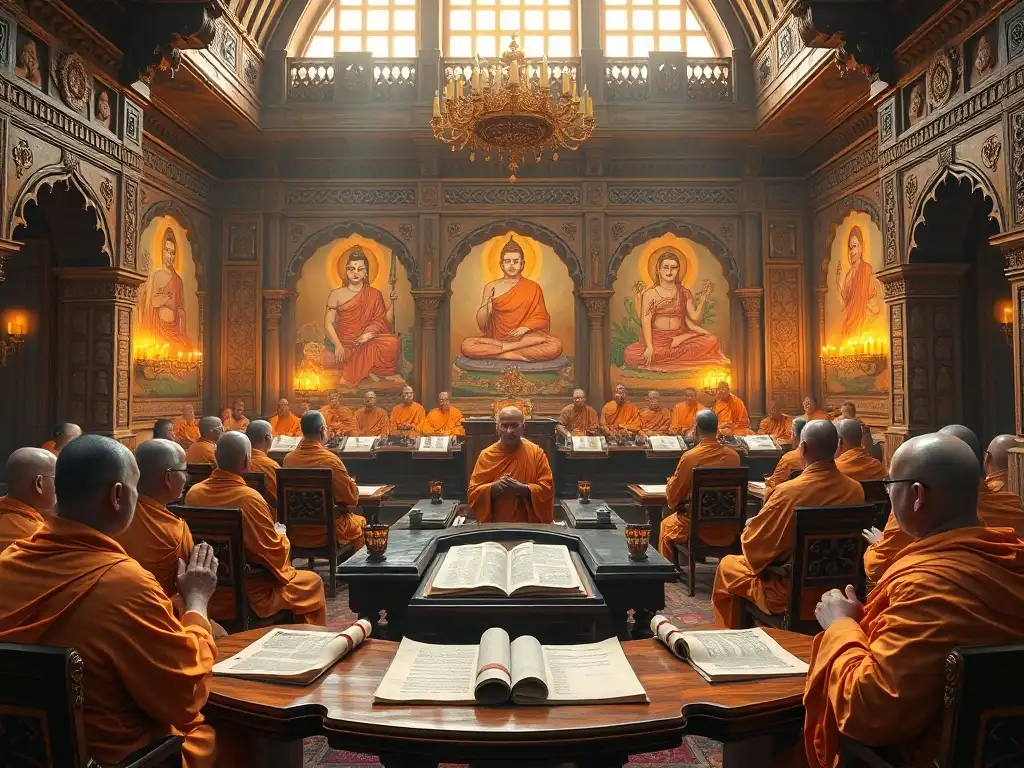
Jain councils have played a pivotal role in shaping the religious and cultural landscape of Jainism through the centuries. In modern times, these councils continue to uphold and propagate the teachings of Jainism, ensuring that the principles of non-violence, truth, and asceticism remain relevant in contemporary society. They serve as platforms for dialogue, education, and community engagement, fostering an environment where ancient wisdom can be applied to modern challenges.
Continuing Legacy of Historical Councils
The legacy of historical Jain councils is evident in the way they have preserved canonical texts and philosophical discourses. The councils that took place in ancient times, such as the Triṣaṣṭhiśalākāpuruṣacaritra, have established a framework for the development of Jain thought. Modern councils draw upon this rich heritage, organizing seminars, workshops, and conferences that revisit these ancient teachings, encouraging scholars and practitioners alike to explore their relevance today.
For instance, councils are often responsible for the publication and dissemination of critical texts, ensuring that a wider audience can access foundational Jain literature. This ongoing commitment to preservation allows the teachings of Jainism to endure through generations, creating a bridge between the past and present.
Efforts to Revive and Maintain Jain Teachings
Efforts to revive and maintain Jain teachings are essential to countering the challenges posed by modernity. Many Jain councils actively engage in educational outreach, establishing schools and colleges that integrate traditional Jain values with contemporary educational practices. This dual approach fosters a learning environment that respects ancient teachings while also adapting to modern educational paradigms.
Moreover, initiatives to translate Jain texts into various languages have broadened accessibility, allowing non-Jain scholars and practitioners to appreciate and engage with Jain philosophy. Such efforts are crucial in ensuring that Jainism retains its vibrancy and relevance in an increasingly globalized world.
Contemporary Relevance of Jain Councils Today
Today, Jain councils are not just custodians of ancient texts; they have become vital players in discussions surrounding ethical living, environmental issues, and social justice. The principles of ahimsa (non-violence) and aparigraha (non-possessiveness) resonate with contemporary movements advocating for sustainability and ethical consumption. Jain councils often collaborate with environmental organizations to promote awareness about ecological balance, reflecting the deep-rooted ethos of Jain teachings in addressing modern crises.
Additionally, the councils serve as mediators within the Jain community, promoting unity and understanding among diverse sects. This role is increasingly important in a world marked by division and conflict, showcasing how ancient wisdom can offer solutions to contemporary societal challenges.
Conclusion: The Enduring Significance of Jain Councils
The enduring significance of Jain councils is evident in their steadfast commitment to preserving and promoting the teachings of Jainism. They represent a continuity of tradition that has adapted to the needs of modern society while staying true to its core values.
Summary of Key Contributions and Historical Impact
Jain councils have made significant contributions throughout history, including the codification of texts, the establishment of ethical frameworks, and the promotion of community welfare. Their historical impact is reflected in the resilience of Jain traditions, which continue to thrive despite external challenges. Councils have been instrumental in ensuring that the rich tapestry of Jain thought remains woven into the fabric of Indian culture.
Reflection on the Future of Jain Councils and Their Teachings
Looking towards the future, Jain councils face both challenges and opportunities. As globalization and technological advancements reshape the world, there is a pressing need for councils to innovate while maintaining their foundational teachings. Engaging younger generations through digital platforms, interactive learning, and community service initiatives will be crucial for the continued relevance of Jainism.
The historical significance of Jain councils lies not only in their past achievements but also in their potential to adapt and thrive in the modern world. By continuing to promote the timeless principles of Jainism, they ensure that this ancient tradition remains a vital force for peace, harmony, and ethical living in contemporary society.
References and Further Reading
The historical significance of Jain councils is a profound topic that has been explored in various scholarly works and texts. These councils played a crucial role in preserving the teachings and texts of Jainism, ensuring that the rich philosophical and ethical tenets of the religion were maintained across generations. For those interested in delving deeper into this subject, a selection of suggested texts and resources is provided below.
Suggested Texts on Jain Councils and History
-
The History of Jainism by John Cort
This comprehensive work outlines the historical development of Jainism, including detailed accounts of various Jain councils. Cort discusses the implications of these councils on the preservation of Jain texts and teachings.
-
Jainism: A Guide for the Perplexed by Paul Dundas
Dundas provides an accessible overview of Jainism's doctrines and historical context. His insights into the role of councils in the establishment and maintenance of Jain philosophy are particularly valuable.
-
The Jain Path of Non-Violence by Nirmal Kumar Bose
This text explores the ethical dimensions of Jainism and how councils have historically influenced its non-violent principles, including the preservation of texts and teachings through various challenges.
-
Jaina Literature and the History of Jain Councils by R. C. Majumdar
Majumdar's work specifically addresses the various councils throughout Jain history, analyzing their decisions and the texts they produced or endorsed.
Recommended Resources for Deeper Understanding of Jainism
-
Jainpedia
An online resource that offers a wealth of information on Jain history, philosophy, and literature. It includes sections that discuss the significance of councils within Jainism.
-
The International School for Jain Studies
This institution provides access to lectures, seminars, and research papers related to Jainism. Their extensive library includes works focused on the historical significance of Jain councils.
-
Jain Studies: A Bibliography
This compilation of academic resources includes references to key texts and papers specifically discussing Jain councils and their impact on the preservation of Jain teachings.
-
Jain Heritage
A digital platform that focuses on the cultural and historical aspects of Jainism, featuring articles and resources on the role of councils in the continuity of Jain traditions.
These texts and resources collectively provide a comprehensive foundation for understanding the historical significance of Jain councils and their role in preserving the teachings and texts of Jainism throughout the centuries.
- Introduction to Jain Councils and Their Importance
- Historical Context of Jain Councils
- Key Objectives of Jain Councils
- The Impact of Jain Councils on Jainism
- The Role of Jain Councils in Modern Times
- Conclusion: The Enduring Significance of Jain Councils
- References and Further Reading
Frequently Asked Questions
What were the main purposes of Jain councils in ancient India?
The main purposes of Jain councils were to preserve teachings, compile texts, and resolve doctrinal disputes among different sects, ensuring the continuity of Jain traditions.
How did Jain councils contribute to the preservation of texts?
Jain councils played a crucial role in documenting and preserving Jain scriptures, which helped maintain the integrity of Jain philosophy and teachings throughout history.
What is the significance of the first Jain council?
The first Jain council was significant as it was held shortly after the death of Mahavira, aiming to compile his teachings and ensure their accurate transmission to future generations.
How did the councils address doctrinal differences?
The councils were instrumental in discussing and resolving doctrinal differences among various sects, fostering unity within the Jain community while respecting diverse interpretations.
What impact did Jain councils have on Jain culture and society?
The councils significantly influenced Jain culture by promoting education, art, and community cohesion, leading to a rich cultural heritage that remains influential today.
Final Reflection: The Enduring Legacy of Jain Councils
The historical significance of Jain councils remains profoundly relevant today as they embody the resilience of faith and the commitment to preserving spiritual teachings. In an age where rapid changes often overshadow traditional wisdom, the councils serve as a reminder of the importance of safeguarding our cultural and spiritual heritage. Their efforts to compile, codify, and disseminate Jain teachings not only shaped the religious landscape of their time but continue to inspire contemporary practices and beliefs.
The influence of Jain councils extends beyond their historical context; they have played a pivotal role in shaping the cultural and social fabric of communities. Their dedication to preserving texts and teachings fosters a sense of identity and continuity among followers. As noted by a prominent scholar, The preservation of knowledge is the foundation upon which the future is built.
This sentiment underscores the ongoing relevance of the councils, as they not only safeguard the past but also provide a framework for future generations to engage with their spiritual roots.
As we reflect on the teachings and texts preserved by Jain councils, I invite you to consider how these lessons can be integrated into your own life. Take a moment to explore the values of compassion, non-violence, and truth that Jainism espouses, and think about how you can embody these principles in your daily actions. By doing so, you not only honor the legacy of the councils but also contribute to a more harmonious world, ensuring that the wisdom of the past continues to illuminate our paths forward.
Embrace the Legacy: Participate in Jain Heritage Today!
Thank you for diving into the fascinating world of Jain Councils with us! Your interest in preserving ancient teachings enriches our collective understanding of this incredible tradition. Now, let’s translate that curiosity into action!
Here are a few ways you can engage with Jain heritage and contribute to its preservation:
- Join a local Jain community or organization to participate in events and discussions that keep these teachings alive.
- Read and share Jain texts or resources with friends, spreading awareness and appreciation for this profound philosophy.
- Take a moment to write a post or blog about your insights from this article, inviting others to explore the significance of Jain Councils.
What impact do you think engaging with Jain teachings could have on your understanding of ethics and spirituality?