
How Buddhism Advocates for Social Justice and Equality


Welcome to Ancient India History, where we embark on a fascinating journey through the rich tapestry of ancient Indian civilizations. In this exploration, we delve into the profound impacts of Buddhism and social justice in India, a powerful theme that resonates through the ages. How did the teachings of the Buddha influence societal structures and ideals of equality?
Join us as we uncover the intricate connections between religion and social justice, illuminating the path toward understanding the values that shaped a civilization. Prepare to be intrigued as we reveal the layers of history that continue to inspire and inform our world today!
- Introduction to Buddhism and Social Justice in India
- Historical Context of Buddhism in India
- Core Teachings of Buddhism Related to Social Justice
- Buddhism's Influence on Social Structures in Ancient India
- Modern Interpretations of Buddhism and Social Justice
- The Global Impact of Buddhism on Social Justice Movements
- Challenges and Critiques of Buddhism's Role in Social Justice
- Conclusion: The Legacy of Buddhism in Promoting Social Justice and Equality
-
Frequently Asked Questions
- What is the connection between Buddhism and social justice in India?
- How did Buddha's teachings influence social structures in ancient India?
- In what ways did Buddhist communities promote social welfare?
- How is Buddhism's approach to social justice relevant today?
- What role did the Gupta Empire play in the spread of Buddhist values?
- Final Reflection: Buddhism as a Beacon for Social Justice and Equality
- Embrace Change: Advocate for Justice Today!
Buddhism, a profound spiritual tradition that emerged in ancient India around the 5th century BCE, has long been celebrated not only for its philosophical insights but also for its strong advocacy of social justice and equality. Rooted in the teachings of Siddhartha Gautama, known as the Buddha, this religion emphasizes compassion, moral integrity, and the interconnectedness of all beings. The principles of Buddhism resonate deeply with social justice concepts, making it a powerful force for change in a society marked by rigid hierarchies and social stratification.
In the context of ancient Indian society, where caste systems and class divisions were prevalent, Buddhism presented a radical alternative, promoting a vision of community grounded in equality and shared humanity. This article explores how Buddhism advocates for social justice and equality, highlighting its role in challenging societal norms and fostering a more inclusive ethos. We will delve into the core teachings of Buddhism that support these values and examine their relevance in the ancient Indian context, shedding light on the transformative impact of this faith on social dynamics.
Overview of Buddhism's Role in Promoting Equality
Buddhism's foundational teachings underscore the importance of equality and social justice, positioning it as a progressive force in ancient Indian history. Central to these teachings are the concepts of Dharma (moral law) and Karma (the law of cause and effect), which advocate for ethical behavior and social responsibility.
- Dharma encourages individuals to act justly and compassionately in their interactions with others, regardless of social status.
- Karma reinforces the idea that one's actions have consequences, promoting accountability and fairness across all levels of society.
The Buddha's Four Noble Truths and the Eightfold Path also serve as guiding principles that foster an equitable approach to life:
- The Four Noble Truths:
- The truth of suffering (Dukkha)
- The truth of the cause of suffering (Samudaya)
- The truth of the end of suffering (Nirodha)
- The truth of the path that frees us from suffering (Magga)
- The Eightfold Path:
- Right understanding
- Right intention
- Right speech
- Right action
- Right livelihood
- Right effort
- Right mindfulness
- Right concentration
These teachings collectively encourage individuals to cultivate compassion and empathy, challenging social injustices and advocating for the marginalized.
In ancient India, the caste system created significant barriers to social mobility and equality, resulting in widespread discrimination and injustice. The rigid social hierarchy dictated one's occupation, rights, and even spiritual status, leading to the oppression of lower caste individuals.
Buddhism emerged as a response to these societal issues, offering a path that emphasized:
- Inclusivity: The Buddha welcomed individuals from all walks of life into his community, regardless of their caste or background. This inclusivity fostered a sense of belonging and mutual respect.
- Empowerment: By advocating for the rights and dignity of the marginalized, Buddhism empowered individuals to challenge oppressive structures. The establishment of monastic communities allowed people to transcend societal limitations and engage in spiritual practice.
- Collective Responsibility: Buddhism instills a sense of collective responsibility for societal well-being, urging individuals to work towards a just and equitable society.
This commitment to social justice not only transformed individual lives but also contributed to a broader cultural shift, promoting values of compassion and equality that resonate to this day. The teachings of Buddhism continue to inspire movements for social justice in contemporary India, reminding us of the enduring relevance of its message in the quest for a fair and just society.
Historical Context of Buddhism in India

Buddhism emerged in the 5th century BCE during a time of significant social and political upheaval in ancient India. The rigid caste system dominated the social hierarchy, leading to systemic inequality and oppression, particularly of the lower castes, known as "Shudras," and those outside the caste system, termed "Untouchables." Siddhartha Gautama, known as the Buddha, recognized these injustices and sought a path that emphasized compassion and equality.
The teachings of Buddhism directly challenged the societal norms of the time. Instead of adhering to the rituals and dogmas of Brahmanism, Buddhism focused on personal spiritual development and the pursuit of enlightenment (Nirvana) as accessible to all individuals, regardless of their social standing. This egalitarian approach laid the groundwork for Buddhism to be regarded as a reformative movement advocating for social justice.
Moreover, the Buddha’s Four Noble Truths and the Eightfold Path were designed not only to guide individuals toward spiritual awakening but also to promote ethical conduct and community welfare. The concept of "Dharma" in Buddhism emphasizes moral responsibility and the interconnectedness of all beings, which further reinforces the principles of social equality.
Key Figures in Buddhism Advocating for Justice and Equality
The movement of Buddhism was not solely reliant on the teachings of the Buddha; several key figures played pivotal roles in advocating for social justice and equality throughout its history in India.
- Siddhartha Gautama (The Buddha):
- As the founder of Buddhism, the Buddha’s teachings were inherently aligned with the principles of equality. He welcomed followers from all walks of life, including women and individuals from lower castes, into the monastic community (Sangha). His radical acceptance and emphasis on inner virtue over external status effectively challenged the caste system.
- Ashoka the Great:
- The Mauryan Emperor Ashoka, who reigned in the 3rd century BCE, was instrumental in promoting Buddhism and its ideals of non-violence (Ahimsa) and compassion. Following his conversion to Buddhism, Ashoka implemented policies that advocated for the welfare of all citizens, including the marginalized. He issued edicts that promoted social justice, religious tolerance, and ethical governance, thus making Buddhism a state-supported vehicle for social reform.
- Buddhist Women Monastics:
- Figures such as Mahapajapati Gotami, the Buddha's aunt, and the first female monk, played a critical role in advocating for women's rights within the monastic community. They fought for the establishment of the Bhikkhuni Sangha, allowing women to attain spiritual enlightenment and actively participate in the Buddhist community, challenging the patriarchal norms of society.
- Bodhidharma and Later Reformers:
- While Bodhidharma is often associated with Chan Buddhism, his teachings and those of later reformers emphasized mindfulness and compassion, which can be closely linked to social justice. These figures called for a more inclusive practice that sought to alleviate the suffering of all beings, reiterating the importance of equity in both spiritual and social realms.
Buddhism’s advocacy for social justice and equality is reflected in its historical context and the actions of its key figures, contributing to its enduring relevance in discussions surrounding social reform in India. The intersection of Buddhism and social justice in India continues to inspire movements toward equality, compassion, and ethical governance in contemporary society.

Buddhism, a philosophy and spiritual tradition that originated in ancient India, encompasses teachings that profoundly advocate for social justice and equality. Central to these teachings is the understanding that all beings are deserving of compassion and respect. By exploring key concepts within Buddhism, we can discern how they align closely with the principles of social justice, particularly in the context of ancient Indian society.
Compassion, or Karuna, is one of the foundational tenets of Buddhism. It goes beyond mere sympathy; it is a profound empathy that drives individuals to alleviate the suffering of others. In a societal context, this principle advocates for the upliftment of marginalized communities and the promotion of equality.
- Compassion in Action:
- Almsgiving: Traditionally, the act of giving alms to the needy is seen as a manifestation of compassion. This practice emphasizes the importance of supporting those who are less fortunate, fostering a sense of community and shared responsibility.
- Monastic Support: Buddhist monks often engage in social work, providing education and healthcare to underprivileged populations, thereby directly addressing social inequalities.
- Moral Responsibility:
- Compassion encourages individuals to recognize their moral obligation towards others. In ancient India, this meant advocating for the rights and dignity of the lower castes, who were often oppressed. The teachings of the Buddha invite practitioners to challenge social norms that perpetuate injustice.
“Compassion is the radicalism of our time.” – Dalai Lama
The Principle of Interconnectedness in Buddhist Philosophy
Interconnectedness, often referred to as Pratītyasamutpāda or dependent origination, is a core principle in Buddhist philosophy that emphasizes the interdependence of all beings. This concept has profound implications for social justice.
- Collective Responsibility:
- Understanding that all actions have consequences encourages individuals to act with awareness of their impact on society. This awareness fosters a collective responsibility towards creating a just society where everyone thrives.
- Breaking Down Barriers:
- The recognition that suffering is universal can help dismantle barriers between social classes. It prompts individuals to empathize with the struggles of others, regardless of their societal status, reinforcing the idea that injustice against one is injustice against all.
| Principle | Implication for Social Justice |
|---|---|
| Interconnectedness | Promotes empathy and collective action |
| Shared Suffering | Encourages solidarity among different social groups |
| Moral Responsibility | Advocates for active engagement in social issues |
The Four Noble Truths form the foundation of Buddhist teachings and provide a framework for understanding suffering and its cessation. Each truth has significant implications for social justice.
- The Truth of Suffering (Dukkha):
- Recognizing that suffering exists for all beings, including the oppressed, is the first step towards advocating for social change. Buddhism teaches that suffering is a shared experience, which fosters empathy and motivates action to alleviate it.
- The Cause of Suffering (Samudaya):
- The Buddha identified ignorance and craving as the root causes of suffering. In a social context, this can be interpreted as the ignorance of systemic inequalities and the craving for power that perpetuates oppression. By addressing these root causes, practitioners can work towards a more equitable society.
- The Cessation of Suffering (Nirodha):
- The aspiration for a society free from suffering aligns with the goals of social justice movements. This truth encourages individuals to envision a world where equality and justice prevail, motivating collective efforts to dismantle oppressive structures.
- The Path to the Cessation of Suffering (Magga):
- The Eightfold Path serves as a guide for ethical living and social engagement. It emphasizes right action, right livelihood, and right speech, all of which encourage individuals to engage in practices that promote justice and equity in society.
The core teachings of Buddhism, particularly the concepts of compassion, interconnectedness, and the Four Noble Truths, provide a robust framework for advocating social justice and equality. These teachings not only address individual behavior but also challenge societal structures, making Buddhism a potent ally in the pursuit of social justice in ancient India and beyond.

Buddhism, emerging in the 6th century BCE, profoundly influenced social structures in ancient India, particularly in its challenge to traditional hierarchies. Central to Buddhism's teachings is the promotion of equality and social justice, concepts often at odds with the rigid caste system prevalent in Indian society at the time. The Buddha advocated for a community based on ethical conduct, compassion, and collective welfare, which resonated with individuals across various social strata.
The establishment of the Sangha, or monastic community, served as a practical manifestation of these ideals. It provided a space where individuals, regardless of their caste, could participate equally in spiritual practice and community life. This inclusivity not only attracted followers from the lower castes but also encouraged a re-evaluation of social norms that dictated status and privilege.
The Challenge to the Caste System Through Buddhist Teachings
Buddhism's challenge to the caste system is articulated through several key teachings of the Buddha. Notably, the concept of 'anatta' (non-self) emphasizes the idea that identity is not inherently tied to caste or social status. This teaching dismantles the notion of inherent superiority or inferiority based on birth.
Additionally, the Four Noble Truths serve as a foundation for understanding suffering, which transcends social barriers. The Buddha taught that all beings experience suffering and that the path to liberation is open to anyone willing to seek it, regardless of their societal position. This universality is further reinforced by the Noble Eightfold Path, which outlines ethical and mental practices aimed at achieving enlightenment—accessible to all.
Buddhist texts often include narratives that highlight the Buddha’s interactions with individuals from various backgrounds, including those considered outcasts or untouchables. For instance, the story of Sundarī, a woman from a low caste, who became a prominent disciple, illustrates how Buddhism actively challenged societal norms that marginalized certain groups.
Case Studies of Buddhist Communities Promoting Equality
Several historical examples demonstrate how Buddhist communities actively promoted social justice and equality in ancient India. One notable case is that of the Sākyas, the Buddha's own clan, which was known for its egalitarian practices. Within the Sākyas, there was a greater emphasis on communal decision-making and less rigid adherence to caste distinctions.
Another significant example is the conversion of Emperor Ashoka to Buddhism in the 3rd century BCE. Ashoka's reign marked a pivotal shift in the promotion of social welfare. His edicts emphasized moral governance, compassion for all living beings, and the promotion of social harmony, which included advocating for the rights of marginalized groups. His policies can be seen as a direct application of Buddhist principles aimed at fostering equality and justice across his empire.
Moreover, various Buddhist monasteries and institutions served as centers of learning and social service. They provided education and medical care to all, regardless of caste. The Viharas (monasteries) often welcomed individuals from lower castes, creating opportunities for social mobility and integrating them into the larger Buddhist community.
Buddhism's stance on social justice in ancient India is evident through its teachings, the establishment of inclusive communities, and the actions of historical figures who embraced its principles. This legacy continues to resonate in contemporary discussions about equality and social justice in India.

Buddhism, with its core tenets emphasizing compassion, non-violence, and interconnectedness, has increasingly been interpreted as a framework for advocating social justice and equality in modern contexts. The teachings of the Buddha resonate with principles of fairness and ethical conduct, which many contemporary practitioners are now applying to address systemic inequalities and injustices in society. This modern interpretation not only revitalizes ancient teachings but also aligns them with current socio-political movements.
In recent decades, numerous Buddhist movements have emerged globally, focusing on social justice issues. These movements seek to apply Buddhist principles to combat various forms of inequality, including poverty, racism, and gender discrimination.
- Engaged Buddhism:
- Definition: This term, popularized by Vietnamese Zen master Thich Nhat Hanh, refers to a socially active form of Buddhism that emphasizes the application of Buddhist ethics to social issues.
- Activities: Engaged Buddhists often participate in grassroots activism, promoting peace and social justice through community service, humanitarian aid, and environmental initiatives.
- Buddhist Women's Movement:
- Focus: This movement addresses gender inequality within Buddhist communities and society at large. It advocates for women's rights, representation, and leadership roles in religious and secular arenas.
- Impact: By challenging patriarchal structures, this movement aims to create a more inclusive environment where women can thrive both spiritually and socially.
- Interfaith Collaborations:
- Partnerships: Many Buddhist organizations collaborate with other faith groups to address social justice issues, recognizing the interconnectedness of various religious teachings.
- Examples: Initiatives such as the "Buddhists for Peace" and "Buddhist Global Relief" work alongside interfaith coalitions to combat hunger and promote education.
- Youth Activism:
- Emerging Leaders: Young Buddhists are increasingly becoming vocal advocates for climate justice, racial equality, and mental health awareness.
- Platforms: Utilizing social media and digital platforms, these youth-led movements amplify their messages and mobilize community action.
Buddhist monasteries have traditionally been centers of spiritual learning and practice; however, many are now evolving into hubs for social justice initiatives. Their roles can be categorized as follows:
- Community Outreach Programs:
- Many monasteries engage in community service, offering support to marginalized groups through food distribution, education, and healthcare services.
- Dialogue and Education:
- Monasteries often host workshops and discussions on social justice topics, fostering a deeper understanding of how Buddhist principles can be applied to current societal challenges.
- Advocacy and Activism:
- Some monks and nuns actively participate in protests and advocacy campaigns, using their moral authority to highlight issues such as human rights abuses and environmental degradation.
- Mental Health Support:
- Recognizing the importance of mental well-being, many monasteries provide counseling and meditation sessions to help individuals cope with social stressors, promoting resilience within communities.
The modern interpretations of Buddhism in relation to social justice reflect a dynamic engagement with contemporary issues. Through various movements and the active participation of monasteries, Buddhism continues to advocate for a more just and equitable society, demonstrating that its teachings remain relevant in addressing the complex challenges of today's world.
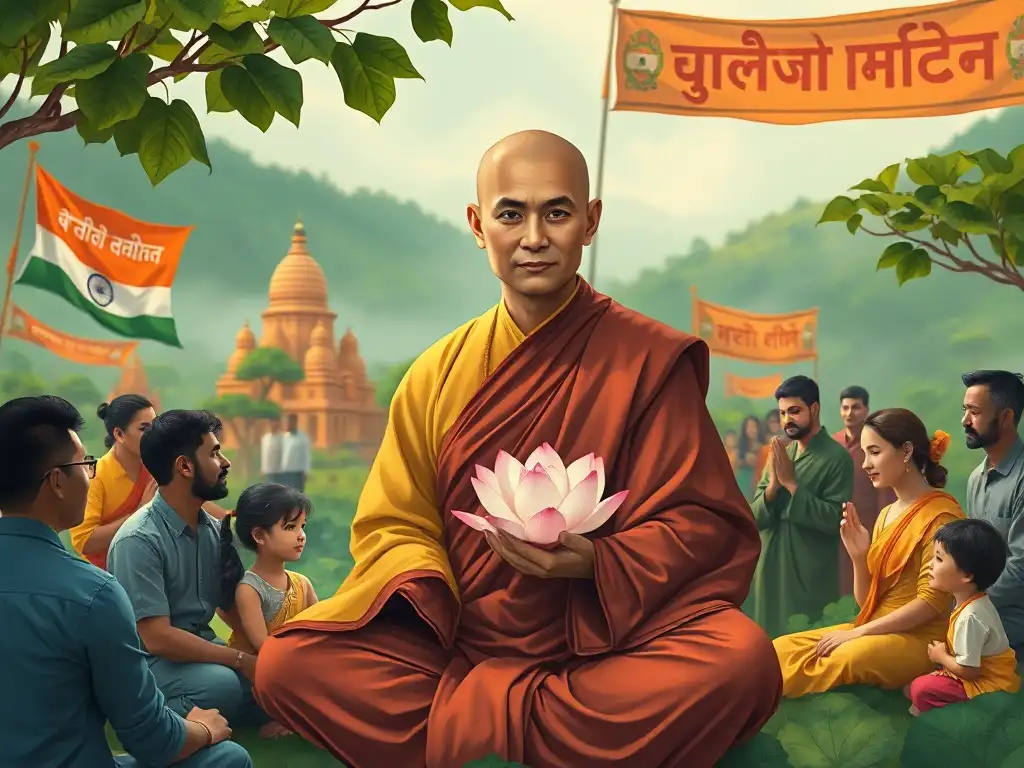
Buddhism has had a profound influence on social justice movements around the world, transcending borders and cultural differences. Its core teachings, which emphasize compassion, non-violence, and the interconnectedness of all beings, have inspired activists and leaders to advocate for equality and justice in various contexts. The principles of Buddhism encourage a holistic approach to social issues, pushing for not only systemic change but also personal transformation among individuals involved in these movements.
Buddhism’s teachings provide a unique framework for understanding and addressing social injustices. One of the key concepts is Right Action, which is part of the Noble Eightfold Path. This principle advocates for ethical conduct and encourages individuals to make decisions that promote well-being for all. Many modern social movements incorporate these teachings, focusing on non-violent resistance and community-building.
For instance, the practice of mindfulness, rooted in Buddhist meditation, has been adopted by various social justice organizations to cultivate awareness and emotional intelligence among activists. This approach helps individuals recognize their biases and develop a deeper understanding of the struggles faced by marginalized communities.
Moreover, Buddhist organizations, such as the International Network of Engaged Buddhists, actively engage in various social issues, including environmental activism, poverty alleviation, and human rights advocacy. These organizations often collaborate with other faith-based and secular groups, showcasing the adaptability of Buddhist principles to contemporary social justice efforts.
Examples of Global Leaders Inspired by Buddhist Principles
Several influential leaders have drawn inspiration from Buddhism in their fight for social justice, demonstrating how its teachings can shape powerful movements:
- Thich Nhat Hanh: This Vietnamese Zen master and peace activist emphasized the importance of mindfulness in social activism. He advocated for peace during the Vietnam War and established engaged Buddhism, which focuses on applying Buddhist teachings to societal issues. His teachings on compassion and understanding have inspired countless individuals to pursue justice through peaceful means.
- Aung San Suu Kyi: The Nobel Peace Prize laureate and former leader of Myanmar has often cited the influence of Buddhism in her quest for democracy and human rights in her country. Although her political legacy has been controversial, her early activism was deeply rooted in Buddhist ethics, advocating for non-violence and reconciliation.
- Martin Luther King Jr.: While primarily associated with Christian teachings, Dr. King's philosophy of non-violence was significantly influenced by Buddhist concepts. He admired the Buddhist commitment to peace and justice, integrating these principles into his civil rights activism.
These leaders exemplify how Buddhism can inspire social justice efforts across diverse contexts, promoting a vision of a just and equitable society grounded in compassion and ethical living.
The global impact of Buddhism on social justice movements highlights its relevance in addressing contemporary issues of inequality and injustice. By fostering a compassionate approach to activism, Buddhism continues to influence and inspire those committed to creating a better world for all.

The role of Buddhism in advocating for social justice and equality has been both influential and contentious throughout history. Despite its foundational tenets that promote compassion and non-violence, various challenges and critiques arise when examining its effectiveness in addressing contemporary social inequities. This section delves into the limitations of Buddhist teachings and the critiques that emerge from within the Buddhist community itself.
Limitations of Buddhist Teachings in Addressing Modern Inequities
While Buddhism emphasizes core values such as compassion (karuna) and loving-kindness (metta), its teachings can sometimes fall short in addressing the complexities of modern social injustices. Some of the limitations include:
- Focus on Individual Enlightenment: Traditional Buddhist teachings often prioritize personal spiritual development over collective societal change. This individualistic approach might lead practitioners to focus on their own path to enlightenment rather than advocating for systemic reform.
- Cultural Context: Many of the foundational texts and teachings of Buddhism were developed in specific historical and cultural contexts that may not directly resonate with contemporary issues such as gender inequality, caste discrimination, and economic disparity. The application of these teachings to modern social justice movements can sometimes be superficial or misaligned.
- Ambiguity in Social Action: The concept of non-attachment in Buddhism can lead to ambiguity regarding the necessity of social action. Some practitioners may interpret this principle as a call to disengage from worldly concerns, thereby neglecting the need for active participation in social justice efforts.
- Hierarchy within Buddhist Communities: In some Buddhist traditions, hierarchical structures can perpetuate inequities, especially concerning gender and caste. This internal hierarchy may contradict the teachings of equality and can lead to resistance against progressive social changes.
Despite these limitations, it is important to recognize that many modern Buddhist movements are actively working to bridge the gap between traditional teachings and contemporary social justice issues.
Critiques from Within the Buddhist Community
Within the Buddhist community itself, there are various critiques regarding the approach to social justice. These critiques often highlight the need for a more robust engagement with current social issues:
- Lack of Inclusivity: Some voices within Buddhism argue that the movement has not sufficiently included marginalized groups, particularly women and lower-caste individuals. This lack of inclusivity can lead to a narrow understanding of what social justice entails and who it affects.
- Resistance to Change: Certain factions within the Buddhist community may be resistant to embracing modern social justice movements, viewing them as incompatible with traditional Buddhist values. This resistance can hinder progress and the ability to address pressing social issues.
- Interdependence vs. Individualism: Critics argue that while Buddhism teaches interdependence, this concept is often underutilized in advocating for social justice. Instead of fostering a collective approach to addressing societal problems, some practitioners may cling to individualistic interpretations that limit broader social engagement.
- Need for Activism: There is a growing call among progressive Buddhists for greater activism that aligns with the core teachings of Buddhism. This includes advocating for equality, environmental justice, and human rights, challenging the notion that spiritual practice and social action are mutually exclusive.
While Buddhism has the potential to significantly contribute to social justice in India, it faces challenges and critiques that must be addressed. By recognizing these limitations and engaging with them constructively, the Buddhist community can foster a more inclusive and effective approach to advocating for social justice.
Buddhism has had a profound impact on social justice and equality throughout its history, particularly within the context of ancient Indian civilization. The teachings of the Buddha emphasized principles such as compassion, non-violence, and the inherent dignity of all individuals. These core values laid the foundation for a societal framework that sought to dismantle caste hierarchies and promote inclusivity.
The historical context of Buddhism's emergence during a time of significant social stratification in India signifies its revolutionary potential. The Buddha's advocacy for the marginalized, including women and the lower castes, demonstrated a commitment to social equity. Notably, the establishment of monastic communities, known as sanghas, provided a space for individuals from diverse backgrounds to come together, further challenging societal norms of exclusion.
Reflection on Buddhism's Continuing Relevance in Modern India
Today, Buddhism's teachings continue to resonate within contemporary discussions about social justice in India. Modern movements, inspired by Buddhist principles, address issues of discrimination, poverty, and human rights. The revival of interest in Buddhism among marginalized communities, particularly among Dalits, underscores the relevance of its teachings in advocating for social equality.
Organizations and activists draw upon Buddhist philosophy to inform their approaches to social justice, emphasizing the interconnectedness of all beings. This perspective fosters a sense of collective responsibility, urging society to work towards the upliftment of the disadvantaged. Furthermore, the mindfulness and compassion cultivated through Buddhist practices are increasingly recognized as effective tools in social activism, promoting healing and understanding across diverse communities.
As we look to the future, the intersection of Buddhism and social justice in India presents significant opportunities for progress. The teachings of the Buddha, when applied to modern societal challenges, can inspire innovative solutions to complex issues. For instance, the principles of ahimsa (non-violence) and karuna (compassion) can guide approaches to conflict resolution and community building.
Moreover, as global conversations around social justice evolve, Buddhism's emphasis on equality and ethical living remains a potent framework for addressing systemic injustices. By harnessing the teachings of Buddhism, advocates can foster a more equitable society that honors the dignity of all individuals. The legacy of Buddhism as a champion for social justice not only enriches India's cultural heritage but also offers a timeless path towards a more just and inclusive future.
Frequently Asked Questions
Buddhism emphasizes compassion, equality, and non-violence, advocating for a society where all individuals have equal rights, thus fostering social justice.
Buddha's teachings challenged the caste system and promoted inclusivity, encouraging followers to recognize the intrinsic value of all individuals, regardless of their social status.
Buddhist communities established monasteries that served as centers for education, charity, and healthcare, playing a crucial role in improving the living conditions of marginalized groups.
Buddhism's focus on equity and compassion continues to inspire modern movements for social justice in India, advocating for the rights of the oppressed and promoting tolerance.
What role did the Gupta Empire play in the spread of Buddhist values?
During the Gupta Empire, Buddhism flourished, spreading its teachings on social equality and justice, influencing art, philosophy, and the overall cultural landscape of India.
In today's world, where social inequalities and injustices persist, Buddhism's teachings on compassion and equality resonate deeply. The principles of non-violence, interconnectedness, and mindfulness not only guide individual behavior but also inspire collective action towards a more just society. As we navigate the complexities of modern life, the relevance of Buddhism in advocating for social justice in India and beyond becomes increasingly clear. It serves as a powerful reminder that the path to equality is not merely a political endeavor but a moral and spiritual journey.
The influence of Buddhism on the cultural and social landscape is profound and ongoing. As we witness movements for social justice gaining momentum across the globe, the teachings of Buddhism provide a framework for understanding and addressing systemic inequalities. The emphasis on compassion and the recognition of shared humanity can galvanize communities to challenge oppressive structures. As the Dalai Lama once said, Compassion is the radicalism of our time.
This sentiment underscores the idea that true social change begins with a deep sense of empathy and a commitment to uplifting the marginalized.
As we reflect on the lessons of Buddhism in relation to social justice, I invite you to consider your role in this ongoing journey. How can you embody the principles of compassion and equality in your daily life? Whether through advocacy, education, or simple acts of kindness, each of us has the power to contribute to a more equitable society. Let us carry forward the teachings of Buddhism as a source of inspiration and action, ensuring that the quest for social justice remains a vibrant and essential part of our collective consciousness.
Embrace Change: Advocate for Justice Today!
Thank you for taking the time to explore how Buddhism champions social justice and equality. Your engagement with these vital concepts is a step toward a more equitable world! Now, it’s time to put your insights into action. Here are some meaningful ways you can contribute:
- Join a local community group or organization focused on social justice initiatives, and begin advocating for positive change in your area.
- Share this article with friends and family to spark discussions about equality and compassion—many voices can amplify the message!
- Volunteer your time or skills to support underserved communities; every bit of help makes a difference.
What will be your next step in promoting social justice and equality? We encourage you to share your thoughts below!