
Silk Roads and Spice Routes: Ancient India’s Role in Global Commerce

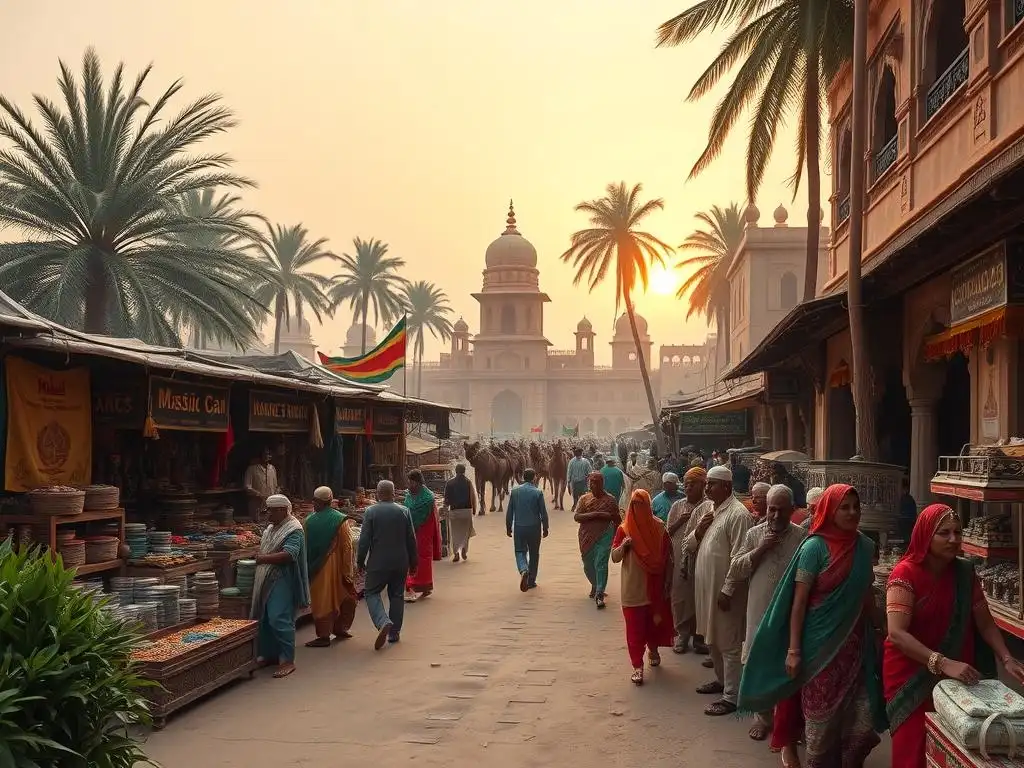
Welcome to Ancient India History, where we embark on a journey through the vibrant tapestry of ancient Indian civilizations. Discover the intricate trade routes that not only connected diverse cultures but also shaped the very foundations of global commerce. In our featured article, "Silk Roads and Spice Routes: Ancient India’s Role in Global Commerce," we delve into the fascinating dynamics of trade in ancient India, revealing how these pathways influenced economies and societies far beyond India's borders.
Prepare to be captivated by the stories of adventure, exchange, and innovation that await you as we explore the profound legacy of ancient Indian trade. Dive in and let your curiosity lead the way!
- Introduction to Ancient India Trade Routes
- The Silk Roads: Ancient India's Role in Trade
- The Spice Routes: Connecting Ancient India to the World
- Major Cities and Trade Hubs in Ancient India
- The Influence of Ancient Indian Trade on Global Commerce
- Challenges and Changes in Ancient Trade Routes
- Conclusion: Legacy of Ancient India Trade Routes
- Further Reading on Ancient India Trade Routes
- Frequently Asked Questions
- Final Reflection: The Enduring Legacy of Ancient India’s Trade Routes
- Unveil the Wonders of Ancient Commerce!
Introduction to Ancient India Trade Routes
The intricate tapestry of ancient Indian history is woven with the threads of commerce and trade, which played a pivotal role in shaping not only the subcontinent but also the global economy of the time. Ancient India was a significant hub of trade routes, connecting diverse cultures and facilitating the exchange of goods, ideas, and traditions across vast distances.
The ancient Indian trade networks, particularly the famed Silk Roads and Spice Routes, were instrumental in establishing India as a key player in global commerce, impacting societies far beyond its borders. This article delves into the multifaceted trade routes of ancient India, highlighting their historical significance, the goods exchanged, and the broader implications for the civilizations involved.
Overview of Global Commerce in Ancient Times
Global commerce in ancient times was characterized by a complex interplay of trade routes that spanned continents, linking civilizations through the exchange of goods and ideas. The Silk Road, for instance, was not merely a single path but a series of interconnected routes that facilitated trade between the East and West, connecting China, India, Persia, and the Mediterranean.
The Spice Route was equally significant, enabling the transport of valuable spices like pepper, cardamom, and cinnamon from India to various parts of the world. These routes were not only vital for economic transactions but also served as conduits for cultural exchange, leading to the spread of religions, art, and technology.
Key Features of Ancient Global Commerce:
- Diverse Goods: Goods traded included silk, spices, precious stones, textiles, and metalwork.
- Cultural Exchange: Trade led to the mingling of cultures, fostering mutual understanding and cooperation.
- Economic Growth: Cities along these trade routes flourished economically, becoming centers of commerce and learning.
Significance of Trade Routes in Ancient India
The trade routes of ancient India were crucial for several reasons, shaping the region's economy and cultural landscape.
- Economic Prosperity: India’s strategic location made it a focal point for traders from different regions. The influx of wealth through trade contributed to the rise of powerful kingdoms, such as the Maurya and Gupta Empires, which thrived on commerce.
- Cultural Integration: Ancient Indian trade routes facilitated the exchange of not only goods but also ideas, religions, and technologies. For instance, Buddhism spread along these trade routes, influencing cultures in Central Asia and beyond.
- Innovations in Maritime Trade: Indian merchants were pioneers in maritime trade, utilizing advanced navigation techniques and shipbuilding skills, which enhanced their trading capabilities across the Indian Ocean and further afield.
The significance of these trade routes is evident in the way they transformed ancient India into a melting pot of cultures, ideas, and economic prosperity, laying the foundation for future civilizations and trade networks.
The Silk Roads: Ancient India's Role in Trade
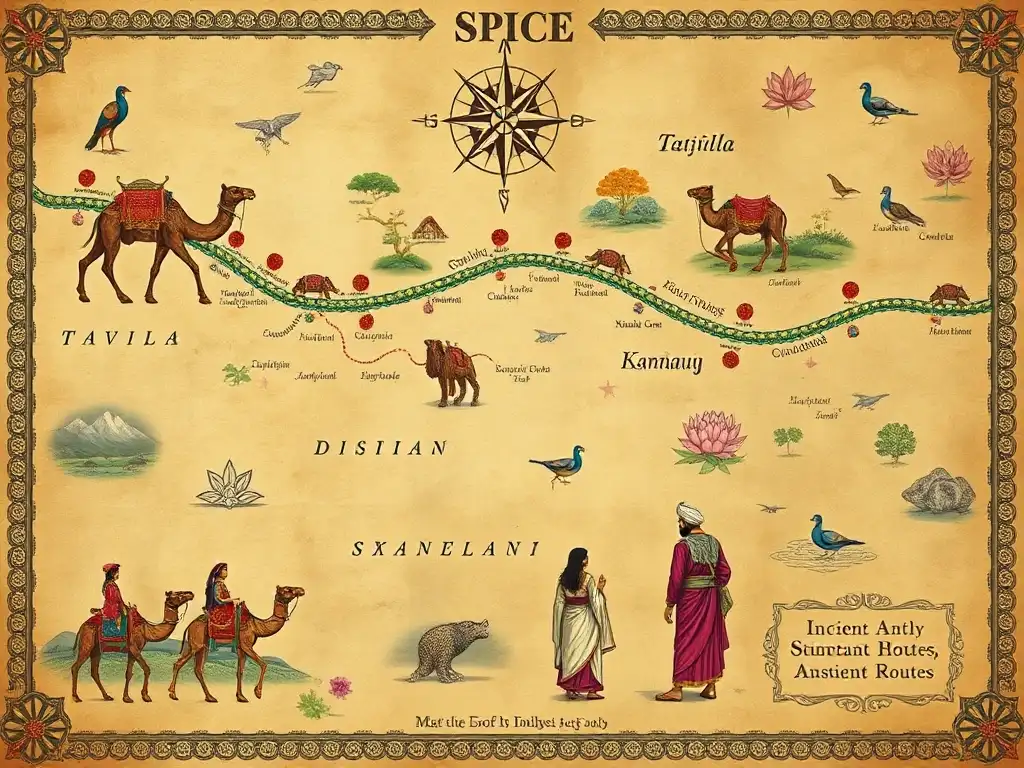
Historical Context of the Silk Roads
The Silk Roads were a vast network of trade routes connecting the East and West, facilitating not only the exchange of goods but also ideas, culture, and technologies. Emerging around the 2nd century BCE, these routes played a pivotal role in the development of ancient trade networks. Ancient India, strategically positioned at the crossroads of these routes, became a significant player in global commerce.
During the reign of the Maurya Empire (322-185 BCE), the establishment of political stability and the promotion of trade fostered the growth of these routes. The later Kushan Empire (1st to 3rd century CE) further enhanced trade interactions, particularly in regions like Gandhara, which became a melting pot of cultural exchanges. The use of caravans, maritime routes, and the establishment of trading outposts were crucial developments during this period, allowing traders to traverse vast distances.
Moreover, the rise of the Gupta Empire (approximately 320-550 CE) marked a golden age for trade in ancient India, with advancements in various fields fostering economic growth. The patronage of arts and commerce made India a hub for the exchange of luxury goods, thereby solidifying its role in the Silk Roads.
Key Trade Goods and Commodities from Ancient India
Ancient India was renowned for a plethora of trade goods that were highly sought after along the Silk Roads. The following table highlights some of the key commodities that were exported:
| Commodity | Description |
|---|---|
| Spices | India was the primary source of spices such as black pepper, cardamom, and cinnamon, which were essential for preserving food and enhancing flavors. |
| Silk | Although primarily associated with China, Indian silk was also a significant export, known for its quality and intricate designs. |
| Textiles | Cotton and finely woven textiles were popular trade items, with Indian artisans renowned for their craftsmanship in fabrics like muslin. |
| Gems and Jewels | India was famous for its precious stones, including diamonds, rubies, and emeralds, drawing traders from far and wide. |
| Medicinal Herbs | Various herbs and medicinal plants, such as turmeric and ginger, were traded for their healing properties. |
The demand for these goods not only stimulated the economy of ancient India but also established its identity as a center of trade along the Silk Roads. The wealth generated from these exports contributed to the flourishing of city-states and urban centers, further enhancing India's trade networks.
Cultural Exchange Along the Silk Roads
The Silk Roads were instrumental in fostering cultural exchanges that transcended geographical boundaries. As traders traversed these routes, they carried with them not just goods but also ideas, beliefs, and artistic influences.
- Religion and Philosophy:
- Buddhism, originating in India, spread across Central Asia to China and beyond, facilitated by Silk Road traders. The establishment of monasteries along the routes served as both spiritual and commercial hubs.
- Hinduism also found its way along these paths, influencing cultures in Southeast Asia, particularly in the archipelago nations.
- Art and Architecture:
- The interaction of different cultures led to the fusion of artistic styles. For instance, Gandharan art, which emerged in ancient India, combined Hellenistic and Indian artistic elements, resulting in unique sculptures and architectural styles.
- The spread of architectural techniques and design concepts influenced the construction of temples and monuments across regions.
- Language and Literature:
- The exchange of languages became prevalent as traders interacted and settled in new lands. Sanskrit, Pali, and Persian influenced local dialects, enriching the linguistic diversity of the regions.
- Literary traditions also spread, with texts such as the Mahabharata and Ramayana finding audiences beyond India, contributing to a shared cultural heritage.
The rich tapestry of cultural exchange along the Silk Roads underscores ancient India's significant role in shaping not just trade but also the global cultural landscape. Through these interactions, ancient India established itself as a vital link in the interconnected world of commerce and civilization.
The Spice Routes: Connecting Ancient India to the World
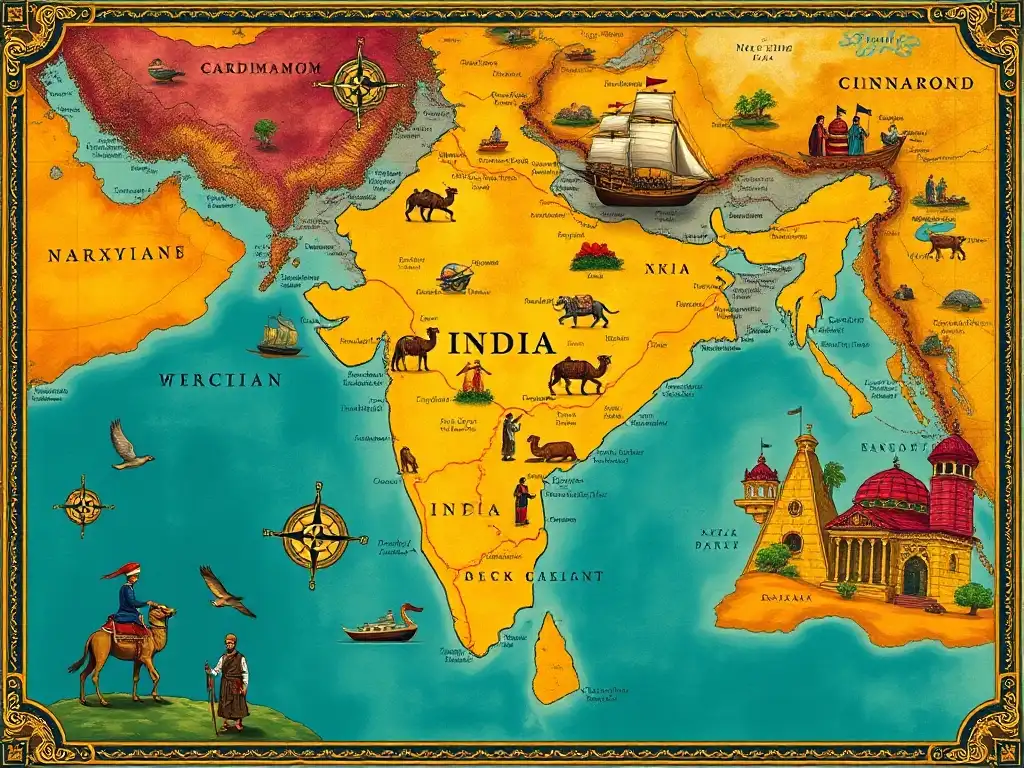
The Spice Routes were crucial pathways that facilitated the trade of valuable spices, connecting Ancient India to various regions across Asia, the Middle East, and beyond. These routes allowed India to emerge as a pivotal player in global commerce during antiquity, fostering cultural exchanges and economic growth. The development of these trade routes can be traced back to several key factors, including geography, demand for spices, and the establishment of trade networks.
Origins and Development of the Spice Trade
The origins of the spice trade can be linked to the rich biodiversity of the Indian subcontinent, where spices like black pepper, cardamom, and cinnamon thrived in abundance. The trade began as early as the 3rd millennium BCE, with evidence of spice usage in ancient Indian texts and archaeological findings.
- Geographical Factors: India's strategic location made it a natural hub for trade. The subcontinent was bordered by the Arabian Sea to the west and the Bay of Bengal to the east, facilitating maritime trade routes. Overland routes, such as the Silk Road, also linked India to Central Asia and the Mediterranean.
- Cultural Exchanges: The spice trade not only involved the exchange of products but also the mingling of cultures. Merchants, travelers, and explorers from different civilizations interacted along these trade routes, introducing new ideas, religions, and technologies.
- Trade Networks: Ancient Indian merchants established extensive trade networks with neighboring regions such as the Roman Empire, China, and Southeast Asia. The establishment of trade guilds and the use of standardized weights and measures further facilitated trade.
The spice trade flourished throughout various periods, particularly during the Maurya and Gupta empires, which provided political stability and encouraged commerce.
Major Spices and Products Exchanged
The spice trade encompassed a wide variety of spices and products, each holding significant value in ancient economies and cultures. Some of the major spices traded included:
- Black Pepper: Often referred to as "black gold," it was one of the most sought-after spices, prized for its flavor and preservative qualities. It was extensively traded and used in culinary practices across various cultures.
- Cinnamon: This aromatic spice was highly valued for its fragrance and medicinal properties. It was often used in religious rituals and as a luxury item in various households.
- Cardamom: Known as the "queen of spices," cardamom was used not only for flavoring food but also for its health benefits. It became a staple in Indian cuisine and was traded widely.
- Cloves and Nutmeg: These spices, although not native to India, found their way into Indian markets through trade and were highly sought after for their unique flavors and preservative properties.
In addition to spices, other products such as textiles, gemstones, and medicinal herbs were exchanged along these routes, further enriching the trade.
Impact of the Spice Routes on Ancient Indian Economy
The impact of the spice routes on Ancient India's economy was profound and multifaceted.
- Economic Growth: The trade of spices contributed significantly to the wealth of various Indian kingdoms. Revenue from spice trade allowed rulers to fund public works, military campaigns, and cultural projects, thus enhancing the overall prosperity of the region.
- Cultural Flourishing: The influx of wealth from trade led to the patronage of arts and sciences, resulting in advancements in literature, philosophy, and architecture. The flourishing of cities along trade routes became centers of culture and education.
- Global Influence: As Indian spices became integral to cuisines around the world, they also helped elevate India’s status on the global stage. The demand for Indian spices influenced international trade policies and relationships, marking India as a key player in the ancient global economy.
The spice routes were not merely trade pathways but vital arteries of commerce that connected Ancient India to the broader world. Their legacy continues to resonate in the historical narrative of trade and economy, highlighting India's significant role in ancient global commerce.
Major Cities and Trade Hubs in Ancient India
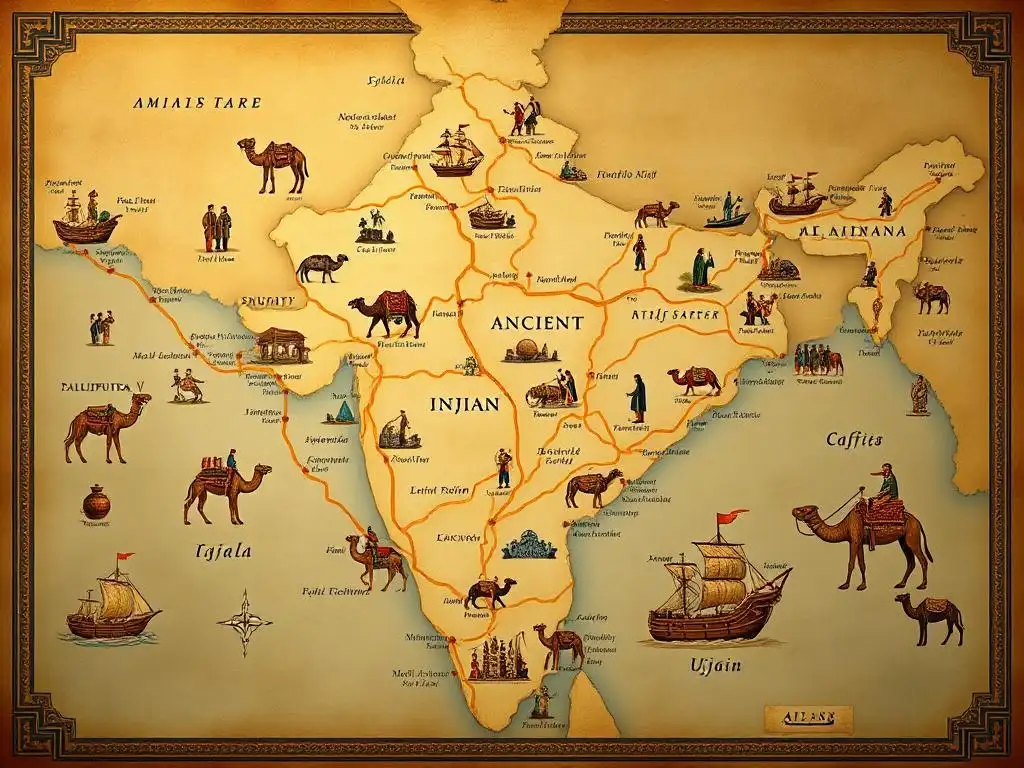
Prominent Trading Centers in Ancient India
Ancient India was interspersed with various cities that served as vital trading centers, facilitating commerce through well-established trade routes. Among these, several cities stand out for their prominence in the ancient trade landscape:
- Taxila: Located near the northwest frontier, Taxila was a significant hub for trade, culture, and education. Its strategic position along the northwestern trade routes connected it with regions such as Central Asia and the Mediterranean. It was renowned for its schools and institutions, attracting traders and scholars alike.
- Pataliputra: As the capital of the Maurya Empire, Pataliputra (modern-day Patna) was a bustling center of commerce. It was strategically located at the confluence of the Ganges and Son rivers, facilitating trade with both interior regions and maritime routes. The city was known for its wealth and diverse markets, where goods such as textiles and spices were exchanged.
- Ujjain: This city played a crucial role in trade during the Gupta period. Positioned on the trade route between the western and eastern parts of India, Ujjain served as a commercial and cultural center. It was particularly famous for its thriving markets that dealt in textiles, gemstones, and spices.
- Madurai: Known for its rich cultural heritage, Madurai was also a significant trading city in ancient India. It was a part of the Tamil trading network and was famous for its cotton textiles and spices, which were highly sought after in both domestic and international markets.
These cities not only played pivotal roles in trade but also contributed to the cultural and economic interactions between India and other civilizations, enhancing their importance in the ancient world.
Role of Port Cities in Maritime Trade
The maritime trade routes of ancient India were equally significant, with several port cities serving as key nodes in the exchange of goods and ideas across the seas. These port cities facilitated trade with various regions, including the Middle East, Southeast Asia, and beyond.
- Lothal: One of the prominent ports of the Indus Valley Civilization, Lothal was strategically located near the Gulf of Khambhat. It is recognized for its well-planned dockyard, which facilitated maritime trade with Mesopotamia and other regions. Archaeological findings indicate that Lothal was a major center for the trade of beads, gems, and cotton textiles.
- Kaveripattinam: Situated at the mouth of the Kaveri River, this port city was a crucial maritime trading hub during the Tamil Sangam period. Kaveripattinam was involved in extensive trade with Southeast Asia, exporting spices, textiles, and pearls. The town was an essential part of the early maritime silk route.
- Cochin (Kochi): Although it became more prominent in later periods, ancient Cochin served as a vital trading post for spices. The port city provided access to the spice-rich regions of Kerala, linking Indian spices to the trade networks that extended to Europe and the Middle East.
- Surat: By the late medieval period, Surat emerged as a major port city, known for its bustling trade activities. It served as the gateway for European traders, particularly the Portuguese and later the British, who sought Indian textiles, spices, and other goods. Surat's strategic location on the Arabian Sea made it a pivotal point for maritime commerce.
These port cities were instrumental in establishing ancient India as a critical player in global trade, contributing significantly to the economic prosperity and cultural exchanges that shaped the region's history. Through their strategic positions, they not only facilitated the flow of goods but also the exchange of ideas, cultures, and technologies across different civilizations.
The Influence of Ancient Indian Trade on Global Commerce
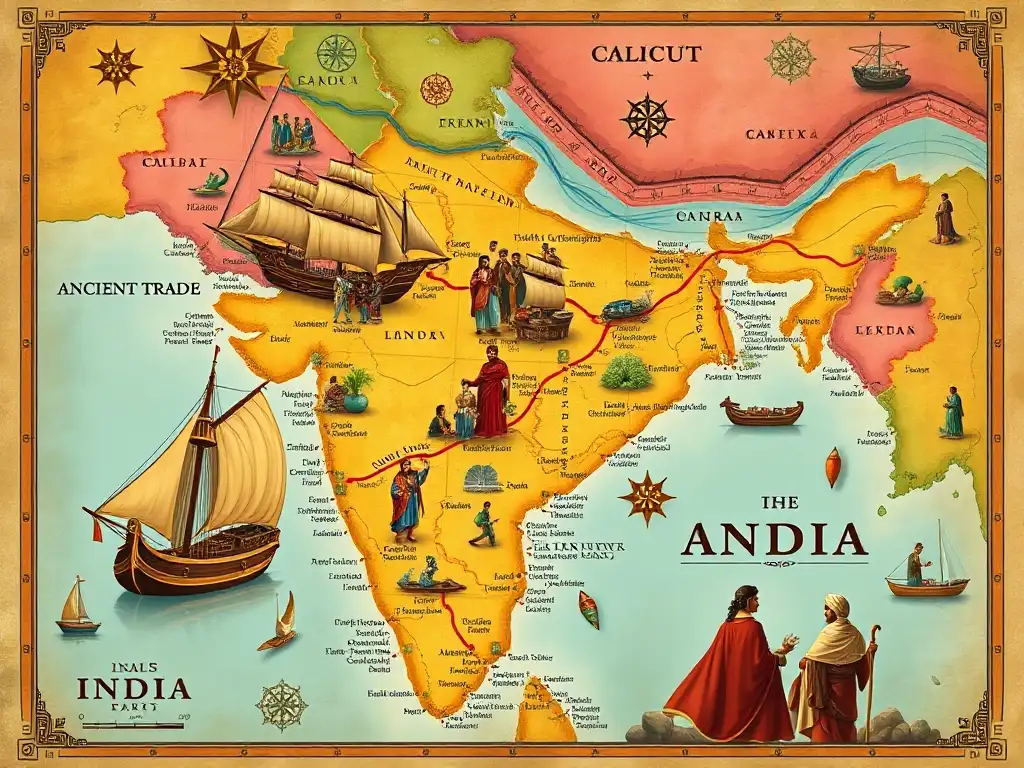
Ancient India's trade routes played a pivotal role in connecting civilizations across continents, facilitating not just the exchange of goods but also the transfer of ideas, cultures, and technologies. The geographical position of India, bordered by the Indian Ocean, the Arabian Sea, and the Himalayas, allowed it to be a central hub in the vibrant tapestry of global commerce.
The trade routes, commonly referred to as the Silk Roads and Spice Routes, enabled merchants from various regions to meet and exchange valuable commodities. India’s abundant resources, particularly spices, textiles, and precious stones, attracted traders from the Roman Empire, the Middle East, and as far away as China and Southeast Asia. This interconnectivity established India as a key player in the global economy during ancient times.
How Ancient India Shaped Trade Networks
Ancient Indian trade networks were sophisticated and well-organized, characterized by a blend of land and maritime routes. The Silk Road, a land-based network, facilitated the movement of silk, spices, and other goods from India to Central Asia and beyond. Meanwhile, the maritime routes connected Indian ports with Southeast Asia, the Arabian Peninsula, and East Africa, allowing for the export of Indian textiles, spices, and metalwork.
- Land Routes: The overland routes traversed through the Khyber Pass and the Bolor Mountains, linking India with Persia and the Mediterranean. These routes helped disseminate Indian goods and culture across vast distances.
- Maritime Routes: Major ports such as Lothal, Surat, and Kolkata served as bustling trade hubs. Ships laden with spices, cotton, and gems set sail to distant lands, establishing India as a pivotal maritime power.
The establishment of trading posts and way stations along these routes facilitated not only commerce but also cultural exchanges, which enriched the civilizations involved.
Contributions of Indian Merchants to Global Markets
Indian merchants were instrumental in shaping the dynamics of global trade in ancient times. Their contributions can be categorized into several key areas:
- Cultural Exchange: Indian traders were not just merchants; they were also cultural ambassadors. Through their travels, they disseminated Indian philosophies, religions (especially Buddhism), and art forms across Asia and beyond. This exchange fostered a rich cultural intermingling, influencing societies worldwide.
- Innovative Trade Practices: Indian merchants introduced various trade practices that are still in use today. They utilized credit systems and bills of exchange, which made transactions smoother and more efficient. The concept of trust-based trading emerged, where parties engaged in commerce based on reputation and mutual trust.
- Diversification of Goods: The Indian trade networks expanded the variety of goods available in global markets. Not only did they export spices like black pepper, cardamom, and cinnamon, but they also brought back exotic items such as silk from China and gold from Africa.
- Economic Impact: The economic activities of Indian merchants significantly contributed to the prosperity of various regions. The wealth generated through trade led to advancements in local economies, impacting agriculture, craftsmanship, and urban development.
The role of ancient Indian trade routes in global commerce was profound and multi-faceted. The intricate networks established by Indian merchants not only fostered economic growth but also enriched the cultural landscape of numerous civilizations, leaving a lasting legacy that continues to influence global trade practices today.
Challenges and Changes in Ancient Trade Routes
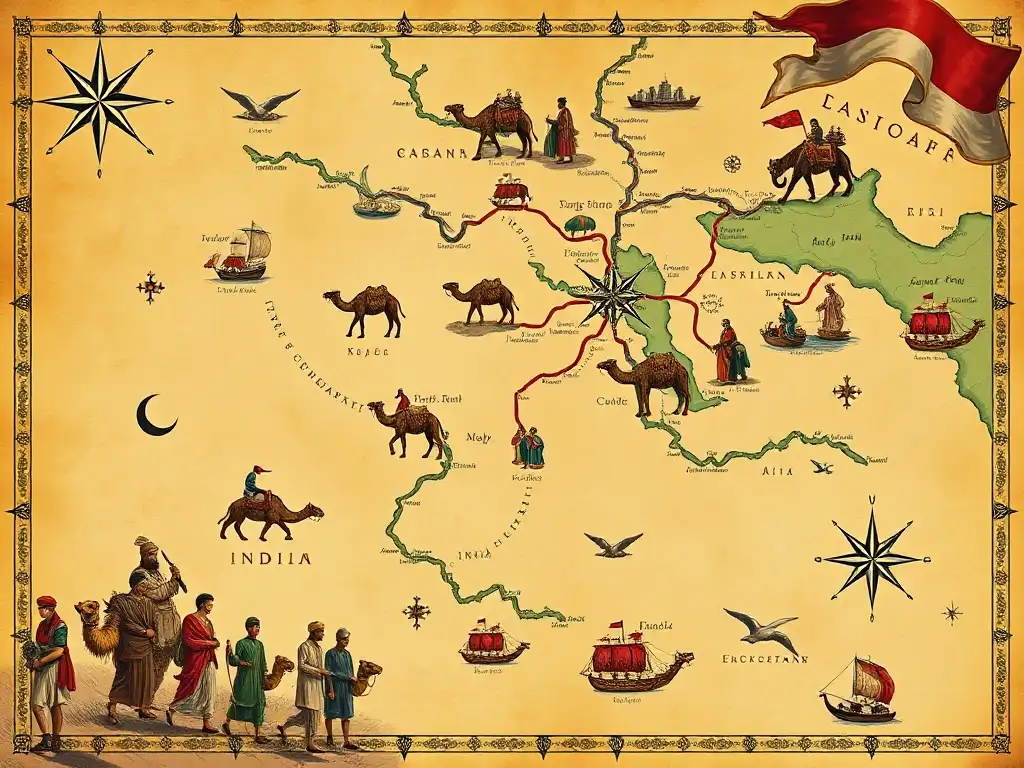
Geopolitical Factors Affecting Trade Routes
The ancient trade routes that crisscrossed India were not just mere pathways for goods; they were influenced by a multitude of geopolitical factors that shaped the commerce of the region. As empires rose and fell, the control over these routes would shift, impacting trade significantly.
- Empires and Kingdoms: The rise of powerful empires like the Maurya and Gupta dynasties facilitated trade through the establishment of stable governance along key routes. Conversely, the decline of these empires often led to diminished security, making trade less appealing.
- Political Alliances and Conflicts: Alliances between states could enhance trade relations, as seen with the Mauryan Empire's diplomatic ties with the Hellenistic kingdoms. However, conflicts, such as the invasions by the Huns, disrupted established trade routes, leading to a decline in commerce and economic instability.
- Cultural Exchange and Influence: The cultural dynamics along trade routes also played a crucial role. The influx of foreign traders brought not only goods but also ideas and cultural practices, which sometimes led to conflicts over cultural identity and control of trade practices.
- Territorial Changes: The constant shifting of borders, due to war or treaties, would often result in the need for new routes or the abandonment of old ones. For example, the Persian Empire’s expansion into northwestern India altered the trade dynamics, as Persian control over certain routes increased.
Natural Disasters and Their Impact on Trade
Natural disasters have always posed significant challenges to trade routes, and ancient India was no exception. The geography of the region, with its varied climate and topography, made it susceptible to various environmental challenges.
- Floods and River Changes: The Indus Valley, a prominent trade hub, was particularly vulnerable to flooding. Changes in river courses could render established routes unusable, disrupting trade lines and affecting the livelihoods of communities dependent on these routes.
- Earthquakes: The seismic activity in the Himalayan region could lead to devastating earthquakes, which could destroy infrastructure, including roads and trading posts. For instance, the destruction of trade centers in the region would temporarily halt commerce, forcing traders to seek alternative routes.
- Droughts and Famine: Prolonged droughts could lead to crop failures, reducing the availability of goods for trade. This would not only impact local economies but also hinder trade with distant regions that relied on Indian spices and textiles. The resulting famine often resulted in social unrest, further complicating the trade landscape.
- Changes in Climate: Over longer periods, shifts in climate could alter agricultural patterns, affecting what goods were available for trade. The rise of new crops or the decline of traditional staples could lead to changes in trade demand, influencing which routes remained economically viable.
The challenges faced by ancient trade routes in India were multifaceted, influenced by geopolitical shifts and natural disasters. Understanding these factors is essential for appreciating the complexities of ancient India trade routes and their role in global commerce.
Conclusion: Legacy of Ancient India Trade Routes
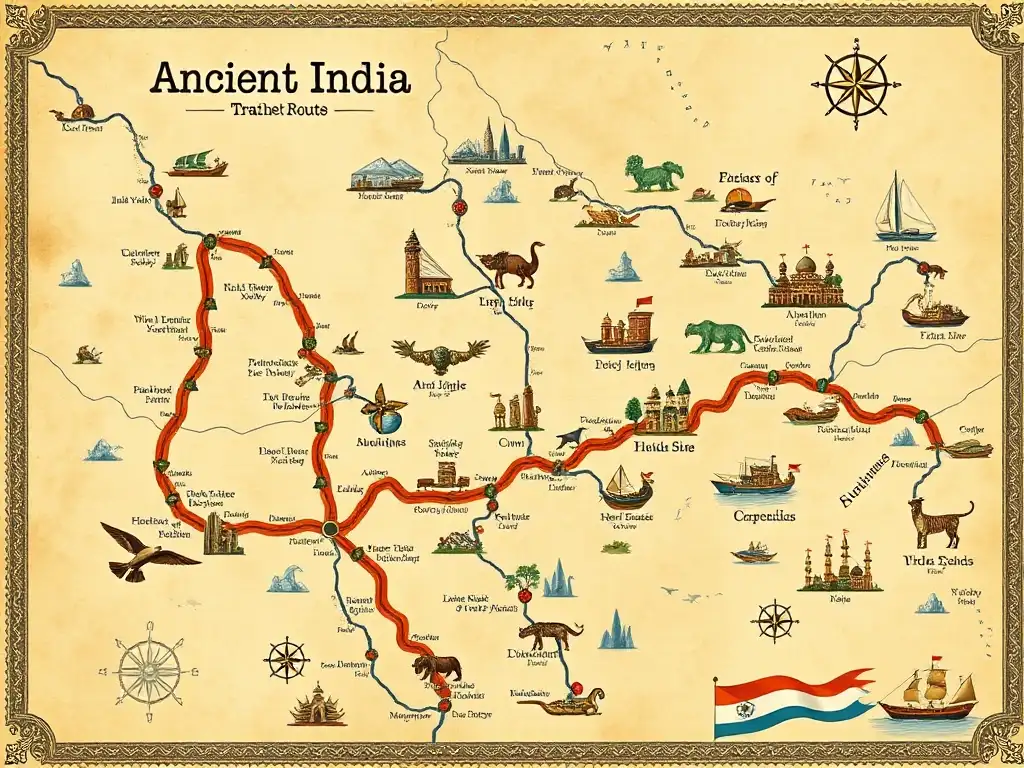
The trade routes established during ancient times played a crucial role in shaping the economic, cultural, and social landscapes of India, significantly impacting the civilizations that followed. From the bustling markets of the Indus Valley Civilization to the extensive trade networks of the Gupta Empire, these routes facilitated not only the exchange of goods but also ideas, technologies, and cultural practices. The legacy of these ancient trade routes continues to resonate in modern commerce, underscoring the profound influence of ancient India on global trade dynamics.
Lasting Impact on Modern Trade Practices
The ancient trade routes of India laid the groundwork for contemporary global commerce in several ways:
-
Interconnected Markets:
The Silk Roads and spice routes established a framework for interconnected markets across continents. This interconnectivity is mirrored in today's global supply chains, where goods travel across multiple countries before reaching consumers. The principles of trade established during ancient times, such as barter and negotiation, still inform modern business practices.
-
Cultural Exchange:
Ancient trade routes were not merely conduits for goods but also for cultural exchange. The blending of cultures through trade influenced languages, religions, and art. This tradition of cultural intermingling continues today, as globalization fosters cross-cultural collaborations in various industries.
-
Standardization of Goods:
Just as ancient traders established quality standards for spices and textiles, modern commerce relies on standardized products to ensure consistency and reliability. The emphasis on quality, which was paramount in ancient trade, remains a critical factor in contemporary markets.
-
Trade Agreements:
The complexities of trade during ancient times necessitated agreements and treaties among various kingdoms and empires. This practice has evolved into the modern system of trade agreements and international trade laws that govern commerce today.
-
Economic Models:
The economic systems that developed around ancient trade routes, such as taxation and tariffs, have influenced modern economic models. Today’s governments utilize similar principles to regulate trade and stimulate economic growth.
Reflection on the Importance of Historical Trade Routes
The historical trade routes of ancient India are more than just pathways for commerce; they represent a tapestry of human connection and collaboration. Reflecting on their importance reveals several key insights:
-
Cultural Heritage:
The trade routes were instrumental in the dissemination of cultural practices, philosophies, and technologies. The spread of Buddhism along these routes exemplifies how trade facilitated not just economic but also spiritual exchanges.
-
Economic Resilience:
Ancient India’s ability to adapt and thrive through trade highlights the resilience of its economy. The diverse range of goods traded, from spices to textiles, showcases India’s resourcefulness and innovation, qualities that are vital for any economy today.
-
Global Perspective:
Understanding ancient trade routes provides a broader perspective on globalization. It illustrates that the interconnectedness of societies is not a modern phenomenon but has roots that trace back thousands of years.
The ancient India trade routes serve not only as a reminder of the past but also as a foundation for understanding the complexities of modern commerce. Their legacy is reflected in the practices and relationships that continue to shape global trade today, emphasizing the enduring significance of these historical pathways.
Further Reading on Ancient India Trade Routes
Recommended Books and Resources
When delving into the fascinating world of ancient India trade routes, several books and resources provide comprehensive insights into the intricate networks that facilitated commerce during those times. Here are some noteworthy recommendations:
- "The Silk Roads: A New History of the World" by Peter Frankopan
- This book offers a global perspective on the significance of trade routes, including the role of India in connecting East and West.
- "Trade and Traders in the Early Indian Ocean World" by Richard H. P. Hingley
- Hingley explores the various trade networks and the impact of Indian traders on the ancient economy, focusing on maritime routes.
- "India in the Persianate Age: 1000-1765" by Richard M. Eaton
- This resource provides a detailed analysis of India’s economic interactions with Persian and Islamic civilizations, shedding light on trade dynamics.
- "The Ancient Economy" by M. I. Finley
- Finley’s classic work discusses the economic structures of ancient societies, including those of India, and the role of trade in their development.
- Online Databases and Journals
- Exploring academic databases like JSTOR and Project MUSE can provide access to a wealth of scholarly articles and papers on ancient trade routes, focusing on India’s contributions.
For those interested in expanding their knowledge of trade and economy in ancient India, the following articles delve into various aspects of this topic:
- "The Indus Valley Civilization: Trade and Economic Practices"
- This article examines the trade mechanisms of one of the earliest urban cultures in India, highlighting their economic practices and connections.
- "Maritime Trade in Ancient India: Routes and Impacts"
- A detailed analysis of maritime trade routes that connected ancient India with Southeast Asia and beyond, including the commodities traded.
- "The Role of the Gupta Empire in Expanding Trade Networks"
- This piece discusses how the Gupta Empire contributed to the flourishing of trade routes, emphasizing its impact on commerce and culture.
- "Silk, Spices, and the Global Economy: Ancient India’s Trade Contributions"
- An exploration of the various goods traded along the Silk Roads and Spice Routes, detailing India’s pivotal role in global commerce.
- "Cross-Cultural Exchanges: India’s Influence on Trade Practices"
- The article highlights how India influenced trade practices across different cultures and regions through its extensive trade networks.
These resources and articles serve as essential tools for anyone interested in the complex and rich tapestry of ancient India’s trade routes and their lasting impact on global commerce.
Frequently Asked Questions
What were the Silk Roads in ancient India?
The Silk Roads were a network of trade routes that connected India with China and other regions, facilitating the exchange of goods, culture, and ideas.
How did the Spice Routes impact ancient Indian trade?
The Spice Routes allowed ancient India to become a hub for spices like pepper and cinnamon, significantly enhancing its role in global commerce and economic prosperity.
What contributions did ancient Indian civilizations make to trade?
Ancient Indian civilizations developed advanced trade techniques, established currency systems, and created maritime routes, which greatly influenced global trade practices.
How did the Indus Valley Civilization contribute to trade?
The Indus Valley Civilization was known for its sophisticated urban planning and trade networks, which included maritime trade with Mesopotamia and the export of goods like textiles and beads.
What was the significance of trade during the Gupta Empire?
During the Gupta Empire, trade flourished due to political stability, leading to increased cultural exchanges and the establishment of trade relations with regions such as Southeast Asia and the Middle East.
Final Reflection: The Enduring Legacy of Ancient India’s Trade Routes
The intricate web of trade routes established by Ancient India not only facilitated the exchange of goods but also fostered cultural connections that resonate in our globalized world today. The significance of these ancient pathways transcends mere commerce; they symbolize the spirit of collaboration and mutual enrichment that continues to shape our societies. As we navigate the complexities of modern trade and globalization, we can draw valuable lessons from the past about the importance of connectivity and cultural exchange.
The influence of Ancient India's trade routes is palpable in our cultural and social landscapes, where the fusion of ideas, art, and traditions can be traced back to these early interactions. The legacy of these routes is not just historical; it is a living testament to the power of trade in forging relationships and understanding among diverse peoples. Trade is not just about goods; it is about the exchange of ideas and the building of bridges between cultures.
This quote encapsulates the essence of what Ancient India’s trade routes represented and how they continue to inspire contemporary dialogues around commerce and cultural exchange.
As we reflect on the lessons from Ancient India’s trade routes, I invite you to consider how you can contribute to fostering connections in your own life. Think about the ways you can engage with diverse cultures, support local artisans, or promote sustainable practices in your community. By embracing the spirit of collaboration and understanding that these ancient routes exemplified, we can create a more interconnected and harmonious world. Let us honor the legacy of our ancestors by continuing to build bridges that unite us across time and space.
Unveil the Wonders of Ancient Commerce!
Thank you for taking the time to delve into the fascinating world of ancient India's role in global commerce! You’ve uncovered the richness of the Silk Roads and Spice Routes, highlighting how these trade networks shaped cultures and economies. Now, it’s time to channel that newfound knowledge into action!
- Explore further: Dive deeper into the captivating stories of traders and their journeys. Check out our exclusive resources and articles on ancient trade routes at Ancient India History.
- Share your insights: Discuss your favorite aspects of ancient trade with friends or on social media—your passion might ignite someone else’s curiosity!
- Engage with our community: Join our forum to connect with fellow enthusiasts and share your thoughts on how ancient commerce continues to influence modern trade practices.
What aspect of ancient trade surprised you the most, and how do you see its impact resonating in today’s world?