
The Evolution of Trade Routes in Ancient India: Connecting Cultures and Economies


Welcome to Ancient India History, where we embark on a captivating journey through time to uncover the rich tapestry of ancient Indian civilizations. In this exploration, we delve into the evolution of trade routes in ancient India, revealing how these pathways not only connected distant lands but also fostered the exchange of cultures and ideas.
Are you ready to discover how bustling markets and thriving commerce shaped the very essence of society from the Indus Valley to the Gupta Empire? Join us as we unravel the intricate history of these vital trade routes and their lasting impact on the world!
Introduction to Ancient Indian Trade Routes History
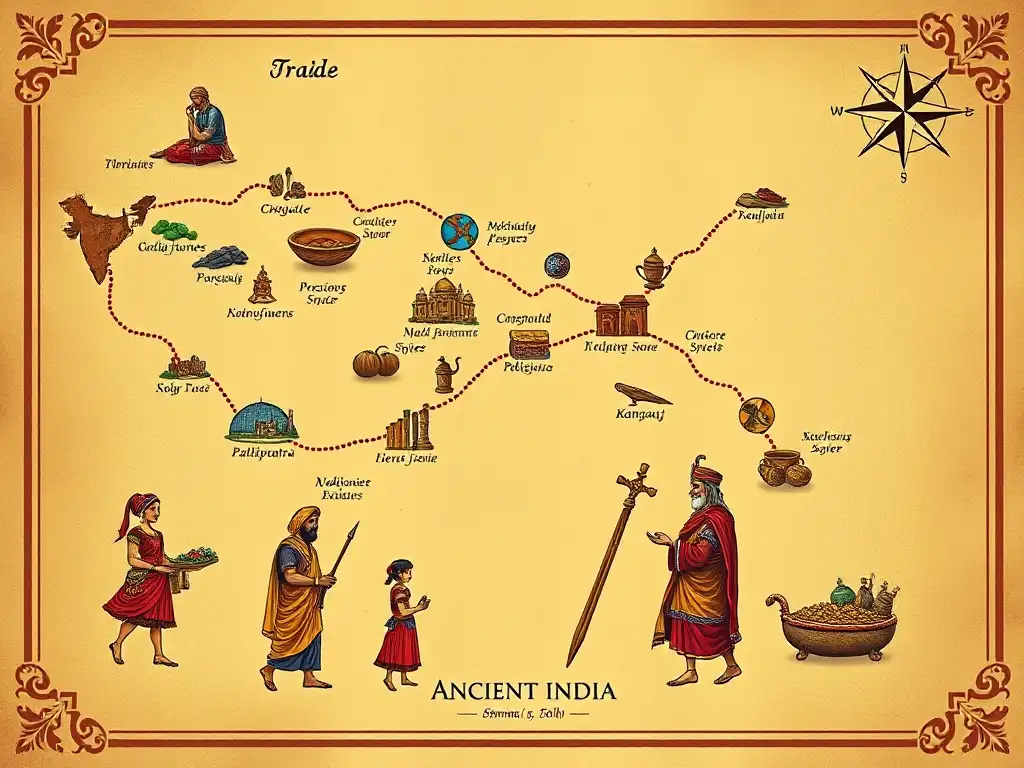
The history of ancient Indian trade routes is a captivating chronicle that illustrates the dynamic interplay between diverse cultures and robust economies. Spanning from the Indus Valley Civilization, through the Maurya Empire, and into the Gupta period, these trade routes were not merely pathways for goods but also conduits for ideas, technologies, and cultural exchanges.
The intricate network of trade routes, both overland and maritime, played a crucial role in shaping the socio-economic landscape of ancient India. This article delves into the evolution of these routes, examining their significance in fostering connections among various civilizations and their lasting impact on the region's economic practices.
Overview of Ancient Indian Trade Routes
Ancient Indian trade routes can be categorized into two primary types: overland routes and maritime routes.
- Overland Routes: These included the famous Silk Road, which facilitated trade between India and regions as far as Central Asia, Persia, and beyond. Key cities such as Taxila and Pataliputra emerged as vital hubs where traders exchanged goods such as spices, textiles, and precious stones.
- Maritime Routes: The Indian Ocean trade network was instrumental in connecting India with distant lands such as Southeast Asia, Africa, and the Middle East. Ports like Lothal and Bharukachchha became thriving centers of commerce, where merchants engaged in the trade of commodities such as ivory, silk, and aromatic spices.
The interconnectedness of these routes fostered not only economic prosperity but also cultural diffusion, as ideas and innovations traveled alongside goods.
Importance of Trade in Ancient Indian Civilizations
Trade was a cornerstone of ancient Indian civilizations, impacting various aspects of life, including:
- Economic Growth: The influx of foreign goods and wealth contributed to the prosperity of local economies, enabling the growth of urban centers and a thriving merchant class.
- Cultural Exchange: Trade routes served as channels for the exchange of philosophies, religions, and artistic styles. For instance, Buddhism spread across Asia through these networks, influencing cultures far beyond India's borders.
- Political Relations: Trade fostered diplomatic ties between various kingdoms and empires, with treaties often established to facilitate trade agreements. This not only enhanced economic stability but also promoted peace and cooperation.
The Geographic Landscape Influencing Trade Routes
The geographic features of ancient India played a significant role in shaping the trade routes that emerged throughout its history.
Major Regions and Their Contributions
- Indus Valley:
- Known for its advanced urban planning and craft production, cities like Harappa and Mohenjo-Daro became crucial points of trade.
- Gangetic Plains:
- Fertile land supported agriculture, leading to surplus production that fueled trade. Important trade centers developed along the Ganges River.
- Deccan Plateau:
- Rich in minerals and spices, this region contributed significantly to India's export economy, facilitating trade with the southern parts of the subcontinent.
- Western Coast:
- The Arabian Sea facilitated maritime trade, with ports like Surat becoming bustling centers of commerce.
Key Geographic Features Facilitating Trade
- Rivers: Major rivers such as the Indus and Ganges provided natural highways for transporting goods and people, facilitating trade and communication between regions.
- Mountain Passes: The Himalayas and the Western Ghats contained passes that allowed traders to traverse difficult terrains, connecting different cultural regions.
- Coastal Geography: The Indian coastline, dotted with natural harbors, enabled the development of maritime trade routes, linking India to various global markets.
Through these geographic advantages, ancient Indian trade routes flourished, serving as vital arteries that connected diverse cultures and economies, ultimately leaving a lasting legacy on the history of trade in the region.
Early Trade Routes in Ancient India
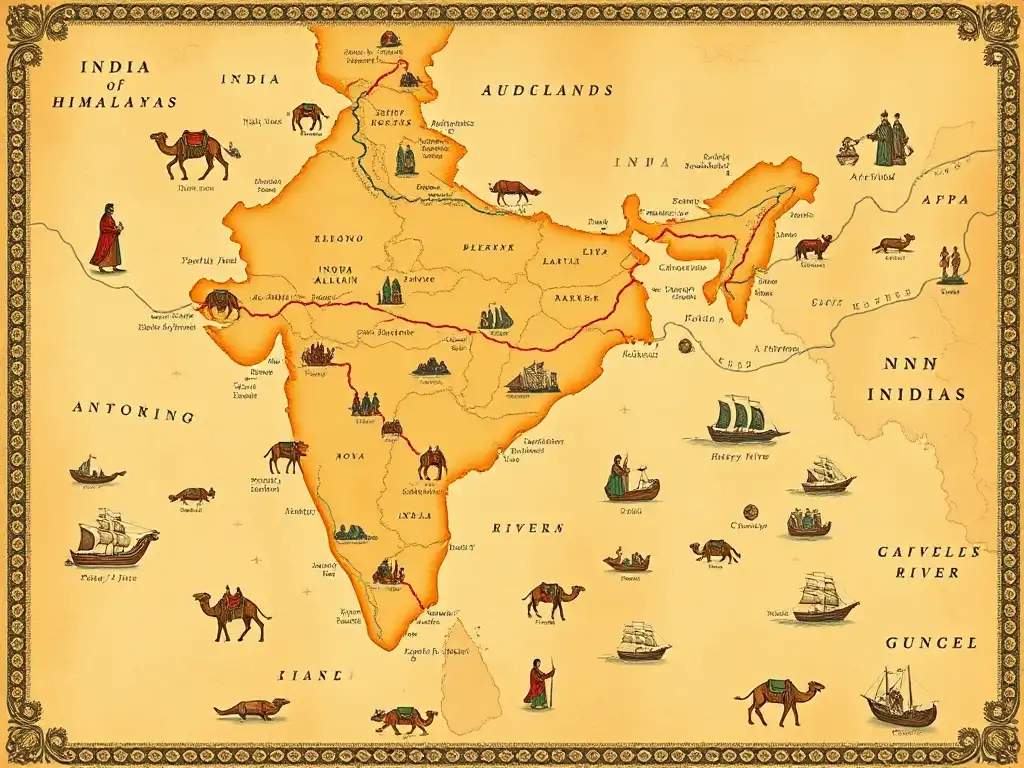
The history of ancient Indian trade routes is a fascinating tapestry woven through millennia, showcasing the early connections between diverse cultures and economies. These routes facilitated not just the exchange of goods but also the transfer of ideas, technologies, and cultural practices. From the rich agricultural hinterlands to bustling urban centers, trade routes played a pivotal role in shaping the socioeconomic landscape of ancient India. By understanding the origins and evolution of these routes, we can gain insights into the interconnectedness of ancient civilizations and their impact on subsequent historical developments.
The Indus Valley Civilization: Trade Origins
The Indus Valley Civilization, flourishing around 2500 BCE, is considered one of the earliest examples of urban culture in the Indian subcontinent. Its cities, such as Harappa and Mohenjo-Daro, were strategically located near rivers, which facilitated trade and transportation. The inhabitants of this civilization engaged in commerce not only with neighboring regions but also with distant lands, including Mesopotamia and Persia.
Archaeological evidence suggests that the Indus people traded a variety of goods, including cotton textiles, pottery, and precious stones. The use of standardized weights and measures indicates the sophistication of their trade practices. The discovery of seals with inscriptions points to a system of writing that might have been used in trade transactions, reflecting an advanced level of economic organization.
Routes Connecting the Indus Valley to Neighboring Regions
Trade routes from the Indus Valley extended to neighboring regions, fostering economic interactions that were crucial for both local and international trade. Key routes connected the Indus Valley to the Arabian Sea, facilitating maritime trade with civilizations across the Persian Gulf. Goods such as spices, textiles, and metals were exchanged, enriching the cultural tapestry of the region.
Overland routes also emerged, linking the Indus Valley to the northern regions, including the foothills of the Himalayas and the Gangetic plains. These routes not only facilitated the movement of goods but also allowed for the exchange of ideas, contributing to the cultural evolution of ancient India. The establishment of trade links with regions such as Central Asia and the Middle East played a crucial role in the diffusion of technologies and innovations, including agricultural practices and metallurgy.
The Role of Major Cities in Trade Networks
As ancient India evolved, major cities emerged as pivotal centers in trade networks, significantly influencing the economic landscape. These urban centers became melting pots of various cultures, leading to a vibrant exchange of goods, ideas, and traditions. The growth of these cities was directly tied to their strategic locations along trade routes, positioning them as hubs of commerce and culture.
Harappa and Mohenjo-Daro: Economic Hubs
Harappa and Mohenjo-Daro, two prominent cities of the Indus Valley Civilization, exemplify the role of urban centers in trade. Their advanced urban planning, featuring well-structured streets and drainage systems, reflects a high level of civic organization, essential for managing trade activities. These cities were not only centers for production but also served as marketplaces where traders from various regions converged.
The archaeological findings from these cities reveal a wealth of artifacts related to trade, including weights, measures, and a variety of goods such as beads and pottery. The presence of storage facilities indicates the importance of managing surplus goods, crucial for sustaining trade. Harappa and Mohenjo-Daro laid the foundations for future urban trade centers in ancient India, influencing the economic practices of subsequent civilizations.
The Impact of Urban Centers on Trade Expansion
The rise of urban centers in ancient India had a profound impact on trade expansion. As trade routes became more established, cities such as Pataliputra and Taxila emerged as significant players in the broader trade network. These urban hubs facilitated not only local trade but also long-distance commerce, connecting India with distant regions like the Roman Empire and Southeast Asia.
The growth of these centers led to the development of specialized crafts and industries, further bolstering trade. Merchants and traders from different backgrounds came together, promoting cultural exchange and economic collaboration. The flourishing trade networks contributed to the wealth of these cities and played a crucial role in shaping the economic practices and systems of ancient India, leaving a legacy that influenced future generations.
The Influence of Empires on Trade Routes
The rise and fall of empires in ancient India significantly influenced the development and expansion of trade routes. These empires, through their political stability, economic policies, and military protection, facilitated the movement of goods, ideas, and cultures across vast distances. As empires expanded, they often integrated diverse trade networks, leading to increased connectivity between different regions. The Mauryan and Gupta Empires, in particular, played pivotal roles in shaping the landscape of ancient Indian trade routes, allowing for the flourishing of commerce and cultural exchange.
Mauryan Empire: Trade Innovations and Expansion
The Mauryan Empire, which thrived from the 4th to the 2nd century BCE, was instrumental in revolutionizing trade practices in ancient India. Under the reign of Emperor Ashoka, the empire expanded its borders significantly, encompassing a vast territory that included critical trade centers. The Mauryan administration introduced several innovations that enhanced trade, including standardized weights and measures, which facilitated transactions and reduced fraud.
Additionally, the establishment of a network of roads, notably the Grand Trunk Road, improved overland trade by allowing merchants to transport goods more efficiently across regions. The Mauryan Empire also promoted maritime trade, with ports like Tamralipti becoming vital links between India and Southeast Asia. This era witnessed an increase in the export of Indian textiles, spices, and precious stones, contributing to economic prosperity and cultural exchanges with neighboring regions.
The Gupta Empire: Flourishing Trade and Cultural Exchange
The Gupta Empire, often referred to as the Golden Age of India (approximately 320 to 550 CE), further advanced the economic landscape established by the Mauryans. The Gupta rulers maintained and expanded existing trade routes while also fostering new connections with far-reaching regions such as the Mediterranean and Southeast Asia. Merchants during this period benefited from improved security and stability, allowing for increased trade activity.
The Gupta period saw a remarkable increase in the trade of luxury goods, including silk, jewelry, and fine pottery. Additionally, the government's encouragement of trade led to the emergence of vibrant marketplaces and trade guilds, which played a crucial role in regulating trade practices and protecting merchants. The rich cultural interactions facilitated by trade during the Gupta Empire resulted in the exchange of ideas, art forms, and technological innovations, further enhancing the sophistication of Indian civilization.
Cultural Exchanges Along Ancient Indian Trade Routes
Ancient Indian trade routes were not merely conduits for goods; they were also pathways for cultural exchanges that profoundly impacted the civilizations connected by them. The interactions between traders, travelers, and local societies led to the dissemination of ideas, religions, and artistic influences across regions.
The Spread of Ideas and Religion through Trade
Trade routes served as vital channels for the spread of religious and philosophical ideas in ancient India. Buddhism, for instance, flourished as a result of trade interactions, with merchants and travelers carrying its teachings to distant lands. The establishment of stupas and monasteries along trade routes facilitated the movement of monks and pilgrims, further spreading Buddhist doctrines across Asia.
Similarly, Hinduism and Jainism also benefitted from trade interactions, as ideas about spirituality, ethics, and ritual practices were exchanged among diverse cultures. The trade routes enabled the dissemination of texts, such as the Vedas and Upanishads, influencing spiritual and philosophical thought beyond the Indian subcontinent. This cultural intermingling not only enriched the religious landscape of the regions involved but also laid the groundwork for future syncretic traditions.
Art and Craftsmanship Influenced by Trade Interactions
The artistic expressions of ancient India were deeply influenced by interactions along trade routes. As goods were exchanged, so too were artistic techniques and styles. The influx of foreign artisans and the demand for luxury items led to the emergence of new art forms, blending indigenous and external influences.
For example, the intricate designs seen in Indian textiles, sculpture, and pottery often reflect the artistic traditions of regions such as Persia and Central Asia. The use of motifs and patterns, along with the introduction of new materials, enriched the Indian art scene. Additionally, trading cities became cultural melting pots, where local artisans learned from foreign influences, resulting in unique styles that characterized the artistic heritage of ancient India.
The evolution of trade routes in ancient India not only facilitated economic growth but also fostered a rich tapestry of cultural exchanges that shaped the civilization's identity. The contributions of empires like the Mauryan and Gupta are evident in the flourishing trade practices and the vibrant cultural landscape that emerged along these ancient routes.
Trade Goods and Economic Practices
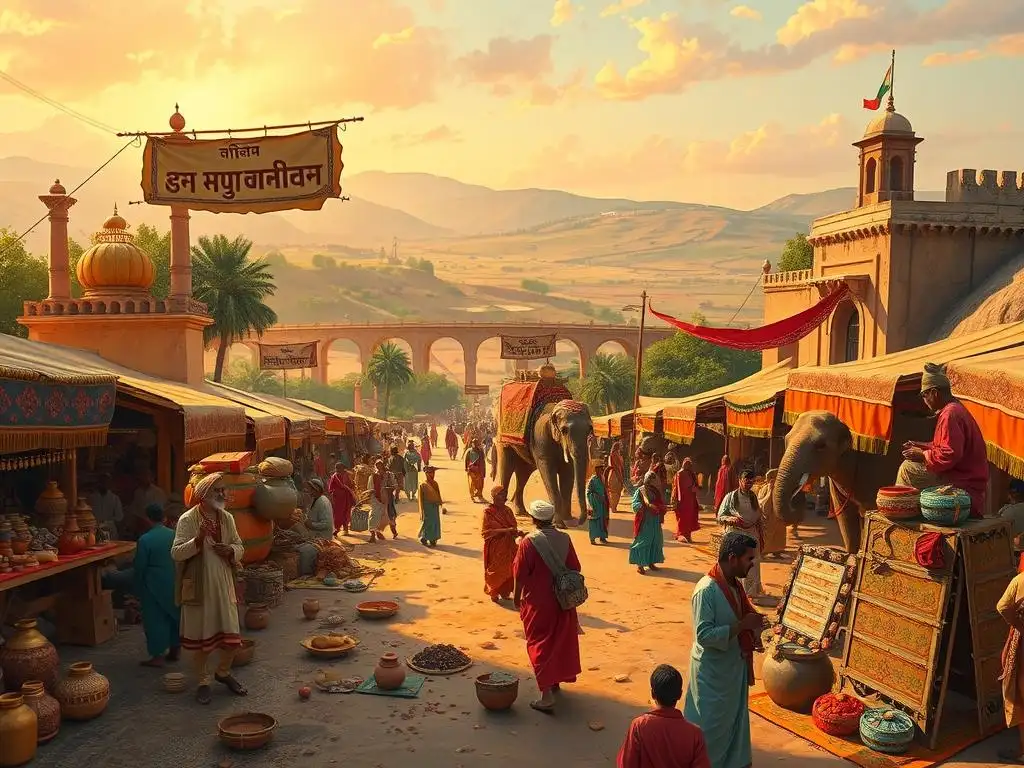
Trade in ancient India was a vital component of its economy, facilitating not only the exchange of goods but also the interaction of diverse cultures. The trade routes that crisscrossed the region connected various civilizations, contributing to the dissemination of ideas, technologies, and religious beliefs, alongside the movement of tangible commodities. Ancient Indian trade practices were characterized by a mix of barter systems and the use of currency, which evolved over time to meet the demands of expanding markets.
The economic practices during this period were influenced by both geographic and social factors. Major trade routes emerged from the Indus Valley Civilization, with cities like Harappa and Mohenjo-Daro acting as central hubs. These routes later expanded under the Mauryan Empire and beyond, linking India with regions as far as the Mediterranean and Southeast Asia. The exchange of goods ranged from local products to luxury items sought after by foreign traders, underscoring the complexity and dynamism of ancient Indian trade.
Key Commodities Traded in Ancient India
The diversity of goods traded in ancient India was remarkable, reflecting the region's rich natural resources and craftsmanship. Some of the key commodities included:
- Spices: India was renowned for its spices, especially black pepper, cardamom, and cinnamon, which were highly valued in international markets.
- Textiles: Cotton and silk textiles were among the most sought-after products, with intricate weaving techniques that showcased India's artistry.
- Metals: Gold, silver, and precious stones were traded extensively, with India being a significant source of diamonds and other gemstones.
- Agricultural Products: Grains like rice and wheat, as well as pulses and legumes, formed the basis of trade within local and regional markets.
- Medicinal Herbs: With a rich tradition of Ayurveda, various herbs and plants were traded for their medicinal properties, drawing interest from traders across the region.
These commodities not only served practical purposes but also played a role in the cultural exchanges that occurred along trade routes, influencing culinary practices, fashion, and medicinal knowledge across civilizations.
The Role of Currency in Ancient Indian Trade
The evolution of currency played a crucial role in the facilitation and expansion of trade in ancient India. Initially, trade was conducted through a barter system, where goods were exchanged directly without monetary intermediaries. However, as trade networks grew more complex, the need for a standardized medium of exchange became evident.
- Early Currency Forms: The earliest forms of currency included cowrie shells and metal tokens, which were used in various regions to facilitate trade.
- Coins: By the 6th century BCE, the introduction of metal coins—initially made of silver and later of gold—revolutionized trade practices. The punch-marked coins of the Mauryan period are one of the earliest examples of standardized currency.
- Regional Variations: Different regions developed their own coinage systems, with unique designs and inscriptions that often reflected local rulers and deities. This diversity added a layer of complexity to trade, as merchants had to navigate various currencies.
The use of currency allowed for greater efficiency in transactions, reduced the complexities of barter, and enabled traders to engage in long-distance commerce with confidence.
The Decline and Transformation of Trade Routes
The decline and transformation of ancient Indian trade routes were influenced by various factors, including changing political landscapes, economic shifts, and the rise of new trade powers. By the end of the first millennium CE, significant changes were observed in the dynamics of trade networks across the Indian subcontinent.
Factors Leading to the Decline of Trade Networks
Several factors contributed to the decline of established trade routes in ancient India:
- Political Instability: The fragmentation of large empires, such as the Mauryan and Gupta Empires, led to increased regional conflicts and instability, adversely affecting trade.
- Invasions and Migrations: Invasions by foreign powers, such as the Huns and later the emergence of Islamic empires, disrupted traditional trade practices and routes.
- Economic Shifts: The rise of maritime trade routes in the Indian Ocean began to overshadow overland routes, leading to a shift in trading dynamics. Coastal ports became increasingly important as centers of commerce.
The combination of these factors caused significant changes in trade patterns, leading to a decline in the once-thriving overland trade networks.
Transformation of Trade Routes in Late Antiquity
As ancient Indian trade routes declined, they also underwent a transformation that reflected the changing socio-economic landscape:
- Emergence of New Trade Centers: Coastal cities such as Kannauj and ports along the western coast gained prominence as new trade hubs, capitalizing on maritime trade.
- Integration into Global Trade Networks: The advent of new trading powers facilitated India's integration into larger global networks, connecting it with East Africa, the Arabian Peninsula, and Southeast Asia. This transition marked a shift from localized trade to broader intercontinental exchanges.
- Cultural Exchanges: The transformation of trade routes also fostered increased cultural exchanges, as goods, ideas, and technologies traversed the newly established maritime routes, enriching the societies involved.
The transformation of trade routes in late antiquity not only reshaped the economic landscape of ancient India but also laid the groundwork for future trade practices in the region.
Legacy of Ancient Indian Trade Routes
The legacy of ancient Indian trade routes is profound, influencing not only the economic landscape of the subcontinent but also shaping cultural exchanges and interactions with distant civilizations. These routes, which flourished from the Indus Valley Civilization (circa 2500 BCE) through the Gupta Empire (circa 320–550 CE), served as crucial arteries for commerce, connecting India to regions as far away as Mesopotamia, Persia, and the Roman Empire. The Silk Road and Spice Route are particularly notable for facilitating trade in luxury goods, including textiles, spices, and precious stones, which were highly sought after in foreign markets.
The establishment of these trade networks not only contributed to the wealth of ancient Indian kingdoms but also allowed for the exchange of ideas, technologies, and cultural practices. For instance, the dissemination of Buddhism into Central Asia and beyond was significantly aided by these routes, showcasing how trade was a vehicle for cultural propagation. The amalgamation of diverse cultural elements along these pathways enriched Indian society, leading to a vibrant tapestry of traditions that continue to influence modern India.
Lasting Impacts on Modern Trade Practices
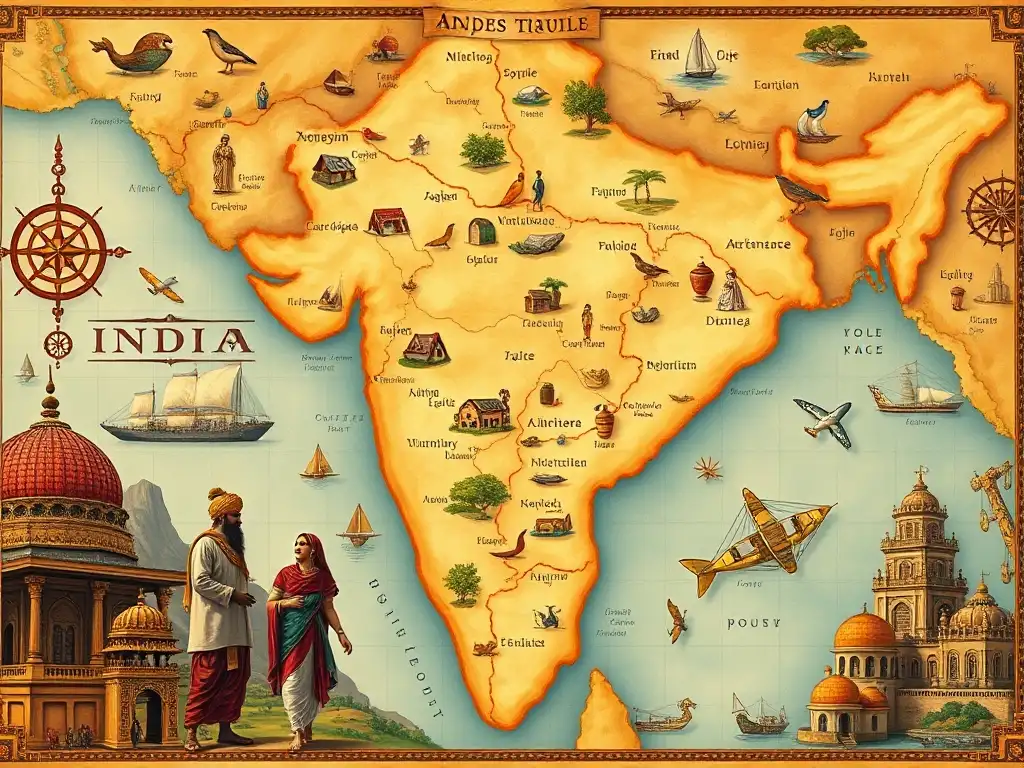
The ancient Indian trade routes laid the groundwork for contemporary trade practices in India and beyond. The principles of trade established during these times, such as the importance of establishing trust, negotiation, and the use of intermediaries, are still prevalent in modern commerce. The legacy of these routes can be observed in today's global supply chains, where countries engage in extensive trade partnerships.
Moreover, the historical interactions facilitated by these routes have led to the integration of various cultural influences, which are evident in modern Indian businesses that cater to both domestic and international markets. The importance of logistics, trade agreements, and the role of ports in facilitating trade can all be traced back to practices that emerged from ancient Indian trade routes. Thus, understanding this history provides valuable insights into current trade dynamics and strategies.
The Cultural Heritage of Ancient Trade Routes in India
Ancient Indian trade routes were not merely conduits for goods; they were also pathways for cultural exchange and interaction. As merchants traveled along these routes, they brought with them not just products but also ideas, religions, and artistic expressions. This cultural diffusion contributed significantly to the richness of Indian heritage.
The spread of religions such as Buddhism and Jainism along trade routes exemplifies this cultural heritage. Stupas, monasteries, and temples built along these routes became centers of learning and cultural exchange, attracting scholars and pilgrims from various regions. Additionally, the fusion of artistic styles—such as Gandhara art, which combined Indian and Greco-Roman influences—highlights how trade facilitated a confluence of cultures.
The culinary diversity seen in India today can also be traced back to these ancient trade connections, with spices and cooking techniques entering the subcontinent through trade interactions. Overall, the cultural heritage established by ancient trade routes continues to be a vital aspect of India's identity, influencing everything from cuisine to art and philosophy.
Conclusion
Summary of Ancient Indian Trade Routes History
Ancient Indian trade routes played a pivotal role in shaping the economic and cultural landscape of the subcontinent. From the bustling markets of Harappa and Mohenjo-Daro to the thriving trade centers of the Maurya and Gupta Empires, these routes facilitated not just the exchange of goods but also the mingling of diverse cultures. The historical significance of these trade networks extends beyond mere commerce; they were instrumental in establishing India as a central player in global trade, influencing economies and cultures across continents.
The Importance of Understanding Trade’s Role in Cultural Development
Understanding the history of ancient Indian trade routes is essential for appreciating their role in cultural development. These routes fostered interactions that led to the exchange of not only goods but also philosophies, religions, and art forms. Through trade, different cultures were able to communicate and influence one another, resulting in a rich cultural mosaic that defines India today.
Recognizing this interconnectedness helps modern societies appreciate the impact of trade on cultural evolution and encourages a dialogue that transcends geographical and historical boundaries. By studying these ancient trade routes, we gain insights into the foundational elements of our global economy and cultural heritage, emphasizing the enduring legacy of ancient Indian trade.
- Introduction to Ancient Indian Trade Routes History
- Overview of Ancient Indian Trade Routes
- Importance of Trade in Ancient Indian Civilizations
- The Geographic Landscape Influencing Trade Routes
- Early Trade Routes in Ancient India
- The Role of Major Cities in Trade Networks
- The Influence of Empires on Trade Routes
- Cultural Exchanges Along Ancient Indian Trade Routes
- Trade Goods and Economic Practices
- The Decline and Transformation of Trade Routes
- Legacy of Ancient Indian Trade Routes
- Lasting Impacts on Modern Trade Practices
- The Cultural Heritage of Ancient Trade Routes in India
- Conclusion
Frequently Asked Questions
What were the main trade routes in ancient India?
The main trade routes included the Silk Road, the Maritime Spice Route, and various land routes connecting to regions like Southeast Asia and the Middle East.
How did the Indus Valley Civilization contribute to trade?
The Indus Valley Civilization established early trade practices, utilizing advanced urban planning and writing systems to facilitate commerce with neighboring regions, showcasing their economic sophistication.
What was the significance of the Gupta Empire in trade history?
The Gupta Empire is known for its economic prosperity, which was bolstered by extensive trade networks that enhanced cultural exchanges and led to advancements in science and art.
How did cultural exchanges occur along trade routes?
Cultural exchanges along trade routes involved the sharing of ideas, religions, and artistic styles, fostering a rich tapestry of diverse cultures that influenced ancient societies.
What role did maritime trade play in ancient Indian history?
Maritime trade was crucial for connecting India with global markets, facilitating the exchange of spices, textiles, and other goods, which significantly impacted the economies of the region.
Final Reflection: The Enduring Legacy of Ancient Indian Trade Routes
The evolution of trade routes in ancient India is not merely a historical account; it is a testament to the interconnectedness of cultures and economies that continues to resonate today. The intricate networks established by traders facilitated not only the exchange of goods but also the sharing of ideas, beliefs, and innovations that shaped civilizations. In an era where globalization is at the forefront of our societal evolution, understanding these ancient routes provides invaluable insights into how trade can bridge divides and foster unity.
The impact of ancient Indian trade routes is evident in the rich tapestry of cultural exchanges that have influenced societies across the globe. From the silk and spice trade to the spread of religions and philosophies, these routes have played a pivotal role in shaping the cultural landscape of not just India, but the world. As historian Romila Thapar aptly stated, Trade is not just about the exchange of goods; it is about the exchange of ideas that can transform societies.
This ongoing influence reminds us of the importance of connectivity and collaboration in our increasingly fragmented world.
As we reflect on the lessons from ancient Indian trade routes, let us consider how we can apply these principles in our own lives. In a time when barriers often seem insurmountable, we are called to foster connections, embrace diversity, and seek understanding across cultures. I invite you to explore the ways in which you can contribute to a more interconnected world, drawing inspiration from the past to build a future where trade—of ideas, cultures, and values—continues to thrive.
Discover the Wonders of Ancient Trade Today!
Thank you for joining us on this journey through the rich tapestry of trade routes in Ancient India! Your time spent exploring how these corridors connected diverse cultures and economies is invaluable. Now, it's time to take the next step and immerse yourself further in this captivating history.
Here’s how you can dive deeper and engage with these fascinating themes:
- Visit a local museum or exhibition that showcases artifacts from ancient trade to witness history firsthand.
- Participate in a community group or online forum where history enthusiasts discuss and share insights about ancient cultures and their economic interactions.
- Share this article with friends and family to spark conversations about the significance of trade in shaping societies.
What are your thoughts on how ancient trade routes have influenced modern cultures? We’d love to hear your insights!