
How the Philosophy of Hinduism Addresses Questions of Existence


Welcome to Ancient India History, where we embark on a captivating journey through the rich tapestry of ancient Indian civilizations. Here, we delve deep into the fascinating realms of culture, philosophy, and innovation that have shaped our world. In our featured article, "How the Philosophy of Hinduism Addresses Questions of Existence," we invite you to explore the profound insights of Hindu philosophy and existence.
Discover how these ancient teachings offer timeless answers to some of life's most pressing questions, and prepare to be intrigued as we unravel the wisdom that still resonates today. Dive in and let your curiosity guide you through the wonders of ancient Indian thought!
- Introduction to Hindu Philosophy and Existence
- Fundamental Concepts of Existence in Hinduism
- The Nature of Reality in Hindu Philosophy
- Addressing Existential Questions through Hindu Texts
- Philosophical Schools of Hinduism and Their Views on Existence
- The Role of Karma in Existence
- The Quest for Liberation (Moksha) in Hindu Philosophy
- Conclusion: The Relevance of Hindu Philosophy on Existence Today
-
Frequently Asked Questions
- What are the main questions of existence addressed by Hindu philosophy?
- How does Hinduism define the concept of the self?
- What role do the Vedas play in Hindu philosophy?
- How does the concept of karma relate to existence in Hindu thought?
- What is the significance of moksha in Hindu existential philosophy?
- Final Reflection: Hindu Philosophy and the Quest for Existence
- Unveil the Wisdom of Hindu Philosophy!
Introduction to Hindu Philosophy and Existence
Hindu philosophy represents a profound and vast tradition that has shaped the intellectual landscape of ancient India and continues to influence contemporary thought. At its core, it addresses fundamental questions concerning existence, the nature of reality, and the purpose of life. The intricate weave of metaphysics, ethics, and spirituality in Hindu philosophy provides a framework for understanding not only the external world but also the internal self.
Exploring how Hindu philosophy approaches questions of existence reveals a rich tapestry of ideas and concepts that have evolved over millennia. This article delves into the essence of Hindu philosophy and its significance in addressing existential inquiries, illuminating the perspectives that have emerged from ancient Indian thought.
Overview of Hindu Philosophy
Hindu philosophy encompasses a diverse range of schools and traditions, each offering unique insights into the nature of existence. The six classical systems, known as the Darshanas, include:
- Nyaya: Focuses on logic and epistemology, emphasizing the importance of reasoning in understanding reality.
- Vaisheshika: A naturalistic philosophy that categorizes existence into various substances and their qualities.
- Samkhya: Presents a dualistic framework that distinguishes between consciousness ( Purusha) and matter ( Prakriti).
- Yoga: Integrates physical, mental, and spiritual practices aimed at achieving unity with the divine.
- Mimamsa: Concentrates on ritual and the authority of the Vedas, emphasizing the importance of dharma (duty).
- Vedanta: Explores the ultimate nature of reality and the relationship between the individual soul ( Atman) and the universal soul ( Brahman).
Each school contributes to a comprehensive understanding of existence, advocating different methodologies and philosophies that reflect the complexity of human thought and experience.
Importance of Existence in Hindu Thought
In Hindu thought, the concept of existence is intricately linked to fundamental ideas such as dharma (duty/righteousness), karma (action and its consequences), and moksha (liberation). The exploration of existence is not merely an abstract inquiry; it involves practical implications for how individuals navigate their lives.
- Dharma: Establishing a moral framework, dharma guides individuals in fulfilling their roles and responsibilities within the universe.
- Karma: The law of cause and effect underscores the significance of one’s actions, reinforcing the idea that every choice contributes to the cycle of existence.
- Moksha: The ultimate goal of existence in Hindu philosophy is liberation from the cycle of birth and rebirth ( samsara), leading to a profound realization of the self and its unity with the cosmos.
Through these concepts, Hindu philosophy offers a holistic view of existence, emphasizing the interconnectedness of all beings and the eternal quest for understanding one's place in the grand tapestry of life.
Fundamental Concepts of Existence in Hinduism
Atman: The True Self
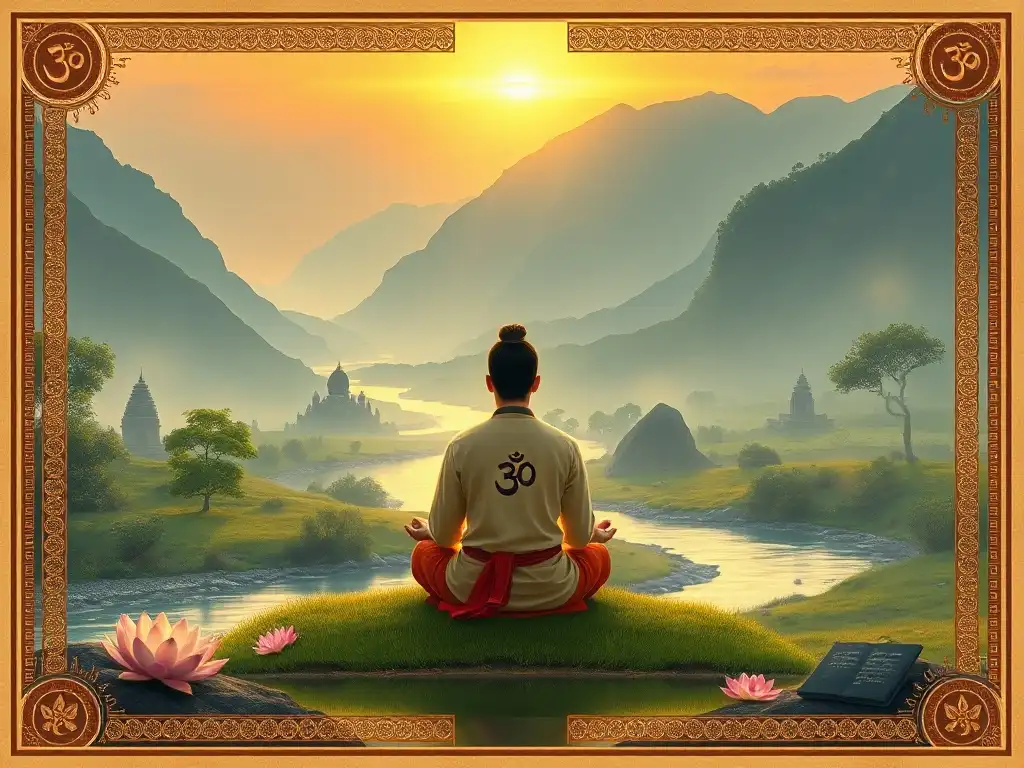
In Hindu philosophy, the concept of Atman is central to understanding existence. Atman refers to the true self or soul of an individual, which is considered eternal and unchanging. It is distinct from the body and mind, which are transient and subject to change. The realization of Atman is crucial for spiritual enlightenment and liberation (moksha).
The relationship between Atman and Brahman, the universal consciousness, is fundamental in Hindu thought. It is often expressed through the phrase "Tat Tvam Asi," meaning "That Thou Art," which emphasizes the non-duality of individual souls and the ultimate reality. This perspective suggests that understanding one's true self leads to a deeper comprehension of existence itself.
Key aspects of Atman include:
- Eternality: Atman is eternal and cannot be destroyed.
- Innate Purity: It is inherently pure and untainted by worldly experiences.
- Unity with Brahman: Atman is ultimately one with Brahman, transcending individual identity.
The quest for self-knowledge and understanding one's Atman is an essential part of Hindu philosophy, leading individuals to question the nature of existence, purpose, and the cosmos.
Brahman: The Universal Consciousness
Brahman represents the ultimate reality in Hindu philosophy, embodying the idea of a universal consciousness that pervades all existence. Unlike Atman, which refers to the individual self, Brahman is the source of all beings and the foundation of the universe. It is often described as Nirguna (without attributes) and Saguna (with attributes), encompassing all aspects of existence.
Understanding Brahman involves recognizing that all forms of life, matter, and energy are manifestations of this singular reality. The essence of Brahman is often compared to an ocean, where individual Atmans are like waves; while they appear separate, they are fundamentally part of the same ocean.
Brahman can be understood through several key attributes:
- Infinite: Brahman is limitless and beyond human comprehension.
- Immanent and Transcendent: While Brahman exists within everything, it also transcends the physical world.
- Source of Creation: All creation emerges from Brahman, and ultimately, everything returns to it.
The exploration of Brahman is critical for understanding the nature of existence. It encourages seekers to transcend personal identity and connect with the broader universe, leading to a profound understanding of life and existence.
Maya: The Illusion of the Material World
In Hindu philosophy, Maya refers to the illusion or deceptive nature of the material world. It is the force that creates the appearance of duality and separation among beings, leading individuals to perceive the world as distinct from the eternal truth of Atman and Brahman. Maya is responsible for the misperception of reality, causing people to become attached to the ephemeral aspects of existence.
The concept of Maya is often illustrated through metaphors, such as a dream or a mirage, emphasizing that what we perceive with our senses may not reflect the ultimate truth. This illusion leads to the cycle of birth, death, and rebirth (samsara), trapping individuals in a cycle of suffering and ignorance.
Understanding Maya involves recognizing:
- Transience: The material world is temporary and ever-changing.
- Attachment: Clinging to the illusions of the material world causes suffering.
- Liberation: Overcoming Maya leads to the realization of true existence and liberation from the cycle of samsara.
By understanding Maya, individuals can shift their focus from transient pleasures to the pursuit of spiritual knowledge, facilitating deeper insights into existence and reality.
The Nature of Reality in Hindu Philosophy

In Hindu philosophy, the nature of reality is a complex and multifaceted concept that encompasses various interpretations and beliefs. Central to this discourse is the understanding that reality is not merely a physical manifestation but is deeply intertwined with consciousness and the ultimate truth, often referred to as Brahman.
At its core, Hindu philosophy presents two primary perspectives on reality: dualism and non-dualism. These perspectives shape how existence is perceived and understood within the broader context of life, purpose, and the cosmos.
Dualism vs. Non-Dualism in Hindu Thought
Hindu thought presents a rich tapestry of philosophical schools, but two dominant perspectives are dualism (Dvaita) and non-dualism (Advaita).
- Dualism (Dvaita): This school, notably championed by philosopher Madhvacharya, posits a distinct separation between the individual soul (Atman) and the supreme being (Brahman). Dualists maintain that while Brahman is the ultimate source of all existence, individual souls retain their unique identities. This perspective emphasizes a personal relationship with divinity, suggesting that worship and devotion are essential paths to understanding existence.
- Non-Dualism (Advaita): In contrast, Advaita Vedanta, articulated by Adi Shankaracharya, proposes that there is no fundamental distinction between Atman and Brahman. According to this view, the apparent diversity of existence is an illusion (Maya), and realizing one's true nature as non-separate from Brahman is the key to liberation (Moksha). This understanding challenges individuals to transcend the ego and the material world to uncover the singular essence of existence.
The debate between these two schools highlights the rich diversity of thought in Hindu philosophy. While dualism fosters a sense of individuality and devotion, non-dualism encourages a quest for unity and transcendence.
The Cycle of Samsara: Life, Death, and Rebirth
One of the most profound concepts in Hindu philosophy is the cycle of Samsara, which refers to the continuous cycle of birth, life, death, and rebirth. This cycle is governed by the law of Karma, the principle that every action has consequences that affect one's future existences.
- Life: In Hindu thought, life is seen as an opportunity for the soul to evolve and progress towards ultimate realization. Each incarnation presents unique challenges and experiences that contribute to spiritual growth.
- Death: Death is not perceived as an end but rather as a transition. Upon dying, the soul sheds its physical body and enters a state of judgment, where its actions (Karma) are evaluated. The accumulated Karma influences the conditions of the next birth.
- Rebirth: The concept of rebirth signifies the importance of actions in shaping one’s destiny. A soul may be reborn into different forms—human, animal, or celestial—depending on its previous life choices. This cyclical nature underscores the belief that existence is an ongoing journey toward enlightenment.
The cycle of Samsara emphasizes the interconnectedness of existence and the importance of living a life aligned with Dharma (righteousness) to attain liberation (Moksha) from the cycle. In this context, Hindu philosophy provides a comprehensive framework for addressing questions of existence, purpose, and the ultimate nature of reality.
Through these philosophical explorations, one can gain deeper insights into the profound questions of life and existence as viewed within the rich heritage of Hindu thought.
Addressing Existential Questions through Hindu Texts
The Upanishads and Questions of Existence
The Upanishads, often regarded as the philosophical backbone of Hinduism, delve deeply into existential inquiries concerning the nature of reality, the self (Atman), and the ultimate cosmic principle (Brahman). Central to Upanishadic thought is the concept of non-duality, which posits that Atman and Brahman are one and the same. This profound realization addresses existential questions by suggesting that individual existence is an illusion (Maya) and that true enlightenment comes from understanding this unity.
The Upanishads pose pivotal questions, such as:
- What is the nature of the self?
- What is the ultimate purpose of life?
- How can one attain liberation (Moksha)?
Through dialogues and philosophical discourse, these texts explore the idea that understanding the self leads to the liberation from the cycle of rebirth (Samsara). One of the most notable Upanishads, the Chandogya Upanishad, articulates the famous phrase "Tat Tvam Asi" (That Thou Art), which emphasizes the interconnectedness of the individual soul and the universal spirit. This understanding of existence encourages seekers to transcend material attachments and seek a higher truth.
The Bhagavad Gita: Duty and Existence
The Bhagavad Gita, a 700-verse dialogue set in the context of the Mahabharata, tackles the existential dilemmas faced by its protagonist, Arjuna, on the battlefield of Kurukshetra. The Gita addresses significant questions about duty (Dharma), morality, and the nature of existence. Arjuna's initial reluctance to fight symbolizes the struggle between personal desires and societal responsibilities, a theme central to human existence.
Key teachings from the Gita include:
- Dharma and Righteousness: The Gita emphasizes that fulfilling one's duty is paramount, suggesting that existence is meaningful when aligned with one's Dharma.
- The Nature of the Soul: Krishna explains that the soul is eternal and indestructible, which reshapes Arjuna's understanding of life and death.
- Pathways to Liberation: The Gita presents various yogic paths (Karma Yoga, Bhakti Yoga, Jnana Yoga) as means to attain spiritual realization and fulfill one's existential purpose.
Through its teachings, the Bhagavad Gita provides a framework for understanding existence in relation to duty, encouraging individuals to act selflessly while remaining aware of the higher spiritual truths that govern life.
The Vedas: Cosmic Order and Existence
The Vedas, the oldest sacred texts of Hinduism, establish a foundational understanding of existence through their exploration of Rta, the cosmic order. They articulate a vision of the universe as a structured and harmonious entity, governed by natural laws that ensure balance and continuity. The Vedic hymns emphasize the interconnectedness of all beings and the importance of aligning human existence with this cosmic order.
Key concepts related to existence in the Vedas include:
- Creation Myths: The Nasadiya Sukta from the Rigveda questions the origins of the universe, pondering whether even the gods know how creation began. This inquiry into existence reflects a deep philosophical curiosity.
- Sacrificial Rituals: The Vedas prescribe rituals (Yajnas) that are believed to sustain the cosmic order, suggesting that human actions can influence the universe’s balance. This interplay between human existence and the cosmos highlights the responsibility individuals hold in maintaining harmony.
- Philosophical Reflections: The Atharva Veda introduces concepts of health and well-being, emphasizing the holistic approach to existence that incorporates physical, mental, and spiritual dimensions.
Through their intricate hymns and philosophical musings, the Vedas contribute to a comprehensive understanding of existence that integrates cosmology, ethics, and human responsibility. This perspective invites individuals to reflect on their role in the broader tapestry of life, fostering a sense of purpose rooted in the eternal laws of nature.
Philosophical Schools of Hinduism and Their Views on Existence

Advaita Vedanta: Non-Dualism and the Nature of Existence
Advaita Vedanta, one of the most prominent philosophical schools within Hinduism, centers around the concept of non-dualism, which asserts that the ultimate reality is singular and that the apparent diversity in the world is an illusion (Maya). This philosophical framework, primarily articulated by Adi Shankaracharya, posits that the individual self (Atman) is fundamentally the same as the universal consciousness (Brahman).
In Advaita Vedanta, the questions of existence are approached through a lens of inquiry into the nature of reality. It emphasizes that:
- Brahman is the only reality: Everything else is transient and subject to change.
- Maya creates illusion: The world we perceive is not the ultimate reality but a mere projection of Brahman.
The famous Mahavakya (great saying) "Tat Tvam Asi" (That Thou Art) encapsulates this idea, suggesting that each individual's essence is inherently connected to the universal. Through self-inquiry and meditation, practitioners aim to realize their true nature, transcending the illusion of separateness and understanding their existence as part of a greater whole.
Dvaita Vedanta: Dualism and the Individual's Existence
In contrast to Advaita Vedanta, Dvaita Vedanta, founded by Madhvacharya, advocates a dualistic interpretation of existence. According to this school, there exists a fundamental distinction between the individual soul (Jiva) and the supreme God (Ishvara, often identified with Vishnu).
Key tenets of Dvaita philosophy include:
- Real distinction between Jiva and Brahman: Unlike Advaita, Dvaita asserts that the Jiva and Brahman are eternally separate entities. Each soul has its unique identity and consciousness.
- Existence as relational: The individual's existence is understood in the context of their relationship with God. Salvation (Moksha) is achieved through devotion (Bhakti) and surrender to Ishvara.
- Affirmation of the material world: Dvaita philosophy recognizes the material world as real and meaningful, providing a framework for understanding existence that emphasizes personal relationships, moral actions, and divine grace.
This dualistic perspective encourages followers to engage in devotional practices, acknowledging their existence as distinct yet dependent on the divine, thereby fostering a sense of community and personal responsibility in the pursuit of spiritual truth.
Samkhya Philosophy: The Nature of Reality and Existence
Samkhya, one of the oldest philosophical systems in Hinduism, approaches the question of existence through a dualistic framework that distinguishes between two fundamental realities: Purusha (consciousness) and Prakriti (matter).
This school of thought posits that:
- Purusha as the observer: Purusha represents the eternal, unchanging consciousness that witnesses the changing phenomena of the material world.
- Prakriti as the material cause: Prakriti encompasses all forms of matter and energy, which are subject to change and evolution.
- Existence as interaction: The interaction between Purusha and Prakriti leads to the manifestation of the universe. The evolution of Prakriti gives rise to the diverse forms of existence, while Purusha remains detached and unaffected.
The philosophy of Samkhya lays the groundwork for understanding existence as a complex interplay between consciousness and material reality. It emphasizes self-realization and discernment (Viveka) to liberate the individual from the cycles of birth and rebirth (Samsara), ultimately leading to the realization of one's true nature as Purusha, distinct from the transient material world.
The diverse philosophical schools of Hinduism each provide unique insights into the nature of existence, enriching the broader discourse on "Hindu philosophy and existence." From the non-dualistic vision of Advaita to the dualistic framework of Dvaita and the analytical approach of Samkhya, these philosophies invite deeper contemplation and understanding of the existential questions that have shaped Hindu thought throughout history.
The Role of Karma in Existence
Karma is a foundational concept in Hindu philosophy, intricately linked to the notions of existence, morality, and the cycle of life and death (samsara). The term "karma" literally translates to "action" in Sanskrit, but its implications extend far beyond mere physical deeds. At its core, karma represents the ethical dimension of existence, emphasizing that every action has consequences that shape not only the present life but also future incarnations. This principle fosters a sense of accountability, guiding individuals toward making conscious choices that align with dharma, or moral duty.
Karma is not merely a law of retribution; it's a complex system that acknowledges the interplay between individual actions and cosmic order. By understanding karma, one can gain insight into the existential questions surrounding purpose, suffering, and the ultimate goal of human life—moksha, or liberation from the cycle of rebirth.
Understanding Karma: Actions and Consequences
In Hindu philosophy, karma operates on a straightforward principle: every action, whether good or bad, generates corresponding consequences. This concept is multifaceted, encompassing three key types of karma:
- Sanchita Karma: This refers to the accumulated karma from all past actions across lifetimes. It represents the entire stock of karma that influences one's current and future existence.
- Prarabdha Karma: This is the portion of sanchita karma that is currently being experienced in this lifetime. It is the karma that has manifested as one's present circumstances, including challenges and opportunities.
- Kriyamana Karma: Also known as "current karma," this refers to the actions we take in the present moment, which will shape future experiences and outcomes.
The interplay of these three types of karma illustrates how past actions influence present realities while also affecting future destinies. For example, a person who engages in selfless service (seva) in this life might experience favorable circumstances in their next incarnation as a result of their good deeds. Conversely, harmful actions can lead to suffering, both in the current life and in subsequent rebirths.
Karma and Its Impact on Life and Rebirth
The implications of karma extend deeply into the cycle of life and rebirth. According to Hindu thought, the actions one takes in their current life not only determine their present conditions but also play a crucial role in shaping their future incarnations. This cyclical journey is governed by the law of karma, which ensures that every soul undergoes a process of moral and spiritual evolution.
Key impacts of karma on life and rebirth include:
- Moral Responsibility: Individuals are encouraged to act ethically, knowing that their choices will have repercussions. This fosters a sense of moral responsibility and encourages virtuous living.
- Rebirth and Evolution: The cycle of rebirth (punarjanma) is influenced by one's karma. A soul may be reborn into different forms—human, animal, or divine—based on the totality of its actions. Each rebirth provides opportunities for growth and learning, pushing the soul toward ultimate liberation.
- Suffering and Joy: The experiences of suffering and joy in life are direct reflections of one’s karma. Understanding this connection can lead to greater acceptance of life's challenges, as they are seen as opportunities for growth rather than mere misfortunes.
Karma serves as a profound lens through which Hindu philosophy addresses questions of existence. By recognizing the intricate relationship between actions and their consequences, individuals can navigate their lives with greater awareness and purpose, ultimately striving for liberation from the cycle of rebirth and achieving a deeper understanding of existence itself.
The Quest for Liberation (Moksha) in Hindu Philosophy
Define Moksha: Liberation from the Cycle of Existence
Moksha, in Hindu philosophy, signifies the ultimate goal of human existence: liberation from the cycle of birth, death, and rebirth (samsara). This concept emphasizes the transient nature of worldly life and the soul's (atman) quest for eternal truth and freedom. Moksha is achieved when an individual transcends the limitations of physical existence and realizes their true nature as part of the universal spirit (Brahman).
The philosophical interpretations of Moksha vary across different schools of Hindu thought. For instance:
- Advaita Vedanta posits that Moksha is the realization of the non-duality of the atman and Brahman, leading to the understanding that the self is fundamentally one with the universe.
- Dvaita Vedanta, on the other hand, emphasizes a dualistic approach where the individual soul remains distinct from God, and Moksha involves eternal service to the divine.
Achieving Moksha involves deep introspection and understanding of one's self, which is crucial for realizing the impermanent nature of the material world. The attainment of Moksha brings about a profound sense of peace, liberation from suffering, and ultimate happiness.
Paths to Moksha: Knowledge, Devotion, and Action
Hindu philosophy outlines three primary paths to attain Moksha, each catering to different temperaments and inclinations of individuals. These paths are:
- Jnana Yoga (Path of Knowledge):
- This path stresses the importance of wisdom and self-inquiry. Practitioners engage in studying sacred texts, meditating, and contemplating the nature of reality.
- The ultimate goal is to discern the difference between the eternal self (atman) and the ephemeral material world.
- Example: The study of the Upanishads guides individuals to understand the nature of Brahman and the atman, leading toward liberation.
- Bhakti Yoga (Path of Devotion):
- Bhakti Yoga emphasizes love and devotion towards a personal god. This path is characterized by intense emotional connection and surrender to the divine will.
- Through prayer, rituals, and chanting, practitioners cultivate a relationship with God, leading to unity with the divine essence.
- Example: Devotees of Krishna express their devotion through practices such as singing bhajans or engaging in temple worship.
- Karma Yoga (Path of Action):
- This path teaches that selfless action performed without attachment to the results is a means to achieve Moksha. It emphasizes the importance of duty (dharma) and ethical conduct.
- By performing one's duties and responsibilities while maintaining a sense of detachment, individuals can purify their hearts and minds, ultimately leading to liberation.
- Example: The teachings of the Bhagavad Gita illustrate how Arjuna is guided to perform his duty as a warrior without attachment to the outcomes, embodying the essence of Karma Yoga.
Each of these paths is a valid approach to liberation, and individuals may choose one path or integrate multiple paths depending on their personal beliefs and experiences. The pursuit of Moksha is a deeply personal journey that reflects the rich philosophical heritage of Hinduism, addressing fundamental questions of existence and the essence of life.
Conclusion: The Relevance of Hindu Philosophy on Existence Today
Hindu philosophy has played a pivotal role in shaping not only the spiritual landscape of India but also in addressing profound questions of existence that transcend cultural and temporal boundaries. The teachings and concepts derived from ancient texts, such as the Upanishads, Bhagavad Gita, and various Darshanas, continue to resonate with individuals seeking meaning and purpose in their lives. This enduring relevance of Hindu philosophy highlights its ability to adapt and address contemporary existential questions, making it a vital area of exploration in today's world.
The exploration of existence within Hindu philosophy encompasses various themes, including the nature of the self (Atman), the concept of Brahman (the ultimate reality), and the cyclical nature of life (Samsara). These principles encourage individuals to reflect deeply on their existence, prompting inquiries into the nature of reality, the interplay between the material and spiritual realms, and the ultimate goal of life—Moksha or liberation. As modern society grapples with the complexities of identity, purpose, and fulfillment, the insights from Hindu philosophy offer valuable perspectives for navigating these challenges.
Contemporary Perspectives on Hindu Philosophy and Existence
In recent years, there has been a resurgence of interest in Hindu philosophy, particularly as it relates to existential questions in a rapidly changing world. Scholars, practitioners, and seekers alike are revisiting ancient texts and teachings to extract wisdom that can inform contemporary life. This revival is characterized by several key perspectives:
- Interconnectedness of Existence: Hindu philosophy underscores the interconnectedness of all beings and the universe. This idea resonates with modern ecological thought, emphasizing the importance of living in harmony with nature. The principle of "Vasudhaiva Kutumbakam" (the world is one family) encourages a global perspective on existence that fosters compassion and responsibility.
- Mindfulness and Self-Realization: Practices derived from Hindu philosophy, such as meditation and yoga, have gained immense popularity worldwide. These practices not only promote physical well-being but also facilitate self-inquiry and realization of one's true nature. The focus on mindfulness aligns with contemporary psychological approaches that advocate for a deeper understanding of the self as a pathway to mental and emotional health.
- Ethical Living and Dharma: The concept of Dharma, or ethical duty, remains a cornerstone of Hindu philosophy. In the context of existence, it prompts individuals to consider their roles and responsibilities in society. As ethical dilemmas arise in various domains—from technology to environmental stewardship—Hindu teachings provide a framework for making choices that honor both individual and collective well-being.
The Influence of Hindu Thought on Global Philosophical Discourse
Hindu philosophy has significantly influenced global philosophical discourse, contributing to the rich tapestry of ideas that shape contemporary thought. Several aspects of this influence are noteworthy:
- Dialogues with Western Philosophy: The introduction of Hindu philosophical concepts to the West, particularly during the 19th and 20th centuries, sparked dialogues with Western existentialism and phenomenology. Thinkers such as Aldous Huxley and Carl Jung drew on Hindu ideas, particularly those related to consciousness and the nature of reality, to expand their own philosophical inquiries.
- Integration into Modern Spirituality: The principles of Hindu philosophy have been integrated into various modern spiritual movements. Concepts such as karma, rebirth, and the pursuit of enlightenment resonate with individuals seeking alternatives to materialistic frameworks, fostering a global spiritual renaissance that draws upon ancient wisdom.
- Academic Engagement: The academic study of Hindu philosophy has gained traction in universities worldwide, with scholars exploring its implications for ethics, metaphysics, and the philosophy of mind. This engagement not only enriches philosophical discourse but also promotes cross-cultural understanding and appreciation of diverse worldviews.
Hindu philosophy offers a profound lens through which to explore questions of existence, both in ancient contexts and contemporary society. Its adaptability and relevance underscore its significance in addressing the existential inquiries of our time, making it an essential subject for further exploration and dialogue in the global philosophical arena.
Frequently Asked Questions
What are the main questions of existence addressed by Hindu philosophy?
Hindu philosophy explores fundamental questions such as the nature of reality, the purpose of life, and the concept of the self. It delves into the interconnectedness of existence and the journey of the soul through reincarnation.
How does Hinduism define the concept of the self?
In Hinduism, the self or Atman is viewed as the eternal essence of an individual, which is distinct from the physical body. It is regarded as a part of the universal soul, or Brahman, emphasizing the idea of oneness in existence.
What role do the Vedas play in Hindu philosophy?
The Vedas are ancient texts that form the foundation of Hindu philosophy, providing insights into rituals, ethics, and metaphysical concepts. They help in understanding the nature of existence and the cosmic order (Dharma).
How does the concept of karma relate to existence in Hindu thought?
In Hindu philosophy, karma refers to the law of cause and effect, suggesting that every action has consequences that influence future existence. This principle underscores the importance of ethical living and personal responsibility.
What is the significance of moksha in Hindu existential philosophy?
Moksha is the ultimate goal in Hindu philosophy, representing liberation from the cycle of birth and rebirth (samsara). It signifies the realization of one's true self and union with Brahman, providing a profound understanding of existence beyond the material world.
Final Reflection: Hindu Philosophy and the Quest for Existence
In an age where existential questions loom larger than ever, the insights of Hindu philosophy offer profound guidance on our journey to understand existence. The teachings of Hinduism, with their intricate views on the nature of reality, self, and the universe, resonate deeply in today's world, where many seek answers to life's most pressing questions. As we grapple with our place in an increasingly complex society, the wisdom of ancient philosophies reminds us that the quest for meaning is timeless and universal.
Hindu philosophy has not only shaped spiritual thought but has also woven itself into the fabric of cultural and social landscapes across the globe. The concepts of Dharma, Karma, and Moksha continue to influence how we perceive our responsibilities and the consequences of our actions. As we navigate the challenges of modern life, we can draw strength from these teachings, which emphasize interconnectedness and the cyclical nature of existence. The greatest gift of life is the opportunity to learn, to share, and to grow.
This quote encapsulates the essence of Hindu philosophy, urging us to embrace our journey with an open heart and mind.
As you reflect on the insights shared in this article, I invite you to explore how the principles of Hindu philosophy can enrich your own understanding of existence. Consider the ways in which these teachings can inspire you to cultivate a deeper connection with yourself and the world around you.
Let the wisdom of the ages guide you in your personal quest for meaning, encouraging you to live with intention, compassion, and a sense of purpose. The journey of existence is not just a solitary path; it is a shared experience that invites us all to seek, learn, and grow together.
Unveil the Wisdom of Hindu Philosophy!
Thank you for diving into the profound teachings of Hinduism and exploring how they address our most pressing questions about existence. Your curiosity is the first step toward deeper understanding and personal growth!
Now, let’s transform that curiosity into action:
- Engage with the Wisdom: Select a key concept from the teachings—such as **karma** or **dharma**—and reflect on it in your daily life. How can this philosophy influence your decisions?
- Join the Conversation: Share your thoughts! Comment below with your insights or questions about how Hinduism shapes our understanding of existence.
- Discover More: Explore additional resources or texts that delve deeper into Hindu philosophy. What books or authors motivate you to expand your knowledge?
What insights have surprised you the most about Hindu philosophy’s approach to existence? Let’s discuss!