
The Story of the First Buddhist Council: Key Figures and Their Contributions

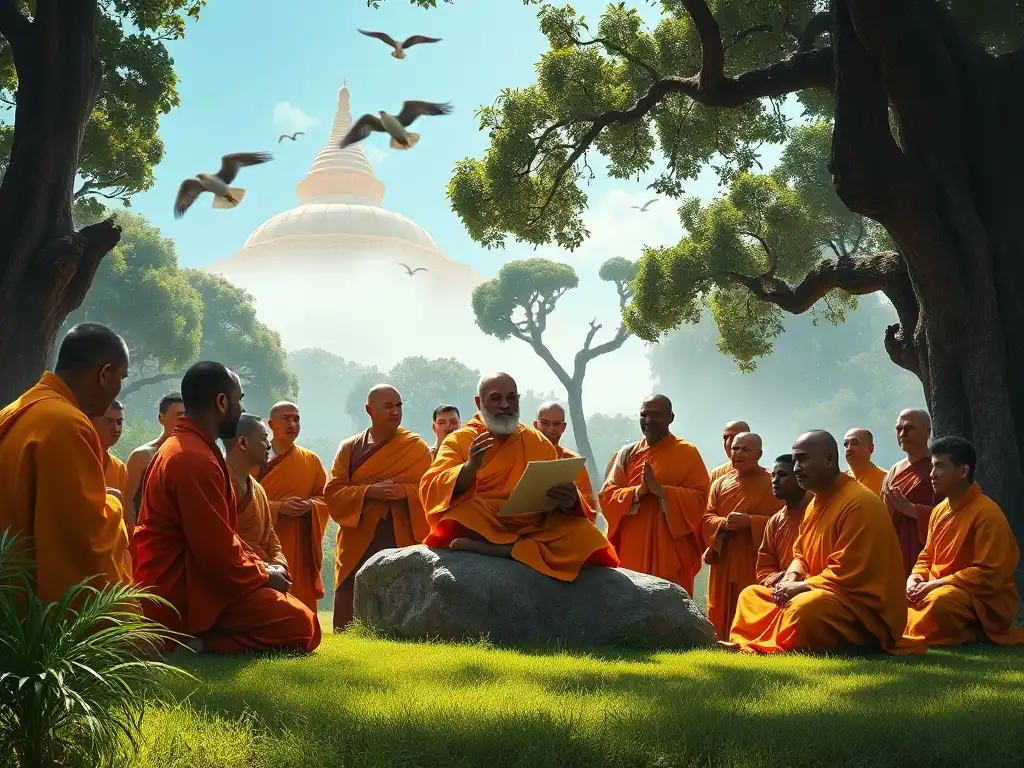
Welcome to Ancient India History, where we embark on a journey through the vibrant tapestry of ancient Indian civilizations. In this corner of the web, you'll uncover the mysteries and marvels of our past, from the sophisticated Indus Valley to the enlightened Gupta Empire. Dive into our featured article on the First Buddhist Council history, where we unravel the pivotal moments and key figures that shaped one of the world's most influential religions.
Are you ready to explore the profound contributions and legacies that continue to resonate today? Join us as we delve deeper into the rich heritage of ancient Indian religions!
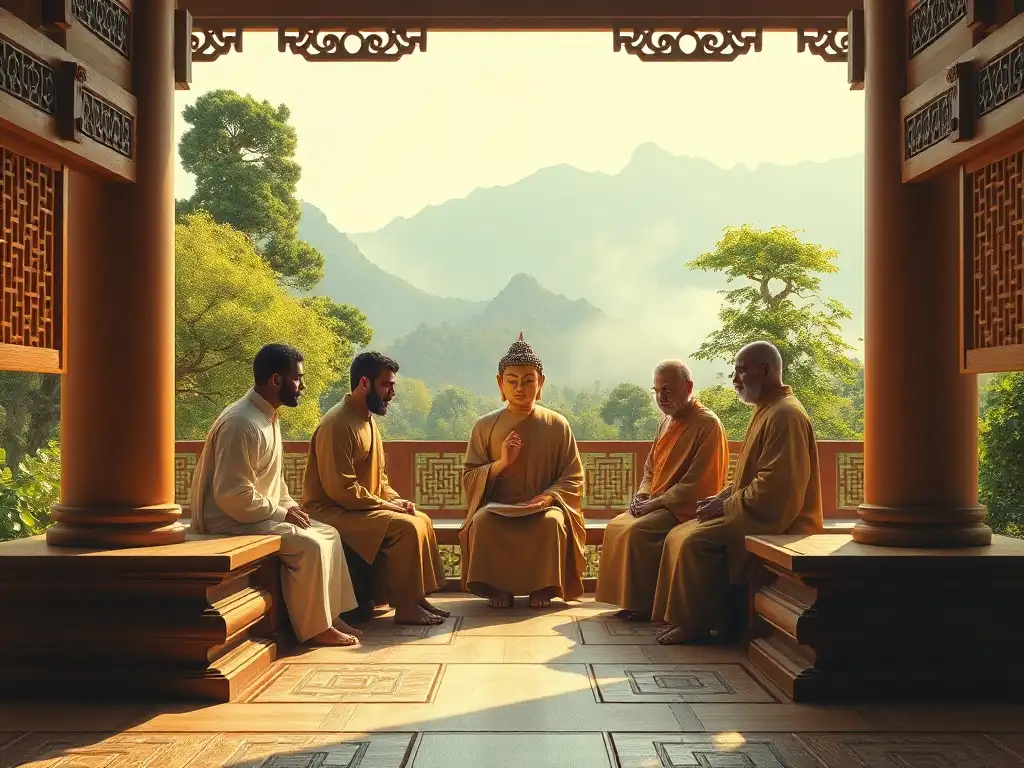
Introduction to the First Buddhist Council History
The First Buddhist Council holds a pivotal place in the history of Buddhism, marking a significant moment shortly after the death of Siddhartha Gautama, known as the Buddha. Convened around 483 BCE in Rajgir, India, this council aimed to preserve the teachings and monastic rules established by the Buddha during his lifetime. As Buddhism began to spread beyond its origins, the need for a systematic compilation of the Buddha's teachings became paramount to ensure their integrity and continuity.
Key figures such as Mahakasyapa, Ananda, and Upali played instrumental roles in this assembly, each contributing to the formation of what would become the foundational texts of Buddhism. This article will explore their contributions, the historical context, and the lasting significance of the First Buddhist Council in shaping Buddhist thought and practice.
Overview of the First Buddhist Council
The First Buddhist Council was convened with the primary objective of compiling the Dharma (the teachings of the Buddha) and the Vinaya (the rules governing monastic life). The council was presided over by Mahakasyapa, a prominent disciple of the Buddha who was known for his deep understanding and commitment to the teachings. During this assembly, Ananda, the Buddha's cousin and personal attendant, played a crucial role in recalling the Buddha's discourses, while Upali was responsible for the monastic rules.
The council's outcomes were monumental, as they laid the groundwork for the Pali Canon, the earliest complete canon of Buddhist scriptures. This compilation ensured that the core teachings of Buddhism would be preserved and transmitted accurately to future generations.
Significance of the First Buddhist Council in Buddhism
The significance of the First Buddhist Council extends beyond mere documentation; it was a crucial step in the establishment of a unified Buddhist community. The council reinforced the authority of the Buddha’s teachings, providing a clear framework for the growing monastic community.
- Preservation of Teachings: The council played a vital role in codifying the teachings of the Buddha, safeguarding them against potential distortions as Buddhism began to spread.
- Establishment of Monastic Discipline: Through the formulation of the Vinaya, the council helped outline ethical and disciplinary guidelines for monks, ensuring a cohesive and disciplined monastic community.
- Unity Among Disciples: By convening the council, the early Buddhist community was able to address various interpretations of the Buddha's teachings, fostering unity and clarity among practitioners.
Historical Context of the First Buddhist Council
Time Period and Location of the First Buddhist Council
The First Buddhist Council took place approximately three months after the Buddha's passing, around 483 BCE, in the historic region of Rajgir, located in modern-day Bihar, India. This city was an important center for early Buddhist activity, as it was where the Buddha delivered many discourses and where several key incidents in his life occurred. The timing of the council was critical; the early followers of the Buddha recognized the urgency of preserving his teachings to prevent fragmentation within the growing community.
Influence of Emperor Ashoka on the Council's Formation
While Emperor Ashoka did not directly influence the First Buddhist Council, his later patronage of Buddhism significantly shaped the religion's propagation and institutionalization. Ashoka ruled from 268 to 232 BCE and is often credited with spreading Buddhism across the Indian subcontinent and beyond. His support for the council's outcomes helped legitimize and promote the teachings compiled during this pivotal gathering.
The First Buddhist Council was not just a mere gathering of monks; it was a foundational moment in the history of Buddhism that set the stage for its future development, impacting the religious landscape of ancient India and the world.
Key Figures of the First Buddhist Council
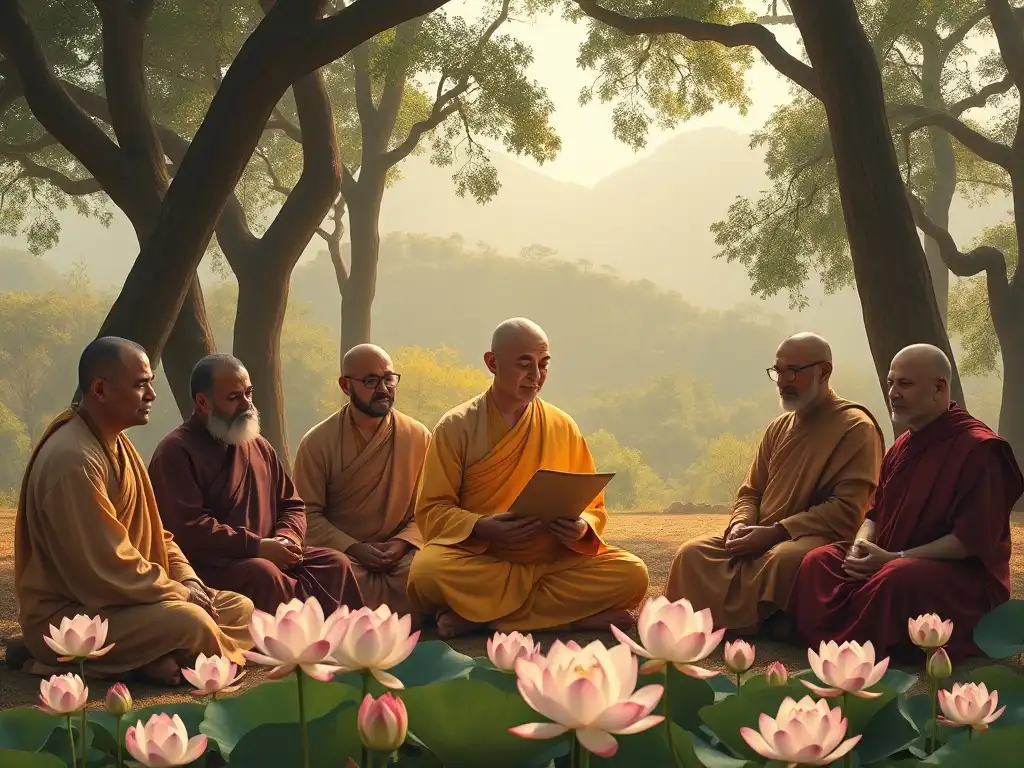
The First Buddhist Council, convened shortly after the death of Siddhartha Gautama, the Buddha, in 483 BCE, was a pivotal moment in the history of Buddhism. This council was instrumental in preserving and organizing the teachings of the Buddha, ensuring their transmission to future generations. The key figures involved in this council played crucial roles in shaping the early Buddhist community and its teachings.
Siddhartha Gautama (Buddha) and His Teachings
Siddhartha Gautama, known as the Buddha, is the central figure of Buddhism. Born into a royal family around 563 BCE in Lumbini, he renounced his privileged life in search of enlightenment. After years of ascetic practices, he attained enlightenment under the Bodhi tree in Bodh Gaya, where he discovered the Four Noble Truths and the Eightfold Path, foundational principles of Buddhism.
The Buddha's teachings emphasized the nature of suffering, its causes, and the path to liberation. His core message revolved around the principles of compassion, mindfulness, and ethical conduct. The First Buddhist Council sought to preserve these teachings, which were primarily transmitted orally during the Buddha's lifetime. The presence of the Buddha's teachings at the council underscored their significance and the need for accurate transmission amidst the growing community of followers.
Mahakasyapa: The Presiding Monk of the Council
Mahakasyapa, one of the Buddha's foremost disciples, played a pivotal role as the presiding monk of the First Buddhist Council. Renowned for his deep understanding of the Buddha's teachings and his ascetic lifestyle, Mahakasyapa was chosen to lead the council due to his exemplary dedication to Buddhism.
Under Mahakasyapa's leadership, the monks gathered at Rajgir in present-day Bihar, India, to discuss and compile the Buddha's teachings. His authority and wisdom were instrumental in guiding the discussions and ensuring that the teachings were accurately preserved. Mahakasyapa's emphasis on maintaining the integrity of the Buddha's message was crucial in establishing a unified direction for the burgeoning monastic community.
Ananda: The Buddha's Attendant and His Role
Ananda, the cousin and devoted attendant of the Buddha, played a significant role in the First Buddhist Council. Known for his exceptional memory and deep commitment, Ananda was one of the last individuals to hear the Buddha's teachings directly. His presence at the council was vital, as he was tasked with reciting the Buddha's discourses, known as the Sutras.
Ananda's contributions were crucial in ensuring that the teachings were accurately remembered and compiled. His insistence on including certain discourses that emphasized compassion and ethical conduct helped shape the moral framework of early Buddhism. Ananda's role exemplified the importance of faithful transmission and the preservation of the Buddha's teachings within the monastic community.
Other Notable Monks and Their Contributions
In addition to Mahakasyapa and Ananda, several other notable monks contributed to the First Buddhist Council, each bringing their unique perspectives and insights. Among them were:
- Upali: A prominent monk known for his expertise in the Vinaya, or monastic rules. Upali played a crucial role in establishing the framework for monastic discipline during the council.
- Sundarananda: Another key figure who contributed to discussions surrounding the teachings and practices of the Buddha, ensuring that diverse viewpoints were represented.
- Kaccayana: Known for his clarity in teaching, Kaccayana's insights helped in the systematic organization of the Buddha's discourses.
These monks, along with Mahakasyapa and Ananda, collectively shaped the decisions and outcomes of the First Buddhist Council, ensuring the preservation and transmission of the Buddha's teachings for future generations.
Contributions and Decisions Made During the First Buddhist Council
The First Buddhist Council resulted in significant contributions and decisions that shaped the future of Buddhism. The assembly of monks focused on preserving the teachings of the Buddha and establishing guidelines for the monastic community. The decisions made during this council are foundational to Buddhist practice and belief.
Compilation of the Buddha's Teachings (Sutras)
One of the primary contributions of the First Buddhist Council was the compilation of the Buddha's teachings into a coherent set of texts called the Sutras. This process involved the systematic collection of the discourses spoken by the Buddha, as recounted by Ananda and other monks. The Sutras became the core texts of Buddhism, providing guidance on ethical conduct, meditation practices, and philosophical insights.
The compilation ensured that the teachings were not only preserved but also accessible to the growing number of followers. This monumental effort laid the groundwork for the written texts that would later emerge, such as the Pali Canon, which remains a vital resource for understanding Buddhist philosophy and practice today.
Establishment of the Vinaya Pitaka
The Vinaya Pitaka, which outlines the rules and regulations governing monastic conduct, was another significant outcome of the First Buddhist Council. Upali, with his expertise in monastic discipline, played a crucial role in formulating these guidelines. The Vinaya Pitaka provided a structured approach to monastic life, emphasizing ethical behavior, communal living, and adherence to the teachings of the Buddha.
The establishment of the Vinaya Pitaka was essential in creating a cohesive monastic community, promoting harmony among monks, and ensuring the integrity of the Buddha's teachings. It also addressed practical issues faced by the monastic community, thereby contributing to the sustainability of Buddhism as a religious tradition.
Decisions Regarding Monastic Rules and Practices
During the First Buddhist Council, significant decisions were made regarding monastic rules and practices that would govern the lives of monks for centuries to come. The discussions led to the establishment of specific codes of conduct, including guidelines on ordination, communal living, and interactions with lay followers.
These decisions were designed to uphold the values of simplicity, humility, and ethical behavior, which are central to Buddhist teachings. By formalizing these practices, the council ensured that the monastic community remained true to the Buddha's vision, fostering an environment conducive to spiritual growth and development.
The resolutions made during the First Buddhist Council continue to influence Buddhist monastic communities worldwide, demonstrating the lasting impact of this historic gathering on the evolution of Buddhism.
Impact of the First Buddhist Council on Buddhism's Development
The First Buddhist Council, convened shortly after the death of Siddhartha Gautama (Buddha) around 483 BCE, played a pivotal role in shaping the trajectory of Buddhism. This council was instrumental in preserving the teachings of the Buddha and establishing a unified framework for the practice of Buddhism. The outcome of the council was twofold: it solidified the doctrine of Buddhism through the compilation of the Tripitaka, or "Three Baskets," which contained the Vinaya Pitaka (monastic rules), Sutta Pitaka (Buddha's discourses), and Abhidhamma Pitaka (philosophical and doctrinal analyses).
Additionally, the council's decisions led to the establishment of a monastic community that adhered to a common set of beliefs and practices. This unity was crucial during a time when various interpretations of the Buddha's teachings were beginning to emerge. The First Buddhist Council thus served as a cornerstone for Buddhism's development, ensuring that the original teachings were preserved and transmitted accurately across generations.
Formation of Different Buddhist Schools
One of the significant impacts of the First Buddhist Council was the groundwork it laid for the emergence of various Buddhist schools. While the council sought to unify Buddhist practices, it also acknowledged the diverse interpretations of the Buddha's teachings. As Buddhism spread throughout India and beyond, different regions adapted these teachings according to their cultural contexts, leading to the formation of distinct schools of thought.
For example, the Theravada school, which emphasizes adherence to the original teachings and monastic discipline, traces its roots back to the council's decisions. Conversely, the Mahayana school emerged later, introducing new texts and practices that diverged from the original teachings compiled during the First Council. This diversification illustrates how the council's foundational work allowed for a rich tapestry of beliefs and practices to flourish within Buddhism, each contributing to the religion's dynamic evolution.
Influence on Subsequent Councils in Buddhist History
The First Buddhist Council set a precedent for future councils that would further define and refine Buddhist teachings and practices. Subsequent councils, such as the Second Buddhist Council in 383 BCE and the Third Buddhist Council in the 3rd century BCE, were influenced by the organizational structures and doctrinal resolutions established during the First Council.
These later councils aimed to address emerging disputes and schisms within the Buddhist community, often reiterating the importance of adhering to the original teachings as outlined in the Tripitaka. For instance, the Third Council, convened by Emperor Ashoka, focused on purifying the monastic community and spreading Buddhism beyond India. This continuity of councils underscores the lasting impact of the First Buddhist Council on the governance and doctrinal integrity of Buddhism throughout its history.
Lasting Legacy of the First Buddhist Council in Modern Buddhism
The legacy of the First Buddhist Council endures in modern Buddhism, where the foundational texts and teachings continue to guide practitioners worldwide. The Tripitaka remains central to Theravada Buddhism, while various Mahayana traditions have their own interpretations of the Buddha's teachings, often referencing the original texts compiled during the council.
Moreover, the emphasis on community and monastic discipline established at the First Council resonates in contemporary Buddhist practices, where sanghas (communities) play a vital role in the spiritual lives of adherents. The council's efforts to preserve and standardize the teachings ensure that modern practitioners have access to a coherent body of doctrine, which is essential for the continuity of the religion.
Conclusion: The Enduring Significance of the First Buddhist Council
The First Buddhist Council signifies a crucial moment in the history of Buddhism, marking the transition from the Buddha's personal teachings to a structured religious framework. Its impact on the development of Buddhism is profound, shaping the practices and beliefs that define the religion today.
Reflection on the Importance of Key Figures in Buddhist History
The success of the First Buddhist Council can be attributed to the key figures involved, particularly Mahakasyapa, who presided over the council, and Ananda, the Buddha's cousin and devoted disciple, whose memory helped preserve the Buddha's teachings. These individuals exemplify the importance of strong leadership and dedication within the Buddhist community. Their contributions were not only instrumental in the council's proceedings but also in fostering a cohesive identity for early Buddhism.
The First Buddhist Council as a Foundation for Future Generations
In many ways, the First Buddhist Council acts as a foundation for future generations of Buddhists. By establishing a clear doctrine and community structure, it enabled Buddhism to adapt and thrive across various cultures and epochs. The council's decisions and the key figures' influence continue to inspire Buddhists around the globe, ensuring that the values of compassion, mindfulness, and ethical living, as taught by the Buddha, remain relevant and vital in today’s world.
- Introduction to the First Buddhist Council History
- Overview of the First Buddhist Council
- Significance of the First Buddhist Council in Buddhism
- Historical Context of the First Buddhist Council
- Key Figures of the First Buddhist Council
- Contributions and Decisions Made During the First Buddhist Council
- Impact of the First Buddhist Council on Buddhism's Development
- Conclusion: The Enduring Significance of the First Buddhist Council
Frequently Asked Questions
What was the First Buddhist Council?
The First Buddhist Council was convened shortly after the death of Buddha to preserve his teachings and establish the monastic community’s guidelines.
Who were the key figures involved in the First Buddhist Council?
Key figures included Mahakasyapa, who presided over the council, and Ananda, who was one of Buddha’s closest disciples and played a vital role in reciting the Buddha's teachings.
Where and when did the First Buddhist Council take place?
The First Buddhist Council took place at Rajgir, India, about three months after the Buddha's passing, around 483 BCE.
What were the major outcomes of the First Buddhist Council?
The council resulted in the compilation of the Pali Canon, which includes the Tripitaka, and helped to standardize the teachings of Buddhism, ensuring the preservation of the doctrine.
Why is the First Buddhist Council significant in Buddhist history?
It is significant because it marked the formal establishment of the Buddhist community and laid the foundation for the transmission of Buddhist teachings, ensuring their survival for future generations.
Final Reflection: The Enduring Legacy of the First Buddhist Council
The story of the First Buddhist Council is not just a historical account; it is a testament to the resilience and adaptability of Buddhist teachings in the face of change. As we navigate a world that often feels fragmented and chaotic, the principles established during this pivotal gathering remind us of the importance of unity, preservation, and the pursuit of truth. The Council's commitment to safeguarding the teachings of the Buddha continues to resonate today, highlighting the relevance of these ancient practices in our modern lives.
The impact of the First Buddhist Council extends far beyond its historical context; it has shaped the very fabric of Buddhist culture and philosophy. The Council's key figures, such as Mahakasyapa and Ananda, exemplified dedication to preserving the Dharma, ensuring that the teachings would endure through generations. Their efforts underscore the importance of community and collaboration in maintaining spiritual integrity. As the Dalai Lama once said, The purpose of our lives is to be happy.
This happiness is rooted in understanding and practicing the teachings that emerged from such foundational moments in history.
As we reflect on the lessons of the First Buddhist Council, let us consider how we can apply its teachings in our own lives. I invite you to explore the values of unity, mindfulness, and compassion in your daily interactions. By embodying these principles, we can contribute to a more harmonious world, just as the early followers of the Buddha sought to do. Embrace the wisdom of the past and let it guide you toward a brighter future, where the essence of the Dharma continues to thrive in our hearts and communities.
Unveil the Wisdom of Ancient India: Take the Next Step!
Thank you for exploring the rich history of the First Buddhist Council! We hope you’ve gained valuable insights into the key figures and their incredible contributions. Now, let’s transform that knowledge into action and deepen your understanding even further!
Here are a few inspiring steps you can take:
- Join a local or online meditation group to experience Buddhist practices and teachings firsthand.
- Share your newfound knowledge with friends or on social media to spark discussions about the significance of Buddhist history.
- Dive into foundational texts about Buddhism, such as "The Dhammapada," to discover how these teachings apply to modern life.
Which aspect of the First Buddhist Council resonates most with you, and how do you plan to incorporate that into your own journey?