
How Pali Influenced Southeast Asian Languages and Cultures


Welcome to Ancient India History, where we embark on a captivating journey through the rich tapestry of ancient civilizations! Dive deep into the fascinating world of Pali influence on Southeast Asia, a topic that reveals the profound connections between language, culture, and history. As we unravel the intricate ways this ancient language shaped the diverse landscapes of Southeast Asian cultures, you'll discover intriguing insights that bridge the past and present. Are you ready to explore how these timeless influences continue to resonate today? Let’s delve into the remarkable impact of Pali together!
- Introduction to Pali Influence on Southeast Asia
- The Roots of Pali in Southeast Asia
- Linguistic Influences of Pali on Southeast Asian Languages
- Cultural Contributions of Pali to Southeast Asian Societies
- Pali in Modern Southeast Asia
- Conclusion: The Enduring Legacy of Pali Influence
-
Frequently Asked Questions
- What is the significance of Pali in Southeast Asia?
- How did Pali impact local languages in the region?
- What are some examples of Pali contributions to Southeast Asian culture?
- How did ancient Indian civilizations contribute to the spread of Pali?
- What is the relationship between Pali and the Gupta Empire?
- Final Reflection: The Enduring Legacy of Pali in Southeast Asia
- Unveil the Impact of Pali on Your Language Journey!
Introduction to Pali Influence on Southeast Asia

The influence of Pali on Southeast Asian languages and cultures is a fascinating subject that reveals the deep-rooted connections between ancient Indian civilization and the diverse societies of Southeast Asia. Pali, the liturgical language of Theravada Buddhism, served as a critical medium of religious and philosophical expression, profoundly shaping the linguistic landscape of the region.
From the inscriptions found in ancient temples to the adoption of Pali vocabulary in local languages, the impact of Pali extends beyond mere language; it encompasses cultural, social, and artistic dimensions that continue to resonate today. This article aims to explore the intricate relationship between Pali and Southeast Asian cultures, uncovering the various ways in which this ancient language has influenced the region's linguistic heritage and cultural practices.
Understanding the Historical Context
To appreciate the significance of Pali in Southeast Asia, it is essential to understand the historical context in which it flourished. The spread of Buddhism during the first millennium CE played a pivotal role in this process. As Indian traders, monks, and scholars traveled across the Bay of Bengal, they brought with them not only religious teachings but also the language in which these teachings were recorded.
- Key Historical Events:
- The establishment of maritime trade routes between India and Southeast Asia.
- The rise of powerful kingdoms, such as the Srivijaya and Khmer Empires, which adopted Buddhism.
- The translation and adaptation of Pali texts into local languages, facilitating the integration of Pali vocabulary and concepts.
These interactions led to a cultural exchange that enriched both Indian and Southeast Asian civilizations, establishing a foundation that would influence the region for centuries to come.
Importance of Pali in Ancient Indian Civilization
Pali is not merely a language; it represents a key element of the intellectual and spiritual heritage of ancient India. Its importance is underscored by its role in the preservation and dissemination of Buddhist teachings.
- Significant Contributions of Pali:
- Scriptural Canon: Pali is the language of the Tipitaka, the earliest collection of Buddhist scriptures, which includes the Sutta Pitaka, Vinaya Pitaka, and Abhidhamma Pitaka.
- Philosophical Texts: Many foundational texts on Buddhist philosophy were composed in Pali, allowing for a rich dialogue on ethics, metaphysics, and psychology.
- Cultural Transmission: The use of Pali in inscriptions, sculptures, and art forms facilitated the transmission of Buddhist culture and values across Southeast Asia.
The reverberations of Pali's influence are still evident today, as many Southeast Asian languages incorporate Pali-derived vocabulary, reflecting the language's enduring legacy. By examining the historical significance and contributions of Pali, we gain insight into how this ancient language shaped not only Southeast Asian cultures but also the broader landscape of world civilization.
The Roots of Pali in Southeast Asia
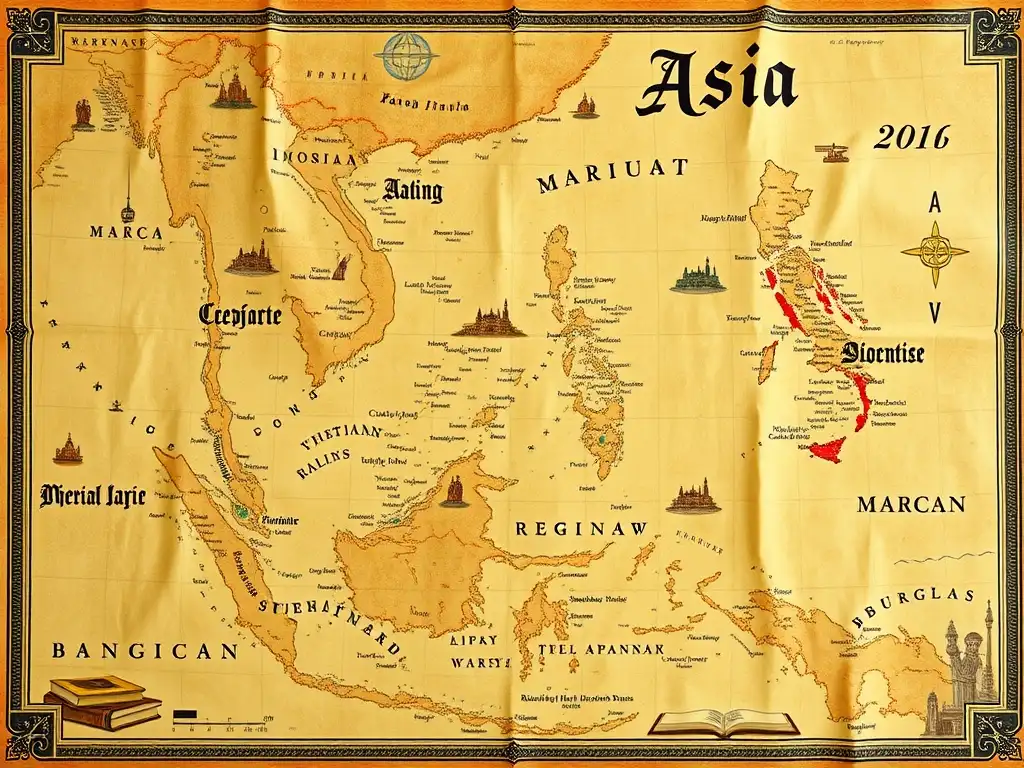
The Spread of Buddhism and Pali Language
The influence of Pali on Southeast Asian languages and cultures is primarily rooted in the spread of Buddhism, which began in India and expanded throughout the region around the 3rd century BCE. As Buddhism took root, so too did the Pali language, which served as the liturgical and scholarly tongue of the Theravada Buddhist tradition.
- Buddhist Texts and Scriptures: The earliest Pali texts, including the Tipitaka (or Pali Canon), were crucial for the dissemination of Buddhist teachings. These texts were translated into local dialects and languages, which led to the linguistic adaptation of Pali across Southeast Asia. The preservation of Pali texts in monastic libraries across countries such as Thailand, Myanmar, and Sri Lanka further cemented its significance.
- Missionary Activities: The efforts of missionaries, particularly during the reign of Emperor Ashoka in the 3rd century BCE, played a pivotal role in promoting Pali. Ashoka's edicts, inscribed on pillars throughout his empire, often included messages in Pali, thereby exposing local populations to the language. This missionary zeal continued through subsequent centuries, with local rulers and monks facilitating the spread of Pali along with Buddhist teachings.
- Linguistic Influence: As Buddhism spread, local languages began to incorporate Pali vocabulary and phrases. For instance, the Khmer language, spoken in modern-day Cambodia, and the Thai language have absorbed numerous Pali words, particularly in religious, philosophical, and administrative contexts. This integration has led to a unique synthesis, enriching the local languages while preserving the original Pali terms.
Historical Trade Routes and Cultural Exchanges
The historical trade routes that connected India with Southeast Asia were not merely conduits for goods but also for ideas, languages, and cultures.
- Maritime Trade Routes: The Indian Ocean trade routes played a significant role in the exchange of culture and language. Merchants and travelers from Indian coastal regions, such as Tamil Nadu and Gujarat, engaged in trade with Southeast Asian kingdoms like Srivijaya and Funan. Through these interactions, Pali was introduced alongside Hindu and Buddhist texts, influencing local dialects and societal structures.
- Cultural Synthesis: This period of trade and cultural exchange led to the emergence of hybrid cultures, where Pali vocabulary mingled with indigenous languages. For example, the Old Malay language shows substantial Pali influence, evident in the lexicon related to governance, religion, and literature.
- Art and Architecture: The influence of Pali extended beyond language; it also permeated art and architecture. Buddhist stupas and temples, adorned with inscriptions in Pali, reflect the linguistic and cultural syncretism. Notable examples include the Borobudur temple in Indonesia, where Pali inscriptions narrate Buddhist teachings.
The Pali influence on Southeast Asia is a testament to the dynamic interplay of language, culture, and religion fueled by trade, travel, and the spread of Buddhism. The legacy of Pali continues to resonate in the languages and cultural practices of Southeast Asian nations today.
Linguistic Influences of Pali on Southeast Asian Languages

Borrowed Vocabulary from Pali
The influence of Pali on Southeast Asian languages is most prominently observed through the extensive borrowing of vocabulary. This process began with the spread of Buddhism, as Pali was the liturgical language of the Theravada Buddhist tradition. As Buddhist texts were translated and disseminated across Southeast Asia, numerous Pali terms entered local languages.
Some key examples of borrowed vocabulary include:
- Religious Terms: Words such as dhamma (law or truth), sangha (community), and buddha (awakened one) have become integral to the lexicon of languages like Thai, Khmer, and Burmese.
- Cultural Concepts: Terms that describe cultural practices and concepts, such as puja (worship) and karma (action), have also been widely adopted.
- Administrative Language: Pali terms related to governance and administration, including raja (king) and dhatu (element or mineral), have influenced political vocabulary in many Southeast Asian contexts.
The adoption of these terms demonstrates not only linguistic borrowing but also the deep integration of Pali cultural and religious concepts into local traditions.
Syntax and Grammar Influences in Local Languages
While the most visible influence of Pali on Southeast Asian languages is in vocabulary, there are also significant impacts on syntax and grammar. These influences manifest in several ways:
- Sentence Structure: Some Southeast Asian languages have adopted Pali-like sentence structures, particularly in formal or religious contexts. For instance, the use of postpositions in languages such as Lao and Khmer reflects Pali syntactic patterns.
- Morphological Changes: The inflectional nature of Pali has inspired certain morphological adaptations in local languages. This is evident in the use of prefixes and suffixes that mimic Pali formations, enhancing the expressiveness of Southeast Asian languages.
- Honorifics and Formality: The system of honorifics in Pali has influenced the way respect and formality are expressed in languages like Thai and Javanese. This results in a more nuanced approach to interpersonal communication that echoes Pali's hierarchical structures.
Overall, these syntactic and grammatical influences highlight a deeper integration of Pali into the linguistic framework of Southeast Asia, further blurring the lines between language and culture.
Case Studies: Pali's Impact on Specific Southeast Asian Languages
To better understand the extent of Pali's influence, we can examine specific case studies of languages that have incorporated Pali elements:
- Thai Language:
- Vocabulary: Approximately 40% of Thai vocabulary is derived from Pali, particularly in religious and formal contexts. Terms like sangha and dhamma are commonly used in Buddhist teachings.
- Syntax: The incorporation of Pali-like constructs has led to a more complex sentence structure in formal Thai.
- Khmer Language:
- Vocabulary: Khmer has borrowed extensively from Pali, with significant contributions to its lexicon, especially in religious texts. Key terms include puja and buddha.
- Grammar: The influence of Pali has also been observed in the use of grammatical structures that resemble Pali's inflectional patterns.
- Burmese Language:
- Vocabulary: Pali has contributed numerous terms related to Buddhism, governance, and law in Burmese, reflecting the historical influence of Pali texts.
- Cultural Integration: The adoption of Pali terms has not only enriched the language but has also reinforced Buddhist cultural practices within Burmese society.
These case studies illustrate the profound impact that Pali has had on the linguistic landscapes of Southeast Asian countries, shaping not only language but also culture and religious practice.
Cultural Contributions of Pali to Southeast Asian Societies

Pali Texts and Their Role in Religious Practices
Pali, as the liturgical language of Theravada Buddhism, has had a profound impact on religious practices across Southeast Asia. The Tipitaka, or the Pali Canon, is the foundation of Theravada Buddhist teachings and contains comprehensive texts on ethics, monastic rules, and sermons attributed to the Buddha. As these texts were transmitted across regions, they facilitated the spread of Buddhist philosophy and practices, influencing local customs and rituals.
Key Aspects of Pali's Religious Influence:
- Canonical Texts: The Pali Canon, comprising the Vinaya Pitaka, Sutta Pitaka, and Abhidhamma Pitaka, has been pivotal in shaping Buddhist doctrine in countries like Thailand, Myanmar, and Sri Lanka.
- Monastic Education: Buddhist monasteries in Southeast Asia often use Pali as a medium of instruction, ensuring that monks are well-versed in the original texts. This has helped maintain the authenticity of Buddhist teachings.
- Ritual Practices: Many religious rituals, chants, and prayers in Theravada Buddhist countries incorporate Pali phrases, reflecting its enduring presence in spiritual life.
Influence of Pali on Literature and Poetry in Southeast Asia
The influence of Pali extends beyond religious texts into the realms of literature and poetry. Writers and poets in Southeast Asia have drawn inspiration from Pali literature, often incorporating its themes and stylistic elements into their works.
Notable Contributions:
- Literary Genres: Pali has contributed to the development of various literary forms, including epic poetry and prose narratives, which often focus on Buddhist themes and moral lessons.
- Cultural Integration: Local authors have adapted Pali literary styles to suit their cultural contexts, leading to a rich tapestry of literature that reflects the fusion of indigenous traditions with Buddhist teachings.
- Preservation of Knowledge: Many historical texts documenting regional histories, astrology, and medicine were written in Pali, serving as crucial resources for scholars and preserving knowledge.
The Impact of Pali on Art and Architecture
The architectural legacy of Southeast Asia is deeply intertwined with Pali influence, particularly in the context of Buddhist temple complexes and monuments. The principles derived from Pali texts have shaped not only the aesthetics but also the spiritual significance of these structures.
Architectural Highlights:
- Stupas and Temples: Structures such as the famous Borobudur in Indonesia and the Shwedagon Pagoda in Myanmar exemplify the use of Pali texts in their design, with intricate carvings depicting scenes from the life of the Buddha and teachings from the Pali Canon.
- Iconography: The artistic representation of Buddhist iconography, influenced by Pali descriptions of the Buddha and Bodhisattvas, is evident in sculptures and paintings found in temples across the region.
- Cultural Exchange: The migration of monks and artisans facilitated the spread of Pali-inspired architectural styles, leading to a synthesis of local artistic traditions and Buddhist aesthetics, which is still evident in contemporary Southeast Asian art.
The Pali influence on Southeast Asia has been multifaceted, affecting religious practices, literary traditions, and artistic expressions. Through its texts, Pali has played a critical role in shaping the cultural landscape of the region, fostering a rich legacy that continues to resonate today.
Pali in Modern Southeast Asia

Preservation of Pali in Contemporary Practices
In today's Southeast Asia, Pali continues to hold significant importance, especially within the realms of religion, literature, and education. It serves as the liturgical language of Theravada Buddhism, which is predominant in countries such as Thailand, Myanmar, Laos, and Cambodia. The preservation of Pali is particularly evident in the following contexts:
- Religious Texts: Many Buddhist scriptures, including the Pali Canon (Tipitaka), are foundational texts for Theravada Buddhism. Monasteries and temples often engage in the study and recitation of these texts, ensuring that Pali remains a living language among practitioners.
- Educational Institutions: Numerous monastic schools and universities in Southeast Asia offer courses in Pali, focusing on its grammar, vocabulary, and literary significance. For instance, the Mahachulalongkornrajavidyalaya University in Thailand has Pali studies as part of its curriculum, which aids in the linguistic development of future monks and scholars.
- Cultural Festivals: Various cultural festivals and ceremonies incorporate Pali chants and prayers, reinforcing its role in community identity and spiritual practices. Events such as the Visakha Bucha Day, which celebrates the birth, enlightenment, and death of the Buddha, often feature Pali recitations.
The integration of Pali in these contemporary practices not only highlights its religious significance but also reflects the cultural heritage of the region, ensuring that the language remains relevant in modern society.
Challenges Faced by Pali in the Modern Language Landscape
Despite its enduring presence, Pali faces several challenges that threaten its survival in the contemporary language landscape:
- Declining Proficiency: As modern languages like Thai, Burmese, and Khmer dominate daily communication, fewer individuals are proficient in Pali. This decline in fluency can lead to a diminished understanding of religious texts and cultural heritage.
- Cultural Globalization: The influence of globalization and the spread of English have overshadowed many traditional languages, including Pali. Young generations may prioritize learning more widely spoken languages over Pali, which can result in a loss of cultural and linguistic diversity.
- Limited Academic Resources: Although there are educational institutions dedicated to the study of Pali, the availability of comprehensive resources—such as textbooks and online materials—remains limited. This scarcity can hinder both self-study and formal education in the language.
- Interference from Regional Dialects: The presence of various regional dialects and languages can complicate the learning and use of Pali. Variations in pronunciation and vocabulary may create barriers for those attempting to engage with Pali texts or teachings.
Addressing these challenges requires concerted efforts from both religious communities and educational institutions to promote Pali as a vital aspect of Southeast Asia's linguistic and cultural heritage. Initiatives that encourage bilingual education and the development of learning resources can significantly contribute to revitalizing interest and proficiency in Pali.
Conclusion: The Enduring Legacy of Pali Influence

Summary of Pali's Cultural and Linguistic Impact
Pali, the liturgical language of Theravada Buddhism, has had a profound impact on the cultural and linguistic landscapes of Southeast Asia. Its influence extends beyond mere vocabulary; it encompasses philosophical concepts, religious practices, and literary traditions that shaped the region's identity.
- Linguistic Contributions:
- Vocabulary Enrichment: Many Southeast Asian languages, such as Thai, Burmese, and Khmer, have absorbed a considerable number of Pali words, particularly in religious and philosophical contexts.
- Syntax and Grammar: The structure of Pali has also influenced the syntax and grammar of these languages, allowing for a distinct blend of local and Pali linguistic features.
- Cultural Integration:
- Buddhism and Literature: The spread of Buddhism throughout Southeast Asia facilitated the transmission of Pali texts, which became foundational to local literary traditions. Notable texts include the Pali Canon, which has been translated and adapted into various local languages.
- Rituals and Practices: Many Buddhist rituals and ceremonies in Southeast Asia incorporate Pali chants and prayers, highlighting the language's role in spiritual life.
- Educational Systems:
- Buddhist Monastic Schools: Pali became a medium of instruction in monastic schools, where monks were trained in Buddhist philosophy and ethics. This educational framework helped preserve Pali texts and ensured their relevance in contemporary society.
Pali's influence is not merely historical; it continues to be a vital component of cultural identity and heritage in many Southeast Asian countries.
Future Perspectives on Pali and Southeast Asian Languages
As globalization continues to shape linguistic dynamics, the future of Pali and its influence on Southeast Asian languages presents a rich area for exploration.
- Revitalization Efforts:
- Language Preservation: There is a growing movement among scholars and practitioners to preserve and promote Pali through academic programs and cultural initiatives. This includes workshops, translations, and the integration of Pali studies into school curricula.
- Digital Resources: The advent of technology has led to the creation of digital platforms that offer resources for learning Pali, making it more accessible to a broader audience.
- Interdisciplinary Studies:
- Cross-Cultural Research: Future research may focus on comparative studies of Pali and other regional languages, examining how cultural exchanges have influenced language evolution. This could provide insights into the interconnectedness of Southeast Asian cultures and languages.
- Impact of Modernization: Analyzing how modernization and urbanization affect the use of Pali in religious and educational contexts can highlight the language's adaptability and relevance in contemporary society.
- Cultural Exchange and Globalization:
- Global Buddhist Community: The global spread of Buddhism may further influence the use of Pali, as practitioners from diverse backgrounds seek to connect with the core teachings of Buddhism.
- Fusion of Languages: In an increasingly interconnected world, the fusion of Pali with local languages may lead to the emergence of new dialects and linguistic forms, reflecting contemporary cultural identities.
The future of Pali in Southeast Asia is poised for both challenges and opportunities, emphasizing the need for continued engagement and scholarship in this fascinating area of linguistic and cultural study.
Frequently Asked Questions
What is the significance of Pali in Southeast Asia?
Pali is a classical language that served as a vital medium for the spread of Buddhism and its teachings in Southeast Asia, influencing local languages and cultures significantly.
How did Pali impact local languages in the region?
The influence of Pali led to the incorporation of many Pali words and expressions into local languages, enriching their vocabulary and enhancing literary traditions.
What are some examples of Pali contributions to Southeast Asian culture?
Pali enriched Southeast Asian culture through religious texts, art, and architecture, as well as through the establishment of Buddhist institutions that promoted education and literacy.
How did ancient Indian civilizations contribute to the spread of Pali?
Ancient Indian civilizations, particularly during the Mauryan Empire, played a crucial role in propagating Buddhism and Pali literature, which laid the foundation for its influence in Southeast Asia.
What is the relationship between Pali and the Gupta Empire?
During the Gupta Empire, Pali literature flourished, and its teachings were disseminated across regions, solidifying its status as a key language for Buddhist scholarship and cultural exchange in Southeast Asia.
Final Reflection: The Enduring Legacy of Pali in Southeast Asia
The influence of Pali on Southeast Asian languages and cultures is not merely a historical footnote; it is a vibrant thread woven into the very fabric of the region's identity. As we navigate through the complexities of modern Southeast Asia, the echoes of Pali resonate in the linguistic diversity and cultural richness that define this area. The profound impact of Pali, once the language of ancient texts and spiritual teachings, continues to shape contemporary practices, beliefs, and expressions in ways that are both subtle and profound.
Culturally, the legacy of Pali is evident in the shared religious and philosophical frameworks that bind communities across Southeast Asia. The reverberations of its teachings can be seen in the rituals, literature, and even the everyday language of millions. As we reflect on this ongoing influence, we are reminded of the words of the scholar Bhikkhu Bodhi: The teachings of the Buddha, preserved in the Pali Canon, offer timeless wisdom that transcends cultural boundaries.
This highlights how Pali serves not only as a historical artifact but as a living source of guidance that continues to inspire and unite diverse cultures.
As we move forward, I invite you to consider the role of Pali in your own life and the lives of those around you. How can we honor this rich heritage while fostering a deeper understanding of our interconnectedness?
Reflect on the ways in which language shapes our perceptions and relationships, and take action by exploring the teachings of Pali, whether through study, community engagement, or personal practice. In doing so, we can contribute to the preservation and celebration of this invaluable cultural legacy, ensuring that the influence of Pali continues to thrive in the hearts and minds of future generations.
Unveil the Impact of Pali on Your Language Journey!
Thank you for immersing yourself in the world of Pali and its influence on Southeast Asian languages and cultures! You've gained insights into a rich linguistic heritage that has shaped many societies. Now, it’s time to take that knowledge further and explore how language can connect us all.
Here are some engaging steps you can take next:
- Delve Deeper: Choose a Southeast Asian language that piques your interest and learn a few key phrases! Discover the Pali roots that enrich its vocabulary and cultural significance.
- Share Your Insights: Engage in discussions about this fascinating topic with friends or on social media; encourage others to explore the profound connections between languages and cultures.
- Join a Language Community: Seek out local or online language exchange groups where you can practice your chosen language and exchange insights about the influence of Pali!
What new language or cultural insight are you eager to explore further, and how will you embrace the connections that Pali offers?