
The Role of Inscriptions in Documenting Ancient Indian Scientific Advances

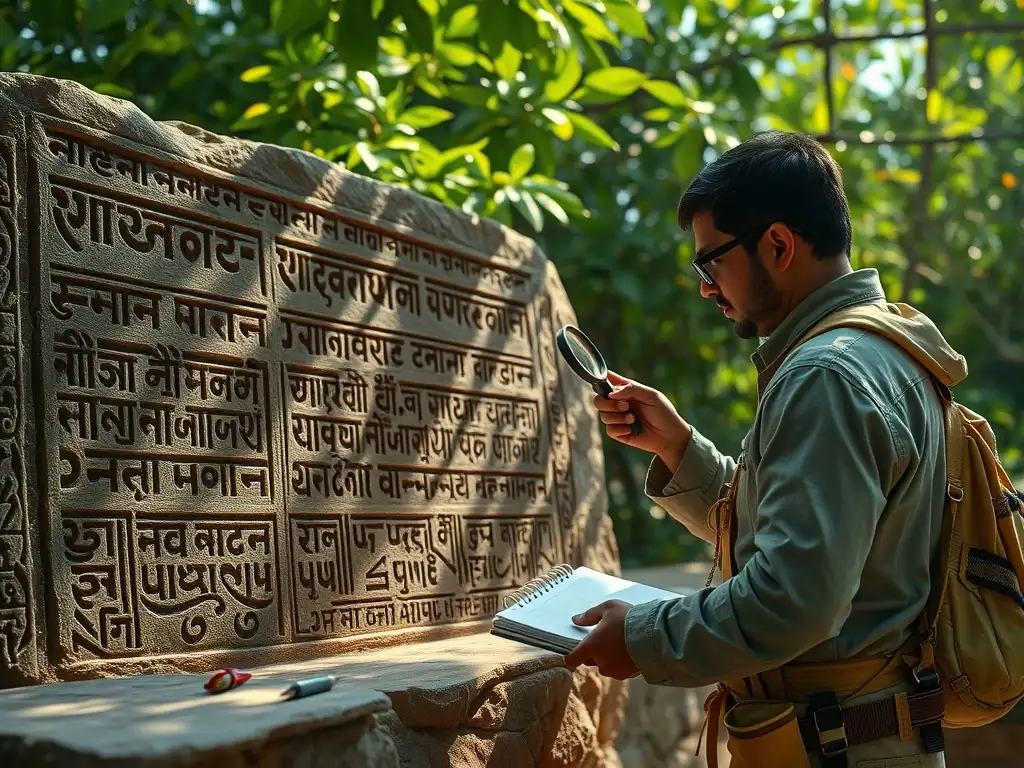
Welcome to Ancient India History, where we embark on a fascinating journey through the rich tapestry of India's past! Here, we delve into the profound impact of ancient Indian scientific inscriptions, which serve as invaluable records of the remarkable advancements achieved by early civilizations. From the intricate carvings of the Indus Valley to the enlightening texts of the Gupta Empire, these inscriptions not only illuminate the brilliance of ancient scholars but also weave a narrative that connects us to our shared heritage.
Ready to uncover the secrets hidden in these ancient texts? Continue exploring to discover how these inscriptions shaped the landscape of scientific thought in ancient India!

Inscriptions from ancient India are invaluable treasures that offer profound insights into the scientific advancements of the time. These inscriptions, etched into stone, metal, and other durable materials, serve as primary sources that document not only the technological and scientific knowledge of ancient civilizations but also their cultural, religious, and administrative contexts.
From the early Indus Valley Civilization to the intellectually vibrant Gupta Empire, these inscriptions provide a narrative of the evolution of scientific thought and practice in ancient India. By exploring these ancient Indian scientific inscriptions, we can delve into the complexities of historical scientific achievements and understand how they shaped the development of knowledge in different domains.
Introduction to Ancient Indian Scientific Inscriptions
Overview of Ancient Indian Inscriptions
Ancient Indian inscriptions can be categorized into various types, each revealing unique aspects of the civilizations that created them. These inscriptions range from epigraphs found in temples and public spaces to administrative records that document the governance and socio-economic aspects of the time. Some prominent inscriptions include:
- Sanskrit Inscriptions: Primarily found in northern India, these inscriptions often detail royal decrees, religious texts, and scientific knowledge.
- Prakrit Inscriptions: Found in various regions, these inscriptions provide insights into the local languages and dialects of ancient India.
- Brahmi and Kharosthi Scripts: These ancient writing systems are significant for understanding the linguistic evolution in the subcontinent.
The study of these inscriptions has revealed a wealth of information about ancient Indian society, including advancements in mathematics, medicine, astronomy, and metallurgy.
Importance of Inscriptions in Historical Research
Inscriptions play a crucial role in historical research, particularly in the context of ancient civilizations. They serve as a bridge connecting modern scholars with the thoughts, ideas, and innovations of the past. The importance of inscriptions includes:
- Authenticity: Inscriptions provide firsthand accounts of historical events and scientific practices, often corroborating other historical sources.
- Cultural Context: They offer insights into the cultural, religious, and philosophical frameworks that influenced scientific thought.
- Chronological Framework: Inscriptions often include dates or references to significant events, aiding historians in constructing timelines of scientific advancements.
By analyzing these inscriptions, researchers can reconstruct the intellectual landscape of ancient India and understand how scientific knowledge was disseminated and preserved.
Key Contributions of Ancient Indian Civilizations
The contributions of ancient Indian civilizations to science and technology are profound and varied. Notable advancements that are often documented through inscriptions include:
- Mathematics: The concept of zero and advancements in arithmetic and geometry, as evidenced in inscriptions from the Gupta period.
- Astronomy: Inscriptions detailing astronomical observations and calculations, highlighting the significance of celestial events in ancient Indian thought.
- Medicine: Texts inscribed on stone and metal plates discuss herbal remedies and surgical techniques, showcasing the advanced medical knowledge of the time.
These contributions not only highlight the scientific prowess of ancient Indian civilizations but also their influence on subsequent cultures and scientific traditions across the world.
Types of Inscriptions Documenting Scientific Knowledge
Religious Inscriptions and Their Scientific Relevance
Religious inscriptions often intertwine with scientific knowledge, reflecting the holistic view of science and spirituality in ancient India. For example:
- Temples: Inscriptions found in temples frequently include astronomical data used for determining the timing of religious festivals and rituals.
- Scriptural Texts: Many ancient texts inscribed in religious contexts discuss natural phenomena, emphasizing the intersection of science and spirituality.
These inscriptions demonstrate that ancient Indian civilizations did not see science as separate from religion; rather, they viewed them as complementary.
Administrative Inscriptions: Record Keeping and Science
Administrative inscriptions played a pivotal role in documenting scientific knowledge, particularly in terms of resource management and public welfare. Key aspects include:
- Land Records: Inscriptions detailing agricultural practices and crop yields reflect the application of scientific methods in farming.
- Water Management: Records of irrigation systems and water conservation methods showcase the scientific understanding of hydrology and engineering.
These inscriptions were essential for the administration of resources, contributing to the overall prosperity of ancient Indian societies.
Epigraphs and Their Role in Scientific Documentation
Epigraphs are critical in documenting scientific knowledge due to their detailed descriptions and annotations. Some noteworthy points include:
- Mathematical Treatises: Inscriptions of mathematical texts provide insight into the advanced mathematical concepts developed in ancient India.
- Astronomical Observations: Many epigraphs contain detailed records of celestial events, showcasing the meticulous nature of ancient Indian astronomers.
The preservation of these scientific documents in the form of inscriptions ensures that the knowledge was not only recorded but also transmitted to future generations.
By examining these various types of inscriptions, we gain a comprehensive understanding of how ancient Indian civilizations documented their scientific advances, reflecting a rich tapestry of knowledge that continues to influence modern science.
Key Scientific Advances Documented in Ancient Indian Inscriptions
Ancient Indian inscriptions serve as vital artifacts that chronicle a myriad of scientific advances. These inscriptions, often engraved on stone tablets, pillars, and copper plates, offer a glimpse into the sophisticated understanding and methodologies employed by ancient Indian scholars. They cover various fields, including mathematics, astronomy, medicine, and engineering, reflecting the ingenuity and contributions of ancient Indian civilizations.
From the precise calculations in mathematical texts to the detailed observations of celestial bodies, these inscriptions highlight the robust scientific tradition that existed in ancient India. They not only document achievements but also reveal the practical applications of these scientific principles in everyday life, governance, and architecture. By studying these artifacts, historians and archaeologists can reconstruct the scientific landscape of ancient India, further solidifying its place in the annals of global history.
Mathematics and Astronomy in Ancient Indian Inscriptions
Ancient Indian inscriptions reveal a profound understanding of mathematics and astronomy, underscoring the intellectual prowess of scholars during that era. One of the most notable contributions is the development of the decimal system and the concept of zero, which were pivotal in mathematical calculations. Inscriptions, such as those found in the Bakhshali Manuscript, illustrate the use of sophisticated arithmetic techniques, including algebraic expressions and geometric principles.
In the realm of astronomy, ancient inscriptions detail observations of celestial events, such as eclipses and planetary movements. The Aryabhatiya of Aryabhata, an eminent mathematician and astronomer, is an exemplary text where we find insights inscribed regarding the calculations of planetary positions and the time of eclipses. The meticulous records not only demonstrate advanced knowledge but also reflect the application of this knowledge in agricultural practices and religious calendars, showcasing the integral connection between science and daily life in ancient India.
Medical Science: Insights from Ancient Texts
Medical science in ancient India is richly documented through various inscriptions, particularly in the form of texts like the Sushruta Samhita and the Charaka Samhita. These texts, often inscribed on palm leaves or stone tablets, provide detailed accounts of surgical techniques, herbal remedies, and the importance of hygiene in healthcare.
Inscriptions reveal practices such as surgical procedures, including the famous cataract surgery attributed to Sushruta, along with descriptions of instruments used in these surgeries. Furthermore, the medicinal properties of various plants and their applications in treating ailments are extensively noted, reflecting a nuanced understanding of botany and pharmacology. These ancient records not only contribute to the historical understanding of medical science in India but also serve as foundational texts that influence modern medical practices and Ayurvedic medicine.
Engineering and Architecture: Evidence from Inscriptions
Inscriptions related to engineering and architecture reveal the advanced techniques and knowledge applied in constructing monumental structures in ancient India. Notable examples include the inscriptions found in the temples of Khajuraho and Hampi, which provide insights into the architectural styles and the engineering prowess of the time.
These inscriptions often detail the materials used, construction methods, and the geometric precision employed in these structures. The intricate designs and planning evident in ancient forts and temples demonstrate a high level of skill and innovation. Inscriptions also commemorate the rulers who commissioned these grand projects, highlighting the interplay between politics and engineering in ancient India. By studying these inscriptions, researchers can better understand the socio-political context of the time and the technological advancements that shaped the landscape of ancient Indian architecture.
The Impact of Ancient Indian Scientific Inscriptions on Modern Science
The wealth of knowledge captured in ancient Indian scientific inscriptions has had a lasting impact on modern science. These inscriptions not only document historical advancements but also serve as a bridge connecting ancient wisdom to contemporary scientific principles.
The meticulous documentation of scientific techniques and theories in ancient texts has laid the groundwork for various fields, including mathematics, medicine, and engineering. Modern-day scientists and researchers continue to explore these inscriptions, often finding inspiration and foundational knowledge that enhances current scientific understanding.
Influence on Contemporary Scientific Thought
The influence of ancient Indian scientific inscriptions on contemporary thought is both profound and pervasive. The concepts of zero and the decimal system, rooted in ancient Indian mathematics, are foundational to modern computational systems. Furthermore, the surgical techniques and medicinal practices documented in ancient texts have been revisited and integrated into modern medical practices, particularly in alternative medicine fields such as Ayurveda.
In addition, the astronomical observations recorded in ancient inscriptions have inspired modern astronomers, who recognize the advanced understanding of celestial phenomena that ancient Indian scholars possessed. This ongoing dialogue between ancient knowledge and contemporary science exemplifies the timeless relevance of these inscriptions in shaping scientific discourse today.
Preservation of Ancient Knowledge through Inscriptions
Ancient Indian inscriptions play a crucial role in preserving knowledge that may have otherwise been lost to time. Through the meticulous recording of scientific principles, these inscriptions provide a repository of information that has survived centuries. The durability of materials such as stone and metal, on which many of these inscriptions are engraved, ensures that the wisdom of ancient scholars can be passed down through generations.
Efforts to conserve and study these inscriptions are vital for understanding the scientific heritage of India. Archaeologists and historians engage in deciphering and interpreting these texts, which not only enriches our understanding of history but also highlights the importance of preserving cultural heritage. The knowledge encapsulated in these inscriptions continues to inspire and inform research across various scientific disciplines.
Case Studies: Inscriptions that Shaped Scientific Understanding
Several specific inscriptions have significantly contributed to shaping scientific understanding in various fields. For instance, the Aihole Inscription dating back to the 6th century CE is crucial for understanding early Indian mathematics and astronomy, as it documents advancements in calculations related to time and space.
Another notable example is the Gwalior inscription, which discusses medical practices and surgical techniques, particularly those attributed to Sushruta. This inscription is pivotal in tracing the evolution of surgical procedures and their ethical implications in ancient times.
These case studies exemplify how ancient Indian scientific inscriptions not only document knowledge but also serve as a catalyst for further research and exploration, influencing both historical and contemporary scientific landscapes. Through careful analysis of these texts, modern scholars can glean insights that inform current scientific practices and philosophies.
Challenges in Interpreting Ancient Indian Scientific Inscriptions

The study of ancient Indian scientific inscriptions presents several challenges that can hinder our understanding of the rich contributions made by these civilizations. These obstacles arise from linguistic complexities, contextual ambiguities, and physical degradation of the inscriptions themselves. Addressing these challenges is crucial to unlocking the full potential of ancient Indian scientific knowledge preserved in these texts.
Linguistic Barriers and Translation Issues
One of the primary challenges in interpreting ancient Indian scientific inscriptions is the linguistic diversity present in the subcontinent. Ancient Indian scripts, such as Brahmi and Kharosthi, were used to document various languages, including Sanskrit, Prakrit, and Tamil. Each language has its own grammar, vocabulary, and idiomatic expressions, which can complicate the translation process.
Moreover, many inscriptions are written in archaic forms of these languages, making it difficult for contemporary scholars to decode them accurately. For example, the use of specialized scientific terminology that may not have direct equivalents in modern languages can lead to misinterpretations. The lack of a comprehensive corpus of translated inscriptions further complicates the task, as scholars often rely on fragmented texts that do not provide full context.
Contextual Challenges: Understanding Cultural Significance
Inscriptions are not merely scientific documents; they are embedded within the broader cultural, social, and religious contexts of ancient Indian civilization. Understanding these contexts is essential for accurate interpretation. For instance, many inscriptions related to scientific advancements are often found in temples or associated with religious practices, which can influence their content and purpose.
Additionally, the intended audience for these inscriptions can vary widely. Some were likely meant for scholars and practitioners, while others may have been designed for a more general populace, impacting the level of detail and complexity in the writing. This multiplicity of purposes necessitates a nuanced approach to interpretation, as scholars must consider how cultural values and priorities shaped the scientific discourse of the time.
Preservation and Damage to Inscriptions Over Time
The physical condition of ancient inscriptions poses another significant challenge. Many inscriptions have suffered damage due to environmental factors, such as erosion, pollution, and biological growth. Additionally, human activities, including urban development and tourism, have further endangered these fragile artifacts.
This deterioration can lead to incomplete texts that are difficult to interpret. Scholars often have to rely on advanced imaging techniques, such as multispectral analysis, to reveal faded characters and recover lost information. However, these technologies can only do so much; the absence of certain portions of inscriptions can lead to gaps in our understanding of the scientific knowledge they convey.
Conclusion: The Lasting Legacy of Ancient Indian Scientific Inscriptions
The exploration of ancient Indian scientific inscriptions reveals a profound legacy that continues to influence contemporary fields of study. Despite the challenges faced in interpreting these inscriptions, they offer invaluable insights into the scientific advancements and intellectual traditions of ancient Indian civilizations.
Summary of Key Findings
Ancient Indian scientific inscriptions serve as a vital link to understanding the scientific methodologies, practices, and achievements of the time. They highlight not only the technical knowledge of ancient scholars but also their philosophical and cultural frameworks. The challenges in linguistic interpretation, contextual understanding, and preservation must be addressed to fully appreciate the depth of knowledge encapsulated in these inscriptions.
Future Research Directions on Ancient Scientific Inscriptions
Future research on ancient Indian scientific inscriptions should focus on interdisciplinary approaches that combine linguistics, archaeology, and cultural studies. Collaborations among experts in these fields can help develop more comprehensive methodologies for interpreting inscriptions. Additionally, the use of technology in preservation efforts should be expanded, enabling better access to damaged texts for further study.
The Role of Inscriptions in Understanding Ancient Indian Civilization
Inscriptions play a crucial role in piecing together the narrative of ancient Indian civilization. They offer glimpses into the scientific thought processes, innovations, and societal values of the time. By studying these inscriptions, scholars can gain a clearer understanding of how ancient Indians viewed the world around them, their contributions to science and technology, and how these elements are woven into the fabric of their cultural identity. The legacy of these inscriptions is not only a testament to past achievements but also an inspiration for future inquiry into the rich tapestry of ancient Indian history.
References and Further Reading on Ancient Indian Scientific Inscriptions
The study of ancient Indian scientific inscriptions offers a window into the remarkable advancements made by ancient civilizations in various fields, including mathematics, astronomy, and medicine. To delve deeper into this fascinating subject, a range of resources are available that provide comprehensive insights into the inscriptions and their significance in documenting scientific knowledge in ancient India.
Suggested Books and Articles
-
"Mathematics in Ancient India" by Kim Plofker
This book explores the mathematical achievements of ancient Indian scholars, highlighting the role of inscriptions in documenting these advancements. Plofker discusses various texts and inscriptions that detail mathematical concepts and their applications.
-
"Astronomy in India: A Historical Perspective" by D. M. Bose
D. M. Bose provides an in-depth analysis of Indian astronomy through historical texts and inscriptions, illustrating how they contributed to astronomical knowledge and practices. This work emphasizes the significance of inscriptions in tracing the evolution of astronomical thought in India.
-
"Science and Technology in Ancient India" by J. C. Das
This comprehensive work examines various scientific fields, including medicine, metallurgy, and engineering. Das discusses the inscriptions that document these fields, showcasing the technological innovations of ancient Indian civilizations.
-
"The Inscriptions of Ashoka" by John S. Strong
Focusing on Emperor Ashoka's edicts, this book analyzes the inscriptions that promote moral and ethical principles. While not solely scientific, it provides context regarding the administrative support for scientific pursuits during Ashoka's reign.
-
"Ancient Indian Medicine: A Concise History" by P. V. Sharma
P. V. Sharma delves into the evolution of medical practices in ancient India, referencing inscriptions that shed light on medical theories and treatments used in that era.
Online Resources for Further Exploration
-
Digital Library of India
This extensive online repository provides access to numerous texts, manuscripts, and inscriptions related to ancient Indian sciences, allowing researchers and enthusiasts to explore primary sources.
-
Indian National Science Academy (INSA)
The INSA website features various publications and resources that discuss the contributions of ancient Indian scholars in scientific fields, along with references to relevant inscriptions.
-
Archaeological Survey of India
The ASI's official site offers insights into archaeological findings, including inscriptions and their significance in understanding ancient Indian science and technology. The site includes reports and detailed descriptions of excavated sites.
-
Academia.edu
A platform where scholars share their research, you can find numerous papers and articles discussing ancient Indian scientific inscriptions. This resource is particularly useful for accessing the latest research and findings in the field.
-
Google Scholar
An invaluable tool for academic research, Google Scholar allows users to find citations and scholarly articles related to ancient Indian scientific inscriptions, offering a wealth of information from various academic journals.
Through these books and online resources, readers can gain a deeper appreciation of the role that inscriptions played in documenting the scientific advancements of ancient Indian civilizations, enriching our understanding of their contributions to global knowledge.
- Introduction to Ancient Indian Scientific Inscriptions
- Types of Inscriptions Documenting Scientific Knowledge
- Key Scientific Advances Documented in Ancient Indian Inscriptions
- The Impact of Ancient Indian Scientific Inscriptions on Modern Science
- Challenges in Interpreting Ancient Indian Scientific Inscriptions
- Conclusion: The Lasting Legacy of Ancient Indian Scientific Inscriptions
- References and Further Reading on Ancient Indian Scientific Inscriptions
- What are ancient Indian scientific inscriptions?
- How did inscriptions contribute to our understanding of ancient Indian civilization?
- What types of scientific advancements are documented in these inscriptions?
- Where can these inscriptions typically be found?
- Why are these inscriptions important for modern science?
Frequently Asked Questions
What are ancient Indian scientific inscriptions?
Ancient Indian scientific inscriptions refer to written records that document scientific advancements in areas such as mathematics, astronomy, and medicine, dating back to civilizations like the Indus Valley and the Gupta Empire.
How did inscriptions contribute to our understanding of ancient Indian civilization?
Inscriptions serve as primary sources that provide insights into the cultural, scientific, and technological achievements of ancient Indian civilizations, allowing historians to reconstruct their social and intellectual contexts.
What types of scientific advancements are documented in these inscriptions?
These inscriptions often include information on mathematical concepts, astronomical calculations, and medical practices, showcasing the sophistication of ancient Indian scientific thought and methodologies.
Where can these inscriptions typically be found?
Inscriptions can be found on various materials such as stone tablets, copper plates, and temple walls, often located in historical sites throughout regions of ancient India, including archaeological digs and museums.
Why are these inscriptions important for modern science?
The study of ancient Indian scientific inscriptions helps modern scholars understand the foundational principles of various scientific fields, illustrating how ancient knowledge has influenced contemporary scientific practices and theories.
Final Reflection: The Enduring Legacy of Ancient Indian Scientific Inscriptions
Inscriptions serve as a powerful testament to the ingenuity of ancient Indian civilization, illuminating the remarkable scientific advances that shaped not only their society but also the world. Today, as we navigate an era increasingly defined by technology and innovation, the wisdom encapsulated in these inscriptions reminds us of the rich intellectual heritage that has influenced modern science. The intricate details etched into stone and metal are not merely relics of the past; they are a call to recognize and honor the profound contributions of ancient scholars.
The impact of these inscriptions extends far beyond their historical context; they continue to inspire contemporary discourse on science and culture. The narratives woven into these ancient texts challenge us to appreciate the interconnectedness of knowledge across time and space. As noted by the historian R. N. Sharma, The scientific spirit of inquiry that characterized ancient Indian scholars is a beacon for future generations, urging us to seek knowledge relentlessly.
This enduring influence underscores the importance of preserving and studying these inscriptions, as they hold keys to understanding the evolution of scientific thought.
As we reflect on the significance of ancient Indian scientific inscriptions, I invite you to consider how these lessons can be applied in your own life. Take a moment to explore the wisdom of the past and let it inspire your quest for knowledge. Whether through studying history, engaging in scientific inquiry, or fostering a spirit of curiosity, we can all contribute to a legacy that honors the brilliance of those who came before us. Embrace the challenge to learn, innovate, and share, ensuring that the light of ancient wisdom continues to shine brightly in our modern world.
Unveil the Secrets of Ancient Indian Innovation!
Thank you for immersing yourself in the fascinating world of ancient Indian scientific achievements through inscriptions. You've uncovered the remarkable role these artifacts play in documenting our rich history. Now, it’s time to take the next steps to deepen your understanding and appreciation of this vibrant heritage.
Here are some actions to consider:
- Explore further: Dive into specific inscriptions and their historical contexts—visit a museum or browse online archives to view images and translations of these ancient documents.
- Share your discoveries: Start a conversation with friends or engage on social media about what you’ve learned, and invite others to discover the scientific contributions of Ancient India.
- Join a community: Become part of forums or local groups that discuss ancient history—connect with fellow enthusiasts and contribute to enriching discussions!
As you reflect on the incredible advancements of the past, consider this: Which inscription or ancient text would you most like to explore further, and why? Let’s uncover the layers of our history together!