
The Gupta Empire: A Case Study in Economic Prosperity


Welcome to Ancient India History, where we embark on a captivating journey through the rich tapestry of India's past! Delve into the remarkable stories of ancient civilizations and uncover their profound contributions to culture and society. In our featured article, "The Gupta Empire: A Case Study in Economic Prosperity," we offer a compelling analysis of how this golden era not only shaped the subcontinent but also set the stage for future advancements. Are you ready to explore the intricate details of Gupta economic prosperity and its lasting impact? Join us as we unlock the treasures of ancient Indian history!

Introduction to the Gupta Empire
The Gupta Empire, often heralded as the "Golden Age" of ancient India, stands as a remarkable testament to the achievements of Indian civilization. Spanning approximately from 320 to 550 CE, this era is characterized by significant advancements in various fields, including science, mathematics, art, and literature.
However, one of the most compelling aspects of the Gupta Empire is its remarkable economic prosperity, which not only fostered cultural and intellectual growth but also established a foundation that influenced subsequent generations. In this article, we will delve into an in-depth analysis of the Gupta Empire's economic prosperity, exploring the factors that contributed to its wealth and the impact it had on both the empire itself and the broader context of ancient Indian society.
Overview of the Gupta Empire
The Gupta Empire emerged after the decline of the Mauryan Empire and is often referred to as a period of unparalleled cultural and economic achievements. Under the leadership of notable rulers like Chandragupta I, Samudragupta, and Chandragupta II, the empire expanded its territory and influence across vast regions of India. The Gupta rulers adopted a policy of religious tolerance, promoting both Hinduism and Buddhism, which further unified their diverse subjects.
Economically, the empire thrived due to its strategic location along important trade routes, facilitating commerce not just within India, but also extending to regions like Southeast Asia and beyond. The increased trade activity contributed to urbanization and the rise of a prosperous merchant class, thereby enhancing the overall wealth of the empire.
Significance of Economic Prosperity in Ancient India
Economic prosperity in the Gupta Empire was pivotal for several reasons:
- Cultural Flourishing: Wealth generated from trade and agriculture allowed for the patronage of arts and sciences. This led to significant contributions in literature, with works such as Kalidasa's plays and Aryabhata's mathematical texts emerging during this time.
- Social Stability: A robust economy provided the foundation for social structures that supported education and cultural activities, fostering a sense of stability and community among the populace.
- Political Strength: Economic prosperity enabled the Gupta rulers to maintain a strong military and administrative apparatus, ensuring the security and governance of their vast territories.
Historical Context of the Gupta Empire
To fully understand the economic prosperity of the Gupta Empire, it is essential to consider the historical context in which it arose. The Gupta period was marked by various internal and external factors that shaped its development.
Timeline of the Gupta Empire
| Year | Event |
|---|---|
| 320 CE | Establishment of the Gupta Empire by Chandragupta I |
| 335-375 CE | Reign of Samudragupta, territorial expansion |
| 375-415 CE | Reign of Chandragupta II, peak of cultural achievements |
| 455 CE | Decline of the Gupta Empire begins |
This timeline highlights key events that not only shaped the political landscape but also provided a conducive environment for economic growth.
Key Figures Influencing Economic Prosperity
Several influential figures played a crucial role in fostering the economic prosperity of the Gupta Empire:
- Chandragupta I: The founder of the Gupta Empire, whose alliances and conquests laid the groundwork for economic expansion.
- Samudragupta: Known as the "Napoleon of India," he expanded the empire significantly, enhancing trade routes and stimulating economic activities.
- Chandragupta II: His reign marked the zenith of economic prosperity, with flourishing trade networks and cultural exchanges that enriched the empire.
The Gupta Empire serves as a prime example of how economic prosperity can lead to a flourishing of culture, social stability, and political strength. In the following sections, we will delve deeper into the specific mechanisms and policies that underpinned this prosperity, analyzing the empire's unique contributions to ancient Indian civilization.
Analysis of Gupta Empire Economic Prosperity
The Gupta Empire, which flourished from approximately 320 to 550 CE, is often referred to as the Golden Age of India due to its remarkable advancements in various fields. This period is characterized by a significant economic prosperity that not only enhanced the quality of life for its citizens but also laid the groundwork for future civilizations. The economic prosperity of the Gupta Empire can be analyzed through its trade networks, agricultural advancements, and the flourishing of arts and sciences, which collectively contributed to the empire's wealth and stability.
The Gupta Empire's economy was primarily agrarian, yet it also thrived on extensive trade, both internal and external. The rich agricultural lands, particularly in the fertile Ganges Valley, supported a variety of crops, including rice, wheat, and sugarcane. This agricultural bounty facilitated surplus production, which was essential for trade with neighboring regions and other countries, such as China and the Mediterranean.
Factors Contributing to Economic Growth
Several key factors contributed to the economic growth of the Gupta Empire.
- Agricultural Innovation: The introduction of advanced farming techniques and the use of iron tools significantly increased agricultural productivity. Crop rotation and better irrigation systems improved yields, allowing more people to engage in trade rather than subsistence farming.
- Trade and Commerce: The Gupta Empire established a vast network of trade routes that connected various regions. These routes facilitated the exchange of goods, such as textiles, spices, and precious stones. The empire also engaged in maritime trade, which opened up access to international markets.
- Urbanization: The growth of cities during this period served as commercial hubs where artisans, merchants, and traders congregated. Urban centers such as Pataliputra became vital economic and cultural nodes, contributing to the overall prosperity of the empire.
- Stable Currency and Banking Systems: The Gupta rulers implemented a stable currency system and established banking facilities that encouraged trade and investment. This monetary stability allowed for easier transactions and fostered economic confidence among merchants.
Role of Governance and Administration
The Gupta Empire's governance and administrative efficiency played a crucial role in its economic prosperity. The emperors implemented a decentralized administrative structure that empowered local governors and officials, promoting effective governance across the vast territories.
- Taxation Policies: The Gupta rulers implemented fair taxation policies that were aimed at encouraging agricultural production and trade. A portion of the agricultural surplus was taxed, but the rates were kept reasonable, ensuring that farmers were not overburdened.
- Infrastructure Development: The administration invested in infrastructure, including roads, irrigation canals, and public buildings. This not only facilitated trade but also improved transportation and communication throughout the empire, enhancing economic integration.
- Legal Framework: The establishment of a codified legal system provided a sense of security for traders and merchants. Clear laws governing trade practices and property rights helped to create an environment conducive to economic growth.
Cultural Contributions and Economic Prosperity
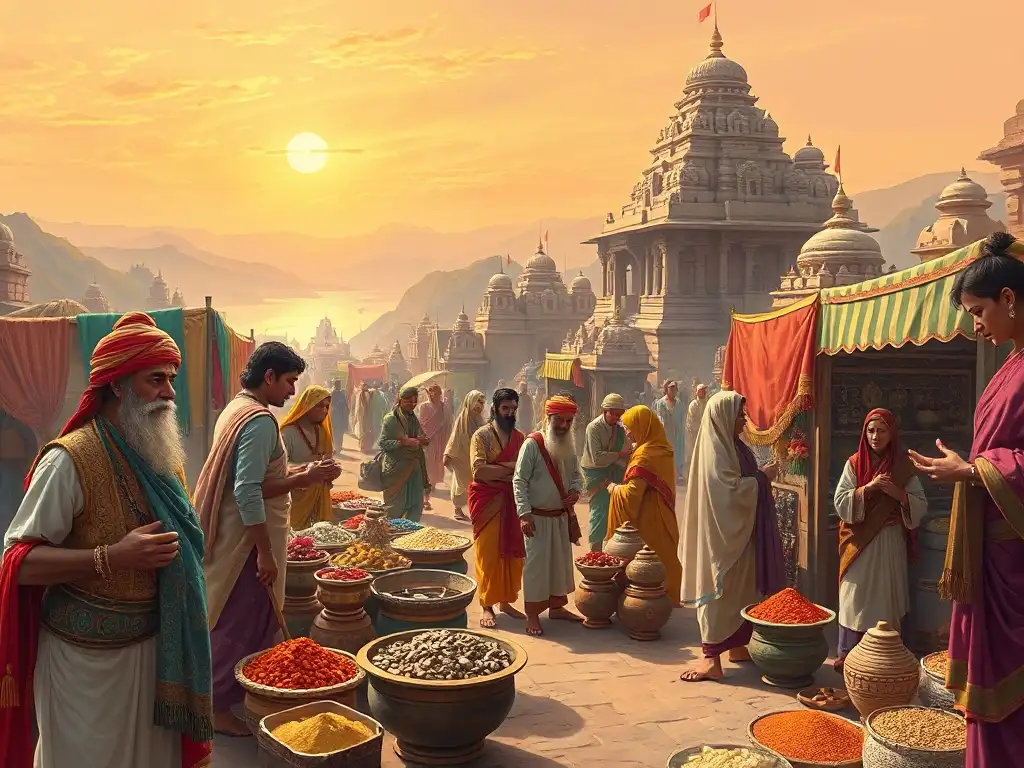
The cultural contributions of the Gupta Empire are deeply intertwined with its economic prosperity. A vibrant cultural scene, including advancements in literature, art, and science, attracted scholars and artists, which in turn fostered a thriving economy.
- Art and Architecture: The Gupta period saw the construction of magnificent temples and sculptures, which not only reflected the empire's wealth but also attracted pilgrims and tourists. The influx of visitors stimulated local economies and encouraged the growth of related crafts and services.
- Scientific and Mathematical Innovations: Scholars during the Gupta period made significant contributions to mathematics, astronomy, and medicine. The invention of the numeral system, including the concept of zero, revolutionized trade and commerce by making calculations easier and more efficient.
- Literature and Education: The flourishing of literature and the establishment of universities, such as Nalanda, drew students from various regions. This educational boom contributed to a literate society that could engage in commerce and governance effectively.
The Intersection of Culture and Economy
The Gupta Empire exemplified the intersection of culture and economy, where cultural advancements directly influenced economic activities.
- Cultural Exchange through Trade: Trade routes not only facilitated the exchange of goods but also ideas, art forms, and cultural practices. This exchange enriched both the local culture and the economy, fostering a sense of unity and identity among diverse populations.
- Patronage of Arts: The Gupta rulers patronized artists and scholars, leading to a cultural renaissance that had economic implications. The thriving arts sector encouraged the production of luxury goods, which became valuable trade items, further boosting the economy.
- Increased Demand for Craftsmanship: The flourishing of culture created a higher demand for handcrafted goods, textiles, and artworks. Artisans and craftspeople thrived, contributing to both local economies and the empire's overall wealth.
The Gupta Empire's economic prosperity can be attributed to a combination of agricultural advancements, efficient governance, trade networks, and a rich cultural heritage. This unique blend of factors not only fortified the empire but also left a lasting legacy on subsequent Indian civilizations.
Comparative Analysis: Gupta Empire vs. Other Ancient Civilizations
The Gupta Empire, often hailed as the Golden Age of India, showcases a remarkable period of economic prosperity that can be fruitfully compared to other ancient civilizations. By examining its economic models, trade networks, and overall societal structure, we can gain insights into the factors contributing to its success.
In comparison to the Roman Empire, which thrived on extensive trade networks and a complex taxation system, the Gupta Empire's prosperity was largely supported by agriculture and local trade. The Gupta rulers implemented policies that encouraged trade and commerce within their territories, leading to a self-sustaining economy that was less reliant on imperial conquests for wealth generation.
Additionally, the Gupta Empire's focus on education and cultural development through institutions like Nalanda University fostered a skilled workforce that contributed to economic stability and innovation. In contrast, while the Maurya Empire also laid the groundwork for economic development, its heavy taxation and militaristic focus often strained its economic resources.
This comparative analysis reveals that while all civilizations faced unique challenges and opportunities, the Gupta Empire's emphasis on internal cohesion and cultural development set it apart as a model of economic prosperity.
Economic Models of the Gupta Empire vs. Maurya Empire
The Gupta Empire's economic model was distinct from that of the Maurya Empire in several ways. The Maurya Empire, under leaders like Chandragupta Maurya and Ashoka, relied heavily on a centralized bureaucratic system that imposed strict taxation on its subjects to fund large military campaigns and administrative overhead. This often led to discontent among the populace and required a robust military to maintain control.
In contrast, the Gupta Empire adopted a more decentralized approach to governance. Local rulers, or "samatvas," were given substantial autonomy, which allowed for more efficient tax collection and management tailored to local needs. The Gupta administration encouraged agricultural production and trade, leading to increased food security and the growth of markets.
Moreover, the Gupta Empire witnessed the emergence of guilds that regulated trade and craft production, ensuring quality and fair pricing. This system fostered a culture of entrepreneurship and innovation, enhancing economic output. The contrasting economic models of the two empires highlight the Gupta Empire's adaptability and focus on sustainable prosperity.
Trade Networks: Gupta Empire vs. Roman Empire
The trade networks of the Gupta Empire were extensive, facilitating not only domestic trade but also connections with external markets, including those of the Roman Empire. The trade routes that connected these two great civilizations were vital for the exchange of goods, ideas, and culture.
While the Roman Empire was known for its sophisticated maritime trade routes across the Mediterranean, the Gupta Empire primarily relied on overland routes that linked it to regions as far as Southeast Asia and the Middle East. The Silk Road, which traversed parts of the Gupta territories, played a crucial role in this trade dynamic. Goods such as silk, spices, and precious stones flowed into India, while Indian products like textiles, metalwork, and aromatic substances were exported.
The thriving trade fostered economic interdependence, with both empires benefiting from the exchange. This interaction also facilitated the spread of cultural and religious ideas, further enriching the civilizations involved. Thus, the trade networks of the Gupta Empire not only contributed to its economic prosperity but also established it as a significant player in the global trade landscape of the ancient world.
Challenges to Economic Prosperity in the Gupta Empire
Despite its remarkable achievements, the Gupta Empire faced several challenges that threatened its economic prosperity. These challenges stemmed from both internal conflicts and external threats, which had profound implications for the stability of the empire and its economy.
Internal Conflicts and Political Instability
Internal conflicts within the Gupta Empire often arose from disputes over succession and power struggles among regional governors. As the central authority weakened, local rulers began to assert their independence, leading to a fracturing of the once-cohesive empire. These power struggles diverted resources away from productive economic activities, leading to decreased agricultural output and trade disruptions.
The resulting political instability also created an environment of uncertainty that discouraged investment and innovation. Merchants and artisans faced increased risks due to the unpredictability of local governance, which further hampered economic growth. As a result, the Gupta Empire's prosperity began to wane in the face of these internal challenges.
External Threats and Their Economic Impact
External threats, particularly from invading forces, posed significant challenges to the economic stability of the Gupta Empire. The Huna invasions in the 5th and 6th centuries CE were particularly damaging, as they not only disrupted trade routes but also led to widespread destruction of infrastructure and agricultural lands.
These invasions strained the empire's resources, forcing the Gupta rulers to redirect funds and military efforts toward defense rather than economic development. The loss of territories to external forces further diminished the empire's ability to generate revenue through taxes and trade, leading to a decline in the overall economic prosperity that had characterized the Gupta period.
While the Gupta Empire achieved a remarkable level of economic prosperity, it was not immune to the challenges posed by internal conflicts and external threats. These factors ultimately contributed to the decline of one of history's most celebrated empires.
Conclusion: Legacy of Gupta Empire Economic Prosperity
The Gupta Empire, often heralded as a golden age of ancient India, showcased a remarkable level of economic prosperity that has left a lasting legacy in the annals of history. This period, spanning from approximately 320 to 550 CE, was characterized by significant advancements in trade, agriculture, and industry, all of which contributed to a flourishing economy. The Gupta rulers implemented effective administrative policies, encouraged commerce, and promoted agricultural productivity, which together created a stable environment for economic growth.
The legacy of economic prosperity during the Gupta Empire is not merely a historical footnote; it serves as a benchmark for subsequent Indian civilizations. The strategies employed by the Guptas in fostering trade relationships, supporting artisans, and developing infrastructure laid the groundwork for future economic policies in India. Moreover, their emphasis on a decentralized administrative framework provided a model that facilitated local governance, allowing regions to thrive independently while contributing to the overarching economic health of the empire.
Lessons Learned from Gupta Empire Economic Strategies

The economic strategies of the Gupta Empire offer invaluable lessons for contemporary economies and governance. One key takeaway is the importance of a balanced approach towards trade and agriculture. The Guptas recognized that a prosperous agricultural base could support a vibrant trade network, leading to mutual reinforcement between these sectors. This interconnectedness ensured that the economy remained resilient against fluctuations.
Another lesson is the significance of supporting local artisans and industries. The Gupta regime fostered an environment where craftspeople could thrive, resulting in the production of high-quality goods that were sought after both domestically and internationally. By investing in local talent and craftsmanship, the empire not only enhanced its economic output but also contributed to cultural richness, as seen in the exquisite art and architecture of the time.
Furthermore, the emphasis on infrastructure development, including roads and trade routes, underscores the necessity of connectivity in economic growth. The Gupta Empire's investments in infrastructure facilitated trade and communication, enabling the swift movement of goods and ideas. This strategic foresight in planning and development remains relevant for modern economies striving for growth.
Influence on Future Indian Civilizations
The economic prosperity of the Gupta Empire had a profound influence on future Indian civilizations, shaping their economic structures and cultural identities. The principles of trade promotion, agricultural enhancement, and local governance established during this period set precedents that later dynasties would adopt and adapt.
For instance, the post-Gupta empires, such as the Harsha Empire and later the Chola and Vijayanagara Empires, drew inspiration from the Gupta economic model. They continued to prioritize trade and agriculture, leading to further advancements in commerce and economic policies. Additionally, the legacy of Gupta craftsmanship and artistic expression influenced subsequent periods, as artisans and scholars sought to build upon the rich cultural heritage established during the Gupta era.
Moreover, the Gupta emphasis on education and intellectual pursuits fostered a spirit of inquiry that permeated through later Indian societies. The establishment of universities and centers of learning during the Gupta period laid the foundation for educational frameworks in future civilizations, enhancing the overall intellectual fabric of India.
References
Key Sources on Gupta Empire Economic Prosperity Analysis
-
K. A. Nilakanta Sastri - A History of South India
This comprehensive source provides insights into the economic conditions during the Gupta Empire, detailing trade networks and agricultural practices.
-
Romila Thapar - The Penguin History of Early India
Thapar's work offers an analysis of the Gupta Empire's economic strategies and their impact on the broader Indian subcontinent.
-
B. D. Chattopadhyaya - The Gupta Empire
This book examines the administrative and economic frameworks that contributed to the prosperity of the Gupta Empire.
Suggested Readings for Further Exploration
-
R. C. Majumdar - The History of Ancient India
This text provides a detailed overview of the Gupta period, including economic aspects, trade, and cultural achievements.
-
Upinder Singh - A History of Ancient and Early Medieval India
This reading delves into the Gupta Empire's contributions to Indian history, emphasizing its economic policies and cultural legacy.
-
S. P. Gupta - Economic History of India
This book offers a broader context of India's economic evolution, with specific chapters dedicated to the Gupta Empire's economic prosperity.
- Introduction to the Gupta Empire
- Historical Context of the Gupta Empire
- Analysis of Gupta Empire Economic Prosperity
- Factors Contributing to Economic Growth
- Cultural Contributions and Economic Prosperity
- Comparative Analysis: Gupta Empire vs. Other Ancient Civilizations
- Challenges to Economic Prosperity in the Gupta Empire
- Conclusion: Legacy of Gupta Empire Economic Prosperity
- Lessons Learned from Gupta Empire Economic Strategies
- Influence on Future Indian Civilizations
- References
- What was the Gupta Empire known for in terms of economic prosperity?
- How did trade contribute to the Gupta Empire's economy?
- What were some key agricultural practices in the Gupta Empire?
- How did the Gupta Empire support artisans and craftspeople?
- What role did currency play in the Gupta Empire's economy?
Frequently Asked Questions
What was the Gupta Empire known for in terms of economic prosperity?
The Gupta Empire is renowned for its economic prosperity, which stemmed from robust trade networks, agricultural advancements, and a thriving craft industry that contributed to its wealth.
How did trade contribute to the Gupta Empire's economy?
Trade played a crucial role by facilitating the exchange of goods, including spices, textiles, and precious stones, both domestically and with foreign markets, enhancing the economic landscape.
What were some key agricultural practices in the Gupta Empire?
The Gupta Empire utilized advanced irrigation techniques and crop rotation methods, which significantly increased agricultural productivity and supported its growing population.
How did the Gupta Empire support artisans and craftspeople?
The empire fostered a vibrant artisan community by providing patronage and market access, which enabled craftspeople to thrive and contribute to the empire's economic richness.
What role did currency play in the Gupta Empire's economy?
The introduction of a standardized currency system facilitated trade and commerce, making transactions smoother and boosting the overall economic activity within the Gupta Empire.
Final Reflection: The Gupta Empire's Enduring Legacy of Economic Prosperity
The Gupta Empire's remarkable economic prosperity serves as a powerful reminder of how effective governance, cultural flourishing, and trade can create a thriving society. Today, as we navigate complex economic challenges globally, the lessons from the Gupta Empire resonate more than ever. Their ability to foster innovation and trade during a time of relative peace highlights the potential for economic growth when stability and creativity are prioritized.
The impact of the Gupta Empire on our cultural and social landscape is profound and ongoing. The advancements in science, mathematics, and the arts during this period laid the groundwork for future generations, influencing countless cultures around the world. The Gupta period is often referred to as the Golden Age of India, a time when the arts and sciences flourished, and the economy thrived.
This historical context not only enriches our understanding of economic prosperity but also emphasizes the importance of cultural investment in fostering a robust society.
As we reflect on the Gupta Empire's legacy, I invite you to consider how the principles of economic prosperity can be applied in our lives today. What steps can you take to foster creativity and collaboration in your community? Embrace the spirit of innovation and cooperation that characterized the Gupta Empire, and let it inspire you to contribute to a more prosperous future, both personally and collectively. The lessons from history are not just stories of the past; they are blueprints for building a better tomorrow.
Unlock the Secrets of Economic Prosperity!
Thank you for diving into the fascinating world of the Gupta Empire with us! You’ve explored the keys to their remarkable economic success. Now, it’s time to take that knowledge and turn it into action!
Here are a few steps you can take to deepen your understanding and spread the insights you’ve gained:
- Engage with History: Visit your local museum or a historical site to discover artifacts from the Gupta period. Experience history firsthand!
- Share the Knowledge: Discuss this article with friends or share your thoughts on social media. Start a conversation about how ancient practices can inspire modern economic success.
- Explore Further: Dive into additional resources by exploring our curated list of readings on ancient economies to broaden your perspective!
What modern practices do you think could be influenced by the economic strategies of the Gupta Empire?