
Exploring the Gupta Empire’s Advanced Understanding of Optics and Light

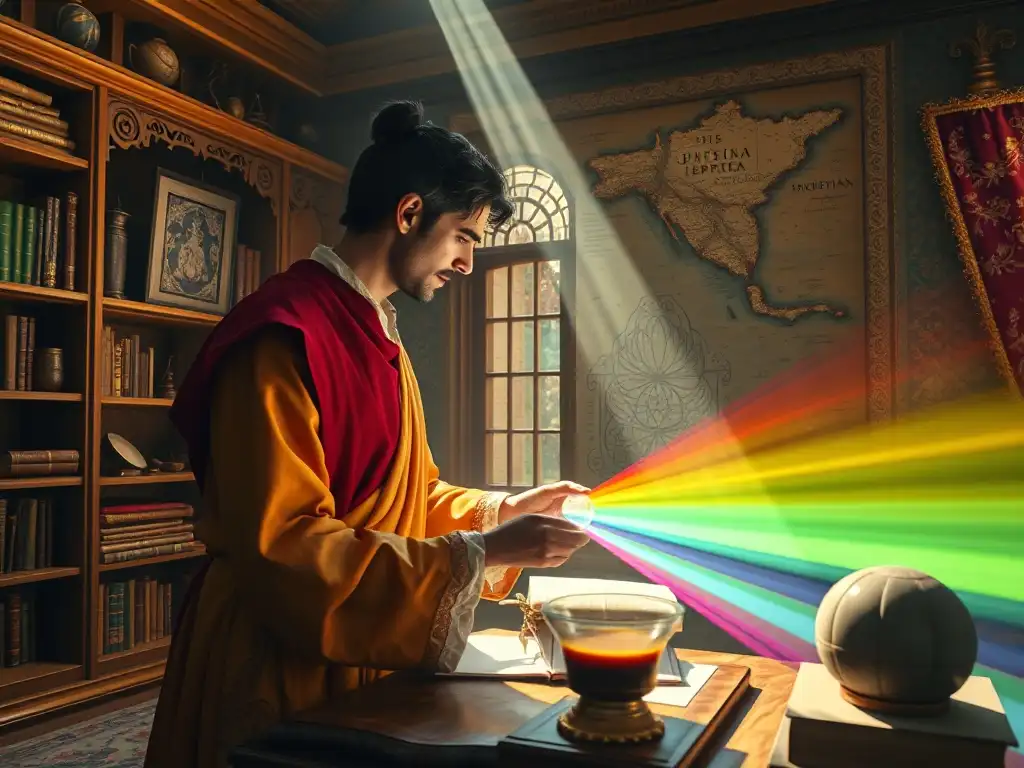
Welcome to Ancient India History, where we embark on an enlightening journey through the rich tapestry of ancient Indian civilizations. Discover how the Gupta Empire, often hailed as a golden age of scientific advancement, made groundbreaking strides in the fields of optics and light. This article will unravel the fascinating insights and innovations that emerged during this remarkable era, inviting you to delve deeper into the brilliance of ancient scholars. Are you ready to explore the secrets of light that illuminated the minds of the Gupta thinkers? Let’s begin this captivating exploration!
- Introduction to the Gupta Empire’s Scientific Contributions
- Historical Context of Optics in the Gupta Empire
- Key Figures in Gupta Optics and Light Research
- Understanding Light in Gupta Science
- Practical Applications of Optics and Light in the Gupta Empire
- Comparisons with Contemporary Civilizations
- Legacy of Gupta Empire Optics and Light Studies
- Conclusion
-
Frequently Asked Questions
- What were the key contributions of the Gupta Empire to the study of optics?
- How did ancient Indian scholars influence modern optics?
- What materials were used in Gupta Empire experiments on light?
- How does the Gupta Empire's understanding of optics compare to other ancient civilizations?
- What legacy did Gupta Empire optics leave for future generations?
- Final Reflection: Illuminating the Legacy of Gupta Empire Optics and Light
- Illuminate Your Understanding of Ancient Optics!
Introduction to the Gupta Empire’s Scientific Contributions
The Gupta Empire, which flourished from approximately 320 to 550 CE, is often referred to as the "Golden Age" of ancient India. This period was marked by remarkable advancements in various fields including science, mathematics, and art, which laid foundational principles that would influence future generations. Among these contributions, the understanding of optics and light stands out as a pivotal area of study, showcasing the Gupta scholars' ingenuity and their profound grasp of the natural world.
By exploring the Gupta Empire's optics and light, we uncover not only the scientific achievements of this era but also how these advancements were intertwined with cultural and philosophical thought. This article delves into the specifics of these contributions, highlighting their significance in the broader context of ancient science.
Overview of the Gupta Empire
The Gupta Empire emerged as a dominant political and cultural force in India during the 4th century CE. Founded by Maharaja Gupta I, this empire expanded its territory across Northern India, promoting a unified culture that combined various regional traditions. The Guptas were known for their patronage of the arts and sciences, fostering an environment conducive to intellectual pursuits.
Key features of the Gupta Empire include:
- Political Stability: The centralized administration allowed for economic prosperity and the flourishing of trade routes.
- Cultural Flourishing: The era witnessed remarkable achievements in literature, with notable figures such as Kalidasa, and in art, exemplified by intricate temple carvings and sculptures.
- Scientific Advancements: Scholars like Aryabhata and Varahamihira made significant contributions to mathematics and astronomy, setting the stage for future developments.
The Gupta Empire's legacy is not merely confined to its political achievements; it is equally recognized for its intellectual advancements, particularly in fields such as mathematics, astronomy, and notably, optics.
Significance of Optics and Light in Ancient Science
Optics, the study of light and vision, played a crucial role in ancient scientific inquiry, and the Gupta Empire made significant strides in this area. The Gupta scholars were not just passive observers of natural phenomena but active experimenters and theorists who sought to understand the principles governing light. Their work laid the groundwork for future explorations in both theoretical and applied optics.
Key aspects of the significance of optics and light in the Gupta Empire include:
- Understanding of Reflection and Refraction: Scholars began to explore how light behaves when it encounters different mediums, leading to foundational concepts in optics.
- Invention of Instruments: The period saw the development of various optical devices, including early telescopes and lenses, which enhanced the study of celestial bodies.
- Influence on Other Sciences: The principles of optics were intertwined with astronomy and mathematics, facilitating advancements in navigation and timekeeping.
The Gupta Empire's advanced understanding of optics and light not only contributed to the scientific landscape of ancient India but also influenced various fields, marking an essential chapter in the history of science. This exploration into their discoveries reveals the depth of knowledge present during this golden age and its lasting impact on future generations.
Historical Context of Optics in the Gupta Empire

The Gupta Empire, which flourished from approximately 320 to 550 CE, is often regarded as a golden age of Indian civilization, particularly in the fields of science and mathematics. Among the various disciplines that saw significant advancements during this period, optics and the understanding of light played a crucial role. This section provides an overview of the historical context surrounding the study of optics in the Gupta Empire, highlighting key developments and influences that shaped the scientific landscape of the time.
The Rise of Scientific Inquiry during the Gupta Period
During the Gupta period, there was a remarkable rise in scientific inquiry, characterized by an emphasis on empirical observation and rational thought. Scholars such as Aryabhata and Varahamihira made groundbreaking contributions in various scientific fields, including astronomy and mathematics, which inherently influenced the study of optics.
- Empirical Observations: Gupta scientists relied heavily on observation of celestial bodies and natural phenomena, which led to a deeper understanding of light and its properties. They observed how light interacted with different materials, setting the groundwork for future explorations in optics.
- Mathematical Foundations: The Gupta Empire saw the formalization of mathematical principles that would later be applied to the study of optics. For example, the concept of zero and the decimal system facilitated complex calculations involving angles and distances, which are essential for understanding light propagation.
- Integration of Knowledge: Scholars during this time often integrated insights from various fields, creating an interdisciplinary approach to science. This integration was crucial for advancements in optics, as it encompassed mathematics, astronomy, and physics.
The Gupta period's focus on knowledge and inquiry laid the foundation for significant developments in optics, making it a pivotal moment in the history of science in India.
Influences on Gupta Optics from Earlier Civilizations
The advancements made in optics during the Gupta Empire were not developed in isolation; they were significantly influenced by earlier civilizations' contributions. Key influences include:
- Indus Valley Civilization: The early practices of metallurgy and glass-making in the Indus Valley provided foundational knowledge regarding the properties of materials used in optics. Artifacts such as beads and mirrors suggest an understanding of reflection and refraction that predated the Gupta Empire.
- Greek Contributions: The introduction of Greek philosophical and scientific texts, especially those of Euclid and Ptolemy, played an essential role in shaping Gupta optics. Euclid's work on optics, particularly his theories on light rays and vision, was instrumental in developing Gupta scholars' understanding of the behavior of light.
- Buddhist Texts: The philosophical inquiries found in Buddhist texts also influenced Gupta scholars. Concepts such as perception and the nature of reality prompted discussions about light and its role in human perception, which were essential for advancing optics.
- Arabic and Persian Sciences: While the Gupta Empire existed prior to significant Arab influence, the exchange of ideas through trade routes helped establish a scientific dialogue that would continue to evolve. The subsequent translations of Gupta works into Arabic would later spark further developments in optics across the Islamic Golden Age.
These influences collectively contributed to a rich intellectual environment that allowed the Gupta Empire to make significant strides in optics, solidifying its legacy in the history of science.
Key Figures in Gupta Optics and Light Research

Aryabhata: Contributions to Optics and Astronomy
Aryabhata, one of the most prominent mathematicians and astronomers of the Gupta Empire, made significant contributions to the fields of optics and astronomy. His seminal work, the Aryabhatiya, composed in 499 CE, laid the groundwork for many scientific principles that are still relevant today.
Aryabhata's approach to optics was largely mathematical, emphasizing the importance of angles and distances in understanding light phenomena. He proposed that the sun reflects light and that the moon shines due to this reflected light, showcasing an early understanding of the behavior of light. Furthermore, Aryabhata formulated the concept of the Earth's rotation on its axis, which was crucial for understanding celestial movements and their impact on the perception of light and shadows.
Key Contributions:
- Mathematical Models: Aryabhata developed formulas to calculate the size of celestial bodies and their distances from Earth, which indirectly influenced the understanding of light's propagation.
- Astronomical Observations: His observations regarding the solar and lunar eclipses provided insights into the light interactions between these celestial bodies.
- Influence on Later Scholars: Aryabhata's work inspired subsequent generations of scientists, including Brahmagupta and Bhaskara, paving the way for further advancements in optics and astronomy.
Varahamihira and His Works on Light Refraction
Varahamihira, another luminary of the Gupta Empire, is best known for his extensive contributions to various scientific disciplines, including optics. His text Brihat Samhita, written in the 6th century CE, is a comprehensive treatise covering astronomy, astrology, meteorology, and natural phenomena, including light refraction.
In his works, Varahamihira discussed the principles of light refraction and reflection, laying the groundwork for understanding how light behaves when it passes through different mediums. He emphasized the concept of angles of incidence and refraction, which are fundamental to the study of optics.
Key Contributions:
- Refraction Laws: Varahamihira documented observations on how light bends when transitioning from air to water, providing early insights into the principles of refraction.
- Practical Applications: His findings had practical implications, influencing the design of lenses and other optical instruments, which were crucial for advancements in astronomy and navigation.
- Integration of Knowledge: Varahamihira's work demonstrates the integration of observational astronomy with practical applications, showcasing the Gupta Empire's advanced understanding of light.
Other Notable Scholars in Gupta Science
In addition to Aryabhata and Varahamihira, several other scholars contributed to the Gupta Empire's understanding of optics and light. Their collective works reflect a rich tradition of scientific inquiry that characterized this golden age of Indian civilization.
- Brahmagupta: Known for his work on mathematics and astronomy, Brahmagupta's theories on shadows and eclipses contributed to the understanding of light phenomena. He expanded upon Aryabhata’s ideas and provided methods for calculating the size of shadows cast by various celestial bodies.
- Bhaskara I: A follower of Aryabhata, Bhaskara I made significant contributions to trigonometry and astronomical calculations, which involved an understanding of angles and their relationship to light.
- Siddhanta Shiromani: Authored by Bhaskara II in the 12th century, this text reflects the ongoing legacy of Gupta-era knowledge and includes discussions on the properties of light and optics.
The Gupta Empire's advancements in optics and light were not merely theoretical but were deeply intertwined with practical applications that influenced various fields, including astronomy, navigation, and architecture. This rich tapestry of knowledge laid the foundations for future explorations in science and mathematics, highlighting the enduring legacy of Gupta scholars in the realm of optics.
Understanding Light in Gupta Science
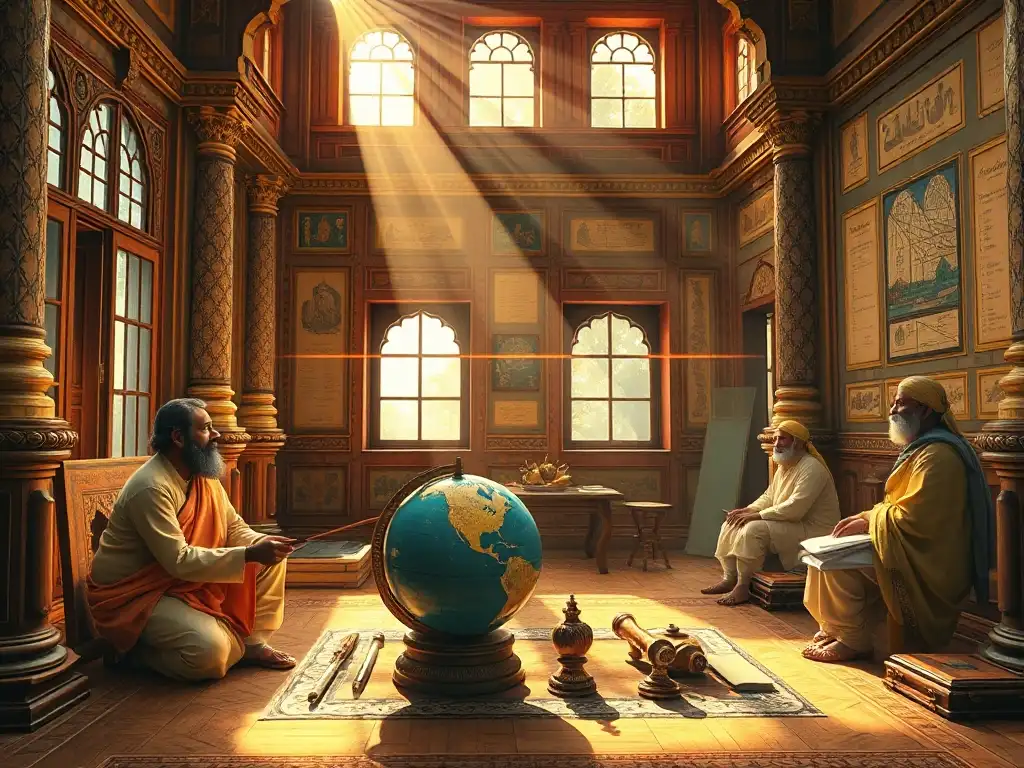
The Gupta Empire, known for its remarkable advancements in various fields, also made significant contributions to the study of optics and light. This period saw scholars keenly interested in understanding the nature of light, leading to theories that would influence future scientific thought. Gupta scientists approached the study of light through both philosophical and empirical lenses, paving the way for innovations in optical science.
The philosophical discussions around light included debates on its nature—whether it was a particle or a wave. Noteworthy scholars such as Aryabhata and Varahamihira engaged in these discussions, drawing from earlier texts and observations. Their work laid a foundation that would later resonate through the ages, influencing both Islamic and European scholars during the Middle Ages.
The Theories of Light Propagation
The Gupta scholars proposed several theories regarding the propagation of light that were remarkably advanced for their time. One of the prominent theories suggested that light travels in straight lines, a concept that formed the basis for later developments in optics.
- Straight-Line Propagation: The idea that light travels in straight lines is fundamental in optics. This principle enabled Gupta scientists to explore further phenomena such as shadows and eclipses, which were crucial for understanding celestial events.
- Nature of Light: Gupta philosophers speculated about light's dual properties and its interaction with matter. They delved into whether light could be considered a substance or merely an effect of other phenomena.
These early theories laid the groundwork for more systematic studies of optics, influencing later scholars in various cultures.
Refraction and Reflection: Gupta Discoveries
The Gupta Empire's contributions to understanding refraction and reflection were particularly noteworthy.
- Reflection: The concept that light bounces off surfaces was well understood. Gupta scholars explored how the angle of incidence relates to the angle of reflection, a principle that remains a cornerstone of optics today.
- Refraction: Gupta scientists were among the first to document the bending of light as it passes through different media. They observed that light travels slower in denser materials, a principle that would later be mathematically formulated in Snell's Law.
Key Experiments
- Water Experiments: By observing the appearance of objects submerged in water, Gupta scientists demonstrated how light bends and alters perception.
- Mirrors and Surfaces: The use of polished surfaces to reflect light was common, and experiments with different angles provided insight into how light behaves when striking various materials.
These discoveries not only contributed to the theoretical basis of optics but also had practical applications in creating better tools for navigation and astronomy.
The Role of Lenses in Gupta Optics
One of the most significant advancements in Gupta optics was the development and use of lenses.
- Lenses as Tools: Gupta scholars crafted lenses from various materials, including glass and crystal. These lenses were used in simple magnifying devices, allowing for enhanced visibility of small objects, which was crucial for fields such as medicine and astronomy.
- Refinement of Techniques: The process of grinding and polishing lenses to achieve the desired curvature demonstrated a sophisticated understanding of materials and their optical properties. This skill led to improvements in the accuracy of astronomical observations.
| Type of Lens | Material Used | Applications |
|---|---|---|
| Convex | Glass | Magnification of objects |
| Concave | Crystal | Correction of vision |
These advancements in lens-making not only contributed to the knowledge of optics during the Gupta Empire but also laid the foundation for future developments in optical science across various cultures.
The Gupta Empire's exploration of optics and light was characterized by a blend of philosophical inquiry and empirical investigation. Their insights into the nature of light, along with practical applications like lenses, significantly advanced the understanding of optics in ancient science, influencing generations to come.
Practical Applications of Optics and Light in the Gupta Empire

The Gupta Empire, often referred to as the Golden Age of India, was marked by significant advancements in various fields, including science and mathematics. One of the most intriguing areas of development during this period was the study and application of optics and light. The Gupta scholars not only made theoretical contributions but also implemented practical applications that influenced various aspects of life, including medicine, architecture, and instrument-making.
Construction of Instruments: Telescopes and Microscopes
The Gupta Empire's scholars demonstrated a remarkable understanding of optics, which led to the advancement of instruments such as telescopes and microscopes. These instruments were pivotal in expanding the horizons of observation and revolutionizing the study of both the cosmos and the microscopic world.
- Telescopes: Although the term "telescope" was not used during the Gupta period, the principles behind it were understood. Gupta scientists are believed to have created simple lenses made from polished quartz and glass. These lenses allowed for improved astronomical observations. For instance, they could observe celestial bodies with greater clarity, contributing to early astronomy.
- Microscopes: Similarly, the development of microscopes can be traced back to this era, with scholars utilizing small lenses to magnify objects. This innovation enabled the study of biology and the understanding of various microorganisms, laying the groundwork for future discoveries in microbiology.
The construction of these instruments was not merely theoretical; practical experiments and observations were conducted to refine their designs. The Gupta Empire's emphasis on empirical research in optics set the stage for later developments in both scientific and medical fields.
Optics in Medicine: Treatment and Surgical Techniques
The Gupta Empire's understanding of optics extended into the realm of medicine, where it played a crucial role in treatment methods and surgical techniques. Notable contributions include:
- Surgical Instruments: The Gupta period saw the creation of advanced surgical instruments that incorporated principles of optics. For instance, scalpels and forceps were designed with precision, allowing surgeons to perform delicate procedures. The use of polished metals and glass lenses enhanced visibility during surgeries.
- Treatments Using Lenses: Gupta physicians utilized convex lenses to aid in the treatment of eye ailments. The concept of using lenses to correct vision was revolutionary for the time. This practice not only improved the quality of life for many individuals but also highlighted the advanced medical knowledge of Gupta scholars.
- Light in Healing Practices: The therapeutic use of light, rooted in the understanding of optics, was also prevalent. Techniques such as phototherapy, where patients were exposed to sunlight for healing purposes, showcased the Gupta Empire's innovative approach to health and wellness.
These applications underscore the Gupta Empire's holistic integration of optics within the medical field, which would influence future generations in both India and beyond.
Impacts on Art and Architecture: Light and Shadow Techniques
The mastery of optics and light during the Gupta Empire had a profound impact on art and architecture, particularly in the use of light and shadow techniques in various forms of artistic expression.
- Architectural Design: Gupta architecture is characterized by intricate designs that utilized natural light to enhance the visual appeal of structures. Temples were strategically built to allow sunlight to filter through, creating an ethereal ambiance that played with light and shadow. This technique not only beautified the structures but also had symbolic significance, representing the divine light.
- Sculpture and Frescoes: In sculpture, the Gupta artists applied their understanding of light to create depth and realism. The play of light on surfaces was carefully considered, allowing for more dynamic and lifelike representations of deities and figures. Frescoes also benefited from this knowledge, as artists used shading techniques to give their works a three-dimensional quality.
- Cultural Significance: The use of light in art and architecture during the Gupta Empire reflected the cultural and spiritual beliefs of the time. Light was often associated with knowledge and divinity, and its incorporation into artistic endeavors served to elevate the spiritual experience of worshippers.
The Gupta Empire's advanced understanding of optics and light was not only a scientific achievement but also a cultural one. The practical applications of these principles in instrument-making, medicine, and art demonstrate the empire's significant contributions to the development of knowledge that would resonate through the ages.
Comparisons with Contemporary Civilizations

The Gupta Empire, which flourished from approximately 320 to 550 CE, is notable for its remarkable achievements in various fields, including optics and light. When comparing the Gupta Empire's understanding of optics with that of contemporary civilizations, particularly Ancient Greece and the Islamic Golden Age, significant distinctions and influences emerge.
Gupta Empire vs. Ancient Greek Understanding of Light
The Ancient Greeks, particularly philosophers such as Euclid and Ptolemy, laid foundational theories concerning light and vision. They proposed that light emanated from the eye and allowed for vision to occur through direct contact with objects. This theory was prevalent until the Gupta period, during which Indian scholars began to challenge and expand upon these ideas.
- Theories of Vision:
- Greek Perspective: The Greeks believed in the "intromission" theory, where light was thought to be emitted from the eyes.
- Gupta Perspective: Gupta scholars, notably Aryabhata and later Brahmagupta, contributed to the understanding of light as a phenomenon that travels in straight lines and is subject to reflection and refraction.
- Optical Instruments:
- Greek Innovations: The Greeks utilized basic optical devices such as concave mirrors to reflect light but lacked a comprehensive understanding of lenses.
- Gupta Advancements: The Gupta Empire saw the introduction of lenses made from polished gemstones, which were used for magnification and improving vision. This innovation laid the groundwork for future optical developments.
- Mathematical Foundations:
- Greek Geometry: The Greeks employed geometric principles to describe light paths, focusing on angles and reflections.
- Gupta Mathematics: Gupta mathematicians advanced the field by integrating trigonometric concepts, which enhanced the understanding of angles of incidence and reflection.
This contrast highlights how the Gupta Empire's contributions to optics were not only innovative but also served to refine and build upon existing Greek knowledge.
The Influence of Gupta Optics on Islamic Scholars
The advancements made by the Gupta Empire in optics significantly influenced scholars in the Islamic Golden Age, particularly between the 8th and 14th centuries. During this time, Islamic scholars sought to compile and expand upon the knowledge of earlier civilizations, including the Gupta Empire.
- Transmission of Knowledge:
- The works of Gupta scholars were translated into Arabic, allowing for a wider dissemination of their theories on light and vision. Key texts, such as Aryabhata's Aryabhatiya, were instrumental in shaping Islamic thought on optics.
- Refinement of Optical Theories:
- Islamic scholars like Al-Haytham (Ibn al-Haytham) built on Gupta concepts by conducting experiments and formulating the "intromission" theory of light, which posited that light enters the eye from external sources, contributing to the understanding of vision and perception.
- Innovations in Optics:
- The Gupta Empire's use of lenses and mirrors inspired Islamic advancements in optical devices, leading to developments such as the camera obscura and improved magnifying tools. These inventions were crucial in both scientific exploration and artistic endeavors during the Islamic Golden Age.
The Gupta Empire's sophisticated understanding of optics and light not only distinguished it from contemporaneous civilizations but also laid the groundwork for future advancements in the field, profoundly influencing Islamic scholars and shaping the course of scientific inquiry in optics.
Legacy of Gupta Empire Optics and Light Studies

The Gupta Empire, often referred to as the "Golden Age" of India, not only flourished in art and literature but also made significant strides in the fields of science and mathematics, particularly in optics and the study of light. Scholars such as Aryabhata and Varahamihira contributed to the understanding of light and vision, laying the groundwork for future explorations in these areas. The Gupta period saw a synthesis of knowledge that integrated earlier traditions with innovative ideas, leading to advancements that would resonate through the centuries.
Lasting Contributions to Modern Science
The Gupta Empire's studies in optics have had a profound and enduring impact on modern science. One of the pivotal contributions was the understanding of refraction and reflection of light. Notably, texts from this era, like Aryabhata’s Aryabhatiya, explored concepts that would later be fundamental to the development of lenses in optics.
| Contribution | Description |
|---|---|
| Refraction | Early theories on light bending through different media, a precursor to lens design. |
| Reflection | Insight into how light reflects off surfaces, influencing later mirror technology. |
| Camera Obscura | Concepts related to the pinhole camera, leading to further developments in photography. |
Innovative techniques used by Gupta scholars for experimentation can be seen in the construction of simple optical instruments. These instruments were not only theoretical but were likely used in practical applications for astronomy and navigation.
In addition to practical applications, the Gupta scholars' emphasis on empirical observation set a precedent for scientific methodology. Their work demonstrated the importance of observation and experimentation, principles that underpin modern scientific inquiry.
Influence on Later Indian Scientific Thought
The advancements made during the Gupta Empire in optics and light significantly influenced subsequent generations of Indian scholars. The knowledge cultivated during this period served as a foundation for later figures such as Bhaskara I and II, who expanded upon the principles of light and optics in their own works.
- Integration of Ideas: The synthesis of Gupta optics with later Indian thought fostered a rich dialogue among scholars, leading to further advancements.
- Preservation of Knowledge: The texts produced during the Gupta Empire were preserved and studied by later generations, ensuring that the insights gained continued to inform the field.
- Cultural Exchange: As Indian scholars interacted with Arabic and Persian scientists, the principles developed during the Gupta period were incorporated into a broader scientific discourse that crossed cultural boundaries.
The legacy of Gupta Empire optics and light studies can be seen as a critical bridge between ancient knowledge and modern scientific thought, underscoring the importance of this era in the development of optical sciences. By examining these contributions, we gain a deeper appreciation of the Gupta Empire's role in shaping the scientific landscape of both ancient India and the world.
Conclusion
Summary of Gupta Empire’s Impact on Optics and Light
The Gupta Empire, often heralded as a golden age of science and mathematics in ancient India, made remarkable strides in the understanding of optics and light. Scholars during this period meticulously studied and documented the properties of light, leading to early theories that predated many modern concepts. One of the notable figures from this era, Aryabhata, contributed to the field by exploring the nature of light and its interaction with various materials.
Key advancements in optics during the Gupta Empire included:
- Refraction and Reflection: Gupta scholars observed how light bends when passing through different media, laying the groundwork for the principles of refraction. This understanding was essential for the development of lenses.
- Formation of Lenses: The creation of rudimentary lenses from polished crystals and glass allowed for the magnification of objects, enhancing both scientific observations and practical applications such as astronomy and medicine.
- Color Theory: Ancient texts indicate that Gupta scientists theorized about the spectrum of light and its relation to color, which would later influence optical studies in other cultures.
These advancements not only enriched the scientific discourse of the time but also influenced subsequent civilizations. The Gupta Empire's contributions to optics and light serve as a testament to the sophistication of ancient Indian science.
The Importance of Continued Exploration of Ancient Indian Science
The legacy of the Gupta Empire's work in optics and light underscores the importance of ongoing exploration of ancient Indian science. Modern researchers and historians continue to uncover the depth of knowledge possessed by ancient scholars, revealing significant contributions that have often been overlooked in the broader narrative of scientific history.
Continued exploration is essential for several reasons:
- Cultural Heritage: Understanding the scientific achievements of ancient civilizations fosters a deeper appreciation of cultural heritage, highlighting the contributions of diverse societies to global knowledge.
- Interdisciplinary Insights: The study of ancient optics can provide valuable insights for fields such as physics, engineering, and even art. Techniques developed in ancient times can inspire modern innovations.
- Educational Value: Incorporating ancient Indian scientific principles into contemporary education can enhance curricula and provide students with a broader perspective on the history of science.
The Gupta Empire’s advancements in optics and light not only reflect an impressive intellectual legacy but also offer valuable lessons for modern science and education. The exploration of these ancient contributions remains vital for understanding the evolution of scientific thought and the interconnectedness of global knowledge systems.
Frequently Asked Questions
What were the key contributions of the Gupta Empire to the study of optics?
The Gupta Empire made significant advances in optics and light, particularly through scholars like Aryabhata, who explored reflection and refraction principles.
How did ancient Indian scholars influence modern optics?
Ancient Indian scholars laid the groundwork for optical science, with theories that later influenced Islamic and European scientists, helping shape modern optical theory.
What materials were used in Gupta Empire experiments on light?
Scholars in the Gupta Empire often used lenses made from polished stones and glass to study light behavior, leading to advancements in optical technology.
How does the Gupta Empire's understanding of optics compare to other ancient civilizations?
The Gupta Empire's insights into optics were among the most advanced of their time, surpassing those of contemporaneous cultures like Greece and China in certain areas.
What legacy did Gupta Empire optics leave for future generations?
The optical advancements from the Gupta Empire laid foundational concepts for later explorations in physics and astronomy, influencing both Eastern and Western scientific thought.
Final Reflection: Illuminating the Legacy of Gupta Empire Optics and Light
The Gupta Empire's advanced understanding of optics and light remains profoundly relevant today, as it showcases the remarkable intersection of science and culture that propelled human knowledge forward. In an era where technology and innovation dominate our lives, revisiting the Gupta Empire's contributions serves as a reminder of the timeless pursuit of knowledge and the importance of interdisciplinary exploration. The brilliance of their optical advancements not only laid the groundwork for future scientific endeavors but also exemplifies how curiosity can illuminate the path to discovery.
The legacy of the Gupta Empire's work in optics continues to resonate within our cultural and scientific landscapes. Their pioneering studies not only advanced the field of optics but also influenced art, architecture, and philosophy, shaping a holistic understanding of the world around us. As we reflect on their achievements, we can draw inspiration from the words of Albert Einstein: The important thing is not to stop questioning. Curiosity has its own reason for existence.
This quote encapsulates the essence of the Gupta Empire's spirit—a relentless quest for knowledge that transcends time and continues to inspire generations.
As we move forward, let us embrace the lessons from the Gupta Empire's exploration of optics and light in our own lives. I invite you to reflect on your own curiosity and the ways in which you can pursue knowledge in your daily experiences. Whether through scientific inquiry, artistic expression, or philosophical contemplation, each of us has the potential to contribute to the ongoing legacy of discovery. By fostering a mindset of exploration and openness, we can illuminate our paths and those of others, ensuring that the light of knowledge continues to shine brightly for future generations.
Illuminate Your Understanding of Ancient Optics!
Thank you for taking the time to delve into the fascinating world of the Gupta Empire and its groundbreaking contributions to the field of optics. Your curiosity reflects a desire to connect with the rich history that shapes our understanding of science today. Now, it’s time to take your insight to the next level!
Here are some actionable steps to deepen your exploration of ancient optics:
- Engage with History: Visit your local library or explore reputable online archives to uncover primary sources from the Gupta period that focus on advancements in science and technology.
- Join a Community: Participate in discussions or social media groups centered around ancient Indian history to connect with others who share your passion and insights.
- Experiment with Light: Conduct a simple optics experiment at home using everyday items like prisms or lenses to experience firsthand how these ancient principles of light operate.
What aspect of the Gupta Empire’s advancements in optics excites you the most, and how might it influence our understanding of modern science?