
The Importance of Nyaya in the Development of Indian Metaphysics

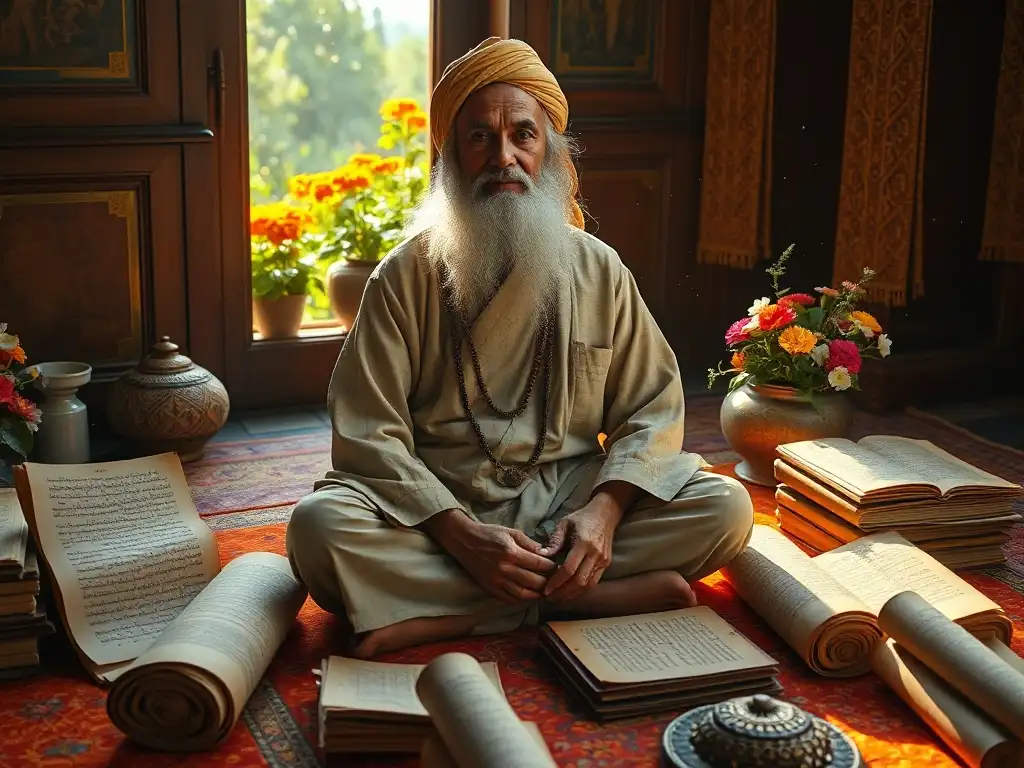
Welcome to Ancient India History, where we embark on a fascinating journey through the rich tapestry of India's past! In this exploration, we delve into the profound impact of Nyaya philosophy in ancient India, a cornerstone that shaped the development of Indian metaphysics. What makes Nyaya not just a philosophical doctrine but a vibrant lens through which we can understand the complexities of thought and debate in ancient civilizations?
Join us as we uncover the significance of this philosophical tradition and its enduring legacy, inviting you to dive deeper into a world where logic and metaphysics intertwine. Your adventure into the heart of ancient wisdom begins here!
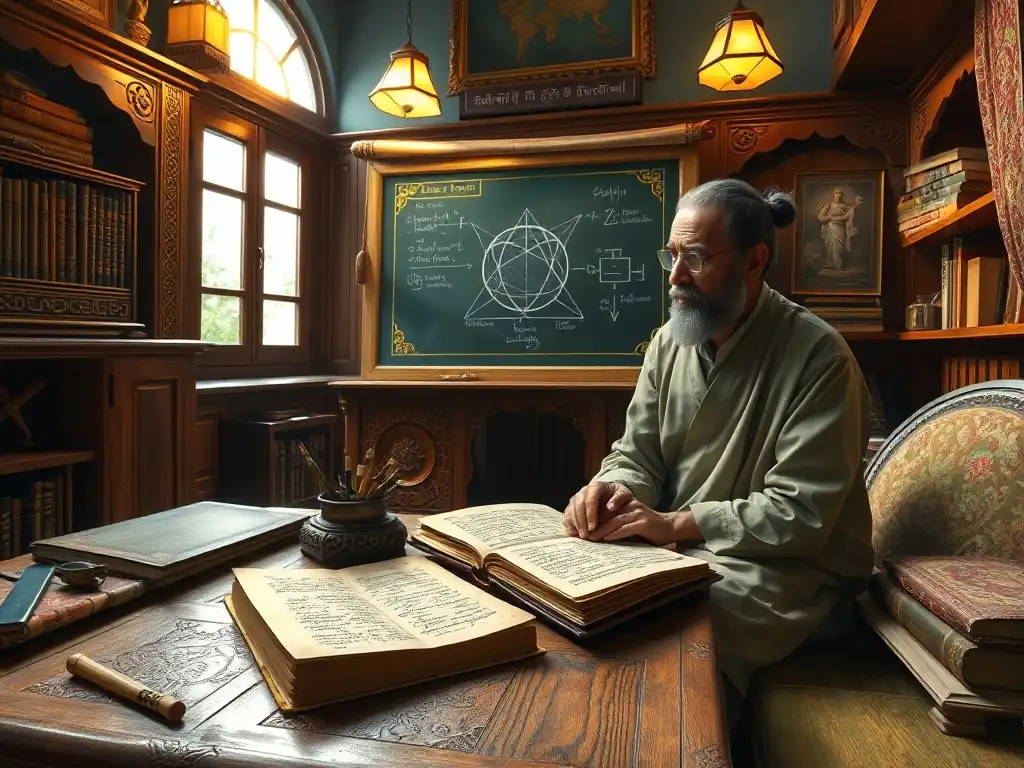
Introduction to Nyaya Philosophy in Ancient India
Nyaya philosophy, one of the six orthodox schools of Indian thought, plays a crucial role in the broader landscape of Indian metaphysics. Originating in ancient India, Nyaya focuses on logic, epistemology, and the process of reasoning, providing a systematic approach to understanding reality and the means of acquiring knowledge. This article delves into the significance of Nyaya philosophy in ancient India, exploring its foundational concepts, historical context, and its profound influence on subsequent philosophical developments. By examining Nyaya, we gain insight into the rich tapestry of Indian thought and its enduring impact on metaphysical discourse.
Overview of Nyaya Philosophy
At its core, Nyaya philosophy is concerned with the principles of valid reasoning and the categories of knowledge. The term "Nyaya" itself translates to "justice" or "rule," reflecting its emphasis on correct reasoning and logical analysis. The foundational text of this school is the Nyaya Sutras, attributed to the philosopher Gautama (also known as Akshapada), who established the framework for logical inquiry.
Key components of Nyaya philosophy include:
- Pramanas (means of knowledge): Nyaya identifies four primary means of acquiring knowledge: perception, inference, comparison, and testimony.
- Nyaya Vada: This refers to the methodology of argumentation and debate, emphasizing critical examination and systematic reasoning.
- Concept of Pratyaksha: The experience of direct perception as the most reliable source of knowledge.
These concepts not only shaped Nyaya itself but also influenced other philosophical schools in India, promoting a culture of rigorous debate and intellectual exploration.
Significance of Nyaya in Indian Thought
Nyaya philosophy holds a pivotal place in Indian intellectual history. Its rigorous approach to logic and epistemology provided a foundation for later philosophical inquiries and discussions. The emphasis on systematic reasoning and the classification of knowledge significantly contributed to the evolution of Indian metaphysics.
The impact of Nyaya is visible in various aspects:
- Critical Thinking: Nyaya encourages critical examination of beliefs and assertions, fostering a culture of intellectual rigor.
- Interdisciplinary Influence: Its principles influenced various fields, including ethics, metaphysics, and theology, leading to a more comprehensive understanding of philosophical questions.
- Dialogue with Other Schools: Nyaya's engagement with other philosophical traditions, such as Buddhism and Advaita Vedanta, enriched the discourse and promoted a synthesis of ideas.
Historical Context of Nyaya Philosophy
Origins of Nyaya in Ancient India
The origins of Nyaya can be traced back to around the 2nd century BCE, during a period of significant philosophical activity in India. This era witnessed the emergence of various schools of thought, each seeking to address fundamental questions about existence, knowledge, and ethics. The historical context that gave rise to Nyaya was marked by:
- Cultural Cross-Pollination: Interaction with other philosophical traditions, particularly the rise of Buddhism and Jainism, prompted the need for a systematic approach to logic and reasoning.
- Societal Needs: The complexities of societal governance and justice necessitated a framework for rational discourse and decision-making.
Key Figures in the Development of Nyaya
Several philosophers contributed to the development and refinement of Nyaya philosophy over the centuries. Notable figures include:
- Gautama (Akshapada): The founder of Nyaya, known for the Nyaya Sutras, which laid the groundwork for logical inquiry.
- Vatsyayana: A prominent commentator on the Nyaya Sutras, whose works helped elucidate and expand upon Gautama's ideas.
- Uddyotakara and Jayanta Bhatta: Later scholars who further developed Nyaya thought, addressing critiques from rival schools and integrating new perspectives.
Their collective efforts established Nyaya as a cornerstone of Indian philosophy, influencing both contemporary and later thinkers.
Influence of Nyaya on Other Philosophical Schools
Nyaya's impact extends beyond its own school, playing a significant role in shaping the landscape of Indian philosophy. Its principles were instrumental in the development of various other philosophical traditions:
- Buddhism: Engaged with Nyaya's epistemological frameworks, leading to debates on perception and inference.
- Advaita Vedanta: Incorporated Nyaya's logical methodologies to bolster arguments for non-dualism.
- Jain Philosophy: Shared common ground with Nyaya in terms of epistemology and the understanding of truth.
This interplay among different schools illustrates the dynamic nature of Indian philosophy, where ideas were continuously debated, refined, and integrated, creating a rich intellectual heritage that is still relevant today.
Core Concepts of Nyaya Philosophy
Nyaya philosophy, one of the six orthodox schools of Indian philosophy, is primarily concerned with logic, epistemology, and metaphysics. At its core, Nyaya emphasizes the significance of reasoning and argumentation in the pursuit of knowledge. It seeks to establish a systematic framework for discerning truth from falsehood, employing a rigorous analytical approach. The Nyaya Sutras, attributed to the sage Gautama (also known as Akṣapāda), serve as the foundational text, outlining key concepts and methodologies.
The central premise of Nyaya is the belief that valid knowledge (prama) can be attained through a precise understanding of the processes of reasoning. This involves the analysis of perception, inference, comparison, and testimony—four crucial means of knowledge (pramanas). Through these methods, Nyaya philosophers aimed to construct a comprehensive view of the universe and human existence, addressing essential questions related to existence, causality, and the nature of reality.
Fundamental Principles of Nyaya
The fundamental principles of Nyaya revolve around the four pramanas, or means of obtaining knowledge. Each of these methods plays a significant role in the Nyaya epistemological framework:
- Pratyaksha (Perception): This is direct knowledge obtained through sensory experience. Nyaya philosophers emphasize the reliability of perception as a primary source of knowledge but also recognize its limitations, such as the potential for error or misinterpretation.
- Anumana (Inference): Inference is a secondary means of knowledge that derives conclusions based on reasoning from known premises. Nyaya outlines a structured process for valid inference, known as the syllogism, which includes five components: the proposition, the reason, the example, the application, and the conclusion.
- Upamana (Comparison): This method involves knowledge gained through analogy or comparison with something familiar. By relating new experiences to known concepts, individuals can acquire insights about unfamiliar entities.
- Shabda (Testimony): Testimony refers to the knowledge acquired from authoritative sources or scriptures. Nyaya holds that reliable testimony is essential for understanding complex or abstract concepts that may not be directly perceivable.
These principles form the bedrock of Nyaya philosophy, guiding philosophical inquiry and debate while underscoring the importance of logic in discerning truth.
The Role of Logic in Nyaya Metaphysics
Logic occupies a central role in Nyaya metaphysics, serving as both a tool for analysis and a foundation for constructing philosophical arguments. The Nyaya tradition emphasizes the application of logical principles to clarify and resolve metaphysical questions.
Nyaya logic is characterized by its focus on the structure of arguments and the relationships between premises and conclusions. It employs specific rules to ensure sound reasoning, which is vital for establishing valid knowledge claims. This logical rigor allows Nyaya philosophers to address issues such as the nature of reality, the existence of the self, and the relationship between cause and effect.
Furthermore, Nyaya's logical framework fosters a critical examination of competing philosophical viewpoints, enabling dialogue between different schools of thought. By employing logical analysis, Nyaya philosophers could critique and refine their own theories while also engaging with alternative perspectives, enriching the broader landscape of Indian philosophy.
Nyaya's Epistemology: Means of Knowledge
Nyaya's epistemology is deeply intertwined with its metaphysical inquiries, as the school seeks to understand the nature and limits of human knowledge. The exploration of the four pramanas—perception, inference, comparison, and testimony—offers a comprehensive approach to epistemological questions.
- Perception: Nyaya recognizes that sensory experience is often the starting point of knowledge. However, it also emphasizes the need for critical reflection on perceptual data, considering factors such as error and subjective interpretation.
- Inference: The rigorous analysis of inference is a hallmark of Nyaya epistemology. By establishing clear criteria for valid inference, Nyaya philosophers aim to elevate inference from mere speculation to a systematic method of acquiring knowledge.
- Comparison: The method of comparison highlights the importance of context and prior knowledge in understanding new information. Nyaya's approach to analogy enriches the process of learning and conceptualization.
- Testimony: The reliance on authoritative sources underscores the communal aspect of knowledge acquisition in Nyaya. It emphasizes the role of tradition and collective wisdom in shaping understanding.
Through this multifaceted approach to epistemology, Nyaya philosophy contributes to a nuanced understanding of knowledge, its sources, and its implications for metaphysical inquiry.
The Contribution of Nyaya to Indian Metaphysics
Nyaya's contributions to Indian metaphysics are profound and enduring, influencing subsequent philosophical discourse and shaping the trajectory of metaphysical thought in India. By providing a systematic approach to understanding reality and its complexities, Nyaya laid the groundwork for later philosophical developments.
Nyaya's Influence on Metaphysical Questions
Nyaya philosophy engaged with several critical metaphysical questions, such as the nature of existence, the self, and causation. By employing logical analysis and the pramanas, Nyaya philosophers sought to clarify these concepts and address common misconceptions.
For instance, Nyaya's exploration of causation distinguishes between different types of causes, such as the efficient cause and the material cause, providing a nuanced framework for understanding the relationship between cause and effect. Additionally, the Nyaya perspective on the self emphasizes the distinction between the self (atman) and the body, contributing to the broader discourse on personal identity and consciousness.
Furthermore, Nyaya's engagement with the nature of reality prompted philosophical debates on the existence of external objects and the role of perception in shaping our understanding of the world. These inquiries not only enriched Nyaya's own metaphysical framework but also influenced other philosophical traditions, leading to a more comprehensive exploration of fundamental questions in Indian philosophy.
Comparative Analysis: Nyaya and Other Indian Philosophies
A comparative analysis of Nyaya with other Indian philosophical schools reveals both unique features and shared themes. For instance, while Nyaya emphasizes logical reasoning and empirical validation, schools like Advaita Vedanta focus on non-dualism and the ultimate nature of reality as Brahman.
Nyaya's engagement with epistemology sets it apart from schools such as Samkhya, which relies heavily on metaphysical categories without a detailed epistemological framework. On the other hand, both Nyaya and Buddhist philosophy share an emphasis on perception and inference, leading to fruitful dialogues and exchanges between the two traditions.
This comparative perspective highlights the dynamic nature of Indian philosophy, where schools often evolve in response to one another, refining their positions and expanding the scope of metaphysical inquiry.
The Evolution of Metaphysical Thought in Nyaya
The evolution of metaphysical thought within the Nyaya tradition is marked by significant developments and refinements over time. Early Nyaya thinkers, such as Gautama, established foundational principles, while later philosophers, including Udyotakara and Jayanta Bhatta, expanded upon these ideas, integrating insights from other philosophical traditions.
This evolution reflects a continuous engagement with pressing metaphysical questions and a willingness to adapt and critique established notions. For example, later Nyaya philosophers explored the implications of new scientific discoveries and advancements in logic, further enriching their metaphysical framework.
Additionally, the influence of Nyaya can be seen in the writings of various philosophers, both within and outside the tradition, indicating its integral role in shaping the broader landscape of Indian metaphysics. The ongoing dialogue between Nyaya and other philosophical schools continues to inspire contemporary discussions on metaphysics, knowledge, and reality, ensuring the relevance of Nyaya philosophy in modern philosophical discourse.
Practical Applications of Nyaya Philosophy

Nyaya philosophy, primarily known for its contribution to logic and epistemology, has extensive practical applications that extend beyond academic discourse. Its principles have been used to refine argumentative discourse, enhance critical thinking, and establish a systematic approach to knowledge acquisition. By emphasizing the importance of inference (anumana) and perception (pratyaksha), Nyaya provides a robust framework for evaluating evidence and deriving conclusions.
- Critical Thinking and Argumentation: The Nyaya system encourages individuals to analyze arguments critically. By applying Nyaya's methods of reasoning, learners can dissect complex propositions, identify fallacies, and construct sound arguments. This skill is crucial in various fields, including law, education, and public discourse.
- Legal Framework: Nyaya's influence on legal reasoning is profound. The principles of justice (nyaya) are rooted in the philosophical ideas of the Nyaya school, which advocate for fairness and rationality in the adjudication process. This philosophical foundation continues to underpin modern legal systems in India.
- Ethical Decision-Making: The ethical implications of Nyaya philosophy guide moral reasoning. It helps individuals assess their decisions through the lens of logic and rationality, promoting a methodical approach to distinguishing right from wrong.
Nyaya in Legal and Ethical Contexts
The integration of Nyaya philosophy into legal and ethical frameworks is significant. Legal systems in ancient India drew heavily from Nyaya's principles, particularly concerning justice and fairness. The term "Nyaya" itself translates to "justice," symbolizing its foundational role in law.
- Judicial Reasoning: Nyaya emphasizes the importance of valid reasoning in judicial contexts. The concepts of burden of proof and standards of evidence can be traced back to Nyaya doctrines, which advocate for logical coherence in legal arguments.
- Ethical Frameworks: In ethical discussions, Nyaya philosophy promotes a rational approach to moral dilemmas. By employing logical analysis, individuals are encouraged to evaluate the consequences of their actions and make ethical choices grounded in reason rather than emotion.
Relevance of Nyaya in Contemporary Philosophy
In contemporary philosophy, Nyaya remains relevant as scholars explore its logical structures and epistemological insights. The resurgence of interest in Indian philosophy in the global arena has led to renewed discussions about the contributions of Nyaya.
- Comparative Philosophy: Nyaya's methodologies are often compared with Western philosophical traditions, particularly those of logic and epistemology. This comparative analysis enriches both fields, providing new perspectives and insights into foundational questions about knowledge and truth.
- Interdisciplinary Applications: Nyaya philosophy's principles have found applications in areas such as cognitive science, artificial intelligence, and linguistics. Its rigorous approach to reasoning and classification offers valuable frameworks for understanding complex systems in modern contexts.
Case Studies of Nyaya in Modern Indian Thought
Several contemporary philosophers and thinkers have drawn upon Nyaya philosophy to address modern issues. These case studies illustrate the enduring legacy of Nyaya in shaping current Indian thought.
- B. R. Ambedkar: The contributions of B. R. Ambedkar to social justice and constitutional law reflect Nyaya's principles. His advocacy for equality and rational governance resonates with the Nyaya emphasis on justice and logical reasoning.
- R. N. Sharma: A prominent modern philosopher, Sharma's works integrate Nyaya concepts with contemporary philosophical discourse, particularly in epistemology and ethics. He explores the relevance of Nyaya in addressing modern challenges, such as gender inequality and social justice.
Conclusion: The Lasting Legacy of Nyaya Philosophy
The contributions of Nyaya philosophy to Indian metaphysics and beyond are significant, establishing a foundational framework for understanding knowledge, justice, and ethics. Its intricate logic and systematic approach to reasoning have left a profound impact on various disciplines.
Summary of Nyaya's Impact on Indian Metaphysics
Nyaya philosophy's influence on Indian metaphysics is evident in its exploration of reality, knowledge, and existence. By articulating a clear methodology for inquiry and understanding, Nyaya has shaped Indian philosophical discourse for centuries. Its principles continue to inspire philosophical exploration and debate, reinforcing the importance of logic and reason in metaphysical discussions.
Future Directions for the Study of Nyaya Philosophy
As interest in Indian philosophy grows, future studies of Nyaya should focus on:
- Interdisciplinary Research: Collaborating with fields such as cognitive science and artificial intelligence can yield fresh insights into Nyaya's relevance in contemporary contexts.
- Global Perspectives: Expanding the discourse to include comparative studies with Western philosophies can enhance the understanding of Nyaya's unique contributions.
- Educational Integration: Incorporating Nyaya philosophy into academic curricula can promote critical thinking and logical reasoning among students, ensuring its principles continue to thrive in modern education.
Nyaya philosophy not only played a crucial role in shaping ancient Indian thought but also continues to influence contemporary philosophical and ethical debates, ensuring its legacy endures in the modern world.
References and Further Reading on Nyaya Philosophy in Ancient India
Nyaya philosophy, a significant school of thought in ancient India, has a rich textual tradition and a profound impact on metaphysics and logic. To delve deeper into this subject, several key texts and scholarly contributions can provide a comprehensive understanding of Nyaya's principles, methodologies, and historical significance. Below is a curated list of essential readings and references that explore various facets of Nyaya philosophy.
Key Texts in Nyaya Philosophy
-
Nyaya Sutras by Gautama (or Akshapada)
Considered the foundational text of Nyaya philosophy, the Nyaya Sutras systematically outline the principles of logic and epistemology. Gautama's work introduces crucial concepts such as perception, inference, analogy, and testimony, forming the bedrock for later developments in Indian logic.
-
Vatsyayana's Nyaya Bhashya
This commentary on the Nyaya Sutras by Vatsyayana is essential for understanding the nuances of the original text. Vatsyayana's insights help clarify the metaphysical and epistemological arguments presented by Gautama, offering a deeper interpretation of the Nyaya system.
-
Udayana's Nyaya Kusumanjali
Udayana's work is a significant advancement in Nyaya philosophy, addressing critiques from rival schools such as Buddhism and Advaita Vedanta. The text emphasizes the importance of logical reasoning and the nature of knowledge, further enriching the discourse within Indian philosophy.
-
Jayanta Bhatta's Nyaya Manjari
This text serves as a critical commentary on Nyaya philosophy, focusing on epistemological issues. Jayanta Bhatta's contributions include a rigorous examination of the nature of perception and the validity of inference, making it a vital resource for scholars.
-
Madhusudana Saraswati's Advaita Siddhi
Although primarily an Advaita Vedanta text, Madhusudana's work engages deeply with Nyaya arguments. His critiques and examinations of Nyaya concepts provide an excellent comparative perspective for understanding the interrelations between these philosophical schools.
Recommended Scholars and Their Contributions
-
B. K. Matilal
A prominent philosopher and scholar, Matilal's works on Nyaya philosophy focus on its logical structure and historical development. His book, Logic, Language, and Reality: An Introduction to Indian Philosophy, provides a thorough analysis of Nyaya's contributions to logic and metaphysics.
-
G. C. Mishra
Mishra's extensive research on Nyaya includes discussions on its epistemological frameworks. His publication, The Nyaya Theory of Knowledge, is a valuable resource for those interested in the intricacies of Nyaya's approach to knowledge acquisition.
-
J. N. Mohanty
Mohanty's writings highlight the relevance of Nyaya philosophy in contemporary philosophical discourse. His works explore the intersections of Nyaya with modern philosophical issues, bridging ancient thought with current academic conversations.
-
R. C. Dutta
Dutta's contributions to the study of Nyaya include comprehensive commentaries and analyses that shed light on its historical context and philosophical implications. His scholarly articles often focus on the evolution of Nyaya thought and its influence on other Indian philosophical systems.
-
Shyam Sundar Sen
Sen's exploration of Nyaya in the context of Indian logic and epistemology provides critical insights into its methodologies. His book, Indian Logic: A Philosophical Study, is an essential reference for understanding the broader implications of Nyaya philosophy in ancient Indian thought.
These texts and scholars together form a robust foundation for those interested in the exploration of Nyaya philosophy in ancient India and its enduring legacy in the field of metaphysics.
- Introduction to Nyaya Philosophy in Ancient India
- Historical Context of Nyaya Philosophy
- Core Concepts of Nyaya Philosophy
- The Contribution of Nyaya to Indian Metaphysics
- Practical Applications of Nyaya Philosophy
- Conclusion: The Lasting Legacy of Nyaya Philosophy
- References and Further Reading on Nyaya Philosophy in Ancient India
Frequently Asked Questions
What is Nyaya philosophy?
Nyaya philosophy is a system of logic and epistemology that originated in ancient India. It emphasizes the importance of reasoning and debate in understanding reality and acquiring knowledge.
How did Nyaya contribute to Indian metaphysics?
Nyaya played a significant role in the development of metaphysical thought in India by providing a framework for analyzing existence, causation, and the nature of reality. Its principles influenced various other philosophical schools.
What are the key texts associated with Nyaya philosophy?
The Nyaya Sutras, composed by Gautama, are the foundational texts of Nyaya philosophy. These sutras outline the principles of logic, epistemology, and the methods of debate used in ancient Indian philosophy.
How does Nyaya philosophy relate to other Indian philosophical systems?
Nyaya philosophy interacts with several other systems, such as Vaisheshika and Advaita Vedanta, by addressing similar themes but offering unique perspectives on knowledge, perception, and reality.
Why is Nyaya philosophy still relevant today?
Nyaya philosophy remains relevant as it encourages critical thinking and logical reasoning, which are essential skills in both academic and practical contexts. Its methods can be applied to modern debates in philosophy and science.
Final Reflection: Embracing Nyaya Philosophy for a Deeper Understanding of Existence
The exploration of Nyaya philosophy in ancient India remains profoundly relevant today, as it offers a rigorous framework for reasoning and understanding the nature of reality. In a world increasingly dominated by misinformation and superficial understanding, the principles of Nyaya challenge us to engage critically with knowledge and truth. This ancient school of thought not only enriches our philosophical landscape but also serves as a beacon for navigating contemporary dilemmas in logic and ethics.
The influence of Nyaya extends far beyond its historical context; it continues to shape the cultural and intellectual fabric of Indian society. The emphasis on logical reasoning and debate nurtures a culture of inquiry that is essential in our quest for knowledge. As philosopher Gauri Ma once said, True knowledge is not merely the accumulation of facts, but the ability to discern truth through reasoned thought.
This perspective highlights how Nyaya philosophy fosters a deeper understanding of existence, encouraging us to question, analyze, and ultimately appreciate the complexity of life.
As we reflect on the lessons of Nyaya, let us invite ourselves to cultivate a mindset of inquiry and critical thinking in our daily lives. Consider how you can apply the principles of Nyaya to your own experiences—whether in personal relationships, professional endeavors, or societal interactions. By embracing this ancient wisdom, we can contribute to a more thoughtful and reasoned world, ensuring that the legacy of Nyaya philosophy continues to inspire future generations.
Embrace the Wisdom of Nyaya – Take Action Today!
Thank you for exploring the profound impacts of Nyaya on Indian metaphysics with us! Your interest in this subject not only enriches your understanding but also contributes to the vibrant discourse surrounding Indian philosophy. Now, it’s time to put that knowledge into action!
Here are a few powerful steps you can take right now:
- Dive Deeper: Read more about Nyaya by exploring additional texts or online resources that elaborate on its principles and applications. Consider checking out classic commentaries or contemporary interpretations to enhance your understanding.
- Join the Conversation: Engage with fellow enthusiasts who share your interest! Participate in forums or local philosophy groups where you can discuss and debate the implications of Nyaya in modern contexts.
- Reflect and Apply: Start a journal to document how the principles of Nyaya can influence your philosophical inquiries or decision-making processes in daily life.
What new insights or questions about Nyaya could deepen your understanding of Indian metaphysics?