
The Interconnection of Science and Art in Gupta Civilization

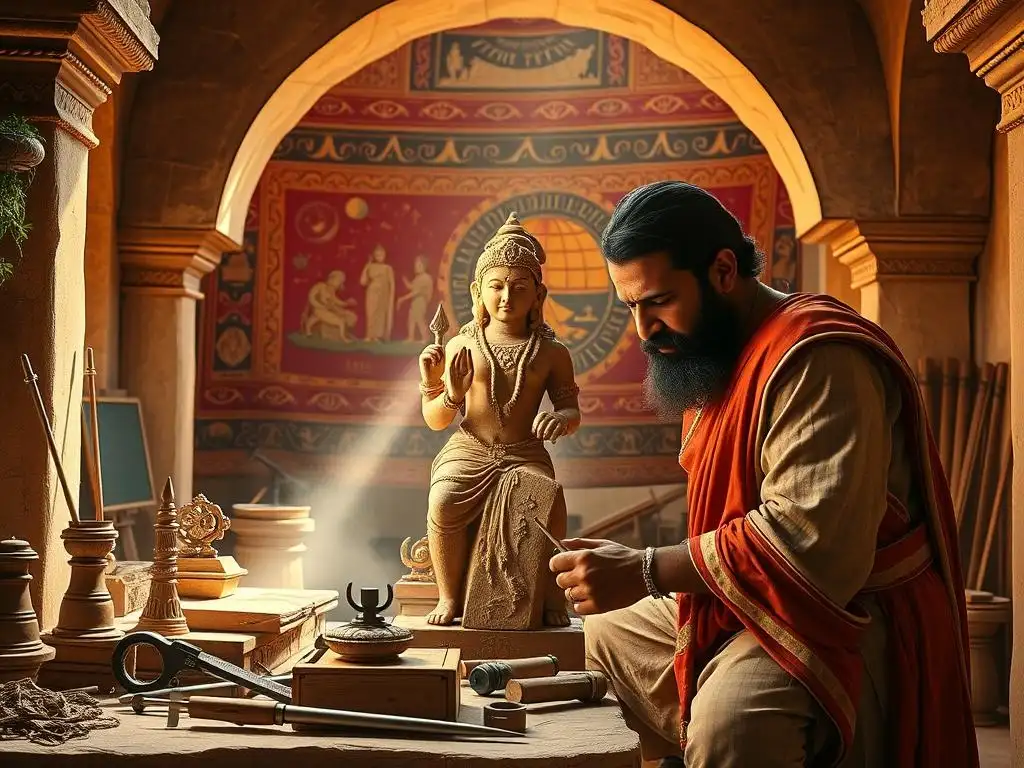
Welcome to Ancient India History, where the rich tapestry of India’s past unfolds before you. Dive into the captivating world of the Gupta civilization, a remarkable era that seamlessly intertwined science and art to create a legacy that continues to inspire. Have you ever wondered how mathematical advancements paralleled breathtaking artistic expressions during this golden age? Join us as we explore the intricate connections that shaped one of the most influential civilizations in ancient history. Prepare to be intrigued and enlightened as you journey through the wonders of the Gupta Empire!
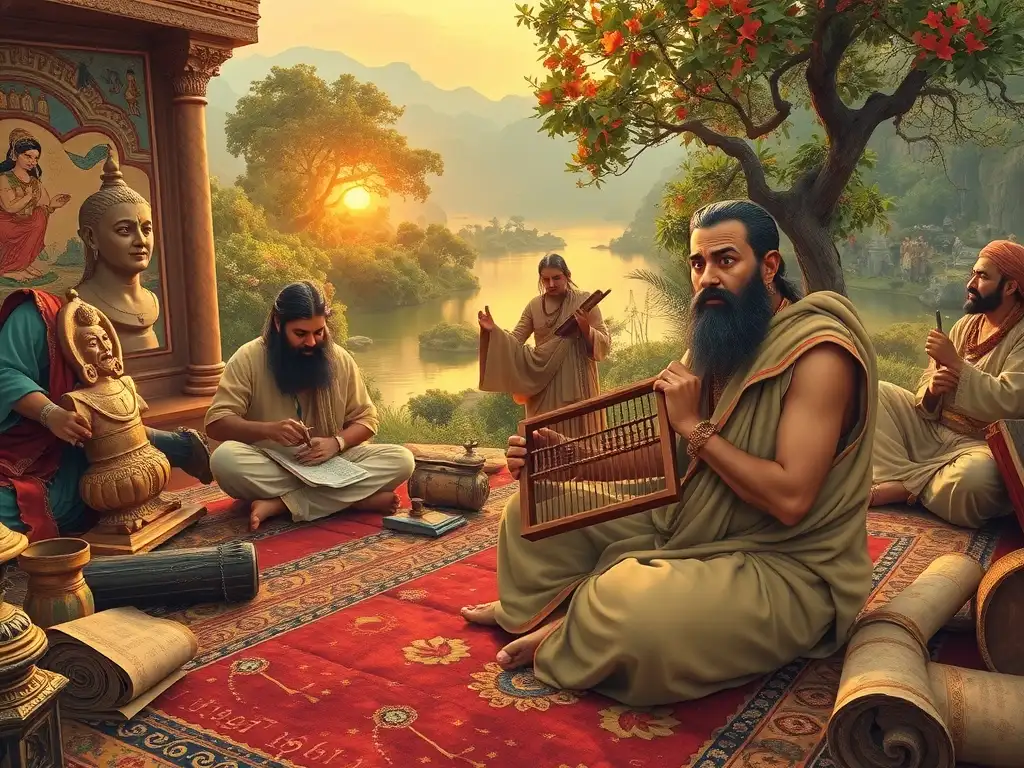
Introduction to Gupta Civilization
The Gupta civilization, often referred to as the Golden Age of India, marked a period of remarkable achievements in various fields, notably in science and art. During this era, which spanned approximately from the 3rd to the 6th century CE, ancient Indian society experienced profound advancements that would shape its cultural and intellectual legacy for centuries to come.
The synergy between science and art during this time not only enriched the cultural fabric of the Gupta Empire but also laid foundational principles that influenced later civilizations. This article explores the intricate relationship between science and art in Gupta civilization, emphasizing how these domains interwove to foster innovation and creativity.
Overview of Gupta Empire
The Gupta Empire, established by Maharaja Sri Gupta, saw its zenith under rulers such as Chandragupta I, Samudragupta, and Chandragupta II. This period is characterized by significant territorial expansion, effective administration, and a flourishing economy. The empire covered vast regions of northern India, and its capital, Pataliputra, became a hub of political and cultural activity.
- Key Highlights of the Gupta Empire:
- Territorial Expansion: At its peak, the empire extended from the Bengal region in the east to the Punjab region in the west.
- Cultural Flourishing: Gupta rulers were patrons of arts and sciences, leading to the emergence of renowned scholars like Aryabhata and Kalidasa.
- Trade and Economy: The empire's strategic location facilitated trade with regions such as Southeast Asia and the Mediterranean.
Importance of Science and Art in Ancient India
Science and art played pivotal roles in ancient Indian civilization, contributing to its identity and legacy. The Gupta period is particularly noted for its advancements in mathematics, astronomy, literature, and sculpture.
- Impact of Science:
- Development of the concept of zero and the decimal system.
- Significant contributions to astronomy, including accurate calculations of planetary movements.
- Impact of Art:
- Creation of exquisite sculptures and murals that depicted religious themes and daily life.
- Flourishing of classical literature, with epic poetry and drama reaching new heights.
The Relationship Between Science and Art in Gupta Civilization
The interplay between science and art during the Gupta period reflects a unique cultural synergy where each domain informed and enriched the other. This relationship is particularly evident in the mathematical precision seen in art, as well as the artistic representation of scientific concepts.
Defining Science and Art in the Context of Gupta Empire
In the Gupta civilization, science encompassed disciplines such as mathematics, astronomy, and medicine, which were characterized by rigorous inquiry and empirical observation. Conversely, art was expressed through various mediums, including sculpture, painting, and literature, which conveyed aesthetic and spiritual values.
- Examples of Interconnection:
- Architectural designs of temples that incorporated mathematical principles for structural integrity.
- The use of artistic motifs in astronomical texts, illustrating celestial movements.
Historical Context: The Flourishing of Gupta Civilization
The Gupta Empire thrived in an environment that encouraged intellectual pursuits and artistic expressions. This era witnessed the establishment of universities, such as Nalanda, which attracted scholars from across the world.
- Factors Contributing to Flourishing:
- Political Stability: Strong governance allowed for the peaceful pursuit of knowledge.
- Cultural Exchange: Interaction with other civilizations facilitated the sharing of ideas and techniques.
As we delve deeper into the interconnection of science and art within the Gupta civilization, we will uncover how these elements not only shaped the era but also laid a foundation for future advancements in various fields.
Key Contributions of Science in Gupta Civilization
The Gupta civilization, often referred to as the Golden Age of India, made significant strides in various fields of science and mathematics, which were deeply interwoven with artistic expression. This period, roughly spanning from the 4th to the 6th centuries CE, is marked by groundbreaking innovations that not only advanced scientific knowledge but also influenced art and culture in profound ways.
Advancements in Mathematics
The Gupta period is renowned for its remarkable contributions to mathematics, which laid the foundation for modern arithmetic and algebra. One of the most notable mathematicians of this era was Aryabhata, who introduced concepts such as zero as a numeral and the place-value system. His work, "Aryabhatiya," detailed methods for solving quadratic equations and computing the areas of various geometric shapes.
Moreover, the concept of pi (π) was refined during this time, with Aryabhata providing a value of 3.1416, which was impressively accurate for the period. Innovations in mathematics were not merely theoretical; they found expression in the art of architecture, where precise measurements and geometric patterns were integral to temple construction and design.
Innovations in Astronomy
Astronomy witnessed remarkable advancements during the Gupta civilization, with scholars like Aryabhata and Varahamihira making significant contributions. Aryabhata proposed a heliocentric model of the solar system, explaining the apparent movement of celestial bodies and providing accurate calculations of eclipses. His astronomical treatises emphasized the importance of observation and mathematical calculation, bridging the gap between science and art through celestial mapping and calendar-making.
Varahamihira's "Brahmasphutasiddhanta" further expanded upon these ideas, discussing planetary motions and the zodiac. The Gupta astronomers also developed sophisticated instruments, such as the gnomon, to measure the positions of celestial bodies, which influenced architectural designs in temples that aligned with astronomical events.
Medical Sciences and Ayurveda
The Gupta period also marked a significant evolution in the medical sciences, particularly through the practice of Ayurveda, which is a holistic system of medicine that integrates science and art. Renowned physicians like Sushruta and Charaka emerged during this era, contributing texts like the "Sushruta Samhita" and the "Charaka Samhita," which outlined surgical techniques, herbal remedies, and the principles of diagnosis.
These texts illustrated not only medical knowledge but also an artistic understanding of human anatomy and health. Surgical instruments were meticulously crafted, reflecting the artistic skills of artisans, while the texts themselves were written in a poetic form, demonstrating the interconnection between scientific inquiry and literary expression.
Artistic Achievements of the Gupta Period
The artistic achievements of the Gupta period are equally significant, reflecting the civilization's rich cultural tapestry. Art during this time was characterized by a blend of spirituality and aesthetics, with advancements in various forms of visual and performing arts.
Sculpture and Architecture
Gupta sculpture is renowned for its intricate detail and emotive expression, often depicting deities and scenes from Hindu mythology. The iconic standing Buddha figures and exquisite carvings found in sites like Sarnath showcase the mastery of Gupta artisans, who utilized techniques that conveyed both grandeur and intimacy.
Architectural innovations are epitomized in the construction of temples, characterized by elaborate designs and intricate carvings that often depicted scenes from epics like the Mahabharata and Ramayana. The use of sandstone and the introduction of the shikhara style of architecture marked a significant transition in temple design, blending functionality with artistic beauty.
Literature and Performing Arts
The Gupta period is also celebrated for its literary contributions, with notable poets like Kalidasa, whose works such as "Shakuntala" and "Meghaduta" exemplified the poetic richness of the era. These literary masterpieces often drew upon scientific themes, reflecting the interconnectedness of art and science in exploring human emotions and the natural world.
Performing arts flourished with the emergence of classical dance and drama, which incorporated elements of storytelling and music. The integration of scientific principles in rhythm and movement can be seen as a reflection of the Gupta ethos, where art and science coalesced to create a vibrant cultural landscape.
The Gupta civilization's interconnection of science and art fostered an environment of innovation and creativity, leaving a lasting legacy that continues to influence various fields to this day.
The Symbiosis of Science and Art
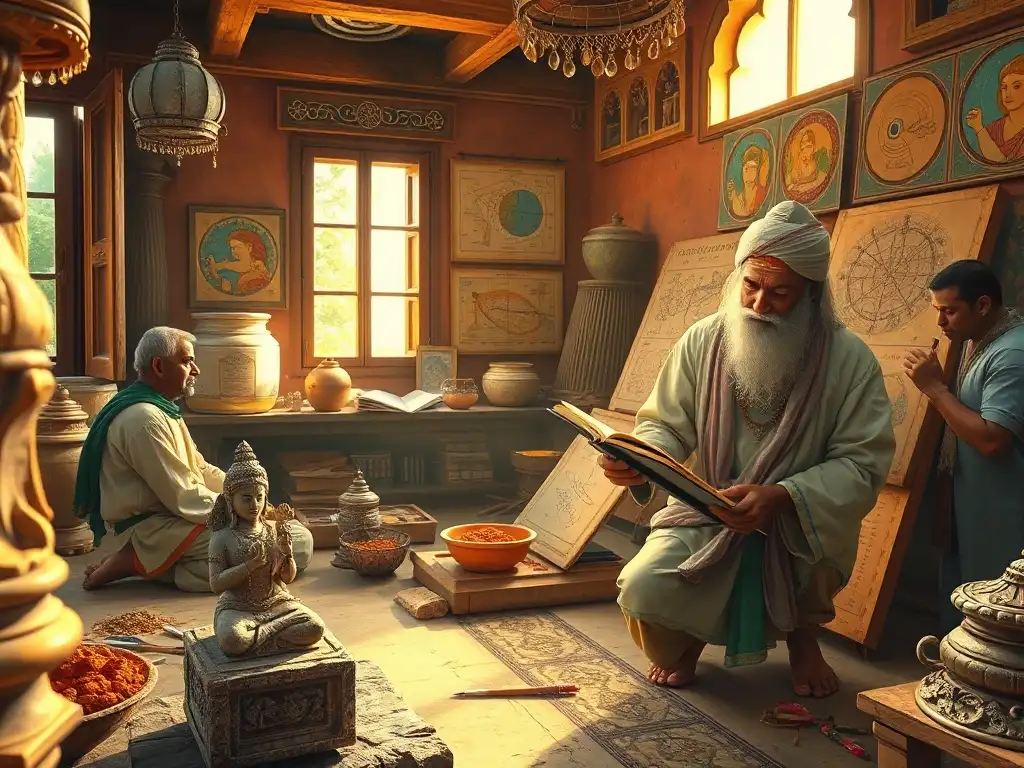
The Gupta civilization, often referred to as the Golden Age of India, witnessed an extraordinary interconnection between science and art. This period, spanning from approximately 320 to 550 CE, was marked by significant advancements in various fields, including mathematics, astronomy, and medicine, all of which were deeply intertwined with artistic expression. The Gupta scholars and artists worked collaboratively, leading to a flourishing of knowledge that was not merely functional but also aesthetically pleasing.
Art was used as a medium to communicate scientific ideas, while scientific discoveries often inspired artistic creations. For example, the intricate carvings and sculptures from this era reflect not only religious themes but also astronomical knowledge, suggesting that the artists were well-versed in the science of their time. This symbiotic relationship enhanced the richness of both domains, making the Gupta civilization a unique example of how science and art can coalesce to enhance human understanding and creativity.
Interdisciplinary Contributions in Education
Education during the Gupta period was characterized by a holistic approach, integrating various disciplines, including science, philosophy, and the arts. Universities like Nalanda became centers of learning where students were encouraged to study multiple subjects. This interdisciplinary framework allowed scholars to explore connections between different fields, fostering an environment where scientific inquiry and artistic expression could thrive together.
For instance, mathematics was not only taught as a theoretical subject but was also applied to architectural design, which required precise calculations for constructing temples and public buildings. Students learned about geometry through practical applications in art and architecture, illustrating how the educational system promoted a comprehensive understanding of the interconnectedness of knowledge.
Artistic Representations of Scientific Concepts
Artistic representations of scientific concepts during the Gupta period were prevalent and deeply influential. The artists skillfully depicted astronomical phenomena and mathematical principles in their works, making complex ideas accessible to the public.
Sculptures and frescoes often illustrated celestial bodies and cosmic events, showcasing the Gupta's advanced understanding of astronomy. For example, the famous Ajanta Caves feature murals that not only narrate religious stories but also incorporate celestial motifs, indicating an awareness of planetary movements and cycles. This blending of scientific understanding with artistic creation served both educational and decorative purposes, enriching the cultural heritage of the era.
Case Studies: Specific Examples of Science Influencing Art and Vice Versa
Several specific examples highlight the interplay between science and art during the Gupta period. One notable case is the portrayal of the solar system in temple architecture, where the alignment of structures often reflected astronomical knowledge. Temples were designed to align with celestial events, such as solstices and equinoxes, showcasing how scientific understanding influenced architectural design.
Another example can be found in the mathematical advancements made during this time, particularly in the field of geometry. The construction of intricate mandalas and yantras used in religious rituals demonstrates how mathematical principles informed artistic practices. These designs not only held spiritual significance but also reflected the mathematical precision of the artists, illustrating the direct influence of science on art.
Lasting Impact of Gupta Civilization on Science and Art
The impact of the Gupta civilization on science and art has been profound and lasting. The innovations and artistic expressions that emerged during this golden age set the foundation for future advancements in various fields. The integration of scientific knowledge into art and vice versa became a hallmark of Indian culture, influencing subsequent generations of scholars and artists.
Influence on Later Indian Civilizations
The legacy of the Gupta civilization significantly influenced later Indian civilizations. The synthesis of science and art established during this period became a model for subsequent empires, such as the Chola and Mughal dynasties. These later civilizations adopted and expanded upon the Gupta's artistic techniques and scientific methodologies, leading to further advancements in architecture, painting, and the sciences.
The concepts of zero, algebra, and advanced geometry developed during the Gupta period also laid the groundwork for the mathematical innovations that would flourish in later Indian history, showcasing the enduring influence of Gupta scholarship.
Global Legacy of Gupta Contributions
The contributions of the Gupta civilization extend beyond the borders of India, leaving a global legacy that resonates in various cultures around the world. The mathematical concepts introduced during this era, particularly the decimal system and the concept of zero, became essential elements of modern mathematics, influencing scholars in the Middle East and Europe.
Artistic styles and techniques developed during the Gupta period also found their way into various cultures, inspiring artists and architects far beyond Indian subcontinent. The intricate sculptures and exquisite paintings of the Gupta era are celebrated for their beauty and craftsmanship, serving as a testament to the civilization's rich cultural heritage that continues to be appreciated and studied globally today.
Conclusion: The Lasting Interconnection of Science and Art
The Gupta civilization, often heralded as a golden age of Indian history, exemplifies the profound interconnection between science and art. This relationship not only fostered advancements in various fields but also enriched cultural expressions that have influenced generations. The synthesis of mathematical innovations, such as the concept of zero and advancements in geometry, with artistic endeavors in sculpture, architecture, and literature, underscores a holistic approach to knowledge and creativity that characterized this period.
The legacy of the Gupta Empire is evident in the way scientific principles were applied to artistic endeavors, resulting in intricate temple designs, precise astronomical calculations, and literary masterpieces that resonate through time. This intertwining of disciplines showcases the Gupta civilization as a unique model of how art and science can coexist, inspire, and elevate one another.
Summary of Key Points
- Innovative Mathematics: The Gupta period saw significant developments in mathematics, including the introduction of the concept of zero and advancements in algebra.
- Architectural Marvels: Artistic expressions flourished in architecture, with the construction of iconic temples that featured detailed carvings and precise geometric patterns.
- Literary Flourishment: The era produced notable literary figures like Kalidasa, whose works reflect a deep understanding of both nature and human emotion, blending artistic and scientific insights.
- Cultural Exchange: The interaction between different cultures during the Gupta Empire facilitated the exchange of ideas, leading to enriched artistic and scientific endeavors.
- Enduring Legacy: The contributions of the Gupta civilization in both science and art laid the groundwork for future developments in these fields, influencing subsequent generations across various domains.
Reflection on the Importance of Gupta Civilization in Historical Context
The Gupta civilization holds a critical place in the tapestry of world history, particularly in the context of ancient Indian advancements. It represents a period where intellectual and artistic pursuits were not viewed as separate entities but rather as interconnected facets of human experience. This holistic approach allowed for a flourishing of creativity and innovation that had lasting impacts on various disciplines.
In examining the Gupta period, we can appreciate how the advancements made in science—such as astronomy and mathematics—were deeply reflected in the artistic creations of the time. This interplay not only contributed to the cultural richness of the period but also set a precedent for future civilizations to value the relationship between these two fields. The Gupta Empire serves as a testament to the power of interdisciplinary collaboration, and its influence is still felt in modern scientific and artistic practices.
References and Further Reading
Recommended Sources on Gupta Civilization
- The Gupta Empire: A History by Romila Thapar
- The Age of the Gupta: A History of Ancient India by Ramesh Chandra Sharma
- India: A History by John Keay
Additional Literature on Science and Art in Ancient India
- Mathematics in Ancient India by Kim Plofker
- Art and Architecture of Ancient India by Christopher Tadgell
- Science and Technology in Ancient India by R. N. Mehta
These sources provide a comprehensive understanding of the Gupta civilization's contributions to both science and art, highlighting the intricate connections that defined this remarkable era in ancient Indian history.
- Introduction to Gupta Civilization
- The Relationship Between Science and Art in Gupta Civilization
- Key Contributions of Science in Gupta Civilization
- Artistic Achievements of the Gupta Period
- The Symbiosis of Science and Art
- Lasting Impact of Gupta Civilization on Science and Art
- Conclusion: The Lasting Interconnection of Science and Art
- References and Further Reading
Frequently Asked Questions
What is the Gupta civilization known for in terms of science?
The Gupta civilization is renowned for its advancements in mathematics, astronomy, and medicine, significantly influencing later scientific developments.
How did art flourish during the Gupta period?
During the Gupta period, art flourished through intricate sculptures, paintings, and architecture, showcasing a blend of religious themes and natural beauty.
What are some key contributions of Gupta scientists?
Gupta scientists made notable contributions such as the concept of zero, advancements in algebra, and detailed astronomical observations that laid the groundwork for future studies.
How did religion influence Gupta art and science?
Religion played a crucial role, with many artworks and scientific endeavors stemming from Hindu, Buddhist, and Jain traditions, reflecting the spiritual values of the time.
In what ways is the Gupta civilization relevant today?
The Gupta civilization's contributions to science and art continue to influence modern disciplines, inspiring contemporary thinkers and artists with their innovative ideas and techniques.
Final Reflection: The Harmonious Fusion of Science and Art in Gupta Civilization
The Gupta civilization stands as a testament to the profound interconnection between science and art, showcasing how these two realms can coexist and enhance one another. In today's world, where specialization often leads to the compartmentalization of knowledge, the Gupta era reminds us of the power of interdisciplinary collaboration. This historical period not only advanced scientific thought but also enriched artistic expression, creating a legacy that continues to inspire innovation and creativity in our modern society.
The influence of the Gupta civilization on our cultural and social landscape is undeniable, as it laid the groundwork for future generations to explore the synergy between science and art. This harmonious relationship is evident in various fields, from architecture to mathematics, where aesthetic beauty and scientific precision converge. As noted by the philosopher and artist Leonardo da Vinci, Simplicity is the ultimate sophistication.
This quote encapsulates the essence of the Gupta civilization, where the simplicity of form and function led to sophisticated advancements that resonate even today.
As we reflect on the lessons from the Gupta civilization, let us embrace the idea that the integration of science and art can lead to groundbreaking discoveries and transformative experiences. I invite you to explore your own passions and consider how you can weave together different disciplines in your life. Whether through creative projects, scientific inquiry, or community initiatives, remember that the spirit of the Gupta civilization lives on in our ability to innovate by bridging the gap between seemingly disparate fields.
Unveil the Beauty of Science and Art Together!
Thank you for diving into the fascinating world of the Gupta civilization with us! You’ve discovered how science and art intertwine to create a rich tapestry of cultural achievement. Now, it’s time to take that knowledge further and engage more deeply with this captivating era.
Here are some steps you can take right now:
- Explore a local museum or gallery to see how ancient art continues to inspire contemporary interpretations.
- Join online forums or social media groups focused on ancient civilizations to share insights and engage in discussions about the remarkable fusion of science and art.
- Consider creating your own art project inspired by the principles of Gupta craftsmanship and share your work with others!
What does the blend of science and creativity inspire you to create or explore next? Let's discuss in the comments below!