
The Influence of Ancient Indian Philosophy on Modern Western Thought


Welcome to Ancient India History, where we embark on a captivating journey through the rich tapestry of India's past. Here, we delve into the profound influence of ancient Indian philosophy on modern Western thought, unraveling how timeless ideas have transcended eras and borders. As you explore our content, you will discover the intricate connections that bind ancient wisdom to contemporary perspectives, igniting your curiosity about the philosophical dialogues that shaped civilizations. Prepare to uncover the threads of history that inform our present and inspire our future!

Introduction to Ancient Indian Philosophy Influence
Ancient Indian philosophy represents a profound and intricate tapestry of thought that has significantly shaped not only the cultural and spiritual landscape of India but has also left an indelible mark on modern Western intellectual traditions. From the profound metaphysical inquiries of the Vedas to the ethical frameworks laid out in the teachings of Buddhism and Jainism, ancient Indian philosophy encompasses a myriad of concepts that resonate with contemporary philosophical discourse. This article delves into the multifaceted influence of ancient Indian philosophy on modern Western thought, exploring its key concepts and their relevance in today's philosophical landscape.
Overview of Ancient Indian Philosophical Traditions
Ancient Indian philosophy is characterized by a rich diversity of schools and thoughts, each contributing uniquely to the understanding of existence, morality, and the cosmos. The primary systems include:
- Hindu Philosophy: Encompassing six orthodox schools (Darshanas) such as Vedanta, Samkhya, and Yoga, which explore the nature of reality, self, and the ultimate goal of life.
- Buddhist Philosophy: Founded by Siddhartha Gautama (Buddha), it introduces critical ideas like the Four Noble Truths and the Eightfold Path, emphasizing the impermanence of life and the pursuit of enlightenment.
- Jain Philosophy: Focused on non-violence (Ahimsa) and the concept of the soul's liberation, Jainism presents a distinct perspective on ethics and metaphysics.
These traditions collectively offer profound insights into human existence, ethics, and the nature of reality, fostering a dialogue that continues to influence various aspects of Western philosophy.
Importance of Studying Ancient Indian Philosophy Today
Understanding ancient Indian philosophy is crucial for several reasons:
- Cultural Exchange: As globalization increases, the interplay between Eastern and Western philosophies becomes more significant, fostering a richer intellectual environment.
- Ethical Frameworks: Concepts such as non-violence and compassion, rooted in ancient Indian thought, are increasingly relevant in addressing contemporary ethical dilemmas.
- Spiritual Insights: The meditative and introspective practices derived from ancient philosophies provide valuable tools for personal well-being and mental health in today's fast-paced world.
By studying these philosophical traditions, we can appreciate their contributions to modern thought and explore how they can inform our understanding of contemporary issues.
Key Philosophical Concepts in Ancient Indian Thought
Ancient Indian philosophy is rich with concepts that have transcended time, influencing not only spiritual practices but also ethical and metaphysical inquiries in Western thought. Here, we highlight some of the key philosophical concepts that continue to resonate today.
Vedic Philosophy and Its Core Teachings
Vedic philosophy, rooted in the ancient texts known as the Vedas, emphasizes the pursuit of knowledge (Jnana) as a path to understanding the self and the universe. Core teachings include:
- Brahman: The ultimate reality or cosmic spirit, which is the source of all existence.
- Atman: The individual soul, which is believed to be an aspect of Brahman, reflecting the interconnectedness of all beings.
- Yoga: A discipline that encompasses physical, mental, and spiritual practices aimed at attaining unity with the divine.
The Vedic texts lay the foundational groundwork for various philosophical explorations, influencing later Indian thought and providing a basis for metaphysical discussions in Western philosophy.
The Role of Dharma in Ancient Indian Philosophy
Dharma, often translated as "duty" or "righteousness," plays a pivotal role in ancient Indian philosophy. It encompasses:
- Moral Order: Dharma represents the ethical framework guiding individuals in their actions and decisions, promoting harmony within society.
- Personal Duty: It emphasizes the importance of one's responsibilities based on their social role (Varna) and stage of life (Ashrama).
- Universal Principle: Dharma also encapsulates the idea of cosmic law, governing the order of the universe.
The concept of Dharma has resonated with Western ethical theories, particularly in discussions surrounding virtue ethics and moral responsibility.
Concepts of Karma and Reincarnation
Karma and reincarnation are fundamental concepts in ancient Indian philosophy that explore the cyclical nature of life and moral causation:
- Karma: Refers to the law of cause and effect, where one's actions directly influence future outcomes. This principle fosters a sense of accountability and encourages ethical living.
- Reincarnation: The belief in the transmigration of the soul, suggesting that life is a continuous cycle of birth, death, and rebirth, shaped by one's karmic actions.
These concepts have found parallels in Western philosophical discussions about morality, justice, and the nature of existence, prompting a deeper inquiry into the implications of our actions across time.
By examining these key philosophical concepts, we can better understand the profound influence of ancient Indian philosophy on modern Western thought and its relevance in addressing contemporary philosophical questions.
Comparative Analysis: Ancient Indian Philosophy and Western Thought
The comparative analysis of ancient Indian philosophy and Western thought reveals a rich tapestry of both convergence and divergence. At their core, both traditions grapple with fundamental questions regarding existence, knowledge, and ethics. However, the methodologies and conclusions drawn from these inquiries often reflect distinct cultural and historical contexts. This section explores the nuanced similarities and differences that characterize these two philosophical landscapes, guiding us through their intricate interplay over the centuries.
Similarities Between Ancient Indian and Western Philosophies
Despite their geographic and cultural separations, ancient Indian and Western philosophies exhibit notable similarities. Both traditions seek to comprehend the nature of reality, the self, and the ethical implications of human existence.
- Metaphysical Inquiries: Both Indian and Western philosophers ponder the essence of reality. Concepts such as Brahman in Vedanta find parallels in Western notions of the Absolute or the Divine.
- Nature of the Self: The exploration of the self is a prominent theme in both traditions. The Indian concept of Atman resonates with the Western philosophical explorations of the soul, especially in the works of Plato and Descartes.
- Ethical Considerations: Both traditions share an interest in ethics and moral philosophy, aiming to define what constitutes a good life. The pursuit of virtue and the ideal way of living are central to both philosophical dialogues.
These parallels highlight a shared human inclination to confront existential questions, suggesting that despite their differences, both philosophical traditions offer valuable insights into the human condition.
Differences in Epistemology: Knowledge Acquisition
A significant divergence between ancient Indian and Western philosophies lies in their epistemological approaches—how knowledge is acquired and understood.
- Intuitive Knowledge: Ancient Indian philosophy often emphasizes intuitive knowledge gained through meditation and personal experience. The practice of Yoga and the pursuit of self-realization are seen as pathways to understanding ultimate truths.
- Rational Inquiry: In contrast, Western philosophy traditionally prioritizes rational inquiry and empirical evidence. Thinkers such as Aristotle established frameworks for logical reasoning and scientific investigation, which laid the groundwork for modern scientific methods.
- Role of Authority: Indian philosophical systems, particularly within the context of the Vedas and Upanishads, often regard ancient texts as authoritative sources of knowledge. In Western thought, while tradition holds value, there is a stronger emphasis on individual reasoning and skepticism of established norms.
These differences illustrate the distinct ways in which each tradition approaches the quest for knowledge, reflecting broader cultural values and intellectual legacies.
Ethical Perspectives: Dharma vs. Western Morality
The ethical frameworks of ancient Indian philosophy and Western thought reveal profound distinctions, particularly in their foundational principles and applications.
- Dharma: In ancient Indian philosophy, the concept of Dharma encompasses duty, righteousness, and moral law, often contextualized within specific social roles and responsibilities. It emphasizes a holistic view of ethics, integrating personal, societal, and cosmic dimensions.
- Western Morality: Western ethical systems, such as utilitarianism, deontology, and virtue ethics, tend to focus on individual rights and universal principles. This often leads to a more abstract approach to morality, where ethical dilemmas are analyzed through the lens of rights and consequences.
- Contextual Ethics vs. Universalism: The Indian perspective is often more contextually grounded, considering the complexities of individual circumstances, while Western philosophies frequently advocate for universal moral laws applicable across diverse situations.
These contrasting ethical perspectives reflect deeper philosophical underpinnings and societal values, shaping how morality is understood and practiced in each tradition.
The Journey of Ancient Indian Philosophy to the West
The transmission of ancient Indian philosophy to the West has been a complex journey shaped by historical contexts and cultural exchanges. This section traces the pathways through which these ideas traveled, revealing the key influences that facilitated their integration into Western thought.
Historical Context of Philosophical Exchange
The historical backdrop of philosophical exchange between ancient India and the West can be traced through various periods, including:
- Trade Routes: The Silk Road and maritime trade routes facilitated cultural exchanges, where ideas, texts, and philosophies were shared between civilizations.
- Hellenistic Influences: Following Alexander the Great's conquests, there was increased interaction between Greek and Indian thinkers, notably in regions like Gandhara, where Greco-Buddhist schools emerged.
- Colonial Era: The British colonial presence in India during the 18th and 19th centuries sparked renewed interest in Indian philosophy among Western intellectuals, leading to translations and studies of key texts.
These historical contexts laid the foundation for a complex interplay of ideas, enriching both traditions through cross-cultural dialogue.
Key Figures Who Bridged Ancient Indian and Western Thought
Several key figures have played pivotal roles in bridging ancient Indian philosophy and Western thought:
- Ralph Waldo Emerson: Influenced by Indian texts, Emerson integrated concepts of self-reliance and the interconnectedness of existence into his transcendentalist philosophy.
- Henry David Thoreau: Thoreau’s reflections on nature and simplicity were inspired by Indian philosophical principles, particularly those found in the Bhagavad Gita.
- Carl Jung: The Swiss psychiatrist explored Indian philosophical concepts, particularly in relation to the psyche and spirituality, emphasizing the importance of integrating Eastern wisdom into psychological practices.
These figures, among others, helped to synthesize philosophical ideas, fostering a deeper appreciation for ancient Indian contributions within Western intellectual circles.
The Influence of Colonialism on Philosophical Ideologies
The colonial era significantly impacted the reception and interpretation of ancient Indian philosophy in the West, shaping philosophical ideologies in various ways:
- Orientalism: Western scholars often viewed Indian philosophy through a colonial lens, leading to a romanticized or distorted understanding of its complexities. This approach frequently emphasized exoticism over accurate representation.
- Revival and Reform Movements: In response to colonial narratives, Indian thinkers such as Swami Vivekananda and Rabindranath Tagore sought to reinterpret and present Indian philosophy as a robust alternative to Western thought, emphasizing its relevance in modern contexts.
- Integration into Modern Philosophy: The colonial encounter facilitated the integration of Indian philosophical concepts into Western philosophy, leading to new movements that combined elements from both traditions.
Such dynamics illustrate how colonialism not only influenced the perception of ancient Indian philosophy in the West but also contributed to a more nuanced and diversified philosophical landscape.
Contemporary Applications of Ancient Indian Philosophical Ideas
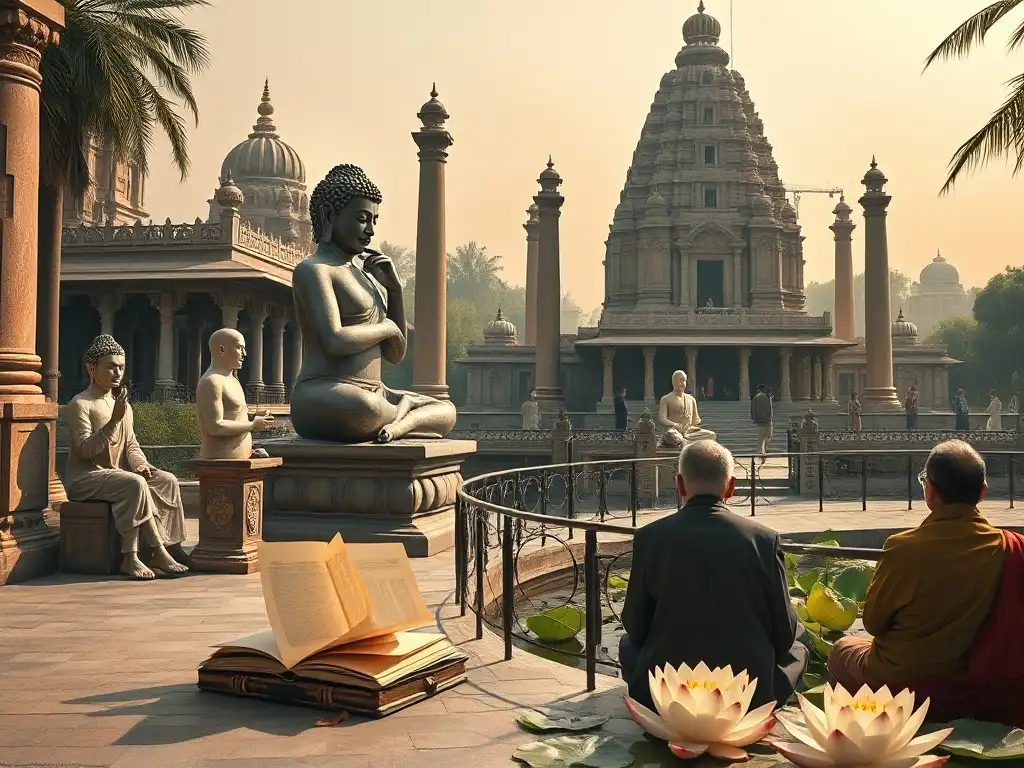
Ancient Indian philosophy, with its rich tapestry of thought and introspective practices, has found profound relevance in the contemporary world. As modern society grapples with issues like mental health, ethical dilemmas, and spiritual voids, the teachings of ancient Indian thinkers such as the Buddha, Adi Shankaracharya, and the authors of the Upanishads provide valuable insights. The principles of non-attachment, self-realization, and holistic well-being resonate strongly with today's search for meaning and fulfillment, leading to the integration of these philosophies into various fields such as psychology, ethics, and spirituality.
Mindfulness and Meditation: Ancient Practices in Modern Psychology
Mindfulness and meditation, rooted deeply in ancient Indian traditions, have gained popularity in modern psychology as effective tools for stress reduction and emotional well-being. Practices such as Vipassana and Transcendental Meditation, originating from Buddhist and Hindu philosophies, emphasize the importance of self-awareness and present-moment focus.
Research has shown that these practices can significantly reduce anxiety, depression, and even chronic pain. For instance, programs like Mindfulness-Based Stress Reduction (MBSR) have been widely adopted in clinical settings, demonstrating the efficacy of ancient techniques in promoting mental health. The therapeutic frameworks developed from these practices not only enhance individual well-being but also encourage a more compassionate approach to interpersonal relationships, echoing the ancient Indian emphasis on interconnectedness and harmony.
The Integration of Karma Concepts in Western Ethics
The principle of karma, which underscores the moral law of cause and effect in ancient Indian thought, has influenced contemporary ethical discussions in the West. The idea that actions have consequences — not just in this life but potentially in future incarnations — encourages individuals to consider the long-term impact of their choices.
In modern ethical frameworks, this concept has been integrated into discussions surrounding accountability and social justice. For example, the emphasis on personal responsibility resonates with contemporary movements advocating for environmental sustainability and social equity. By recognizing the interconnected nature of actions and their repercussions, individuals and societies are prompted to adopt more ethical practices, aligning well with ancient Indian teachings that advocate for dharma (righteousness) and social responsibility.
Influence on Modern Spiritual Movements
The spiritual landscape of the West has been significantly shaped by ancient Indian philosophies, particularly through the introduction of yoga and various forms of meditation. These practices, often stripped of their traditional contexts, have been embraced by millions seeking spiritual growth and personal transformation.
Contemporary spiritual movements, such as New Age spirituality, frequently draw upon the concepts of chakras, karma, and reincarnation, highlighting the ongoing relevance of ancient Indian thought. These adaptations, while sometimes criticized for lacking depth, reflect a broader quest for spiritual fulfillment and connection among individuals in a rapidly changing world. As such, the influence of ancient Indian philosophy continues to permeate modern spiritual practices, encouraging a return to introspection and personal growth.
Critiques and Misinterpretations of Ancient Indian Philosophy
Despite the profound influence of ancient Indian philosophy on modern thought, there are notable critiques and misunderstandings that arise from its interpretation and application in contemporary contexts. These critiques often stem from oversimplification or cultural misappropriation, which can dilute the richness of these philosophical traditions.
Common Misconceptions About Ancient Indian Philosophical Concepts
One prevalent misconception about ancient Indian philosophy is the reduction of complex ideas into simplistic terms. For example, the concept of "Maya," often translated as "illusion," can lead to a misunderstanding of the intricate views on reality that ancient Indian thinkers presented. This oversimplification can result in a failure to appreciate the philosophical depth regarding the nature of existence and consciousness.
Additionally, the notion of karma is frequently misinterpreted in the West as a mere system of reward and punishment, neglecting its more nuanced understanding of moral responsibility and interconnectedness. Such misconceptions can lead to an incomplete or distorted view of the philosophies, undermining their original intent and significance.
The Risk of Cultural Appropriation in Philosophical Adaptation
The adaptation of ancient Indian philosophical concepts in Western contexts sometimes raises concerns about cultural appropriation. Practices like yoga, meditation, and rituals have been commercialized, often divorced from their spiritual and cultural roots. This commodification can lead to a superficial understanding of these philosophies, where the deeper ethical and spiritual teachings are overlooked.
Furthermore, the selective appropriation of these ideas can contribute to a lack of respect for the traditions from which they originate. It is essential for practitioners and scholars to approach ancient Indian philosophies with sensitivity and awareness, ensuring that they honor the cultural contexts and historical significance while exploring their relevance in modern life. By doing so, we enrich our understanding and appreciation of these profound philosophical traditions, fostering a more respectful engagement with their teachings.
Conclusion: The Lasting Impact of Ancient Indian Philosophy on Modern Thought
The influence of ancient Indian philosophy on modern Western thought is profound and multifaceted. It has contributed to various philosophical discussions, ranging from metaphysics to ethics, and has shaped the intellectual landscape of contemporary philosophy. By introducing concepts such as non-dualism, the nature of consciousness, and the importance of introspection, ancient Indian philosophies like Vedanta and Buddhism have provided alternative frameworks for understanding reality and existence. This philosophical dialogue has enriched Western thought, fostering a more inclusive approach that appreciates diverse perspectives.
As we reflect on the lasting impact of ancient Indian philosophy, it is essential to acknowledge that its teachings continue to inspire thinkers and practitioners across the globe. The integration of these philosophical concepts into modern discussions about spirituality, psychology, and ethics highlights their relevance in addressing contemporary challenges. The ongoing exploration of these ancient ideas not only broadens our understanding of philosophy but also cultivates a greater appreciation for the interconnectedness of global thought.
Summary of Key Influences
The key influences of ancient Indian philosophy on modern Western thought can be summarized as follows:
- Non-Dualism: The concept of non-duality, primarily found in Advaita Vedanta, presents a holistic view of reality that transcends the dichotomy between the self and the universe. This perspective challenges the reductionist tendencies in Western philosophy, promoting a more integrative understanding of existence.
- Ethical Frameworks: The ethical teachings of Buddhism, particularly the concepts of compassion (karuna) and non-attachment, have resonated with modern moral philosophy. The emphasis on mindfulness and ethical living has also influenced contemporary movements focused on well-being and personal development.
- Consciousness and Self-Realization: Ancient Indian philosophies have significantly contributed to discussions on consciousness. The exploration of the self and the nature of consciousness in texts like the Upanishads has parallels in modern psychology and cognitive science, prompting inquiries into the nature of awareness and perception.
- Meditative Practices: The introduction of meditation and introspective practices from ancient Indian traditions has transformed Western approaches to mental health, spirituality, and personal growth. Techniques such as mindfulness meditation have gained substantial traction, emphasizing the benefits of self-reflection and inner peace.
These influences illustrate how ancient Indian philosophy has not only enriched Western thought but also fostered a dialogue that bridges cultural and intellectual divides.
Future Directions for the Study of Ancient Indian Philosophy in a Global Context
The future of studying ancient Indian philosophy in a global context holds exciting possibilities. As we continue to explore its teachings, several directions emerge:
- Interdisciplinary Approaches: The integration of ancient Indian philosophy with fields such as psychology, neuroscience, and environmental studies can yield valuable insights. By combining philosophical inquiry with empirical research, scholars can explore the practical applications of ancient wisdom in contemporary issues.
- Cross-Cultural Dialogues: Encouraging dialogues between Eastern and Western philosophies can foster a deeper understanding of shared human experiences. This cross-cultural engagement can help dismantle stereotypes and promote a more nuanced appreciation of philosophical diversity.
- Revival of Traditional Practices: Renewed interest in meditation, yoga, and other traditional practices rooted in ancient Indian philosophy offers opportunities for personal and societal transformation. Researching their efficacy and relevance in modern contexts can enhance their adoption and adaptation.
- Educational Initiatives: Incorporating ancient Indian philosophical texts and concepts into educational curricula can cultivate a more inclusive approach to philosophy. By exposing students to diverse philosophical traditions, we can foster critical thinking and broaden their intellectual horizons.
The study of ancient Indian philosophy presents a rich tapestry of ideas that continue to influence modern Western thought. Its impact is likely to grow as scholars and practitioners engage with these timeless teachings, fostering a deeper understanding of ourselves and the world around us.
- Introduction to Ancient Indian Philosophy Influence
- Key Philosophical Concepts in Ancient Indian Thought
- Comparative Analysis: Ancient Indian Philosophy and Western Thought
- The Journey of Ancient Indian Philosophy to the West
- Contemporary Applications of Ancient Indian Philosophical Ideas
- Critiques and Misinterpretations of Ancient Indian Philosophy
- Conclusion: The Lasting Impact of Ancient Indian Philosophy on Modern Thought
Frequently Asked Questions
What is ancient Indian philosophy?
Ancient Indian philosophy encompasses a diverse range of ideas and schools of thought that originated in India, including Vedanta, Buddhism, and Jainism, each offering unique perspectives on existence, ethics, and spirituality.
How did ancient Indian philosophy influence Western thought?
Ancient Indian philosophy has significantly influenced Western thought through various channels, including the introduction of concepts like non-dualism and meditation, which have shaped modern philosophical and psychological practices.
What are some key contributions of ancient Indian philosophers?
Key contributions include the development of logical reasoning, ethical frameworks, and metaphysical discussions. Thinkers such as Buddha and Adi Shankaracharya have left a lasting impact on philosophical discourse.
How does ancient Indian philosophy relate to modern science?
Many ideas from ancient Indian philosophy, such as the interconnectedness of all life and the importance of mindfulness, resonate with modern scientific principles in psychology and ecology, promoting a holistic view of the universe.
Can ancient Indian philosophy be applied today?
Yes, the principles of ancient Indian philosophy can be applied today in various fields, including psychology, yoga, and ethics, offering valuable insights into personal well-being and social harmony.
Final Reflection: The Enduring Legacy of Ancient Indian Philosophy
The influence of ancient Indian philosophy on modern Western thought is not just a historical curiosity; it is a profound testament to the interconnectedness of human ideas and cultures. Today, as we navigate a world increasingly defined by globalization and cultural exchange, the insights of ancient Indian thinkers resonate with contemporary issues such as ethics, consciousness, and the nature of reality. This enduring legacy challenges us to rethink our assumptions and embrace a more holistic understanding of existence.
The impact of ancient Indian philosophy extends far beyond academic discourse; it has woven itself into the very fabric of our cultural and social landscapes. From mindfulness practices rooted in Buddhist philosophy to the ethical frameworks inspired by Hindu texts, these ancient teachings continue to shape our modern lives. As the philosopher Aldous Huxley once said, "> The great religions are the great humanizing forces of the world." This observation underscores the importance of integrating these timeless philosophies into our daily practices, fostering a deeper sense of connection and understanding among diverse communities.
As we reflect on the teachings of ancient Indian philosophy, let us consider how we can incorporate these insights into our own lives. Take a moment to explore the principles of compassion, mindfulness, and interconnectedness that have stood the test of time. Challenge yourself to apply these teachings in your interactions with others and in your personal journey. By doing so, you not only honor the wisdom of the past but also contribute to a more thoughtful and harmonious future.
Unlock the Wisdom: Apply Ancient Insights Today!
Thank you for exploring the fascinating connections between ancient Indian philosophy and modern Western thought! You've gained valuable insights into how these timeless ideas continue to shape our worldview and influence our decisions. Now, it’s time to take action and discover how you can integrate this wisdom into your daily life.
Here are a few steps you can take next:
- Reflect on a philosophical concept that resonated with you from this discussion. Select one and dedicate a week to incorporating it into your routine—whether it’s practicing mindfulness or embracing the principle of non-attachment.
- Share your thoughts! Join our community by commenting below or on social media using the hashtag #AncientWisdomModernLife. Let’s engage in a conversation about how ancient teachings can address contemporary challenges.
- Explore relevant texts—pick up a book on Eastern philosophy or attend a local class to deepen your understanding and appreciation of these profound ideas.
Which aspect of ancient Indian philosophy do you believe could most significantly impact your life or the world today?