
The Impact of Ancient Indian Philosophy on Global Spiritual Movements


Welcome to Ancient India History, where we embark on a captivating journey through the rich tapestry of ancient Indian civilizations. In this exploration, we unveil the profound influence of Ancient Indian philosophy on global spiritual movements, revealing how these timeless ideas have shaped thoughts and beliefs across cultures. Prepare to delve into the depths of wisdom that originated from the Indus Valley to the Gupta Empire, and discover the lasting legacy that continues to inspire seekers and scholars alike.
Are you ready to uncover the secrets of ancient wisdom? Let's dive into the profound impact that these philosophies have had on the world!

Introduction to Ancient Indian Philosophy Influence
Ancient Indian philosophy is a profound and intricate field that has significantly shaped not only the spiritual landscape of India but also the global philosophical discourse. Rooted in a rich tapestry of thought, it encompasses a wide range of ideas and practices that have transcended geographical boundaries and cultural barriers.
The influence of ancient Indian philosophy is particularly evident in various global spiritual movements, where its concepts of self-realization, ethics, and metaphysics have found resonance across diverse cultures. This article delves into the multifaceted impact of ancient Indian philosophy, examining its definitions, key schools of thought, and the historical context that has allowed it to flourish and influence spiritual practices worldwide.
Definition of Ancient Indian Philosophy
Ancient Indian philosophy refers to a collection of philosophical traditions that originated in the Indian subcontinent, characterized by their distinctive approaches to understanding the nature of reality, the self, and the ultimate purpose of life. This philosophical landscape is primarily articulated through two major categories: the orthodox (āstika) schools, which accept the authority of the Vedas, and the heterodox (nāstika) schools, which challenge or reject Vedic authority.
Key tenets of ancient Indian philosophy include:
- Dharma: The moral and ethical duties governing individual conduct.
- Karma: The law of cause and effect that influences one's future based on past actions.
- Moksha: The ultimate goal of liberation from the cycle of birth and rebirth (samsara).
The underlying themes of ancient Indian philosophy continue to inform various spiritual practices, emphasizing introspection, meditation, and the quest for ultimate truth.
Overview of Key Philosophical Schools in Ancient India
Ancient Indian philosophy comprises several influential schools, each contributing unique perspectives on metaphysics, epistemology, and ethics. Key schools include:
- Vedanta: Focused on the end part of the Vedas, exploring the nature of reality and the relationship between the individual soul (atman) and the universal spirit (Brahman).
- Sankhya: A dualistic system that outlines a framework of two fundamental realities: purusha (consciousness) and prakriti (matter).
- Yoga: Primarily concerned with practices that lead to physical, mental, and spiritual discipline, aiming for union with the divine.
- Buddhism: Emerging as a reform movement, it challenges the Vedic traditions and emphasizes the Four Noble Truths and the Eightfold Path to attain enlightenment.
- Jainism: Advocating for non-violence (ahimsa) and truth (satya), it offers a unique perspective on ethics and the nature of existence.
These schools have not only shaped Indian thought but have also influenced various global spiritual movements, fostering a greater understanding of the human experience and the nature of existence.
Historical Context of Ancient Indian Philosophy
The Evolution of Philosophical Thought in Ancient India
The philosophical journey of ancient India spans several millennia, beginning as early as the Vedic period (circa 1500-500 BCE). During this time, the initial philosophical inquiries were predominantly centered around rituals, cosmology, and the nature of the divine. As time progressed, thinkers began to explore more abstract concepts, leading to the development of profound philosophical discourses.
- Pre-Vedic Era: Early mystical traditions and oral teachings laid the groundwork for later philosophical thought.
- Vedic Period: The emergence of the Vedas introduced ritualistic practices and early metaphysical concepts.
- Upanishadic Period: This era marked a pivotal shift towards introspective inquiry and the exploration of the self, culminating in the philosophical dialogues found in the Upanishads.
- Post-Vedic Developments: Diverse schools emerged, each contributing distinct ideas and practices that interacted with one another and with external influences.
Through this evolution, ancient Indian philosophy has continually adapted, absorbing insights from various cultural exchanges while maintaining its core principles.
Major Texts and Scriptures Influencing Global Thought
The philosophical frameworks established in ancient India are encapsulated in a variety of texts and scriptures that have significantly influenced global thought. Some of the major texts include:
- The Vedas: The foundational texts of Hindu philosophy, encompassing a wide range of teachings.
- The Upanishads: Philosophical treatises that explore the nature of reality and the self, serving as a bridge between the Vedic rituals and the philosophical inquiries that followed.
- The Bhagavad Gita: A key scripture that synthesizes various philosophical ideas and ethical dilemmas, often regarded as a spiritual classic.
- Buddhist Sutras: Texts that outline the teachings of Buddha, presenting an alternative philosophical perspective that has influenced numerous spiritual movements worldwide.
These texts not only shaped the spiritual practices within India but also permeated other cultures, contributing to the global discourse on philosophy and spirituality. The enduring legacy of ancient Indian philosophy continues to inspire seekers and scholars alike, highlighting its timeless relevance in understanding the complexities of existence.
Core Principles of Ancient Indian Philosophy
Ancient Indian philosophy is characterized by a rich tapestry of thought that has profoundly influenced spiritual movements globally. Central to these philosophical systems are core principles that guide ethical behavior, spiritual practice, and the understanding of existence.
Among these principles, Dharma refers to the moral duty or righteousness that governs individual conduct and societal roles. It encompasses a wide variety of ethical guidelines that vary according to one's age, caste, and situation, promoting harmony within society. Karma, another crucial tenet, posits that every action has consequences, shaping one's future experiences based on past actions. This concept encourages individuals to act with intention and mindfulness, recognizing their role in the larger tapestry of life.
Additionally, the philosophy of Maya (illusion) and Brahman (ultimate reality) plays a vital role in understanding existence. Maya teaches that the material world is transient and deceptive, while Brahman represents the ultimate, unchanging reality that transcends individual experiences. These ideas foster a perspective that seeks liberation (moksha) from the cycle of birth, death, and rebirth (samsara), emphasizing the pursuit of spiritual enlightenment.
Concepts of Dharma and Karma
The concepts of Dharma and Karma are foundational to ancient Indian philosophy, weaving through its spiritual and ethical frameworks. Dharma encompasses duties, rights, laws, conduct, and virtues that vary by context. It serves as a guiding principle in determining how individuals should act in various roles within society. For instance, the Dharma of a student differs from that of a warrior or a householder, reflecting the diverse responsibilities individuals hold.
Karma, on the other hand, focuses on the moral implications of actions. It posits that every deed, whether good or bad, influences one's future circumstances. This principle instills a sense of accountability and encourages ethical living, as individuals understand that their actions directly affect their spiritual journey. The interplay of Dharma and Karma emphasizes a holistic approach to life, where mindful actions aligned with dharma can lead to positive karmic outcomes.
The Role of Meditation and Mindfulness

Meditation and mindfulness are central practices in ancient Indian philosophy, contributing significantly to personal and spiritual development. These practices are rooted in the belief that self-awareness and inner peace can lead to enlightenment.
Meditation, or dhyana, is a disciplined practice aimed at quieting the mind and focusing one's thoughts. It is seen as a means to connect with the deeper aspects of the self and the universe. Various forms, such as Vipassana and Transcendental Meditation, have emerged from ancient traditions, promoting relaxation, concentration, and emotional well-being.
Mindfulness, closely related to meditation, emphasizes being present in the moment and fully experiencing one's thoughts and feelings without judgment. This practice fosters a greater awareness of one's actions and their impact on oneself and others, aligning closely with the concepts of Dharma and Karma. Together, meditation and mindfulness form a pathway toward spiritual growth, encouraging individuals to cultivate inner peace and compassion.
Understanding the Nature of Reality: Maya and Brahman
In ancient Indian philosophy, the concepts of Maya and Brahman provide profound insights into the nature of reality. Maya refers to the illusory nature of the material world, suggesting that what we perceive through our senses is often deceptive. This illusion can lead individuals away from the truth of their existence and the interconnectedness of all beings.
Brahman, in contrast, represents the ultimate reality, the source of all creation, and the essence of existence. It is described as infinite, eternal, and unchanging, transcending the limitations of the physical world. Understanding the relationship between Maya and Brahman is crucial for those on a spiritual path, as it encourages seekers to look beyond superficial appearances and seek a deeper truth.
The interplay between these concepts fosters a journey toward moksha, or liberation, where individuals strive to break free from the cycle of birth and death, recognizing that true essence lies in realizing their unity with Brahman. This understanding has not only shaped ancient Indian spirituality but has also resonated with various global philosophical movements.
Ancient Indian Philosophy Influence on Eastern Spiritual Movements
The impact of ancient Indian philosophy extends beyond its borders, significantly influencing various Eastern spiritual movements. The integration of core philosophical principles has shaped the ethical frameworks, practices, and beliefs of numerous traditions.
Buddhism: Roots and Philosophical Borrowings
Buddhism, founded by Siddhartha Gautama (the Buddha) in the 5th century BCE, draws heavily from ancient Indian philosophical concepts. The core teachings of Buddhism reflect a deep engagement with ideas such as Dharma and Karma, albeit with unique interpretations.
The notion of Anatta (non-self) and Dukkha (suffering) aligns with the understanding of Maya, reinforcing the idea that attachment to the material world leads to suffering. Moreover, the Buddhist practice of mindfulness and meditation mirrors the techniques developed in ancient Indian philosophies, emphasizing the importance of self-awareness and inner peace.
Through the lens of ancient Indian philosophy, Buddhism has developed a comprehensive ethical framework that encourages compassion, wisdom, and the pursuit of enlightenment, showcasing the profound connections between these spiritual traditions.
Jainism: Ethical Teachings and Influence on Global Ethics
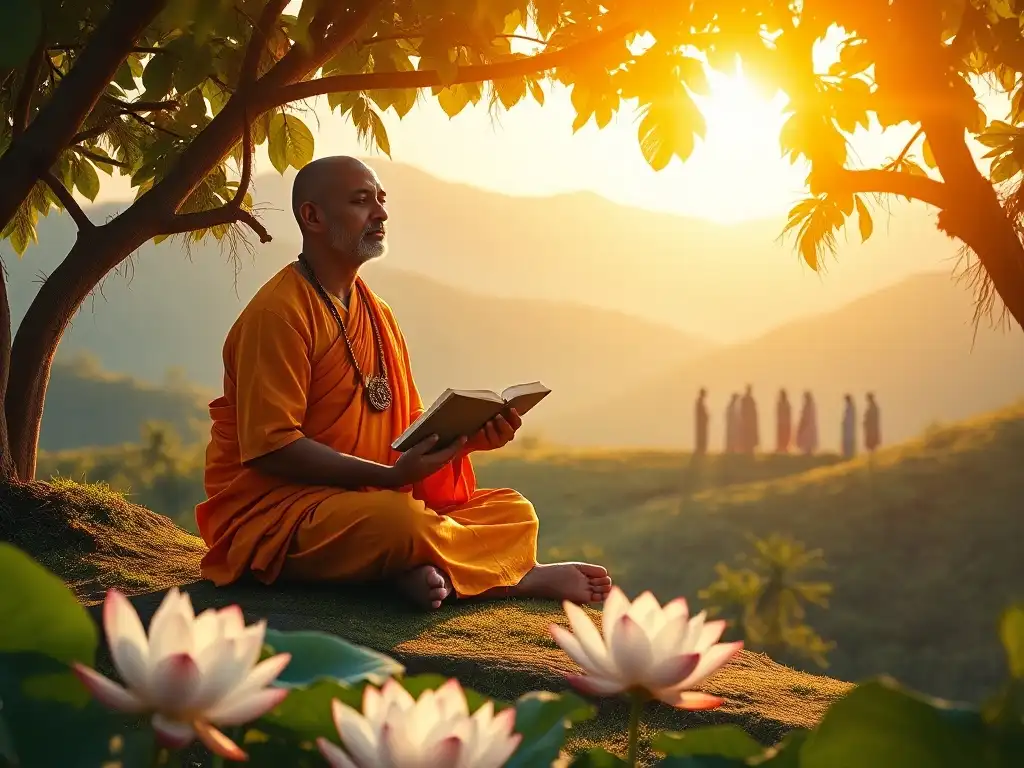
Jainism, another significant tradition originating from ancient India, emphasizes non-violence (ahimsa) and truthfulness (satya) as its core principles. These ethical teachings deeply resonate with the concepts of Dharma and Karma, advocating for a life of compassion and respect for all living beings.
The Jain philosophy of non-possessiveness (aparigraha) encourages detachment from material possessions, aligning with the teachings on Maya, which highlight the transient nature of the physical world. Jainism's rigorous ethical standards have inspired various global movements focused on peace, environmentalism, and animal rights, illustrating the far-reaching influence of ancient Indian philosophical thought.
By embodying principles that transcend cultural boundaries, Jainism contributes to the global discourse on ethics and morality, reinforcing the lasting impact of ancient Indian philosophy on contemporary spiritual movements.
Ancient Indian Philosophy Influence on Western Thought
Ancient Indian philosophy has had a profound influence on Western thought, particularly from the 19th century onward. The philosophical traditions originating in India, such as Vedanta and Buddhism, offered alternative perspectives that challenged established Western paradigms. As Western intellectuals began to explore Eastern philosophies, they found resonances with their own inquiries into the nature of reality, ethics, and existence. This cross-pollination of ideas has led to a richer understanding of both traditions and has significantly shaped various spiritual movements in the West.
The Transmission of Ideas through Trade and Exploration
The exchange of philosophical ideas between ancient India and the West can be traced back to trade routes, particularly the Silk Road, which facilitated not just commerce but also the flow of knowledge. Early travelers, such as Alexander the Great, encountered Indian philosophies during their campaigns. Later, the spread of Buddhism into Central Asia and eventually into Europe allowed for the integration of Indian thought into Western consciousness.
During the colonial period, Western scholars and missionaries began to study Indian texts, leading to a revival of interest in ancient Indian philosophy. Translations of key works like the Upanishads and the Bhagavad Gita played a vital role in this transmission. Through these texts, concepts of karma, dharma, and moksha found their way into Western discourse, influencing thinkers who sought to reconcile spiritual and philosophical inquiries.
Key Figures in Western Philosophy Inspired by Indian Thought
Several prominent Western philosophers and writers have drawn inspiration from ancient Indian philosophy. Figures such as Ralph Waldo Emerson and Henry David Thoreau were instrumental in introducing Indian ideas to American transcendentalism. They embraced concepts of the self, nature, and spirituality found in Indian texts, which encouraged a more holistic view of existence.
In modern times, philosophers like Carl Jung explored the psychological implications of Eastern thought, incorporating Indian concepts of consciousness into his theories. Additionally, the Beat Generation, including writers like Jack Kerouac and Allen Ginsberg, found inspiration in Indian spirituality, integrating its principles into their literary works and lifestyles. These interactions highlight the significant impact of ancient Indian philosophy on various strands of Western intellectual and cultural life.
Comparative Analysis: Ancient Indian Philosophy and Other Philosophies
A comparative analysis of ancient Indian philosophy reveals both similarities and distinctions with other philosophical traditions, particularly Greek philosophy and Abrahamic religions. This juxtaposition allows for a deeper understanding of the unique contributions of Indian thought to global philosophical discourse.
Similarities with Greek Philosophy
Ancient Indian philosophy shares several fundamental ideas with Greek philosophy, particularly in its exploration of metaphysics, ethics, and the nature of the self. Both traditions engaged in profound inquiries about existence, the cosmos, and the pursuit of knowledge. For instance, the concept of an ultimate reality, whether it be Brahman in Vedanta or the One in Neoplatonism, reflects a shared interest in understanding the nature of being.
Moreover, ethical discussions in the Indian texts often parallel those found in Greek philosophy. Concepts such as virtue, morality, and the good life are central to both traditions. The dialogues of Socrates resonate with the teachings of Indian sages, emphasizing self-examination and the pursuit of wisdom. This common ground illustrates how ancient Indian philosophy influenced Western thought and vice versa, creating a rich tapestry of philosophical inquiry.
Distinctions from Abrahamic Religious Philosophies
While ancient Indian philosophy shares affinities with various philosophical traditions, it also stands apart from Abrahamic religious philosophies, which include Judaism, Christianity, and Islam. One fundamental distinction is the concept of the self. In Indian philosophy, particularly in the context of Vedanta and Buddhism, there is a profound exploration of the nature of the self, often culminating in the realization of non-duality or the illusory nature of individuality. This contrasts sharply with the Abrahamic perspective, which typically emphasizes a personal, distinct relationship between the individual and God.
Additionally, the Indian philosophical focus on cyclical time, represented through concepts like samsara (the cycle of birth and rebirth), diverges from the linear historical narrative found in Abrahamic traditions. This cyclical understanding promotes a different approach to morality and existence, where liberation (moksha) from the cycle is a central goal, unlike the linear progression towards an eschatological end in Abrahamic faiths.
While ancient Indian philosophy shares similarities with both Greek philosophy and the Abrahamic traditions, its unique perspectives on the self, time, and liberation contribute significantly to the broader landscape of global philosophical thought.
The Modern Relevance of Ancient Indian Philosophy
Ancient Indian philosophy, with its profound insights and holistic approach to existence, remains remarkably relevant in today's world. This philosophy, which encompasses diverse schools of thought such as Vedanta, Buddhism, and Jainism, focuses on key concepts like non-attachment, self-realization, and the interconnectedness of all beings. In a modern context, these teachings provide frameworks for addressing contemporary issues such as stress management, ethical living, and the quest for meaning in an increasingly materialistic society.
Moreover, the emphasis on meditation and mindfulness found within these philosophical traditions is being widely adopted in various therapeutic settings, contributing to mental well-being. The teachings encourage individuals to look inward, fostering emotional intelligence and resilience. As society grapples with challenges such as climate change and social injustice, the ancient principles of harmony with nature and compassion for all living beings resonate deeply, urging a return to a more balanced and sustainable lifestyle.
Contemporary Spiritual Movements Inspired by Ancient Indian Thought

Numerous contemporary spiritual movements have drawn inspiration from ancient Indian philosophy, creating a rich tapestry of practices and beliefs that transcend geographical and cultural boundaries.
- Yoga and Meditation: The global proliferation of yoga is perhaps the most significant manifestation of ancient Indian thought. Rooted in texts like the Yoga Sutras of Patanjali, modern yoga incorporates physical postures, breath control, and meditation techniques, promoting physical health and spiritual growth.
- Mindfulness Practices: Derived from Buddhist teachings, mindfulness has gained immense popularity, particularly in Western psychology. This practice emphasizes present-moment awareness, helping individuals manage stress and anxiety while enhancing overall well-being.
- New Age Spirituality: Elements of ancient Indian philosophy permeate New Age movements, which often blend various spiritual traditions. Concepts such as karma, reincarnation, and holistic healing have been integrated into contemporary spiritual practices, appealing to a diverse audience seeking deeper meaning and connection.
These movements underscore the adaptability and enduring relevance of ancient Indian philosophy, demonstrating its capacity to inform and enrich modern spiritual experiences.
The Influence of Ancient Indian Philosophy in Modern Psychology
Ancient Indian philosophy has significantly influenced modern psychology, particularly in the realms of cognitive-behavioral therapy (CBT) and positive psychology.
- Cognitive-Behavioral Therapy: Many principles of CBT resonate with ancient Indian thought, particularly the emphasis on the mind's role in shaping experiences. The idea that changing one's thoughts can lead to a transformation in feelings and behaviors mirrors the philosophical teachings found in texts like the Bhagavad Gita, which advocate for detachment from the fruits of one’s actions.
- Positive Psychology: This emerging field, which focuses on human strengths and well-being, has found parallels in the ancient Indian emphasis on self-actualization and flourishing. Concepts such as dharma (duty) and sukha (happiness) provide valuable insights into what constitutes a fulfilling life, encouraging individuals to pursue meaning and purpose.
The integration of these philosophies within psychological frameworks not only enriches therapeutic practices but also emphasizes the importance of holistic approaches to mental health that consider spiritual and existential dimensions.
Conclusion: The Lasting Legacy of Ancient Indian Philosophy
The influence of ancient Indian philosophy on global spiritual movements is profound and enduring. Its teachings have transcended time and geography, providing a foundation for various practices that promote holistic well-being, ethical living, and spiritual growth. The principles of interconnectedness and self-realization resonate deeply, offering guidance in navigating the complexities of modern life.
Summary of Ancient Indian Philosophy Influence on Global Spirituality
Ancient Indian philosophy has significantly shaped contemporary spiritual landscapes through its teachings on yoga, mindfulness, and ethical living. The principles derived from various philosophical traditions continue to inspire individuals seeking deeper meaning and personal transformation. This influence is evident in the rising interest in practices that promote mental clarity, emotional resilience, and spiritual fulfillment.
Future Directions for Research and Exploration in Philosophy
As global societies continue to evolve, future research in philosophy should explore the integration of ancient Indian thought with modern scientific and psychological frameworks. This exploration can lead to innovative practices that address contemporary challenges while fostering a deeper understanding of the human experience. Additionally, interdisciplinary studies that bridge philosophy, psychology, and spirituality can offer new insights into the applications of ancient wisdom in addressing issues such as mental health, environmental sustainability, and social justice. Engaging with these ancient traditions in a modern context is essential for cultivating a more compassionate and interconnected world.
References
Ancient Indian philosophy has left a profound impact on global spiritual movements, influencing various aspects of thought, spirituality, and ethics across cultures. Understanding the key texts and resources related to this rich tradition can provide deeper insights into its influence.
Key Texts and Resources for Further Reading on Ancient Indian Philosophy
-
The Upanishads
A collection of ancient texts that form the philosophical basis of Hinduism, the Upanishads explore concepts such as the nature of the ultimate reality (Brahman) and the self (Atman). Their teachings have significantly influenced various spiritual and philosophical movements worldwide.
-
Bhagavad Gita
This 700-verse Hindu scripture, part of the Indian epic Mahabharata, is a dialogue between Prince Arjuna and Lord Krishna, who serves as his charioteer. The Gita addresses the moral and philosophical dilemmas faced by Arjuna, imparting teachings that resonate with many spiritual traditions.
-
Buddhist Sutras
The teachings of Buddhism, derived from the life and philosophy of Siddhartha Gautama (the Buddha), are recorded in various sutras. Notable texts such as the Dhammapada and the Heart Sutra reflect the core principles of Buddhism that have influenced spiritual practices and philosophies globally.
-
The Yoga Sutras of Patanjali
This foundational text of yoga philosophy outlines the eight limbs of yoga, offering a comprehensive guide to spiritual practice and mental discipline. Its teachings have been integral to the development of various modern spiritual movements focused on mindfulness and meditation.
-
Advaita Vedanta Texts
Works by philosophers like Adi Shankaracharya elucidate the non-dualistic interpretation of Vedanta. These texts have influenced not only Hindu thought but also various modern spiritual movements that emphasize unity and the interconnectedness of all existence.
-
The Philosophy of Jainism
Jain texts, such as the Tattvartha Sutra, present unique insights into ethics, cosmology, and the nature of reality. Jainism's principle of non-violence (ahimsa) has had a lasting influence on global peace movements and ethical philosophies.
-
Contemporary Analyses
-
"Indian Philosophy: A Very Short Introduction" by Sue Hamilton
This concise overview provides an accessible introduction to the main ideas and historical development of Indian philosophy.
-
"The Essence of Hinduism" by Mahatma Gandhi
Gandhi's reflections on Hindu philosophy emphasize the moral and ethical tenets that have inspired global movements for social justice.
-
These texts and resources serve as vital gateways into understanding the profound influence of ancient Indian philosophy on global spiritual movements. They offer insights not only into the historical context of these philosophies but also into their ongoing relevance in contemporary discourse.
- Introduction to Ancient Indian Philosophy Influence
- Historical Context of Ancient Indian Philosophy
- Core Principles of Ancient Indian Philosophy
- Concepts of Dharma and Karma
- The Role of Meditation and Mindfulness
- Understanding the Nature of Reality: Maya and Brahman
- Ancient Indian Philosophy Influence on Eastern Spiritual Movements
- Buddhism: Roots and Philosophical Borrowings
- Jainism: Ethical Teachings and Influence on Global Ethics
- Ancient Indian Philosophy Influence on Western Thought
- Comparative Analysis: Ancient Indian Philosophy and Other Philosophies
- The Modern Relevance of Ancient Indian Philosophy
- Contemporary Spiritual Movements Inspired by Ancient Indian Thought
- The Influence of Ancient Indian Philosophy in Modern Psychology
- Conclusion: The Lasting Legacy of Ancient Indian Philosophy
- References
- What is the significance of ancient Indian philosophy in global spiritual movements?
- How did ancient Indian philosophy contribute to the understanding of spirituality?
- Which ancient texts are essential for studying Indian philosophy?
- In what ways did ancient Indian philosophy influence Western thought?
- How is the impact of ancient Indian philosophy still felt today?
Frequently Asked Questions
What is the significance of ancient Indian philosophy in global spiritual movements?
Ancient Indian philosophy has had a profound influence on various spiritual traditions around the world, including Buddhism, Jainism, and even modern New Age practices.
How did ancient Indian philosophy contribute to the understanding of spirituality?
It introduced concepts like karma, dharma, and moksha, which have shaped the spiritual frameworks of many cultures, emphasizing the interconnectedness of life.
Which ancient texts are essential for studying Indian philosophy?
Key texts include the Vedas, Upanishads, Bhagavad Gita, and the works of Buddhist and Jain philosophers, each offering unique perspectives on existence and ethics.
In what ways did ancient Indian philosophy influence Western thought?
Elements of Indian philosophy, particularly ideas about self-realization and meditation, have permeated Western philosophical and spiritual practices, especially during the 19th and 20th centuries.
How is the impact of ancient Indian philosophy still felt today?
Modern spiritual movements, yoga practices, and philosophical discussions continue to draw from ancient Indian teachings, highlighting their lasting relevance in contemporary society.
Final Reflection: The Enduring Influence of Ancient Indian Philosophy
The teachings of ancient Indian philosophy resonate profoundly in today's global spiritual movements, highlighting the timeless nature of its wisdom. As we navigate a world increasingly in search of meaning and connection, the principles rooted in ancient texts continue to inspire countless individuals and communities. The relevance of these philosophies is not merely historical; they serve as guiding lights for personal and collective transformation in our modern lives.
The influence of ancient Indian philosophy extends far beyond its geographical origins, shaping cultural narratives and spiritual practices across the globe. From yoga and meditation to concepts of non-attachment and interconnectedness, these teachings have woven themselves into the fabric of contemporary spirituality. As the philosopher Alan Watts once said, The more a thing tends to be permanent, the more it tends to be lifeless.
This quote encapsulates the dynamic nature of these philosophies, reminding us that their true essence lies in their ability to adapt and thrive in diverse contexts.
As you reflect on the insights shared in this article, consider how the principles of ancient Indian philosophy can enrich your own spiritual journey. Embrace the opportunity to explore these teachings, allowing them to inspire your thoughts, actions, and relationships. In a world yearning for deeper understanding and connection, let the wisdom of the past guide you toward a more harmonious and fulfilling future.
Unveil Your Spiritual Journey Today!
Thank you for diving into the rich world of ancient Indian philosophy with us! You've uncovered insights that not only deepen your understanding but also illuminate pathways for personal and global transformation. Now, it’s time to take those insights and turn them into action.
Here’s how you can continue your exploration and embrace the wisdom of these philosophies:
- Join a local meditation group or an online community to practice mindfulness techniques inspired by ancient traditions.
- Share your newfound knowledge with friends and family by hosting a discussion or book club—everyone can benefit from these teachings!
- Explore further by reading classic texts such as the **Bhagavad Gita** or **Upanishads**, and reflect on their relevance in your life today.
What aspect of ancient Indian philosophy resonates most with you, and how do you see it influencing your daily life?