
The Significance of Trade Routes in the Spread of Ancient Indian Philosophies


Welcome to Ancient India History, where we embark on a fascinating journey through time to uncover the rich tapestry of cultures and civilizations that shaped the Indian subcontinent. Today, we delve into the intricate ancient Indian trade routes, exploring how these pathways not only facilitated commerce but also served as vital conduits for the exchange of philosophies and ideas.
What secrets did these routes hold that influenced the very fabric of ancient Indian society? Join us as we unravel the significance of trade in the spread of profound philosophies and discover the dynamic interplay between economics and culture in one of history's most vibrant eras.
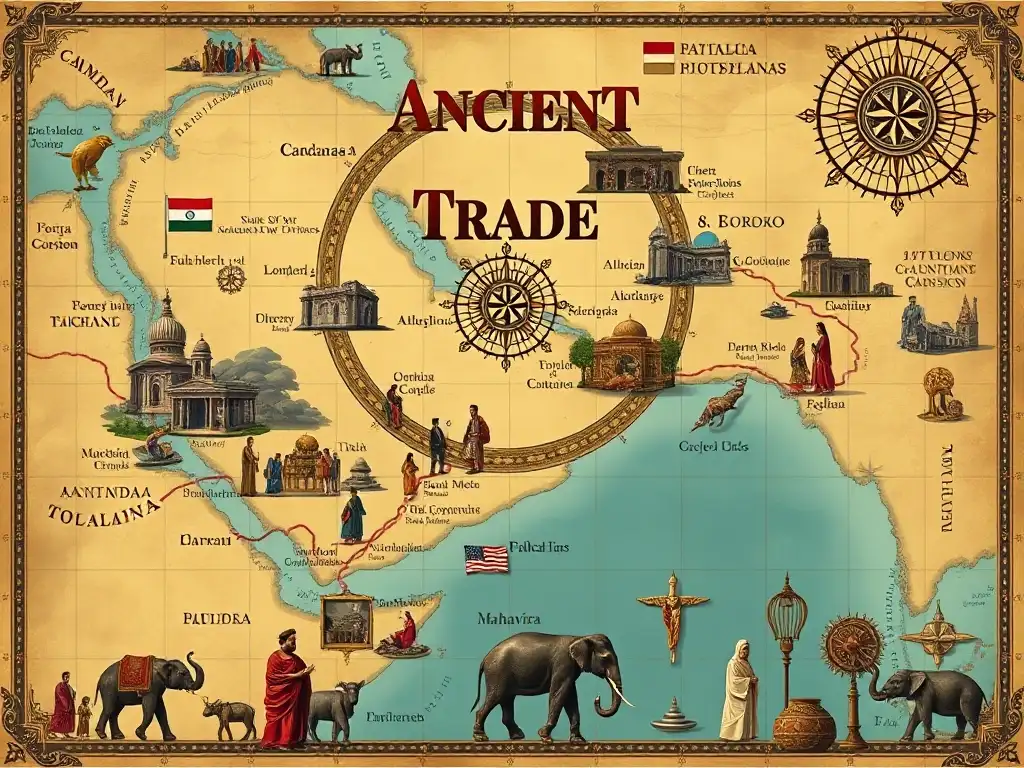
Introduction to Ancient Indian Trade Routes
The ancient Indian trade routes played a pivotal role in not only the economic prosperity of various civilizations but also in the dissemination of ideas, philosophies, and cultural practices. Spanning from the bustling markets of the Indus Valley to the thriving centers of the Gupta Empire, these routes served as conduits for interaction among diverse cultures and traditions.
The exchange of goods was accompanied by the exchange of knowledge, which profoundly influenced the philosophical landscape of ancient India. This article delves into the significance of these trade routes, highlighting their impact on the spread of ancient Indian philosophies and the intricate web of connections that shaped the region's cultural heritage.
Overview of Ancient Indian Trade Routes
Ancient India was crisscrossed by a network of trade routes, both overland and maritime, linking it with distant regions such as Persia, the Mediterranean, and Southeast Asia. The Silk Road and the Spice Route are among the most renowned, facilitating the exchange of not only silk and spices but also ideas and beliefs. Key cities such as Taxila, Pataliputra, and Ujjain emerged as vital trade hubs, fostering economic activity and cultural interactions.
The routes can be categorized into:
- Overland Trade Routes: Connecting India to Central Asia and beyond.
- Maritime Trade Routes: Facilitating sea trade with regions like Arabia, Africa, and Southeast Asia.
These trade routes not only supported the economy but also acted as channels for the flow of philosophies such as Buddhism, Jainism, and Hinduism, enriching the cultural fabric of the region.
Importance of Trade in Ancient Indian Civilization
Trade was a cornerstone of ancient Indian civilization, contributing significantly to its wealth and cultural development. The exchange of goods led to the establishment of prosperous cities and a vibrant economy. Moreover, the interactions with foreign traders and travelers provided a platform for the exchange of ideas and philosophies.
Some of the key benefits of trade in this context include:
- Economic Prosperity: Increased wealth from trade led to advancements in various sectors, including art, science, and philosophy.
- Cultural Exchange: The mingling of different cultures along trade routes led to the blending and evolution of ideas and practices.
- Diplomatic Relations: Trade fostered diplomatic ties, facilitating the exchange of not just goods but also thoughts and beliefs.
The Role of Trade Routes in the Dissemination of Philosophies
The trade routes of ancient India were not merely channels for goods; they were pathways for the exchange of ideas that shaped philosophical thought. As traders and travelers moved along these routes, they carried with them their beliefs, practices, and teachings, which were embraced and adapted by local populations.
How Trade Routes Facilitated Cultural Exchange
The encounters between traders from various backgrounds often led to a rich tapestry of cultural interactions. For instance, Buddhist monks traveled along trade routes to spread their teachings, establishing monasteries and centers of learning in regions far from their homeland. These interactions often resulted in a fusion of philosophical ideas, as merchants and scholars exchanged insights on topics such as morality, ethics, and the nature of existence.
- Cultural Syncretism: The blending of different cultural practices and beliefs often led to the emergence of new philosophical schools.
- Dissemination of Texts: Ancient texts and scriptures were also traded and translated, making them accessible to a wider audience.
The Impact of Trade on Religious and Philosophical Ideas
The movement of people and goods along ancient Indian trade routes had a profound impact on religious and philosophical ideas. Major religions, such as Buddhism and Jainism, gained traction beyond their place of origin due to the influence of trade. The spread of Buddhism to Central Asia and China, facilitated by trade, is a prime example of how these routes were instrumental in the propagation of philosophical thought.
Some notable impacts include:
- Adoption of Beliefs: Local populations often adopted and adapted these philosophies, leading to the development of distinct regional practices.
- Philosophical Dialogues: The interactions along trade routes fostered dialogues between different philosophical traditions, enriching the intellectual landscape of the time.
The ancient Indian trade routes were vital not only for economic exchanges but also for the rich cultural and philosophical interactions that shaped the subcontinent's history. Understanding their significance provides valuable insights into the complexities of ancient Indian civilization and its enduring legacy in the world of philosophy.
Key Trade Routes of Ancient India
Ancient Indian trade routes were crucial in facilitating economic exchanges and the dissemination of ideas, philosophies, and cultures across regions. These routes were characterized by both overland and maritime paths that connected India to various parts of the world, creating a network that enriched Indian civilization.
Notable trade routes included the Silk Road, which linked India to Central Asia and beyond, and the maritime routes that connected the Indian subcontinent with Southeast Asia, the Middle East, and Africa. The significance of these routes extended beyond mere commerce; they acted as conduits for the spread of religious and philosophical ideas, fostering interconnectedness among diverse cultures.
The Silk Road and its Influence on Indian Thought
The Silk Road, a vast network of trade routes that connected the East and West, played a pivotal role in the transmission of ideas and philosophies. Indian merchants and travelers traversed this route, bringing with them not only goods but also cultural and religious concepts. The exchange of thoughts between Indian sages and philosophers and their counterparts in Central Asia and the Mediterranean regions led to an enriching dialogue that influenced various schools of thought.
Buddhism, for instance, found its way along the Silk Road, spreading its teachings across Asia. The interactions along this route contributed to the evolution of Buddhist thought, as it absorbed influences from Zoroastrianism, Greek philosophy, and other belief systems. The Silk Road thus served as a melting pot of ideas, enabling a cross-pollination that shaped the philosophical landscape of ancient India and its neighboring cultures.
Maritime Trade Routes and Their Significance
Maritime trade routes were equally vital to ancient Indian trade, connecting the subcontinent to far-flung regions such as Southeast Asia, the Arabian Peninsula, and East Africa. Ports like Lothal, Sopara, and Bharukaccha became bustling centers of trade, facilitating the exchange of spices, textiles, and precious stones. The maritime routes also enabled the spread of Indian philosophies, particularly Hinduism and Buddhism, to distant lands.
The significance of these trade routes extended beyond trade; they were instrumental in cultural exchanges. Indian traders and sailors not only transported goods but also shared their religious beliefs, art, and literature. The establishment of trade ties with regions such as Indonesia and Cambodia resulted in the adoption of Hindu and Buddhist practices, showcasing the profound impact of maritime trade on the dissemination of ancient Indian philosophies.
Overland Trade Routes Connecting India to the World
In addition to the Silk Road, several overland trade routes connected India with the Middle East, Central Asia, and beyond. The routes through the Khyber Pass and other mountain pathways facilitated the movement of traders, pilgrims, and intellectuals. These routes were vital for the exchange of goods such as textiles, gems, and agricultural products, which were highly sought after in foreign markets.
The interactions along these overland routes played a crucial role in the exchange of ideas. As traders traveled, they not only exchanged products but also philosophical concepts. This led to a blending of cultures and ideas, with Indian philosophies influencing and being influenced by other traditions. Consequently, these overland trade routes became crucial in shaping the intellectual and spiritual landscape of the regions they connected.
Major Philosophical Schools Influenced by Trade
The dynamic exchanges facilitated by ancient trade routes significantly influenced various philosophical schools in India. The interaction between traders, scholars, and religious leaders led to the development and spread of key philosophical ideas that continue to resonate today.
Buddhism: Emergence and Spread through Trade
Buddhism emerged in India during the 5th century BCE and quickly spread beyond its borders, largely due to trade routes. The teachings of Siddhartha Gautama (the Buddha) gained traction along both overland and maritime routes. As Indian traders traveled to Central Asia and Southeast Asia, they carried with them the principles of Buddhism, establishing monasteries and spreading the Dharma.
The establishment of trade relations with regions such as China and Tibet further facilitated this spread. The translation of Buddhist texts into local languages and the adaptation of its teachings to regional cultures demonstrated the flexibility and appeal of Buddhism, making it a significant philosophical force across Asia.
Jainism: Trade Connections and Philosophical Exchange
Jainism, with its emphasis on non-violence and asceticism, also benefited from trade connections. Jain merchants played a crucial role in the economic landscape of ancient India, and their travels often led to the dissemination of Jain teachings. The commitment to non-violence resonated with the principles of trade, as Jain merchants sought to conduct their business ethically.
The interactions with other cultures along trade routes allowed Jainism to influence and be influenced by various philosophical ideas. This exchange enriched Jain thought, helping it to establish a robust identity that has persisted through the centuries.
Hinduism: Integration of Ideas through Commerce
Hinduism, one of the oldest religions in the world, was significantly shaped by the interactions along ancient trade routes. As traders ventured into foreign lands, they not only exchanged goods but also ideas about spirituality, ethics, and cosmology. This led to the integration of diverse elements into Hindu thought, influenced by local customs and beliefs encountered during trade.
The cross-cultural exchanges enriched Hindu philosophy, allowing it to adapt and evolve. The incorporation of various deities, rituals, and philosophies from regions such as Southeast Asia contributed to the dynamic nature of Hinduism, ensuring its continued relevance and vitality in the face of changing cultural landscapes.
Case Studies of Trade Routes and Philosophical Spread
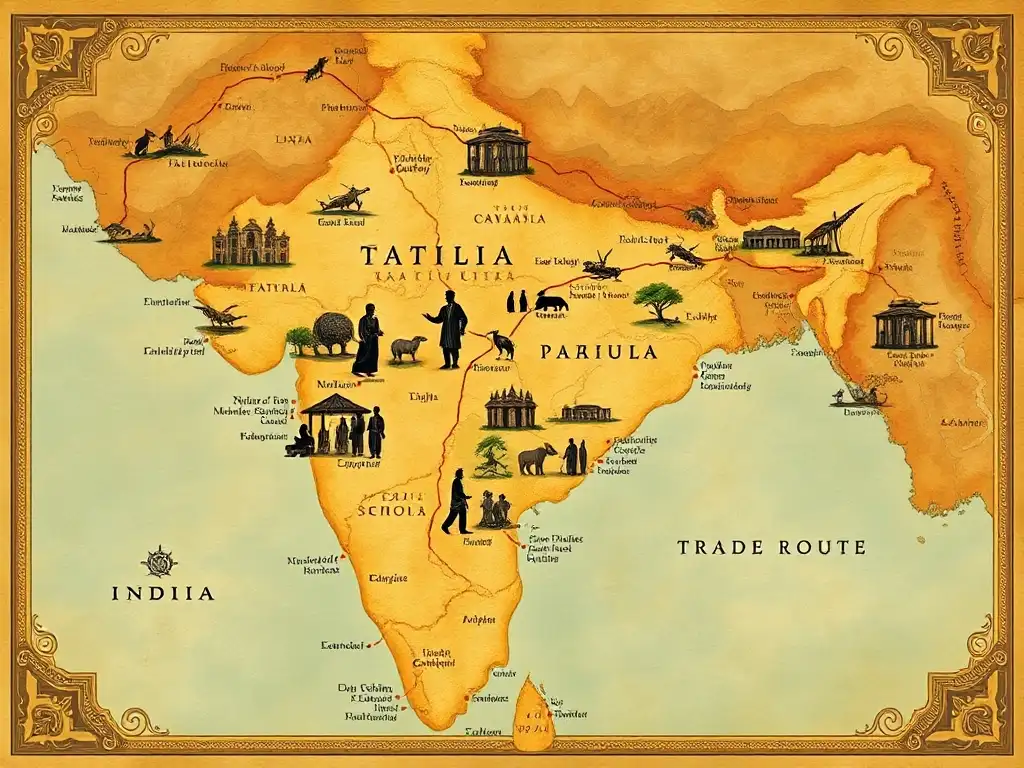
The ancient Indian trade routes were not merely conduits for the exchange of goods; they were vibrant pathways for the dissemination of ideas, cultures, and philosophies. These routes facilitated interactions between diverse civilizations, leading to the blending and evolution of various philosophical thoughts across regions. The examination of specific trade routes during significant empires, such as the Mauryan and Gupta, reveals how these channels played a pivotal role in spreading Indian philosophies, particularly Buddhism and Hinduism, to far-flung areas of Asia and beyond.
The Mauryan Empire and the Expansion of Ideas
The Mauryan Empire (circa 322-185 BCE) marked a period of profound transformation in ancient India, both politically and philosophically. Under the reign of Emperor Ashoka, trade routes flourished, connecting India with Central Asia, the Mediterranean, and beyond. Ashoka, after embracing Buddhism, became a pivotal figure in promoting this philosophy along trade routes.
- Buddhism's Reach: Ashoka's edicts, inscribed on pillars and rocks, communicated Buddhist principles, fostering a culture of peace and non-violence. The spread of Buddhism was aided by merchants and missionaries who traveled along the Silk Road and maritime routes, bringing Buddhist teachings to regions like Sri Lanka, Southeast Asia, and even as far as China.
- Cultural Exchange: The interactions along these routes led to cultural exchanges that enriched both Indian and foreign philosophies. For instance, the Hellenistic influences from the west began to blend with Indian thoughts, resulting in new philosophical inquiries and artistic expressions.
The Gupta Empire: Trade and Intellectual Flourishing
The Gupta Empire (circa 320-550 CE) is often referred to as the Golden Age of India, characterized by significant advancements in arts, science, and philosophy. During this period, trade routes continued to thrive, further enhancing the intellectual landscape of ancient India.
- Intellectual Centers: Key trade cities like Pataliputra and Taxila became hubs of learning, drawing scholars from different regions. The flourishing trade allowed for the exchange of not just goods, but also ideas and philosophies. This period saw the emergence of influential thinkers like Aryabhata and Kalidasa, whose works were informed by interactions with diverse philosophical traditions.
- Integration of Philosophies: The Gupta period witnessed the integration of various philosophical schools, including Hinduism, Buddhism, and Jainism, which were disseminated along trade routes. The concept of Dharma, encompassing moral and ethical duties, became a focal point in discussions, influencing societal norms and practices across regions.
The Legacy of Ancient Indian Trade Routes
The impact of ancient Indian trade routes extends far beyond their historical context, shaping the philosophical landscape for centuries to come. The legacies of these routes continue to resonate in various aspects of Indian culture and thought.
Long-lasting Effects on Indian Philosophical Thought
The exchange of ideas facilitated by trade routes left an indelible mark on Indian philosophical thought.
- Cultural Syncretism: The blending of philosophies led to the development of syncretic practices, where elements of Buddhism and Hinduism coalesced, influencing spiritual and cultural practices in India. This syncretism can be seen in various artistic and architectural expressions, as well as in contemporary spiritual movements.
- Global Philosophical Dialogues: The ideas propagated along these trade routes contributed to global philosophical dialogues. Notably, the introduction of Indian philosophies to regions such as Tibet and China led to the establishment of unique schools of thought that integrated Indian concepts with local beliefs.
The Continuing Relevance of Ancient Trade Routes in Modern India
Today, the legacy of ancient Indian trade routes is reflected in the socio-cultural fabric of modern India, underlining their continued relevance.
- Cultural Heritage: The routes are celebrated as part of India's rich cultural heritage, with numerous festivals and events that trace their historical significance. The revival of interest in ancient trade routes has also prompted academic and cultural explorations that seek to understand their impact on contemporary Indian society.
- Economic Connectivity: In a globalized world, the spirit of ancient trade routes is echoed in modern economic initiatives, such as the 'Act East' policy and regional connectivity projects, which aim to enhance trade partnerships and cultural exchanges with neighboring countries, reinforcing India’s role as a key player in regional and global contexts.
The ancient Indian trade routes were instrumental in the spread of philosophical ideas and continue to influence Indian thought and culture today, demonstrating the profound interconnectedness of trade, culture, and philosophy throughout history.
Conclusion
The intricate tapestry of ancient Indian philosophies was significantly woven through the dynamic networks of trade routes that crisscrossed the subcontinent and beyond. These routes not only facilitated the exchange of goods but also served as vital conduits for the dissemination of ideas, beliefs, and cultural practices. The movement of merchants, scholars, and travelers along these paths fostered interactions that enriched the philosophical landscape of ancient India, allowing diverse schools of thought to emerge and evolve.
Summary of the Impact of Trade Routes on Ancient Indian Philosophies
The impact of ancient Indian trade routes on the spread of philosophies can be summarized in several key points:
- Cultural Exchange: Trade routes were melting pots of cultural interactions. As merchants traveled, they exchanged more than just commodities; they shared philosophies, religious beliefs, and cultural practices. For instance, the Silk Road connected India with Central Asia and China, leading to the exchange of Buddhist texts and ideas which influenced both regions.
- Buddhism and Jainism: The establishment and expansion of Buddhism and Jainism were significantly bolstered by trade routes. Monks often accompanied traders, using these pathways to spread their teachings. The Mauryan Empire under Ashoka, who embraced and promoted Buddhism, further utilized trade routes to disseminate the religion across Asia.
- Hindu Philosophical Texts: Hindu philosophical texts, such as the Upanishads and the Bhagavad Gita, reached various parts of Asia through these trade networks. The spread of these texts contributed to the development of philosophical ideas in regions like Southeast Asia, where Hinduism and Buddhism found fertile ground.
- Integration of Ideas: Trade routes facilitated the integration of various philosophical ideas, leading to the development of syncretic philosophies. This blending of thoughts often resulted in unique interpretations of concepts such as dharma, karma, and moksha, reflecting the rich diversity of human experience.
Final Thoughts on the Importance of Understanding Trade in Historical Context
Understanding ancient Indian trade routes is crucial for appreciating the historical context of philosophical development in the region. Trade was not merely an economic activity; it was a catalyst for intellectual and spiritual exchange. The philosophies that emerged were deeply interconnected with the societies that nurtured them, shaped by the myriad interactions that occurred through trade.
Moreover, recognizing the role of trade routes helps us comprehend the global influences that shaped ancient Indian civilization. As ideas traveled along with goods, they transformed and adapted, leading to the rich philosophical traditions we study today. This understanding underscores the importance of trade as a foundational element of cultural and intellectual history, inviting us to explore further the intricate links between commerce, culture, and thought in the ancient world.
- Introduction to Ancient Indian Trade Routes
- The Role of Trade Routes in the Dissemination of Philosophies
- Key Trade Routes of Ancient India
- Major Philosophical Schools Influenced by Trade
- Case Studies of Trade Routes and Philosophical Spread
- The Legacy of Ancient Indian Trade Routes
- Conclusion
Frequently Asked Questions
What were the main ancient Indian trade routes?
The ancient Indian trade routes included the Silk Road, connecting India to Central Asia, and several maritime routes linking India to Southeast Asia and the Middle East.
How did trade influence ancient Indian philosophies?
Trade facilitated cultural exchanges, allowing philosophies like Buddhism and Jainism to spread beyond India, enriching the cultural landscape of various regions through interactions with other civilizations.
What role did cities play in the trade routes of ancient India?
Cities such as Taxila and Pataliputra became vital hubs along trade routes, fostering economic growth and serving as centers for philosophical thought and cultural exchange.
How did geography affect ancient Indian trade?
The diverse geography of India, including mountains and rivers, shaped the development of both overland and maritime trade routes, influencing the movement of goods and ideas.
What were the economic impacts of the ancient trade routes in India?
The ancient trade routes significantly boosted the economy by facilitating trade in spices, textiles, and precious stones, leading to prosperity in urban centers and enhancing India's global influence.
Final Reflection: The Enduring Legacy of Ancient Indian Trade Routes
The exploration of ancient Indian trade routes reveals their profound impact on the dissemination of philosophies that shaped civilizations. Today, as we navigate a world interconnected by technology and globalization, the lessons from these ancient pathways remind us of the power of exchange—not just of goods, but of ideas and beliefs. The significance of these routes transcends time, illustrating how cultural dialogues can foster understanding and unity among diverse communities.
The influence of ancient Indian trade routes on the spread of philosophies continues to resonate in our cultural and social landscapes. These routes were not merely conduits for commerce; they were vibrant channels of intellectual and spiritual exchange that enriched societies across continents. As we reflect on this historical phenomenon, we can appreciate how the cross-pollination of ideas has shaped our worldviews. Trade is not just about goods; it is about the exchange of cultures, ideas, and philosophies that can transform societies.
As we consider the lessons from ancient Indian trade routes, I invite you to reflect on your own journey of exchange and growth. How can you foster dialogue and understanding in your own life? Embrace the spirit of curiosity and openness that characterized these ancient pathways, and let it guide your interactions with others. By doing so, you contribute to a legacy of connection and enlightenment that echoes through time, reminding us all of the importance of sharing not just what we have, but who we are.
Unveil the Wisdom of Ancient Trade Routes!
Thank you for exploring the fascinating relationship between trade routes and the spread of ancient Indian philosophies with us! Your engagement not only enriches your understanding but also contributes to preserving the legacies of our past. Now, let’s take that knowledge further and put it into action!
Here are some steps you can take to deepen your connection with this topic:
- Dive Deeper: Explore scholarly articles or books on ancient trade routes and their impact on philosophies. Each reading will enhance your comprehension and appreciation of these historical connections.
- Join the Conversation: Share this article with friends or on social media platforms. Discuss how trade influenced not just ideas but also cultures and societies at large.
- Contribute Your Thoughts: We invite you to share your own insights or reflections in the comment section below to engage with our community and spark meaningful discussions!
What insights or philosophies do you think were most profoundly shaped by these ancient trade routes?