
The Indus Valley Civilization: Pioneers of External Trade and Innovation

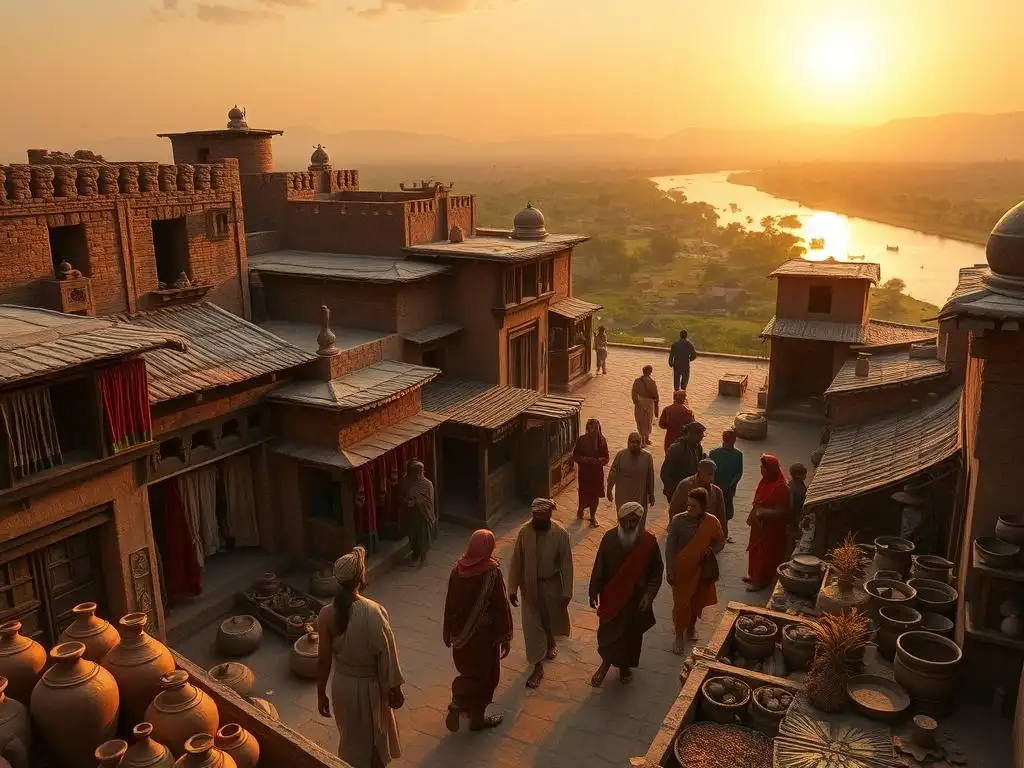
Welcome to Ancient India History, where we delve into the rich tapestry of India's past, uncovering the remarkable achievements of its ancient civilizations. In our featured article, "The Indus Valley Civilization: Pioneers of External Trade and Innovation," we explore how this enigmatic society laid the groundwork for modern trade practices and technological advancements. What secrets lie within the bustling marketplaces and innovative minds of the Indus Valley? Join us as we embark on a journey through time, revealing the profound impact of trade and economy on the thriving cultures of ancient India. Your adventure into the past awaits!
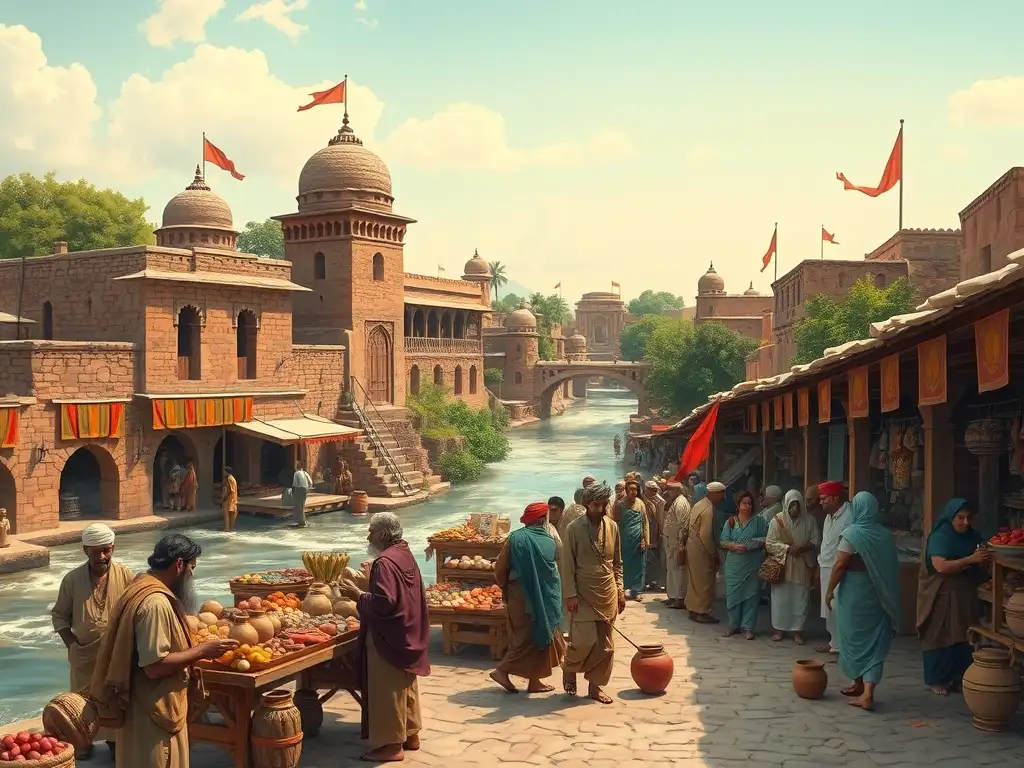
Introduction to the Indus Valley Civilization
The Indus Valley Civilization (IVC), flourishing around 2500 BCE in what is now modern-day Pakistan and northwest India, stands as one of the earliest and most sophisticated urban cultures in human history. Renowned for its advanced city planning, remarkable architecture, and innovative technologies, this civilization played a pivotal role in shaping the economic landscape of ancient societies.
Central to its legacy is the theme of trade and innovation, which facilitated not only local prosperity but also connections with distant lands. This article delves into the multifaceted aspects of Indus Valley trade and innovation, examining how these elements contributed to its prominence and enduring influence.
Overview of the Indus Valley Civilization
The Indus Valley Civilization is characterized by well-organized cities like Harappa and Mohenjo-Daro, which featured grid layouts and sophisticated drainage systems. The society was predominantly agrarian, yet it was also marked by extensive trade networks that reached as far as Mesopotamia and the Arabian Peninsula. The inhabitants of this civilization were skilled artisans, producing goods such as pottery, textiles, and metalwork, which were traded both locally and internationally. The evidence of standardized weights and measures further exemplifies their advanced commercial practices, establishing the IVC as a hub of trade and innovation in the ancient world.
Importance of Trade and Innovation in Ancient Societies
Trade served not only as a means of economic sustenance but also as a catalyst for cultural exchange and technological advancement. The Indus Valley Civilization exemplifies this relationship, where trade networks facilitated the exchange of ideas, goods, and technologies. Innovations in agricultural techniques, metallurgy, and urban planning were often disseminated through these interactions, highlighting the significance of trade in fostering a dynamic and interconnected ancient society. As we explore the IVC's trade and innovation, it becomes evident that these elements were foundational to its development and sustainability.
Historical Context of the Indus Valley Civilization
Understanding the historical context of the Indus Valley Civilization provides crucial insights into its achievements and challenges. The civilization thrived during a period marked by significant climatic and geographical factors that influenced its growth and prosperity.
Timeline of the Indus Valley Civilization
- c. 3300 BCE: Emergence of the early Harappan culture.
- c. 2500 BCE: Peak of the Indus Valley Civilization, with extensive urban planning.
- c. 1900 BCE: Decline of major urban centers, leading to fragmentation.
- c. 1300 BCE: Transition to post-Harappan cultures, marking the end of the civilization.
This timeline illustrates the dynamic phases of the Indus Valley Civilization, from its initial development to its eventual decline, emphasizing the complexities of its historical journey.
Geographical Significance and Resources
The geographical setting of the Indus Valley Civilization was instrumental in its success. Positioned along the fertile plains of the Indus River, the civilization benefited from rich agricultural resources, including wheat, barley, and cotton. This agrarian abundance supported a growing population and facilitated trade. Furthermore, proximity to trade routes connecting the East and West enabled the IVC to engage in commerce with distant societies, enriching its economic and cultural fabric. The availability of natural resources such as precious stones and metals also fueled its artisanal production and trade activities.
The Indus Valley Civilization stands as a testament to the importance of trade and innovation in shaping ancient societies, laying the groundwork for future civilizations in the Indian subcontinent and beyond. Through thorough exploration of its historical context, we can better appreciate the depth and complexity of this remarkable civilization.
Indus Valley Trade Networks
The Indus Valley Civilization (IVC), which flourished around 3300 to 1300 BCE, is renowned for its sophisticated urban planning and advanced societal structures. One of the most remarkable aspects of this civilization was its extensive trade networks, which facilitated commerce not only within the region but also with distant lands. The strategic locations of cities like Harappa and Mohenjo-Daro provided access to vital resources and trade routes, enabling the IVC to engage in extensive external trade.
Overview of Trade Routes in the Indus Valley
The trade routes of the Indus Valley Civilization were well-established and served as critical conduits for commercial exchange. Major routes connected the urban centers of the IVC to neighboring regions, including the Arabian Peninsula, Mesopotamia, and Central Asia.
- Land Routes: These included overland paths that traversed the rugged terrains of the Himalayas and the deserts of modern-day Pakistan and Afghanistan. Traders utilized pack animals, such as camels and donkeys, to transport goods over these challenging routes.
- River Routes: The Indus River and its tributaries played a pivotal role in trade. Barges and boats were used to navigate these waterways, facilitating the movement of goods such as textiles, pottery, and agricultural products. The river systems allowed for efficient bulk transport, connecting port cities to inland trade networks.
- Maritime Routes: Evidence suggests that the IVC engaged in maritime trade through the Arabian Sea. Ports like Lothal served as key maritime hubs, where goods were loaded onto ships bound for distant lands, enhancing trade opportunities with civilizations like Mesopotamia.
Major Trade Partners and Regions
The Indus Valley Civilization established trade relations with several significant regions and cultures, highlighting its far-reaching influence:
- Mesopotamia: The IVC traded extensively with the Sumerians, exchanging goods such as cotton textiles, beads, and pottery for precious metals, lapis lazuli, and other luxury items. Archaeological findings indicate that seals from the IVC have been found in Mesopotamian sites, emphasizing the depth of this trade relationship.
- Persian Gulf: Trade with the Arabian Peninsula enabled the IVC to acquire resources such as copper and ivory. Artifacts from the IVC have been discovered in Oman and Bahrain, indicating a thriving exchange of goods and cultural influence.
- Central Asia: The IVC's trade networks extended to Central Asian regions, where they exchanged agricultural products and crafts for livestock and raw materials.
Key Innovations of the Indus Valley Civilization
The success of the Indus Valley trade can be attributed not only to its extensive networks but also to several key innovations that facilitated trade and economic growth.
Technological Innovations in Trade
Technological advancements played a crucial role in enhancing trade efficiency in the Indus Valley Civilization:
- Weights and Measures: The IVC developed standardized weights and measures, which ensured fair trade practices and helped regulate commerce. These measures facilitated accurate transactions, allowing for the widespread exchange of goods.
- Seals and Writing: The use of seals not only served as a means of branding products but also as a method of communication. The Indus script, albeit undeciphered, suggests that the civilization had a complex system of record-keeping, which likely included trade transactions and inventory management.
- Urban Planning: The meticulously planned cities of the IVC, with their advanced drainage systems and organized layouts, provided a conducive environment for trade. Markets were strategically located, enabling easy access for traders and consumers alike.
Agricultural Innovations Supporting Trade
Agricultural advancements also underpinned the trade networks of the Indus Valley Civilization:
- Irrigation Techniques: The development of sophisticated irrigation systems allowed for the cultivation of surplus crops. This agricultural productivity not only supported local populations but also generated surplus goods for trade, such as grains and cotton.
- Crop Diversity: The introduction of various crops, including wheat, barley, and legumes, enhanced food security and trade opportunities. The ability to produce multiple crops contributed to a stable economy that could sustain both local needs and export demands.
- Animal Husbandry: The domestication of animals, such as cattle and sheep, provided essential resources like milk, leather, and wool, which were traded both locally and with external partners. This diversified the economy and strengthened trade relations.
The Indus Valley Civilization's trade networks and innovations were instrumental in establishing it as a significant player in ancient commerce. The combination of strategic trade routes, relationships with major trading partners, and technological and agricultural advancements laid the groundwork for a prosperous economy that thrived long before many other ancient civilizations emerged.
The Role of Urban Centers in Trade
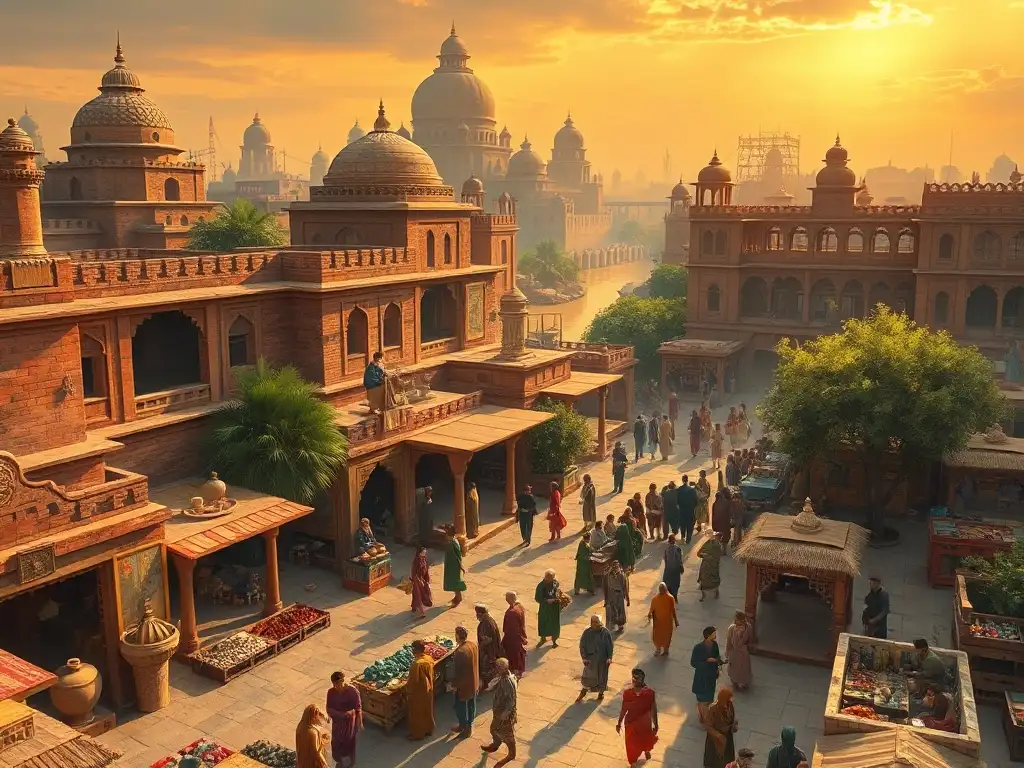
The Indus Valley Civilization (IVC), one of the world's earliest urban cultures, is renowned for its sophisticated trade networks that facilitated the exchange of goods both locally and with distant regions. Central to this trade were the urban centers, which served not only as bustling marketplaces but also as administrative hubs overseeing commercial activities. The strategic location of these cities allowed them to act as conduits for trade, linking various regions within the Indian subcontinent and beyond.
Urban centers like Harappa and Mohenjo-Daro were meticulously planned, featuring advanced infrastructure that supported trade activities. The presence of well-defined streets, drainage systems, and granaries illustrates the economic foresight of IVC. These cities were equipped to handle large volumes of trade, with warehouses for storage and standardized weights and measures that facilitated fair transactions. This level of organization suggests a complex economic system that was vital for the flourishing trade of the civilization.
Major Cities: Harappa and Mohenjo-Daro
Two of the most prominent cities of the Indus Valley Civilization, Harappa and Mohenjo-Daro, stand out for their contributions to trade and innovation. Harappa, located in present-day Pakistan, was strategically positioned along the Ravi River, while Mohenjo-Daro, situated near the Indus River, was ideally placed to access maritime routes.
Both cities exhibited remarkable urban design, with a grid-like layout that maximized trade efficiency. Archaeological evidence indicates that these cities were hubs for the production and export of various goods, including textiles, pottery, and metalwork. The extensive use of seals, which featured intricate designs and inscriptions, suggests that these cities engaged in trade with regions as far as Mesopotamia, facilitating cultural and economic exchanges that would shape the development of civilizations across continents.
Urban Planning and Infrastructure Supporting Trade
The urban planning of the Indus Valley cities was a key factor in their ability to thrive as trade centers. The cities were built with a focus on functionality, featuring wide streets and a sophisticated drainage system that ensured sanitation and accessibility. This meticulous planning not only promoted trade but also enhanced the quality of life for inhabitants.
Warehouses and granaries were strategically located to facilitate the storage of surplus goods, which could be traded during peak seasons. Additionally, the uniformity in brick size and construction techniques across the cities showed a level of standardization that made trade more efficient. This infrastructure supported not only local commerce but also long-distance trade, as goods could be transported easily within and outside the urban centers, further establishing the Indus Valley as a crucial player in ancient trade networks.
Cultural Exchange Through Trade
Trade in the Indus Valley Civilization was not solely about the exchange of goods; it also facilitated a rich cultural exchange that influenced art, religion, and societal practices. The interaction with neighboring regions, particularly through trade routes, led to a blend of ideas, customs, and technologies that enriched the cultural landscape of the civilization.
The movement of merchants and traders across these routes encouraged the sharing of knowledge and artistic styles, which were often reflected in the artifacts found in archaeological sites. The blend of different cultural elements contributed to a unique Indus Valley identity while simultaneously connecting it to broader ancient global networks.
Influence of Trade on Art and Craftsmanship
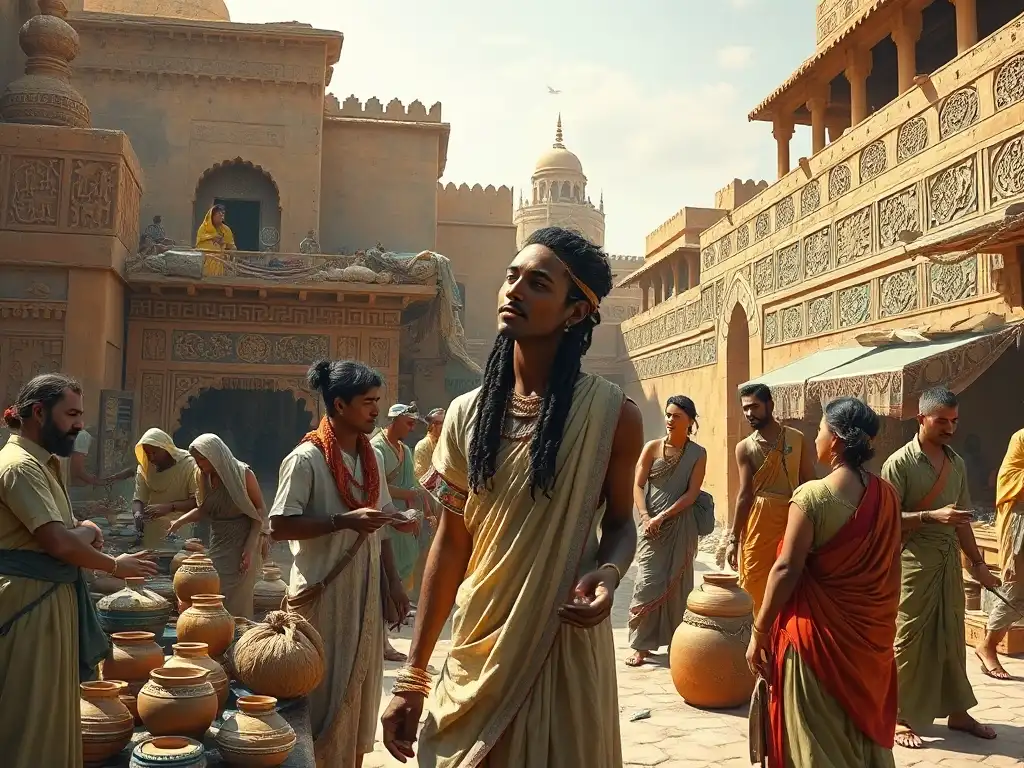
The impact of trade on art and craftsmanship in the Indus Valley Civilization cannot be overstated. As merchants interacted with various cultures, they brought back new techniques and materials that significantly influenced local craftsmanship. The production of goods such as pottery, jewelry, and textiles reflected a fusion of styles and techniques, showcasing the artisans' skills and the civilization's wealth.
For instance, the intricate designs on pottery and the use of semi-precious stones in jewelry production highlight the advanced aesthetic sensibilities of the Indus people, which were likely inspired by both local traditions and foreign influences. The ability to trade these high-quality crafted items not only boosted the economy but also established the Indus Valley as a center of artistic excellence in the ancient world.
Spread of Cultural Practices and Ideas
Through trade, the Indus Valley Civilization played a crucial role in the dissemination of cultural practices and ideas across regions. The movement of people and goods allowed for the exchange of religious beliefs, agricultural techniques, and social customs, leading to a dynamic cultural landscape.
For example, the adoption of specific agricultural practices from neighboring regions improved local farming techniques, while the exchange of spiritual ideas enriched the religious practices within the Indus Valley. This cultural diffusion contributed to a shared heritage that transcended geographic boundaries, fostering connections that would influence subsequent civilizations in the region. The legacy of the Indus Valley’s trade networks can still be seen today in the cultural tapestry of South Asia, where many ancient practices continue to resonate.
Economic System and Trade Practices
The Indus Valley Civilization, flourishing between 3300 BCE and 1300 BCE, is renowned for its advanced economic system and trade practices. This civilization engaged in both local and long-distance trade, which played a crucial role in its economic prosperity. The economy was primarily agrarian, supported by the fertile alluvial plains of the Indus River, which enabled the cultivation of crops like wheat, barley, and cotton. However, the economic framework was diversified through the incorporation of trade, which allowed for the exchange of goods beyond regional boundaries.
The Indus Valley people developed sophisticated urban centers such as Harappa and Mohenjo-Daro, which served as hubs for trade activities. These cities were strategically located along trade routes that connected them to various regions, including the Arabian Peninsula and Mesopotamia. Artifacts such as seals and weights indicate a structured system of trade, suggesting that the civilization had well-defined practices for measuring goods and establishing trade agreements. The economic practices of the Indus Valley Civilization exemplify a blend of agriculture and commerce, reflecting a complex society with a robust economic foundation.
Currency and Barter Systems in the Indus Valley
While there is no definitive evidence of a standardized currency in the Indus Valley Civilization, various artifacts suggest that barter was the primary method of trade. The civilization utilized a system of weights and measures, which aided in facilitating trade transactions. Archaeological findings, including stone weights marked with precise measurements, indicate that these were employed in trade to ensure fairness and accuracy.
Trade commodities included agricultural products, textiles, pottery, and metal goods, which were exchanged based on agreed values. The use of seals, often inscribed with unique symbols, played a significant role in trade practices, likely serving as a means of identification for traders and their goods. These seals, made from materials like steatite, were often used to stamp clay tablets, creating a form of documentation for transactions.
Despite the absence of a formal currency, the barter system allowed for a dynamic trading environment. Goods were exchanged not only within the civilization but also with neighboring regions, showcasing the extensive network of commerce that characterized the Indus Valley.
Role of Guilds and Merchants in Trade
Guilds and merchants were integral to the trade practices of the Indus Valley Civilization, facilitating the movement of goods and fostering economic interactions. These guilds likely comprised groups of artisans and traders who specialized in different crafts and commodities. By organizing themselves into guilds, these individuals could standardize quality, regulate prices, and develop networks that enhanced trade efficiency.
Merchants in the Indus Valley were adept at navigating both local and international markets. They played a crucial role in connecting the civilization with distant regions, such as Mesopotamia and the Arabian Gulf. Trade expeditions often involved maritime routes, with evidence of sea trade indicated by artifacts found in coastal areas. The Indus Valley merchants were known for their skills in negotiation and logistics, ensuring that goods were transported safely across vast distances.
The collaborative efforts of guilds and merchants contributed to the prosperity of the Indus Valley's economy, allowing it to flourish through the exchange of diverse products and the establishment of trade relationships with other civilizations.
Decline of the Indus Valley Civilization and Its Trade
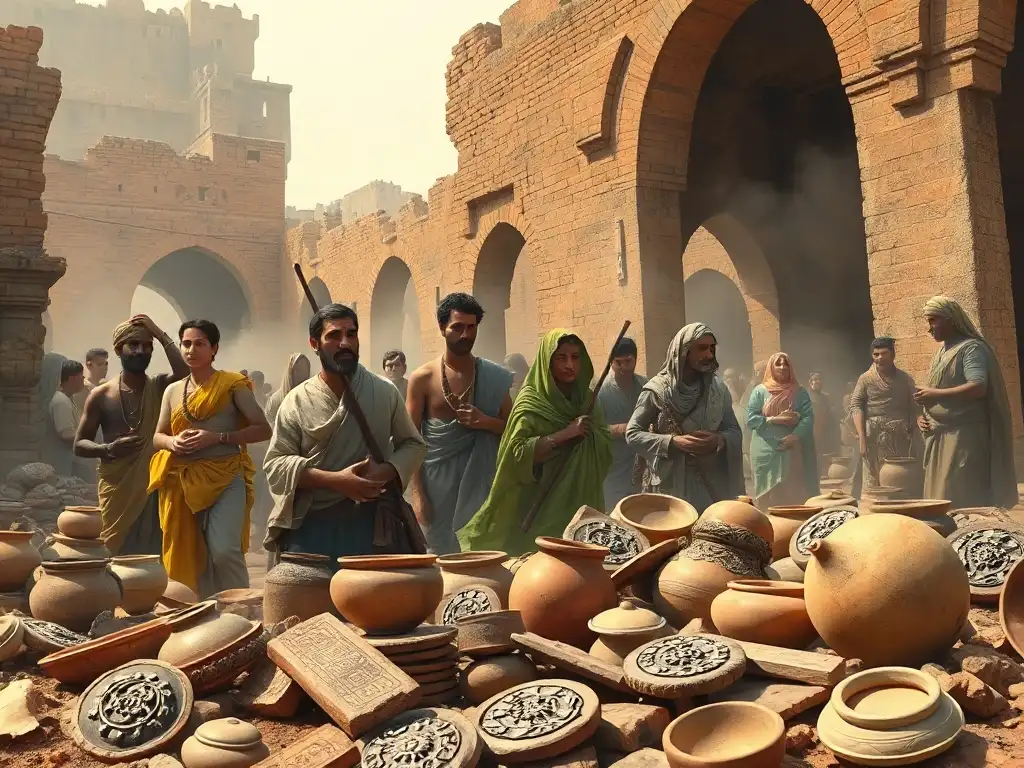
The decline of the Indus Valley Civilization, occurring around 1900 BCE, marked a significant turning point for its trade networks and economic structures. Various factors contributed to this decline, leading to the gradual disintegration of the once-thriving civilization.
Factors Leading to the Decline
Several theories have been proposed to explain the decline of the Indus Valley Civilization, including environmental changes, economic challenges, and sociopolitical factors. Evidence suggests that climate change, leading to droughts and shifts in the monsoon patterns, severely impacted agricultural productivity. As the availability of resources diminished, the reliance on trade would have intensified, placing additional strain on the economy.
Moreover, the increasing vulnerability of urban centers to external threats could have contributed to their downfall. Archaeological findings indicate signs of urban decay, including abandoned structures and a decline in trade activities, suggesting that social unrest or invasions may have played a role in the civilization's collapse. The combination of these factors created a precarious situation, ultimately leading to the decline of the Indus Valley Civilization and its economic practices.
Impact on Trade Networks and Economic Structures
The decline of the Indus Valley Civilization had profound implications for its trade networks and economic structures. As urban centers fell into disrepair and populations dwindled, long-distance trade routes became less active. The once-bustling trade hubs that facilitated exchanges with neighboring regions diminished in significance, leading to a fragmentation of the economic system.
The decline also resulted in a shift towards localized economies, with communities relying more on subsistence farming and less on external trade. This transition marked a significant departure from the interconnected trading practices that characterized the civilization at its height. The loss of trade networks had lasting effects on the cultural and economic landscape of the region, ultimately paving the way for new civilizations to emerge, each with its own distinct economic practices and trade relationships.
Legacy of the Indus Valley Trade and Innovation
The Indus Valley Civilization (IVC), flourishing around 2500 BCE in what is now Pakistan and northwest India, left an indelible mark on the history of trade and innovation. The sophisticated urban centers such as Harappa and Mohenjo-Daro were strategically located along trade routes, facilitating commerce not only within the region but also with distant lands. This trade network was characterized by the exchange of goods like cotton textiles, metalwork, pottery, and precious stones, which were highly sought after in markets beyond the Indus Valley.
The legacy of IVC trade is evident in the artifacts and seals discovered at archaeological sites, showcasing intricate designs and motifs. These artifacts indicate a well-organized trading system that likely involved standardized weights and measures, suggesting a sophisticated understanding of commerce. The influence of the IVC extended to subsequent Indian civilizations, paving the way for future trade practices and innovations that would shape the economic landscape of ancient India.
Influence on Subsequent Indian Civilizations
The innovations in trade and commerce established by the Indus Valley Civilization had a profound influence on later Indian civilizations. The methods and practices developed during the IVC laid the groundwork for the Maurya and Gupta Empires, which inherited and expanded upon the trade networks established by their predecessors.
For instance, the use of standardized weights and measures, as evidenced by Indus seals, became a hallmark of trade in later periods. The Mauryan Empire, known for its vast trade routes connecting India with regions such as the Middle East and Southeast Asia, further enhanced the legacy of IVC trade practices. Additionally, the development of trade guilds and merchant communities can be traced back to the organizational structures that emerged during the time of the Indus Valley.
The cultural exchanges facilitated by trade during this period also contributed to the dissemination of ideas, technologies, and cultural practices, enriching the tapestry of Indian civilization in the centuries that followed.
Lasting Impact on Trade Practices in Ancient India
The impact of the Indus Valley Civilization on trade practices in ancient India is multifaceted. One of the most significant contributions was the establishment of long-distance trade networks that connected India with other ancient civilizations, including Mesopotamia and Persia. This not only fostered economic growth but also encouraged cultural exchanges that enriched the social and artistic life of the region.
The innovations introduced by the IVC, such as advanced urban planning, road construction, and the use of maritime trade routes, set a precedent for subsequent civilizations. For example, the concept of urban trade centers, which thrived in the Indus Valley due to their strategic locations, influenced the establishment of similar centers in later empires, facilitating increased commerce and interaction.
Furthermore, the agricultural practices and irrigation techniques developed during the IVC allowed for surplus production, which in turn supported a thriving trade economy. This agricultural foundation became essential for sustaining trade practices in ancient India, enabling societies to engage in commerce effectively and support a diverse range of goods.
Conclusion
Summary of the Indus Valley's Contributions to Trade and Innovation
The Indus Valley Civilization stands as a pioneering force in the realm of trade and innovation. Its strategic geographic positioning, sophisticated urban planning, and advanced trade practices facilitated extensive commerce with other civilizations. The legacy of IVC trade is reflected in the cultural, economic, and technological advancements that shaped subsequent Indian civilizations, establishing a foundation upon which future societies would build.
The contributions of the IVC to trade innovation not only enhanced the economic landscape of ancient India but also fostered a spirit of cultural exchange that enriched the region's history. The standardization of trade practices and the establishment of trade networks continue to resonate throughout the annals of Indian history.
Reflection on the Importance of Understanding Ancient Trade Systems
Understanding the ancient trade systems of the Indus Valley Civilization is crucial for appreciating the complexities of early human societies. These systems were not merely economic frameworks; they were intricate networks of cultural exchange and interaction that influenced the development of civilizations.
By studying the trade and innovation of the IVC, modern historians and scholars can gain insights into the social structures, economic practices, and technological advancements of ancient societies. This knowledge not only enriches our understanding of history but also highlights the importance of trade as a catalyst for cultural and economic development throughout human civilization.
The Indus Valley's trade practices and innovations offer valuable lessons about the interconnectedness of ancient societies and the enduring impact of commerce on human development. Understanding these ancient systems is essential for appreciating the foundations of modern trade and the rich tapestry of human history.
- Introduction to the Indus Valley Civilization
- Historical Context of the Indus Valley Civilization
- Indus Valley Trade Networks
- Key Innovations of the Indus Valley Civilization
- The Role of Urban Centers in Trade
- Major Cities: Harappa and Mohenjo-Daro
- Urban Planning and Infrastructure Supporting Trade
- Cultural Exchange Through Trade
- Influence of Trade on Art and Craftsmanship
- Spread of Cultural Practices and Ideas
- Economic System and Trade Practices
- Decline of the Indus Valley Civilization and Its Trade
- Legacy of the Indus Valley Trade and Innovation
- Conclusion
- What were the primary goods traded by the Indus Valley Civilization?
- How did the Indus Valley Civilization contribute to innovation?
- What role did external trade play in the Indus Valley Civilization?
- How did the Indus Valley Civilization influence later Indian cultures?
- What evidence supports the existence of trade in the Indus Valley Civilization?
Frequently Asked Questions
What were the primary goods traded by the Indus Valley Civilization?
The Indus Valley Civilization traded various goods, including cotton textiles, metals, and jewelry. Their trade networks extended to regions like Mesopotamia, showcasing their economic innovation.
How did the Indus Valley Civilization contribute to innovation?
The civilization is known for its advanced urban planning, including grid layouts and drainage systems. They also pioneered techniques in metallurgy and agriculture, significantly impacting their trade practices.
What role did external trade play in the Indus Valley Civilization?
External trade was crucial for the Indus Valley Civilization, facilitating cultural exchange and the import of resources not available locally, such as precious stones and luxury goods.
How did the Indus Valley Civilization influence later Indian cultures?
Their innovations in trade and urban development laid the groundwork for future Indian civilizations, influencing aspects like craftsmanship, agricultural techniques, and city planning.
What evidence supports the existence of trade in the Indus Valley Civilization?
Archaeological findings, such as trade seals, weights, and artifacts from other regions, provide substantial evidence of their extensive trade networks and interactions with neighboring cultures.
Final Reflection: The Enduring Legacy of Indus Valley Trade and Innovation
The Indus Valley Civilization stands as a testament to the ingenuity and foresight of early societies, showcasing how trade and innovation were not merely economic activities but vital threads woven into the fabric of cultural identity and progress. Today, as we navigate a globalized world, the lessons from the Indus Valley resonate more than ever, reminding us that collaboration and exchange can lead to unprecedented advancements.
Culture and commerce are inextricably linked, and the Indus Valley Civilization exemplifies this connection through its sophisticated trade networks and innovative practices. The influence of their pioneering spirit can still be felt in modern economic systems and cultural exchanges. As we reflect on their achievements, we are reminded of the words of historian Fernand Braudel: The economy is a part of civilization, and it is the civilization that gives meaning to the economy.
This insight encourages us to appreciate the broader implications of trade, urging us to recognize how our interactions shape not only our economies but our societies as a whole.
As we look to the future, let us take inspiration from the Indus Valley's legacy of innovation and collaboration. I invite you to reflect on how you can incorporate the principles of trade and innovation into your own life, whether through fostering connections, embracing new ideas, or seeking out diverse perspectives. By doing so, we can honor the spirit of the Indus Valley Civilization and contribute to a world that values creativity, cooperation, and progress for generations to come.
Unveil the Legacy of the Indus Valley Civilization!
Thank you for diving deep into the fascinating world of the Indus Valley Civilization! You’ve discovered not only the intricacies of external trade and innovation but also the enduring legacy that continues to inspire us today. Now, take the next step to explore and expand your understanding even further.
Here are some inspiring actions you can take right now:
- Join our community! Sign up for our newsletter to receive the latest insights and articles directly in your inbox.
- Explore further. Visit our collection of artifacts and trade routes from the Indus Valley on our website to truly appreciate their remarkable legacy.
- Share your thoughts! Discuss this article with friends or on social media to spark curiosity and conversation about ancient trade practices.
What aspect of the Indus Valley Civilization do you find most intriguing, and how do you believe it influences our world today?