
Exploring the Duality of Atman and Brahman in Upanishadic Philosophy

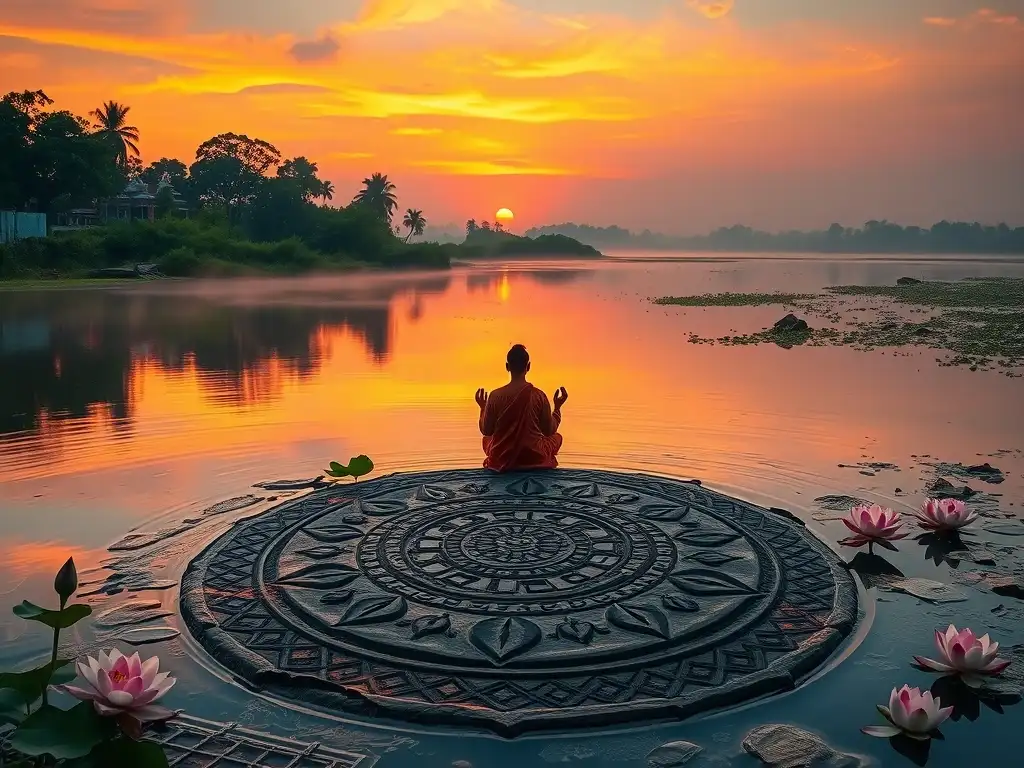
Welcome to Ancient India History, where we embark on a fascinating journey through the rich tapestry of India's past. Here, you will delve into the profound depths of Atman Brahman Upanishadic philosophy, exploring the intricate relationship between the self and the universal consciousness that has captivated thinkers for centuries. What does it truly mean to understand the duality of Atman and Brahman? Join us as we unravel the mysteries of this ancient wisdom, igniting your curiosity and inspiring deeper reflection on the philosophies that have shaped civilizations. Your adventure into the heart of ancient Indian thought begins now!
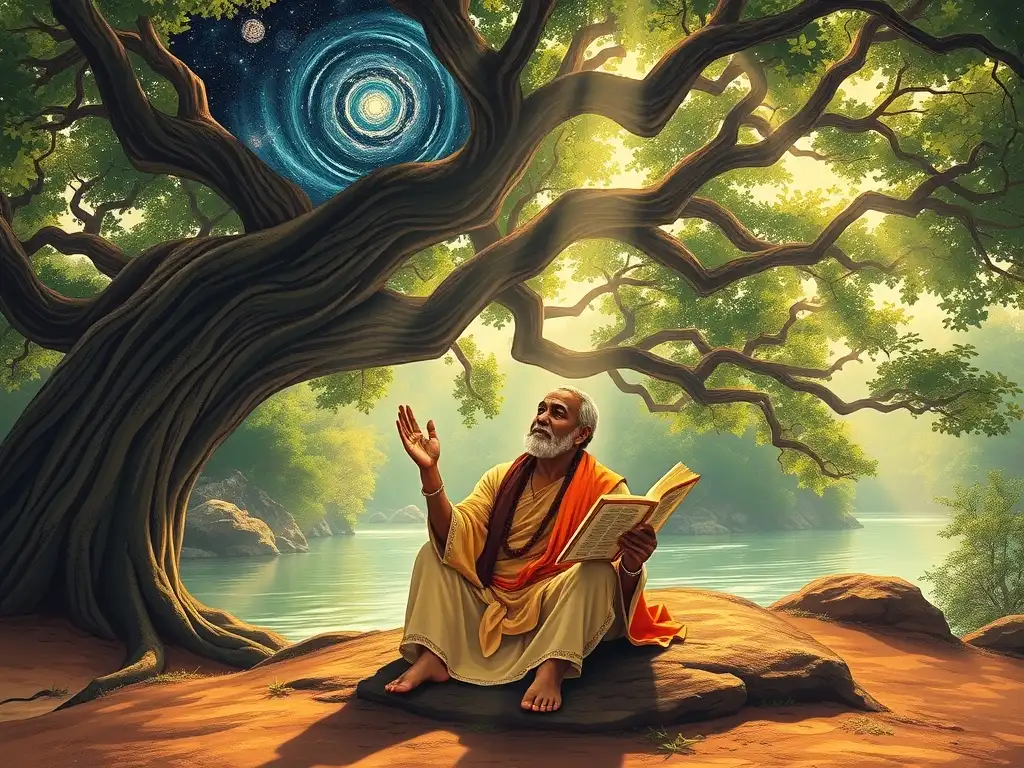
Exploring the intricate relationship between Atman and Brahman is a profound journey into the heart of Upanishadic philosophy, a cornerstone of ancient Indian thought. This exploration not only reveals the philosophical depth of these concepts but also highlights their relevance in understanding the essence of existence and consciousness.
Atman, often understood as the individual self or soul, and Brahman, the ultimate reality or universal spirit, together form a duality that encapsulates the spiritual and metaphysical inquiries of ancient India. This article aims to delve into the definitions, significance, and historical context of these concepts, providing a comprehensive overview of their interrelation and impact on Indian philosophy.
Introduction to Atman and Brahman
Definition of Atman in Upanishadic Philosophy
Atman, in the context of Upanishadic philosophy, refers to the true self or the essence of an individual. It is often described as eternal, unchanging, and transcendent, representing the innermost core of a person. The Upanishads articulate Atman as being beyond the physical body and mind, embodying pure consciousness. This essence is considered a fragment of the universal reality, Brahman, leading to the conclusion that every individual soul is inherently linked to the cosmic spirit.
Definition of Brahman in Upanishadic Philosophy
Brahman is defined as the ultimate, unchanging reality underlying all existence. It is often characterized as infinite, formless, and absolute, encompassing the entire universe and all its phenomena. The Upanishadic texts emphasize that Brahman is the source of all creation and the ultimate goal of spiritual realization. Understanding Brahman involves transcending the limitations of the material world and grasping the unity of all existence, which is a central theme in many philosophical discourses of ancient India.
Importance of the Relationship between Atman and Brahman
The relationship between Atman and Brahman is pivotal in Upanishadic philosophy, encapsulated in the phrase "Tat Tvam Asi," meaning "That Thou Art." This profound statement underscores the notion that the individual self (Atman) is not separate from the universal spirit (Brahman). This realization is considered the pinnacle of spiritual knowledge, leading to liberation (moksha) from the cycle of birth and death. Understanding this duality encourages individuals to seek a deeper connection with the universe and fosters a sense of unity among all beings.
Historical Context of Upanishadic Philosophy
Origins of the Upanishads
The Upanishads are a collection of ancient Indian texts that form the philosophical basis of Hinduism. Composed between 800 BCE and 400 BCE, they represent the culmination of Vedic thought. These texts emerged as philosophical reflections on the rituals and hymns found in the earlier Vedic scriptures. The Upanishads serve as a bridge between the ritualistic practices of the Vedas and the more abstract philosophical inquiries that characterize later Indian philosophy.
Key Philosophers and Texts Influencing Atman and Brahman
Several key philosophers and texts have shaped the discourse surrounding Atman and Brahman. Notable figures include Yajnavalkya, a prominent sage featured in the Brihadaranyaka Upanishad, who elaborated on the nature of Atman. Other significant texts, such as the Chandogya Upanishad, also explore these concepts, delving into the relationship between the individual self and the cosmic reality. The insights of these philosophers have had a lasting impact on subsequent philosophical traditions in India.
Evolution of Thought: From Vedas to Upanishads
The transition from the Vedic texts to the Upanishads marks a significant evolution in Indian philosophy. While the Vedas primarily focus on rituals and hymns directed towards various deities, the Upanishads shift the focus towards introspection and metaphysical inquiry. This transition reflects a growing interest in understanding the nature of reality and the self, paving the way for philosophical developments that would influence not only Hindu thought but also other Indian philosophical systems, such as Buddhism and Jainism.
Core Concepts of Atman and Brahman
Atman and Brahman are foundational concepts in Upanishadic philosophy, representing two interrelated aspects of the ultimate reality. Atman refers to the individual self or soul, while Brahman signifies the universal consciousness or the cosmic spirit. Understanding these two concepts is crucial for grasping the essence of Upanishadic thought and the philosophical inquiries that have shaped Indian spirituality.
The exploration of Atman and Brahman reveals a profound duality that underpins many philosophical discussions within the Upanishads. This duality serves to bridge the gap between the individual and the universal, offering insights into the nature of existence and the human experience. As we delve deeper into these concepts, we uncover the intricate relationship that defines the spiritual landscape of ancient India.
Understanding the Nature of Atman
Atman is often described as the true essence or the innermost self of an individual. It is believed to be eternal, unchanging, and beyond the physical form. The Upanishads emphasize that Atman is not merely the ego or the personality; instead, it represents the ultimate reality within each person. This conception of Atman is pivotal because it suggests that the essence of each individual is the same as the essence of the universe, leading to the realization of one's true nature.
In the context of self-realization, understanding Atman involves introspection and meditation. The Upanishads advocate for a journey inward to discover the true self, which transcends the limitations of the material world. The famous phrase "Tat Tvam Asi," meaning "That Thou Art," encapsulates the idea that the individual self is fundamentally connected to the universal self, thus affirming the spiritual unity shared by all beings.
Understanding the Nature of Brahman
Brahman is described as the ultimate reality, the source from which all existence emanates. It is characterized as infinite, formless, and beyond human comprehension. The Upanishads articulate Brahman as the foundation of all that exists and the unifying principle that underlies the diversity of the universe.
The nature of Brahman is often articulated through various attributes, such as Sat (truth), Chit (consciousness), and Ananda (bliss), collectively known as "Satchidananda." These attributes signify that Brahman is not just an abstract concept but a living reality that pervades everything. In understanding Brahman, one begins to appreciate the interconnectedness of all life and the divine essence that flows through every being.
The Interconnectedness of Atman and Brahman
The relationship between Atman and Brahman is central to Upanishadic thought, emphasizing the idea that the individual self (Atman) is fundamentally the same as the universal self (Brahman). This interconnectedness suggests that realization of Atman leads to the understanding of Brahman, and vice versa.
The Upanishads articulate this connection through various metaphors, one of the most notable being the analogy of the wave and the ocean. Just as a wave is not separate from the ocean, the individual soul is not distinct from the universal spirit. This perspective fosters a sense of unity and encourages individuals to seek a deeper understanding of their place within the cosmos.
The Duality of Atman and Brahman
The concept of duality in Upanishadic philosophy does not imply a strict separation between Atman and Brahman but rather highlights two aspects of the same ultimate reality. This duality is essential for comprehending the complexities of existence, as it allows individuals to navigate their spiritual journey while recognizing their inherent connection to the universe.
The Philosophical Significance of Duality
The duality of Atman and Brahman serves as a philosophical framework that underpins many spiritual practices and beliefs in ancient India. It encourages the pursuit of knowledge and self-realization, urging individuals to transcend the illusions of separateness and recognize their divine nature.
This duality also provides a basis for ethical living, as understanding the interconnectedness of all beings fosters compassion and empathy. By recognizing that harming another is equivalent to harming oneself, individuals are encouraged to engage in righteous living and contribute positively to the collective welfare of society.
How Duality is Perceived in Upanishadic Texts
In the Upanishads, the duality of Atman and Brahman is articulated through various dialogues, metaphors, and teachings. Texts such as the Chandogya Upanishad and the Mandukya Upanishad delve into the nuances of this duality, presenting diverse perspectives on the relationship between the individual and the universal.
The Upanishads often present this duality not as a conflict but as a harmonious interplay that invites contemplation and reflection. Through meditation and philosophical inquiry, seekers are encouraged to explore these concepts deeply, ultimately arriving at the realization of the non-dual nature of existence.
Case Studies of Duality in Key Upanishadic Verses
Several key verses from the Upanishads exemplify the duality of Atman and Brahman. For instance, the Chandogya Upanishad introduces the famous Mahavakya, "Tat Tvam Asi," which directly asserts the identity of Atman and Brahman. Similarly, the Mandukya Upanishad presents the concept of Aum as the essence of the universe, illustrating the interconnectedness of all existence.
These verses serve not only as philosophical assertions but also as practical guides for spiritual seekers. Through the contemplation of these teachings, individuals can experience the profound realization of their unity with the cosmos, transcending the limitations of individual identity and embracing their true nature as part of the universal whole.
The Implications of Atman and Brahman in Human Experience

The concepts of Atman and Brahman are central to Upanishadic philosophy and carry profound implications for understanding human existence and consciousness. Atman, often translated as the "self," represents the individual soul or essence, while Brahman signifies the ultimate reality or universal consciousness. Together, these concepts explore the relationship between the individual and the cosmos, emphasizing the interconnectedness of all beings.
This duality posits that while individuals may experience life through their unique Atman, they are ultimately expressions of the same Brahman. Such an understanding encourages individuals to seek a deeper connection with the universe, fostering a sense of unity rather than division. This perspective has far-reaching implications, influencing not only personal identity but also ethical considerations and communal living.
Moreover, the realization of the relationship between Atman and Brahman can lead to transformative shifts in consciousness. Recognizing that the individual self is an extension of a greater whole can inspire compassion, empathy, and a commitment to collective well-being. As individuals cultivate this awareness, they may experience profound peace and fulfillment, transcending the ego-driven pursuits that often characterize human experience.
How Atman Shapes Individual Identity
Atman significantly shapes individual identity by serving as the foundation of self-awareness and consciousness. In the Upanishadic context, understanding Atman is crucial for personal development and spiritual growth. Unlike the transient aspects of identity, such as social status or material possessions, Atman embodies the eternal essence of a person. This eternal quality invites individuals to explore their true nature beyond superficial identification.
The exploration of Atman often leads to self-inquiry and introspection. By engaging in practices such as meditation and contemplation, individuals can peel away layers of conditioning and societal expectations, revealing their authentic selves. This journey fosters a deeper understanding of one's motivations, desires, and moral compass, ultimately guiding individuals toward a life of purpose and meaning.
Furthermore, the realization of Atman as an unchanging essence encourages individuals to cultivate resilience in the face of life's challenges. When one identifies with the eternal self rather than the fluctuating circumstances of life, they can maintain equanimity and navigate adversity with grace. This shift in perspective not only enhances personal well-being but also enriches relationships with others, promoting tolerance and understanding.
The Role of Brahman in Universal Consciousness
Brahman, as the ultimate reality, plays a pivotal role in shaping the understanding of universal consciousness within Upanishadic philosophy. It represents an all-encompassing, formless essence that transcends time, space, and individual distinctions. This concept encourages individuals to consider their place within the vast cosmos, fostering a sense of belonging and interconnectedness.
The recognition of Brahman as the source of all existence leads to a profound appreciation for the diversity of life. While individual beings may appear separate, they are manifestations of the same underlying reality. This understanding encourages individuals to respect the sanctity of all forms of life, promoting harmony and ecological awareness.
Moreover, contemplating Brahman can facilitate spiritual awakening. As individuals meditate on the nature of Brahman, they may experience moments of transcendence, where the boundaries of the self dissolve, revealing a state of pure awareness. This experience underscores the significance of Brahman in guiding individuals toward enlightenment and liberation from the cycle of birth and rebirth (samsara).
Realizing Oneness: Practices and Meditation Techniques
Realizing the oneness of Atman and Brahman is central to the spiritual journey in Upanishadic philosophy, and various practices are employed to facilitate this realization. Meditation serves as a cornerstone of these practices, offering individuals a pathway to experience deeper states of consciousness and connect with their true essence.
One effective technique is self-inquiry, where practitioners ask profound questions such as "Who am I?" to peel back layers of identity and connect with Atman. This practice encourages introspection and can lead to transformative insights about the nature of the self.
Another approach is silent meditation, which involves focusing on the breath or a mantra to quiet the mind and cultivate inner awareness. This stillness allows individuals to transcend thoughts and emotions, creating space for a direct experience of Brahman. Many practitioners also engage in yoga, which integrates physical postures, breath control, and meditation to harmonize body and mind, facilitating a deeper connection with the universal consciousness.
Additionally, devotional practices (bhakti) can foster a sense of unity with Brahman. Through chanting, prayer, and rituals, individuals express love and reverence for the divine, nurturing a relationship that transcends personal limitations and fosters a sense of belonging within the cosmos.
Comparisons with Other Philosophical Systems
The exploration of Atman and Brahman in Upanishadic philosophy invites comparisons with various philosophical systems, revealing both unique attributes and shared themes that enrich the understanding of existence.
Atman and Brahman vs. Western Philosophical Concepts
In Western philosophy, concepts of the self and the ultimate reality exhibit both similarities and differences when juxtaposed with Atman and Brahman. For instance, Descartes' famous assertion "Cogito, ergo sum" emphasizes the individual's thinking self as the foundation of identity. However, unlike the Upanishadic view of Atman as eternal, Western thought often sees the self as fragmented and subject to change.
Furthermore, the idea of a singular, transcendent God in monotheistic traditions contrasts with the non-dual nature of Brahman, which encompasses all existence. While Western philosophies may focus on the duality between creator and creation, Upanishadic philosophy emphasizes the unity of Atman and Brahman, inviting individuals to recognize their inherent connection to the divine essence.
Similarities with Other Eastern Philosophies
Atman and Brahman share intriguing parallels with other Eastern philosophical systems, such as Buddhism and Taoism. For instance, the Buddhist concept of anatta (non-self) challenges the notion of a permanent identity, resonating with the Upanishadic exploration of the transient nature of the ego. However, where Buddhism emphasizes the absence of a permanent self, Upanishadic philosophy posits Atman as the eternal essence that connects individuals to Brahman.
Similarly, Taoism's idea of the Tao as the fundamental nature of the universe mirrors the non-dualistic principles found in Upanishadic philosophy. Both traditions emphasize harmony with the cosmos and the importance of aligning with the greater reality, albeit through different terminologies and practices.
Unique Aspects of Upanishadic Philosophy
What sets Upanishadic philosophy apart is its profound exploration of the relationship between Atman and Brahman, emphasizing the non-dual nature of existence. This philosophical framework encourages individuals to engage in direct experiential inquiry rather than merely intellectual understanding. The Upanishads advocate for personal realization through meditation, self-inquiry, and ethical living, fostering a holistic approach to spirituality.
Moreover, the Upanishadic texts convey a sense of universality and inclusivity, suggesting that all paths lead to the same ultimate truth. This perspective invites individuals from various backgrounds to engage with the teachings, cultivating a rich tapestry of spiritual exploration that transcends cultural and religious boundaries.
The unique contributions of Upanishadic philosophy, particularly the concepts of Atman and Brahman, offer profound insights into the nature of self and existence, encouraging individuals to explore their inner depths and recognize their connection to the universe.
Conclusion: The Relevance of Atman and Brahman Today
The philosophical concepts of Atman and Brahman, as articulated in the Upanishads, continue to resonate profoundly in contemporary discussions on spirituality and self-realization. The duality encapsulated in these terms serves as a gateway for individuals seeking to understand their own existence and relationship with the universe. In an era marked by rapid technological advancements and increasing disconnection from traditional values, the wisdom of the Upanishadic teachings offers a timeless perspective on the essence of being and the interconnectedness of all life.
By exploring the nature of Atman as the individual self and Brahman as the ultimate reality, individuals can cultivate a deeper awareness of their place within the cosmos. This understanding encourages a sense of unity with others and fosters compassion, which is essential in today's increasingly fragmented world. The teachings of the Upanishads invite modern seekers to transcend the superficial layers of identity and engage with the profound truths of existence that continue to inspire spiritual inquiry.
Modern Interpretations of Atman and Brahman
In contemporary philosophy and spirituality, interpretations of Atman and Brahman have evolved, reflecting diverse cultural and individual understandings. Many modern thinkers view Atman as synonymous with consciousness or the soul, while Brahman is often perceived as the universal spirit or the ultimate source of all existence. This shift in interpretation allows for a more inclusive understanding that aligns with various philosophical traditions, including Western existentialism and Eastern spirituality.
The advent of transpersonal psychology has also contributed significantly to the interpretation of these concepts. The exploration of human consciousness and the quest for self-actualization resonate with the Upanishadic emphasis on realizing one's true nature. Practitioners of meditation and mindfulness incorporate these principles to foster personal growth and spiritual awakening, bridging ancient wisdom with modern psychological practices.
The Impact of Upanishadic Philosophy on Contemporary Spiritual Practices
Upanishadic philosophy has profoundly influenced various contemporary spiritual practices, including yoga, meditation, and holistic healing. The central tenets of Atman and Brahman are frequently invoked in yoga philosophy, emphasizing the union of the individual self with the universal consciousness. This integration fosters a holistic approach to well-being, addressing physical, mental, and spiritual health.
Meditation practices rooted in Upanishadic thought encourage practitioners to reflect on the nature of their existence and develop a deeper connection to their inner selves. These practices not only enhance self-awareness but also promote a sense of interconnectedness with the world around them. Additionally, the ideals of compassion and unity reflected in these teachings have inspired many social movements and organizations that advocate for peace and harmony among diverse communities.
Final Thoughts on the Legacy of Atman and Brahman in Philosophy
The legacy of Atman and Brahman within the landscape of philosophy is substantial, offering a rich tapestry of insights that continue to inspire thinkers and seekers alike. By engaging with these concepts, individuals can explore the nature of reality and the self, fostering a deeper understanding of existence that transcends mere intellectual inquiry. The Upanishads serve as a bridge between ancient wisdom and contemporary thought, encouraging a dialogue that spans cultures and epochs.
As we navigate the complexities of modern life, the teachings of the Upanishads remind us of the intrinsic unity that underlies our diverse experiences. The ongoing relevance of Atman and Brahman invites us to reflect on our own spiritual journeys and the profound interconnectedness of all beings, ultimately guiding us toward a more compassionate and enlightened existence.
References and Further Reading
Suggested Texts on Upanishadic Philosophy
- The Upanishads, translated by Eknath Easwaran - This translation provides a clear and accessible interpretation of the key Upanishadic texts, making them approachable for modern readers.
- The Principal Upanishads by Sarvepalli Radhakrishnan - A comprehensive anthology that offers insights into the philosophical depth of the Upanishads along with contextual analysis.
- Meditations on the Upanishads by Swami Sivananda - A thoughtful exploration that connects Upanishadic philosophy with practical meditation techniques.
Academic Resources on Atman and Brahman
- The Philosophy of the Upanishads by Paul Deussen - An in-depth academic treatment of the philosophical implications of Atman and Brahman within the Upanishadic texts.
- Atman and Brahman: A Study of the Upanishads: by K. Satchidananda Murty - This text delves into the philosophical discourse surrounding these concepts and their interpretations throughout history.
- The Upanishads: A New Translation: by Vernon Katz and Rene Guenon - An academic yet accessible translation that emphasizes the philosophical and metaphysical aspects of the texts.
Recommended Online Lectures and Courses on Ancient Indian Philosophy
- Coursera: "Indian Philosophy: The Basics": - A course offering insights into the foundational concepts of Indian philosophy, including discussions on Atman and Brahman.
- EdX: "The Upanishads: Ancient Wisdom for Modern Living": - This course explores the key themes and teachings of the Upanishads relevant to contemporary life.
- YouTube Lectures by Swami Sarvapriyananda - A series of engaging and informative talks that discuss the philosophical implications of Atman and Brahman from a modern perspective.
Through these resources, readers can further explore the profound contributions of Upanishadic philosophy to both historical and contemporary thought, enriching their understanding of Atman and Brahman.
- Introduction to Atman and Brahman
- Historical Context of Upanishadic Philosophy
- Core Concepts of Atman and Brahman
- The Duality of Atman and Brahman
- The Implications of Atman and Brahman in Human Experience
- Comparisons with Other Philosophical Systems
- Conclusion: The Relevance of Atman and Brahman Today
- References and Further Reading
- What is the significance of Atman and Brahman in Upanishadic philosophy?
- How do the concepts of Atman and Brahman influence Indian culture?
- What are the main texts that discuss Atman and Brahman?
- How does Upanishadic philosophy relate to modern spiritual practices?
- What role did Atman and Brahman play in the development of later Indian philosophies?
Frequently Asked Questions
What is the significance of Atman and Brahman in Upanishadic philosophy?
Atman refers to the individual soul, while Brahman is the universal spirit. According to Upanishadic philosophy, understanding the relationship between the two is key to achieving spiritual enlightenment.
How do the concepts of Atman and Brahman influence Indian culture?
The duality of Atman and Brahman has deeply influenced various aspects of Indian culture, including art, literature, and spiritual practices, promoting the idea of unity in diversity.
What are the main texts that discuss Atman and Brahman?
The Upanishads are the primary texts that explore the concepts of Atman and Brahman, providing profound insights into spiritual philosophy and the nature of existence.
How does Upanishadic philosophy relate to modern spiritual practices?
Many modern spiritual movements draw inspiration from Upanishadic philosophy, emphasizing meditation, self-realization, and the pursuit of understanding the self in relation to the universe.
What role did Atman and Brahman play in the development of later Indian philosophies?
The exploration of Atman and Brahman laid the groundwork for later philosophical systems in India, such as Advaita Vedanta, which further developed the idea of non-dualism and the oneness of existence.
Final Reflection: Embracing the Unity of Atman and Brahman
In our exploration of Atman and Brahman within Upanishadic philosophy, we uncover profound truths that resonate deeply with the complexities of modern life. The duality of these concepts not only enriches our understanding of self and the universe but also challenges us to reconsider our place within it. As we navigate a world often marked by division and disconnection, the teachings of the Upanishads remind us of the essential oneness that underlies all existence—a striking reminder that our individual journeys are intrinsically linked to a greater cosmic reality.
The influence of Atman and Brahman extends beyond ancient texts; it permeates contemporary discussions about identity, consciousness, and spirituality. This philosophical framework encourages us to engage in a deeper dialogue about who we are and the interconnectedness of all beings. As we reflect on our own lives, we can find solace in the words of the Upanishads: The one who sees all beings in the self, and the self in all beings, is a true seer.
This perspective not only fosters empathy and understanding but also invites us to recognize the divine essence within ourselves and others, shaping a more compassionate society.
As we conclude this exploration, I invite you to reflect on the lessons of Atman and Brahman in your own life. Consider how embracing the unity of all existence can transform your interactions and perceptions. Let this ancient wisdom inspire you to cultivate a deeper awareness of your connection to the world around you. In doing so, you not only honor the teachings of the Upanishads but also contribute to a more harmonious and enlightened future for all.
Embark on Your Journey to Understanding Atman and Brahman!
Thank you for diving deep into the fascinating realms of Upanishadic Philosophy with us! You’ve uncovered insights that not only enrich your understanding but also invite profound reflections on the self and the universe. Now, it’s time to take those insights further.
Here’s how you can continue your exploration:
- Engage with the Text: Read a selected Upanishad to experience the concepts of Atman and Brahman firsthand. Immerse yourself in the wisdom by annotating your thoughts and questions.
- Join the Discussion: Share your insights in our comments section or on social media. Help broaden the conversation by connecting with like-minded individuals who are equally passionate about ancient philosophies.
- Reflect and Meditate: Take a moment for introspection to relate these ancient principles to your own life. Consider journaling about your thoughts on how Atman and Brahman shape your understanding of existence.
Which aspect of Atman and Brahman intrigues you the most, and how has this exploration influenced your perspective on life? We’d love to hear your thoughts!