
The Rise and Fall of Trade Cities in Ancient India: A Historical Overview


Welcome to Ancient India History, where we embark on an exhilarating journey through the rich tapestry of India's past! Have you ever wondered how bustling trade cities shaped the ancient Indian economy and influenced cultures across the subcontinent? In our featured article, "The Rise and Fall of Trade Cities in Ancient India: A Historical Overview," we delve into the fascinating stories of these vibrant hubs of commerce.
From the flourishing markets of the Indus Valley to the thriving trade networks during the Gupta Empire, each city holds secrets waiting to be uncovered. Prepare to ignite your curiosity and explore the profound impact these trade cities had on ancient civilization!
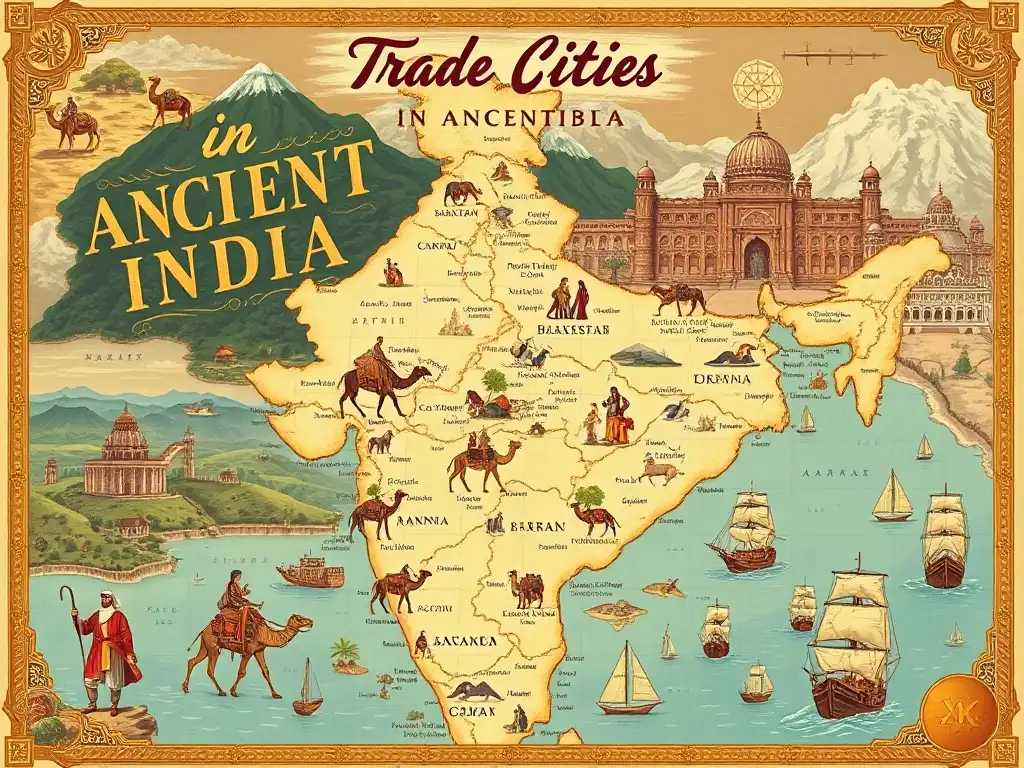
Introduction to Trade Cities in Ancient India
The history of ancient India is deeply intertwined with the rise and fall of trade cities, which played a pivotal role in shaping the economic and cultural landscape of the subcontinent. From the bustling markets of the Indus Valley Civilization to the thriving urban centers during the Gupta Empire, these trade cities were not merely commercial hubs; they were vibrant ecosystems where diverse cultures, ideas, and goods converged.
Understanding the evolution of these cities offers profound insights into the broader dynamics of trade and commerce in ancient India, revealing how these urban centers contributed to the development of both regional and long-distance trade networks.
Definition and Importance of Trade Cities
Trade cities in ancient India can be defined as urban settlements primarily engaged in commerce, facilitating the exchange of goods both locally and across vast distances. These cities were crucial for several reasons:
- Economic Growth: They stimulated economic activities by providing a centralized location for trade, leading to the accumulation of wealth.
- Cultural Exchange: As melting pots of diverse populations, trade cities fostered cultural interactions and the dissemination of ideas, art, and technology.
- Political Significance: Many trade cities became centers of power, influencing regional politics and governance.
The significance of trade cities extends beyond mere commerce; they were vital to the socio-political fabric of ancient Indian civilization.
Overview of Trade and Commerce in Ancient India
Trade and commerce in ancient India were characterized by a rich tapestry of local and international exchanges. The Indian subcontinent was strategically located along major trade routes that connected it to regions such as the Middle East, Southeast Asia, and beyond. Key features of trade and commerce included:
- Diverse Goods: Traders exchanged a wide variety of products, including spices, textiles, precious stones, and agricultural products.
- Trade Routes: Prominent trade routes, both overland and maritime, facilitated the movement of goods and served as conduits for cultural exchange.
- Economic Systems: Different forms of currency were utilized, alongside barter systems, to facilitate trade transactions.
The vibrancy of trade in ancient India not only enriched its economy but also helped in establishing it as a formidable player on the global stage.
The Emergence of Trade Cities in Ancient India
The emergence of trade cities was a gradual process influenced by various historical, geographical, and socio-economic factors. These cities, which flourished at different times, mirrored the changing dynamics of trade and commerce across ancient India.
Historical Context of Trade Cities
The roots of trade cities in ancient India can be traced back to significant historical developments:
- Indus Valley Civilization (c. 3300–1300 BCE): The earliest trade cities, like Harappa and Mohenjo-Daro, showcased advanced urban planning and a robust trading system that linked them with distant regions.
- Post-Vedic Period: As regional kingdoms emerged, trade cities evolved to support the growing demand for goods and services, bolstered by an expanding agrarian economy.
- Mauryan Empire (c. 322–185 BCE): Under this empire, trade cities such as Pataliputra became prominent, reflecting the integration of trade into the political framework.
This historical context highlights how trade cities were not isolated phenomena, but rather essential components of a larger economic and cultural evolution in ancient India.
Key Trade Cities in Ancient India
Several trade cities emerged as prominent centers of commerce throughout ancient India, each contributing uniquely to the trade landscape:
- Taxila: A significant hub for trade and education, Taxila connected the North-Western regions with Central Asia and the Middle East. It was known for its diverse goods, including textiles and metalwork.
- Ujjain: Located on a key trade route, Ujjain was a center for the trade of spices and textiles, playing a vital role in the economy during the Gupta period.
- Kanchipuram: Renowned for its silk and textile trade, Kanchipuram was a major city in the South, attracting traders from various regions.
These cities exemplify the vibrant trade networks that existed in ancient India, each leaving a lasting legacy on the region's history and culture.
Factors Contributing to the Rise of Trade Cities
The emergence of trade cities in ancient India can be attributed to a confluence of geographic, economic, and sociopolitical factors. These cities served not only as commercial hubs but also as cultural melting pots that facilitated the exchange of ideas, goods, and innovations. Understanding these factors provides insight into how these cities flourished and their significance in the broader context of ancient Indian civilization.
Geographic Advantages of Trade Routes
Geography played a pivotal role in the establishment of trade cities across ancient India. The subcontinent's strategic location, bordered by the Himalayas to the north and surrounded by water on three sides, made it a natural crossroads for trade. Key geographic features included:
- Rivers: Major rivers like the Ganges, Indus, and Brahmaputra facilitated transportation and irrigation, enhancing agricultural productivity.
- Mountain Passes: Passes such as the Khyber facilitated overland trade with Central Asia, connecting Indian markets with those of Persia and beyond.
- Coastal Proximity: Coastal cities, such as Lothal and Sopara, served as vital ports for maritime trade routes, allowing for interactions with traders from Africa, the Middle East, and Southeast Asia.
These geographic advantages enabled trade cities to thrive by attracting merchants and fostering economic activities.
Cultural Exchange and Economic Prosperity
Trade cities were not just economic centers; they were also vibrant hubs of cultural exchange. The influx of traders from various regions led to a rich tapestry of cultural interactions, resulting in:
- Cultural Syncretism: The blending of local customs with those of foreign traders enriched the cultural landscape, influencing art, religion, and social practices.
- Language and Knowledge: The movement of people facilitated the exchange of languages and knowledge, contributing to advancements in various fields such as mathematics, astronomy, and philosophy.
- Economic Interdependence: As trade cities prospered, they established intricate trade networks that promoted economic interdependence among different regions, further stimulating growth.
This dynamic interplay of cultural and economic factors was crucial in shaping the identity of ancient Indian trade cities.
Influence of Empires and Dynasties on Trade Cities
The rise of trade cities was significantly influenced by the patronage and policies of various empires and dynasties throughout ancient Indian history. Notable influences included:
- Mauryan Empire: Under rulers like Chandragupta Maurya and Ashoka, the Mauryan Empire established a vast network of roads and promoted trade, enhancing the prosperity of cities such as Pataliputra.
- Gupta Empire: The Gupta period marked a golden age of trade, characterized by stability and prosperity. Trade cities flourished as a result of the empire's support for commerce and cultural development.
- Regional Kingdoms: Local kingdoms often leveraged their resources to enhance trade, leading to the emergence of cities like Taxila and Ujjain as significant trade hubs.
The strategic initiatives of these empires played a crucial role in the growth and sustainability of trade cities, making them integral to the ancient Indian economy.
The Role of Trade Cities in Ancient Indian Economy
Trade cities were essential components of the ancient Indian economy, serving multiple functions that went beyond mere commerce. Their impact can be categorized into various dimensions of economic life.
Impact on Local Economies and Agriculture
Trade cities had a profound influence on local economies and agriculture. They acted as central markets where surplus agricultural products could be exchanged for goods produced in urban areas. This resulted in:
- Increased Agricultural Output: The demand for products in trade cities incentivized farmers to enhance their agricultural practices, leading to greater yields.
- Specialization: Regions began to specialize in specific crops or goods, fostering an environment of economic specialization that benefitted both the rural and urban economies.
- Wealth Distribution: As trade flourished, local economies experienced an influx of wealth, which led to improvements in infrastructure and public services.
These changes facilitated a thriving economy that connected urban and rural areas, promoting overall growth.
The Exchange of Goods and Commodities
The exchange of goods and commodities was at the heart of trade cities' economic activities. The diversity of products traded included:
- Luxury Goods: Spices, textiles, and precious metals were among the high-value items that attracted traders from distant lands.
- Everyday Commodities: Local products such as grains, pottery, and tools played a critical role in sustaining the urban population and supporting trade.
- Cultural Artifacts: The trade of cultural artifacts and religious items contributed to the dissemination of ideas and beliefs across regions.
The bustling markets of trade cities became melting pots of commerce, connecting various cultures and economies through the exchange of goods.
Trade Cities as Centers of Cultural and Intellectual Exchange
Beyond their economic significance, trade cities served as vital centers for cultural and intellectual exchange. They were instrumental in fostering:
- Cultural Institutions: Many trade cities became home to schools, monasteries, and universities that attracted scholars and thinkers, contributing to the intellectual heritage of ancient India.
- Art and Architecture: The wealth generated through trade allowed for the patronage of artists and architects, leading to the creation of significant cultural landmarks.
- Religious Syncretism: Trade cities facilitated interactions between different religious traditions, often resulting in the blending of religious practices and philosophies.
In this way, trade cities played a crucial role in shaping the cultural and intellectual landscape of ancient India, leaving a lasting legacy on its civilization.
Decline of Trade Cities in Ancient India

The decline of trade cities in ancient India marked a significant turning point in the region's economic landscape. These cities, which once flourished as vibrant hubs of commerce and cultural exchange, experienced a gradual decrease in trade activities due to various interrelated factors. By analyzing the causes and understanding the consequences, we can gain deeper insights into how these declines influenced the socio-economic fabric of ancient India.
Causes of Decline in Trade Activities
Several factors contributed to the decline of trade activities in ancient Indian trade cities:
- Geopolitical Instability: Frequent invasions and conflicts, such as those by the Huns and later the Turks, disrupted trade routes and created an atmosphere of uncertainty. As cities faced attacks, trade dwindled, and populations moved inland for safety, leading to a decrease in economic activities.
- Economic Shifts: Over time, shifts in trade routes, particularly the rise of maritime trade in the Indian Ocean, diverted commerce away from overland trade routes that had benefited cities like Pataliputra and Ujjain. The emergence of new trade networks diminished the importance of established trade cities.
- Natural Disasters: Environmental factors, including droughts, floods, and changes in climate, also played a role. Such disasters could devastate agricultural production, leading to food shortages and a subsequent decline in urban populations reliant on trade for sustenance.
- Decline of Empires: The weakening of major empires, such as the Maurya and Gupta Empires, which had supported trade through infrastructure and security, contributed to the disintegration of trade networks. As political unity fractured, so did the economic stability that sustained these cities.
Case Studies of Decline
Examining specific examples of trade cities reveals the broader patterns of decline experienced across ancient India:
- Pataliputra: Once the capital of the Maurya Empire, Pataliputra thrived as a trading metropolis. However, following the empire's collapse, internal strife and external invasions led to its gradual decline. By the 5th century CE, its prominence as a trade center diminished significantly.
- Ujjain: Known for its strategic location on the trade route between the west and the east, Ujjain was a bustling marketplace. However, with the decline of the Gupta Empire and the rise of regional powers, the city lost its economic vitality, and trade routes shifted towards emerging ports along the coast.
- Taxila: This ancient city was a renowned center for learning and trade. However, its decline began with the invasions of Alexander the Great and continued as the Silk Road's dynamics changed, leading to a diminished role in international trade.
The Legacy of Trade Cities in Ancient India
The legacy of ancient trade cities extends far beyond their decline. Their historical significance continues to shape various aspects of modern society.
Influence on Modern Trade Practices
Many principles established in ancient trade cities laid the groundwork for contemporary commercial practices:
- Trade Networks: The intricate trade routes developed in ancient times set precedents for modern supply chains. The understanding of logistics, market systems, and network building has origins in these ancient trade systems.
- Cultural Exchange: Trade cities served as melting pots of diverse cultures, languages, and religions. This cultural exchange fostered innovation and collaboration, influencing current global trade practices that emphasize multiculturalism and collaboration across borders.
- Economic Policies: Concepts of taxation, trade regulations, and commerce laws from ancient Indian trade cities have informed modern economic policies, reflecting a continuity of thought regarding trade governance.
Cultural Contributions and Historical Significance
The trade cities of ancient India were not only economic centers but also significant cultural hubs:
- Art and Architecture: The wealth generated through trade financed remarkable architectural projects, including temples and stupas, many of which are still revered today. The craftsmanship and artistic styles developed in these cities influenced subsequent generations.
- Intellectual Exchange: These cities were also centers of learning, where scholars from various regions gathered. The exchange of knowledge in fields such as mathematics, astronomy, and philosophy laid the foundation for future advancements in these areas.
- Religious Syncretism: As diverse groups interacted in trade cities, religious and philosophical ideas blended, leading to the development of new belief systems and practices that shaped the spiritual landscape of India.
Lessons Learned from the Rise and Fall of Trade Cities
The historical trajectory of trade cities in ancient India offers valuable lessons for contemporary society:
- Resilience in Trade: The rise and fall of these cities illustrate the importance of adaptability in trade practices. Modern economies can learn from the necessity of diversifying trade routes and being responsive to geopolitical changes.
- Sustainability: Understanding the environmental impacts of trade activities can guide current practices toward more sustainable methods, ensuring the longevity of resources and economic viability.
- Cultural Awareness: The legacy of cultural exchange underscores the importance of fostering relationships across diverse communities. Embracing multiculturalism can enhance global trade and cooperation in today's interconnected world.
The study of trade cities in ancient India reveals a complex interplay of economic, cultural, and political factors that shaped their rise and fall. Their legacy continues to influence modern practices and offers timeless lessons for future generations.
Conclusion: Reflecting on Trade Cities in Ancient India
The trade cities of ancient India played a pivotal role in shaping the region's economic landscape and cultural exchanges. From the bustling streets of the Indus Valley Civilization to the vibrant markets of the Gupta Empire, these cities not only facilitated commerce but also became melting pots of diverse cultures, ideas, and innovations. As we reflect on their rise and fall, it is crucial to understand the intricate web of factors that influenced their trajectories, including geographical advantages, political stability, and the shifting dynamics of trade routes.
The decline of many trade cities can be attributed to a combination of environmental factors, invasions, and changing trade patterns. Yet, the legacy of these cities remains indelible, offering invaluable insights into the socio-economic fabric of ancient India. By studying these historical sites, we can discern the patterns of trade that influenced not only local economies but also the broader interactions between India and other civilizations across the globe.
Summary of Key Points
- Historical Significance: Trade cities in ancient India served as crucial hubs for commerce, connecting various regions and cultures through trade routes.
- Cultural Exchange: These cities promoted the exchange of ideas, art, and technology, contributing to the rich tapestry of Indian civilization.
- Factors Influencing Trade: Geographical location, political stability, and environmental conditions played significant roles in the prosperity or decline of these trade centers.
- Legacy and Lessons: The rise and fall of trade cities provide important lessons about the resilience and adaptability of economies in the face of change.
The Importance of Preserving Historical Knowledge on Trade Cities
Preserving the historical knowledge of trade cities in ancient India is vital for several reasons. Firstly, it helps us understand the complexities of early trade networks and their impact on contemporary economic systems. By examining these trade routes, we gain insights into the movement of goods, people, and ideas that shaped ancient societies.
Secondly, historical knowledge allows us to appreciate the cultural and technological contributions of these cities, which laid the groundwork for future civilizations. Recognizing the achievements of ancient trade centers can inspire modern societies to value diversity and collaboration in commerce.
Lastly, the preservation of this knowledge serves as a reminder of the importance of sustainability in trade practices. By learning from the successes and failures of the past, we can develop strategies that honor both economic growth and environmental stewardship, ensuring that future trade practices are responsible and equitable.
The trade cities of ancient India are not only a testament to the ingenuity and resilience of past civilizations but also a source of wisdom for current and future generations. Their rich history deserves to be celebrated and preserved, providing a bridge between the past and the present in our ongoing exploration of trade and commerce.
- Introduction to Trade Cities in Ancient India
- The Emergence of Trade Cities in Ancient India
- Factors Contributing to the Rise of Trade Cities
- The Role of Trade Cities in Ancient Indian Economy
- Decline of Trade Cities in Ancient India
- The Legacy of Trade Cities in Ancient India
- Conclusion: Reflecting on Trade Cities in Ancient India
Frequently Asked Questions
What were the main trade cities in ancient India?
Ancient India was home to several prominent trade cities, including Taxila, Pataliputra, and Ujjain, which facilitated commerce and cultural exchange.
How did trade cities contribute to ancient Indian civilization?
The trade cities were crucial in promoting economic growth, allowing for the exchange of goods, ideas, and culture, thus fostering the development of various regions.
What role did the Indus Valley Civilization play in trade?
The Indus Valley Civilization is known for its advanced urban planning and trade networks, connecting with distant lands and establishing early commerce.
What factors led to the decline of trade cities in ancient India?
The decline of trade cities was influenced by various factors, including political instability, invasions, and changes in trade routes, leading to reduced economic activity.
How did the Gupta Empire affect trade?
The Gupta Empire revitalized trade by improving infrastructure and establishing a stable political environment, which promoted both internal and external trade.
Final Reflection: The Legacy of Trade Cities in Ancient India
The rise and fall of trade cities in ancient India serves as a profound reminder of the intricate relationship between commerce and culture. As we delve into the historical significance of these bustling hubs, we uncover not only their economic impact but also their role in shaping social dynamics and cultural exchanges. The ebb and flow of these cities reflect the ever-changing tides of human ambition and adaptability, reminding us that prosperity is often fleeting yet deeply influential.
The legacy of trade cities in ancient India continues to resonate in our contemporary world, as we witness the ongoing evolution of trade and commerce. These cities were not merely centers of economic activity; they were vibrant melting pots of ideas, art, and innovation. Their influence can still be felt today, as globalization fosters connections reminiscent of those ancient trade routes. Trade is not just about the exchange of goods; it is the exchange of cultures and ideas that enriches humanity.
This quote encapsulates the enduring impact of these cities, highlighting how their historical significance transcends time and geography.
As we reflect on the lessons from the rise and fall of trade cities in ancient India, let us consider how we can apply these insights to our own lives. In a world that often feels divided, we have the power to foster connections and build bridges through trade, dialogue, and cultural exchange.
Embrace the spirit of these ancient cities by seeking opportunities to learn from diverse perspectives and to contribute to a more interconnected global community. The legacy of trade cities invites us to engage actively in shaping our future, reminding us that every interaction can be a step towards greater understanding and collaboration.
Rediscover the Legacy of Ancient Trade Cities!
Thank you for taking the time to explore the fascinating rise and fall of trade cities in ancient India. By diving into this historical overview, you've gained valuable insights into the complexities of commerce and culture in this remarkable era. Now, it’s time to act and further your journey of discovery!
Here are some ways to deepen your understanding and connect with the history of ancient trade:
- Visit a local museum or archaeological site that showcases artifacts and stories from ancient trade.
- Share your insights with friends or online communities— ignite a discussion about the impact of trade on contemporary urban life!
- Delve into literature about significant trade routes such as the Silk Road and their influence on various civilizations.
What aspect of ancient trade cities intrigues you the most: the bustling marketplaces, the rich cultural exchanges, or the reasons behind their eventual decline? Let's discuss in the comments below!