
The Spiritual Journey of Chandragupta Maurya: From Warrior to Ascetic

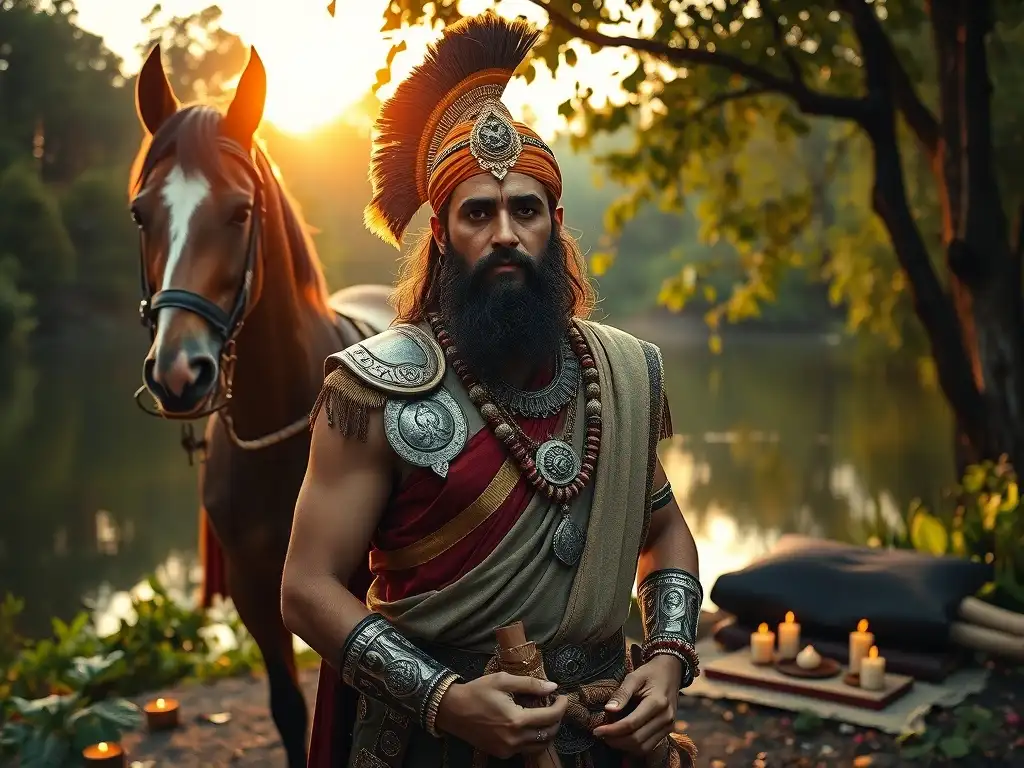
Welcome to Ancient India History, where we embark on a fascinating voyage through the tapestry of time that is woven with the vibrant stories of ancient civilizations. Today, we delve into the remarkable spiritual journey of Chandragupta Maurya, a figure whose transformation from a fierce warrior to a revered ascetic reflects the profound depths of India's cultural heritage.
Join us as we explore the life and legacy of this key historical figure, uncovering the intricate layers of his experiences that shaped not only his fate but also the course of an entire nation. Prepare to be captivated by the intertwining of valor and spirituality that defines Chandragupta's extraordinary path—your adventure into the heart of ancient India's history begins now!
Chandragupta Maurya stands as one of the most significant figures in ancient Indian history, known not only for his military prowess but also for his profound spiritual transformation. His journey from a formidable warrior to an ascetic reflects the duality of ambition and introspection, which resonates deeply within the fabric of Indian philosophy.
This article delves into the life of Chandragupta Maurya, exploring the pivotal moments that shaped his spiritual journey and the lasting impact he had on ancient Indian society. By examining his early years, military conquests, and eventual renunciation, we can gain insight into how his experiences influenced the spiritual landscape of India during his time.
Introduction to Chandragupta Maurya
Chandragupta Maurya, the founder of the Maurya Empire, emerged as a powerful leader in the 4th century BCE. His life story is not merely one of conquest but also embodies the evolution of personal beliefs and spiritual awakening.
Overview of Chandragupta Maurya's Life
Born into a humble family, Chandragupta's ascent to power was marked by strategic alliances and military innovations. He played a crucial role in overthrowing the Nanda dynasty, establishing a vast empire that stretched across most of the Indian subcontinent. His reign is often noted for its administrative efficiency and economic prosperity, but it is his later transformation that garners significant interest.
Importance of His Spiritual Journey in Ancient India
Chandragupta's spiritual journey is particularly notable as it reflects the philosophical currents of ancient India. His interactions with prominent thinkers, such as Chanakya, and his eventual embrace of Jainism highlight the interplay between power and spirituality. This transformation serves as a profound narrative about the search for meaning beyond material success, influencing future generations in their spiritual pursuits.
Early Life and Warrior Background
To fully appreciate Chandragupta Maurya's spiritual journey, it is essential to explore his early life and the warrior ethos that defined his character.
Birth and Early Years of Chandragupta Maurya
Chandragupta was born in 340 BCE in what is now Bihar, India. His early years were marked by struggles, as he was raised in a period of political turmoil and instability. This environment instilled in him a sense of resilience and determination that would later characterize his rise to power.
Rise as a Warrior and Conqueror
Chandragupta's entry into the world of warfare began in his youth, as he sought to reclaim his family's honor and establish a foothold in the political landscape. He quickly gained recognition for his military skills and tactical acumen, which would serve him well in the subsequent conquests that defined his reign.
Key Battles and Military Strategies
Throughout his military career, Chandragupta engaged in several key battles, employing innovative strategies that showcased his leadership. His most notable confrontation was against the Nanda dynasty, where he utilized guerrilla tactics and alliances with local rulers to weaken his enemies. These victories were not just about territorial expansion; they were also foundational in shaping his identity as a ruler, ultimately paving the way for his eventual spiritual awakening.
In the following sections, we will delve deeper into the transformative experiences that led Chandragupta from the battlefield to the path of asceticism, highlighting the philosophical underpinnings of his spiritual journey.
Transformation to Spirituality
Chandragupta Maurya's transformation from a formidable warrior to a revered ascetic is a profound journey that illustrates the complexities of human experience and the search for deeper meaning. While he initially rose to prominence through his military conquests and political acumen, his later life reflects a significant shift towards spirituality and inner peace. This transformation was not merely a change in lifestyle; it represented a fundamental re-evaluation of his values and purpose in life, leading him to seek a path that transcended the ambitions of power and territorial expansion.
The pivotal moments in his life, marked by personal struggles and existential questions, served as the backdrop for this spiritual metamorphosis. As he navigated the challenges of leadership and faced the realities of war, Chandragupta began to contemplate the transient nature of life and the impermanence of worldly achievements. This introspection set the stage for a spiritual awakening that would ultimately guide him towards asceticism.
The Catalyst for Change in Chandragupta's Life
The catalyst for Chandragupta's change can be traced back to his encounters with key historical figures and the tumultuous events surrounding his reign. After establishing the Maurya Empire and witnessing the bloodshed of countless battles, he became increasingly disillusioned with the violence that accompanied his rise to power. The influence of his mentor, Chanakya, who initially encouraged his quest for sovereignty, also played a significant role in his transformation. Chanakya, well-versed in the philosophies of governance and ethics, instilled in Chandragupta a sense of duty that extended beyond mere conquest.
Furthermore, the pivotal meeting with the Jain monk, Bhadrabahu, deeply impacted Chandragupta's outlook. Bhadrabahu's teachings on non-violence and detachment resonated with Chandragupta, prompting him to reevaluate his life choices. This encounter became a turning point, leading him to embrace a life of asceticism and spiritual inquiry. The internal conflict between his warrior identity and his emerging spiritual consciousness created a fertile ground for profound personal transformation.
Influences on His Spiritual Development
Chandragupta's spiritual development was shaped by various influences that enriched his understanding of life and spirituality. The philosophical teachings of Jainism and Buddhism, which emphasized principles such as ahimsa (non-violence), compassion, and self-discipline, played a crucial role in his transformation. These teachings not only provided a moral framework for his new path but also encouraged a deeper contemplation of the nature of existence and the cycle of birth and rebirth.
Additionally, the cultural milieu of ancient India, rich with diverse spiritual traditions, offered Chandragupta a treasure trove of wisdom to draw from. He engaged with various ascetics and sages, each contributing unique perspectives on life, ethics, and the pursuit of enlightenment. The interplay of these diverse influences fostered a holistic approach to spirituality, allowing Chandragupta to synthesize various elements into his own spiritual practice.
Chandragupta Maurya's Spiritual Practices
Chandragupta's spiritual practices reflect his commitment to asceticism and the pursuit of inner peace. As he transitioned from a life focused on power and conquest, he adopted a disciplined lifestyle that prioritized spiritual growth and ethical living. His practices encompassed a range of activities aimed at fostering mindfulness, self-control, and a deeper connection with the universe.
Embracing Asceticism: A Shift from Warrior to Ascetic
Embracing asceticism marked a profound shift in Chandragupta's identity. He renounced his royal privileges and the trappings of power, choosing instead to live a life of simplicity and self-restraint. This shift was characterized by rigorous discipline, including fasting, meditation, and the relinquishment of material possessions. By adopting the ascetic lifestyle, Chandragupta sought to transcend the desires that had previously driven him, aiming for a higher state of consciousness.
His ascetic journey was not merely a rejection of worldly life but an active engagement with spiritual principles. Through his practices, he aimed to purify the mind and cultivate virtues such as humility, compassion, and inner peace. This transformation not only exemplified his personal evolution but also served as an inspiration for others seeking spiritual growth.
Key Spiritual Teachings and Philosophies Adopted
During his journey towards spiritual enlightenment, Chandragupta embraced several key teachings that guided his practices. Central to his philosophy were the principles of ahimsa (non-violence) and aparigraha (non-attachment), which he adopted from Jainism. These teachings encouraged him to live in harmony with all beings, fostering a profound respect for life.
Chandragupta also integrated elements of Buddhist thought, particularly the emphasis on mindfulness and the importance of understanding the nature of suffering. By recognizing the impermanence of life and the interconnectedness of all beings, he cultivated a compassionate worldview that transcended his past as a warrior. This shift in perspective allowed him to find solace and meaning in a life devoted to spiritual practice rather than territorial ambition.
The Role of Meditation and Reflection
Meditation and reflection played a pivotal role in Chandragupta's spiritual journey. Through meditation, he developed a deeper awareness of his thoughts and emotions, facilitating a process of self-discovery and inner transformation. This practice enabled him to cultivate tranquility, clarity, and insight, essential for navigating the complexities of life and leadership.
Reflection served as a tool for integrating his experiences and teachings into a coherent spiritual framework. By contemplating his past actions and their consequences, Chandragupta fostered a sense of accountability and ethical responsibility in his new life. This commitment to introspection not only enriched his spiritual practices but also allowed him to embody the values he had adopted, demonstrating the profound impact of meditation and reflection in shaping a meaningful existence.
Legacy of Chandragupta Maurya's Spiritual Journey
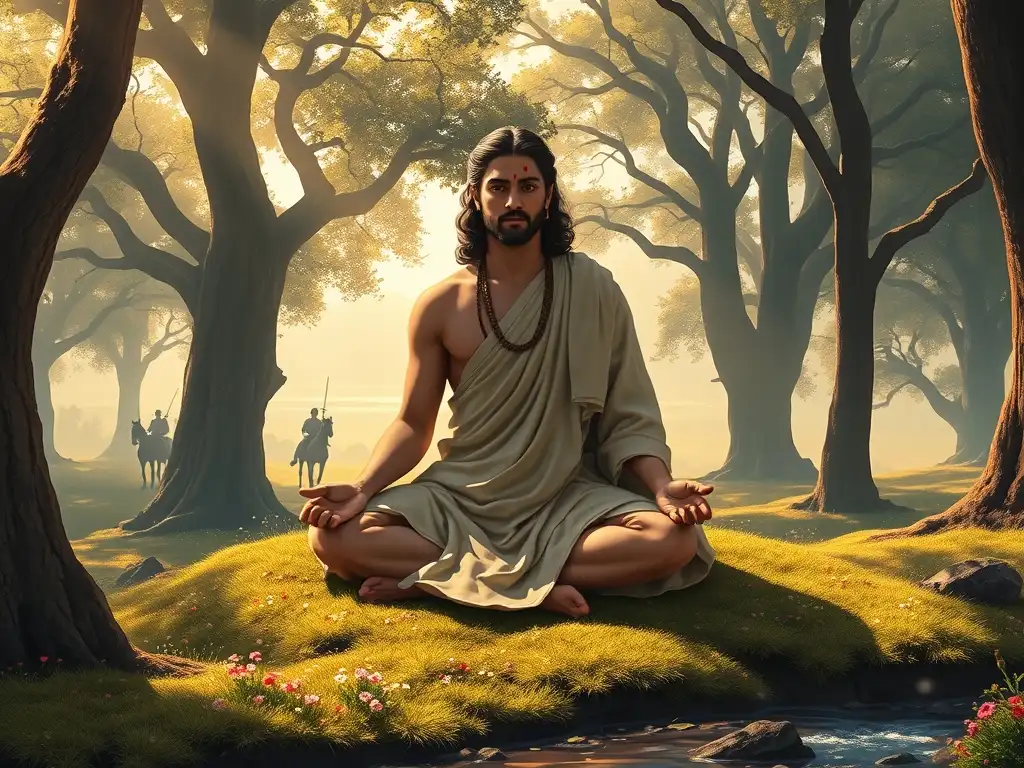
Chandragupta Maurya's spiritual journey from a formidable warrior to a revered ascetic left a lasting legacy that significantly influenced both governance and spiritual practices in ancient India. His transformation is not merely a personal metamorphosis but a reflection of the broader philosophical and ethical considerations of leadership. This journey established a paradigm where rulers could embrace spirituality without compromising their responsibilities toward their subjects. His life serves as a reminder that the pursuit of personal enlightenment can coexist with the duties of governance, creating a balance that has resonated through the ages.
Impact on Leadership and Governance
Chandragupta's spiritual transformation had profound implications for leadership and governance in ancient India. After his conversion to Jainism under the guidance of the sage Bhadrabahu, he adopted principles of non-violence and ethical governance. This shift not only influenced his policies but also set a precedent for future rulers. His emphasis on dharma (moral duty) as a guiding principle for leadership encouraged subsequent leaders to consider ethical implications in their decisions.
Moreover, his legacy is evident in the Mauryan Empire's administration, which was marked by a blend of military prowess and moral governance. For instance, the edicts of Ashoka, his grandson, reflect a commitment to righteousness and welfare, echoing the spiritual values instilled by Chandragupta. The Mauryan model of governance became a benchmark for later Indian empires, emphasizing the integration of spiritual principles into political structures.
Influence on Future Generations of Leaders and Ascetics
Chandragupta Maurya's journey had a ripple effect on the spiritual and political landscape of India. His decision to renounce worldly pleasures and embrace asceticism inspired not only future rulers but also spiritual seekers. Notable figures such as Ashoka were deeply influenced by his commitment to ethical governance and spirituality, which shaped the policies of the Mauryan Empire for generations.
The legacy of Chandragupta also extended to the realm of spirituality. His life story became a source of inspiration for numerous ascetics and spiritual practitioners who sought to balance worldly responsibilities with spiritual pursuits. Jain texts recount his transformation and convey the message that true strength lies in self-control and adherence to moral values, inspiring future generations to adopt similar paths.
The Last Years: Life as an Ascetic
Chandragupta's final years were marked by a profound commitment to his ascetic lifestyle. After abdicating the throne in favor of his son, he traveled to Karnataka, where he lived as a Jain ascetic. His life in the forest was characterized by strict adherence to Jain principles, including fasting and meditation. This period demonstrated his unwavering commitment to achieving spiritual liberation, even after a life of power and conquest.
His ascetic life was not just a personal choice but also a public declaration of his beliefs. Chandragupta's renunciation of power and wealth served as a powerful statement about the transient nature of material success and the enduring value of spiritual enlightenment. His legacy as an ascetic is celebrated within Jain traditions, where he is revered as a model of spiritual dedication and humility.
Conclusion
Summary of Chandragupta Maurya's Spiritual Journey
Chandragupta Maurya's spiritual journey from a warrior king to an ascetic illustrates the profound interconnectedness of power and spirituality. His transition not only transformed his own life but also had significant implications for leadership and governance in ancient India. By prioritizing ethical principles and spiritual values, he paved the way for a new paradigm of leadership that resonated through subsequent generations.
Reflection on His Contributions to Ancient Indian Spirituality
Chandragupta's contributions to ancient Indian spirituality are immense. His life exemplifies the idea that one can achieve greatness while adhering to spiritual values. By embracing Jainism and promoting non-violence, he not only enriched his own spiritual life but also created a legacy that encouraged future generations to pursue a path of righteousness. His journey serves as a timeless reminder that true leadership is defined not just by power, but by the moral and spiritual integrity of the leader.
Further Reading and Resources
For those interested in delving deeper into the spiritual journey of Chandragupta Maurya and the broader context of ancient Indian spirituality, a variety of resources are available. These include both books and scholarly articles that analyze his life, principles, and the philosophies that influenced his transformation from a warrior to an ascetic. Here is a curated list of recommended reading materials.
Recommended Books on Chandragupta Maurya
- "Chandragupta Maurya: The Rise of the Mauryan Empire" by Romila Thapar
- This comprehensive book provides an in-depth look at the life of Chandragupta Maurya, including his early years, military conquests, and eventual spiritual transformation. Thapar, a renowned historian, emphasizes the socio-political context of his reign.
- "The Mauryan Empire" by David W. W. Edwards
- Edwards offers insights into the Mauryan Empire's establishment under Chandragupta. This book explores its governance, culture, and the philosophical underpinnings that guided Chandragupta's journey towards asceticism.
- "The Life of Chandragupta Maurya: A Historical Novel" by R. K. Narayan
- This fictionalized account portrays the life of Chandragupta in a narrative style, making it accessible for readers who enjoy storytelling. Narayan highlights the spiritual aspects of Chandragupta's journey, providing a unique perspective on his life.
- "From Warrior to Ascetic: The Spiritual Transformation of Chandragupta Maurya" by Shashi Tharoor
- Tharoor examines the profound changes in Chandragupta's life as he shifted from a fierce warrior to a follower of Jainism. The book discusses the philosophical influences that shaped his later years.
Articles and Journals Exploring Ancient Indian Spirituality
- "Chandragupta Maurya and the Path of Jainism" in the Journal of Ancient Indian History
- This article investigates Chandragupta's adoption of Jainism and its impact on his governance and personal life. It provides a scholarly analysis of how spiritual beliefs influenced his actions and policies.
- "Spirituality in Ancient India: The Legacy of the Mauryan Empire" in the Indian Historical Review
- This journal article explores the broader context of spirituality during the Mauryan period, with a focus on Chandragupta's role in promoting religious tolerance and philosophical discourse.
- "The Influence of Jain Philosophy on Chandragupta Maurya" in the Journal of Comparative Religion
- This piece delves into the specific tenets of Jain philosophy that resonated with Chandragupta and how they guided his transformation. It offers a comparative analysis of his beliefs and those of contemporary spiritual leaders.
These resources provide valuable insights into the life of Chandragupta Maurya, his spiritual evolution, and the rich tapestry of ancient Indian spirituality, making them essential for anyone interested in this pivotal figure in Indian history.
- Introduction to Chandragupta Maurya
- Early Life and Warrior Background
- Transformation to Spirituality
- Chandragupta Maurya's Spiritual Practices
- Legacy of Chandragupta Maurya's Spiritual Journey
- Conclusion
- Further Reading and Resources
- What was the significance of Chandragupta Maurya's spiritual journey?
- How did Chandragupta Maurya's early life influence his spiritual path?
- What role did Chanakya play in Chandragupta Maurya's journey?
- How did Chandragupta Maurya's asceticism affect his reign?
- What legacy did Chandragupta Maurya leave regarding spirituality in leadership?
Frequently Asked Questions
What was the significance of Chandragupta Maurya's spiritual journey?
Chandragupta Maurya's spiritual journey marked his transformation from a warrior to an ascetic, highlighting the impact of spirituality on leadership and personal development in ancient India.
How did Chandragupta Maurya's early life influence his spiritual path?
His early life as a warrior shaped his understanding of power and conflict, leading him to seek inner peace and enlightenment after establishing the Maurya Empire.
What role did Chanakya play in Chandragupta Maurya's journey?
Chanakya, also known as Kautilya, was a crucial mentor who guided Chandragupta in both politics and spirituality, emphasizing the importance of wisdom in governance and personal growth.
How did Chandragupta Maurya's asceticism affect his reign?
Chandragupta's embrace of asceticism towards the end of his life influenced his policies, promoting tolerance and non-violence, which helped foster a more stable and harmonious society.
What legacy did Chandragupta Maurya leave regarding spirituality in leadership?
Chandragupta's journey illustrates the potential for spiritual growth within leadership, encouraging future rulers to consider the balance between power and spirituality in their governance.
Final Reflection: The Transformative Power of Chandragupta Maurya's Spiritual Journey
Chandragupta Maurya's spiritual journey serves as a profound reminder of the potential for transformation within each of us. As we navigate the complexities of modern life, the story of a warrior who became an ascetic resonates deeply, highlighting the importance of introspection and personal growth. In a world often driven by ambition and material success, we are called to reflect on what it truly means to seek inner peace and fulfillment.
Culturally, the legacy of Chandragupta Maurya continues to shape our understanding of leadership and spirituality. His evolution from a fierce warrior to a contemplative ascetic illustrates the delicate balance between power and humility, ambition and enlightenment. As we witness leaders and individuals grappling with their own paths, we are reminded of the wisdom in his journey. The greatest conqueror is not the one who conquers others, but the one who conquers himself.
This quote encapsulates the essence of Chandragupta's transformation, urging us to look within for our greatest victories.
As you reflect on the spiritual journey of Chandragupta Maurya, I invite you to consider your own path. What aspects of your life could benefit from a deeper exploration of spirituality and self-awareness? Embrace the lessons of his journey, and allow them to inspire you to seek balance and purpose in your own life. Remember, the journey toward self-discovery is ongoing, and each step taken in reflection brings us closer to our true selves.
Embrace Your Own Spiritual Journey Today!
Thank you for dedicating your time to explore the fascinating transformation of Chandragupta Maurya from a fierce warrior to an insightful ascetic. This journey offers profound insights into personal growth, resilience, and the quest for inner peace. Now, it’s your turn to take those lessons and apply them to your life!
Here are some actionable steps to kickstart your own spiritual journey:
- Start a daily meditation practice: Set aside just 10 minutes each day to quiet your mind and connect with your inner self.
- Read a book on spirituality or philosophy: Expand your knowledge and discover new perspectives that resonate with you.
- Join a local community or online group: Engage with others on similar paths to share experiences and support each other’s growth.
What small action will you take today to ignite your own transformation? Share your thoughts below and let’s inspire each other on our spiritual journeys!