
Chandragupta Maurya: The Emperor Who Laid the Groundwork for the Golden Age

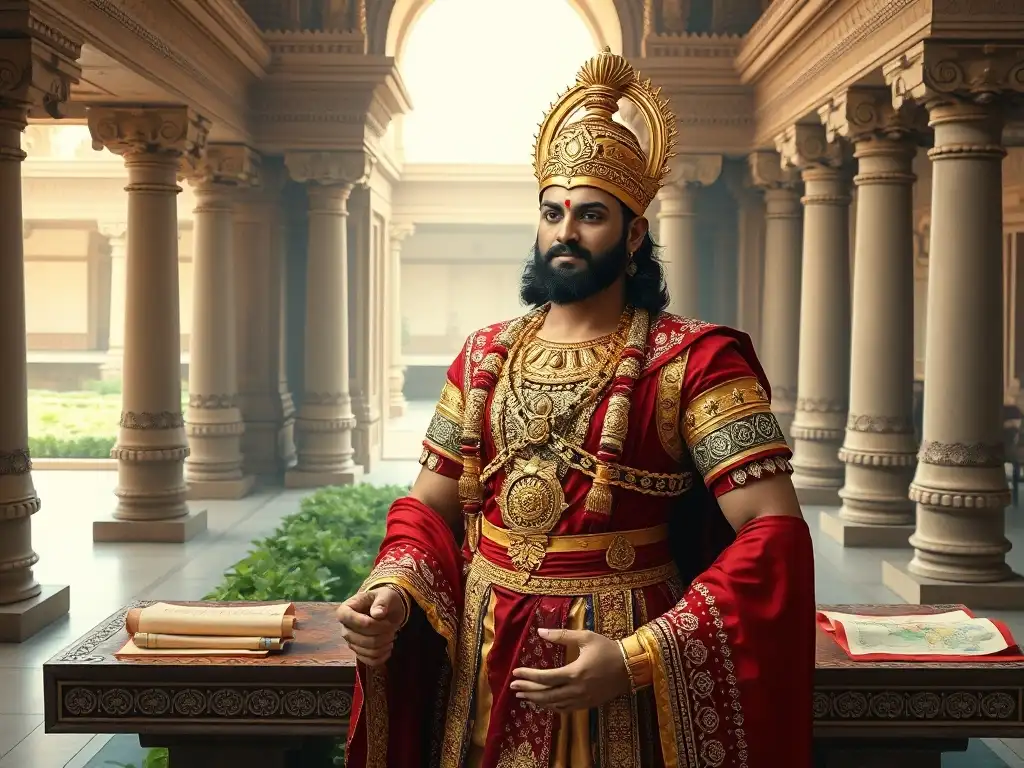
Welcome to Ancient India History, where we embark on a fascinating journey through the rich tapestry of ancient Indian civilizations. In this vibrant realm of history, culture, and monumental contributions, we invite you to delve into the life of Chandragupta Maurya, a pivotal figure whose reign marked the dawn of an era that would shape the subcontinent for centuries. Discover the historical significance of this remarkable emperor who laid the groundwork for the illustrious Gupta Empire and the Golden Age of India.
Are you ready to explore the legacy of a leader who transformed the course of history? Join us as we unravel the captivating tale of Chandragupta Maurya!
- Introduction to Chandragupta Maurya
- Early Life and Background of Chandragupta Maurya
- Rise to Power: Chandragupta Maurya's Path to the Throne
- Chandragupta Maurya's Reign: Establishing an Empire
- Chandragupta Maurya's Historical Significance
- Cultural and Societal Contributions During Chandragupta's Rule
- Conclusion: The Lasting Impact of Chandragupta Maurya
- Further Reading and Resources on Chandragupta Maurya
-
Frequently Asked Questions
- What was the historical significance of Chandragupta Maurya?
- How did Chandragupta Maurya contribute to the political landscape of India?
- What role did Chanakya play in Chandragupta Maurya's rise to power?
- How did Chandragupta Maurya influence trade and economy in ancient India?
- What are some lasting legacies of the Maurya Empire established by Chandragupta?
- Final Reflection: Chandragupta Maurya's Enduring Legacy in History
- Ignite Your Curiosity: Dive Deeper into Ancient India’s Legacy!
Introduction to Chandragupta Maurya
Chandragupta Maurya stands as a monumental figure in the annals of ancient Indian history, recognized not only as a formidable ruler but also as the architect of a unified Indian empire that set the stage for one of the most prosperous periods in Indian civilization—the Gupta Empire. His reign marked the transformation of fragmented kingdoms into a centralized state, paving the way for advancements in culture, trade, and governance.
Understanding Chandragupta Maurya's historical significance is essential for comprehending how his leadership and strategic acumen laid the groundwork for the Golden Age of India, influencing subsequent generations and shaping the subcontinent's socio-political landscape.
Overview of Chandragupta Maurya's Life
Chandragupta Maurya was born around 340 BCE in a humble family, likely in the region that is now modern-day Bihar, India. His rise to power is a remarkable tale of ambition and strategy. With the guidance of his mentor, the philosopher Chanakya (also known as Kautilya), Chandragupta successfully overthrew the Nanda Dynasty, which had ruled a large part of northern India. By 321 BCE, he established the Maurya Empire, which became one of the largest empires in the Indian subcontinent.
Chandragupta's reign was characterized by several key achievements:
- Unification of India: He brought together various regional factions under a single administration, significantly reducing the power of local chiefs and establishing a cohesive state.
- Establishment of a Bureaucratic System: His governance included a well-structured bureaucracy that facilitated effective administration and taxation.
- Military Innovations: He developed a strong military, employing war elephants and skilled infantry, which enabled him to expand his territory and defend against invasions.
Chandragupta's legacy is further enriched by his conversion to Jainism later in life, which influenced his policies and approach to governance, promoting non-violence and respect for all living beings.
Importance of Studying Chandragupta Maurya
Delving into the life and accomplishments of Chandragupta Maurya is crucial for several reasons:
- Foundation of Indian Empires: Understanding his methods of statecraft and administration offers insights into the foundational principles that guided later empires, including the Gupta Empire, which is often regarded as India’s Golden Age.
- Cultural Integration: His reign fostered a period of cultural synthesis, where diverse traditions and practices coalesced, laying the groundwork for advancements in art, science, and philosophy that would flourish in the centuries to follow.
- Strategic Leadership: Studying his life provides valuable lessons in leadership, diplomacy, and military strategy, which remain relevant in contemporary discussions on governance and statecraft.
- Philosophical Contributions: The influence of Chanakya's teachings on Chandragupta’s rule highlights the interplay between philosophy and politics, offering a framework for understanding the ethical dimensions of leadership.
The historical significance of Chandragupta Maurya extends beyond his immediate achievements; it encompasses the transformative impact he had on the trajectory of Indian history, making him an essential subject of study for anyone interested in the rich tapestry of ancient Indian civilization.
Early Life and Background of Chandragupta Maurya
Origins and Family Background
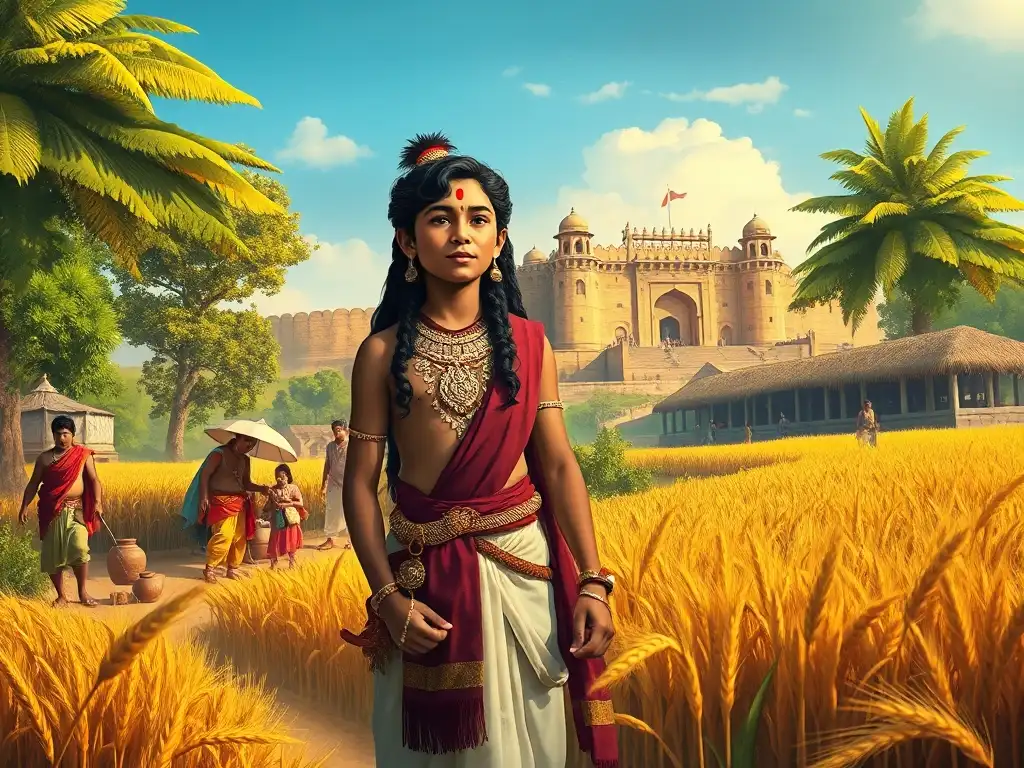
Chandragupta Maurya was born around 340 BCE in a humble family, originating from the region that is now part of modern-day Bihar, India. His family is believed to have belonged to the Kshatriya warrior caste, which played a significant role in shaping his future as a ruler. According to ancient texts, specifically the Mudrarakshasa, he was the son of a Maurya ruler, although precise details concerning his lineage remain somewhat obscure.
His early life was marked by instability, as the Indian subcontinent was divided into numerous small kingdoms rife with conflict. The rise of the Nanda Dynasty, a powerful and wealthy dynasty in Magadha, created an environment of oppression for many local leaders and warriors, including Chandragupta. This socio-political backdrop provided a fertile ground for his ambitions.
Chandragupta's origins are particularly significant as they illustrate the dramatic socio-political shifts in ancient India. His humble beginnings serve as a testament to the potential for greatness that can arise from adversity. His rise to power against the Nandas not only marked a pivotal moment in Indian history but also laid the foundation for a unified empire under his rule.
Influences on Chandragupta's Early Years
Chandragupta's formative years were influenced by several key factors that shaped his character and ambitions. One of the most notable influences was his mentor, Chanakya (also known as Kautilya), a Brahmin teacher and philosopher who played a critical role in advising and guiding him. After facing humiliation at the hands of the Nandas, Chanakya vowed to overthrow the dynasty and sought out Chandragupta as a suitable candidate for this mission.
Chanakya's guidance provided Chandragupta with the necessary political acumen and military strategy required to challenge the Nandas. This relationship is pivotal, as it highlights the importance of mentorship in shaping leaders.
Moreover, Chandragupta's exposure to various cultures and military tactics through early engagements with different kingdoms also played a crucial role. His interactions with local chieftains and tribal leaders allowed him to develop a diverse understanding of governance, alliances, and warfare. This knowledge would later prove invaluable as he consolidated power and expanded his dominion.
Chandragupta Maurya's early life was characterized by a blend of humble origins, significant mentorship from Chanakya, and a rich tapestry of experiences that influenced his development as a formidable leader. The convergence of these elements not only prepared him for his eventual rise to power but also established the groundwork for the Mauryan Empire, which would flourish under his reign.
Rise to Power: Chandragupta Maurya's Path to the Throne
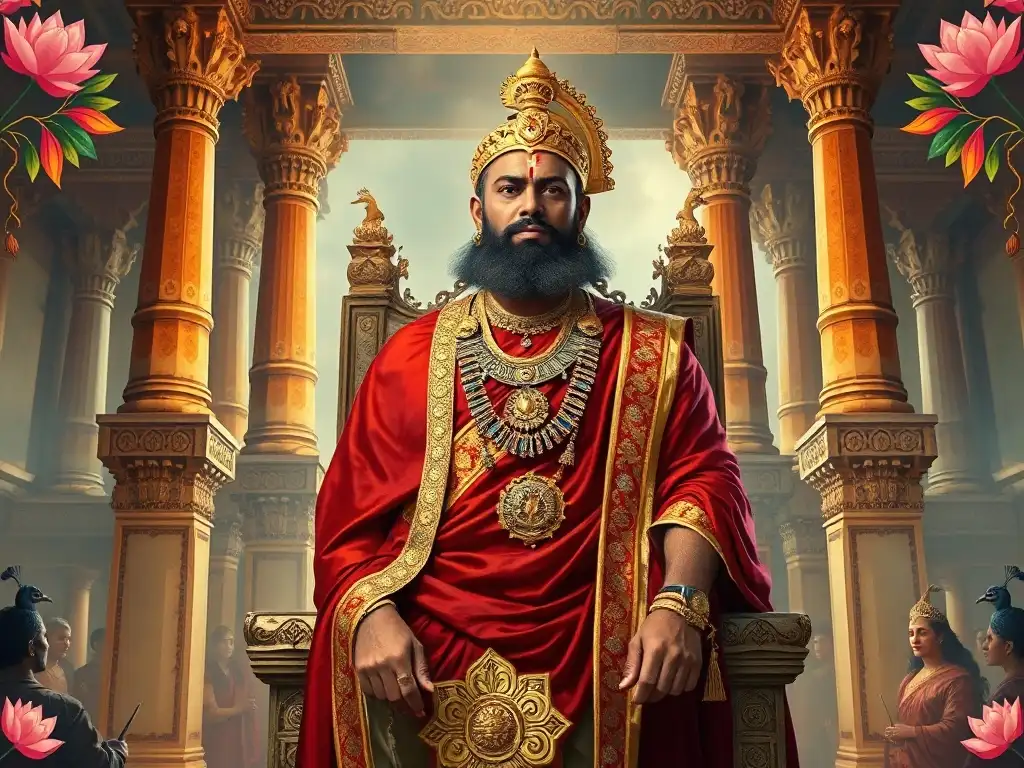
Chandragupta Maurya's rise to power marks a significant chapter in ancient Indian history, laying the foundation for what would later be known as the Maurya Empire. His ascent to the throne was a remarkable journey characterized by strategic alliances, military prowess, and astute political maneuvering.
Chandragupta, born into a humble family in present-day Bihar, displayed exceptional leadership qualities from a young age. His quest for power was not merely a personal ambition but a response to the fragmented political landscape of India, which was plagued by rival kingdoms and foreign invasions.
The Maurya Empire's establishment began with Chandragupta uniting various smaller kingdoms under his banner, showcasing his ability to galvanize support and inspire loyalty among diverse groups. This unification was critical for creating a centralized authority that would later enable the flourishing of culture, trade, and governance.
The Role of Chanakya in Chandragupta's Ascension
A pivotal figure in Chandragupta Maurya's rise was Chanakya, a brilliant strategist and philosopher who played a crucial role in shaping his destiny. Chanakya, also known as Kautilya, was a scholar at Takshashila who became disillusioned with the Nanda Dynasty after being insulted by its ruler, Dhana Nanda.
Key Contributions of Chanakya:
- Mentorship: Chanakya recognized Chandragupta's potential and took him under his wing, providing guidance and education in statecraft, economics, and military strategy. His teachings are encapsulated in the ancient text Arthashastra, which emphasizes the importance of diplomacy and realpolitik.
- Strategic Alliances: Chanakya was instrumental in forming alliances with local chieftains and influential warriors, which helped Chandragupta build a formidable army. His ability to navigate the intricate web of political relationships was vital in rallying support against the Nandas.
- Tactical Warfare: Under Chanakya's mentorship, Chandragupta adopted innovative military tactics, including guerilla warfare, which allowed him to engage larger forces effectively. This strategic acumen was crucial in his confrontations with the Nanda forces.
Chanakya's unwavering belief in Chandragupta's destiny to rule played a significant role in the latter's success, making him not only a mentor but also a key architect of the Maurya Empire's foundation.
Key Events Leading to Chandragupta's Rule
Several critical events paved the way for Chandragupta Maurya's eventual ascension to power. These events illustrate the tumultuous political climate of ancient India and highlight Chandragupta's strategic responses.
- The Overthrow of the Nanda Empire:
- Formation of Alliances: Chandragupta, with Chanakya's guidance, formed alliances with disenchanted nobles and local rulers opposed to the Nanda Dynasty. This coalition was vital for amassing resources and troops.
- Military Campaigns: Chandragupta launched a series of military campaigns against the Nandas, employing innovative tactics that caught the Nanda forces off guard. His most notable victory came after a prolonged siege of Pataliputra, the Nanda capital.
- Support from the Macedonian Campaign:
- Impact of Alexander the Great: The incursions of Alexander the Great into India destabilized the region, weakening the Nanda rule. Some local rulers sought Chandragupta's leadership as a countermeasure against foreign threats, further bolstering his position.
- Exploiting Political Instability: The chaos following Alexander's campaign provided Chandragupta with an opportunity to expand his influence and consolidate power. He capitalized on the power vacuum left by the Macedonian forces.
- Establishment of a New Dynasty:
- Coronation as Emperor: In 321 BCE, after successfully overthrowing the Nandas, Chandragupta was crowned as the emperor, marking the beginning of the Maurya Empire. This event symbolized not only a change in leadership but also a turning point in Indian history, setting the stage for future advancements.
Through these key events, Chandragupta Maurya emerged as a formidable ruler, whose historical significance extends beyond his immediate accomplishments, influencing the trajectory of Indian civilization for centuries to come. The foundations he laid in governance, administration, and military strategy would resonate through the ages, ultimately leading to the Golden Age of the Maurya Empire under his grandson, Ashoka.
Chandragupta Maurya's Reign: Establishing an Empire
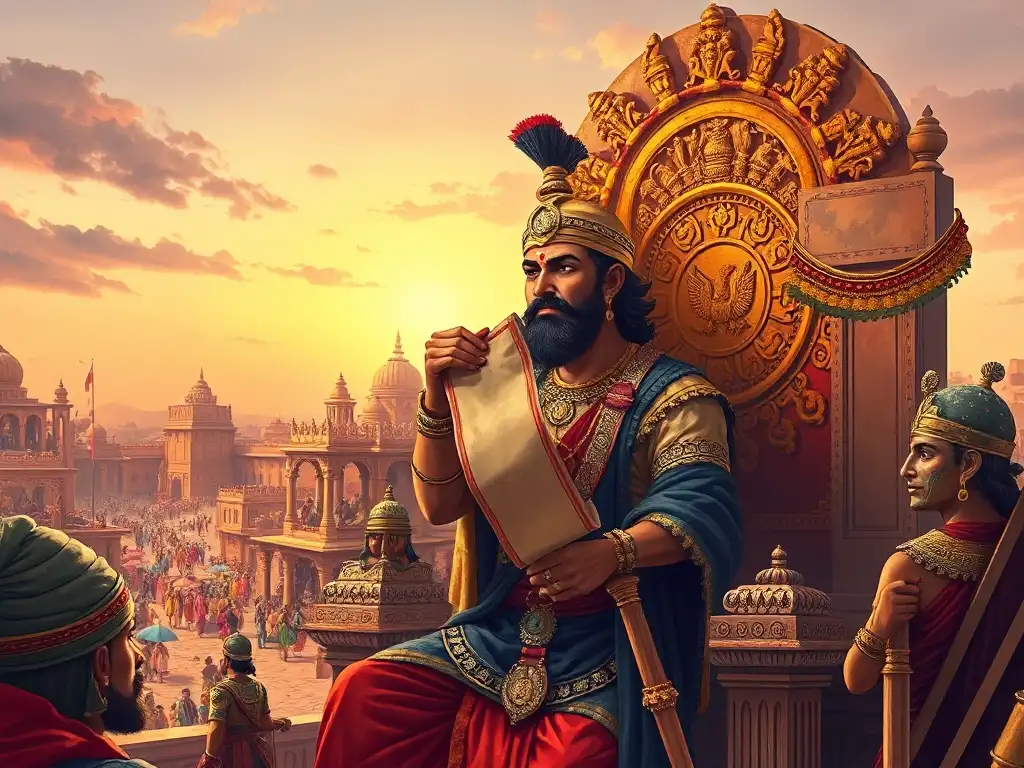
Chandragupta Maurya, the founder of the Maurya Empire, played a pivotal role in the unification of India during the 4th century BCE. His reign marked the transition from fragmented kingdoms to a centralized empire, laying the foundation for future advancements and the eventual Golden Age of India.
Chandragupta's rise to power began with strategic alliances and military prowess. He successfully overthrew the Nanda Dynasty, which had ruled over much of northern India, through a combination of guerrilla warfare and political maneuvering. His ambitions were bolstered by the teachings of his mentor, Chanakya (Kautilya), who provided both tactical advice and philosophical guidance. Together, they formed a formidable alliance that capitalized on the discontent among the populace towards the Nanda rulers.
Unification of India: Key Conquests and Strategies
Chandragupta's military campaigns were characterized by decisive battles and the astute use of diplomacy. His notable conquests included:
- Northern India: Chandragupta first targeted the Nanda Empire, using a well-planned strategy that involved forming alliances with local governors and exploiting divisions within the Nanda ranks. The decisive battle at Pataliputra marked his ascension.
- Western Expansion: Following his success against the Nandas, Chandragupta turned his attention westward. He confronted the territories held by Alexander the Great’s successors. Utilizing both military tactics and negotiations, he secured his western borders, establishing a stronghold in regions that are now part of modern-day Pakistan and Afghanistan.
- Diplomatic Alliances: Beyond military conquest, Chandragupta understood the importance of diplomacy. He forged alliances with various regional powers, which not only expanded his territory but also stabilized his rule. This approach facilitated the integration of diverse cultures and traditions under one banner, enriching the Mauryan Empire.
Chandragupta's ability to unify disparate regions set the stage for a cohesive state that could support economic and cultural developments in the years to come.
Political and Administrative Innovations
Chandragupta Maurya's reign was marked by significant political and administrative innovations that transformed governance in ancient India. He established a centralized administration that was efficient and effective, which included:
- Bureaucratic Structure: The Mauryan Empire was divided into provinces, each governed by a viceroy appointed by Chandragupta. This administrative division allowed for more localized governance while maintaining overall control from the central authority.
- Legal Reforms: Chandragupta implemented a codified system of laws, influenced by both local customs and the strategic insights of Chanakya. This legal framework ensured uniformity and justice across the empire, which was essential for maintaining order in a vast territory.
- Spy Networks: The use of espionage was another hallmark of Chandragupta's administration. He established a network of spies that monitored both the populace and potential threats, enabling him to preemptively address dissent and maintain stability.
These innovations not only strengthened Chandragupta's rule but also provided a model for future Indian empires, emphasizing the importance of a well-organized state apparatus.
Economic Policies and Their Impact
Chandragupta Maurya's economic policies were foundational in enhancing the prosperity of his empire. His approach to economic management included:
- Agricultural Reforms: Recognizing the importance of agriculture, Chandragupta implemented policies that improved irrigation systems and agricultural practices. This focus on agriculture ensured food security and supported population growth.
- Taxation System: The establishment of a systematic taxation framework allowed the Mauryan state to fund administrative functions and military expenditures. Taxes were collected fairly, promoting a sense of responsibility among the populace. The revenue generated was crucial for infrastructure projects, including roads and trade routes.
- Trade and Commerce: Chandragupta fostered trade by securing major trade routes and establishing markets. His policies encouraged both domestic and international trade, connecting India with regions such as Persia and the Mediterranean. This not only enriched the empire but also facilitated cultural exchanges that would later contribute to the Golden Age.
Chandragupta Maurya's reign was marked by strategic military conquests, innovative political structures, and sound economic policies, all of which positioned India for prosperity and cultural flourishing in the centuries that followed. His historical significance lies not only in his unification of India but also in the enduring impact of his governance on subsequent Indian civilizations.
Chandragupta Maurya's Historical Significance
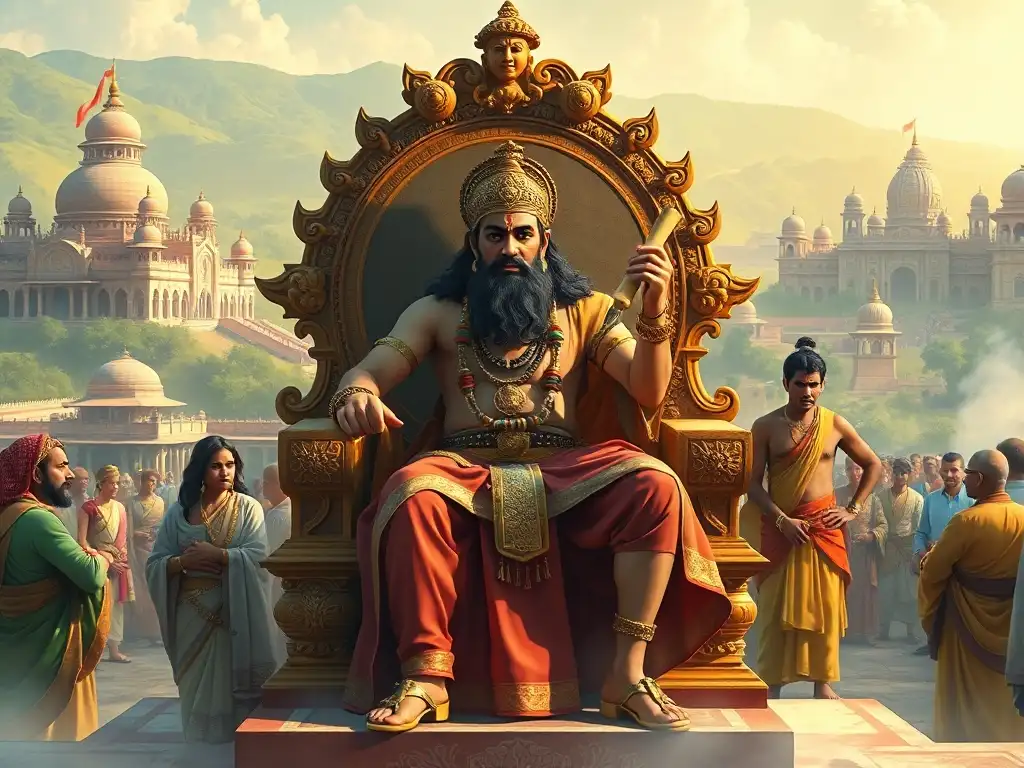
Chandragupta Maurya is a pivotal figure in ancient Indian history, often regarded as the founder of the Maurya Empire. His reign marked the transition from fragmented regional kingdoms to a centralized imperial governance, setting the stage for significant cultural and political developments in India. His historical significance lies not only in his military conquests but also in his innovative approaches to administration and governance that influenced future generations.
Legacy of Chandragupta Maurya in Ancient India
Chandragupta's legacy is multifaceted, encompassing military, political, and cultural dimensions. He is credited with unifying the Indian subcontinent under a single rule for the first time, which allowed for greater economic integration and cultural exchange among diverse communities.
- Unification of India: By defeating the Nanda Dynasty and establishing the Maurya Empire, Chandragupta created a centralized authority that facilitated trade and communication across vast distances. This unification was crucial in fostering a sense of identity among the diverse populations of India.
- Cultural Flourishing: His reign set the stage for a cultural renaissance that would flourish under his grandson, Ashoka. The Maurya Empire became a hub of art, philosophy, and religion, promoting the spread of Buddhism and Jainism, which left a lasting impact on Indian culture.
- Historical Accounts: Ancient historians like Megasthenes, who visited India during Chandragupta's reign, provided valuable insights into the governance and societal structures of ancient India. His accounts, particularly in "Indica," highlight the empire's administrative efficiency and cultural richness.
Contributions to Governance and Administration
Chandragupta Maurya's approach to governance was revolutionary for his time, characterized by systematic administration and an emphasis on law and order.
- Centralized Administration: He established a bureaucratic system that allowed for effective governance over a vast territory. This included appointing officials who were responsible for various aspects of administration, such as tax collection, law enforcement, and public works.
- Use of Spies: Chandragupta employed a network of spies to gather intelligence, a practice that enhanced security and stability within the empire. This strategic move allowed him to preemptively address dissent and maintain control over his subjects.
- Legal Reforms: He introduced a code of laws that emphasized justice and fairness, contributing to the establishment of a rule of law in the empire. The Mauryan legal system laid the groundwork for future legal frameworks in India.
Role in Laying the Groundwork for the Gupta Empire
The foundations laid by Chandragupta Maurya were instrumental in the emergence of the Gupta Empire, which is often referred to as the Golden Age of India.
- Political Stability: The centralized governance model established by Chandragupta provided a stable political environment that the Gupta rulers later capitalized on. This stability allowed for economic prosperity and cultural advancements.
- Cultural Continuity: The promotion of arts, science, and philosophy during Chandragupta's reign created a rich cultural milieu that the Guptas would inherit and further develop. The continuity of cultural practices, including the patronage of scholars and artists, was crucial for the flourishing of Indian civilization.
- Economic Policies: The economic policies initiated during the Maurya Empire, such as trade facilitation and agricultural reforms, set a precedent that would benefit the Gupta Empire. The Mauryan emphasis on infrastructure, including roads and trade routes, contributed significantly to the economic prosperity of subsequent dynasties.
Chandragupta Maurya's historical significance is profound, as he not only unified a diverse subcontinent but also established administrative practices and cultural norms that would resonate throughout Indian history, culminating in the illustrious era of the Gupta Empire.
Cultural and Societal Contributions During Chandragupta's Rule
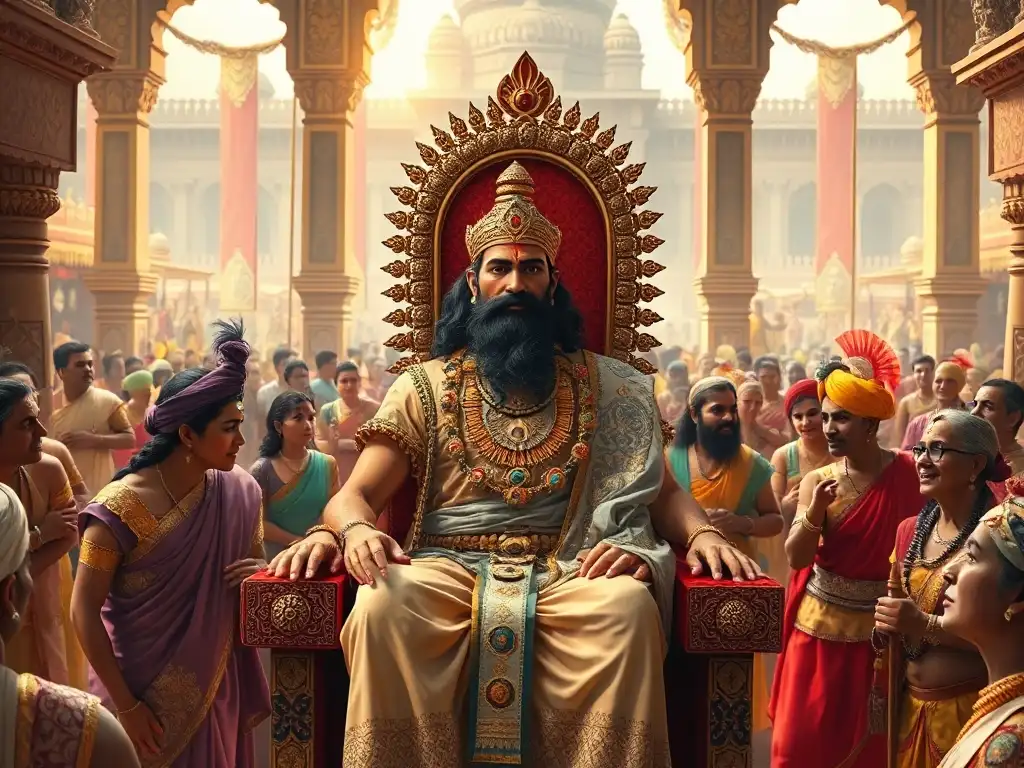
Influence on Indian Society and Culture
Chandragupta Maurya's reign marked a transformative period in Indian society and culture, laying the groundwork for the flourishing of arts, architecture, and social structures. His establishment of the Mauryan Empire not only unified disparate regions but also facilitated the exchange of ideas and cultural practices.
- Cultural Synthesis: Chandragupta's rule saw the blending of various regional traditions, particularly the integration of the Indus Valley civilization's heritage with new influences from the northwestern territories. This cultural amalgamation resulted in a rich tapestry of artistic expression, including sculpture, pottery, and textiles.
- Promotion of Literature and Philosophy: Under Chandragupta’s patronage, scholars and philosophers thrived. The period is noted for the early development of Sanskrit literature, with texts that laid the foundations for later works. Notably, the political treatise, Arthashastra, attributed to Kautilya (Chanakya), provided insights into governance, economics, and military strategy, influencing future generations.
- Religious Tolerance and Diversity: Chandragupta's empire was characterized by a respect for various religions and belief systems. Although he later converted to Jainism, his policies encouraged the coexistence of Hinduism, Buddhism, and Jainism, fostering an environment of pluralism that enriched the spiritual landscape of ancient India.
Promotion of Trade and Economic Development
Chandragupta Maurya's reign was pivotal in establishing a robust economic framework that not only benefitted his empire but also set the stage for future prosperity. His strategic initiatives in trade, agriculture, and infrastructure laid the groundwork for economic growth during the subsequent Gupta period.
- Trade Routes and Market Regulation: Chandragupta recognized the importance of trade for economic stability. He developed extensive trade routes, both overland and maritime, facilitating commerce with neighboring regions such as Persia and the Mediterranean. The establishment of markets and the regulation of trade practices ensured fair commerce and stimulated economic activity.
- Agricultural Development: The Mauryan Empire invested in agricultural advancements, including irrigation systems and crop rotation methods. This emphasis on agriculture not only increased food production but also contributed to the wealth of the state, allowing for surplus production that could support a growing population.
- Taxation and Revenue Systems: Chandragupta implemented a structured taxation system, which was essential for the empire's administration and military funding. The collection of taxes from agriculture, trade, and crafts enabled the state to maintain a powerful army and invest in public works, further enhancing the empire's infrastructure.
- Commercial Guilds and Craftsmanship: The Mauryan period saw the rise of guilds, which organized craftspeople and traders into groups that facilitated cooperation and quality control. These guilds played a crucial role in the economy, promoting craftsmanship and trade specialization, which contributed to the empire’s economic vibrancy.
The cultural and societal contributions during Chandragupta Maurya's rule were significant in shaping the Indian subcontinent's historical landscape. His influence on society, culture, and trade not only laid a strong foundation for the Mauryan Empire but also set the stage for the Golden Age of India that followed.
Conclusion: The Lasting Impact of Chandragupta Maurya
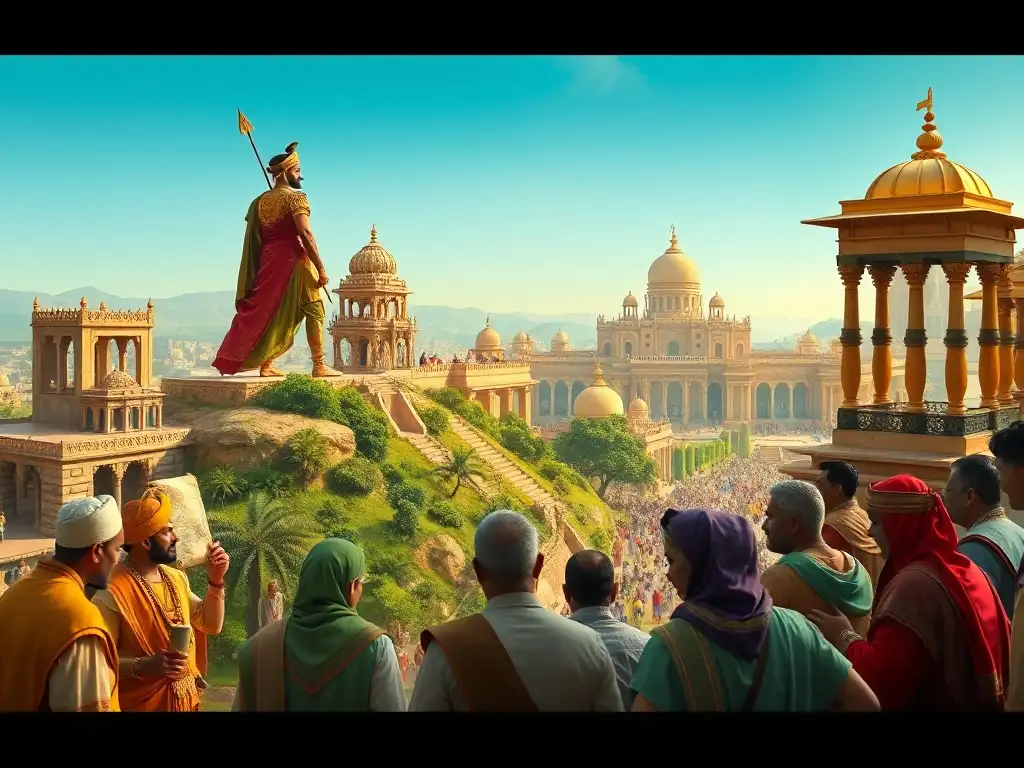
Chandragupta Maurya, often heralded as one of the most significant figures in ancient Indian history, laid the foundation for an empire that would flourish and expand under his successors. His reign marked a turning point that not only united several fragmented kingdoms of the Indian subcontinent but also established administrative frameworks and cultural advancements that resonate even today.
The accomplishments of Chandragupta cannot be overstated; his adeptness in governance and military strategy was pivotal in overcoming external threats, such as those posed by Alexander the Great's incursions. By employing a combination of diplomacy and warfare, he managed to assert control over vast territories, which allowed for the integration of diverse cultures and people. This unification was crucial in fostering a sense of identity and political stability that would facilitate the subsequent Golden Age of India.
Reflection on Chandragupta Maurya's Historical Significance
Chandragupta's historical significance is multifaceted. He is often credited with the following key contributions:
- Unification of India: Chandragupta successfully unified the northern Indian states, creating a centralized authority that had not been seen since the decline of the Mauryan Empire. This unification laid the groundwork for political stability and economic prosperity.
- Establishment of the Mauryan Empire: His reign marked the beginning of the Mauryan Empire, which would become one of the largest empires in ancient India. The administrative practices established during his rule set a precedent for future governance in the region.
- Innovative Governance: Chandragupta implemented a bureaucratic system that included a network of officials and a codified set of laws. This governance model ensured an efficient administration that could manage vast territories and diverse populations.
- Cultural Fusion: By integrating various cultures and traditions, Chandragupta's policies promoted a rich cultural exchange. This blending of ideas and customs played a significant role in the development of Indian civilization.
Chandragupta's legacy is further reinforced through the writings of his advisor, Chanakya (also known as Kautilya), whose work "Arthashastra" continues to be studied for its insights into statecraft and economics.
The Enduring Legacy of the Mauryan Empire
The legacy of the Mauryan Empire, initiated by Chandragupta, extends far beyond his lifetime. Several factors contribute to the enduring impact of this empire:
- Ashoka the Great: Chandragupta's grandson, Ashoka, expanded the empire to its zenith and is renowned for promoting Buddhism and non-violence. His reign marked a cultural and spiritual renaissance that influenced the Indian subcontinent and beyond.
- Trade and Economy: The Mauryan Empire established extensive trade routes that facilitated economic growth. The empire became a hub for trade, connecting India with other regions, including Central Asia and the Mediterranean.
- Legal and Administrative Framework: The administrative practices initiated by Chandragupta influenced subsequent Indian dynasties. The principles of governance, taxation, and law established during the Mauryan period set a standard that persisted throughout Indian history.
- Cultural Contributions: The Mauryan period saw advancements in art, architecture, and literature. The construction of stupas and the promotion of various art forms during this time reflect the cultural richness that flourished under Mauryan rule.
Chandragupta Maurya's historical significance is not merely confined to his reign but is a cornerstone of India's ancient history. His contributions to unification, governance, and cultural exchange laid the foundation for an empire that would shape the course of Indian civilization for centuries to come. The Mauryan Empire's enduring legacy continues to be a testament to the vision and leadership of Chandragupta Maurya.
Further Reading and Resources on Chandragupta Maurya
Recommended Books and Articles
To gain a deeper understanding of Chandragupta Maurya and his historical significance, several books and articles provide detailed insights into his life, reign, and the socio-political landscape of ancient India. Here are some recommended titles:
- "The Mauryan Empire" by Romila Thapar
- This comprehensive work explores the rise of the Mauryan Empire, focusing on Chandragupta's strategies, policies, and the challenges he faced in unifying India.
- "A History of Ancient India" by R. C. Majumdar
- A classic text that covers the entire spectrum of ancient Indian history, with specific sections dedicated to the Mauryan period and the foundational role of Chandragupta.
- "Chandragupta Maurya and His Times" by J. C. Jain
- This book provides a focused biography of Chandragupta, detailing his early life, military conquests, and the establishment of the Mauryan dynasty.
- "The Arthashastra" by Kautilya (Chanakya)
- Although not solely about Chandragupta, this ancient treatise on statecraft was written by Kautilya, his advisor, and offers invaluable insights into the governance and administration during his reign.
- Scholarly Articles
- Numerous academic journals feature articles discussing various aspects of Chandragupta Maurya's rule, including his military tactics, economic policies, and his influence on subsequent Indian history.
Online Resources for Exploring Ancient Indian History
The digital age has made access to information easier than ever, and numerous online resources can enhance your understanding of Chandragupta Maurya and the broader context of ancient Indian history. Here are some valuable links:
- Digital South Asia Library (DSAL)
- A comprehensive resource that offers access to various texts, maps, and historical documents related to South Asian history, including materials on the Mauryan period.
- Internet Archive
- A vast repository of digitized books and manuscripts, including works related to ancient Indian history. Search for titles focused on Chandragupta Maurya to find relevant historical texts.
- The British Museum's Collection Online
- This resource features artifacts from the Mauryan Empire, providing visual context and historical significance through ancient coins, sculptures, and inscriptions.
- Ancient History Encyclopedia
- A user-friendly platform that provides articles and illustrations related to ancient civilizations, including detailed entries on Chandragupta Maurya and the Mauryan Empire.
- YouTube Educational Channels
- Channels like "Khan Academy" and "The Great Courses" often feature lectures and documentaries that explore the history of ancient India, including the life and contributions of Chandragupta Maurya.
These resources can help readers deepen their knowledge and appreciation of Chandragupta Maurya's historical significance and the rich tapestry of ancient Indian civilization.
Frequently Asked Questions
What was the historical significance of Chandragupta Maurya?
Chandragupta Maurya is known for establishing the Maurya Empire, which played a crucial role in unifying ancient India and setting the stage for future prosperity.
How did Chandragupta Maurya contribute to the political landscape of India?
He introduced centralized governance and a structured administration, which helped maintain order and stability in the empire, influencing future rulers.
What role did Chanakya play in Chandragupta Maurya's rise to power?
Chanakya, also known as Kautilya, was a key advisor who provided strategic guidance and support, helping Chandragupta overthrow the Nanda Dynasty.
How did Chandragupta Maurya influence trade and economy in ancient India?
Under his rule, trade routes were expanded, leading to a booming economy that facilitated cultural exchange and prosperity across the region.
What are some lasting legacies of the Maurya Empire established by Chandragupta?
The Maurya Empire laid the groundwork for political unity, cultural advancement, and infrastructure development, significantly influencing the subsequent Golden Age of India.
Final Reflection: Chandragupta Maurya's Enduring Legacy in History
Chandragupta Maurya's historical significance is not merely a chapter in the annals of time; it is a foundation upon which the Golden Age of India was built. The strategies he employed to unify a fragmented subcontinent and establish a powerful empire resonate profoundly in today's world, where the quest for unity and strength remains ever pertinent. His life and achievements serve as a reminder that visionary leadership can transform societies and shape destinies, making his story relevant to contemporary discussions on governance and nation-building.
The influence of Chandragupta Maurya extends far beyond his reign; it has woven itself into the cultural and social fabric of India. His legacy is a testament to the power of ambition and resilience, inspiring generations to strive for greatness. As historian Romila Thapar aptly noted, Chandragupta's rise from humble beginnings to emperor illustrates the potential for change and the impact of leadership on a society.
This observation highlights how his journey continues to inspire not just historians but also leaders and citizens alike, encouraging them to embrace the possibilities of transformation and progress.
As we reflect on Chandragupta Maurya's remarkable journey, let us invite ourselves to consider how we can apply the lessons of his life to our own. What steps can we take to unify our communities and foster a spirit of cooperation? The legacy of this great emperor challenges us to think about our role in shaping the future, urging us to act with purpose and vision. Embrace the spirit of Chandragupta Maurya, and let it inspire you to become a catalyst for positive change in your own life and the lives of those around you.
Ignite Your Curiosity: Dive Deeper into Ancient India’s Legacy!
Thank you for exploring the fascinating story of Chandragupta Maurya, a pivotal figure in shaping the future of ancient India. By understanding his journey, you've unlocked a glimpse into the foundations of a rich and vibrant civilization. Now, it's time to take the next step in your exploration!
Here are some simple yet powerful actions you can take right now:
- Read more about his impactful successors, such as Ashoka the Great, and discover how their reigns further transformed Indian history.
- Share your newfound knowledge with friends or on social media! Discuss how Chandragupta’s strategies still resonate in today’s world.
- Join a local history group or online forum to engage with others who are passionate about ancient civilizations and learn from their insights.
Which aspect of Chandragupta’s reign intrigues you the most, and how do you think it has influenced modern governance?