
The Language of the Vedas: Sanskrit's Role in Hindu Scriptures

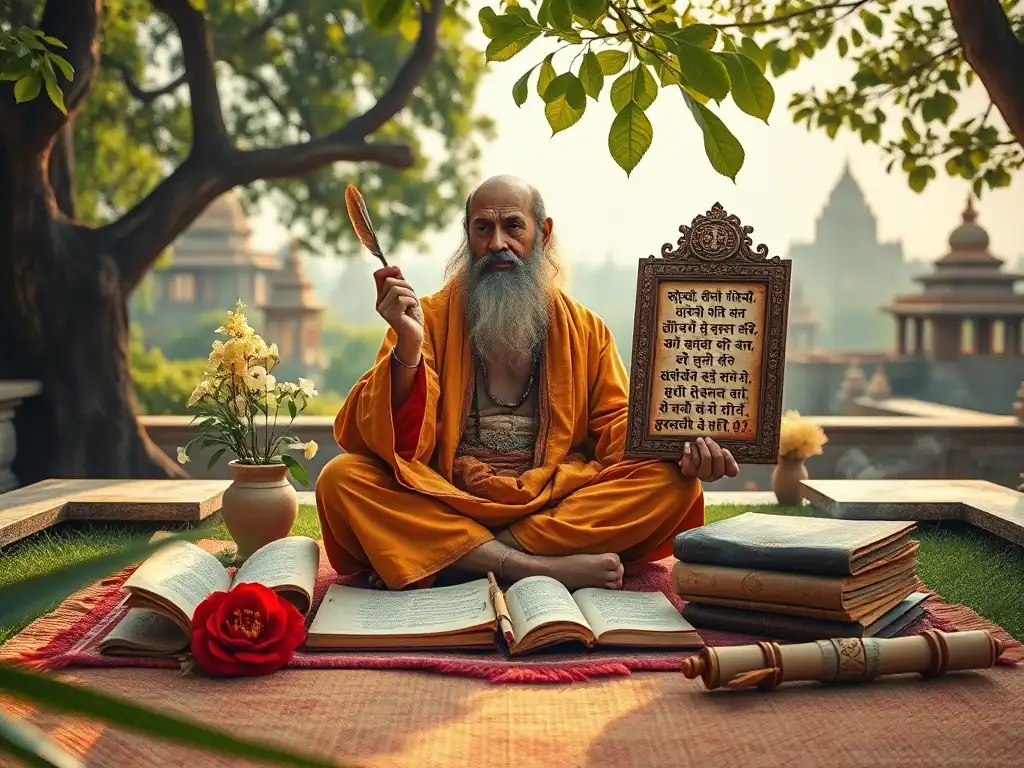
Welcome to Ancient India History, where we embark on a captivating journey through the rich tapestry of ancient Indian civilizations. In our exploration today, we delve into the profound influence of Sanskrit on Hindu texts, revealing how this ancient language shaped the Vedas and continues to resonate through the ages. Prepare to uncover the intricate connections between language and spirituality, and discover the pivotal role Sanskrit played in the formation of Hindu scriptures.
Join us as we unlock the secrets of the past that continue to illuminate our understanding of ancient Indian religions. Dive deeper to explore the echoes of history!

Introduction to Sanskrit and Its Significance
Sanskrit, often referred to as the language of the gods, serves as a cornerstone of Hindu texts and ancient Indian literature. Its roots trace back to the Indo-European language family, making it one of the oldest languages still in use today.
The significance of Sanskrit extends beyond mere communication; it embodies a rich philosophical and spiritual heritage, encapsulating concepts that have shaped Hindu thought and culture for millennia. As the primary language of the Vedas— the oldest sacred scriptures of Hinduism—Sanskrit plays a pivotal role in understanding not only the religious traditions but also the historical and cultural contexts of ancient India.
The influence of Sanskrit on Hindu texts is profound, with many scriptures, including the Upanishads and Puranas, composed in this ancient language. Through its intricate grammar and extensive vocabulary, Sanskrit provides a nuanced and precise means to express complex philosophical ideas, making it an invaluable tool for spiritual discourse. This article explores the multifaceted relationship between Sanskrit and Hindu scriptures, delving into the language's historical context and its foundational role in the Vedic texts.
Overview of Sanskrit as an Ancient Language
Sanskrit is characterized by its rich phonetic structure and grammatical precision, which allows for a unique expression of ideas. This ancient language has a vast corpus of literature, ranging from religious texts to poetry and scientific treatises. Its ability to convey deep philosophical and spiritual meanings has made it a vital part of Hindu ritual and practice.
- Key Features of Sanskrit:
- Phonetics: The sounds of Sanskrit are meticulously articulated, allowing for effective chanting and recitation in rituals.
- Grammar: The complex grammatical system includes numerous rules for word formation (sandhi) and sentence construction, facilitating precise expression.
- Vocabulary: Sanskrit boasts a rich lexicon, enabling the articulation of nuanced concepts, particularly in philosophy and spirituality.
The Historical Context of Sanskrit in Ancient India
The emergence of Sanskrit can be traced back to the Vedic period (c. 1500 – 500 BCE), during which it evolved as the spoken and liturgical language of the Indo-Aryans. The earliest texts, known as the Vedas, were composed in a form of Sanskrit that is often referred to as Vedic Sanskrit. As ancient Indian society developed, Sanskrit transitioned into what is now known as Classical Sanskrit, which was standardized and enriched with literary and philosophical works.
- Timeline of Sanskrit Development:
- Vedic Period: Birth of Vedic Sanskrit with the composition of the Vedas.
- Epic Period: Transition to Classical Sanskrit, marked by the creation of epics like the Mahabharata and Ramayana.
- Medieval Period: Continued use and evolution of Sanskrit in various religious and scholarly contexts.
The Vedas: A Foundation of Hindu Texts
The Vedas, consisting of four primary texts— Rigveda, Samaveda, Yajurveda, and Atharvaveda—are the foundational scriptures of Hinduism. They encapsulate a wide array of knowledge, including hymns, incantations, philosophy, and rituals. The significance of the Vedas extends beyond their religious implications, as they provide insight into the socio-cultural life of ancient India.
Definition and Importance of the Vedas
The term "Veda" translates to "knowledge," which aptly reflects their role as a repository of ancient wisdom. The Vedas are not merely texts; they are considered śruti (that which is heard), believed to be divinely revealed to ancient sages. Their teachings encompass various aspects of life, including philosophy, ethics, and cosmology, which continue to influence contemporary Hindu thought.
- Key Aspects of the Vedas:
- Hymns and Rituals: The Vedas contain hymns dedicated to various deities, alongside instructions for rituals that form the backbone of Vedic worship.
- Philosophical Inquiry: Philosophical concepts introduced in the Vedas laid the groundwork for later teachings in the Upanishads and other scriptures.
Structure and Composition of the Vedic Texts
The Vedic texts are structured in a layered manner, with each Veda comprising four distinct parts: Samhitas, Brahmanas, Aranyakas, and Upanishads. This structure reflects the evolving nature of Vedic knowledge, transitioning from ritualistic practices to philosophical exploration.
- Components of the Vedas:
- Samhitas: Collections of hymns and mantras used in rituals.
- Brahmanas: Prose texts that explain the rituals and their significance.
- Aranyakas: Transitional texts that explore more abstract and philosophical themes.
- Upanishads: Philosophical treatises that delve into the nature of reality and the self.
The profound influence of Sanskrit on Hindu texts, particularly the Vedas, underscores its role as more than just a language. It serves as a vital instrument for preserving and transmitting the rich spiritual and philosophical heritage of ancient India.
Sanskrit Influence on Hindu Texts
Sanskrit, often regarded as the sacred language of Hinduism, has had a profound influence on Hindu texts, particularly the Vedas, which are considered the oldest scriptures of Indian civilization. Its intricate structure and rich vocabulary allow for deep philosophical discourse, making it a critical tool for conveying spiritual and metaphysical concepts.
The use of Sanskrit in these texts not only preserves their integrity but also enhances their aesthetic and auditory qualities through its phonetic richness. This linguistic influence extends beyond mere communication; it embodies the spiritual ethos of Hinduism, encapsulating profound ideas and cultural values that have shaped the religion over millennia.
The Role of Sanskrit in Shaping Hindu Scriptures
Sanskrit's role in shaping Hindu scriptures is multifaceted. As the primary language of the Vedas, it facilitates the transmission of ancient wisdom and rituals that are central to Hindu practices. The precision of Sanskrit grammar, along with its extensive lexicon, enables the articulation of complex philosophical ideas, such as the concepts of Dharma (duty), Karma (action), and Moksha (liberation).
Each of these ideas is embedded in the texts, allowing practitioners to engage with the spiritual teachings at a deeper level. Furthermore, the ritualistic use of Sanskrit in chants and mantras creates an environment conducive to meditation and spiritual awakening, reinforcing its significance in religious practice.
Linguistic Features of Sanskrit in Vedic Literature
Sanskrit possesses several linguistic features that are evident in Vedic literature. One notable aspect is its inflectional nature, which allows for the modification of words to express different grammatical functions, such as tense, mood, and number. This flexibility enables nuanced expressions of thought, which is particularly important in philosophical discussions found in the Upanishads, the concluding part of Vedic literature.
Additionally, the use of meter in Vedic poetry, such as the Anushtubh meter, contributes to the rhythmic quality of the texts, enhancing their oral transmission. The presence of compound words, known as Samasa, is another feature that adds depth and richness, allowing for the condensation of complex ideas into single terms.
Comparison of Sanskrit with Other Ancient Languages
When compared to other ancient languages, such as Latin or Ancient Greek, Sanskrit stands out for its systematic grammar and philosophical depth. While Latin and Greek have significantly influenced Western languages and literature, Sanskrit's impact on Indian languages, including Hindi, Bengali, and Marathi, is profound.
Unlike Latin, which evolved into the Romance languages, Sanskrit remains largely intact as a classical language, continuing to function in religious and academic contexts. Furthermore, the philosophical texts written in Sanskrit, such as the Brahmanas and Upanishads, explore metaphysical concepts that are not as prominently addressed in Western texts, showcasing a unique perspective on existence and consciousness.
The Vedas and Their Connection to Sanskrit
The Vedas are the cornerstone of Hindu scripture and are intrinsically linked to Sanskrit. Composed in this ancient language, the Vedas encapsulate a vast array of knowledge, including hymns, rituals, and philosophical discourses. The connection between the Vedas and Sanskrit is not merely linguistic; it reflects a cultural and spiritual heritage that has persisted through centuries. The preservation of these texts in their original language has allowed generations to access the wisdom of their ancestors, reinforcing the continuity of Hindu thought and practice.
The Four Vedas: Rigveda, Samaveda, Yajurveda, and Atharvaveda
The four Vedas—Rigveda, Samaveda, Yajurveda, and Atharvaveda—each serve distinct purposes yet share a common foundation in Sanskrit. The Rigveda, the oldest, consists of hymns dedicated to various deities, showcasing the poetic prowess of its authors. The Samaveda focuses on melodies and chants, emphasizing the auditory experience of worship. The Yajurveda provides instructions for rituals, intertwining prose and verse to guide practitioners in sacrificial ceremonies. Lastly, the Atharvaveda encompasses a broader range of topics, including spells and philosophical hymns, reflecting the diverse aspects of Vedic knowledge.
Key Concepts and Terminologies Derived from Sanskrit in the Vedas
Many key concepts and terminologies in Hinduism are derived from Sanskrit terms found in the Vedas. For example, the term "Brahman," which refers to the ultimate reality, is central to Vedic philosophy and has influenced various schools of thought within Hinduism. Other significant terms include "Atman" (the self), "Dharma" (righteousness or duty), and "Samsara" (the cycle of birth and rebirth). These concepts are not only foundational to the Vedas but also form the bedrock of Hindu philosophical discourse, emphasizing the significance of Sanskrit as a language of spiritual and intellectual exploration.
The Use of Sanskrit in Mantras and Rituals
Sanskrit's use in mantras and rituals is a vital aspect of Hindu worship. Mantras, composed in Sanskrit, are sacred sounds or phrases that are believed to carry spiritual potency. The recitation of these mantras, often during rituals or meditation, is thought to invoke divine blessings and facilitate a connection with the cosmic order.
The precise pronunciation and intonation of Sanskrit words are considered crucial, as subtle variations can alter the intended meaning or effectiveness of the mantra. This highlights the importance of linguistic accuracy in preserving the spiritual integrity of rituals, further establishing Sanskrit's pivotal role in Hindu religious practice.
Sanskrit's Impact on Later Hindu Scriptures
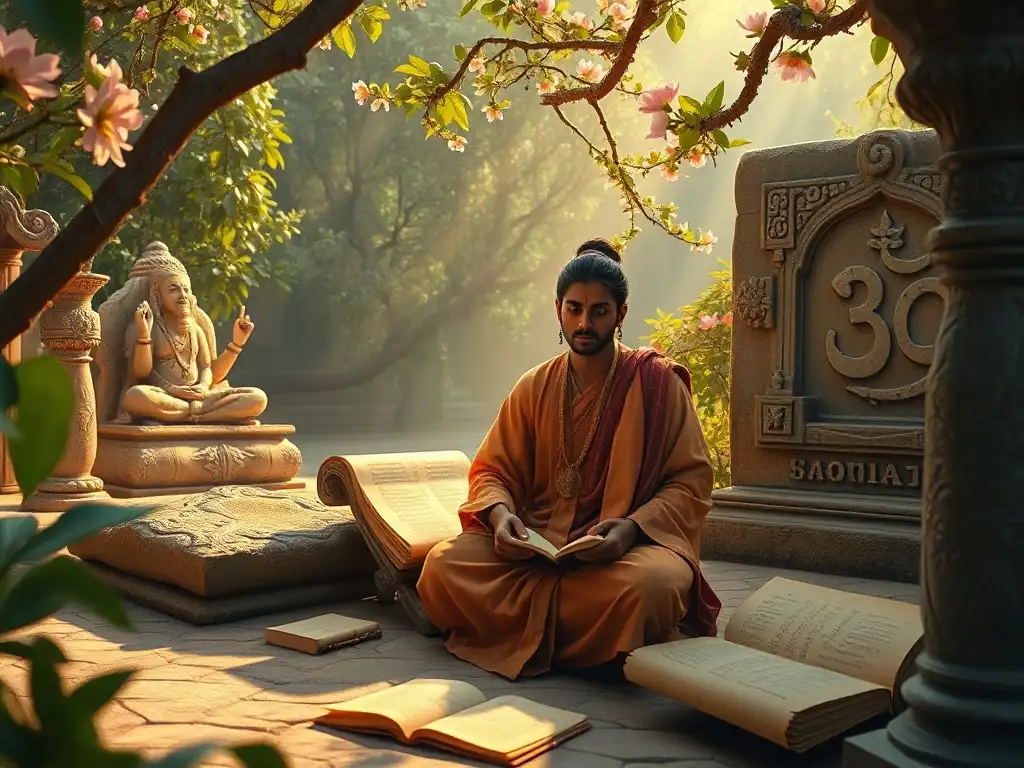
Sanskrit, the ancient language of Indian civilization, has had a profound influence on the formulation and evolution of Hindu scriptures beyond the Vedas. Its impact is particularly notable in the creation of later texts such as the Upanishads, Puranas, and various philosophical treatises. The rich vocabulary and intricate grammar of Sanskrit provided a versatile medium through which complex metaphysical concepts could be expressed with clarity and precision. This linguistic versatility allowed for the adaptation of earlier Vedic ideas into new contexts, facilitating the development of a diverse range of spiritual and philosophical thought that characterizes Hinduism today.
The transition from the Vedic corpus to these later texts illustrates how Sanskrit evolved and diversified, leading to various dialects and styles. The language became a tool for not only religious expression but also for philosophical inquiry, allowing sages and scholars to explore profound questions about existence, the nature of the self, and the universe. Thus, Sanskrit's influence on Hindu texts has been integral in shaping the theological and philosophical landscape of Hindu traditions.
Transition from Vedic Sanskrit to Classical Sanskrit
The transition from Vedic Sanskrit to Classical Sanskrit marks an important linguistic and cultural shift in ancient India. Vedic Sanskrit, the language of the Vedas, is characterized by its archaic forms and complex grammatical structures, which were suited for the ritualistic and poetic nature of the texts. With the passage of time, especially around the 5th century BCE, a simplification and standardization process led to the emergence of Classical Sanskrit.
Classical Sanskrit retained much of the Vedic vocabulary but adapted it for broader literary and philosophical use. This transition reflects not just a linguistic evolution but also a cultural one, as the focus of literature shifted from ritualistic hymns to more philosophical texts. The grammatical treatises of Panini, which codified the rules of Classical Sanskrit, played a pivotal role in this transition, making the language more accessible for scholars and practitioners alike. This evolution enabled a wider audience to engage with sacred texts, further embedding Sanskrit in the religious and cultural fabric of ancient India.
Influence on Upanishads and Puranas
The Upanishads, often regarded as the philosophical culmination of Vedic thought, illustrate the profound influence of Sanskrit on Hindu spirituality. Written in a more accessible form of Sanskrit, these texts delve into the nature of reality, the self, and the ultimate goal of human existence—moksha (liberation). The language's capacity for nuanced expression allowed sages to articulate complex ideas regarding Brahman (the ultimate reality) and Atman (the individual soul), facilitating a deeper understanding of the interconnectedness of all existence.
Similarly, the Puranas, a genre of texts that narrate the history of the universe and the genealogies of gods, heroes, and sages, heavily utilized Sanskrit to convey their messages. These texts often employed a narrative style that made spiritual teachings more relatable to the general populace. The use of Sanskrit in the Puranas not only preserved mythological and theological narratives but also ensured their transmission across generations, solidifying the language's role as a cornerstone of Hindu literature.
The Role of Sanskrit in Hindu Philosophy and Theology
Sanskrit serves as the foundational language for Hindu philosophy and theology, providing the lexicon and structure necessary for articulating profound spiritual concepts. Philosophers such as Adi Shankaracharya and Ramanuja utilized Sanskrit to develop their interpretations of the Upanishads and to expound on concepts like Advaita (non-duality) and Vishishtadvaita (qualified non-duality).
The precise grammar and rich vocabulary of Sanskrit allowed these thinkers to engage in elaborate philosophical discourse, establishing a tradition of intellectual inquiry that continues to influence contemporary Hindu thought. Moreover, the use of Sanskrit in rituals and prayers elevates the spiritual experience, as the sounds of the language are believed to carry intrinsic power (shakti). Thus, Sanskrit is not merely a means of communication; it is imbued with spiritual significance that enhances the practice and understanding of Hinduism.
Preservation and Transmission of Sanskrit Texts
The preservation and transmission of Sanskrit texts have been pivotal in maintaining the continuity of Hindu culture and philosophy. Over centuries, various methods were employed to safeguard these texts, ensuring their survival through periods of political upheaval and cultural change. The meticulous work of scribes, along with the oral traditions of recitation, played crucial roles in this endeavor.
Manuscript culture flourished in ancient India, with texts being copied by hand, often in monastic settings where scholars dedicated their lives to studying and preserving Sanskrit literature. This dedication ensured that the teachings contained within these texts remained accessible to future generations, reinforcing the importance of Sanskrit as a sacred language.
Historical Manuscript Traditions in Ancient India
Ancient India boasted a rich tradition of manuscript preservation, with texts written on materials such as palm leaves, birch bark, and paper. The historical manuscript tradition was characterized by a range of practices, including the careful transcription of texts by skilled scribes who adhered to stringent standards to maintain accuracy.
Regional variations in script and style emerged, reflecting the diverse cultural contexts in which Sanskrit was utilized. Notable centers of learning, such as Nalanda and Takshashila, became hubs for the production and dissemination of Sanskrit manuscripts, fostering an environment of scholarly exchange. This flourishing manuscript culture not only preserved religious and philosophical texts but also contributed to the broader intellectual heritage of ancient India, influencing various fields including science, medicine, and astronomy.
The Role of Scholars and Gurus in Maintaining Sanskrit Literature
Scholars and gurus have played a crucial role in the maintenance and transmission of Sanskrit literature throughout history. These learned individuals served as custodians of knowledge, ensuring that sacred texts were accurately taught, interpreted, and preserved. Many prominent figures, such as Panini, who formalized Sanskrit grammar, and Vyasa, credited with compiling the Vedas and Puranas, exemplify the impact of scholarly contributions on the evolution of Sanskrit literature.
Gurus, in particular, have been instrumental in the oral transmission of knowledge, emphasizing the importance of learning through direct instruction and dialogue. This mentorship model not only facilitated the preservation of texts but also encouraged critical engagement with their content, fostering a dynamic scholarly tradition that continues to thrive in contemporary Hindu practices. The commitment of scholars and gurus to preserving Sanskrit literature has ensured that the rich legacy of ancient Indian thought remains vibrant and influential in modern times.
Conclusion: The Enduring Legacy of Sanskrit in Hinduism
The legacy of Sanskrit within Hinduism is profound and far-reaching, shaping not only religious texts but also cultural practices and philosophical thought. As the liturgical language of the Vedas, Sanskrit has preserved the teachings, rituals, and spiritual insights of ancient Indian civilization. Its syntax, grammar, and phonetics contribute significantly to the richness of Hindu scriptures, allowing for the nuanced expression of complex ideas.
Sanskrit's influence extends beyond the Vedic texts, permeating the Upanishads, Puranas, and various schools of Indian philosophy, thus establishing a linguistic foundation for Hindu thought that continues to resonate today. The enduring nature of Sanskrit is evident in its ongoing use in rituals, chants, and spiritual practices, underscoring its role as a bridge between the past and the present in the Hindu tradition.
Summary of Sanskrit's Influence on Hindu Texts
Sanskrit serves as the bedrock for numerous Hindu texts, encapsulating the essence of ancient wisdom and spiritual knowledge. The Vedas, composed in this ancient language, are revered as the ultimate authority in Hinduism, guiding rituals, ethics, and meditative practices. Each of the four Vedas—Rigveda, Samaveda, Yajurveda, and Atharvaveda—exploits the unique phonetic qualities of Sanskrit to convey profound philosophical concepts and metaphysical inquiries.
The Upanishads, which delve deeper into the metaphysical aspects of the Vedas, further illustrate how Sanskrit facilitates the exploration of concepts such as Brahman (the ultimate reality) and Atman (the individual soul). Moreover, the linguistic precision of Sanskrit enhances the clarity of philosophical arguments found in texts like the Bhagavad Gita and the Brahma Sutras. Thus, the influence of Sanskrit on Hindu texts is not merely functional; it is integral to the transmission of sacred knowledge across generations.
The Continuing Relevance of Sanskrit in Contemporary Hindu Practices
In contemporary Hinduism, Sanskrit remains a vital part of religious life and practice. Many rituals, prayers, and mantras are performed in Sanskrit, highlighting its sacred status. For instance, during puja (worship), devotees chant verses from the Vedas and other scriptures, invoking divine blessings and connecting with the spiritual essence of the universe.
Furthermore, educational institutions and traditional schools often emphasize the study of Sanskrit to understand Hindu scriptures better. This revival of interest in Sanskrit not only enhances religious literacy but also fosters a deeper appreciation for the cultural heritage of India. Moreover, the resurgence of interest in yoga and meditation practices rooted in Hinduism has led to an increased focus on Sanskrit terminology and phrases, further solidifying its relevance in modern spiritual practices.
Further Reading and Resources on Sanskrit and Hindu Scriptures
For those interested in exploring the intricate relationship between Sanskrit and Hindu texts further, a wealth of resources is available. These materials encompass historical analyses, linguistic studies, and interpretations of sacred scriptures, offering deeper insights into the role of Sanskrit in shaping Hindu thought and practice.
Recommended Books and Articles
- "The Sanskrit Language: An Introduction" by Walter Harding Maurer: - This book offers a comprehensive overview of Sanskrit grammar and its historical significance.
- "The Vedas: An Introduction to Hinduism's Sacred Texts" by Roshen Dalal: - A detailed exploration of the Vedas, their content, and their impact on Hindu culture.
- "Sanskrit and the Study of Hinduism" by David Gordon White - A scholarly analysis of the relevance of Sanskrit in contemporary studies of Hinduism.
- "Mantras: Words of Power" by Swami Sivananda: - This book delves into the significance of mantras in Hindu practice, many of which are rooted in Sanskrit.
Online Resources for Further Exploration
- The Digital Library of India - A vast collection of ancient texts, including many in Sanskrit, provides access to historical manuscripts and translations.
- Sanskrit Language and Literature - An online platform offering courses, textbooks, and resources for learning Sanskrit and understanding its significance in Hindu scriptures.
- Hindu Scriptures Archive - A repository of translations and commentaries on major Hindu texts, focusing on the role of Sanskrit in their composition and interpretation.
- YouTube Channels on Sanskrit and Hinduism - Many channels provide lectures, discussions, and tutorials on Sanskrit language and its influence on Hindu scriptures, making learning accessible and engaging.
By delving into these resources, readers can enrich their understanding of Sanskrit's profound influence on Hindu texts and its enduring legacy in contemporary practices.
- Introduction to Sanskrit and Its Significance
- The Vedas: A Foundation of Hindu Texts
- Sanskrit Influence on Hindu Texts
- The Vedas and Their Connection to Sanskrit
- Sanskrit's Impact on Later Hindu Scriptures
- Preservation and Transmission of Sanskrit Texts
- Conclusion: The Enduring Legacy of Sanskrit in Hinduism
- Further Reading and Resources on Sanskrit and Hindu Scriptures
Frequently Asked Questions
What is the significance of Sanskrit in Hindu texts?
Sanskrit is the sacred language of Hinduism, used extensively in Vedic scriptures and other religious texts, shaping the philosophy and rituals of the faith.
How did Sanskrit influence ancient Indian culture?
Sanskrit served as a lingua franca, facilitating communication among diverse regions and cultures, and greatly influenced literature, philosophy, and the arts throughout ancient India.
What are the primary texts where Sanskrit is utilized?
The most notable texts include the Vedas, Upanishads, and Puranas, which are foundational to Hindu beliefs and practices, showcasing the depth of Sanskrit's influence.
How did the Vedas contribute to the understanding of Sanskrit?
The Vedas are some of the earliest written records in Sanskrit, providing key insights into its grammatical structure and linguistic development, alongside rich spiritual content.
In what ways does Sanskrit influence modern Hindu practices?
Sanskrit remains vital in rituals, mantras, and ceremonies, preserving ancient traditions and ensuring the continuity of Hindu spirituality through the ages.
Final Reflection: The Enduring Influence of Sanskrit in Hindu Texts
The exploration of Sanskrit's role in Hindu scriptures reveals its profound and lasting impact on spiritual and cultural identity. Today, as we navigate a world increasingly defined by globalization and cultural exchange, the significance of Sanskrit in shaping Hindu texts remains paramount. It serves not only as a linguistic foundation but also as a bridge connecting generations of seekers to the wisdom of the ancients. The echoes of its verses continue to resonate, reminding us of the power of language to convey deep philosophical truths.
Cultural and social landscapes are intricately woven with the threads of language, and Sanskrit stands as a testament to this connection. The influence of Sanskrit on Hindu texts extends beyond mere words; it encapsulates the essence of thought, spirituality, and tradition. As we reflect on this enduring legacy, we are reminded of the words of Mahatma Gandhi: A language is something infinitely greater than grammar and philology. It is the poetic testament of the genius of a race and culture, and the living embodiment of the thoughts and fancies that have moulded them.
This observation underscores the importance of preserving and celebrating the linguistic heritage that shapes our understanding of spirituality and identity.
As we conclude this exploration, I invite you to reflect on the role of language in your own life and the texts that inspire you. Consider how the teachings of the past can inform your present and future. Engage with the wisdom of the Vedas and the beauty of Sanskrit, allowing it to enrich your spiritual journey. Let us carry forward the lessons learned, embracing the transformative power of language as we navigate our paths in a diverse and interconnected world.
Unveil the Wisdom of Sanskrit!
Thank you for diving into the fascinating world of the Vedas and the profound role of Sanskrit in Hindu scriptures. You've unlocked valuable insights that connect ancient knowledge with modern understanding. Now, it's time to take those insights further!
- Explore the beauty of basic Sanskrit phrases to deepen your appreciation of the texts.
- Share your newfound knowledge with others— start a discussion or write a blog post about your experiences and learnings!
- Consider joining a local or online Sanskrit class to immerse yourself in this ancient language and its rich cultural heritage.
What aspect of Sanskrit or the Vedas resonates with you the most, and how do you plan to engage with it further?