
The Life of Ashvaghosha: The Poet Who Brought Buddhism to Life


Welcome to Ancient India History, where we embark on a fascinating journey through the rich tapestry of ancient Indian civilizations. Have you ever wondered how the poetic brilliance of Ashvaghosha helped illuminate the path of Buddhism?
In our featured article, " The Life of Ashvaghosha: The Poet Who Brought Buddhism to Life," we delve into the life and legacy of this remarkable figure, exploring his profound influence on religious thought and cultural expression. Join us as we uncover the intricate connections between Ashvaghosha and the spiritual evolution of Buddhism, inviting you to explore the depths of history that shaped an entire civilization.
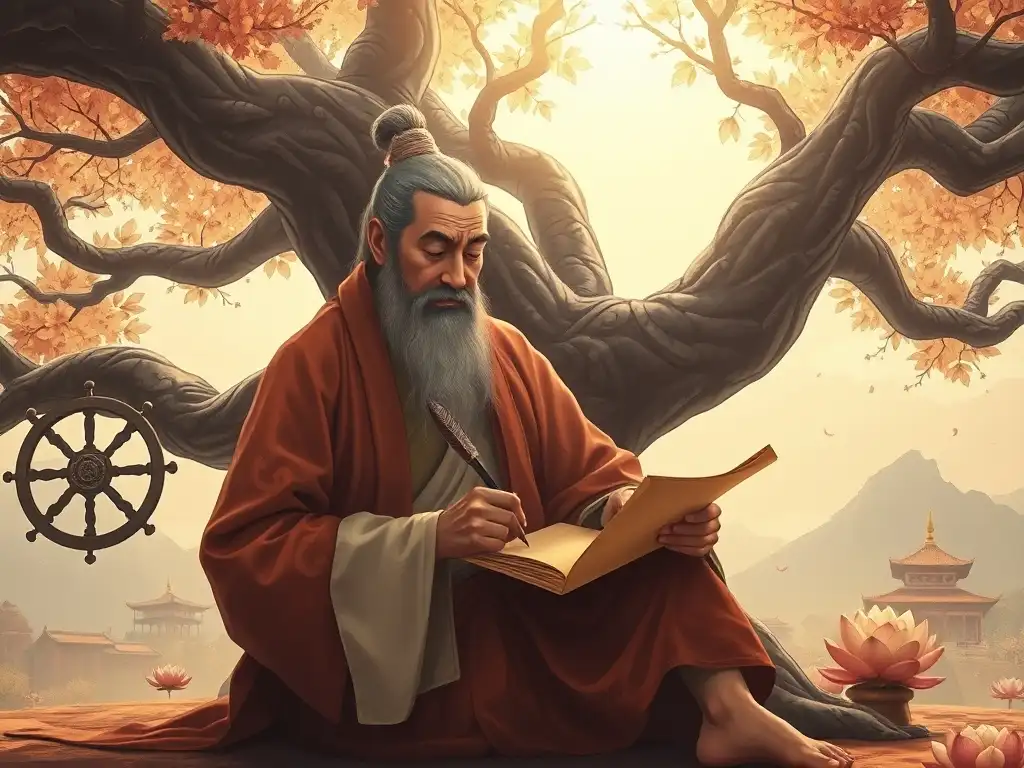
Introduction to Ashvaghosha and His Relevance in Buddhism
Ashvaghosha, a prominent figure in ancient Indian literature and philosophy, is often credited with bringing the teachings of Buddhism to life through his poetic genius and philosophical insights. His works not only enriched Buddhist literature but also played a crucial role in the dissemination of Buddhist ideas beyond the confines of India.
For centuries, Ashvaghosha's contributions have been revered, making him a pivotal character in the history of Ashvaghosha and Buddhism. This article delves into the life of Ashvaghosha, exploring his historical significance, literary achievements, and the profound impact he had on Buddhism during a critical period of its development.
Overview of the history of Ashvaghosha and Buddhism
Ashvaghosha lived during the 1st century CE, a time marked by significant cultural and religious exchanges in ancient India. He is best known for his seminal works, such as the "Buddhacharita", a biography of the Buddha, and the "Saundarananda," which addresses the themes of love and enlightenment. These texts not only reflect the philosophical underpinnings of Buddhism but also illustrate the rich tapestry of ancient Indian culture.
The history of Ashvaghosha is intertwined with the evolution of Buddhism itself. As Buddhism spread throughout India and beyond, figures like Ashvaghosha helped articulate its teachings in a manner that resonated with the broader populace. His poetic style and profound insights made complex Buddhist concepts accessible, contributing to the religion's growth and appeal.
Importance of Ashvaghosha in ancient Indian literature and philosophy
Ashvaghosha's significance extends beyond his role as a Buddhist poet; he is also recognized as one of the earliest dramatists in Indian literature. His ability to weave narratives that blend philosophical discourse with artistic expression has left an indelible mark on the literary landscape of ancient India.
In the realm of philosophy, Ashvaghosha's works present a synthesis of various schools of thought, encapsulating the essence of Buddhist teachings while engaging with the prevailing philosophical ideas of his time. His influence can be seen in subsequent Buddhist literature and is a testament to his enduring legacy as a thinker and poet.
Early Life of Ashvaghosha
Birth and background in ancient India
Details surrounding Ashvaghosha's birth and early life remain shrouded in mystery, with much of what is known derived from later accounts. It is believed that he was born in a Brahmin family in the region of Gandhara, which is present-day Pakistan. This area was a melting pot of cultures and ideas, providing Ashvaghosha with a rich intellectual environment that would shape his future endeavors.
His upbringing in a culturally vibrant and religiously diverse setting allowed him to engage with various philosophical traditions, which later became evident in his literary works. The confluence of Brahmanical, Buddhist, and other spiritual influences played a crucial role in forging his unique worldview.
Influences of the cultural and religious environment on Ashvaghosha's formative years
The cultural and religious milieu of ancient India during Ashvaghosha's youth was characterized by a dynamic interplay of ideas. The rise of Buddhism, alongside the enduring traditions of Hinduism, created a fertile ground for intellectual exploration.
Ashvaghosha's formative years were likely influenced by the teachings of the Buddha, as well as the philosophical debates prevalent in his society. The accessibility of Buddhist thought, coupled with the artistic expressions of the time, may have inspired him to embark on a path that would ultimately lead to his remarkable contributions to Buddhist literature.
The life of Ashvaghosha is a captivating journey through ancient Indian history, reflecting the rich tapestry of cultural and intellectual currents that shaped his work and legacy. His role as a poet and philosopher continues to resonate, illuminating the profound connections between literature, culture, and spirituality in the context of Buddhism.
Ashvaghosha's Contributions to Buddhism
Ashvaghosha was a pivotal figure in the development of early Buddhist literature and philosophy. His contributions significantly shaped the dissemination of Buddhist teachings, making complex spiritual concepts accessible to a broader audience. By merging literary artistry with profound philosophical insights, Ashvaghosha played a vital role in the evolution of Buddhist thought during the first few centuries CE.
His works not only conveyed the essence of Buddhist philosophy but also engaged with the cultural and intellectual milieu of ancient India. Ashvaghosha's ability to imbue his writings with a sense of poetic beauty helped in elevating the status of Buddhist literature. This made the teachings of the Buddha resonate with both the common people and the educated elite, ensuring that the foundational concepts of Buddhism were preserved and propagated through generations.
His role as a poet and playwright in spreading Buddhist teachings
Ashvaghosha's role as a poet and playwright was instrumental in the popularization of Buddhist teachings. He utilized the dramatic arts to convey profound spiritual messages, thereby reaching a wider audience. His plays often incorporated themes from the Buddha's life, illustrating his journey to enlightenment and the principles of compassion, impermanence, and non-attachment.
One of his most notable works, Saṃdhinirmocana Sūtra, is a testament to his skill in blending poetic expression with philosophical depth. By crafting narratives that were not only engaging but also thought-provoking, Ashvaghosha effectively communicated Buddhist ideals. His ability to captivate audiences through performance art played a crucial role in making Buddhism more relatable and accessible, fostering an environment where Buddhist teachings could thrive.
Key works that shaped the history of Ashvaghosha and Buddhism
Ashvaghosha's literary legacy is encapsulated in several key works that have had a lasting impact on the history of Ashvaghosha and Buddhism:
- Buddhacharita: This epic poem narrates the life of the Buddha, detailing his journey from prince to enlightened being. It is considered one of the earliest biographies of the Buddha and serves as a foundational text in Buddhist literature.
- Saundarananda: This narrative poem explores the transformation of Nanda, the Buddha's half-brother, from a life of indulgence to one of spiritual awakening. It emphasizes the themes of renunciation and the pursuit of enlightenment.
- Vimalakīrtinirdeśa: While attributed to various authors, Ashvaghosha's influence on this text is evident. It discusses the bodhisattva ideal and the nature of reality, highlighting the importance of compassion in the path to enlightenment.
These works not only reflect Ashvaghosha's literary genius but also serve as crucial texts that shaped the trajectory of Buddhist thought and practice.
The Legacy of Ashvaghosha in Buddhist Philosophy
The legacy of Ashvaghosha extends beyond his immediate contributions; it has left a profound mark on Buddhist philosophy. His writings have been studied and revered throughout the centuries, influencing generations of scholars and practitioners.
The philosophical depth of his work invites readers to explore the complexities of existence and the nature of suffering. Ashvaghosha's ability to articulate profound ideas in a relatable manner has ensured that his teachings remain relevant in contemporary discussions of Buddhism.
The philosophical implications of his writings
Ashvaghosha's writings delve deeply into the philosophical underpinnings of Buddhism, particularly focusing on the nature of reality, the self, and the path to enlightenment. His exploration of concepts such as śūnyatā (emptiness) and anattā (non-self) encourages readers to transcend conventional thinking and embrace a more nuanced understanding of existence.
Through his poetic expressions, Ashvaghosha illustrates the interconnectedness of all beings, emphasizing the importance of compassion and altruism. His philosophical implications challenge the reader to reflect on their own lives and the broader impact of their actions, reinforcing the core Buddhist tenets of mindfulness and ethical conduct.
Impact on later Buddhist thought and literature
The impact of Ashvaghosha on later Buddhist thought and literature cannot be overstated. His integration of poetic form with philosophical discourse paved the way for subsequent generations of writers and thinkers. Notable figures in Mahayana Buddhism, including Nagarjuna and Shantideva, have drawn inspiration from Ashvaghosha’s works, further developing the themes he introduced.
His influence is evident in the way later Buddhist literature embraced narrative approaches to convey complex philosophical ideas. The tradition of using poetry and drama as vehicles for spiritual teachings can be traced back to his innovations, which have continued to resonate in various Buddhist cultures across Asia.
Ashvaghosha's contributions not only enriched the history of Ashvaghosha and Buddhism but also laid foundational stones that would shape the philosophical landscape of Buddhism for centuries to come.
Ashvaghosha's Influence Beyond Buddhism
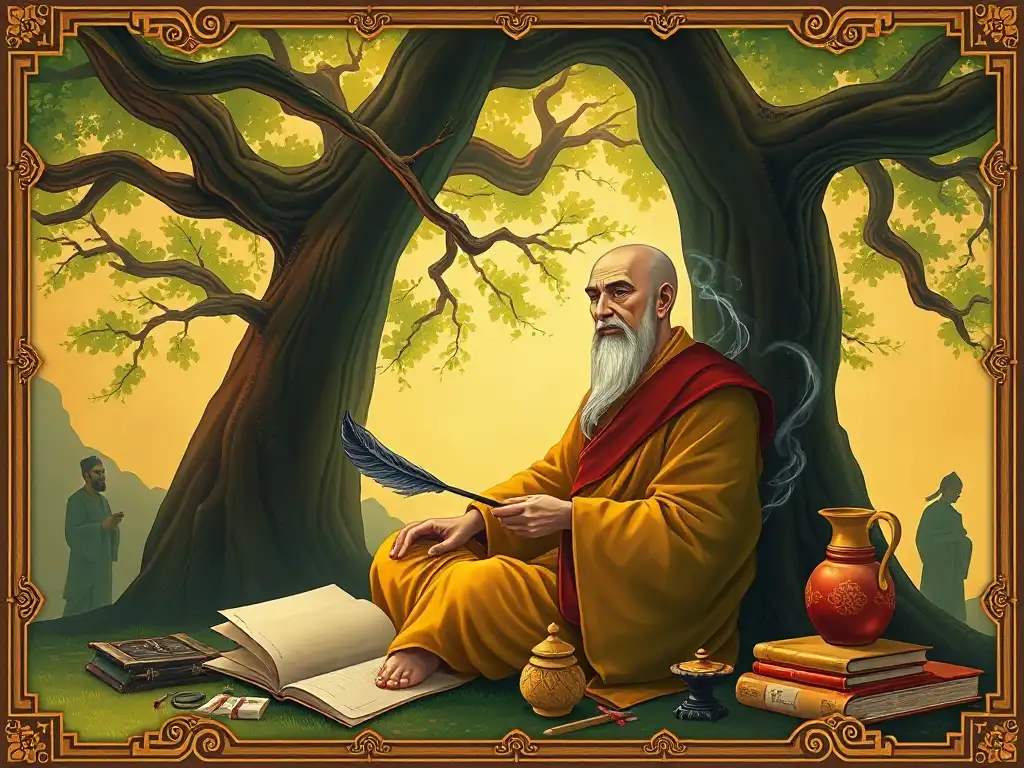
Ashvaghosha's impact extends well beyond the confines of Buddhism, influencing a range of cultural, artistic, and religious traditions in ancient India. His literary prowess and philosophical insights helped bridge the gap between various schools of thought, enriching the tapestry of Indian civilization. By providing a poetic lens through which to view Buddhist principles, Ashvaghosha facilitated a deeper understanding of Buddhism among diverse audiences, thus enhancing its acceptance and integration into the broader cultural milieu of ancient India.
Moreover, his works have inspired generations of poets and writers, not only within Buddhist circles but also among those adhering to other religious traditions. This cross-pollination of ideas has led to a rich intertextuality, where themes from Ashvaghosha's poetry can be found echoed in the works of later Indian poets and playwrights. His ability to articulate the spiritual and ethical dimensions of the human experience resonates with universal themes, making his contributions timeless.
Contributions to Indian culture and arts
Ashvaghosha's literary contributions significantly shaped the landscape of ancient Indian culture and arts. His most notable work, the "Buddhacharita" (Acts of the Buddha), is often regarded as one of the earliest biographies of the Buddha, blending narrative and poetic forms to bring the life of the Buddha to vibrant life. This text not only serves as a religious scripture but also exemplifies the artistic expression of the time, showcasing the sophistication of classical Sanskrit literature.
In addition to his narratives, Ashvaghosha's poetic style set a precedent for future poets. His use of metaphors, similes, and intricate imagery inspired various forms of Indian poetry, including the kāvya tradition, which emphasized emotional expression and aesthetic beauty. His influence can be seen in the works of later poets such as Kalidasa and Bhavabhuti, who drew on his stylistic innovations to create their masterpieces.
Furthermore, Ashvaghosha's engagement with the themes of morality, spirituality, and human suffering resonated with artists and dramatists, leading to the incorporation of Buddhist narratives into traditional Indian dance and theater. His legacy thus extends into the performing arts, where the stories and ideals of Buddhism found a fertile ground for expression.
Interactions with other ancient Indian religions
Ashvaghosha's life and works occurred during a vibrant period of religious diversity in ancient India, where Buddhism coexisted alongside Hinduism, Jainism, and other philosophical traditions. His writings reflect an awareness of these diverse religious currents and often engage in dialogues with them. This interaction enriched the Buddhist tradition, allowing it to assimilate and respond to the philosophical inquiries posed by its contemporaries.
For instance, Ashvaghosha's emphasis on compassion and non-violence resonates with Jain principles, while his exploration of metaphysical concepts draws on Upanishadic thought, showcasing the syncretic nature of his philosophy. His ability to communicate Buddhist ideas in a manner that was accessible and relatable to followers of other religions helped promote a climate of mutual respect and understanding.
Moreover, Ashvaghosha's works prompted discussions on ethics and morality that transcended religious boundaries, fostering a spirit of inquiry that characterized ancient Indian intellectual life. As a result, his influence contributed to the evolution of a more pluralistic society where diverse religious ideas could coexist and enrich one another.
Historical Context of Ashvaghosha's Life
To fully appreciate the significance of Ashvaghosha’s contributions, it is essential to understand the historical context in which he lived. The socio-political landscape of ancient India during his era was marked by significant changes that shaped not only the development of Buddhism but also the interactions between various religious and cultural traditions.
The socio-political landscape of ancient India during his time
Ashvaghosha flourished during the early centuries of the Common Era, a period characterized by the rise of powerful dynasties such as the Kushans and the Mauryas. The Kushan Empire, in particular, played a crucial role in the spread of Buddhism across Central Asia and into China. Under the patronage of rulers like Kanishka, Buddhism began to flourish, resulting in increased support for Buddhist monasteries and the translation of texts.
This era was also marked by significant urbanization and trade, which facilitated cultural exchanges across regions. The Silk Road, for example, served as a conduit for ideas, goods, and people, allowing Ashvaghosha's works to reach a wider audience and contribute to the globalization of Buddhist teachings. The socio-political stability provided by the Kushan rulers permitted the flourishing of art, literature, and philosophy, creating an environment conducive to Ashvaghosha's literary endeavors.
The evolution of Buddhism during Ashvaghosha's era
During Ashvaghosha's lifetime, Buddhism was undergoing a transformation from the early teachings of the Buddha to more diverse schools of thought, including Mahayana Buddhism. This evolution was marked by the incorporation of new texts, practices, and philosophical ideas that sought to make the teachings more accessible and relevant to the lay population.
Ashvaghosha's works reflect this dynamic period in Buddhist history. His writings not only preserved the essence of the Buddha's teachings but also introduced new concepts such as the ideal of the Bodhisattva—a figure who seeks enlightenment not only for themselves but also for the benefit of all sentient beings. This emphasis on altruism and compassion became central to Mahayana Buddhism and helped to attract a broader audience.
Additionally, the establishment of monastic institutions during this time provided a structured environment for the study and dissemination of Buddhist teachings, further facilitating the growth of the tradition. Ashvaghosha's contributions were instrumental in articulating the values and ideals of this evolving form of Buddhism, ensuring its relevance and appeal in a rapidly changing socio-cultural landscape.
Conclusion: The Lasting Impact of Ashvaghosha on Buddhism
Ashvaghosha stands as a towering figure in the landscape of ancient Indian literature and Buddhism, serving as a bridge that connected the philosophical underpinnings of Buddhist thought with the poetic expressions of the time. His contributions not only enriched the spiritual and literary heritage of India but also played a crucial role in the dissemination and popularization of Buddhist teachings across different cultures.
Recap of the significance of Ashvaghosha's life and work
Ashvaghosha’s life and work are characterized by a profound commitment to articulating the essence of Buddhism through the medium of poetry. His most notable contribution, the "Buddhacharita," stands as a seminal text that narrates the life of the Buddha with a blend of reverence and literary elegance. This work is significant not only for its narrative quality but also for its philosophical depth, which draws from earlier Buddhist texts while incorporating elements of Indian aesthetics.
Moreover, Ashvaghosha's ability to weave intricate philosophical arguments into poetic forms facilitated a broader understanding of Buddhist concepts among the laity, making complex ideas accessible and relatable. His other work, "Sariputra Prakarana," further illustrates his versatility and commitment to Buddhist teachings, focusing on the life and virtues of one of Buddha's principal disciples. Collectively, these works underscore his role in establishing a literary canon that would inspire generations of Buddhist writers and thinkers.
Reflection on the enduring relevance of his contributions to the history of Ashvaghosha and Buddhism
The relevance of Ashvaghosha’s contributions can be observed even in contemporary discussions surrounding Buddhism, spirituality, and literature. His narrative style and thematic explorations continue to resonate with modern audiences, reflecting the timeless human quest for meaning and understanding. The way he portrayed the Buddha’s journey not only serves as an inspirational account but also invites readers to explore their spiritual paths.
Furthermore, Ashvaghosha's integration of poetic artistry with philosophical inquiry has paved the way for a rich tradition of Buddhist literature that persists today. His works have influenced a wide range of literary forms, fostering a dialogue between poetry and spirituality that transcends geographical and cultural boundaries. As such, the history of Ashvaghosha and Buddhism is not merely a chapter in the past but a living legacy that continues to inspire and engage individuals in their pursuit of wisdom and enlightenment.
Ashvaghosha’s life and works illustrate the profound impact one individual can have on a religion and its cultural expression. His legacy as a poet and philosopher remains a cornerstone in the exploration of Buddhism, making him an enduring figure in the annals of ancient Indian history.
- Introduction to Ashvaghosha and His Relevance in Buddhism
- Early Life of Ashvaghosha
- Ashvaghosha's Contributions to Buddhism
- The Legacy of Ashvaghosha in Buddhist Philosophy
- Ashvaghosha's Influence Beyond Buddhism
- Historical Context of Ashvaghosha's Life
- Conclusion: The Lasting Impact of Ashvaghosha on Buddhism
- What was the significance of Ashvaghosha in Buddhist literature?
- How did Ashvaghosha contribute to the history of Buddhism?
- What are some notable works of Ashvaghosha?
- When did Ashvaghosha live, and what was the context of his work?
- Why is Ashvaghosha considered a bridge between poetry and philosophy?
Frequently Asked Questions
What was the significance of Ashvaghosha in Buddhist literature?
Ashvaghosha is known for his influential works that helped to articulate and popularize Buddhist teachings. His poetry made complex philosophical ideas accessible to a wider audience.
How did Ashvaghosha contribute to the history of Buddhism?
He played a crucial role in the development of Buddhist thought through his writings, such as the Buddhacharita, which narrates the life of Buddha and emphasizes key Buddhist principles.
What are some notable works of Ashvaghosha?
His most renowned works include the Buddhacharita and the Saundarananda, both of which showcase his poetic prowess and deep understanding of Buddhist philosophy.
When did Ashvaghosha live, and what was the context of his work?
Ashvaghosha lived during the 1st century CE, a period marked by the spread of Buddhism across India. His efforts coincided with the cultural exchanges that enriched Buddhist literature.
Why is Ashvaghosha considered a bridge between poetry and philosophy?
Ashvaghosha's ability to weave philosophical concepts into lyrical poetry made his work appealing, allowing him to serve as a cultural bridge that connected Buddhist teachings with the broader literary traditions of the time.
Final Reflection: The Enduring Legacy of Ashvaghosha in Buddhism
The life and works of Ashvaghosha serve as a powerful reminder of the profound impact that literature and philosophy can have on spiritual traditions. In an age where the teachings of Buddhism are more relevant than ever, Ashvaghosha's ability to weave complex ideas into poetic forms continues to resonate with seekers of truth and wisdom. His contributions not only shaped the history of Buddhism but also enriched the cultural tapestry of India, demonstrating how art can illuminate the path to enlightenment.
The influence of Ashvaghosha extends far beyond his time, echoing through the centuries as a beacon of inspiration for poets, scholars, and practitioners alike. His narratives and philosophical insights have fostered a deeper understanding of Buddhist principles, bridging the gap between ancient wisdom and contemporary thought. Poetry is the language of the soul, and Ashvaghosha spoke directly to the heart of humanity.
This ongoing dialogue between his works and modern interpretations showcases the timeless relevance of his teachings and the universal quest for meaning.
As we reflect on Ashvaghosha's legacy, let us embrace the invitation to explore our own spiritual journeys through the lens of his poetry and philosophy. Consider how the themes of compassion, mindfulness, and the pursuit of knowledge resonate in your life today. By engaging with the lessons of Ashvaghosha, we can cultivate a deeper understanding of ourselves and the world around us, fostering a more compassionate and enlightened society for future generations.
Unveil the Legacy of Ashvaghosha Today!
Thank you for exploring the remarkable life of Ashvaghosha with us! Your interest in this profound figure not only enriches your understanding of Buddhist literature but also highlights the timeless impact of spiritual expression. Now, it’s time to take that knowledge further and integrate it into your personal journey.
Here are a few ways you can delve deeper into Ashvaghosha’s legacy:
- Read an excerpt from his poetry: Experience the beauty and depth of his work firsthand by seeking out translations that resonate with you.
- Join a discussion group: Engage with others who appreciate Ashvaghosha's contributions; you might uncover new insights and perspectives!
- Share this article with friends or on social media to inspire others to explore his life and works. Fostering conversations around such influential figures can ignite new interests!
Which aspect of Ashvaghosha's teachings do you feel most inspired to explore in your own life?