
The Mysteries of the Indus Script: Theories and Controversies

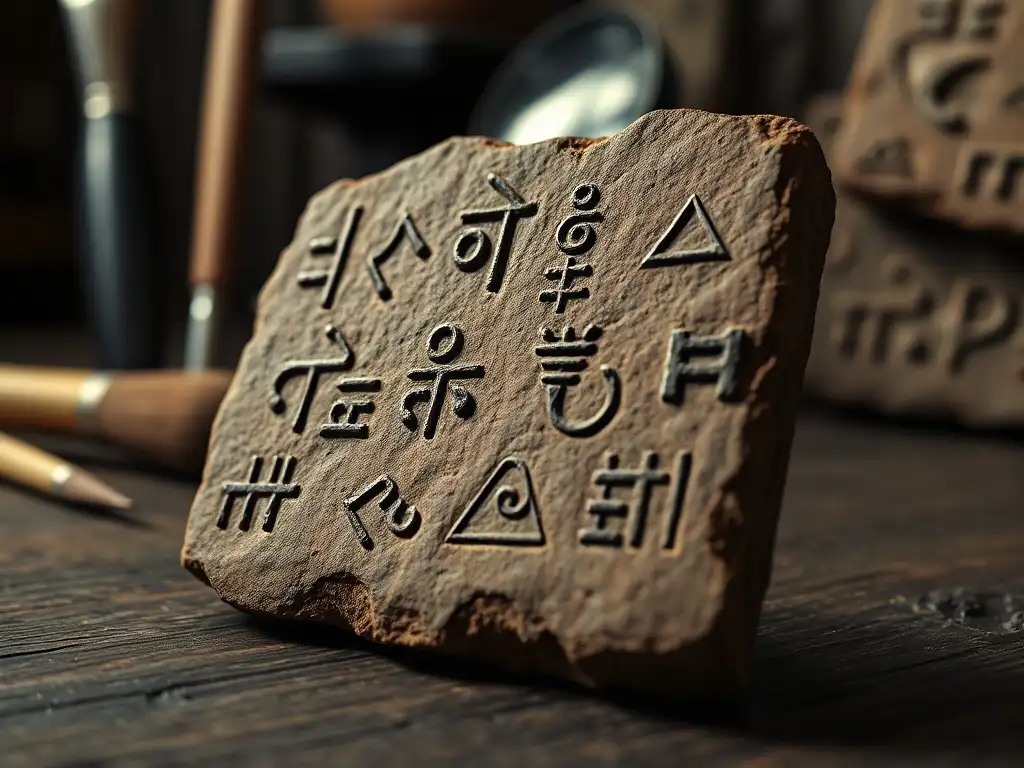
Welcome to Ancient India History, where we embark on a fascinating journey through the rich tapestry of India's ancient civilizations. Dive deep into the mysteries of the Indus Script, a topic that has sparked countless theories and controversies among historians and linguists alike. What secrets lie within these enigmatic symbols? As you explore our in-depth article, you’ll uncover not only the complexities of the script but also the broader implications of understanding the Indus Valley civilization. Get ready to satisfy your curiosity and unravel the past as we delve into the intricate world of inscriptions and epigraphy!

The Indus script remains one of the most intriguing puzzles in the study of ancient civilizations. Despite its discovery over a century ago, the script, associated with the Indus Valley Civilization (IVC), continues to elude definitive decipherment. Scholars have proposed various theories regarding its structure, function, and significance, leading to ongoing debates and controversies within the field of epigraphy.
This article aims to explore the multifaceted dimensions of the Indus script, shedding light on the different theories that have emerged and the controversies that surround them. By delving into the characteristics of the script, its importance in understanding ancient Indian history, and its relationship with other ancient writing systems, we will uncover the complexities that make the Indus script a captivating subject of study.
Introduction to the Indus Script
The Indus script is a collection of symbols and characters that were used by the inhabitants of the Indus Valley Civilization, which flourished from approximately 3300 to 1300 BCE across what is now Pakistan and northwest India. This writing system is primarily found on seals, pottery, and various other artifacts unearthed during excavations in major sites like Harappa and Mohenjo-Daro. Despite the wealth of material evidence, the script's inability to be deciphered has led to a plethora of interpretations, which we will explore in this article.
Overview of the Indus Valley Civilization
The Indus Valley Civilization represents one of the world's earliest urban cultures, known for its advanced city planning, sophisticated drainage systems, and vibrant trade networks. At its zenith, it covered an extensive area, with major urban centers showcasing remarkable architecture and a high degree of social organization. The civilization's decline around 1900 BCE remains a subject of scholarly debate, but its legacy continues to influence cultural and historical narratives in South Asia.
Importance of the Indus Script in Ancient History
The Indus script holds a critical place in ancient history as it potentially reveals insights into the language, culture, and societal structures of the IVC. Its study is essential for understanding the complexities of communication in one of the earliest urban societies. As the only known writing system of the civilization, it serves as a key to unlocking the mysteries of their social dynamics, trade practices, and religious beliefs.
Objectives of the Article on Indus Script Theories and Controversies
This article aims to:
- Examine the various theories surrounding the decipherment of the Indus script.
- Discuss the controversies that arise from differing interpretations of the script.
- Highlight the significance of the Indus script in archaeological studies and its comparisons with other ancient scripts.
Understanding the Indus Script
To grasp the significance of the Indus script, it is essential to understand its characteristics, the context in which it was used, and its implications for the study of ancient scripts.
Characteristics of the Indus Script
The Indus script consists of over 400 unique symbols, often inscribed on seals and other artifacts. The script is primarily pictographic, with some symbols thought to represent phonetic sounds. However, the lack of a bilingual inscription or a Rosetta Stone-like artifact complicates efforts to decipher its meaning. The brevity of most inscriptions, often consisting of just a few symbols, suggests that the script may have served specific administrative or religious functions rather than conveying complex narratives.
The Significance of Indus Script in Archaeological Studies
The Indus script is a focal point in archaeological studies of the Indus Valley Civilization. Researchers analyze the script's distribution across various sites to draw conclusions about trade, political organization, and cultural exchange. Its presence on seals, which were likely used in trade transactions, indicates a level of economic sophistication and inter-regional connectivity that demands further exploration.
Comparison with Other Ancient Scripts
When comparing the Indus script with other ancient writing systems, such as Mesopotamian cuneiform or Egyptian hieroglyphics, key differences emerge. While both the cuneiform and hieroglyphic systems eventually became decipherable, the Indus script's unique characteristics and lack of contextual understanding keep it shrouded in mystery. This comparison not only highlights the distinct features of the Indus script but also raises questions about the evolution of writing as a tool for communication in early civilizations.
As we delve further into the theories and controversies surrounding the Indus script, we will uncover the rich tapestry of ideas that continue to shape our understanding of this enigmatic aspect of ancient Indian history.
Theories on the Indus Script
The Indus script, associated with the ancient Indus Valley Civilization, remains one of the most intriguing subjects in the study of ancient writings. This script, which appears on seals, pottery, and other artifacts, is characterized by its short inscriptions consisting of various symbols. Scholars have proposed several theories concerning the nature and meaning of this script, leading to a rich tapestry of hypotheses that attempt to unravel its mysteries. These theories generally fall into two main categories: those that suggest the script represents a language, and those that propose it serves other functions, such as symbolic or ritualistic communication.
Major Theories of Decipherment
- Linguistic Theory: This theory posits that the Indus script is a form of written language, potentially related to Dravidian languages spoken in South India today. Proponents, like Iravatham Mahadevan, argue that the script's symbols can be correlated to phonetic sounds, suggesting a sophisticated linguistic system.
- Symbolic System Theory: Some researchers argue that the Indus script may not represent a language at all, but rather a symbolic system used for trade, religious rituals, or administrative purposes. This theory suggests that the symbols convey meaning through representation rather than phonetics.
- Syllabic Theory: This perspective suggests that the script is syllabic, meaning that each symbol represents a syllable rather than a single sound. This theory has been championed by scholars like Asko Parpola, who believe that the symbols can be grouped into syllables that might align with known languages.
- Numerical and Computational Theory: Some theorists have employed statistical and computational methods to analyze the signs, positing that the frequency and arrangement of symbols can reveal underlying patterns, similar to those found in known languages.
These theories illustrate the ongoing quest to understand the Indus script, with each perspective contributing to the broader conversation about the nature of this ancient writing system.
Comparative Analysis of Theories
When comparing these theories, several key differences emerge that highlight the complexities of deciphering the Indus script:
- Linguistic vs. Symbolic: The linguistic theory seeks to connect the script to spoken languages, while the symbolic theory views the inscriptions as a means of conveying ideas or concepts without phonetic representation.
- Phonetic vs. Syllabic: The distinction between phonetic and syllabic interpretations is crucial. Linguistic proponents focus on sound correlations, whereas syllabic theorists emphasize the grouping of symbols into units of sound.
- Methodological Approaches: The methodologies employed in supporting these theories vary significantly. Linguistic theories often rely on comparative linguistics, while symbolic and numerical theories might leverage statistical analysis and computer modeling.
This comparative analysis underscores the multifaceted nature of the Indus script and the diverse approaches scholars take to unravel its secrets.
Controversies Surrounding the Indus Script
The Indus script is not only a subject of theoretical exploration but also a focal point of significant controversy. The debates surrounding its interpretation reflect broader discussions about ancient civilizations and their cultural legacies.
Ongoing Debates Among Scholars
Disagreements among scholars about the Indus script's nature and purpose have persisted for decades. Key points of contention include:
- Interpretive Validity: Scholars often argue over the validity of various interpretations. For example, some contend that attempts to link the script to known languages are speculative and lack sufficient evidence, while others maintain that such connections are essential for understanding the script.
- Cultural Implications: The implications of deciphering the Indus script on our understanding of the Indus Valley Civilization are profound. Some scholars argue that recognizing it as a language could elevate the civilization's status in the annals of history, while others caution against projecting modern concepts of language and culture onto ancient societies.
- Artifact Authenticity: The authenticity of certain artifacts bearing the Indus script is also a contentious issue. Some scholars have raised doubts about the provenance of certain seals and inscriptions, questioning whether they truly belong to the Indus Valley Civilization.
These ongoing debates reflect the complexities of interpreting ancient scripts and highlight the need for careful and critical analysis in the field of ancient studies.
Case Studies of Misinterpretations
Several notable misinterpretations of the Indus script have occurred, illustrating the challenges faced by researchers:
- The "Sanskrit Connection": Early scholars, in an attempt to link the Indus script to Sanskrit, misapplied phonetic principles, leading to flawed readings of the symbols. This connection has since been largely discredited, yet it highlights the dangers of preconceived notions influencing interpretation.
- Overemphasis on Symbolism: Some interpretations have overemphasized the symbolic nature of the script, suggesting that it was purely an artistic expression rather than a functional writing system. Such perspectives can obscure the potential linguistic attributes of the script.
- Misleading Statistical Analyses: Instances of misapplied computational methods have also arisen, where researchers have drawn conclusions based on statistical anomalies rather than robust linguistic evidence. These cases serve as cautionary tales about the importance of sound methodology in script analysis.
These case studies exemplify the pitfalls of interpreting the Indus script and underscore the necessity for rigorous scholarship in the field of epigraphy.
The Future of Indus Script Research
The future of Indus script research holds great promise as scholars and archaeologists continue to explore the depths of this ancient writing system. With the advent of new technologies and interdisciplinary approaches, researchers are now better equipped to tackle the complexities surrounding the Indus script. This section delves into the emerging technologies that are reshaping archaeological practices, predictions for future discoveries, and the ongoing importance of understanding this enigmatic script.
Emerging Technologies in Archaeology
Recent advancements in technology have revolutionized the way archaeologists study ancient scripts, including the Indus script. Among these technologies are:
- Digital Imaging and 3D Modeling: High-resolution imaging techniques, such as photogrammetry, allow researchers to create detailed 3D models of archaeological artifacts. This can enhance the study of inscriptions, revealing previously unnoticed details.
- Machine Learning and AI: Artificial intelligence is increasingly being applied to decipher ancient scripts. Algorithms can analyze patterns in the symbols, potentially identifying correlations and meanings that human researchers might overlook.
- Data Mining and Big Data Analysis: The application of big data can help researchers sift through vast amounts of archaeological information, identifying trends and connections that could lead to new insights into the Indus Valley Civilization.
- Remote Sensing Technologies: Techniques such as satellite imagery and ground-penetrating radar allow researchers to discover new archaeological sites without extensive excavation, potentially uncovering more inscriptions related to the Indus script.
These technologies not only streamline the research process but also foster collaboration among disciplines, enhancing our understanding of the Indus script and its context within ancient Indian civilization.
Predictions for Future Discoveries
As technology advances and research methodologies evolve, several predictions can be made regarding future discoveries related to the Indus script:
- New Inscriptions: Ongoing excavations in the Indus Valley region may yield new inscriptions that could provide additional data points for decoding the script.
- Cross-Cultural Connections: Future research might reveal connections between the Indus script and contemporary writing systems, potentially illuminating exchanges between the Indus Valley Civilization and neighboring cultures.
- Decipherment Breakthroughs: With improved analytical techniques, there is a possibility of significant breakthroughs in deciphering the Indus script, enabling scholars to better understand the language and its implications.
- Interdisciplinary Collaborations: Increased collaboration between linguists, archaeologists, historians, and computer scientists will likely lead to innovative approaches in deciphering and interpreting the script, resulting in richer and more nuanced understandings of the Indus Valley Civilization.
The future of Indus script research is undoubtedly bright, with the potential to reshape our comprehension of this ancient writing system.
Conclusion
Summary of Theories and Controversies
The Indus script has long been a subject of fascination and debate among scholars. Various theories have emerged regarding its origin, structure, and potential meanings. Some researchers propose that the script represents a form of proto-writing, while others argue that it is a sophisticated language system. Controversies surrounding its decipherment persist, largely due to the limited number of inscriptions and the absence of a bilingual inscription akin to the Rosetta Stone. These factors contribute to ongoing discussions about the script's significance in understanding the socio-political and cultural dynamics of the Indus Valley Civilization.
The Importance of Continued Research on Indus Script
Continued research on the Indus script is crucial for several reasons. Firstly, it provides insights into the linguistic practices of one of the world's earliest urban civilizations. Understanding the script can shed light on the administrative, economic, and cultural facets of the Indus Valley people. Furthermore, deciphering the script may reveal connections to other ancient languages and scripts, enhancing our understanding of the development of writing systems in South Asia and beyond.
Continued exploration of existing sites and the application of new technologies will undoubtedly yield new information, reinforcing the relevance of the Indus script in the broader narrative of human history.
Final Thoughts on Understanding Ancient Civilizations Through Their Scripts
The study of ancient scripts, including the Indus script, is essential for comprehending the complexities of ancient civilizations. Scripts serve as windows into the thoughts, beliefs, and practices of people long ago. As researchers delve deeper into the mysteries of the Indus script, they not only seek to understand the language itself but also the rich cultural heritage of the Indus Valley Civilization. The ongoing quest to decode this ancient writing system highlights the importance of continued archaeological and linguistic research, ensuring that the legacies of these civilizations are preserved and understood for future generations.
References

The study of the Indus script has generated a wealth of scholarly work, exploring its myriad theories and controversies. Below are some pivotal references that provide insights into the ongoing debates surrounding the script's meaning and significance.
- Possehl, Gregory. The Indus Civilization: A Contemporary Perspective. This book offers an overview of the Indus Valley Civilization, including discussions on the script and its implications for understanding the culture.
- Witzel, Michael. "The Teacher’s Dilemma: The Indus Script." In this paper, Witzel critiques various attempts at deciphering the script, arguing for a multidisciplinary approach.
- Kak, Subhash. The Infinite Way: The Indus Script. Kak presents a controversial viewpoint on the script, proposing connections to Vedic texts.
- S. R. Rao. "Indus Script: A New Perspective." Rao's work is critical for understanding the script's historical context and its potential links to later Indian languages.
- Fairservis, Walter A. The Indus Valley: A New Look. Fairservis explores archaeological findings and their implications for understanding the Indus script.
Suggested Readings on Indus Script Theories and Controversies
For those seeking to delve deeper into the complexities of the Indus script, the following readings are recommended:
- "The Indus Script: Texts, Concordance, and Translations" by Asko Parpola: This comprehensive work collates various inscriptions and offers translations that challenge traditional interpretations.
- "Revisiting the Indus Script: New Perspectives" edited by Iravatham Mahadevan: A collection of essays that provide fresh theories and critiques surrounding the Indus script.
- "Indus Civilization: A Historical Perspective" by Sudeshna Ghosh: This book examines the broader historical context of the Indus Civilization, including its writing system.
- "Deciphering the Indus Script: A Critical Survey" by Shikaripur Ranganatha Rao: Rao's critical analysis of previous attempts at deciphering the script provides a balanced overview of the field's controversies.
- "The Languages of Ancient India" by R. S. Sharma: Although primarily focused on language, this work includes sections pertinent to the discussion of the Indus script's place in the evolution of Indian writing systems.
Key Academic Journals in the Field of Epigraphy and Ancient Scripts
To stay updated with the latest research and discussions regarding the Indus script and similar topics, consider following these academic journals:
- Journal of Archaeological Science: This journal publishes articles on archaeological research, including studies on ancient scripts and inscriptions.
- Indian Journal of History of Science: Focuses on the historical development of science, technology, and scripts in India, featuring articles that discuss the Indus script.
- Epigraphica Indica: A leading journal specifically dedicated to the study of inscriptions, including those from the Indus Valley.
- Journal of South Asian Studies: Offers a broader context of South Asian history and culture, frequently featuring articles that touch on ancient scripts.
- Language and Linguistics Compass: While broader in scope, this journal includes articles on historical linguistics and script evolution, relevant for understanding the Indus script.
- Introduction to the Indus Script
- Understanding the Indus Script
- Theories on the Indus Script
- Controversies Surrounding the Indus Script
- The Future of Indus Script Research
- Conclusion
- References
- Suggested Readings on Indus Script Theories and Controversies
- Key Academic Journals in the Field of Epigraphy and Ancient Scripts
Frequently Asked Questions
What is the Indus script?
The Indus script is a collection of symbols found on seals and pottery from the Indus Valley Civilization. Its purpose and meaning remain largely mysterious, leading to various theories and controversies regarding its interpretation.
Why is the Indus script considered mysterious?
The Indus script is considered mysterious because it has not yet been deciphered, and scholars disagree on its linguistic nature and relationship to other ancient scripts. This has led to differing theories about its origins and functionality.
What are some prominent theories about the Indus script?
Some theories suggest that the Indus script represents a language similar to Dravidian languages, while others propose it could be a form of pictorial writing or even a sacred script. Each theory is supported by various linguistic and archaeological evidence.
What are the main controversies surrounding the Indus script?
The main controversies involve disagreements over its decipherability, the existence of a written language in the Indus Valley, and the implications of its use for understanding ancient Indian culture. These disputes highlight the complexity and richness of the Indus Valley Civilization.
How does the study of the Indus script impact our understanding of ancient India?
Studying the Indus script can provide insights into the socio-political structures, trade practices, and cultural exchanges of the Indus Valley Civilization, shaping our understanding of early Indian civilizations and their contributions to history.
Final Reflection: Unraveling the Enigma of the Indus Script
The exploration of Indus script theories and controversies remains profoundly relevant today as we seek to understand the complexities of ancient civilizations. The ongoing debates surrounding the script not only highlight the limitations of our current knowledge but also illuminate the rich tapestry of human history. As we delve into these mysteries, we are reminded that the quest for understanding is as significant as the answers we seek.
Cultural and social landscapes are continually shaped by our interpretations of history, and the Indus script serves as a poignant example of this dynamic interplay. The controversies surrounding its decipherment reflect our broader struggles with communication and meaning across time and space. As scholars and enthusiasts alike grapple with these ancient symbols, we are reminded of the words of the renowned historian Will Durant: We are what we repeatedly do. Excellence, then, is not an act, but a habit.
This notion resonates deeply as we strive for excellence in our understanding of the past, fostering a culture of inquiry that transcends generations.
As we conclude this exploration, I invite you to reflect on the significance of the Indus script in your own life. Consider how the pursuit of knowledge—whether through history, language, or culture—can enrich your understanding of the world. Embrace the mysteries that remain and let them inspire you to seek answers, challenge assumptions, and engage with the complexities of our shared human experience. The journey of discovery is ongoing, and each of us has a role to play in unraveling the enigmas of our past.
Unveil the Secrets of the Indus Script Today!
Thank you for diving into the fascinating world of the Indus Script! You've explored intricate theories and the ongoing controversies that surround this ancient mystery. Now, it's time to take your curiosity a step further and engage with this captivating subject.
Here’s how you can continue your journey:
- Join a discussion forum or local history group to connect with others who share your fascination for ancient scripts. Share your insights and learn from diverse perspectives!
- Explore archaeological findings related to the Indus Valley—an abundance of resources is just a click away!
- Read an academic paper or book on ancient scripts to deepen your understanding of various languages and writing systems.
Which of these actions are you excited to pursue next, and what new insights do you think they could reveal about the Indus Script?