
Chandragupta Maurya's Journey: From Warrior to Philosopher

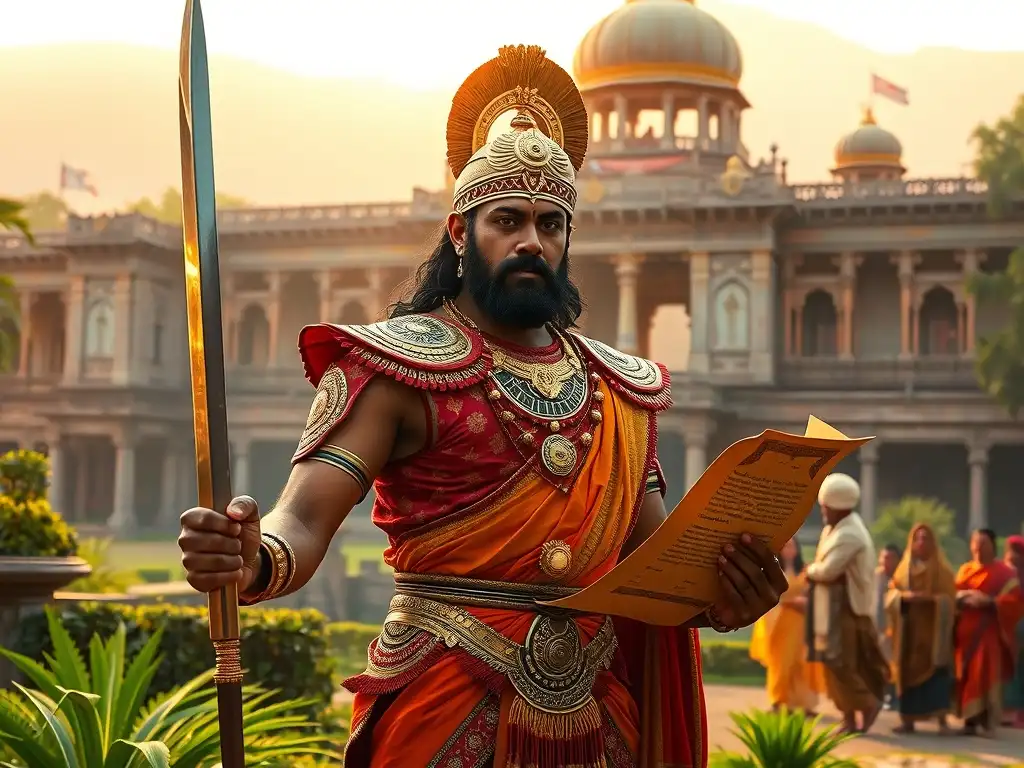
Welcome to Ancient India History, where we embark on an exhilarating journey through time, unveiling the rich tapestry of India’s ancient civilizations. In our exploration today, we delve into the remarkable life of Chandragupta Maurya, a figure whose historical significance transcends mere warfare to encompass profound philosophical insights. How did this warrior transition into a ruler who laid the foundation for one of the greatest empires in history?
Join us as we unravel the layers of his journey from a fierce fighter to a sagacious leader, and discover the lasting impact he had on Indian culture and society. Your adventure into the past begins now—read on to uncover the compelling narrative of Chandragupta Maurya!
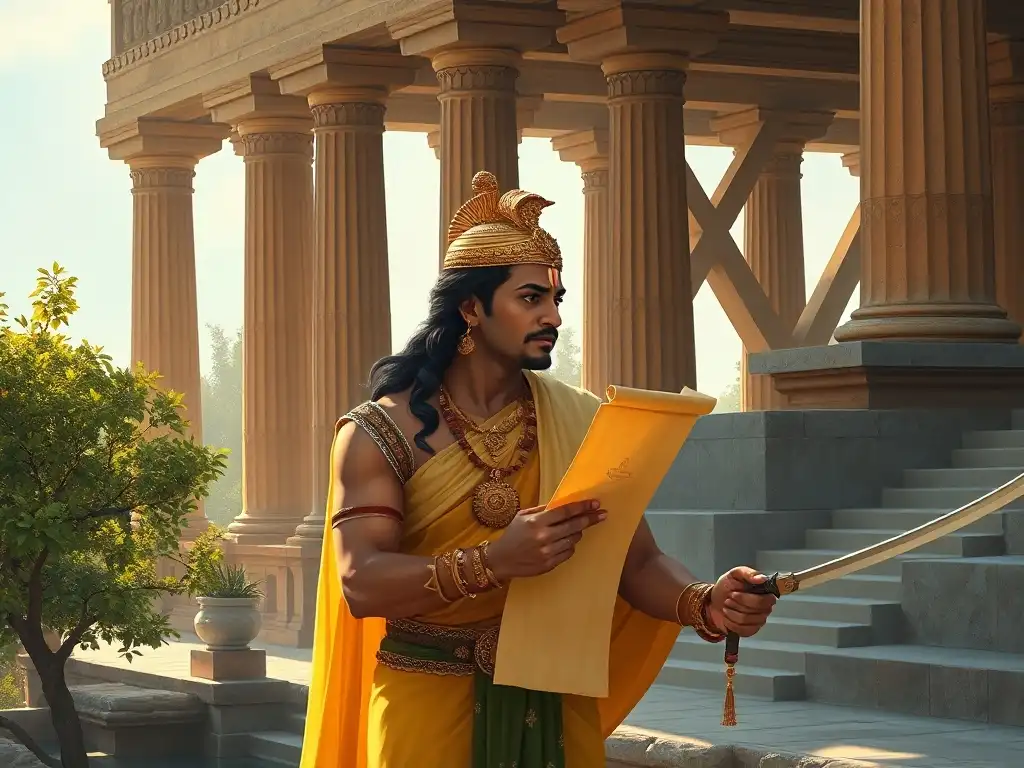
Chandragupta Maurya stands as one of the most pivotal figures in ancient Indian history, emblematic of a transformative era that shaped the subcontinent's political and cultural landscape. His journey from a youthful warrior to a sagacious philosopher is not merely a tale of personal evolution; it represents the broader narrative of the rise of the Mauryan Empire, which laid the foundation for a unified India.
Understanding Chandragupta Maurya's historical significance offers invaluable insights into the complexities of governance, warfare, and philosophical thought during a time of great change. As we delve deeper into his life and contributions, it becomes clear that Chandragupta's legacy extends far beyond his military achievements, influencing the realms of administration, culture, and society.
Introduction to Chandragupta Maurya
Overview of Chandragupta Maurya's Life
Chandragupta Maurya was born around 340 BCE and is best known for founding the Mauryan Empire, which was the first large empire in India. After overthrowing the Nanda Dynasty with the help of his mentor Chanakya, he established a vast empire that stretched across much of the Indian subcontinent.
His reign marked a period of significant political stability and economic prosperity, laying down administrative frameworks that would influence future generations. Chandragupta's life was not just about conquest; it was also a journey of philosophical introspection and understanding the responsibilities of power, culminating in his eventual renunciation of the throne for a spiritual pursuit.
Importance of Studying His Historical Significance
Exploring Chandragupta Maurya's historical significance is crucial for several reasons:
- Foundational Impact: His establishment of the Mauryan Empire set the stage for future Indian empires and significantly influenced the socio-political fabric of the region.
- Cultural Contributions: The Mauryan period was marked by advancements in art, architecture, and literature, which were heavily influenced by Chandragupta's policies and vision.
- Political Philosophy: His relationship with Chanakya gave rise to important political treatises, such as the Arthashastra, which continue to be studied for insights into statecraft and governance.
- Religious Influence: Chandragupta's later life, marked by his conversion to Jainism, highlights the interplay between politics and religion, making him a significant figure in the context of Indian religious history.
Early Life of Chandragupta Maurya
Birth and Background
Chandragupta was born into a humble family, possibly of the Kshatriya (warrior) caste. His early life remains shrouded in mystery, but it is widely believed that he was born in the region of present-day Bihar. The socio-economic conditions of his early life likely instilled in him a sense of resilience and ambition that would later propel him toward remarkable achievements. His interactions with local rulers and common people shaped his understanding of governance and military tactics, which would prove invaluable in his later conquests.
Influences During His Formative Years
During his formative years, Chandragupta was significantly influenced by several key figures and events:
- Chanakya's Guidance: The most notable influence in his youth was Chanakya, a learned Brahmin and strategist who recognized Chandragupta's potential. Chanakya became his mentor, instilling in him the principles of statecraft and the importance of unity against oppression.
- Political Turmoil: The political instability of the Nanda dynasty created an environment ripe for rebellion. This backdrop of discontent served as a catalyst for Chandragupta’s aspirations to rise against the ruling class and seek power.
- Military Training: Exposure to various military tactics and strategies through local skirmishes and alliances honed his skills as a leader and warrior, preparing him for the monumental task of establishing the Mauryan Empire.
By understanding these aspects of Chandragupta Maurya's early life, we can appreciate the complexities of his character and the motivations that drove him to become one of history's most significant figures.
Rise to Power: The Warrior Phase
Chandragupta Maurya's ascent to power is a captivating narrative that reveals his transformation from a local warrior to the founder of one of ancient India's most significant empires—the Maurya Empire. This phase of his life is predominantly marked by military prowess, strategic alliances, and a relentless ambition to unify the fragmented Indian subcontinent under one banner. His journey began in the late 4th century BCE, a time when India was divided into numerous small kingdoms, each vying for power and control.
Early Military Campaigns and Strategy
Chandragupta's military journey started with his early campaigns against regional rulers in the Magadha region. Armed with a keen understanding of warfare tactics, he utilized guerrilla warfare to outmaneuver larger, more established armies. His initial campaigns were characterized by strategic raids and calculated assaults, which allowed him to build a reputation as a formidable warrior.
One of the defining moments in his rise was his alliance with Chanakya, a brahmin scholar and strategist. Chanakya played a pivotal role in shaping Chandragupta's military strategies. Together, they formulated plans that emphasized not just brute strength but also psychological warfare. This approach helped Chandragupta gain the trust of local populations and recruit soldiers from various communities, thus expanding his army significantly.
Key Battles and Conquests
Some of the most notable battles that propelled Chandragupta into prominence include his confrontations with the Nanda dynasty, which ruled Magadha. The decisive battle against Dhana Nanda marked a turning point; through strategic planning and alliances, Chandragupta was able to defeat the Nandas and seize control of their kingdom.
Following his conquest of Magadha, he expanded his territory through campaigns in other regions such as present-day Punjab and parts of northern India. His military campaigns were not solely focused on territorial expansion; they also aimed at establishing a centralized power that could effectively govern an increasingly diverse populace. This relentless pursuit of power and expansion ultimately culminated in the establishment of the Maurya Empire.
Establishment of the Maurya Empire
The establishment of the Maurya Empire around 322 BCE marked a significant turning point in Indian history. Chandragupta’s leadership transformed the Indian political landscape, creating one of the largest empires in the world. After consolidating power in Magadha, he focused on administrative reforms and infrastructure development, laying the groundwork for a stable governance system.
Under Chandragupta's rule, the Maurya Empire became known for its efficient administration, which included the introduction of a centralized tax system and a network of roads that facilitated trade and communication across the vast empire. This period also saw the establishment of a strong military presence to protect the empire's borders and maintain internal order, ensuring the longevity of his reign.
The Transition to Philosophy
As Chandragupta’s reign progressed, a significant transformation took place—his focus began to shift from military conquests to philosophical governance. This transition was influenced heavily by the teachings of Chanakya, which emphasized the importance of wisdom, strategy, and ethical leadership in ruling an empire.
Influence of Chanakya on Chandragupta Maurya
Chanakya, also known as Kautilya, was not just a mentor but a crucial architect of Chandragupta's strategies. After being humiliated by the Nandas, Chanakya vowed to overthrow their dynasty and found a new empire. His deep understanding of statecraft, economics, and military tactics profoundly influenced Chandragupta’s approach to governance.
Chanakya’s seminal work, the Arthashastra, provided Chandragupta with insights into administration, diplomacy, and ethical conduct. This philosophical foundation enabled Chandragupta to transition from a warrior-focused ruler to a philosopher-king, balancing the needs of his subjects with the imperatives of statecraft.
Philosophical Teachings and Governance
Chandragupta's governance began to reflect the philosophical teachings he assimilated over time. He emphasized the importance of dharma (righteousness) in leadership, advocating for a balanced approach to rule that considered both the welfare of the state and the well-being of its citizens. His reign is often characterized by efforts to ensure social justice, economic prosperity, and cultural development.
Incorporating Chanakya's teachings, Chandragupta established a government that promoted ethical governance and effective administration. His policies focused on trade, agriculture, and infrastructure, contributing to the economic stability of the Maurya Empire. The integration of philosophy into governance helped solidify his rule and earn the loyalty of his subjects.
Integration of Philosophy into Leadership
Chandragupta's approach to leadership was revolutionary for his time. He understood that a ruler's legitimacy came not just from military might but from the ability to foster an environment of peace and prosperity. This philosophy was evident in his later years when he adopted a more introspective lifestyle, focusing on self-discipline and spiritual growth.
His conversion to Jainism in his later life exemplified this philosophical shift. He renounced his throne in favor of his son, Bindusara, and dedicated his remaining years to penance and contemplation. This transition from a warrior to a philosopher-king marked a profound legacy, influencing future Indian leaders who sought to blend military strength with ethical governance.
Through this journey, Chandragupta Maurya not only established a powerful empire but also laid the foundation for a governance model that would resonate through centuries in Indian history. His historical significance lies in this unique blend of military prowess and philosophical insight, making him a pivotal figure in ancient Indian civilization.
Chandragupta Maurya's Historical Significance
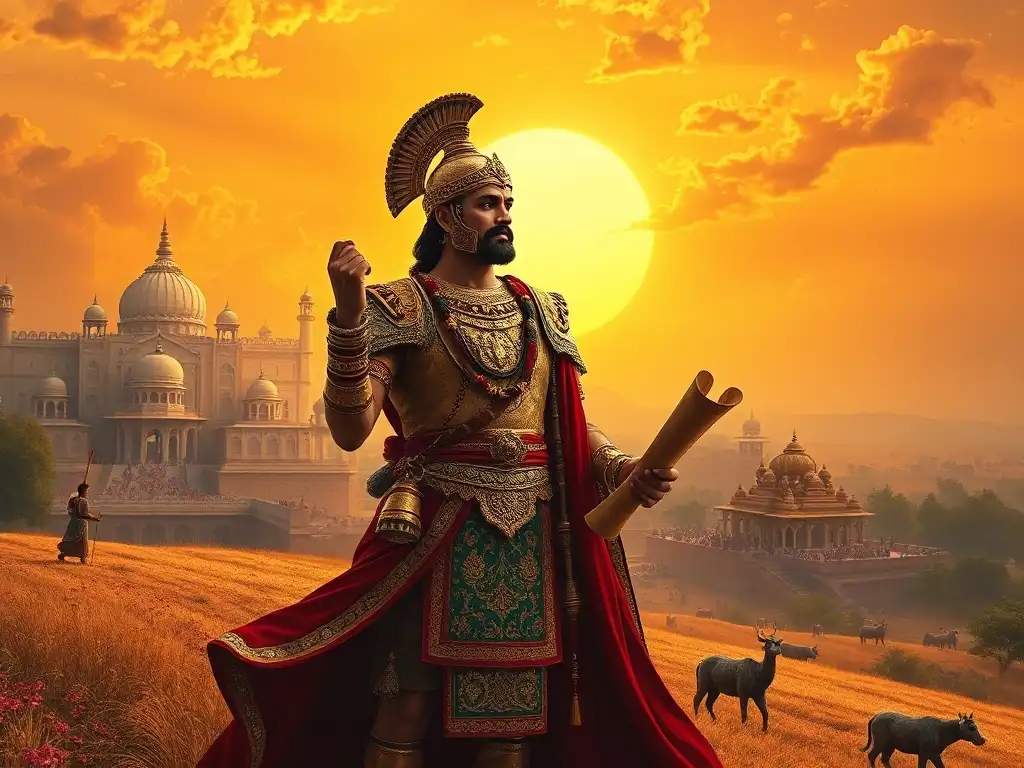
Chandragupta Maurya stands as a pivotal figure in ancient Indian history, marking the transition from regional kingdoms to a centralized empire. His rise to power not only reshaped the political landscape of India but also laid the foundation for one of the largest empires in Indian history, the Maurya Empire. His strategic acumen and military prowess enabled him to overthrow the Nanda Dynasty, establishing a new order that emphasized governance, trade, and diplomacy.
Moreover, his alliance with Chanakya, a renowned philosopher and statesman, was instrumental in shaping his policies and strategies, highlighting the synergy between military might and political wisdom. Chandragupta's significance is further underscored by his embrace of Jainism later in life, showcasing a philosophical evolution that influenced his governance and policies.
Contributions to Indian History and Culture
Chandragupta Maurya's contributions extend beyond military conquests; he played a crucial role in the socio-political development of ancient India. His reign marked the first instance of a unified Indian state, facilitating a common administrative framework that promoted trade and cultural exchange. He implemented policies that encouraged agricultural development and improved infrastructure, which in turn stimulated economic growth. Culturally, his era witnessed the synthesis of various traditions and practices, enriching the Indian cultural mosaic. Furthermore, the patronage of art and literature during his rule laid the groundwork for the flourishing of Indian culture, influencing subsequent generations.
Legacy of Chandragupta Maurya in Governance
Chandragupta Maurya's legacy in governance is profound, characterized by the establishment of a centralized administration that balanced power and accountability. He adopted a bureaucratic system that ensured efficient governance across his vast empire, integrating diverse regions and communities. The implementation of law and order was paramount, as Chandragupta recognized the importance of a stable society for economic prosperity.
His governance model, which emphasized meritocracy and included various advisors and officials from different backgrounds, has been studied and admired throughout history. Additionally, his emphasis on ethical leadership and justice can be seen as a precursor to later administrative philosophies in India.
Comparison with Other Key Historical Figures
When compared to other key historical figures, Chandragupta Maurya's approach to leadership and statecraft stands out. Unlike figures such as Alexander the Great, who sought to conquer and expand territories without establishing lasting governance, Chandragupta focused on unification and sustainability.
His emphasis on diplomatic relations and strategic alliances, particularly with Chanakya, mirrors the tactics of leaders like Ashoka, his grandson, who furthered the Mauryan legacy by promoting non-violence and Buddhist principles. Chandragupta's ability to adapt and evolve, particularly in his later years as he embraced Jainism, sets him apart from other warriors who remained steadfast in their beliefs and practices.
The Impact of Chandragupta Maurya's Rule
Chandragupta Maurya's rule had a lasting impact that extended well beyond his reign, influencing the economic, social, and cultural fabrics of ancient Indian society.
Economic and Social Reforms
Chandragupta implemented significant economic and social reforms that laid the groundwork for a prosperous empire. His administration focused on agricultural productivity, resulting in increased food security and trade. He introduced tax reforms that ensured fair taxation, promoting economic stability and growth. Additionally, his policies aimed at social justice and the welfare of the populace reflected his commitment to the well-being of his subjects. These reforms not only enhanced the quality of life for many but also fostered loyalty and unity among the diverse communities within his empire.
Architectural and Cultural Developments
Under Chandragupta's reign, there was a notable flourishing of architectural and cultural developments. The period saw the construction of significant infrastructures, such as roads and irrigation systems, which facilitated trade and communication across the empire. Culturally, this era was marked by the patronage of arts and literature, leading to advancements in various fields including sculpture, literature, and philosophy. The synthesis of diverse cultural influences during this period contributed to the richness of Indian heritage, with the Mauryan Empire serving as a melting pot of ideas and artistic expressions.
Relations with Neighboring Kingdoms
Chandragupta Maurya's diplomatic acumen was evident in his relations with neighboring kingdoms. He skillfully negotiated alliances and maintained peace through strategic marriages and treaties, which helped secure the borders of his empire. His interactions with the Hellenistic world, particularly with figures like Alexander the Great, showcased his ability to navigate complex geopolitical landscapes. These relationships not only strengthened his position but also facilitated cultural exchanges that enriched Indian society. Chandragupta's legacy in diplomacy set a precedent for future rulers, emphasizing the importance of strategic alliances in maintaining stability and prosperity.
Conclusion: The Lasting Legacy of Chandragupta Maurya
Chandragupta Maurya remains a pivotal figure in the annals of Indian history, representing a dynamic blend of warrior spirit and philosophical insight. His journey from a youthful warrior to the founder of the Maurya Empire illustrates not only his military prowess but also his ability to adapt and embrace the philosophical teachings that would shape his reign and influence future generations.
Under his leadership, the Maurya Empire unified a fragmented subcontinent, establishing a governance model that emphasized both strength and wisdom. This duality in his character has left a profound impact on the socio-political landscape of India, marking him as a leader who understood the importance of both conquest and moral governance.
Reflection on His Journey from Warrior to Philosopher
Chandragupta’s transformation from a fierce warrior to a contemplative philosopher is a testament to the complexity of his character. Initially, he rose to prominence through military conquest, driven by the ambition to establish a powerful empire. However, his encounters with great thinkers like Chanakya facilitated a significant shift in his worldview.
Embracing the teachings of the Niti Shastra, he began to understand the nuances of governance and ethics, balancing his role as a ruler with that of a philosopher. This shift is epitomized in his later life when, after abdicating the throne, he adopted a life of asceticism, highlighting the philosophical underpinnings that guided his actions throughout his reign. His ability to integrate martial prowess with philosophical depth serves as an enduring model for leaders, emphasizing the importance of wisdom in governance.
The Continued Relevance of His Teachings in Modern Times
Chandragupta Maurya's teachings and philosophies remain relevant in contemporary discourse. His insights into governance, leadership, and ethics continue to inspire political leaders, strategists, and thinkers. The principles of pragmatism and moral governance, as espoused by Chanakya and embodied by Chandragupta, resonate in today’s discussions about effective leadership and the responsibilities that come with power.
Furthermore, his emphasis on unity and the welfare of the state provides valuable lessons for modern democracies facing challenges of division and conflict. In an age of rapid change and uncertainty, the philosophical reflections of Chandragupta Maurya encourage a dialogue on the interplay between power, ethics, and the greater good.
Further Reading on Chandragupta Maurya
For those interested in delving deeper into the life and legacy of Chandragupta Maurya, there are numerous resources that provide valuable insights into his historical significance and the context of his era.
Recommended Books and Articles
- "The Arthashastra" by Kautilya (Chanakya): This ancient text, attributed to Chanakya, outlines the principles of governance and statecraft that influenced Chandragupta's rule.
- "Chandragupta Maurya: The Great Emperor" by R. C. Majumdar: This book provides a comprehensive overview of Chandragupta's life, achievements, and the socio-political landscape of his time.
- "The Mauryan Empire" by Romila Thapar: An insightful exploration of the Mauryan Empire, highlighting its administrative structure and cultural contributions.
- "Chandragupta Maurya and the Birth of the Indian Empire" by D. N. Jha: This work discusses the historical significance of Chandragupta and the legacy of the Mauryan dynasty.
Important Historical Sites Related to Chandragupta Maurya
- Pataliputra (modern-day Patna): The capital of the Mauryan Empire, rich in archaeological sites and historical significance.
- Nalanda: An ancient center of learning that flourished under the Maurya dynasty, representing the cultural advancements during Chandragupta's reign.
- Sanchi Stupa: Though primarily associated with Emperor Ashoka, the site reflects the architectural and artistic achievements that began during Chandragupta's time.
- Taxila: A significant urban center that thrived during the Mauryan era, showcasing the blend of cultures facilitated by Chandragupta's unification efforts.
These resources and sites offer a deeper understanding of Chandragupta Maurya's historical significance and the enduring impact of his legacy on Indian civilization.
- Introduction to Chandragupta Maurya
- Early Life of Chandragupta Maurya
- Rise to Power: The Warrior Phase
- The Transition to Philosophy
- Chandragupta Maurya's Historical Significance
- The Impact of Chandragupta Maurya's Rule
- Conclusion: The Lasting Legacy of Chandragupta Maurya
- Further Reading on Chandragupta Maurya
- What was the historical significance of Chandragupta Maurya?
- How did Chandragupta Maurya's reign impact ancient India?
- What role did Chanakya play in Chandragupta Maurya's rise to power?
- How did Chandragupta's journey reflect the transition from warrior to philosopher?
- What contributions did Chandragupta Maurya make to Indian culture?
Frequently Asked Questions
What was the historical significance of Chandragupta Maurya?
Chandragupta Maurya is significant for founding the Maurya Empire, which marked a pivotal shift in Indian history by unifying much of the Indian subcontinent.
How did Chandragupta Maurya's reign impact ancient India?
His reign led to the establishment of a centralized administration and trade networks, fostering economic growth and cultural exchange across ancient India.
What role did Chanakya play in Chandragupta Maurya's rise to power?
Chanakya, a political strategist, mentored Chandragupta, helping him to overthrow the Nanda Dynasty and laying the groundwork for the Maurya Empire.
How did Chandragupta's journey reflect the transition from warrior to philosopher?
Chandragupta's later life showcased his transformation into a philosopher after adopting Jainism, emphasizing peace and spirituality over conquest.
What contributions did Chandragupta Maurya make to Indian culture?
He promoted art, architecture, and philosophical thought, which influenced future generations and laid the foundation for the cultural richness of ancient India.
Final Reflection: The Enduring Legacy of Chandragupta Maurya
Chandragupta Maurya's journey from warrior to philosopher exemplifies a profound transformation that resonates deeply in today's world. His ability to navigate the complexities of power and governance, while also embracing philosophical ideals, underscores the importance of leadership that is both strategic and ethical. In an era where the lines between power and morality often blur, his legacy serves as a powerful reminder of the impact one individual can have on the course of history.
Culturally and socially, Chandragupta's influence continues to shape our understanding of governance and philosophy. His story encourages us to reflect on the balance between strength and wisdom in leadership. As we navigate our own challenges, we can draw inspiration from his life. The greatest warrior is not the one who conquers the most, but the one who conquers himself.
This quote encapsulates the essence of Chandragupta's journey, highlighting the internal battles that often define true leadership.
As you reflect on the lessons from Chandragupta Maurya's life, consider how you can embody the principles of resilience and philosophical inquiry in your own journey. Embrace the challenges you face, and let them guide you toward a deeper understanding of yourself and the world around you. The legacy of Chandragupta is not just a story of the past; it is a call to action for each of us to strive for greatness in our own lives, blending strength with wisdom as we forge our paths forward.
Embrace the Legacy of Chandragupta: Take Action Today!
Thank you for joining us on this incredible exploration of Chandragupta Maurya's transformation from a fierce warrior to a wise philosopher. We hope you found inspiration in his story and gained valuable insights into leadership, strategy, and the pursuit of knowledge. Now, let's take the next steps together!
- Dive deeper into Maurya’s philosophies by reading classical texts such as Arthashastra. You may uncover powerful strategies that can shape both your personal and professional journey.
- Share this article with your friends and family to spark meaningful discussions about his impact on history and how we can integrate his lessons into our lives.
- Consider joining a local history group or an online community to engage with others who are passionate about ancient leaders and their influence on contemporary thought.
What aspect of Chandragupta's journey resonates with you the most, and how will you incorporate those lessons into your life? We invite you to share your thoughts below!