
The Nyaya School: Unraveling the Logic Behind Ancient Indian Philosophy

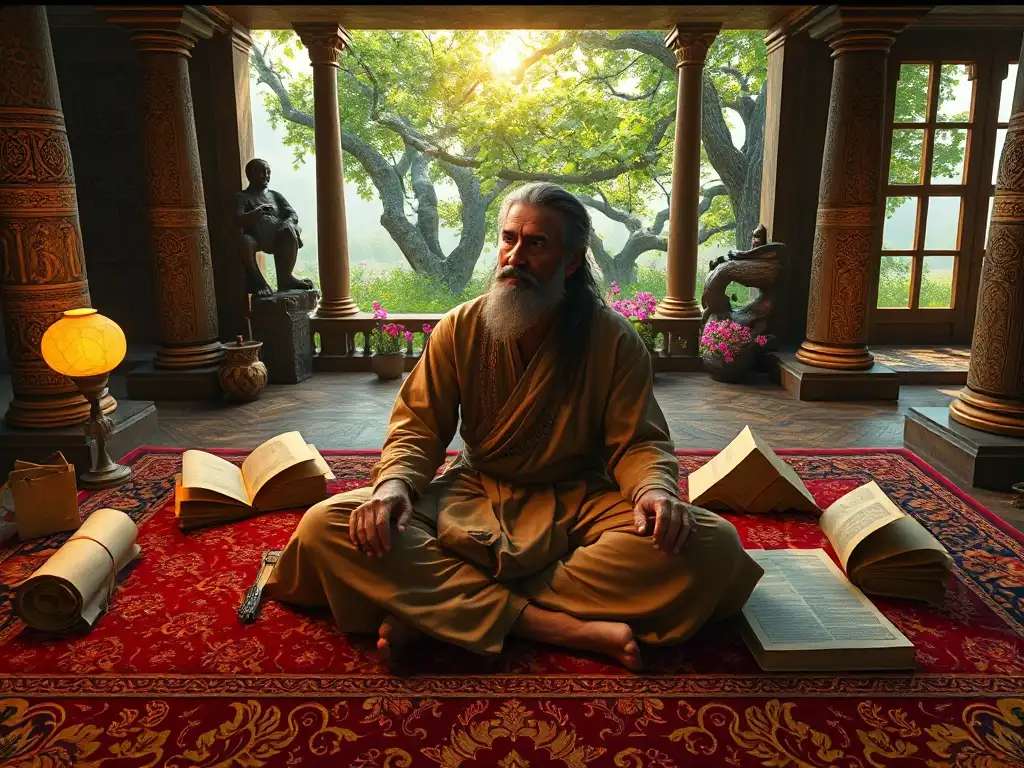
Welcome to Ancient India History, where we embark on a fascinating journey through the tapestry of time that weaves together the rich and diverse heritage of ancient Indian civilizations. In this exploration, we delve into the profound depths of Ancient Indian philosophy schools, with a spotlight on The Nyaya School—a pivotal institution that unravels the intricate logic and reasoning that shaped philosophical thought in India.
Prepare to be captivated as we uncover the nuances of ancient wisdom that not only influenced a civilization but continue to resonate in today's world. Join us as we delve deeper into this intellectual legacy and discover the secrets that lie within.
The Nyaya School stands as a cornerstone in the landscape of ancient Indian philosophy, intricately woven into the broader tapestry of Indian thought. Originating around the 6th century BCE, this school of logic and epistemology offers profound insights into the nature of knowledge, perception, and reasoning. The Nyaya philosophers embarked on a quest to understand the world through logical analysis and debate, laying the groundwork for critical thinking and rational discourse in Indian intellectual traditions.
As we delve into the Nyaya School, we will explore its foundational principles, key contributors, and its lasting impact on subsequent philosophical developments in India. The significance of the Nyaya School is not merely historical; its methods and ideas resonate in contemporary discussions on logic and epistemology, highlighting the enduring relevance of ancient Indian philosophy schools. Join us on this journey as we unravel the complex arguments and teachings that define the Nyaya School, illuminating its role in shaping the philosophical landscape of ancient India.
Historical Context of the Nyaya School
The Nyaya School emerged during a period of vibrant intellectual activity in ancient India, characterized by the flourishing of diverse philosophical schools. This context was marked by the quest for knowledge and truth, with various thinkers attempting to address fundamental questions about existence, reality, and the nature of the self. The Nyaya philosophers sought to refine the methods of inquiry, emphasizing logical reasoning as a tool for understanding the world.
Key figures such as Gautama, the founder of Nyaya, played a pivotal role in establishing the foundational texts, notably the Nyaya Sutras. These texts articulate the principles of Nyaya philosophy, including the famous Nyaya logic, which revolves around establishing valid knowledge through rigorous reasoning. By examining the historical context, we can appreciate how the Nyaya School not only contributed to philosophical discourse but also engaged in dialogues with other schools, enriching the broader intellectual landscape of ancient India.
Core Principles of Nyaya Philosophy
At its heart, the Nyaya School is built upon a systematic approach to logic and epistemology. The core principles can be distilled into several key concepts:
- Pramana (Means of Knowledge): Nyaya identifies four primary means of knowledge: perception, inference, comparison, and testimony. Each method provides a pathway to understanding reality, emphasizing the importance of reliable sources.
- Anumana (Inference): This concept focuses on deriving conclusions based on premises. The Nyaya philosophers developed a detailed framework for valid inference, which remains influential in modern logic.
- Tarka (Debate): The art of debate is central to Nyaya philosophy, as it encourages critical examination of ideas. Through structured discourse, philosophers aimed to ascertain truth and resolve contradictions.
- Pratyaksha (Perception): Nyaya emphasizes the role of direct experience in acquiring knowledge. This principle underscores the importance of empirical observation in philosophical inquiry.
By elucidating these principles, the Nyaya School not only advanced logical reasoning but also engaged with ethical and metaphysical questions, showcasing its multifaceted contributions to ancient Indian philosophy.
Influence and Legacy of the Nyaya School
The legacy of the Nyaya School extends far beyond its historical origins. Its influence is evident in various spheres of Indian thought, including ethics, metaphysics, and epistemology. The rigorous logical methods developed by Nyaya philosophers have set the stage for subsequent philosophical debates, particularly in relation to competing schools such as Vaisheshika and Sankhya.
Moreover, the Nyaya framework has left an indelible mark on Indian jurisprudence and logic, informing the development of legal reasoning and argumentation techniques. Its emphasis on structured analysis continues to resonate in contemporary philosophical discussions, bridging the gap between ancient and modern thought.
As we further explore the intricacies of the Nyaya School, we will uncover the specific contributions of individual philosophers, the interplay with other philosophical traditions, and the enduring impact of its teachings on both historical and contemporary contexts.
- Historical Context of the Nyaya School
- Core Principles of Nyaya Philosophy
- Influence and Legacy of the Nyaya School
- What is the Nyaya School in ancient Indian philosophy?
- How does the Nyaya School differ from other ancient Indian philosophy schools?
- What are the main contributions of the Nyaya School to philosophy?
- Who were the prominent philosophers associated with the Nyaya School?
- How did the Nyaya School influence other philosophical traditions in India?
Introduction to Ancient Indian Philosophy Schools

Ancient Indian philosophy is characterized by a rich tapestry of thought that emerged from various schools, each contributing unique perspectives and methodologies. Among these, the Nyaya school stands out for its rigorous approach to logic and epistemology. This school, which originated around the 6th century BCE, is part of a broader philosophical landscape that includes influential systems such as Sankhya, Vaisheshika, and others. The study of these philosophical schools not only enhances our understanding of ancient Indian thought but also provides insights into the intellectual traditions that shaped the civilization.
Overview of Major Philosophical Schools in Ancient India
Ancient India was home to several philosophical schools, each with distinct doctrines and methodologies. Here are some of the key schools:
- Nyaya:
- Founded by Gautama (also known as Akshapada), this school emphasizes logic and epistemology. Nyaya is known for its detailed analysis of perception, inference, and testimony as valid means of knowledge.
- It asserts that logical reasoning is essential for attaining truth and understanding the nature of reality.
- Vaisheshika:
- Established by Kanada, this school focuses on categorizing and analyzing the nature of reality. It introduces the concept of anu (atoms), suggesting that everything is composed of these minute particles.
- Vaisheshika complements Nyaya by providing a metaphysical framework that explores the nature of existence.
- Sankhya:
- Attributed to Kapila, Sankhya presents a dualistic framework that distinguishes between Purusha (consciousness) and Prakriti (matter). It analyzes the evolution of the universe through a systematic classification of the elements.
- This school is foundational for understanding the interplay between the physical and metaphysical realms.
- Buddhism:
- Founded by Siddhartha Gautama (the Buddha), this school emphasizes the Four Noble Truths and the Eightfold Path as means to attain enlightenment. It critically engages with the concepts of self and reality, providing a unique perspective on existence.
- Jainism:
- Founded by Mahavira, Jainism focuses on non-violence (ahimsa) and truth (satya) as essential principles. It offers a comprehensive analysis of the nature of the soul and the universe, promoting a path to liberation through ethical living.
- Advaita Vedanta:
- Championed by Adi Shankaracharya, this school advocates for non-dualism, arguing that the individual soul (Atman) is identical to the ultimate reality (Brahman). It emphasizes the importance of self-realization and liberation from the cycle of birth and death.
Each of these schools contributed to the intellectual discourse of ancient India, shaping the philosophical landscape and influencing cultural practices, ethics, and religious beliefs.
Significance of Logic in Ancient Indian Philosophy
Logic plays a crucial role in ancient Indian philosophy, particularly within the Nyaya school. The following points highlight its significance:
- Foundation of Knowledge:
- Logic is viewed as the cornerstone of valid knowledge. Nyaya philosophers meticulously defined the means of acquiring knowledge (pramanas) and emphasized the importance of logical reasoning in validating claims.
- They identified four primary means of knowledge:
- Pratyaksha (perception)
- Anumana (inference)
- Upamana (comparison)
- Shabda (testimony)
- Debate and Discourse:
- The Nyaya school fostered an environment of rigorous debate and dialogue, encouraging scholars to engage in critical analysis of ideas. This tradition of debate not only refined philosophical arguments but also contributed to a deeper understanding of complex concepts.
- The Nyaya Sutras, composed by Gautama, serve as foundational texts that outline the principles of logical reasoning.
- Influence on Other Schools:
- The logical framework established by Nyaya significantly influenced other philosophical systems in India. For instance, the Vaisheshika school incorporated Nyaya's logical principles to elaborate on its metaphysical theories.
- Likewise, Buddhist logic, particularly in the works of figures like Nagarjuna, shows traces of Nyaya's influence, demonstrating the interconnectedness of these philosophical traditions.
- Practical Applications:
- The emphasis on logic in Nyaya extends beyond theoretical discourse. It has practical implications in areas such as law, ethics, and everyday reasoning, promoting clarity of thought and effective communication.
- The methodologies developed by the Nyaya school continue to resonate in contemporary discussions on logic and epistemology.
The Nyaya school exemplifies the importance of logic in ancient Indian philosophy, serving as a vital component of the broader philosophical inquiry that characterizes this rich intellectual tradition. The interplay of different schools and their contributions creates a diverse landscape that continues to inspire and inform philosophical thought today.
Historical Context of the Nyaya School

The Nyaya School, one of the six orthodox schools of ancient Indian philosophy, is primarily concerned with logic, epistemology, and the nature of knowledge. Its historical context is deeply rooted in the intellectual traditions of ancient India, which flourished around the same time as significant developments in art, science, and spirituality. The Nyaya School emerged during a period of intense philosophical activity, proposing systematic methods for reasoning and disputation.
Origins of the Nyaya School in Ancient India
The origins of the Nyaya School can be traced back to the Nyaya Sutras, attributed to the sage Gautama Nyaya, also known as Akshapada. These texts, composed around the 2nd century BCE, laid the foundational principles of logic and epistemology in ancient Indian thought. The Nyaya Sutras present a structured approach to understanding knowledge, emphasizing the importance of valid reasoning and the process of inference as a means to attain truth.
The Nyaya School arose in response to various philosophical dilemmas prevalent in ancient Indian society. The need for clarity in arguments and the evaluation of evidence drove scholars to develop a comprehensive system of logic. The term "Nyaya" itself translates to "justice" or "rule," reflecting its focus on the methodologies of reasoning and the pursuit of truth.
Key Figures in the Development of Nyaya Philosophy
Several influential figures contributed to the evolution of Nyaya philosophy, expanding upon Gautama's foundational ideas:
- Uddyotakara: A prominent commentator on the Nyaya Sutras, Uddyotakara lived around the 7th century CE. He is known for his work, the Nyaya Varttika, where he elaborates on the original sutras, providing clarity and depth to Nyaya logic.
- Vatsyayana: Another key figure, Vatsyayana, is recognized for his Nyaya Bhashya, which further interprets and critiques the Nyaya Sutras. His contributions were crucial in establishing the Nyaya School as a significant philosophical tradition that engaged with other schools of thought.
- Jayanta Bhatta: Living in the 10th century CE, Jayanta Bhatta was instrumental in bridging Nyaya with other philosophical schools, particularly the Advaita Vedanta. His work emphasized the interconnections between various philosophical traditions in India.
Influence of the Nyaya School on Other Philosophical Traditions
The Nyaya School's rigorous approach to logic and epistemology has had a profound impact on other philosophical traditions within India and beyond. Notably, its methods have influenced:
- Vaisheshika: The Nyaya School's ideas on logic and categorization were foundational for the Vaisheshika school, which focused on metaphysics and the nature of reality.
- Buddhism: Nyaya’s emphasis on valid knowledge and logical reasoning resonated with Buddhist philosophers, who incorporated many Nyaya concepts into their discussions on perception and inference.
- Advaita Vedanta: The debates between Nyaya philosophers and Vedanta scholars spurred the development of more nuanced arguments regarding the nature of reality, self, and ultimate truth.
Through its meticulous methods of analysis and argumentation, the Nyaya School not only shaped the discourse of ancient Indian philosophy but also laid the groundwork for future philosophical inquiries. The principles established by Nyaya continue to be relevant in contemporary discussions about logic and reasoning, illustrating the enduring legacy of ancient Indian philosophy schools.
Core Principles of Nyaya Philosophy

Nyaya philosophy, one of the six orthodox schools of ancient Indian philosophy, is distinguished by its systematic approach to logic and epistemology. At its core, Nyaya emphasizes the importance of reasoning and critical analysis as tools for attaining knowledge and truth. The foundational principles revolve around the idea that knowledge is a means to liberation (moksha) and that sound reasoning is essential for discerning reality from illusion.
Central to Nyaya thought is the idea that human perception is inherently limited and that we must rely on logical inference to arrive at deeper truths. This school of thought is characterized by its methodical dissection of arguments and propositions, establishing criteria for validity and soundness. The Nyaya philosophers proposed a structured framework for understanding knowledge, which laid the groundwork for subsequent philosophical developments in India.
Fundamental Concepts of Nyaya Logic
The fundamental concepts of Nyaya logic revolve around the notion of "Nyaya," which translates to "justice" or "rule." This implies a commitment to rigorous standards of reasoning and argumentation. The Nyaya Sutras, authored by Akshapada Gautama, serve as the foundational text of this school, outlining the key principles and methodologies for logical inquiry.
Nyaya posits that knowledge can be classified into two categories: true knowledge (prama) and false knowledge (apramā). A key focus is on the means through which knowledge can be acquired, emphasizing the necessity of proper epistemological tools. The Nyaya philosophers meticulously categorized various forms of knowledge, aiming to refine our understanding of reality and the means by which we can grasp it.
The Four Pramanas (Sources of Knowledge)
Nyaya philosophy identifies four primary sources of knowledge, known as pramanas, that serve as the basis for acquiring valid knowledge. Understanding these pramanas is crucial for grasping the Nyaya approach to epistemology and logic.
Perception (Pratyaksha)
Perception, or "pratyaksha," is considered the most direct and immediate source of knowledge in Nyaya philosophy. It refers to the knowledge gained through the senses, allowing individuals to observe and experience the world around them. Nyaya distinguishes between two types of perception:
- Ordinary perception: Gained through direct sensory experience.
- Extraordinary perception: Involves insights that transcend ordinary sensory limitations, such as clairvoyance.
Nyaya philosophers assert that while perception is a reliable source of knowledge, it must be complemented by logical reasoning to avoid misinterpretation and illusion.
Inference (Anumana)
Inference, or "anumana," is the second pramana in Nyaya philosophy. It involves deriving knowledge based on logical reasoning from observed facts. The process of inference consists of two key components:
- Generalization: Establishing a universal rule from specific instances.
- Conclusion: Applying the general rule to arrive at a specific conclusion.
For example, if we observe that all humans are mortal (generalization) and that Socrates is a human, we can infer that Socrates is mortal (conclusion). Nyaya emphasizes the importance of sound reasoning in making valid inferences to uncover deeper truths.
Comparison (Upamana)
Comparison, or "upamana," is the third source of knowledge in the Nyaya framework. It refers to the knowledge gained through analogy or comparison between two entities that share common characteristics. This pramana is particularly useful in explaining unfamiliar concepts by relating them to known entities.
For instance, if someone has never seen a cow but has seen a horse, they can understand the concept of a cow through comparison. Nyaya philosophers highlight the significance of identifying relevant similarities to generate valid knowledge from comparisons.
Testimony (Shabda)
Testimony, or "shabda," serves as the fourth source of knowledge in the Nyaya system. It refers to the knowledge acquired from credible sources, such as scriptures, authoritative texts, or knowledgeable individuals. In Nyaya philosophy, the reliability of testimony is contingent upon the credibility of the source and the consistency of the information with other known truths.
Nyaya argues that testimony can provide valid knowledge when it comes from an authoritative source, thus emphasizing the role of tradition and teachings in the pursuit of understanding. The careful evaluation of testimony is critical to ensure that the knowledge gained is both accurate and beneficial.
By delving into these core principles and sources of knowledge, Nyaya philosophy presents a structured and logical framework that has significantly influenced the discourse of ancient Indian philosophy schools. Its emphasis on rigorous reasoning and analysis continues to resonate in contemporary philosophical discussions, highlighting the enduring legacy of this ancient tradition.
The Nyaya Methodology
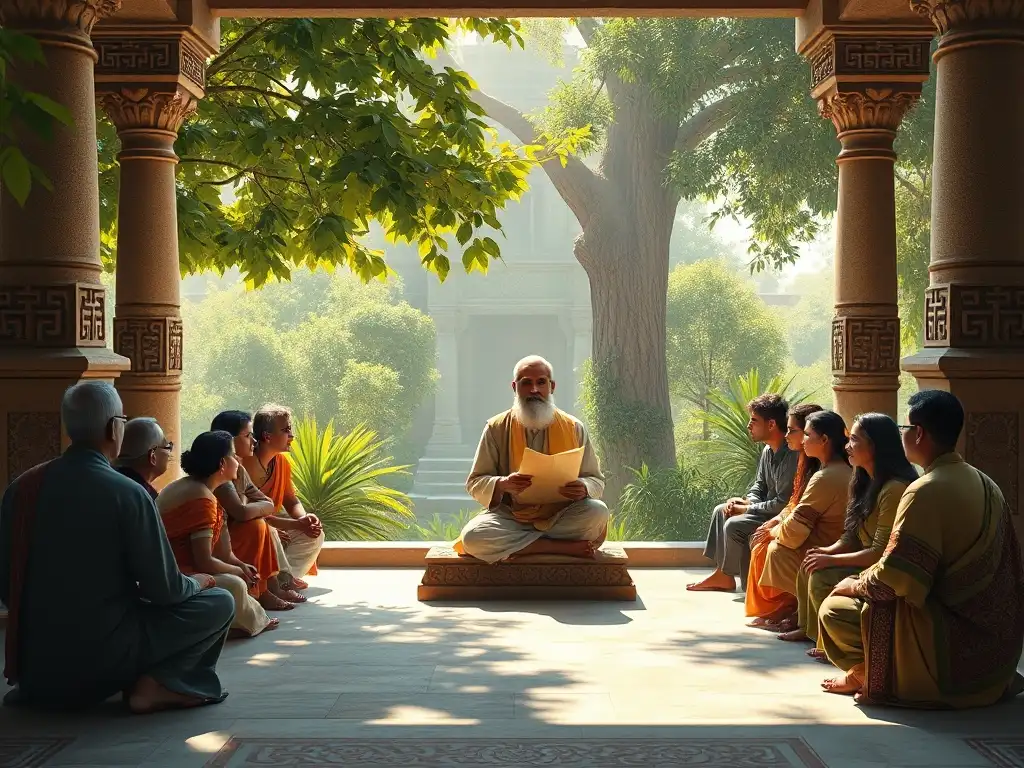
The Nyaya methodology is a cornerstone of ancient Indian philosophy, emphasizing the systematic study of logic and epistemology. Originating around the 6th century BCE, this school provides a framework for understanding reality and the processes of reasoning. Nyaya, which translates to "rule" or "method," seeks to establish a path to valid knowledge (prama) through rigorous analysis and argumentation.
At its core, the Nyaya methodology revolves around the concept of pramanas, or means of knowledge. The school identifies four primary pramanas: perception (pratyaksha), inference (anumana), comparison (upamana), and testimony (sabda). Each of these methods plays a crucial role in evaluating arguments and discerning truth.
Structure of Nyaya Arguments
Nyaya arguments are structured around a systematic format known as the "prakarana," which consists of several key elements:
- Pratijna (Assertion): This is the initial statement or claim that the arguer seeks to establish. For example, "Fire exists on the mountain."
- Hetu (Reason): The reasoning behind the assertion is provided, which must be logically sound. For instance, "Because there is smoke rising from the mountain."
- Udaharana (Example): A supportive example is introduced to validate the reasoning. "Just like smoke indicates the presence of fire in a kitchen."
- Upanaya (Application): The argument is then applied to the specific case at hand to reinforce the assertion. "Thus, the smoke seen on the mountain indicates there is likely fire."
- Nigamana (Conclusion): Finally, a conclusion is drawn that reaffirms the original assertion. "Therefore, we can conclude that fire exists on the mountain."
This structured approach not only aids in clarity but also enhances the persuasiveness of arguments. The Nyaya school emphasizes the importance of logical coherence and the necessity of sound reasoning in philosophical discourse.
Importance of Debate and Dialogue in Nyaya
Debate and dialogue are central to the Nyaya philosophy, reflecting its commitment to the pursuit of truth through collaborative inquiry. The Nyaya philosophers believed that engaging in discussions helps refine ideas, clarify concepts, and address counterarguments effectively.
- Contextual Understanding: Through dialogue, philosophers can explore diverse perspectives, which enriches their understanding of complex issues. The dialectical method encourages open-mindedness and the willingness to revise one's views in light of new evidence.
- Critical Thinking: The practice of debate fosters critical thinking skills, as participants must analyze arguments, identify fallacies, and construct compelling counterarguments. This intellectual rigor is vital for advancing philosophical thought.
- Social Engagement: Nyaya promotes the idea that philosophy is not just an isolated pursuit but a communal activity. Engaging in public discourse allows philosophical ideas to permeate society, influencing culture and ethics.
In essence, the Nyaya school's emphasis on debate serves as a tool for societal improvement and personal growth, reinforcing the notion that truth is best uncovered through collective effort.
Application of Nyaya Logic to Daily Life
The principles of Nyaya logic extend far beyond philosophical inquiry; they have practical implications for everyday decision-making and problem-solving. Here are some ways Nyaya logic can be applied in daily life:
- Critical Decision-Making: By employing the structured format of Nyaya arguments, individuals can make informed decisions. For example, when faced with a choice, one can outline the assertion (the decision), the reasoning behind it, examples that support it, and potential outcomes.
- Resolving Conflicts: In interpersonal disputes, applying Nyaya logic can help clarify positions and promote understanding. By articulating arguments clearly and engaging in constructive dialogue, parties can find common ground and resolve conflicts amicably.
- Evaluating Information: In an age of information overload, the ability to discern credible sources from misinformation is crucial. The Nyaya framework encourages critical evaluation of evidence and reasoning, enabling individuals to assess claims more effectively.
- Enhancing Communication Skills: The art of constructing logical arguments enhances one's ability to communicate ideas persuasively. Whether in personal conversations or professional settings, employing Nyaya logic can lead to more impactful exchanges.
The application of Nyaya logic in daily life empowers individuals to navigate complexities with clarity and reason. By integrating these principles into various aspects of life, one can cultivate a more thoughtful and analytical approach to challenges.
Comparison of Nyaya with Other Ancient Indian Philosophy Schools
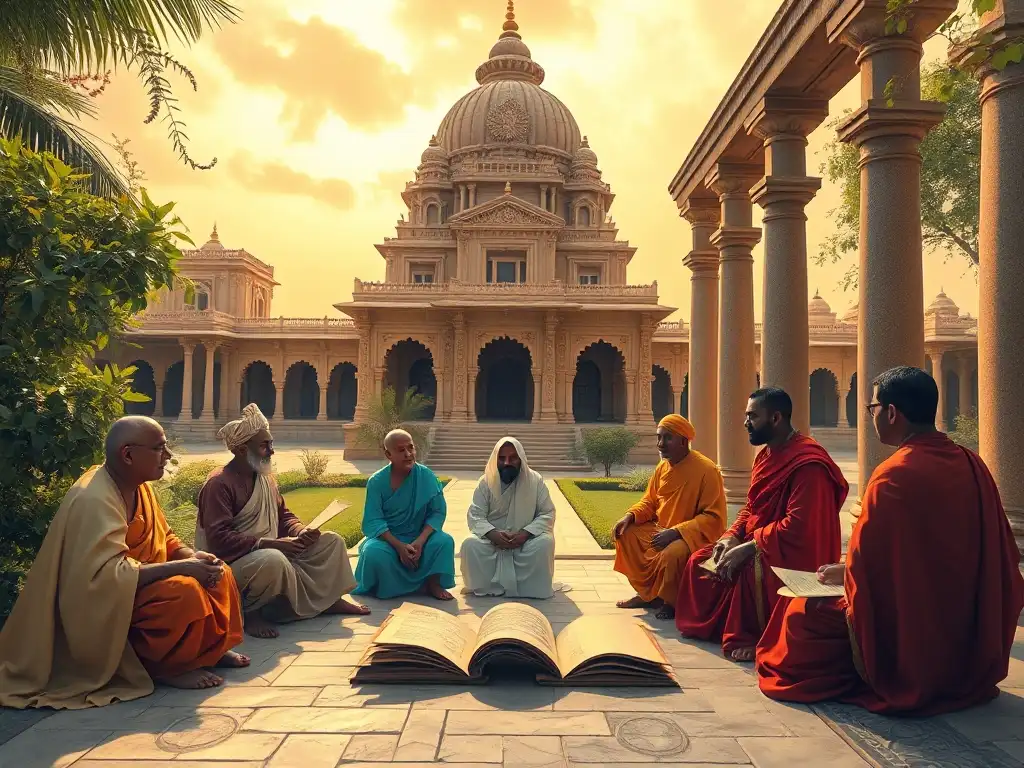
The Nyaya school of philosophy, with its focus on logic and epistemology, stands out among the various ancient Indian philosophy schools. Understanding its relationship with other schools like Vaisheshika and Sankhya reveals both shared foundations and unique divergences that contribute to the rich tapestry of ancient Indian thought.
Nyaya vs. Vaisheshika: Similarities and Differences
Both Nyaya and Vaisheshika are integral to ancient Indian philosophy and share several foundational aspects, yet they exhibit distinct characteristics that differentiate them.
Similarities
- Origin and Development: Both schools emerged around the same period (approximately the 2nd century BCE) and were systematically developed by the philosopher Gautama (Nyaya) and Kanada (Vaisheshika).
- Focus on Logic: Both emphasize the importance of logical reasoning. Nyaya primarily concentrates on the process of inference and debate, while Vaisheshika employs logic to categorize and understand the nature of reality.
- Epistemological Foundations: Each school recognizes different means of knowledge (pramanas). They share a common understanding of perception (pratyaksha) and inference (anumana) as valid sources of knowledge.
Differences
- Core Concerns: Nyaya is primarily concerned with epistemology and the nature of knowledge, whereas Vaisheshika focuses on metaphysics, particularly the categorization of substances.
- Philosophical Goals: The ultimate aim of Nyaya is to attain liberation (moksha) through right knowledge, while Vaisheshika aims to explain the nature of reality, including the atomic theory.
- Concept of God: Vaisheshika introduces the idea of Ishvara (God) as a creator, while Nyaya does not necessarily emphasize divinity in its logical framework.
While Nyaya and Vaisheshika share common philosophical roots, their divergent focuses on logic versus metaphysics lead to unique paths within ancient Indian philosophy.
Nyaya vs. Sankhya: Philosophical Divergence
The contrast between Nyaya and Sankhya highlights fundamental differences in their approach to knowledge, reality, and existence.
Fundamental Differences
- Nature of Reality: Sankhya posits a dualistic framework, distinguishing between purusha (consciousness) and prakriti (matter). In contrast, Nyaya does not inherently adopt a dualistic view, focusing instead on the relationship between knowledge and the objects of knowledge.
- Methodology: Nyaya employs a rigorous logical structure for understanding concepts, whereas Sankhya relies on a more metaphysical and philosophical discourse, emphasizing enumeration and classification of principles.
- Role of Experience: Nyaya values sensory experience as a crucial element of knowledge acquisition, while Sankhya regards it as less significant in the pursuit of ultimate truth, emphasizing introspection and contemplation.
Philosophical Implications
The divergence between Nyaya and Sankhya reflects broader themes in ancient Indian philosophy regarding the nature of existence and the pathways to knowledge. While Nyaya seeks to establish clarity through logical analysis, Sankhya aims to attain understanding through categorical distinctions.
Nyaya's Influence on Later Indian Philosophical Thought
The Nyaya school has had a lasting impact on Indian philosophy, influencing both contemporaneous schools and later developments.
Contributions to Indian Philosophy
- Integration with Other Schools: Nyaya's principles of logic and reasoning became foundational for various other schools, particularly in their debates on epistemology. Its framework of pramanas influenced the development of Buddhist logic and later Vedanta.
- Influence on Jainism: The Jain tradition adopted Nyaya's methods of debate and analysis, particularly in their understanding of perception and inference.
- Modern Implications: Nyaya's emphasis on logical reasoning continues to resonate within contemporary philosophical discussions in India. Its structured approach contributes to fields such as mathematics and formal logic.
Conclusion
In essence, the Nyaya school not only enriched the philosophical landscape of ancient India but also laid the groundwork for future explorations in logic and epistemology across various traditions. Its legacy persists, underscoring the importance of logical inquiry in understanding the complexities of existence and knowledge.
The Legacy of the Nyaya School

The Nyaya School, one of the six orthodox systems of ancient Indian philosophy, holds a significant place in the landscape of ancient Indian thought. Founded by the sage Gautama, also known as Akshapada, during the 2nd century BCE, Nyaya primarily focuses on logic and epistemology. The school's central text, the "Nyaya Sutras," systematically outlines its philosophical doctrines, establishing a framework for understanding reality and promoting rational discourse.
Impact of Nyaya on Modern Indian Philosophy
The contributions of the Nyaya School extend far beyond its historical context, influencing both traditional and contemporary philosophical discourse in India.
- Logical Methodology: The rigorous logical techniques developed by Nyaya philosophers laid the groundwork for subsequent philosophical inquiry. Their methods of reasoning, including the use of pramanas (means of knowledge), are foundational in modern Indian philosophy. This emphasis on logical analysis has been instrumental in shaping the discourse around epistemology and metaphysics.
- Engagement with Other Schools: Nyaya engaged with and critiqued various other philosophical systems, such as Buddhism and Jainism. This dialectical approach enriched Indian philosophy, fostering an environment of intellectual competition and collaboration. The way Nyaya philosophers addressed the criticisms of other schools demonstrates its robust nature and adaptability, which continues to inspire contemporary philosophical debates.
- Integration into Hindu Thought: The Nyaya School's principles have been integrated into broader Hindu thought, influencing texts such as the Brahma Sutras and the Bhagavad Gita. The emphasis on logical reasoning and ethical conduct found in Nyaya has permeated various aspects of Hindu philosophy, making it a crucial player in the development of modern Indian philosophical ideals.
Contemporary Relevance of Nyaya Logic in Various Fields
The relevance of Nyaya logic is not confined to philosophy alone; it extends to various fields, showcasing its versatility and application in contemporary contexts.
- Law and Jurisprudence: The principles of logical reasoning employed by the Nyaya School are mirrored in contemporary legal practices. The focus on evidence, argumentation, and the systematic evaluation of claims aligns closely with modern judicial processes. Nyaya's analytical approach to reasoning aids in the interpretation of laws and the resolution of conflicts.
- Cognitive Science and Artificial Intelligence: Recent advancements in cognitive science and artificial intelligence have drawn parallels with Nyaya's theories of perception and inference. The structured methodologies for understanding human cognition and reasoning processes in Nyaya can inform AI algorithms, aiding in the development of more sophisticated decision-making systems.
- Education and Pedagogy: The pedagogical strategies rooted in Nyaya's logical frameworks can enhance educational practices today. By promoting critical thinking and analytical skills, Nyaya-inspired methodologies can foster a more interactive and inquiry-based learning environment, preparing students to engage thoughtfully with complex issues.
- Ethics and Morality: The ethical implications of Nyaya philosophy continue to resonate in discussions around morality and social justice. The nuanced understanding of consequences and intentions in Nyaya can contribute to contemporary ethical debates, providing a rich philosophical foundation for addressing modern dilemmas.
The legacy of the Nyaya School remains a vital part of the discourse within ancient Indian philosophy schools. Its impact on both historical and modern contexts underscores the enduring significance of logic and reasoning in shaping philosophical thought across various domains.
Conclusion
The exploration of the Nyaya School highlights its significance within the broader framework of ancient Indian philosophy. As a pivotal system, Nyaya has laid the groundwork for logical reasoning and epistemology, influencing not only subsequent philosophical thought in India but also offering insights applicable to modern philosophical discourse.
Summary of Key Contributions of the Nyaya School
The Nyaya School, founded by Gautama (also known as Akshapada), introduced a systematic approach to logic and epistemology, which can be summarized through its key contributions:
- Formal Logic: The Nyaya School is renowned for its methods of formal logic, distinguishing itself from other philosophical schools by emphasizing the significance of valid inference (anumana) and reasoning.
- Epistemology: Nyaya scholars identified four valid means of knowledge (pramanas):
- Perception (pratyaksha): Direct sensory experience.
- Inference (anumana): Concluding based on premises and evidence.
- Comparison (upamana): Knowledge gained through analogy.
- Testimony (shabda): Knowledge passed through reliable sources.
- Debate and Discourse: The Nyaya School established rigorous methods for debate and discussion, fostering a tradition of philosophical inquiry that encouraged critical examination of ideas.
- Influence on Other Schools: Nyaya’s logical framework and epistemological theories have been instrumental in shaping the teachings of other philosophical schools such as Vaisheshika and Mimamsa.
- Realism: The proponents of Nyaya advocated for a form of realism, asserting that the external world exists independently of perception, which influenced later philosophical thought.
The Importance of Understanding Ancient Indian Philosophy Schools Today
Understanding ancient Indian philosophy schools, particularly the Nyaya School, is crucial for several reasons:
- Cultural Heritage: Engaging with the Nyaya School enriches our understanding of India's philosophical heritage, providing insights into how ancient Indian thinkers approached questions of existence, knowledge, and ethics.
- Critical Thinking: The logical methodologies developed by the Nyaya School promote critical thinking skills, encouraging individuals to analyze arguments and evidence systematically.
- Interdisciplinary Relevance: The principles of logic and reasoning from the Nyaya School have applications across various fields, including science, law, and artificial intelligence, where structured reasoning is paramount.
- Global Philosophy: By studying the Nyaya School, scholars can appreciate the diversity of philosophical thought that exists globally, fostering a more inclusive understanding of philosophical traditions.
- Inspiration for Modern Issues: The insights from the Nyaya School can provide valuable perspectives on contemporary issues, such as the nature of truth and the process of knowledge acquisition, thereby contributing to ongoing philosophical debates.
The Nyaya School not only holds a vital place in ancient Indian philosophy but also continues to offer valuable lessons and frameworks that are applicable in today's world. Understanding this school and its contributions enhances our appreciation for the rich tapestry of philosophical thought that has emerged from ancient India.
Frequently Asked Questions
What is the Nyaya School in ancient Indian philosophy?
The Nyaya School is one of the most significant philosophical traditions in ancient India, focusing on logic, epistemology, and the methods of gaining knowledge.
How does the Nyaya School differ from other ancient Indian philosophy schools?
Unlike other schools, the Nyaya School emphasizes formal logic and the criteria for valid reasoning, making it unique in its analytical approach to philosophical inquiry.
What are the main contributions of the Nyaya School to philosophy?
The Nyaya School contributed significantly to the development of logic, argumentation techniques, and the understanding of perception and inference as means of knowledge acquisition.
Who were the prominent philosophers associated with the Nyaya School?
Key figures include Gautama, the founder of Nyaya, and later philosophers like Vatsyayana, who expanded on the original texts and teachings of the school.
How did the Nyaya School influence other philosophical traditions in India?
The principles of the Nyaya School influenced various other traditions by integrating logical reasoning and epistemological analysis, fostering a more rigorous approach to philosophy across ancient Indian thought.
Final Reflection: Embracing the Wisdom of Ancient Indian Philosophy
The exploration of the Nyaya School reveals the profound relevance of logic and reasoning in our contemporary world. In an age where critical thinking is paramount, the principles laid out by ancient philosophers resonate more than ever. The Nyaya School's emphasis on epistemology and the methods of inquiry not only enrich our understanding of ancient Indian philosophy schools but also serve as a guiding light for navigating the complexities of modern life. The quest for knowledge and truth remains timeless, urging us to engage deeply with the world around us.
Cultural and social landscapes are continuously shaped by the philosophical frameworks we adopt. The Nyaya School, with its rigorous approach to logic, has influenced various fields, from law to science, fostering a culture of rational discourse. As we reflect on its enduring legacy, we are reminded of the words of the great philosopher Aristotle: It is the mark of an educated mind to be able to entertain a thought without accepting it.
This sentiment echoes the essence of the Nyaya School, encouraging us to question, analyze, and ultimately understand the world through a lens of reason and inquiry.
As we conclude this exploration, I invite you to reflect on how the teachings of the Nyaya School can be integrated into your own life. Consider the importance of questioning assumptions, seeking clarity, and engaging in thoughtful dialogue. Let the principles of ancient Indian philosophy inspire you to cultivate a mindset that values logic and reason, not only in academic pursuits but also in everyday interactions. Embrace the wisdom of the past as a tool for personal growth and societal progress, and remember that the journey of inquiry is as significant as the answers we seek.
Unveil the Complexity of Ancient Indian Philosophy!
Thank you for diving into the fascinating world of the Nyaya School and its profound impact on ancient Indian thought! We hope you’ve gained valuable insights into how logic shaped philosophical discourse in India. Now it’s time to take that knowledge and put it into action!
- Engage with Others: Join a local or online philosophy group to discuss the principles of Nyaya and their relevance today.
- Explore Further: Read more books or articles on Indian philosophy; consider forming a study group focused on ancient schools of thought.
- Share Your Insights: Connect with us on social media and share your thoughts about how logic influences your daily decisions and perspectives.
What aspect of the Nyaya School do you find most intriguing, and how do you believe it applies to modern logic and reasoning?