
The Impact of Ashoka the Great: How a Ruler Propagated Buddhism


Welcome to Ancient India History, your portal to the fascinating tapestry of India's past. Here, we delve into the impact of Ashoka the Great, a ruler whose profound commitment to Buddhism not only transformed his empire but also reverberated across centuries, shaping spiritual and cultural landscapes. As you explore the legacy of Ashoka and the rise of Buddhism, prepare to uncover the intricate connections between governance, philosophy, and the quest for peace in ancient times.
Join us on this journey through history and discover how one ruler's vision continues to influence millions today. What secrets lie within Ashoka's reign? Let's find out together!
- Introduction to Ashoka the Great and Buddhism
- The Rise of Ashoka: Context and Background
- The Transformation of Ashoka: From Warrior to Buddhist Ruler
- The Impact of Ashoka on Buddhism
- The Spread of Buddhism Under Ashoka
- The Legacy of Ashoka and Buddhism
- Conclusion: The Enduring Impact of Ashoka and Buddhism
-
Frequently Asked Questions
- What was the role of Ashoka in the spread of Buddhism?
- How did Ashoka's policies influence Indian society?
- What were the key achievements of Ashoka during his reign?
- How did Ashoka's edicts contribute to the spread of Buddhism?
- What is the significance of Ashoka in the context of ancient Indian history?
- Final Reflection: The Enduring Legacy of Ashoka and Buddhism
- Embrace the Legacy of Ashoka: Take Action Today!
Introduction to Ashoka the Great and Buddhism
Ashoka the Great, one of the most illustrious and transformative rulers of ancient India, reigned during the Maurya Dynasty in the 3rd century BCE. His legacy is not only marked by his remarkable governance but also by his profound influence on the spread of Buddhism, which has resonated through centuries and across continents. Following a bloody conquest, Ashoka underwent a significant transformation, embracing the principles of non-violence and compassion that Buddhism espouses.
This pivotal shift not only altered the course of his rule but also catalyzed the propagation of Buddhist teachings throughout his empire and beyond. The Impact of Ashoka and Buddhism is a critical area of study for understanding how a ruler can shape the religious and cultural landscape of an era, making Ashoka's life and reign a focal point for historians and scholars alike.
Overview of Ashoka's Reign
Ashoka ascended to the throne around 268 BCE and ruled the vast Mauryan Empire, which spanned much of the Indian subcontinent. His reign is often characterized by a commitment to public welfare, reflected in his edicts, which were inscribed on pillars and rocks throughout his territory. These inscriptions emphasized moral governance, non-violence, and respect for all living beings.
- Key Aspects of Ashoka’s Rule:
- Conquest and Transformation: Initially known for his military conquests, Ashoka's transformation began after the Kalinga War, where the devastation he witnessed prompted a deep introspection.
- Promotion of Dharma: He adopted the concept of Dharma, integrating Buddhist principles into statecraft, which emphasized ethical conduct, compassion, and social justice.
- Cultural Patronage: Ashoka became a great patron of Buddhism, supporting the establishment of monasteries and the dissemination of Buddhist texts.
This profound shift in Ashoka's governance not only marked a new era of peace and stability but also laid the groundwork for Buddhism to flourish, making it a significant force in the cultural and spiritual life of ancient India.
Significance of Buddhism in Ancient India
Buddhism emerged in the 5th century BCE as a reformist movement seeking to address the spiritual and social issues of its time. Under Ashoka’s influence, Buddhism transitioned from a regional faith to a prominent religious force with far-reaching implications.
- Impact of Buddhism on Society:
- Social Reform: Buddhism’s teachings on equality and social justice challenged the rigid caste system, promoting inclusivity.
- Cultural Exchange: Ashoka's missionary activities fostered cultural exchange between diverse regions, contributing to the spread of Buddhist art, philosophy, and practices.
- Global Influence: Ashoka’s efforts not only solidified Buddhism's presence in India but also set the stage for its spread to Central Asia, Southeast Asia, and beyond, influencing cultures worldwide.
The Impact of Ashoka and Buddhism illustrates the powerful interplay between leadership and religious propagation, showcasing how a ruler's vision can profoundly shape the spiritual and cultural fabric of a civilization. Through Ashoka's reign, Buddhism not only thrived in ancient India but also established a legacy that continues to influence millions today.
The Rise of Ashoka: Context and Background
Historical Context of Ashoka's Rule
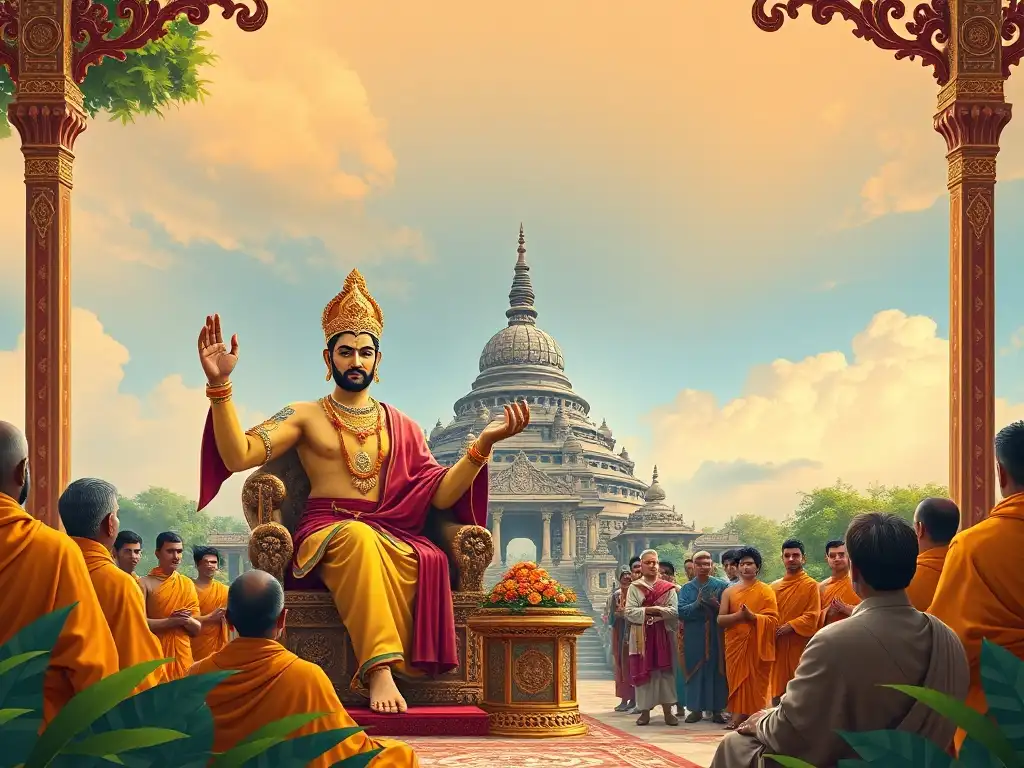
Ashoka the Great ruled the Maurya Empire from approximately 268 to 232 BCE, a period marked by significant political and social transformation in ancient India. His reign followed the conquests of his grandfather, Chandragupta Maurya, and the subsequent consolidation of power by his father, Bindusara. The Maurya Empire at this time encompassed a vast territory, stretching from present-day Afghanistan in the northwest to Bengal in the east, and from the Himalayas in the north to the Deccan Plateau in the south.
The socio-political landscape was characterized by frequent warfare, territorial expansion, and a complex web of alliances among various kingdoms. Ashoka's ascent to the throne came in the aftermath of a brutal campaign against Kalinga, a powerful kingdom located on the eastern coast of India. This conflict not only solidified Ashoka's power but also served as a turning point in his life, leading him to adopt a path of non-violence and compassion, which would later influence the spread of Buddhism.
The Impact of Ashoka and Buddhism is particularly significant, as his transformation from a fierce warrior to a proponent of peace and Dharma (moral law) marked a pivotal shift in the cultural and spiritual fabric of the region. The Kalinga War, which claimed countless lives, deeply affected Ashoka, prompting him to embrace the principles of Buddhism and advocate for its teachings throughout his empire and beyond.
Early Life and Ascension to the Throne
Ashoka was born into the Maurya dynasty around 304 BCE, the son of Emperor Bindusara and a queen named Dharma. His early life was steeped in the complexities of royal lineage. Being one of the numerous sons in a royal family, Ashoka faced challenges in securing his position as the heir to the throne. His upbringing involved rigorous training in martial arts, statecraft, and leadership, preparing him for the responsibilities that lay ahead.
His ascension to the throne came after a tumultuous period marked by rivalry among his siblings. Despite these challenges, Ashoka proved to be a capable military leader and strategist. He initially gained prominence through his military campaigns, which showcased his prowess and ambition. Following the death of Bindusara, Ashoka ultimately emerged victorious, claiming the throne.
However, it was his experiences during the Kalinga War that catalyzed his transformation. Witnessing the horrors of war firsthand and the suffering it inflicted upon the populace led to a profound internal change. Ashoka's embrace of Buddhism not only shaped his policies but also significantly influenced the Impact of Ashoka and Buddhism across Asia. He began to promote the values of peace, tolerance, and compassion, setting forth a new path for governance that emphasized moral and ethical considerations over mere conquest.
With his conversion to Buddhism, Ashoka became a pivotal figure in the propagation of Buddhist teachings, commissioning edicts that spread the philosophy throughout his empire. His reign exemplifies how a ruler can profoundly impact religion and culture, leaving a lasting legacy that resonates to this day.
The Transformation of Ashoka: From Warrior to Buddhist Ruler
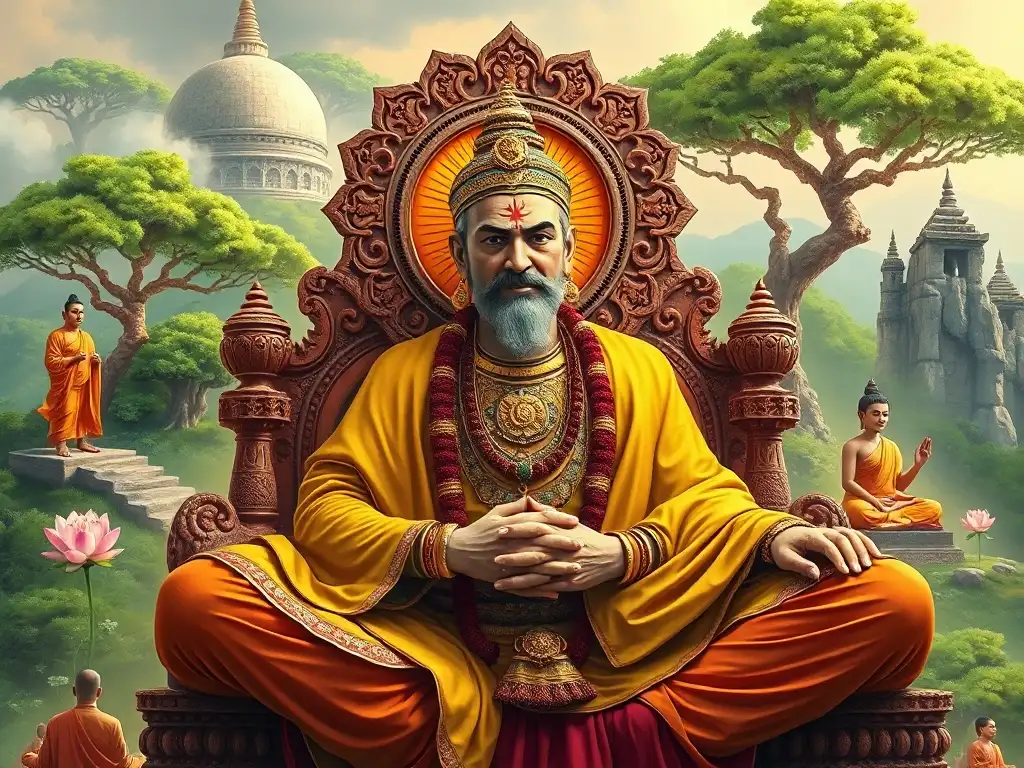
Ashoka the Great, one of the most iconic figures in Indian history, is renowned not only for his military prowess but also for his profound transformation from a fierce warrior to a benevolent ruler who embraced and propagated Buddhism. This metamorphosis marked a significant turning point not only in his reign but also in the spread of Buddhist teachings across the Indian subcontinent and beyond.
The Kalinga War: A Turning Point
The Kalinga War, fought around 261 BCE, stands as a pivotal moment in Ashoka's life and reign. This conflict was not merely a military engagement; it was a profound catalyst for change. The war resulted in a catastrophic loss of life, with estimates suggesting that around 100,000 soldiers and civilians perished. The aftermath left Ashoka deeply shaken and remorseful, as he witnessed the immense suffering that war inflicted on his subjects.
What good is conquest if it leads to suffering? The true victory lies in the hearts of the people.
- Ashoka's reflection post-Kalinga War.
This realization prompted Ashoka to reassess his values and approach to governance. The bloodshed of the Kalinga War ignited a quest for peace and an earnest desire to promote the welfare of his people. As a result, he began to prioritize non-violence (Ahimsa) and compassion, core tenets of Buddhism, over territorial expansion.
Ashoka's Conversion to Buddhism
Following the Kalinga War, Ashoka's journey towards Buddhism deepened. Although he was already exposed to various philosophical teachings, it was Buddhism that resonated with him the most profoundly. His conversion was not just a personal spiritual awakening; it was a public commitment to the principles of Buddhism that shaped his policies and governance.
- Emphasis on Dharma: Ashoka adopted the concept of Dharma as the guiding principle of his rule. He believed in governing through moral authority rather than fear, promoting ethical conduct among his subjects. This was a departure from the traditional autocratic rule that characterized many monarchs of his time.
- Spread of Buddhist Teachings: To disseminate the teachings of Buddhism, Ashoka established numerous stupas, monasteries, and schools across his empire. He sent missionaries, including his own son Mahinda, to foreign lands such as Sri Lanka, effectively broadening the reach of Buddhism.
- Edicts of Ashoka: In an effort to communicate his new philosophy, Ashoka inscribed his edicts on rocks and pillars throughout his realm. These edicts not only promoted Buddhist ethical principles but also emphasized tolerance for all religions, marking a significant shift towards religious pluralism in ancient India.
- Promotion of Social Welfare: Ashoka initiated various social welfare programs, including the construction of hospitals, roads, and wells. His commitment to the welfare of his subjects reflected the compassionate ideals of Buddhism, positioning him as a ruler who genuinely cared for the well-being of his people.
Through his transformation from a warrior to a Buddhist ruler, Ashoka's impact on Buddhism was monumental. Not only did he play a crucial role in the propagation of its teachings, but he also set a precedent for future leaders, showcasing how governance rooted in compassion and ethical principles can lead to a more harmonious society. The legacy of Ashoka continues to inspire those seeking to blend leadership with moral responsibility, solidifying his place in history as a pivotal figure in the spread of Buddhism.
The Impact of Ashoka on Buddhism
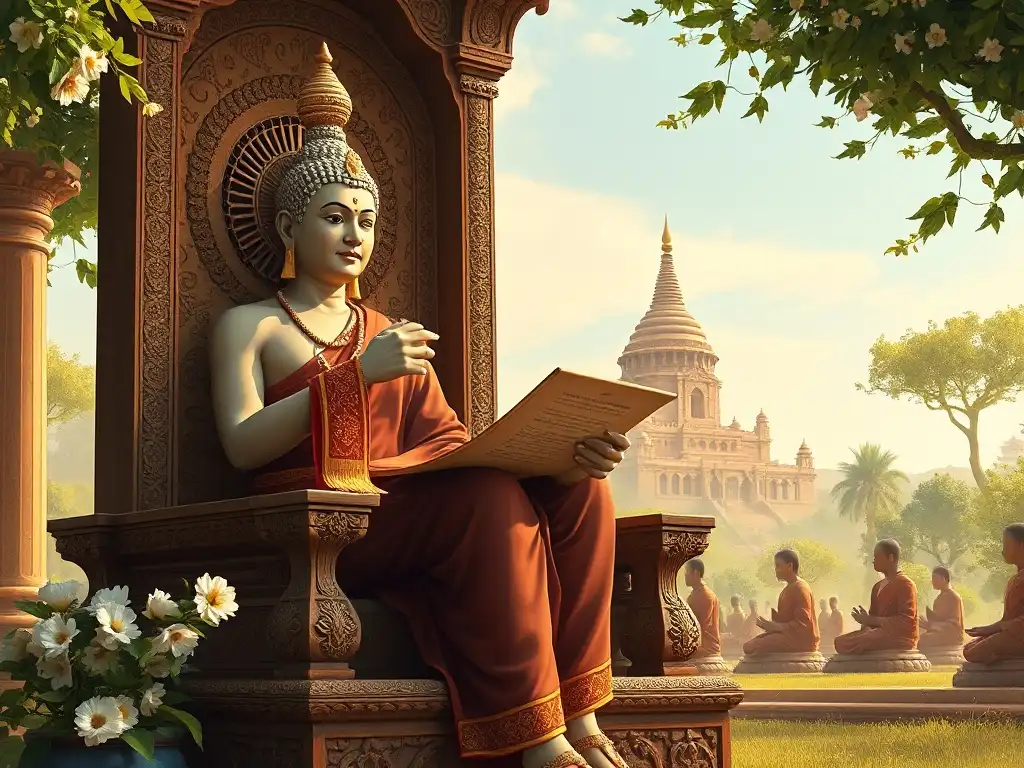
Ashoka the Great, the third Mauryan emperor, is often celebrated as one of the most significant figures in the spread of Buddhism. His reign, which lasted from approximately 268 to 232 BCE, marked a transformative period in Indian history, characterized by the transition from a militaristic approach to governance to one that embraced non-violence and moral governance. Ashoka's commitment to Buddhism significantly influenced its teachings, practices, and overall reach, not only within the Indian subcontinent but across Asia.
Promotion of Buddhist Teachings
Under Ashoka's rule, the impact of Ashoka and Buddhism became evident through his vigorous promotion of Buddhist teachings. After the Kalinga War, which resulted in a significant loss of life and suffering, Ashoka experienced a profound transformation that led him to renounce violence and adopt the principles of Dharma (moral law).
- Edicts of Ashoka: He inscribed his teachings and edicts on pillars and rocks throughout his empire, using language accessible to the common people. These edicts emphasized:
- Ahimsa (non-violence)
- Truthfulness
- Compassion towards all living beings
- Respect for all religions
- Buddhist Councils: Ashoka convened the Third Buddhist Council around 250 BCE, which aimed to purify the Buddhist movement and eliminate corruption. This council played a crucial role in:
- Standardizing Buddhist texts
- Promoting the Theravada tradition
- Facilitating the spread of Buddhist teachings across regions.
- Missionary Activities: Ashoka sent missionaries to various parts of India and beyond, including regions like Sri Lanka, and even as far as the Hellenistic kingdoms. This initiative helped to disseminate Buddhist teachings and establish a network of followers.
Establishment of Stupas and Monasteries
Another significant aspect of Ashoka's impact on Buddhism was his patronage in the establishment of stupas and monasteries, crucial for the physical and spiritual infrastructure of Buddhism.
- Stupas: Ashoka constructed numerous stupas, which served as reliquaries for sacred Buddhist relics. Some notable stupas include:
- Sanchi Stupa: One of the oldest stone structures in India, representing the architectural brilliance of the time.
- Bodh Gaya: The site of Buddha’s enlightenment, where Ashoka built a stupa to honor this pivotal moment in Buddhist history.
- Monasteries: Ashoka's support extended to the construction of monastic complexes, known as viharas, which provided spaces for monks to live, study, and teach. This infrastructure was essential for:
- Facilitating the education of new monks
- Hosting important religious gatherings
- Serving as centers for meditation and community service.
- Cultural Exchanges: The stupas and monasteries not only served religious purposes but also became centers for cultural exchange, where art, architecture, and ideas flourished, promoting the growth of Buddhism as a major world religion.
Support for Buddhist Monks and Scholars
Ashoka's reign was marked by significant support for Buddhist monks and scholars, ensuring that they had the resources and freedom to propagate their teachings.
- Royal Patronage: Ashoka provided generous patronage to Buddhist monks, which included:
- Land grants for monasteries
- Funds for the maintenance of monks and their activities
- Protection under the law, allowing them to travel freely for missionary work.
- Promotion of Education: Ashoka championed the establishment of centers of learning dedicated to Buddhist teachings. These centers attracted scholars from various regions, which:
- Fostered intellectual debates and discussions
- Led to the development of important Buddhist texts and philosophies.
- Interfaith Dialogue: Ashoka's policy of religious tolerance encouraged dialogue between different faiths. He believed that understanding among various religious communities was essential for societal harmony. This approach helped to:
- Cultivate a broader acceptance of Buddhism
- Allow for the integration of local practices and beliefs, enriching the Buddhist tradition.
The impact of Ashoka and Buddhism during his reign was profound and multi-faceted. His dedication to promoting Buddhist teachings, establishing stupas and monasteries, and supporting monks and scholars laid the foundation for Buddhism to flourish not just in India, but across the world, shaping the course of history for centuries to come.
The Spread of Buddhism Under Ashoka

Diplomatic Relations and Buddhist Missions
One of the pivotal aspects of Ashoka the Great's influence on the Impact of Ashoka and Buddhism was his extensive diplomatic network, which facilitated the spread of Buddhism beyond the borders of India. Ashoka recognized that to propagate Buddhism effectively, it was essential to establish strong diplomatic ties with neighboring kingdoms. He sent emissaries and missionaries to various regions, including regions of present-day Nepal, Sri Lanka, and Southeast Asia.
- Key Missions:
- Sri Lanka: Ashoka dispatched his son, Mahinda, and daughter, Sanghamitra, to Sri Lanka. Their mission was instrumental in establishing Buddhism on the island, leading to the formation of the Sri Lankan Buddhist tradition.
- Southeast Asia: Missions were also sent to regions that would later become parts of Indonesia, Thailand, and Myanmar, laying the groundwork for Buddhism to flourish in these areas.
These missions were not merely religious in nature; they were also diplomatic efforts aimed at fostering peaceful relations and cultural exchanges. The emissaries carried not just teachings of Buddhism but also ideals of non-violence and moral governance, which resonated deeply in various cultures.
Ashoka's Edicts: A Tool for Propagation
Ashoka's Edicts, inscribed on rocks and pillars throughout his empire, served as a powerful medium for promoting Buddhist ideals and practices. These inscriptions, written in various languages, including Brahmi and Greek, communicated Ashoka's vision of Dhamma (moral law) and his commitment to the welfare of his subjects.
- Content of the Edicts:
- Moral Teachings: The edicts emphasized values like compassion, non-violence, and respect for all living beings, aligning closely with Buddhist principles.
- Promotion of Buddhist Monasteries: Some edicts encouraged the establishment of monasteries and the support of monks, directly contributing to the institutional framework of Buddhism.
The strategic placement of these edicts along trade routes ensured that travelers, merchants, and diplomats encountered them, further disseminating Ashoka’s message. By embedding Buddhist teachings into the legal and moral fabric of his empire, Ashoka effectively ensured that Buddhism was not just a religion but a guiding principle for governance and social conduct.
Influence on Neighboring Regions and Cultures
The Impact of Ashoka and Buddhism extended far beyond the Indian subcontinent, influencing various cultures and societies. Ashoka's policies and the establishment of Buddhist missions had profound effects on neighboring regions, leading to the integration of Buddhist practices into local customs and traditions.
- Cultural Syncretism:
- In regions like Sri Lanka, Buddhism blended with indigenous beliefs, leading to unique interpretations and practices. The integration of local deities into Buddhist worship exemplifies this syncretism.
- In Southeast Asia, the adoption of Buddhist art and architecture can be observed in stupas and temple complexes, which reflect local styles while adhering to Buddhist iconography.
- Political Influence:
- Rulers in regions influenced by Ashoka often adopted Buddhist principles in governance, promoting peace and stability. For instance, the subsequent rulers of Sri Lanka embraced Buddhism, leading to the establishment of a long-lasting Buddhist monarchy.
The legacy of Ashoka's influence on Buddhism is evident in how it shaped the cultural, political, and spiritual landscapes of neighboring regions, establishing a framework that allowed Buddhism to thrive and evolve into a global religion.
Ashoka the Great's strategic diplomatic engagements, the propagation of his edicts, and his influence on neighboring cultures collectively contributed to the remarkable spread of Buddhism, marking a significant chapter in the history of ancient Indian religions.
The Legacy of Ashoka and Buddhism

Ashoka the Great, the third Mauryan emperor, is often regarded as one of the most influential figures in the spread of Buddhism beyond the Indian subcontinent. His reign marked a significant transformation in both his personal beliefs and the governance of his empire, leading to a lasting legacy that shaped Indian society and culture in profound ways. Ashoka’s conversion to Buddhism after the Kalinga War was pivotal, as it not only influenced his policies but also established Buddhism as a major world religion.
Long-term Effects on Indian Society and Culture
The impact of Ashoka on Indian society and culture is multifaceted, extending into various aspects of daily life, governance, and religious practices. Here are some of the notable long-term effects:
- Promotion of Ethical Governance:
- Ashoka introduced the concept of Dharma (moral law) as a guiding principle for governance.
- His edicts emphasized non-violence ( Ahimsa), compassion, and tolerance towards all beings, which became foundational ethical principles in Indian culture.
- Cultural Syncretism:
- The spread of Buddhism under Ashoka facilitated the blending of various cultural practices.
- It encouraged inter-religious dialogue and the exchange of ideas between different sects, leading to a more pluralistic society.
- Architectural Innovations:
- Ashoka’s reign saw the construction of stupas, monastic complexes, and pillars inscribed with his edicts that promoted Buddhist teachings. Notable examples include the Sanchi Stupa and the Ashoka Pillars.
- These architectural feats not only served religious purposes but also became symbols of cultural identity and heritage.
- Educational Advancements:
- The establishment of monasteries and educational institutions during Ashoka’s reign contributed to the spread of literacy and scholarship.
- These centers became hubs for learning, where Buddhist teachings were studied alongside other philosophies and sciences.
- Art and Literature:
- The influence of Buddhism under Ashoka inspired a rich tradition of art, including sculptures and paintings depicting the life of the Buddha and other Buddhist themes.
- Literature flourished, with texts that explored Buddhist philosophy and ethics, contributing to the intellectual legacy of India.
Overall, Ashoka’s policies and his commitment to Buddhism significantly shaped the ethical, cultural, and artistic landscape of ancient India, leaving a legacy that continued to resonate through time.
Ashoka's Role in the Global Spread of Buddhism
Ashoka's contributions to the spread of Buddhism were not confined to India; his influence extended across Asia, facilitating the religion's journey to various regions. Here’s how Ashoka played a crucial role in the global dissemination of Buddhism:
- Diplomatic Missions:
- Ashoka dispatched missionaries, including his own son Mahinda and daughter Sanghamitra, to regions such as Sri Lanka, Southeast Asia, and beyond.
- These missions were instrumental in establishing Buddhism as a state religion and fostering its acceptance in diverse cultures.
- Support for Buddhist Councils:
- Ashoka convened the Third Buddhist Council, which aimed to purify the Buddhist order and standardize teachings.
- The council's decisions, documented in various texts, helped create a cohesive framework for Buddhist practice that could be easily shared across different regions.
- Cultural Exchange:
- The trade routes established during Ashoka's reign facilitated not only the exchange of goods but also ideas and beliefs.
- The interactions between Indian traders and communities in Central Asia, the Middle East, and further into East Asia helped propagate Buddhist teachings and practices.
- Inscriptions and Edicts:
- Ashoka’s edicts, inscribed on rocks and pillars, served as a means of communication, outlining his commitment to Buddhism and moral governance.
- These inscriptions were translated and disseminated, providing a written record that encouraged the spread of Buddhist thought.
- Influence on Later Empires:
- Subsequent empires, such as the Kushan Empire, adopted Ashoka’s pro-Buddhist policies, further extending the reach of Buddhism.
- The Silk Road, which became a vital trade network, also played a significant role in transmitting Buddhist teachings to China and beyond.
Ashoka the Great's strategic initiatives and unwavering commitment to Buddhism not only solidified its place in Indian society but also catalyzed its global spread. His legacy continues to influence millions around the world, demonstrating the enduring impact of his reign on the teachings and dissemination of Buddhism.
Conclusion: The Enduring Impact of Ashoka and Buddhism

Summary of Ashoka's Contributions to Buddhism
Ashoka the Great, who reigned from 268 to 232 BCE, is often regarded as one of the most significant figures in the history of Buddhism, primarily due to his extensive efforts in promoting and propagating its teachings. His conversion to Buddhism following the Kalinga War marked a pivotal turn in his rule and the broader acceptance of Buddhism in India and beyond.
- Patronage of Buddhism: Ashoka was a fervent supporter of Buddhist monks and scholars. He built numerous stupas, monasteries, and viharas, which served as centers for learning and meditation. Notable constructions include the Sanchi Stupa and the Great Stupa at Sarnath, both of which became crucial pilgrimage sites for later generations.
- Edicts and Inscriptions: One of his most enduring contributions was the issuance of the Edicts of Ashoka, inscribed on pillars and rocks across his empire. These edicts not only promoted Buddhist principles such as non-violence (ahimsa) and compassion but also emphasized ethical governance and moral conduct. His decrees encouraged a peaceful coexistence among various religious communities, fostering an environment conducive to the spread of Buddhism.
- Missionary Activities: Ashoka played a crucial role in sending missionaries to various regions, including Sri Lanka, where he established Buddhism as a major faith. His emissaries, such as Mahinda, were instrumental in spreading Buddhist teachings beyond the Indian subcontinent, helping Buddhism gain a foothold in Southeast Asia.
Reflection on Ashoka's Legacy in Ancient Indian History
The impact of Ashoka on Buddhism and, consequently, on ancient Indian history cannot be overstated. His reign marked a significant transition in Indian civilization, where the principles of Buddhism began to influence not only spiritual practices but also governance and social ethics.
- Cultural Syncretism: Ashoka's promotion of Buddhism contributed to a unique syncretism in ancient Indian culture. By advocating for tolerance and respect for all religions, he laid the groundwork for a pluralistic society where ideas and beliefs could coexist harmoniously. This legacy of inclusivity continued to shape Indian society long after his reign.
- Influence on Future Rulers: The model of governance that Ashoka established based on Buddhist principles influenced subsequent rulers in India. Many later dynasties, including the Gupta Empire, adopted aspects of his administration and ethical governance, further embedding Buddhist values into the political fabric of the region.
- Enduring Teachings: Ashoka's emphasis on non-violence and compassion resonated through time, influencing not only the development of Buddhism but also other religious and philosophical traditions in India. His teachings continue to inspire movements for peace and social justice globally.
The impact of Ashoka and Buddhism remains a defining chapter in ancient Indian history. His contributions not only advanced the spread of Buddhism but also transformed the cultural and ethical landscape of India, leaving a legacy that continues to be felt in contemporary discussions around governance, ethics, and inter-religious dialogue.
Frequently Asked Questions
What was the role of Ashoka in the spread of Buddhism?
Ashoka played a crucial role in the propagation of Buddhism by embracing the religion after the Kalinga War and promoting its teachings across his empire through edicts and missions.
How did Ashoka's policies influence Indian society?
Ashoka's policies were centered on non-violence and compassion, which significantly transformed Indian society by promoting moral governance and encouraging the practice of Buddhism among the populace.
What were the key achievements of Ashoka during his reign?
During his reign, Ashoka is known for his extensive infrastructure projects, the establishment of hospitals, and the construction of stupas that housed Buddhist relics, all contributing to the cultural advancement of ancient India.
How did Ashoka's edicts contribute to the spread of Buddhism?
Ashoka's edicts, inscribed on rocks and pillars, communicated his moral principles and Buddhist teachings to the public, making them accessible and promoting Buddhism as a way of life throughout his empire.
What is the significance of Ashoka in the context of ancient Indian history?
Ashoka is often regarded as one of the most impactful rulers in ancient Indian history, not only for his military conquests but also for his commitment to peace and Buddhism, which left a lasting legacy on Indian culture and religion.
Final Reflection: The Enduring Legacy of Ashoka and Buddhism
The impact of Ashoka the Great on Buddhism is not just a historical footnote; it is a vibrant thread woven into the fabric of our modern world. Today, as we navigate a landscape often fraught with division and conflict, the principles of compassion, tolerance, and non-violence that Ashoka championed resonate more than ever. His commitment to spreading the teachings of Buddhism serves as a powerful reminder of the potential for leaders to influence societal values and promote peace.
Culture and society continue to be shaped by the ideals that Ashoka embraced. His reign marked a pivotal shift towards a more humane governance model, one that prioritized the welfare of all beings. This legacy is evident in contemporary discussions around ethical leadership and social responsibility. As Mahatma Gandhi once said, “The greatness of a nation and its moral progress can be judged by the way its animals are treated.” This sentiment echoes Ashoka’s own edicts, which emphasized kindness and respect for all life, illustrating the profound and lasting influence of his rule on our ethical frameworks.
As we reflect on the lessons from Ashoka’s life and his propagation of Buddhism, let us consider how we can embody these values in our own lives. How can we, as individuals and communities, promote compassion and understanding in our daily interactions? The teachings of Ashoka invite us to be mindful of our actions and their impact on others, urging us to foster a culture of peace and empathy. In doing so, we not only honor his legacy but also contribute to a more harmonious world for future generations.
Embrace the Legacy of Ashoka: Take Action Today!
Thank you for immersing yourself in the fascinating impact of Ashoka the Great on Buddhism and his profound legacy in shaping ancient India. Your interest paves the way for a deeper understanding and appreciation of history. Now, let’s channel that curiosity into actionable steps!
- Join a local or online discussion group focused on the philosophies of Ashoka and Buddhism to share insights and expand your knowledge.
- Visit historical sites related to Ashoka or explore documentaries, books, and podcasts that provide a deeper look into his reign and contributions.
- Share your insights with friends or on social media to inspire others to discover this pivotal moment in history. Use the hashtag #LegacyOfAshoka to connect with fellow enthusiasts!
What aspect of Ashoka’s reign do you find most inspiring, and why? Let's spark a conversation!