
The Role of Textiles in Ancient Indian External Trade

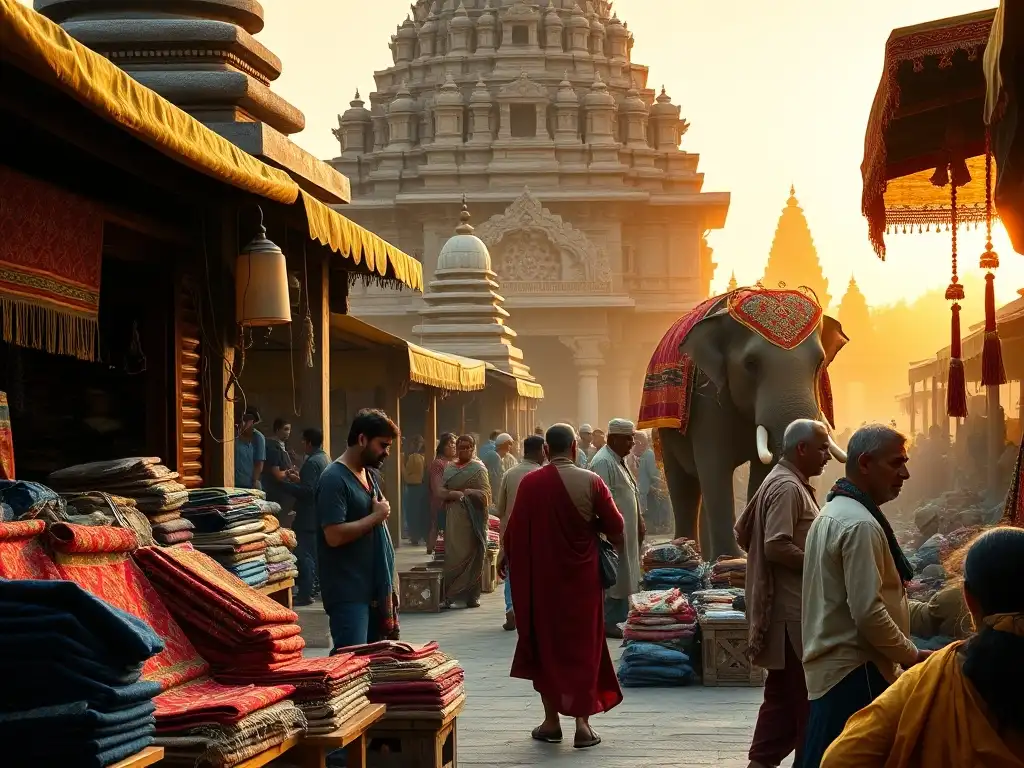
Welcome to Ancient India History, where we embark on a fascinating journey through the vibrant tapestry of India's past. Here, we delve into the rich and diverse history, culture, and contributions of ancient Indian civilizations, from the enigmatic Indus Valley to the illustrious Gupta Empire. In our featured article, "The Role of Textiles in Ancient Indian External Trade," we uncover the intricate web of ancient Indian textiles trade—a cornerstone of economic exchange that shaped not only local communities but also international relations.
Are you curious about how these exquisite fabrics influenced trade routes and cultural exchanges? Join us as we unravel the threads of history that connect us to this remarkable legacy!
- Introduction to Ancient Indian Textiles Trade
- Historical Context of Textiles in Ancient India
- Types of Textiles in Ancient India
- The Role of Textiles in External Trade
- Techniques and Innovations in Textile Production
- Economic Impacts of Textile Trade
- Decline of Textile Trade in Ancient India
- Conclusion: Legacy of Ancient Indian Textiles Trade
-
Frequently Asked Questions
- What was the significance of textiles in ancient Indian trade?
- Which civilizations were involved in trade with ancient Indian textiles?
- How did the Indus Valley Civilization contribute to textile trade?
- What were the main types of textiles produced in ancient India?
- How did the Gupta Empire influence textile trade?
- Final Reflection: The Enduring Legacy of Ancient Indian Textiles Trade
- Uncover the Threads of History!
Introduction to Ancient Indian Textiles Trade
The history of ancient Indian textiles trade is a fascinating narrative that intertwines culture, economy, and craftsmanship. From the vibrant cotton fabrics of the Indus Valley to the exquisite silks of the Gupta Empire, textiles played a pivotal role in shaping India's external trade networks.
This article delves into the significance of textiles in ancient Indian commerce, exploring how these woven masterpieces not only influenced trade practices but also served as a medium of cultural exchange. The rich variety of textiles produced in ancient India reflects the ingenuity of its artisans and the flourishing economic landscape, making it imperative to understand their impact on both local and international markets.
Overview of Ancient Indian Trade Practices
Ancient India was a hub of trade, with its merchants engaging in vibrant commerce that spanned across continents. The trade routes, both overland and maritime, facilitated the exchange of goods, ideas, and cultures. Key aspects of these trade practices included:
- Trade Routes:
- The Silk Road connected India to Central Asia and beyond.
- Maritime routes linked India with the Middle East and Southeast Asia.
- Goods Traded:
- Besides textiles, other commodities included spices, precious stones, and metals.
- The diversity of products attracted traders from various regions, enhancing India's economic stature.
- Marketplaces:
- Ancient cities like Pataliputra and Taxila became bustling centers of trade.
- These marketplaces were not only economic hubs but also cultural melting pots.
- Merchants and Guilds:
- Specialized merchant classes emerged, with guilds such as the Srenis playing a vital role in regulating trade practices.
- These groups provided support, protection, and standards for trade, fostering a thriving business environment.
Importance of Textiles in Ancient Indian Economy
Textiles were more than just fabric; they were a cornerstone of the ancient Indian economy. The significance of textiles can be understood through several dimensions:
- Economic Contribution:
- Textiles accounted for a substantial portion of ancient India's exports, contributing significantly to the GDP.
- The production of textiles provided livelihoods for numerous artisans and weavers.
- Cultural Symbolism:
- Different regions specialized in specific textiles, such as the famous muslin of Bengal and the intricate brocades of Varanasi.
- These textiles often carried cultural meanings, with designs and motifs reflecting local traditions and beliefs.
- Trade Relations:
- The demand for Indian textiles in foreign markets, particularly in Rome and Persia, established strong trade relationships.
- These interactions not only enhanced India's economic ties but also facilitated cultural exchanges, as textiles often traveled alongside ideas and innovations.
- Innovation and Techniques:
- The ancient Indian textile industry was characterized by advanced techniques such as dyeing, weaving, and embroidery.
- Innovations like block printing and tie-dyeing were pivotal in creating unique products that captivated international markets.
The textiles trade of ancient India is a testament to the country's rich history and its significant role in global commerce. The interplay between textiles, trade practices, and cultural exchanges lays the foundation for understanding the broader economic landscape of ancient Indian civilizations.
Historical Context of Textiles in Ancient India
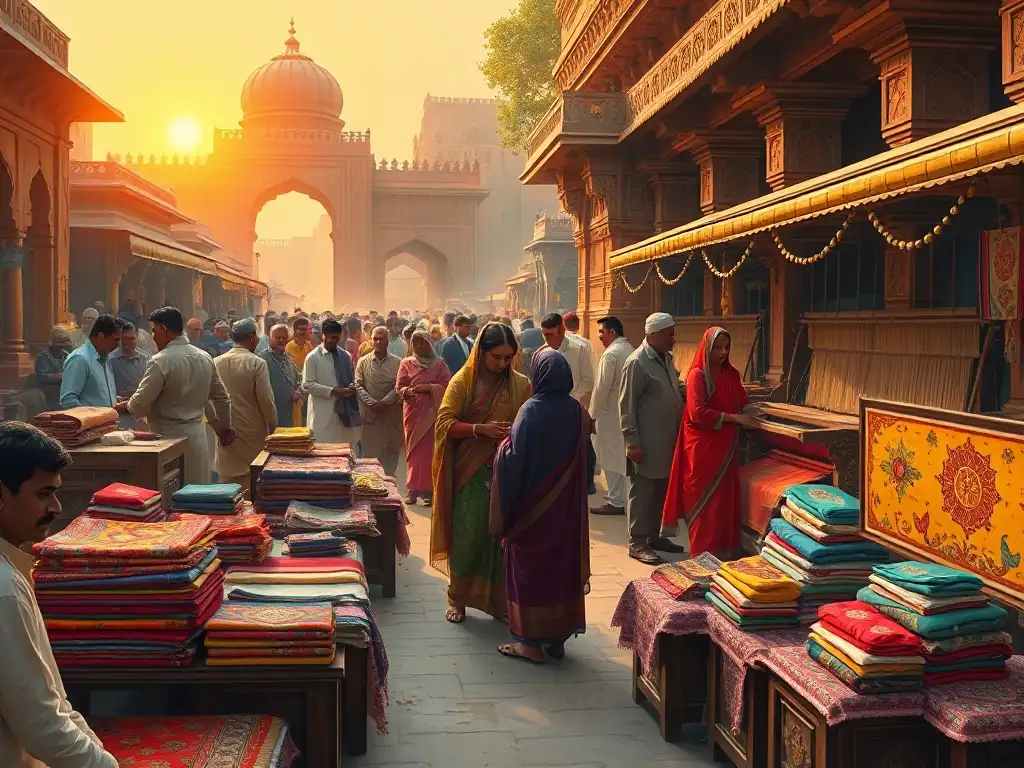
The history of textiles in ancient India is deeply intertwined with its trade and commerce, showcasing the remarkable skills and creativity of its civilizations. From the earliest days of the Indus Valley Civilization (circa 3300-1300 BCE), textiles have played a significant role not only in daily life but also in external trade, influencing cultural exchanges across regions.
The production of textiles in ancient India was characterized by a variety of materials, including cotton, silk, and wool, each contributing to a diverse range of fabrics. The intricate techniques of weaving, dyeing, and embellishing were highly developed, reflecting the artistry and craftsmanship of the time. The advancement of textile production can be traced through archaeological findings, ancient texts, and trade records, which highlight the importance of these goods in both local and international markets.
As trade routes expanded, particularly during the Maurya (322-185 BCE) and Gupta (c. 320-550 CE) empires, India emerged as a prominent player in the global textile trade. The demand for Indian textiles surged in markets across Asia, the Middle East, and even Europe, leading to the establishment of extensive trade networks that facilitated cultural and economic exchanges.
Development of Textile Production in Ancient Civilizations
The evolution of textile production in ancient India was marked by several key developments that shaped its role in external trade. Initially, the Indus Valley Civilization showcased advanced techniques in cotton weaving, with evidence of spindle whorls and loom remains found in archaeological sites like Mohenjo-Daro and Harappa. The use of natural dyes and intricate patterns underscored the sophistication of their textile crafts.
As time progressed, the advent of new materials such as silk, particularly during the Mauryan period, revolutionized textile production. The techniques for sericulture, or silk cultivation, were introduced, leading to the creation of luxurious silk fabrics that became highly sought after in foreign markets. The Arthashastra, an ancient Indian treatise on statecraft and economics, mentions the importance of textiles in trade and regulation, emphasizing the sophistication of the textile economy.
The Gupta Empire saw further advancements in textile production, with the integration of various weaving techniques and patterns. The emergence of specialized weaving centers, such as those in Varanasi and Kanchipuram, established India as a central hub for high-quality textiles. This period is often referred to as the Golden Age of Indian history, not only for its political achievements but also for its cultural and artistic advancements, including textiles.
Key Regions Involved in Textile Manufacturing
Several regions across ancient India were renowned for their textile manufacturing, each contributing unique styles and techniques that enriched the tapestry of Indian textiles. These regions became pivotal in the ancient Indian textiles trade, catering to both domestic and international markets.
- Gujarat: Known for its rich cotton production, Gujarat emerged as a major center for weaving and dyeing. The port city of Surat became a vital trading hub, facilitating the export of textiles to Europe and the Middle East.
- Bengal: Famous for its fine muslin, Bengal textiles were highly prized in ancient trade routes. The intricate craftsmanship involved in producing lightweight, sheer fabrics made Bengal a key player in the ancient Indian textiles trade.
- Tamil Nadu: The southern region was celebrated for its silk weaving, particularly in cities like Kanchipuram and Madurai. The vibrant colors and exquisite designs of its silk sarees gained immense popularity, making Tamil Nadu a significant contributor to the textile trade.
- Uttar Pradesh: With its historical centers of Varanasi and Agra, Uttar Pradesh became synonymous with brocade and other elaborate textiles. The intricate patterns and gold-thread work of brocade fabrics were in high demand, both locally and internationally.
- Madhya Pradesh: Known for its tribal weaving traditions, this region produced unique textiles that reflected the cultural diversity of ancient India. The use of natural dyes and traditional motifs gave these textiles a distinct identity in the market.
The interplay of these regions in textile production not only highlights the diversity of ancient Indian textiles but also underscores their significant role in external trade, facilitating cultural exchanges that enriched the civilizations involved.
Types of Textiles in Ancient India
Cotton Textiles and Their Significance
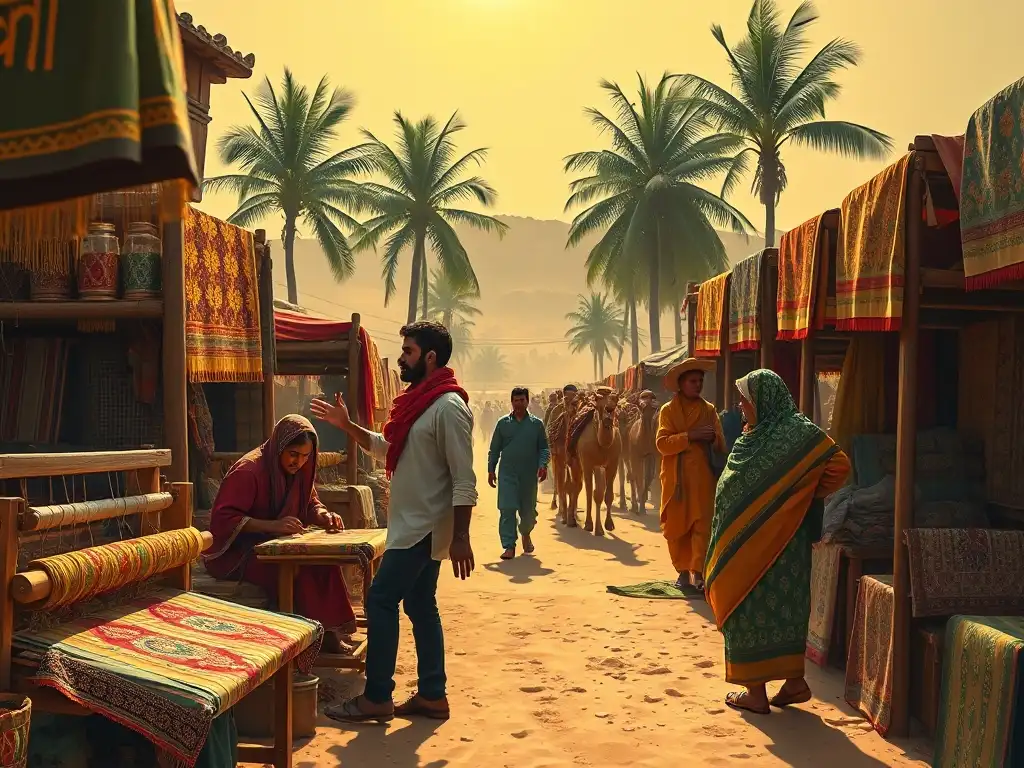
Cotton textiles were one of the most significant exports of ancient Indian civilizations, particularly during the Indus Valley period (c. 3300–1300 BCE). The cultivation of cotton in India dates back to at least 5000 BCE, with archaeological evidence suggesting that the Indus Valley people were proficient in spinning and weaving cotton. The prominence of cotton textiles can be attributed to several factors:
- Durability and Comfort: Cotton fabrics were favored for their breathability and softness, making them ideal for the warm climate of the Indian subcontinent. The ability to produce lightweight and comfortable garments contributed to their widespread use.
- Artistic Expression: Ancient Indian textiles displayed intricate designs and vibrant colors, achieved through various dyeing techniques. The use of natural dyes derived from plants and minerals added to the aesthetic appeal. Notable textile patterns included block printing and embroidery, which later influenced textile traditions in other cultures.
- Trade Networks: The demand for Indian cotton textiles extended beyond the subcontinent. By the time of the Maurya Empire (c. 322–185 BCE), these textiles were traded extensively along the Silk Road and maritime routes, reaching markets in Africa, the Middle East, and Europe. This trade not only enriched the Indian economy but also facilitated cultural exchanges.
Silk Textiles: Origins and Influence
Silk textiles emerged as a luxury commodity in ancient India, with their origins tracing back to around 2000 BCE when sericulture began in the region. The production of silk was often associated with the royal courts and elite classes, symbolizing status and wealth. Key points regarding silk textiles include:
- Cultural Significance: Silk was revered not only for its beauty but also for its association with spirituality and divine symbolism. Textiles often carried motifs that reflected religious beliefs, such as images of deities and mythological narratives.
- Influence on Trade: The Silk Route played a crucial role in the dissemination of silk from India to other parts of Asia and beyond. This trade route facilitated the exchange of not just goods but also ideas, art, and culture. Indian silk textiles, characterized by their elaborate designs and vibrant colors, were highly sought after in foreign markets.
- Technological Advancements: The production of silk textiles in ancient India involved sophisticated techniques, including weaving, dyeing, and embroidery. These methods were refined over centuries, leading to the creation of unique silk garments that showcased both artistry and craftsmanship.
Wool and Other Fabrics in Ancient Trade
While cotton and silk dominated the textile trade, wool and other fabrics also played a notable role in ancient Indian commerce. Woolen textiles were primarily produced in the northern regions of India, where sheep farming was prevalent. Important aspects include:
- Diverse Fabrics: In addition to wool, ancient Indian textiles included linen made from flax and hemp. These materials were used to create a variety of garments, blankets, and other textile products that catered to different climates and preferences.
- Trade with Neighboring Regions: The trade of woolen textiles was often conducted with Central Asian tribes and Persian merchants. The exchange of goods included not only textiles but also livestock, grain, and spices, further enriching the cultural tapestry of the region.
- Cultural Exchange: The presence of diverse fabrics in ancient trade routes contributed to the blending of styles and techniques. For instance, the influence of Persian and Central Asian designs began to manifest in Indian textile patterns, resulting in a fusion of aesthetics that enriched the textile heritage of ancient India.
The ancient Indian textiles trade was a dynamic and multifaceted aspect of the economy, reflecting not only the material culture of the time but also the interconnectedness of ancient civilizations through commerce. The diversity of textiles, from cotton and silk to wool, played a substantial role in shaping economic relationships and cultural exchanges across regions.
The Role of Textiles in External Trade
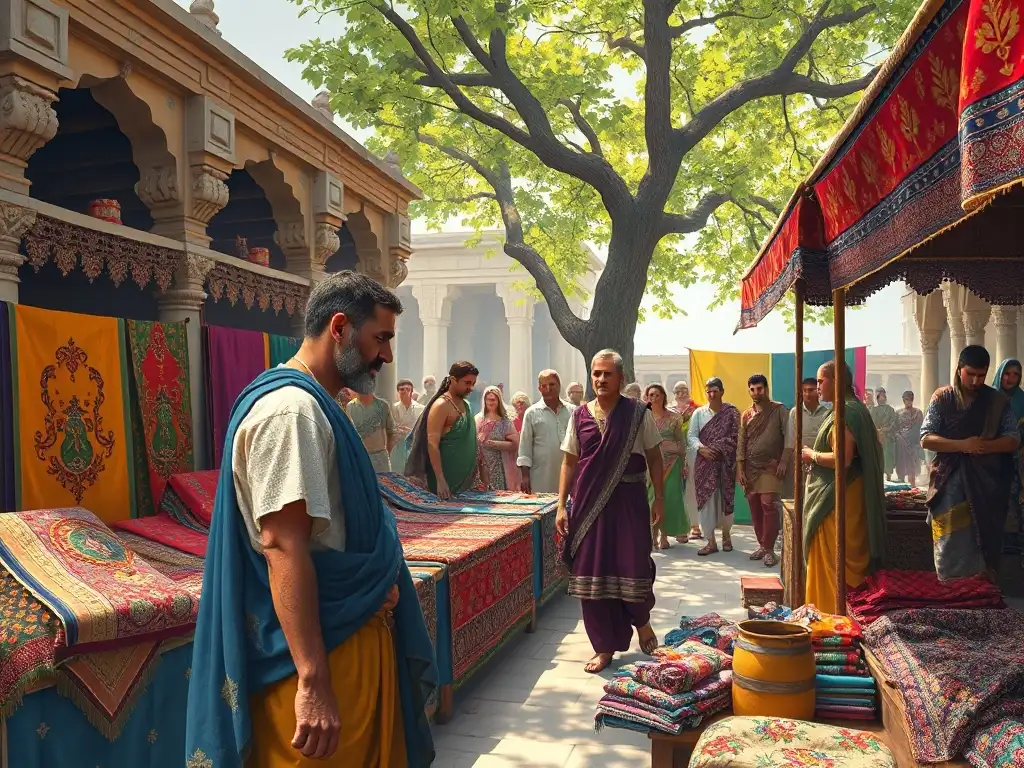
Textiles played a pivotal role in the external trade of ancient India, serving not only as a commodity but also as a symbol of cultural exchange and economic prosperity. The rich tradition of textile production, dating back to the Indus Valley Civilization, laid the foundation for India's reputation as a leading exporter of luxurious fabrics. These textiles, characterized by their intricate designs and superior quality, were highly sought after across various regions, facilitating trade relationships with distant lands.
Major Trade Routes for Ancient Indian Textiles
The trade of ancient Indian textiles was supported by an extensive network of trade routes that connected India with various regions around the world. The following routes were particularly significant:
- Silk Road: This overland trade network was crucial for connecting India to Central Asia, the Middle East, and beyond. Indian textiles, especially silk and cotton fabrics, were transported along this route, reaching markets as far as China and Rome.
- Maritime Routes: The coastal cities of ancient India, such as Lothal, Calicut, and Cochin, served as key nodes for maritime trade. Indian textiles were shipped across the Indian Ocean to regions in Southeast Asia, Africa, and the Arabian Peninsula. The monsoon winds facilitated these sea voyages, making trade efficient and timely.
- Inland Routes: Besides the well-known trade routes, inland pathways also contributed to the distribution of textiles. Caravans would transport goods overland to various cities within India and neighboring regions, ensuring that textiles reached both local and foreign markets.
These trade routes not only facilitated the movement of textiles but also resulted in the exchange of ideas, technologies, and cultural practices, enriching the civilizations involved.
Trade Partners and Markets for Indian Textiles
Ancient Indian textiles found a diverse array of markets and trade partners, each contributing to the economic fabric of the region. Notable trade partners included:
- Mesopotamia: Indian textiles were highly valued in Mesopotamia, where they were traded for goods such as metals and precious stones. The Sumerians, in particular, appreciated the luxury of Indian cotton and silk.
- Southeast Asia: Countries like Indonesia and Malaysia became significant markets for Indian textiles. The demand for vibrant fabrics inspired local artisans to adopt Indian designs and techniques, leading to a fusion of styles.
- Roman Empire: Roman accounts highlight the high demand for Indian textiles, particularly fine muslins and dyed fabrics. The trade with Rome was so lucrative that it significantly influenced India’s economy, leading to the establishment of trade guilds focused on textile production and export.
- Arabian Peninsula: Trade with Arab merchants facilitated the spread of Indian textiles to Africa and Europe. The bustling markets of Arabia became a hub for Indian goods, allowing textiles to reach a wider audience.
This extensive network of trade partners illustrated the global relevance of ancient Indian textiles, making them a cornerstone of external trade.
Impact of Textiles on Cultural Exchange
The trade of textiles in ancient India was not merely an economic activity; it also served as a vehicle for cultural exchange. The following aspects illustrate the profound impact of textiles on cultural interactions:
- Artistic Influences: The intricate designs and techniques used in Indian textiles influenced local craftsmanship in various regions. For instance, the introduction of Indian motifs and patterns in Southeast Asian textiles showcases how trade led to artistic diffusion.
- Religious and Cultural Symbols: Textiles often carried cultural significance, with specific colors and patterns associated with religious beliefs and social status. Through trade, these cultural symbols spread, leading to a shared understanding and appreciation of diverse traditions.
- Language and Ideas: The interaction between traders from different cultures facilitated the exchange of languages and ideas. This interaction contributed to the development of new concepts in art, literature, and philosophy, enriched by the threads of textile trade.
- Social Structures: The demand for textiles also led to the emergence of specialized guilds and communities centered around textile production. This social organization fostered collaboration among artisans, encouraging innovation and enhancing the overall quality of textiles.
The ancient Indian textiles trade was integral not only to the economy but also to cultural dynamics, shaping the relationships between India and its trading partners. The legacy of this rich textile heritage continues to be celebrated today, reflecting the enduring significance of trade in ancient civilizations.
Techniques and Innovations in Textile Production
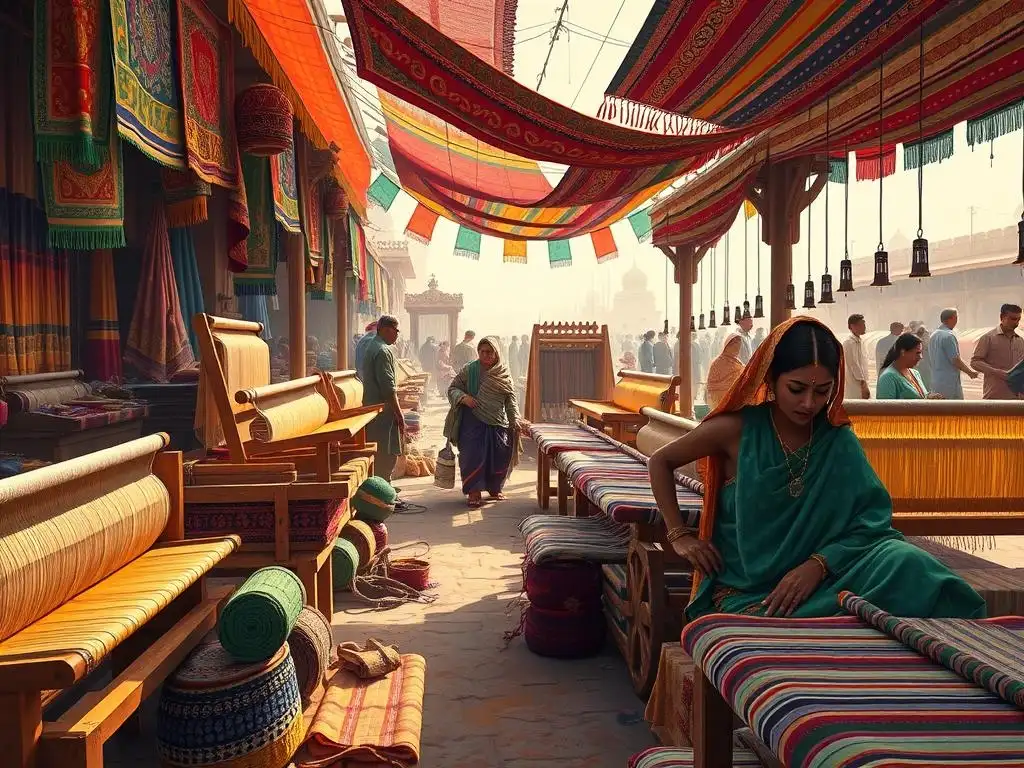
The ancient Indian textiles trade was not merely about the exchange of goods; it was a complex web of techniques and innovations that defined the quality, aesthetics, and cultural significance of textiles. The artisans of ancient India developed sophisticated methods of production that played a crucial role in establishing India as a dominant player in the global textile market.
Weaving Techniques and Their Evolution
Weaving in ancient India has a rich history, with techniques that evolved significantly over centuries. The primary weaving techniques included:
- Plain Weave: This is one of the simplest forms, where two sets of threads are interlaced at right angles. It formed the basis for many textiles, providing a sturdy foundation.
- Twill Weave: Characterized by diagonal patterns, twill weaving allowed for the creation of denser and more durable fabrics. This technique became prominent with the emergence of cotton textiles around 3000 BCE.
- Jacquard Weave: Later innovations led to the intricate designs seen in textiles like brocades and silks. The use of a loom that could control individual threads allowed for elaborate patterns and motifs, making these textiles highly sought after in trade.
The introduction of the pit loom in the Indus Valley civilization marked a significant advancement in weaving technology, allowing for larger and more complex fabrics. As trade routes expanded, so did the influence of foreign techniques, leading to a dynamic exchange of ideas that shaped the evolution of Indian weaving.
Dyeing Methods and Color Significance
Dyeing was a vital aspect of textile production in ancient India, not only for aesthetic purposes but also for cultural and symbolic meanings. Some of the prominent dyeing methods included:
- Natural Dyes: Derived from plants, minerals, and insects, these dyes were prevalent and varied in color. For instance, indigo was used for blue, while madder provided rich reds.
- Block Printing: This technique involved carving designs into wooden blocks, which were then dipped in dye and stamped onto fabric. This not only enhanced the variety of colors but also allowed for intricate patterns to be created efficiently.
- Tie-Dye (Bandhani): This method involved tying sections of fabric to resist dye, resulting in unique and vibrant patterns. Bandhani has deep cultural roots and was often associated with specific regions and communities.
The significance of colors in ancient Indian textiles cannot be overstated. For example, saffron was often associated with purity and sacrifice, while red symbolized prosperity and fertility. These colors played a crucial role in ceremonial garments and everyday wear, reflecting the cultural ethos of different regions.
Patterns and Motifs in Ancient Indian Textiles
Patterns and motifs in ancient Indian textiles were not just decorative; they held deep cultural significance and often told stories about the community and its beliefs. Prominent motifs included:
- Floral Patterns: These were commonly used in various textiles, symbolizing nature's beauty and the cycle of life. The lotus was a particularly popular motif, representing purity and enlightenment.
- Geometric Designs: Geometric patterns often found in woven fabrics and embroideries showcased the mathematical knowledge of ancient artisans. These designs were not only visually appealing but also conveyed a sense of order and harmony.
- Religious Symbols: Many textiles featured motifs inspired by religious iconography, such as the swastika or representations of deities. These designs were often used in ceremonial garments and offered a connection to spirituality.
The diversity of patterns and motifs across different regions illustrates the rich tapestry of cultures within ancient India. The textiles traded along the Silk Road and other routes were often adorned with local designs, making them unique and highly valued in foreign markets.
The ancient Indian textiles trade was a testament to the ingenuity and creativity of its artisans. The techniques and innovations in weaving, dyeing, and design not only catered to the domestic market but also played a pivotal role in establishing India as a center for textile excellence in the ancient world.
Economic Impacts of Textile Trade
Contribution of Textile Trade to Ancient Indian Wealth
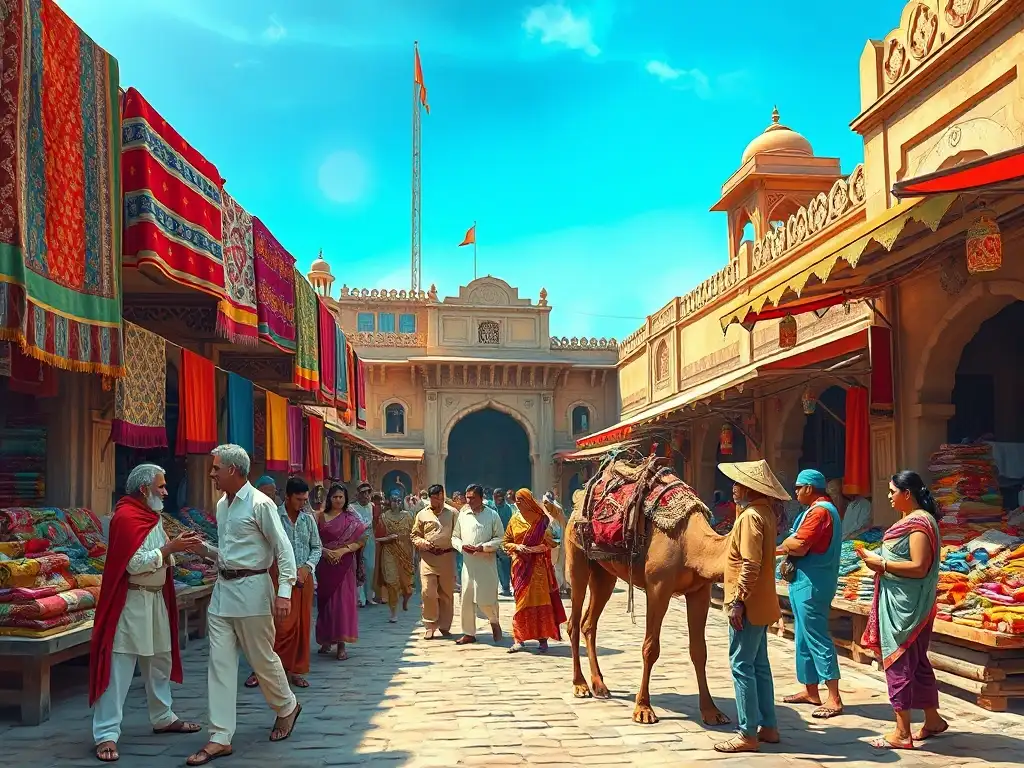
The textile trade significantly contributed to the wealth of ancient Indian civilizations, playing a crucial role in their economic structures. The production and export of textiles, particularly cotton, silk, and wool, became a cornerstone of trade with various regions, including the Middle East, Southeast Asia, and even Europe. Ancient Indian textiles were renowned for their quality and artistry, leading to high demand in international markets.
Key Factors Influencing Wealth Generation:
- Diverse Textile Production: Ancient India was home to a variety of textile-producing regions. Each region specialized in different materials and techniques:
- Cotton from Gujarat: Gujarat was famous for its cotton fabrics, especially those dyed with natural colors.
- Silk from Varanasi: The silk produced in this region was considered among the finest in the world.
- Wool from the North: The northern regions contributed high-quality woolen textiles.
- Trade Routes and Networks: The establishment of trade routes, such as the Silk Road and maritime routes, facilitated the movement of textiles. These routes connected India with various cultures, allowing for a rich exchange of goods and ideas.
- Market Demand: The aesthetic appeal and durability of Indian textiles attracted merchants from far and wide. This sustained demand ensured a continuous influx of wealth, making textiles one of the leading exports of ancient India.
- Taxation and Revenue: The textile trade generated substantial revenue for ancient Indian kingdoms. Governments imposed taxes on the trade, which funded various public projects, including infrastructure and cultural endeavors.
Employment and Skill Development in Textile Industries
The textile industry was a major source of employment in ancient India, providing livelihoods to millions of people. The labor involved in weaving, dyeing, and finishing textiles required a variety of skills, leading to a robust workforce that was both specialized and diverse.
Aspects of Employment and Skill Development:
- Artisan Communities: Different communities emerged as specialists in textile production, each honing specific skills over generations. Notable artisan groups included:
- Weavers: Master weavers created intricate patterns and designs, making textiles highly sought after.
- Dyers: Skilled dyers utilized natural dyes, developing unique color palettes that became synonymous with certain regions.
- Training and Knowledge Transfer: Knowledge of textile production was often passed down through generations. Families and communities formed guilds where they shared techniques and innovations, ensuring the survival of these crafts.
- Economic Mobility: The textile trade offered opportunities for economic mobility. Skilled artisans could improve their social status through their craft, leading to a more dynamic economy.
- Cultural Exchange: The interaction of different communities through trade resulted in the blending of techniques and styles, enriching the textile production landscape. This cultural exchange also fostered innovation, as artisans experimented with new materials and designs.
The ancient Indian textiles trade was not only a significant contributor to the wealth of civilizations but also a crucial sector for employment and skill development, shaping the social and economic fabric of ancient Indian society.
Decline of Textile Trade in Ancient India
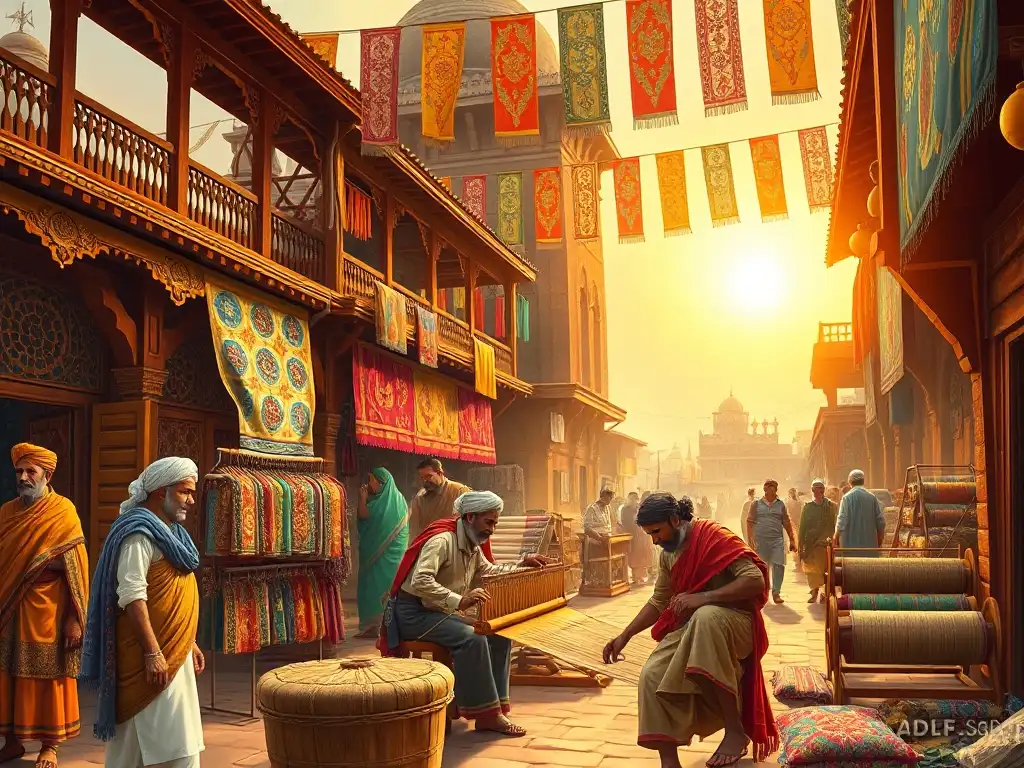
The decline of textile trade in ancient India can be traced back to a combination of internal and external factors that collectively weakened this once-thriving industry. As regions like the Indus Valley, known for their advanced weaving techniques, began to fragment politically and economically, the repercussions on textile export were significant.
Factors Leading to Decline of Textile Export
Several key factors contributed to the decline of textile exports from ancient India:
- Political Fragmentation:
- The disintegration of large empires such as the Maurya and Gupta empires led to increased regionalism. This resulted in the fragmentation of trade networks that had previously facilitated the export of textiles.
- The rise of local powers and kingdoms often disrupted established trade routes, leading to instability.
- Invasions and Foreign Rule:
- The incursion of foreign invasions, particularly by the Huns and later the establishment of Muslim rule, altered trade dynamics. These invasions often led to the destruction of textile production centers and a shift in trade priorities.
- The introduction of new textile styles and materials by foreign influences reduced the demand for traditional Indian textiles in some markets.
- Economic Shifts:
- Changes in demand patterns both domestically and internationally affected the textile industry. As trade routes evolved, preferences shifted towards other goods, diminishing the prominence of textiles.
- The rise of other economies and textile centers, such as those in Southeast Asia and Europe, began to overshadow ancient Indian textiles in the global market.
- Technological Changes:
- The latter part of the ancient period saw technological advancements in other parts of the world. For example, the introduction of mechanized textile production in Europe during the Industrial Revolution eventually rendered traditional methods less competitive.
- Lack of innovation in weaving techniques and machinery in India contributed to falling behind in the global textile market.
- Colonial Impact:
- The onset of colonialism, particularly in the 18th and 19th centuries, led to a systematic dismantling of local industries, including textiles. British policies favored local production in Britain, which significantly impacted Indian textile exports.
- The imposition of tariffs and trade restrictions further curtailed the ability of Indian textiles to compete in international markets.
Comparison with Contemporary Trade Practices
When comparing ancient Indian textiles trade with contemporary practices, several notable differences emerge:
-
Globalization:
Today's textile trade operates within a globally interconnected market, allowing for a diverse array of products and quicker distribution channels. In contrast, ancient trade was largely regional and dependent on overland routes.
-
Technological Advancements:
Modern textile manufacturing employs advanced technologies such as automation and digital textile printing, significantly enhancing production efficiency. Ancient Indian textiles relied on manual methods, which, while rich in tradition, could not match modern output levels.
-
Market Dynamics:
Contemporary trade is influenced by consumer preferences, sustainability concerns, and fast fashion trends. In ancient times, textile exports were heavily influenced by cultural exchanges and the demand for traditional craftsmanship.
-
Regulatory Framework:
Current textile trade is governed by international trade agreements, intellectual property laws, and environmental regulations that were non-existent in ancient times. These frameworks shape how textiles are produced, marketed, and sold globally.
-
Cultural Significance:
While textiles in ancient India held significant cultural and ritual importance, modern textiles often prioritize trend and utility, sometimes at the cost of traditional significance.
The decline of textile trade in ancient India was a multifaceted issue influenced by various internal and external factors. Understanding these nuances offers valuable insights into the evolution of trade and commerce, highlighting the importance of adapting to changing economic landscapes—lessons that are relevant even today.
Conclusion: Legacy of Ancient Indian Textiles Trade
The legacy of ancient Indian textiles trade is profound, influencing both historical and contemporary spheres of commerce and culture. The intricate textiles produced in ancient India, such as silks, cottons, and woolen fabrics, not only catered to local demands but also captured the interest of international markets, establishing a network of trade routes that spanned continents. This vibrant trade played a pivotal role in shaping economic relationships between India and other civilizations, including the Romans, Persians, and Chinese, contributing significantly to India's wealth and cultural exchange.
The establishment of trade centers, such as those in the Indus Valley and later during the Maurya and Gupta Empires, facilitated not only the exchange of goods but also the sharing of techniques and artistic styles. This exchange enriched the textile traditions of both India and its trade partners. The legendary quality of Indian textiles, characterized by their vibrant colors and intricate patterns, laid the groundwork for a reputation that continues to resonate in today's global textile markets.
Enduring Influence on Modern Textile Industries
The impact of ancient Indian textiles trade can be seen in the modern textile industries in several ways. Many contemporary textile practices and designs can trace their roots back to ancient techniques. For instance, the art of weaving and dyeing, particularly the use of natural dyes derived from local flora, has persisted through generations, influencing sustainable practices in today’s textile production.
Additionally, the global appreciation for Indian textiles has led to a revival of traditional crafts, such as block printing and handloom weaving. These practices not only preserve cultural heritage but also provide livelihoods to artisans across the country. The contemporary fashion industry often draws inspiration from ancient designs, integrating them into modern clothing lines, which celebrate the rich history of Indian textiles while promoting ethical fashion.
Table: Influence of Ancient Techniques on Modern Practices
| Ancient Technique | Modern Application |
|---|---|
| Natural Dyeing | Sustainable fashion collections |
| Handloom Weaving | Revival of artisan communities |
| Block Printing | Trend in contemporary home decor |
Preservation of Historical Textile Techniques and Practices
The preservation of historical textile techniques and practices is crucial for maintaining the rich tapestry of India’s cultural heritage. Organizations and initiatives focused on reviving traditional crafts are increasingly important as they provide a platform for artisans to showcase their skills. Workshops and training programs are being established to educate younger generations about ancient practices, ensuring that these techniques are not lost to time.
Moreover, museums and cultural institutions play a significant role in archiving the history of textiles, showcasing ancient artifacts alongside modern interpretations. Exhibitions often highlight the evolution of textile practices, illustrating how ancient methods have influenced current trends. This preservation effort not only maintains the cultural identity of Indian textiles but also educates the public about their historical significance.
The legacy of ancient Indian textiles trade has left an indelible mark on both the historical landscape and contemporary practices within the textile industry. The ongoing efforts to preserve and revitalize these traditions ensure that the rich heritage of ancient Indian textiles continues to thrive in a rapidly changing world.
Frequently Asked Questions
What was the significance of textiles in ancient Indian trade?
Textiles played a crucial role in ancient Indian trade, serving as one of the primary exports that enhanced economic exchange with various civilizations.
Which civilizations were involved in trade with ancient Indian textiles?
Ancient Indian textiles were traded with multiple civilizations, including the Romans, Persians, and various Southeast Asian cultures, showcasing India’s extensive trade networks.
How did the Indus Valley Civilization contribute to textile trade?
The Indus Valley Civilization is known for its advanced craftsmanship in textiles, particularly in cotton production, which laid the foundation for India's prominent position in the textile trade.
What were the main types of textiles produced in ancient India?
Ancient India produced a variety of textiles, including cotton, silk, and wool, each celebrated for their quality and intricate designs that appealed to international markets.
How did the Gupta Empire influence textile trade?
The Gupta Empire furthered the textile trade by promoting artisanship and establishing trade routes, which helped in the proliferation of Indian textiles across the globe, enhancing their cultural influence.
Final Reflection: The Enduring Legacy of Ancient Indian Textiles Trade
The intricate tapestry of ancient Indian textiles trade not only shaped the economic landscape of its time but also laid the foundation for cultural exchanges that resonate even today. The vibrant colors, unique patterns, and exquisite craftsmanship of these textiles were not merely commodities; they were carriers of stories and symbols that transcended borders. As we navigate a world increasingly defined by globalization, the significance of these ancient trade routes becomes ever more apparent, reminding us of the interconnectedness of human societies.
The influence of ancient Indian textiles trade continues to permeate our cultural and social fabric, fostering a sense of identity and heritage. From the bustling markets of the past to the contemporary revival of traditional crafts, the legacy of these textiles is a testament to the enduring spirit of creativity and innovation.
As Mahatma Gandhi once said, “The true measure of any society can be found in how it treats its most vulnerable members.” This sentiment echoes in the way we honor and preserve the artistry of our ancestors, ensuring that the stories woven into these fabrics are not lost to time.
As you reflect on the lessons gleaned from the rich history of ancient Indian textiles trade, consider how you can weave these insights into your own life. Embrace the diversity of cultures around you and recognize the threads that connect us all. Whether through supporting local artisans, learning about the history behind traditional crafts, or simply appreciating the beauty of textiles in your surroundings, each action contributes to a greater understanding of our shared human experience. Let us carry forward the legacy of ancient Indian textiles trade, celebrating the artistry and stories that continue to inspire us today.
Uncover the Threads of History!
Thank you for joining us on this journey through the fascinating role textiles played in ancient Indian external trade. We hope you've discovered the rich tapestry of culture, commerce, and craftsmanship that defined this period. Now, it’s time to take the next step!
Here’s how you can delve deeper into the world of ancient Indian textiles and trade:
- Explore local museums that showcase textiles and artifacts from ancient India, allowing you to experience these historical treasures up close.
- Join online forums or discussion groups dedicated to ancient trade routes and textiles, where you can share insights and learn from others passionate about this topic.
- Challenge yourself to create your own textile-inspired art piece or craft, allowing you to express what you've learned in a unique way!
What aspect of ancient Indian textile trade intrigues you the most, and how do you think it shaped cultural connections across different regions? We invite you to share your thoughts below!