
The Interplay Between Astronomy and Metallurgy in Ancient India


Welcome to Ancient India History, where we journey through the captivating tapestry of one of the world's oldest civilizations. Dive into the intricate relationship between astronomy and metallurgy in ancient India, a fascinating exploration of how these two disciplines shaped the technological innovations of the time. Discover the brilliance of ancient Indian scholars and artisans who not only gazed at the stars but also forged metals that laid the groundwork for future advancements. Prepare to unlock the secrets of a civilization that continues to influence our world today—your adventure begins here!
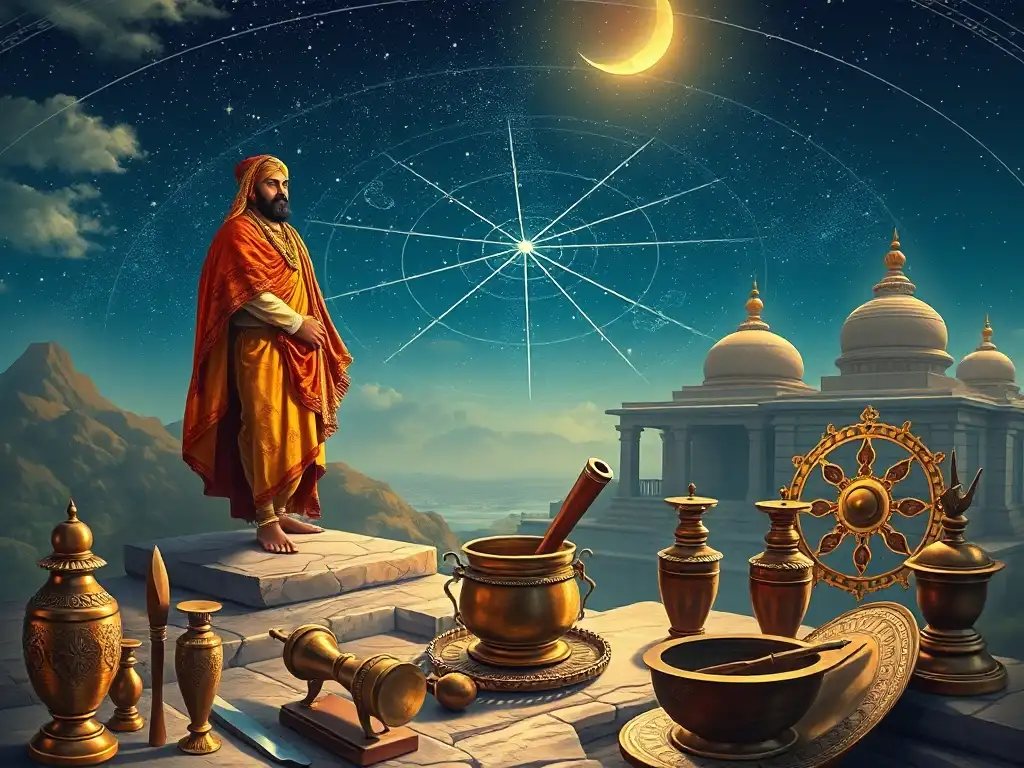
Introduction to Astronomy and Metallurgy in Ancient India
The relationship between astronomy and metallurgy in ancient India is a fascinating intersection of two pivotal domains that significantly contributed to the scientific and technological advancements of the time. Ancient Indian civilizations, renowned for their profound understanding of the cosmos and their innovative metallurgical practices, showcased an intricate interplay between these fields.
This synergy not only facilitated the development of advanced tools and materials but also influenced various aspects of daily life, spirituality, and even architecture. As we delve into this topic, we will explore how ancient Indian astronomers utilized their knowledge of celestial bodies to inform their metallurgical techniques, leading to remarkable achievements in both disciplines.
Historical Context of Astronomy and Metallurgy
Understanding the historical context of astronomy and metallurgy in ancient India requires a closer look at the origins and development of these fields, as they are deeply intertwined with the cultural and intellectual landscape of the time.
Origins of Astronomy in Ancient India
The origins of astronomy in ancient India can be traced back to the Indus Valley Civilization, around 2500 BCE, where evidence suggests that early inhabitants practiced celestial observations. Texts such as the Vedas, particularly the Rigveda, contain references to celestial bodies and their movements. The contributions of notable astronomers like Aryabhata in the 5th century CE laid the foundation for a sophisticated understanding of astronomy. Aryabhata's work included calculations of planetary positions, eclipses, and the circumference of the Earth, showcasing the advanced level of astronomical knowledge attained by ancient Indian scholars.
- Key Contributions in Astronomy:
- Development of the siddhantic texts, which systematized astronomical knowledge.
- Innovations in mathematical techniques for celestial calculations.
- Establishment of observatories, known as jantar mantars, for practical astronomical observations.
Development of Metallurgy in Ancient India
The development of metallurgy in ancient India is characterized by a remarkable progression from primitive techniques to sophisticated methods that produced high-quality metals and alloys. The copper age saw the rise of copper metallurgy, which eventually led to the discovery of techniques for smelting iron. One of the most notable examples is the Iron Pillar of Delhi, which reflects the advanced metallurgical skills of ancient Indian craftsmen and their ability to create rust-resistant iron.
- Milestones in Metallurgy:
- Extraction and use of copper, bronze, and iron in various applications.
- Techniques for creating alloys, such as brass, which demonstrated an understanding of material properties.
- The influence of cultural practices and trade in the dissemination of metallurgical knowledge.
The interplay between astronomy and metallurgy not only highlights the ingenuity of ancient Indian civilizations but also underscores how these fields informed and enriched one another, leaving a lasting legacy on the technological innovations that followed.
The Relationship Between Astronomy and Metallurgy
The interplay between astronomy and metallurgy in ancient India is a fascinating aspect of the civilization's technological and scientific advancements. Both fields were interlinked, influencing each other in profound ways. The study of celestial bodies not only inspired philosophical and spiritual perspectives but also had practical implications for metallurgy. For instance, the timing of certain astronomical events often dictated the best times for metalworking, particularly in agricultural societies where celestial cycles were critical for understanding seasonal changes.
Moreover, the precision required in astronomical observations necessitated the development of sophisticated instruments, which in turn relied on advanced metallurgical techniques and materials. This relationship highlights how the quest for knowledge in one domain could drive innovations in another, leading to advancements that were essential for both navigation and the crafting of tools and artifacts.
How Astronomy Influenced Metallurgical Practices
Astronomy played a crucial role in shaping metallurgical practices in ancient India. The movements of celestial bodies were meticulously observed and recorded, leading to the establishment of calendars that dictated agricultural cycles, religious festivals, and even the timing for metallurgical activities. For example, certain phases of the moon were believed to be more auspicious for forging metals, influencing when artisans would undertake their work.
Additionally, the need for precise measurements in astronomy led to the development of better tools and techniques in metallurgy. Instruments such as the gnomon (a simple sundial) and astrolabes required high-quality materials that could withstand the rigors of daily use. The skills honed in creating these astronomical instruments were often applied in developing more advanced metallurgical techniques, including alloying and the production of intricate metalwork.
Metallurgy’s Contribution to Astronomical Tools
Metallurgy significantly contributed to the creation of instruments used for astronomical observations in ancient India. The production of high-quality bronze and iron allowed for the crafting of precise tools such as the astrolabe, which was essential for determining celestial positions, timekeeping, and navigation. These instruments required sophisticated metallurgical techniques to ensure durability and accuracy.
Furthermore, the development of specialized alloys enhanced the functionality of various astronomical instruments. The ability to create strong, corrosion-resistant materials meant that these tools could endure the test of time, allowing astronomers to make long-term observations that contributed to the evolution of astronomical knowledge. The synergy between metallurgy and astronomy thus led to significant advancements in both fields, showcasing the ingenuity of ancient Indian civilization.
Key Figures and Texts in Astronomy and Metallurgy
Ancient India was home to several key figures and texts that contributed to the interplay between astronomy and metallurgy. These individuals and their works laid the foundation for future developments in both domains, influencing generations of scholars and craftsmen.
Prominent Astronomers of Ancient India
Several prominent astronomers emerged in ancient India, whose works reflect the integration of astronomy and metallurgy. Aryabhata, active in the 5th century CE, is perhaps the most renowned, known for his groundbreaking work, the Aryabhatiya, where he introduced concepts of zero and decimal systems. His astronomical calculations required precise measurement tools, which were often crafted from metal.
Another significant figure is Brahmagupta, who contributed to mathematics and astronomy in the 7th century CE. His treatise, Brahmasphutasiddhanta, not only dealt with celestial mechanics but also mentioned the use of tools that required advanced metallurgy for accurate astronomical observations.
Important Texts on Metallurgy and Astronomy
Several ancient texts serve as crucial references for understanding the relationship between astronomy and metallurgy in ancient India. The Arthashastra, attributed to Kautilya in the 4th century BCE, discusses various aspects of statecraft, economics, and technology, including metallurgy, highlighting its importance in various trades, including those related to astronomical instruments.
The Surya Siddhanta, an ancient astronomical text, provides insights into the methods used by ancient Indian astronomers. It details calculations related to planetary motion and eclipses, showcasing how precise measurements were vital for astronomical predictions, which in turn influenced metallurgical practices.
These texts illustrate the depth of knowledge and expertise present in ancient Indian society, where astronomy and metallurgy coalesced to foster advancements that would leave a lasting legacy in both fields.
Case Studies of Astronomy and Metallurgy in Ancient Indian Cultures

The relationship between astronomy and metallurgy in ancient India is exemplified through various civilizations, each demonstrating sophisticated knowledge and practices that intertwined these two disciplines. By examining specific case studies, we can glean insights into how astronomical understanding informed metallurgical advancements and vice versa.
The Indus Valley Civilization
The Indus Valley Civilization, thriving around 2500 BCE, is one of the earliest known urban cultures in South Asia. This civilization showcased remarkable advances in metallurgy, particularly in the production of bronze through the alloying of copper and tin. Archaeological findings indicate that the people of the Indus Valley understood complex casting techniques, evidenced by the creation of intricate artifacts such as tools, ornaments, and seals.
Interestingly, the Indus Valley people also exhibited a keen awareness of celestial phenomena. The alignment of certain city layouts and structures suggests a possible connection to astronomical observations. Scholars propose that the orientation of some urban centers, like Mohenjo-Daro, may have been influenced by solar and lunar cycles, highlighting an early recognition of the significance of astronomy in daily life and agricultural practices. This interplay between celestial observations and metallurgical innovation laid foundational principles for future cultures in India.
The Gupta Empire
The Gupta Empire, which flourished from around 320 to 550 CE, is often referred to as the "Golden Age" of India, marked by significant achievements in various fields, including astronomy and metallurgy. Astronomers like Aryabhata and Varahamihira made notable contributions to the understanding of celestial bodies, planetary motions, and eclipses. Aryabhata's work, particularly in his treatise "Aryabhatiya," laid the groundwork for later astronomical studies and emphasized the importance of precise calculations.
In metallurgy, the Gupta period is renowned for its advancements in ironworking, particularly with the production of high-quality wrought iron. The famous Iron Pillar of Delhi, which stands at over 1,600 years old, is a testament to the advanced metallurgical techniques of the time and showcases exceptional resistance to corrosion—an achievement attributed to both the purity of the iron used and the environmental conditions of the region. The intersection of astronomical knowledge and metallurgical practice during this period illustrates how celestial observations could influence practical applications in technology, including the timing and methods of metal extraction and processing.
Conclusion: The Legacy of Astronomy and Metallurgy in Ancient India
The interplay between astronomy and metallurgy in ancient India reveals a rich tapestry of knowledge that not only advanced technological capabilities but also enriched cultural and scientific understanding. Through civilizations like the Indus Valley and the Gupta Empire, we see how astronomical insights influenced metallurgical practices, leading to innovations that resonate through history.
This legacy continues to inspire contemporary studies in both fields, showcasing the enduring impact of ancient Indian civilizations on modern science and technology. As we explore the contributions of astronomy and metallurgy in ancient India, it becomes evident that these disciplines were not isolated but rather interconnected, reflecting a holistic approach to understanding the world. The achievements of these ancient cultures serve as a reminder of the profound relationship between human ingenuity and the natural world, a theme that remains relevant in today's scientific endeavors.
Further Reading and References
To gain a deeper understanding of the intricate relationship between astronomy and metallurgy in ancient India, the following resources are recommended:
-
Books:
-
"The History of Ancient Indian Astronomy" by S. R. Sarma
This book offers an extensive overview of the development of astronomical knowledge in ancient India, detailing the methodologies and tools used by astronomers.
-
"Metallurgy in Ancient India" by R. K. Sharma
A comprehensive study that explores the advancements in metallurgy during the ancient period, highlighting key techniques and their applications.
-
-
Research Papers:
-
"Astronomy and Metalwork: A Study of Ancient Indian Techniques"
This paper examines the correlation between astronomical observations and metallurgical practices, providing insights into how these fields influenced one another.
-
"The Role of Astronomy in the Development of Indian Metallurgy"
A scholarly article that discusses specific instances where astronomical knowledge contributed to advancements in metalworking.
-
-
Online Resources:
-
The Indian Council of Historical Research (ICHR)
A repository of articles and papers related to Indian history, including extensive research on astronomy and metallurgy.
-
Digital Library of India
This platform hosts a variety of texts and manuscripts that delve into ancient Indian sciences, including astronomy and metallurgy.
-
-
Documentaries and Lectures:
-
"Wonders of Ancient India: Astronomy and Engineering"
A documentary that visually presents the achievements in both astronomy and metallurgy, highlighting their interconnectedness.
-
Lectures by Prominent Historians and Scientists
Various online platforms offer lectures that cover the technological innovations of ancient India, often touching on the synergy between astronomy and metallurgy.
-
These resources serve as a solid foundation for anyone interested in exploring the depths of how astronomy and metallurgy coexisted and influenced each other in ancient Indian civilization.
- Introduction to Astronomy and Metallurgy in Ancient India
- Historical Context of Astronomy and Metallurgy
- The Relationship Between Astronomy and Metallurgy
- Key Figures and Texts in Astronomy and Metallurgy
- Case Studies of Astronomy and Metallurgy in Ancient Indian Cultures
- Conclusion: The Legacy of Astronomy and Metallurgy in Ancient India
- Further Reading and References
- What were the contributions of ancient India to astronomy?
- How did metallurgy evolve in ancient India?
- What is the connection between astronomy and metallurgy in ancient India?
- Were there any ancient Indian texts that focused on astronomy and metallurgy?
- How did ancient Indian civilizations influence later developments in astronomy and metallurgy?
Frequently Asked Questions
What were the contributions of ancient India to astronomy?
Ancient Indian astronomy included significant achievements such as the calculation of solar eclipses and the establishment of the sidereal year. Scholars like Aryabhata made remarkable advancements in understanding celestial bodies.
How did metallurgy evolve in ancient India?
Metallurgy in ancient India progressed through techniques such as the smelting of iron and the creation of alloys. The famous Wootz steel from southern India was highly sought after for its quality.
What is the connection between astronomy and metallurgy in ancient India?
The connection lies in the use of metal tools for astronomical observations, enabling precise measurements. This interplay facilitated advancements in both fields, enhancing scientific and technological progress.
Were there any ancient Indian texts that focused on astronomy and metallurgy?
Yes, texts like the Lilavati and Aryabhatiya addressed astronomical concepts, while metallurgical knowledge was documented in works like the Rasaratna Samuccaya, showcasing the integration of both disciplines.
How did ancient Indian civilizations influence later developments in astronomy and metallurgy?
Ancient Indian contributions laid foundational knowledge that influenced Islamic scholars and later European scientists. The precision in metalwork and astronomical calculations set benchmarks for future studies.
Final Reflection: The Cosmic Connection of Astronomy and Metallurgy in Ancient India
The intricate relationship between astronomy and metallurgy in ancient India is not just a historical curiosity; it is a testament to the profound understanding that ancient civilizations had of the universe and their ability to manipulate materials. Today, as we delve into the depths of space and innovate with new materials, we find ourselves standing on the shoulders of giants who once gazed at the stars and forged metals with equal reverence. This intersection of knowledge and craftsmanship continues to inspire modern science and technology, reminding us of the timeless quest for understanding and creation.
The legacy of astronomy and metallurgy in ancient India has left an indelible mark on our cultural and social landscape, shaping not only scientific advancements but also our philosophical outlook on the universe. The meticulous observations of celestial bodies and the mastery of metalworking reflect a society that valued both intellectual inquiry and practical application. As we reflect on this rich heritage, we are reminded of the words of the ancient philosopher Aryabhata: The earth is round like a ball and rotates on its axis.
This profound insight illustrates how the ancients were not merely craftsmen but also thinkers who sought to explain the cosmos through their work.
As we move forward, let us take a moment to reflect on the lessons embedded in the interplay of astronomy and metallurgy in ancient India. Consider how the pursuit of knowledge and the art of creation can coexist in your own life. Whether you are an artist, a scientist, or simply a curious mind, embrace the spirit of inquiry and craftsmanship that defined an era long past. In doing so, you contribute to a legacy that transcends time, inspiring future generations to explore the wonders of the universe and the materials that shape our world.
Unlock the Mysteries of Ancient India's Sciences!
Thank you for exploring the fascinating relationship between astronomy and metallurgy in ancient India! Your interest in this rich history not only enhances your knowledge but also helps preserve these incredible stories. Now, it's time to take action and delve deeper into this captivating subject.
- Delve deeper: Visit your local library to uncover ancient texts or artifacts related to metallurgy and astronomy that shaped India’s history.
- Join a community group or online forum focused on ancient studies to share insights, ask questions, and learn from fellow enthusiasts.
- Connect the dots: Consider creating a visual representation illustrating the overlap of these two fields and share your findings on social media to inspire others!
What aspect of ancient India’s scientific achievements do you find most intriguing and why? Let's keep the conversation going!