
The Spiritual Journey of a Buddhist: From Learning to Enlightenment


Welcome to Ancient India History, where we embark on an enlightening voyage through time to uncover the rich tapestry of India's ancient civilizations. Delve into the Buddhist spiritual journey in India, as we explore the profound teachings and transformative experiences that shaped this enduring path from learning to enlightenment. Prepare to unlock the secrets of ancient wisdom, as each click reveals the cultural and historical treasures that defined an era. Join us in this exploration, and let your curiosity guide you deeper into the heart of India's spiritual legacy!

Introduction to the Buddhist Spiritual Journey in India
The Buddhist spiritual journey represents a profound exploration of the self, a quest for understanding, and a pathway to enlightenment that has captivated millions throughout history. Originating in ancient India, Buddhism offers a rich tapestry of teachings that guide practitioners from the initial stages of learning to the profound experience of awakening.
This journey is not merely a personal endeavor; it is deeply rooted in the cultural and philosophical context of ancient Indian civilization, which has shaped its teachings and practices. In this article, we will delve into the intricacies of the Buddhist spiritual journey in India, examining its definition, the importance of spiritual growth, and the historical context that has influenced its development.
Definition of the Buddhist Spiritual Journey
The Buddhist spiritual journey can be defined as the progressive path that a practitioner undertakes to attain enlightenment, also known as Nirvana. This journey involves:
- Study and Learning: Engaging with the teachings of the Buddha (Siddhartha Gautama) and other influential texts.
- Meditation: Practicing mindfulness and deep contemplation to cultivate awareness and insight.
- Moral Conduct: Adhering to ethical principles, such as the Noble Eightfold Path, which serves as a guide for living a life of compassion and wisdom.
- Realization: Achieving a profound understanding of the nature of reality, suffering, and the self.
This spiritual journey is often viewed as a transformative process that leads to self-realization and liberation from the cycle of birth and rebirth (samsara).
Importance of Spiritual Growth in Buddhism
Spiritual growth is a cornerstone of Buddhist practice, emphasizing the need for continuous development and self-improvement. It is crucial for several reasons:
- Overcoming Suffering: Buddhism teaches that suffering is an inherent aspect of life. The spiritual journey provides tools to understand and transcend this suffering.
- Cultivating Compassion: As practitioners grow spiritually, they become more compassionate and empathetic towards others, fostering a sense of interconnectedness.
- Achieving Enlightenment: The ultimate goal of the Buddhist spiritual journey is to attain enlightenment, a state of profound peace and wisdom that liberates individuals from ignorance and attachment.
Historical Context of Buddhism in Ancient India
Understanding the Buddhist spiritual journey necessitates a look into its historical context within ancient India. The emergence of Buddhism marked a significant departure from the existing religious paradigms, offering new insights into spirituality and ethical living.
The Origins of Buddhism: Siddhartha Gautama's Path
Buddhism originated in the 5th century BCE with the life of Siddhartha Gautama, who later became known as the Buddha, meaning "the awakened one." His path to enlightenment involved:
- Royal Upbringing: Siddhartha was born into a royal family in Lumbini, present-day Nepal.
- The Four Sights: Encountering an old man, a sick man, a dead man, and a wandering ascetic profoundly impacted him, leading to his quest for understanding suffering.
- Ascetic Practices: Siddhartha initially pursued extreme asceticism but soon realized that the Middle Way, a balanced approach to spiritual practice, was essential.
- Enlightenment: After meditating under the Bodhi tree in Bodh Gaya, he attained enlightenment and began teaching others the path to liberation.
Key Historical Events in the Spread of Buddhism
The spread of Buddhism throughout ancient India and beyond was marked by several key events:
- Emperor Ashoka's Conversion: In the 3rd century BCE, Ashoka the Great embraced Buddhism and promoted its teachings across his vast empire, establishing pillars with edicts that spread the Buddha's message.
- The Council of Rajgir: This gathering of Buddhist leaders in the 5th century BCE aimed to preserve the Buddha's teachings and ensure their continuity.
- Trade Routes: The establishment of trade routes facilitated the exchange of ideas and practices, allowing Buddhism to spread to regions such as Central Asia, China, and beyond.
Influence of Ancient Indian Culture on Buddhist Thought
Buddhism did not exist in isolation; rather, it was profoundly influenced by the cultural and philosophical milieu of ancient India. Key influences include:
- Hindu Concepts: Many Buddhist ideas, such as karma and dharma, were adapted from existing Hindu beliefs, creating a rich dialogue between the two traditions.
- Philosophical Schools: The emergence of various philosophical schools in ancient India, including the Samkhya and Nyaya schools, shaped Buddhist thought and contributed to its development.
- Art and Literature: The artistic representations of the Buddha and Buddhist themes in ancient Indian art reflect the cultural synthesis that characterized this period, further enriching the spiritual journey of practitioners.
The Buddhist spiritual journey in India is a profound exploration that intertwines personal transformation with the rich tapestry of ancient Indian culture and history. Understanding this journey provides invaluable insights into the teachings and practices that have inspired countless individuals on their path to enlightenment.
The Stages of the Buddhist Spiritual Journey
The Buddhist spiritual journey is characterized by a series of transformative stages, each building upon the last. This journey is not merely a linear progression but rather a dynamic exploration of the self that intertwines learning, practice, and personal experience. Understanding these stages is crucial for practitioners and those interested in the rich tapestry of Buddhist teachings in India.
Initial Learning: Understanding Basic Teachings
The first stage of the Buddhist spiritual journey involves initial learning, where individuals are introduced to the foundational teachings of Buddhism. This stage typically includes the Four Noble Truths and the Eightfold Path, which serve as the bedrock of Buddhist philosophy:
- The Four Noble Truths:
- Dukkha: The truth of suffering, acknowledging that life is filled with dissatisfaction and impermanence.
- Samudaya: The truth of the origin of suffering, which is often linked to desire and attachment.
- Nirodha: The truth of the cessation of suffering, suggesting that it is possible to end suffering by letting go of attachments.
- Magga: The truth of the path leading to the cessation of suffering, which is outlined in the Eightfold Path.
- The Eightfold Path:
- Right Understanding: Comprehending the nature of reality and the path of transformation.
- Right Intent: Cultivating intentions of love and compassion, free from ill will.
- Right Speech: Engaging in truthful, harmonious communication.
- Right Action: Acting ethically and with respect for all living beings.
- Right Livelihood: Choosing a profession that does not harm others.
- Right Effort: Striving to cultivate wholesome qualities and abandon unwholesome ones.
- Right Mindfulness: Developing awareness of body, feelings, and thoughts.
- Right Concentration: Practicing meditation to achieve mental focus and clarity.
In this initial phase, learners often engage with texts, attend teachings, and participate in community discussions. This foundational knowledge is crucial as it sets the stage for deeper practices.
Deepening Understanding: Meditation and Mindfulness
As individuals progress on their spiritual journey, they move into a phase of deepening understanding, where meditation and mindfulness play pivotal roles. This stage emphasizes the practical application of the teachings learned in the initial phase.
- Meditation: Practicing meditation helps individuals cultivate concentration and insight. Different forms of meditation, such as Samatha (calm abiding) and Vipassana (insight), are explored to develop a deeper understanding of the self and reality. Through sustained meditation, practitioners can experience moments of clarity, recognizing the impermanent nature of thoughts and emotions.
- Mindfulness: Mindfulness involves maintaining a moment-to-moment awareness of thoughts, feelings, and sensations without judgment. This practice encourages individuals to observe their experiences and reactions, fostering a deeper connection with the present moment. Mindfulness can be practiced in daily activities, enhancing one's ability to respond to life's challenges with equanimity.
- Integration of Teachings: In this stage, practitioners begin integrating Buddhist teachings into their daily lives. This includes applying ethical principles, cultivating compassion, and understanding the interconnectedness of all beings. The journey becomes increasingly personal as individuals explore their own experiences in light of the teachings.
Challenges Faced on the Spiritual Journey
While the spiritual journey can be profoundly rewarding, it is not without its challenges. Practitioners often encounter various obstacles that can hinder their progress toward enlightenment. Recognizing and addressing these challenges is essential for sustaining their commitment to the path.
Common Obstacles in the Path to Enlightenment
- Doubt: Uncertainty about the teachings or one's ability to practice can lead to doubt, causing individuals to question their commitment and understanding.
- Desire and Attachment: Strong attachments to material possessions, relationships, or personal identities can create barriers to spiritual growth, leading to suffering and dissatisfaction.
- Restlessness: The desire for immediate results can lead to impatience and distraction, making it difficult for practitioners to maintain focus in their meditation and daily practices.
- Fear and Anxiety: Encountering deep-seated fears or unresolved emotional issues can surface during meditation, creating resistance to facing these challenges.
- Lack of Discipline: Consistency in practice is vital; however, the demands of daily life and a lack of discipline can lead to a decline in commitment to spiritual practices.
Overcoming Challenges: Techniques and Teachings
Buddhism provides various techniques and teachings to help practitioners overcome these challenges:
- Cultivating Patience and Perseverance: Recognizing that spiritual growth takes time can help practitioners cultivate patience. Engaging in regular practice, even when faced with difficulties, is crucial.
- Developing a Supportive Community: Connecting with like-minded individuals through sanghas (Buddhist communities) can provide encouragement and support. Sharing experiences and insights can help individuals feel less isolated in their struggles.
- Mindful Reflection: Practicing mindfulness can aid in recognizing and observing challenges without judgment. This reflective approach allows individuals to confront their doubts and fears with clarity and compassion.
- Guidance from Teachers: Seeking guidance from experienced teachers can provide valuable insights and personalized support. Teachers can help clarify misunderstandings and offer practical advice on overcoming obstacles.
- Engaging in Service: Practicing compassion through acts of service can redirect focus from personal challenges to the well-being of others, reinforcing the interconnectedness emphasized in Buddhist teachings.
By addressing these challenges with the appropriate techniques and teachings, practitioners can continue their spiritual journey towards enlightenment, deepening their understanding and commitment to the path.
Achieving Enlightenment: The Ultimate Goal of the Buddhist Spiritual Journey
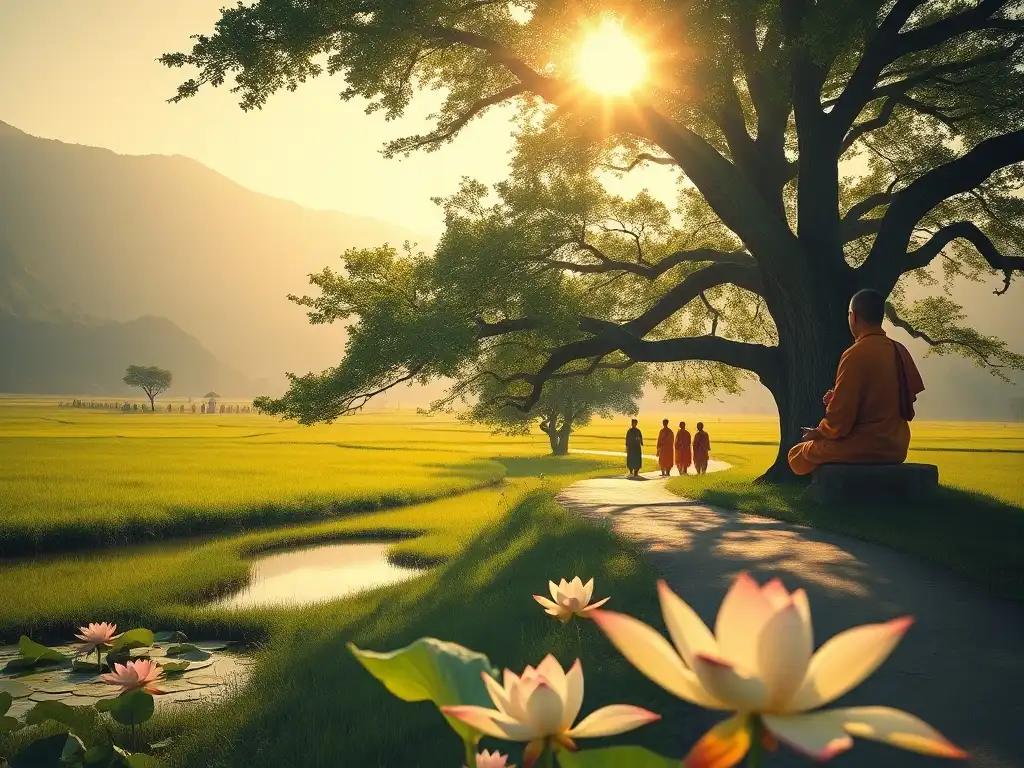
The concept of enlightenment, or Bodhi, is central to the Buddhist spiritual journey. It represents the ultimate goal for practitioners, signifying a profound understanding of reality and liberation from the cycle of birth, death, and rebirth ( samsara). To achieve enlightenment, one must transcend ignorance, attachment, and suffering, which are the root causes of human distress. This transformative state is characterized by the realization of the Four Noble Truths and the attainment of a state of inner peace and joy.
The path toward enlightenment is often depicted as the Noble Eightfold Path, which serves as a practical guide for Buddhists. This path encompasses:
- Right Understanding: Comprehending the nature of reality and the truths of Buddhism.
- Right Intent: Cultivating an intention of love and compassion.
- Right Speech: Practicing truthful and harmonious communication.
- Right Action: Engaging in ethical conduct and compassionate behavior.
- Right Livelihood: Choosing occupations that do not harm others.
- Right Effort: Diligently cultivating wholesome qualities.
- Right Mindfulness: Developing awareness of the body, feelings, and thoughts.
- Right Concentration: Achieving deep states of meditation.
By adhering to this path, individuals can progressively purify their minds, leading them closer to the realization of enlightenment.
Understanding Enlightenment in Buddhist Philosophy
In Buddhist philosophy, enlightenment is not merely an abstract concept but a profound experiential state. It denotes the awakening of the individual to the true nature of existence, free from the delusions that cloud perception. Enlightenment is often described in terms of wisdom and compassion, where one understands the interconnectedness of all beings and experiences a deep sense of compassion for all sentient life.
Key to this understanding is the realization that the self is an illusion. The Anatta (non-self) doctrine posits that what we consider the "self" is merely a collection of changing phenomena, such as thoughts, feelings, and physical sensations. Recognizing this leads to the dissolution of ego and a deep sense of peace.
Furthermore, enlightenment is not a one-time event but a continuous process. It involves regular meditation practice, ethical living, and the cultivation of insight. This journey can take many lifetimes, as each cycle of rebirth presents new opportunities for learning and growth.
The Significance of Nirvana in Ancient Indian Buddhism
Nirvana, in the context of ancient Indian Buddhism, is often depicted as the ultimate state of freedom and liberation. It represents the cessation of all suffering, desires, and attachments, marking the end of the samsara cycle. The term itself means "blowing out" or "extinguishing," symbolizing the extinguishment of the fires of greed, hatred, and ignorance.
The attainment of Nirvana is significant for several reasons:
- Spiritual Liberation: It provides liberation from the continual cycle of rebirth, offering a permanent state of peace and bliss.
- Moral and Ethical Foundation: The pursuit of Nirvana encourages ethical living, as individuals are motivated to cultivate virtues that lead to spiritual growth.
- Cultural Influence: The concept of Nirvana has deeply influenced Indian philosophy, art, and literature, shaping the moral framework within which society operates.
Nirvana is not merely a personal achievement but an ideal that has shaped Buddhist teachings and practices throughout ancient India.
The Impact of the Buddhist Spiritual Journey on Society
The Buddhist spiritual journey has had a profound impact on ancient Indian society, influencing various facets of life, from governance to social ethics. The teachings of Buddhism, emphasizing compassion, mindfulness, and ethical behavior, encouraged a societal shift toward more humane practices and policies.
Contributions of Buddhism to Ancient Indian Civilization
Buddhism contributed significantly to ancient Indian civilization in multiple ways:
- Philosophical Thought: The emergence of Buddhist philosophy introduced new ways of thinking about existence, ethics, and the nature of reality, challenging and enriching existing traditions.
- Art and Architecture: The construction of stupas, monasteries, and rock-cut temples, such as those at Ajanta and Ellora, showcased a unique artistic style that blended spiritual significance with cultural expression.
- Education and Scholarship: Monastic universities, like Nalanda, became centers of learning, attracting scholars from across Asia and promoting the exchange of ideas.
Buddhism's contributions helped lay the groundwork for a more interconnected and reflective society, fostering an environment of learning and ethical contemplation.
The Role of Buddhism in Shaping Indian Culture and Ethics
Buddhism played a pivotal role in shaping the ethical and cultural landscape of ancient India. Its teachings promoted values such as non-violence ( ahimsa), compassion, and altruism, which resonated deeply within Indian society. This ethical framework influenced various aspects of life, including:
- Social Structure: Buddhism challenged the rigid caste system by promoting the idea that spiritual attainment was accessible to all, regardless of social status.
- Cultural Practices: Festivals and rituals within Buddhist communities encouraged communal harmony and collective celebrations of virtues like compassion and generosity.
- Literature and Philosophy: The narratives and teachings of Buddhism found expression in various literary forms, enriching the cultural tapestry of ancient India.
Buddhism's emphasis on ethical conduct and philosophical inquiry has left an indelible mark on Indian culture, promoting values that continue to resonate in contemporary society.
Conclusion: The Ongoing Spiritual Journey of Buddhism in Modern India
The spiritual journey of Buddhism, originating in ancient India, continues to evolve and thrive in contemporary society. From the historical teachings of Siddhartha Gautama (the Buddha) to modern interpretations, the essence of this journey remains rooted in the principles of compassion, mindfulness, and the pursuit of enlightenment. As practitioners navigate their paths today, they draw from a rich tapestry of traditions and teachings that have transcended time, illustrating the adaptability and enduring nature of Buddhism.
In modern India, the resurgence of interest in Buddhist practices is evident through various temples, meditation centers, and educational programs. These institutions not only preserve ancient teachings but also adapt them to address contemporary issues, such as mental health, social justice, and environmental concerns. The spiritual journey of Buddhism is thus not just a historical narrative; it is a living, breathing process that continues to inspire individuals toward greater awareness and understanding.
Contemporary Practices and Their Roots in Ancient Teachings
Contemporary Buddhist practices often reflect a blend of ancient teachings and modern adaptations. Key practices such as meditation, mindfulness, and ethical living can be traced back to the foundational teachings of the Buddha. For instance, the Vipassana meditation technique, which emphasizes insight into the nature of reality, has deep roots in the original Buddhist discourse.
Moreover, modern interpretations of Buddhist concepts, such as compassion and interconnectedness, resonate with current global challenges. Many practitioners today engage in socially engaged Buddhism, which focuses on applying Buddhist principles to social and political issues. This evolution highlights the flexibility of Buddhism to address the needs of society while remaining anchored to its ancient origins.
The Relevance of the Buddhist Spiritual Journey Today
The relevance of the Buddhist spiritual journey in today's world cannot be overstated. Amidst the complexities of modern life, the teachings of Buddhism offer valuable tools for personal transformation and societal healing. Concepts such as impermanence and non-attachment encourage individuals to navigate life's challenges with resilience and equanimity.
Furthermore, as mental health issues become increasingly recognized, mindfulness practices rooted in Buddhism have gained popularity as effective coping mechanisms. Techniques such as mindful breathing and meditation are now integrated into therapeutic practices, underscoring the ongoing impact of Buddhism on contemporary well-being.
References and Further Reading on Buddhist Teachings
For those interested in delving deeper into the teachings of Buddhism and its spiritual journey, a wealth of resources is available that bridges ancient wisdom with modern applications. Exploring these texts and materials can provide profound insights into the Buddhist path and its relevance in today's context.
Recommended Texts on Buddhism and Spiritual Growth
- "The Heart of the Buddha's Teaching" by Thich Nhat Hanh: This book provides a comprehensive overview of core Buddhist teachings and their practical applications in daily life.
- "What the Buddha Taught" by Walpola Rahula: An essential introduction to the fundamental principles of Buddhism, this text is ideal for both beginners and seasoned practitioners.
- "The Miracle of Mindfulness" by Thich Nhat Hanh: A guide to the practice of mindfulness, offering practical exercises that integrate Buddhist teachings into everyday living.
Resources for Exploring Buddhism in Ancient India
- "Buddhism: A Very Short Introduction" by Damien Keown: This concise text offers insights into the historical development of Buddhism and its core concepts, with a focus on its origins in India.
- "The Life of the Buddha" by Bhikkhu Nanamoli: A detailed account of the life of Siddhartha Gautama, this book connects the historical aspects of Buddhism with its spiritual teachings.
- Online Platforms and Documentaries: Websites such as the Buddhist Door and various documentaries on platforms like YouTube provide visual and textual resources that explore the rich history of Buddhism in ancient India.
Engaging with these texts and resources can enhance one’s understanding of the Buddhist spiritual journey, fostering a deeper appreciation for its teachings and their ongoing significance in both historical and modern contexts.
- Introduction to the Buddhist Spiritual Journey in India
- Historical Context of Buddhism in Ancient India
- The Stages of the Buddhist Spiritual Journey
- Challenges Faced on the Spiritual Journey
- Achieving Enlightenment: The Ultimate Goal of the Buddhist Spiritual Journey
- The Impact of the Buddhist Spiritual Journey on Society
- Conclusion: The Ongoing Spiritual Journey of Buddhism in Modern India
- References and Further Reading on Buddhist Teachings
- What is the significance of the Buddhist spiritual journey in India?
- How did ancient Indian civilizations contribute to Buddhism?
- What are the main stages of the Buddhist spiritual journey?
- How can one start their own Buddhist spiritual journey in India?
- What role do Buddhist teachings play in modern India?
Frequently Asked Questions
What is the significance of the Buddhist spiritual journey in India?
The Buddhist spiritual journey in India is essential as it represents the path to enlightenment through practices like meditation and moral living, rooted in the teachings of Buddha.
How did ancient Indian civilizations contribute to Buddhism?
Ancient Indian civilizations, particularly during the Maurya and Gupta Empires, significantly influenced Buddhism through the establishment of monasteries, promotion of Buddhist art, and the spread of Buddhist texts.
What are the main stages of the Buddhist spiritual journey?
The main stages include learning the teachings of Buddha, meditation for self-discovery, and ultimately, reaching nirvana, which is the state of enlightenment and liberation from suffering.
How can one start their own Buddhist spiritual journey in India?
To start your Buddhist spiritual journey in India, one can visit significant sites like Bodh Gaya, engage in meditation retreats, and study the Dharma to deepen their understanding of Buddhist practices.
What role do Buddhist teachings play in modern India?
Buddhist teachings continue to play a vital role in modern India by promoting values of compassion, non-violence, and mindfulness, influencing various social and spiritual movements across the country.
Final Reflection: Embracing the Path of the Buddhist Spiritual Journey
The exploration of the Buddhist spiritual journey in India remains profoundly relevant today, as it offers a timeless framework for personal growth and inner peace. In a world increasingly filled with distractions and chaos, the teachings of Buddhism remind us of the importance of mindfulness, compassion, and the pursuit of enlightenment. The journey from learning to enlightenment is not merely a historical narrative; it is a call to action for individuals seeking deeper meaning in their lives.
Cultural and social landscapes are continually shaped by the principles of Buddhism, as they encourage a collective shift towards understanding and empathy. The teachings that originated in India resonate across the globe, influencing countless individuals and communities. As we navigate the complexities of modern life, we can find solace in the words of the Buddha: The mind is everything. What you think, you become.
This quote encapsulates the essence of the Buddhist journey, emphasizing the transformative power of our thoughts and intentions.
As we conclude this exploration of the Buddhist spiritual journey, I invite you to reflect on your own path. Consider how the principles of Buddhism can be integrated into your daily life, fostering a deeper connection with yourself and those around you. Let the teachings inspire you to cultivate mindfulness, compassion, and a commitment to personal growth. The journey towards enlightenment is not a destination but a continuous process—embrace it with an open heart and a curious mind.
Embrace Your Spiritual Awakening Today!
Thank you for taking the time to explore the profound journey of Buddhism and the path from learning to enlightenment. We hope you've discovered valuable insights that inspire you on your own spiritual quest. Now, it's your turn to take action and deepen your understanding!
Here are a few steps to continue your journey towards enlightenment:
- Practice Mindfulness: Dedicate just 10 minutes a day to meditation or mindful breathing to cultivate inner peace and awareness.
- Join a Community: Seek out local or online Buddhist groups to share experiences and grow together in your practice.
- Read More: Explore literature on Buddhist philosophy that resonates with you, potentially uncovering new perspectives.
What aspect of your spiritual journey are you most excited to explore further? We invite you to share your thoughts with us below!