
The Evolution of Mauryan Coinage: Key Figures in Economic History


Welcome to Ancient India History, where we journey through the vibrant tapestry of India’s past, uncovering the profound cultural legacies and remarkable achievements of ancient civilizations. In our featured article, "The Evolution of Mauryan Coinage: Key Figures in Economic History," we delve into the fascinating world of Mauryan coinage, exploring its pivotal role in shaping economic structures and trade practices that influenced not only India but the wider world.
Prepare to be captivated by the stories behind the coins, the leaders who minted them, and the economic dynamics that thrived during this remarkable era. Join us as we unlock the secrets of ancient India’s economic history and inspire your curiosity to learn more!

Introduction to Mauryan Coinage and Economic History
The study of Mauryan coinage not only uncovers the intricate details of ancient monetary systems but also illuminates the broader economic history of one of India's most significant empires. The Mauryan Empire, which thrived from approximately 322 to 185 BCE, played a pivotal role in shaping the economic landscape of ancient India.
By analyzing the evolution of their coinage, we gain insights into trade practices, economic policies, and the relationships between various regions and cultures. This article aims to delve into the rich tapestry of Mauryan coinage, exploring its significance in the context of economic history and highlighting key figures who contributed to its development.
Overview of Mauryan Empire and Its Economic Significance
The Mauryan Empire emerged under the leadership of Chandragupta Maurya and flourished under the reign of his grandson, Ashoka the Great. Spanning vast territories across the Indian subcontinent, this empire was marked by a centralized administration and a sophisticated bureaucratic system.
- Economic Features:
- Agricultural Prosperity: The fertile plains of the Ganges supported extensive agriculture, a cornerstone of the Mauryan economy.
- Trade Networks: The empire established thriving trade routes both overland and via rivers, facilitating commerce with distant lands.
- Taxation System: A structured taxation system enabled the collection of revenues that funded public works and military endeavors.
The economic significance of the Mauryan Empire is evident in its ability to support a large army, promote infrastructure projects, and sustain a vibrant cultural life.
Importance of Coinage in Ancient Indian Trade
Coinage served as a pivotal medium for facilitating trade in ancient India. Its introduction revolutionized economic transactions, providing a reliable and standardized method of exchange that transcended the limitations of barter systems.
- Advantages of Coinage:
- Standardization: Coins provided a uniform measure of value, enhancing the efficiency of trade.
- Durability: Made from metals like silver and gold, coins were long-lasting and could be reused.
- Wider Acceptance: Coinage allowed for easier trade across different regions, fostering economic interconnectivity.
In the context of the Mauryan Empire, the use of coinage reflected the complexities of its economy and its interactions with neighboring cultures.
Historical Context of Mauryan Coinage
To fully appreciate the evolution of Mauryan coinage, it is essential to explore its historical context, including the emergence of coinage in ancient India and the Mauryan Empire's role in its development.
The Emergence of Coinage in Ancient India
The origins of coinage in India can be traced back to the 6th century BCE, with the advent of punch-marked coins. These early coins, made from silver and marked with symbols, represent the nascent stages of a monetary system.
- Characteristics of Early Coins:
- Material: Predominantly silver, reflecting the value and rarity.
- Design: Simple designs, often featuring symbols or animal motifs, indicated authenticity and value.
The introduction of these early coins marked a significant evolution in trade practices, laying the groundwork for more sophisticated forms of currency in the Mauryan period.
The Role of the Mauryan Empire in Coinage Development
The Mauryan Empire played a crucial role in the advancement of coinage, establishing a standardized system that would influence subsequent Indian dynasties.
- Key Developments:
- Standardized Coins: The Mauryans introduced a range of coins with consistent weights and designs, enhancing trade across vast territories.
- Artistry and Craftsmanship: Coins from the Mauryan period reflected artistic finesse, often featuring intricate designs and inscriptions that conveyed political messages.
- Economic Policies: The Mauryan rulers implemented policies that promoted the minting of coins, facilitating commerce and enhancing economic stability.
The advancements made during the Mauryan Empire not only influenced local economies but also set a precedent for future coinage systems in India, making it a significant chapter in the overarching narrative of ancient Indian economic history.
Key Figures in Mauryan Coinage
The Mauryan Empire, one of the largest empires in ancient India, showcased a sophisticated system of coinage that played a pivotal role in its economic history. Several key figures contributed significantly to the development and evolution of Mauryan coinage, each influencing the empire's trade, governance, and economic strategies. These figures not only shaped the monetary system but also left a lasting legacy that is studied and revered in the realm of economic history.
Chandragupta Maurya: The Founder and His Economic Innovations
Chandragupta Maurya, the founder of the Mauryan Empire, was instrumental in establishing a centralized economy that utilized coinage as a critical tool for governance and trade. He recognized the importance of a standardized currency to facilitate transactions and enhance trade across the vast territories of his empire.
Chandragupta's administration introduced a variety of coins, typically made from silver and copper, which were stamped with symbols or images that represented the authority of the state. This innovation in coinage not only streamlined commerce but also helped in tax collection, thereby strengthening the central authority. His strategic alliances and conquests further expanded the economic landscape, allowing for a more extensive network of trade routes and markets.
Ashoka the Great: Coinage as a Tool for Governance and Trade
Ashoka the Great, the grandson of Chandragupta, took the concept of coinage a step further, using it as a means to promote his policies and ideals. His reign marked a significant transformation in the use of coins, embedding moral and ethical messages alongside economic functionality.
Ashoka issued a wide range of coins, some of which featured images of the Buddha and inscriptions promoting dharma, reflecting his commitment to Buddhist principles. This not only reinforced his image as a benevolent ruler but also facilitated trade by creating a sense of trust among merchants and traders. The use of coins during his reign thus served as a dual instrument of governance and trade, promoting both economic stability and socio-political ideology.
Other Influential Figures in Mauryan Coinage History
While Chandragupta and Ashoka are often highlighted, other influential figures also played crucial roles in the evolution of Mauryan coinage. Notable among them was Bindusara, Chandragupta's son, who further developed the monetary system and trade relations. His reign saw the expansion of trade networks, particularly with regions such as the Mediterranean, enhancing the flow of goods and ideas.
Additionally, various local governors and officials contributed to the minting of coins in their respective regions, adapting designs that reflected local customs and practices. This decentralization of coin production allowed for a diverse range of coins, each serving different economic purposes and reinforcing local economies within the broader imperial framework.
Types of Mauryan Coins and Their Economic Implications
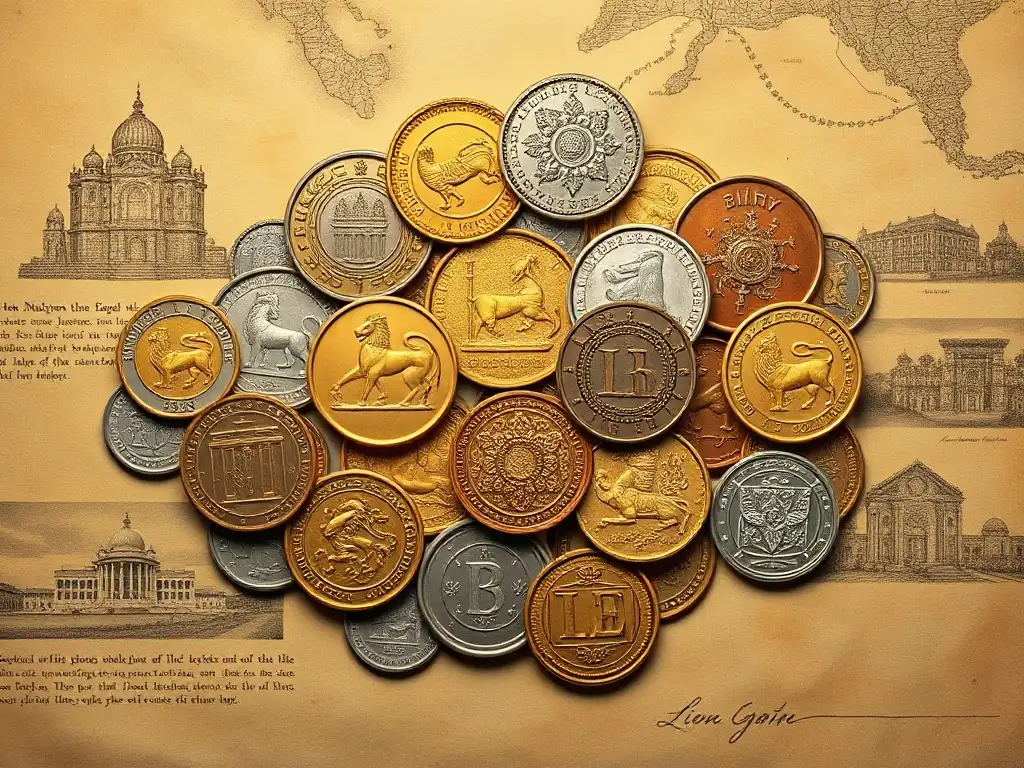
The Mauryan Empire produced a variety of coins that served distinct purposes and reflected the dynamic economic landscape of the time. Understanding the types of coins and their implications provides valuable insights into the economic practices and trade networks of ancient India.
Introduction to Different Types of Mauryan Coins
Mauryan coins can be categorized into several types based on materials, denominations, and designs. The most common materials used were silver, copper, and occasionally gold. The coins varied in size and weight, reflecting their denomination.
- Silver coins (Rupaka): Often larger and more valuable, used for significant transactions.
- Copper coins (Panas): Smaller denominations used for everyday transactions and trade.
- Gold coins: Rare but occasionally minted for special purposes or elite trade.
These coins were not just mediums of exchange but also symbols of the Mauryan state’s economic power and stability.
The Symbolism and Design of Mauryan Coinage
The designs of Mauryan coins were rich in symbolism, often depicting animals, religious motifs, and royal insignia. These symbols served multiple purposes:
- Authority: Coins stamped with the king’s image or symbols of power reinforced the legitimacy of the ruler and the state.
- Cultural representation: Animals like elephants and lions were common, representing strength and prosperity.
- Religious significance: Coins featuring Buddhist symbols reflected the growing influence of Buddhism during Ashoka’s reign.
The intricate designs not only made the coins aesthetically appealing but also communicated the cultural and political ethos of the Mauryan Empire.
The Impact of Coin Types on Trade and Economy
The diversity of Mauryan coins had significant implications for trade and the economy. The availability of various denominations facilitated transactions across different strata of society, promoting both local and long-distance trade.
- Trade facilitation: A standardized currency allowed merchants to conduct business more efficiently, reducing the complexity of barter systems.
- Market expansion: The introduction of coins contributed to the emergence of markets and trade centers, fostering economic growth.
- Economic integration: The circulation of coins across vast territories helped integrate diverse regional economies into a unified Mauryan economic system.
Overall, the types of Mauryan coins and their strategic use laid the foundation for complex economic interactions that would influence subsequent Indian civilizations.
The Role of Coinage in Mauryan Trade Networks
Coinage played a pivotal role in the economic landscape of the Mauryan Empire, facilitating trade both internally and externally. The introduction of coins revolutionized the way transactions were conducted, moving away from the barter system that had dominated earlier periods. The Mauryan coins, which were made from various metals such as silver, gold, and copper, served not only as currency but also as a means of establishing trust and value in trade. With distinct designs and inscriptions, these coins became symbols of the Mauryan authority and were critical in creating a unified economic framework across the vast empire.
The extensive trade networks established during the Mauryan period were crucial for the dissemination of goods, resources, and culture. Coinage enabled merchants to engage in commerce more efficiently, allowing for easier price determination and reducing the complexities associated with trade. As a result, the Mauryan coinage system significantly enhanced economic interactions between different regions, fostering an environment where trade thrived and diverse goods circulated widely.
Internal Trade: Coinage as a Medium of Exchange
Within the Mauryan Empire, internal trade benefitted immensely from the introduction of coinage. The use of coins simplified transactions between merchants and consumers, making it easier to conduct business in marketplaces and urban centers. As coins became widespread, they allowed for a more organized approach to trade, where prices could be standardized and goods exchanged at a fair value.
Coins helped bridge regional economies, facilitating the movement of goods like textiles, spices, and agricultural products. The Mauryan state actively promoted internal trade by establishing market regulations and providing safe trade routes, further enhancing economic stability. Merchants were encouraged to participate in commerce, leading to the emergence of vibrant trade hubs that contributed to the overall prosperity of the empire. This internal trade network not only boosted the economy but also fostered cultural exchanges among diverse communities.
External Trade: Mauryan Coins in International Markets
The Mauryan Empire's strategic location made it a key player in regional and international trade. Mauryan coins found their way into foreign markets, reflecting the empire's extensive trade links with regions such as the Mediterranean, Central Asia, and Southeast Asia. These coins served as a medium of exchange for valuable commodities like ivory, precious stones, and exotic spices, contributing to the empire's wealth and international standing.
Mauryan traders were known to engage with various civilizations, including the Greeks and Persians, facilitating a flow of goods and cultural exchange. The coins were not only a practical tool for trade but also a representation of the Mauryan influence, as foreign merchants recognized their value and reliability. This external trade was instrumental in integrating the Mauryan economy into the larger global market, showcasing the empire's economic prowess during its peak.
Economic Policies Influencing Mauryan Coinage
The economic policies of the Mauryan Empire were integral to the development and stability of its coinage system. Under the guidance of key figures like Chandragupta Maurya and his grandson Ashoka, the empire implemented policies that ensured the effective functioning of its economy, including the regulation of coin production and trade practices.
Taxation and Revenue Collection in the Mauryan Empire
Taxation was a fundamental aspect of the Mauryan economic framework. The empire faced the challenge of collecting revenue to fund its administrative and military needs. The introduction of coins facilitated this process, as taxes could be collected in a standardized currency rather than in kind, simplifying record-keeping and transactions.
The Mauryan state established a structured system for revenue collection, which included taxes on agriculture, trade, and crafts. These policies ensured a steady flow of resources to the treasury, enabling the empire to invest in infrastructure and public services. The efficient taxation system not only supported the economic stability of the Mauryan Empire but also reinforced the importance of coinage as a reliable medium for financial transactions.
The Standardization of Coinage and Its Economic Effects
One of the most significant advancements in Mauryan coinage was the standardization of its currency. This move ensured consistency in weight, metal content, and design, which was crucial for building trust among traders and consumers. Standardized coins minimized confusion in commerce and made it easier to assess the value of goods across different regions.
The economic effects of this standardization were profound. It allowed for ease of trade, both internally and externally, as merchants could confidently engage in transactions without the fear of counterfeit currency. Additionally, a standardized coinage system encouraged economic growth by promoting trade and investment, ultimately contributing to the overall prosperity of the Mauryan Empire. The legacy of this standardized coinage can still be seen in modern economic systems, where uniform currency remains a cornerstone of trade and commerce.
The Legacy of Mauryan Coinage in Indian Economic History
The Mauryan Empire, which flourished from approximately 322 BCE to 185 BCE, is renowned not only for its political achievements but also for its revolutionary contributions to economic practices, particularly through its coinage. The Mauryan coinage system is considered a pivotal development in Indian economic history, marking a transition from barter systems to a more sophisticated economy that utilized standardized currency. The coins produced during this era, including the well-known punch-marked coins, facilitated trade and commerce across vast distances, thus integrating various regions of ancient India.
Mauryan coinage also reflected the socio-political dynamics of the empire. The coins often bore the symbols of power, such as the royal insignia and images of deities, which served to reinforce the authority of the Mauryan rulers. This connection between coinage and governance illustrates how economic systems were intertwined with the political fabric of the time. Furthermore, the introduction of a unified currency helped in the administration of taxes and trade, which were essential for the empire's vast economy.
Influence on Subsequent Indian Coinage Systems
The innovations in Mauryan coinage set a precedent that influenced subsequent Indian coinage systems for centuries to come. The standardization of weight and purity in coins introduced by the Mauryans became a model for later dynasties, including the Shungas, Satavahanas, and later empires like the Gupta Empire. As the Mauryan coins were widely recognized and accepted, they established a baseline for value that would guide future minting practices.
Moreover, the artistic designs and motifs used in Mauryan coins inspired subsequent coins, leading to a rich tradition of numismatic art in India. The use of symbols, inscriptions, and images on coins evolved, reflecting the cultural and political changes within the subcontinent. This legacy can be traced through the intricate coin designs that would emerge in later historical periods, highlighting the lasting impact of Mauryan innovations.
The Role of Mauryan Coinage in Shaping Economic Practices
Mauryan coinage played a crucial role in shaping the economic practices of ancient India. By introducing a standardized currency, the Mauryans facilitated trade not just within their empire but also with neighboring regions. This encouraged commerce and economic interactions, leading to the growth of markets and trade routes. Merchants could conduct transactions with greater ease and confidence, knowing the value of coins was recognized across various territories.
Additionally, the use of coins contributed to the development of banking systems and credit networks. The proliferation of coinage meant that merchants could store wealth in a tangible form, leading to the emergence of more complex economic activities, such as loans and investments. The economy became increasingly monetized, moving away from the limitations of barter systems, which greatly enhanced economic efficiency.
Conclusion: The Enduring Impact of Mauryan Coinage on Economic History
The legacy of Mauryan coinage is significant in the context of Indian economic history. Its introduction of a standardized currency not only revolutionized trade practices during the Mauryan period but also laid the groundwork for future economic systems in India. The influence of Mauryan coinage can be seen in the subsequent dynasties that adopted and adapted these innovations, ensuring that the principles established during this era continued to resonate throughout Indian history.
Summary of Key Points on Mauryan Coinage and Economy
- Standardization of Currency: Mauryan coinage introduced a unified currency system, enhancing trade and commerce.
- Political Symbolism: Coins served as tools of authority, reflecting the power of the Mauryan rulers.
- Influence on Future Systems: The innovations in Mauryan coinage influenced subsequent empires and their numismatic practices.
- Economic Practices: Mauryan coinage facilitated the emergence of banking systems and a monetized economy.
Reflection on the Historical Significance of Mauryan Coinage in Ancient India
Mauryan coinage stands as a testament to the advanced economic understanding of ancient Indian civilizations. Its role in fostering trade, shaping political authority, and influencing subsequent economic practices cannot be overstated. As a cornerstone of economic history, Mauryan coinage not only reflects the complexities of the Mauryan Empire but also serves as a crucial element in understanding the evolution of economic systems in ancient India. The interplay between coinage and economic activities during this period highlights the sophisticated nature of Mauryan society and its enduring influence on the Indian subcontinent's historical trajectory.
References and Further Reading on Mauryan Coinage and Economic History
The study of Mauryan coinage provides invaluable insights into the economic practices, trade routes, and cultural exchanges of ancient India. Below is a compilation of suggested books, articles, and online resources that offer a deeper understanding of Mauryan coinage and its impact on economic history.
Suggested Books and Articles on Mauryan Economic Practices
-
"The Mauryan Empire" by Romila Thapar
This comprehensive book explores the political, social, and economic aspects of the Mauryan Empire, including detailed discussions on coinage and its implications for trade and economy.
-
"Coins and Kings: The Politics of Money in Ancient India" by John M. Fritz
Fritz provides an in-depth analysis of how coinage was used as a tool of political power during the Mauryan period, exploring the relationship between coins and governance.
-
"Economic History of Ancient India: From the Earliest Times to the Present Day" by R. S. Sharma
This book covers the broader economic practices of ancient India, with specific sections dedicated to the Mauryan period, highlighting the role of coinage in economic activities.
-
"Mauryan Coinage: A Study of the Coinage of the Maurya Dynasty" by K. C. Jain
Jain's work offers an extensive classification of Mauryan coins and examines their significance in trade and everyday life during the empire.
-
"The Role of Coinage in the Economy of the Mauryan Empire" - Journal of Economic History
This scholarly article discusses the economic implications of coinage in the Mauryan Empire, including trade integration and market dynamics.
Online Resources for Further Exploration of Ancient Indian Coinage
-
Digital Himalaya
This project hosts a range of resources, including digitized manuscripts and studies on ancient Indian coinage, providing valuable information for researchers and enthusiasts alike.
-
The British Museum Collection
The British Museum's online collection contains images and descriptions of various Mauryan coins, showcasing the artistry and diversity of coinage from this era.
-
Ancient India Coinage: A Historical Overview
This website offers an overview of ancient Indian coinage, with dedicated sections on the Mauryan period, discussing key figures and economic trends.
-
Coin India
A platform dedicated to numismatics that features articles, blogs, and forums focused on Indian coins, including those from the Mauryan Empire, allowing for community discussions and knowledge sharing.
-
Academia.edu
An academic platform where scholars share papers and research on various topics, including Mauryan coinage. Users can find several articles and theses discussing the economic history associated with Mauryan currency.
These resources collectively provide a well-rounded foundation for anyone interested in understanding the economic history reflected in Mauryan coinage. Whether through books, scholarly articles, or engaging online platforms, readers can explore the rich context of ancient Indian economic practices.
- Introduction to Mauryan Coinage and Economic History
- Historical Context of Mauryan Coinage
- Key Figures in Mauryan Coinage
- Types of Mauryan Coins and Their Economic Implications
- The Role of Coinage in Mauryan Trade Networks
- Economic Policies Influencing Mauryan Coinage
- The Legacy of Mauryan Coinage in Indian Economic History
- Conclusion: The Enduring Impact of Mauryan Coinage on Economic History
- References and Further Reading on Mauryan Coinage and Economic History
- What was the significance of Mauryan coinage in ancient India?
- Who were the key figures involved in the development of Mauryan coinage?
- How did Mauryan coinage impact the economy of ancient India?
- What types of coins were minted during the Mauryan period?
- How does the study of Mauryan coinage contribute to our understanding of ancient Indian economic history?
Frequently Asked Questions
What was the significance of Mauryan coinage in ancient India?
Mauryan coinage played a crucial role in facilitating trade and commerce, allowing for a standardized medium of exchange that boosted the economy during the Mauryan Empire.
Who were the key figures involved in the development of Mauryan coinage?
Key figures include Chandragupta Maurya, the founder of the Mauryan Empire, and Ashoka, his grandson, who expanded the use of coins for economic and administrative purposes.
How did Mauryan coinage impact the economy of ancient India?
The introduction of Mauryan coinage enhanced economic transactions, supported trade networks, and promoted the growth of a monetary economy, which was vital for the empire's prosperity.
What types of coins were minted during the Mauryan period?
Coins minted during the Mauryan period included punch-marked coins and various metallic coins, which featured symbols and inscriptions indicating their value and origin.
How does the study of Mauryan coinage contribute to our understanding of ancient Indian economic history?
Studying Mauryan coinage provides insights into trade practices, economic organization, and the cultural exchanges that shaped ancient Indian civilizations, highlighting their sophisticated economic systems.
Final Reflection: The Enduring Legacy of Mauryan Coinage in Economic History
The exploration of Mauryan coinage as a pivotal element in economic history reveals not only the sophistication of ancient trade practices but also their lasting influence on modern economies. As we navigate through the complexities of today’s financial systems, understanding the foundations laid by the Mauryan Empire can provide invaluable insights into the evolution of currency and commerce. The significance of these ancient coins extends far beyond their metallic composition; they represent a transformative period in economic history that continues to resonate with contemporary society.
The impact of Mauryan coinage is evident in our cultural and social landscapes, where the principles of trade, value, and economic exchange remain central to our interactions. Reflecting on the intricate designs and inscriptions of these coins, one can appreciate the artistry and thoughtfulness that went into their creation.
The coins not only facilitated trade but also served as a medium for cultural expression and political authority. As historian Richard Saller aptly noted, > “Coins are not just currency; they are a reflection of the society that produces them.” This observation underscores the ongoing relevance of Mauryan coinage as a lens through which we can examine the interplay between economy and culture.
As we conclude our journey through the evolution of Mauryan coinage, I invite you to reflect on the lessons embedded in this rich history. Consider how the principles of trade and value established in ancient times can inform our understanding of modern economic practices. Let the story of Mauryan coinage inspire you to appreciate the complexities of our current economic systems and encourage you to engage with them thoughtfully. By recognizing the historical significance of these coins, we can better navigate our own economic landscapes and contribute to a more informed and interconnected world.
Unveil the Wonders of Mauryan Coinage!
Thank you for diving into the fascinating world of Mauryan coinage with us! You've uncovered insights into its evolution and the key figures that shaped ancient India's economy. Now it’s time to take that knowledge further and bring the history to life!
Here are some actionable steps you can take right now:
- Explore a local museum or historical site that features ancient coins or artifacts to see these treasures firsthand.
- Share your newfound knowledge with friends or on social media—let them in on the rich history of Mauryan coinage!
- Join a history forum or community group to discuss your thoughts and insights about ancient economies and their relevance today.
What aspect of Mauryan coinage intrigues you the most, and how do you believe it influences our understanding of economic history today?