
The Evolution of Mauryan Governance: Influential Administrators


Welcome to Ancient India History, where we embark on a fascinating journey through the tapestry of rich and diverse civilizations that shaped the Indian subcontinent. Today, we delve into the intricate world of Mauryan governance administration history, exploring how influential administrators orchestrated one of the most remarkable empires in ancient times.
Prepare to uncover the strategies, innovations, and legacies that not only defined the Mauryan Empire but also left an indelible mark on the course of Indian history. Join us as we unravel the complexities of governance and administration that thrived during this extraordinary era—your adventure into the past begins now!

Introduction to Mauryan Governance Administration History
The Maurya Empire, spanning from 322 BCE to 185 BCE, is one of the most significant periods in ancient Indian history, known for its profound contributions to governance, administration, and culture. The empire marked a pivotal evolution in the way states were governed, establishing a framework that would influence subsequent dynasties.
This article delves into the intricacies of Mauryan governance administration history, focusing on the influential administrators who shaped the empire's policies and practices. By examining the techniques and structures implemented by these key figures, we can better understand the administrative innovations that characterized the Maurya Empire and their lasting impact on the Indian subcontinent.
Overview of the Maurya Empire
The Maurya Empire emerged in the aftermath of the fragmentation of the Indian subcontinent following the decline of the Nanda dynasty. Founded by Chandragupta Maurya, the empire expanded rapidly under his leadership and that of his grandson, Ashoka the Great. At its zenith, the Maurya Empire covered a vast territory, stretching from the eastern regions of modern-day India to parts of Afghanistan and Bangladesh.
Key characteristics of the empire include:
- Strong military presence: The Mauryan rulers maintained a formidable army, which played a crucial role in territorial expansion and the consolidation of power.
- Economic prosperity: A well-organized economy facilitated trade and agriculture, contributing to the wealth of the empire.
- Cultural and religious diversity: The Maurya Empire was home to various cultures and religions, fostering a rich tapestry of societal practices and beliefs.
The governance structure established during this period laid the groundwork for effective administration, ensuring stability and prosperity across the empire.
Significance of Governance in Ancient India
Governance in ancient India was not merely a system of rule; it was deeply intertwined with the philosophical, social, and economic fabric of society. The Mauryan governance model introduced several significant concepts that would resonate throughout Indian history:
- Centralized authority: The Mauryan rulers centralized power, enabling efficient decision-making and implementation of policies across vast territories.
- Administrative innovations: The establishment of a bureaucratic system introduced formal roles and responsibilities, allowing for better management of resources and people.
- Legal and ethical foundations: The Mauryas emphasized the importance of dharma (righteousness) in governance, influencing the moral compass of future administrations.
These elements highlight the critical role that governance played in shaping not only the Maurya Empire but also the broader historical context of ancient Indian civilization.
Key Features of Mauryan Governance
The Mauryan governance system was characterized by several key features that distinguished it from previous and later administrations. Understanding these features provides insight into the effectiveness and longevity of Mauryan rule.
Centralized Administration
One of the hallmark features of Mauryan governance was its centralized administration. The emperor held supreme authority, which facilitated:
- Uniform policy implementation: Decisions made at the top were consistently executed throughout the empire, promoting stability and coherence.
- Taxation and revenue collection: A streamlined tax system allowed for efficient collection and distribution of resources, which was vital for maintaining the empire’s infrastructure and military.
The central authority was supported by a network of officials and advisors, ensuring that the emperor’s directives were effectively communicated and enforced.
Role of Provincial Governors
To manage the vast expanse of the Maurya Empire, provincial governors played a crucial role. These governors were responsible for:
- Local governance: They administered their respective regions, addressing local issues and concerns while adhering to the central policies.
- Military oversight: Provincial governors often commanded local military forces, ensuring the security and order of their territories.
This system of delegation allowed for a balance between centralized control and local autonomy, which was essential for managing diverse populations and geographies.
Bureaucratic Structure and Functionality
The Mauryan bureaucracy was a sophisticated system that underpinned the empire's governance. Key aspects included:
- Division of responsibilities: Various departments handled specific functions, such as revenue collection, law enforcement, and public works, ensuring specialization and efficiency.
- Merit-based appointments: While some positions were hereditary, many bureaucratic roles were filled based on merit and capability, promoting effective governance.
This bureaucratic structure not only facilitated smooth administration but also set a precedent for future Indian empires, showcasing the importance of a well-organized government in managing complex societies.
Influential Administrators of the Mauryan Empire
The Mauryan Empire, one of the largest empires in ancient India, was marked by significant contributions from a series of influential administrators who shaped its governance. These figures not only established the foundational structures of administration but also adapted and evolved governance practices over time, reflecting the complexities and challenges of ruling a vast and diverse territory. Key figures such as Chandragupta Maurya, Chanakya (Kautilya), and Ashoka the Great played pivotal roles in developing the Mauryan governance system, each leaving a lasting legacy that influenced subsequent generations.
Chandragupta Maurya: The Founder’s Vision
Chandragupta Maurya, the founder of the Mauryan Empire, is renowned for his strategic acumen and ambitious vision. Rising from humble beginnings, he successfully unified a fragmented India under a centralized authority. His governance was characterized by a strong military foundation and a focus on economic prosperity.
Chandragupta established an efficient administrative framework, dividing the empire into provinces governed by loyal officials. This decentralization allowed for effective management of resources and local governance. Notably, he implemented a taxation system that ensured state revenue while supporting agricultural productivity, which was crucial for sustaining the empire's economy.
Furthermore, Chandragupta's vision extended to fostering trade and infrastructure, establishing trade routes that facilitated commerce across his empire. His reign set the stage for a robust administrative structure that would be further developed by his successors, particularly in areas of law and public welfare.
Chanakya (Kautilya): The Architect of Mauryan Administration
Chanakya, also known as Kautilya, was not only a key advisor to Chandragupta Maurya but also the mastermind behind the political and administrative strategies of the Mauryan Empire. His work, the Arthashastra, is a seminal text on statecraft, economics, and military strategy, reflecting his deep understanding of governance and human nature.
Under Chanakya's guidance, the Mauryan administration adopted a pragmatic approach to governance. He emphasized the importance of intelligence and espionage in maintaining state security and stability. His principles advocated for a centralized bureaucracy, where officials were appointed based on merit rather than lineage, promoting efficiency and loyalty.
Moreover, Chanakya's policies extended to the welfare of the people, suggesting that the government should act in the best interest of its citizens. This philosophy underpinned many administrative reforms, including justice systems that were fair and accessible. His contributions solidified the Mauryan administration's reputation for being both strategic and benevolent.
Ashoka the Great: The Beacon of Moral Governance
Ashoka the Great, the grandson of Chandragupta, is perhaps the most celebrated ruler of the Mauryan Empire, renowned for his transformative approach to governance. After the Kalinga War, which profoundly affected him, Ashoka shifted from militaristic expansion to a focus on moral governance and the welfare of his subjects.
His reign is marked by the promotion of Dhamma (moral law), which emphasized ethical conduct, non-violence, and respect for all living beings. Ashoka's edicts, inscribed on pillars and rocks throughout his empire, communicated his vision for a just society, encouraging people to follow a path of righteousness and compassion.
Additionally, Ashoka played a crucial role in spreading Buddhism, which further influenced governance by emphasizing community welfare and the importance of moral leadership. His policies included the establishment of hospitals, rest houses, and educational institutions, showcasing a commitment to public health and knowledge dissemination. Ashoka’s legacy remains a symbol of enlightened leadership, deeply rooted in ethical principles.
Evolution of Governance Practices in the Maurya Empire
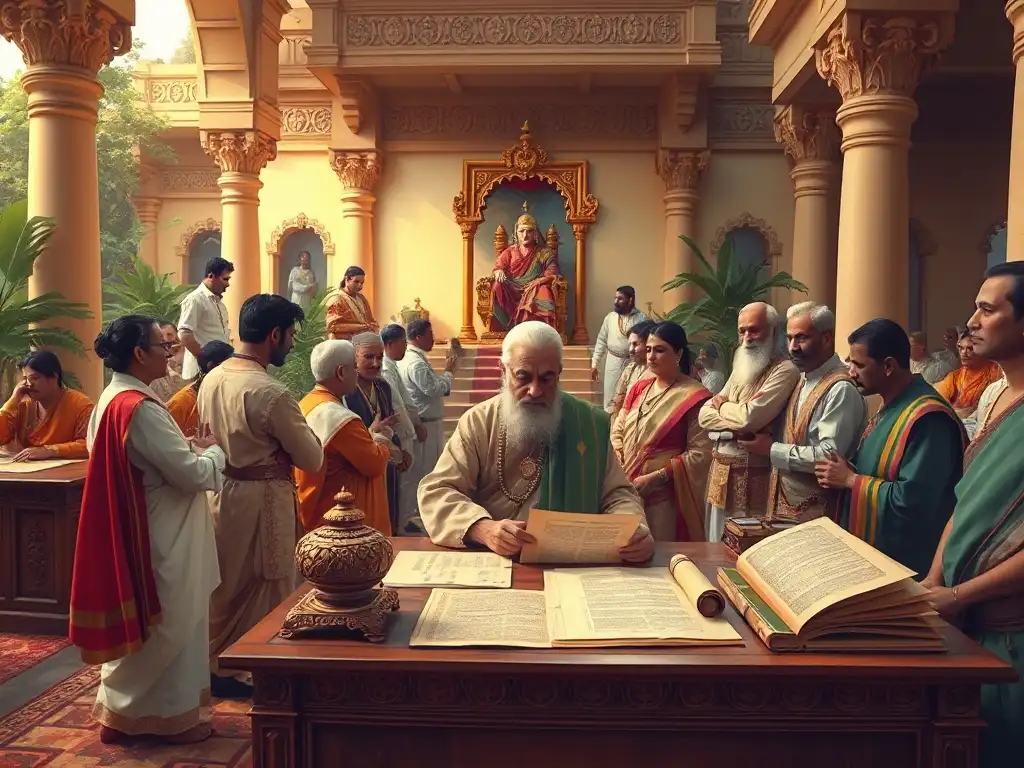
The governance practices in the Mauryan Empire evolved significantly over time, driven by the changing political landscape and the philosophical underpinnings of its rulers. This evolution was marked by shifts in administrative techniques, public policy, and the integration of ethical governance.
Changes in Administrative Techniques Over Time
Initially, the Mauryan government focused heavily on military strength and centralized control. However, as the empire expanded, administrative techniques were adapted to manage diverse populations and vast territories more effectively.
The introduction of provincial governors allowed for localized governance, which enabled more responsive and efficient administration. These governors were supported by a network of officials responsible for various domains such as taxation, justice, and infrastructure. As the empire matured, the bureaucratic apparatus became more sophisticated, incorporating specialized roles to address the complexities of governance.
In addition, the use of written records and codified laws became more prevalent, facilitating better communication and consistency in legal matters. The emphasis on meritocracy and accountability in administrative appointments also strengthened governance, reducing corruption and inefficiency.
Influence of Religion and Philosophy on Governance
Religion and philosophy played a critical role in shaping the governance of the Mauryan Empire. The influence of Buddhism, particularly during Ashoka’s reign, introduced a moral dimension to political leadership. Ashoka's commitment to Dhamma reflected a governance philosophy that prioritized ethical conduct and the well-being of citizens.
Furthermore, the incorporation of various religious beliefs within the administration fostered a sense of unity among the diverse populations of the empire. Policies promoting tolerance and respect for different faiths contributed to social harmony, which was essential for maintaining stability in such a vast empire.
Additionally, the philosophical underpinnings provided by thinkers like Chanakya emphasized the importance of pragmatism in governance, balancing ethical considerations with the realities of statecraft. This blend of philosophy and practical governance created a dynamic framework that allowed the Mauryan Empire to thrive and adapt through various challenges.
The evolution of Mauryan governance administration history is marked by the significant contributions of its influential administrators, whose legacies continue to resonate in discussions of governance and ethical leadership.
The Legacy of Mauryan Governance Administration History
The Mauryan Empire, which thrived from approximately 322 to 185 BCE, laid the groundwork for a sophisticated system of governance that influenced not only its immediate successors but also the broader landscape of Indian administrative practices. The empire’s governance was characterized by a centralized authority that utilized a complex bureaucracy to manage its vast territories. This system emphasized efficiency, stability, and the welfare of its citizens, setting a precedent for future Indian empires.
Key figures in Mauryan governance, such as Chandragupta Maurya and his advisor Chanakya (Kautilya), were instrumental in creating a governance framework that integrated various aspects of administration, law, and economic management. The Arthashastra, attributed to Chanakya, serves as a seminal text outlining statecraft, economic policy, and military strategy, reflecting the sophisticated governance strategies of the Mauryan period. This legacy has endured through history, influencing not only the political structures of later Indian states but also contributing to the broader discourse on governance in ancient civilizations.
Lasting Impact on Subsequent Indian Empires
The Mauryan governance model significantly influenced subsequent Indian empires, including the Shunga, Gupta, and even later dynasties. The emphasis on a strong central authority, the use of a bureaucratic system, and the establishment of a network of provincial governors can be observed in these later empires. For example, the Gupta Empire (c. 240 to 550 CE) adopted many administrative techniques from the Mauryan system, such as the division of the empire into provinces governed by local rulers who reported back to a central authority.
Moreover, the Mauryan Empire's policies on trade, agriculture, and taxation set a standard that would be emulated in various forms by later states. The concept of Rajadharma—the duty of kings to govern justly and for the welfare of the people—was another Mauryan legacy that resonated through time, influencing the moral and ethical foundations of governance in India.
Comparative Analysis with Other Ancient Civilizations
When comparing Mauryan governance to other ancient civilizations, several similarities and differences emerge. Like the Roman Empire, which also utilized a complex bureaucracy and legal system, the Mauryan Empire emphasized central control and a structured administrative hierarchy. However, unlike Rome, which relied heavily on military expansion and territorial acquisition, the Mauryan approach integrated more elements of welfare and state support for its citizens.
In contrast to the Athenian model of democracy, which allowed for greater citizen participation in governance, the Mauryan system was more autocratic, with power concentrated in the hands of the emperor and his advisors. Yet, both systems shared a commitment to public infrastructure, such as roads and trade routes, which facilitated economic prosperity and cultural exchange.
Conclusion: Reflections on Mauryan Governance and Administration
The Mauryan governance system represents a pivotal chapter in the history of Indian administration, characterized by its innovative approaches to statecraft, economic management, and law. By analyzing the structures and policies established by influential figures like Chandragupta Maurya and Chanakya, one can gain insights into the complexities of governance during this remarkable period.
Summary of Key Influential Figures
The pivotal figures of Mauryan governance—Chandragupta Maurya, Chanakya, and later emperors like Ashoka—played crucial roles in shaping the administration and policies of the empire. Chandragupta’s establishment of centralized authority, Chanakya’s strategic counsel, and Ashoka’s commitment to moral governance and public welfare collectively contributed to a robust administrative framework. Their legacies continue to be studied for their insights into leadership, statecraft, and ethical governance.
The Importance of Understanding Mauryan Governance Today
Understanding Mauryan governance is essential not only for appreciating the historical legacy of India but also for its relevance in contemporary governance discussions. The principles of effective administration, ethical leadership, and social welfare established during the Mauryan period remain pertinent today. As modern societies grapple with governance challenges, revisiting the Mauryan model can offer valuable lessons in statecraft, organizational management, and the importance of public service in fostering a just society.
- Introduction to Mauryan Governance Administration History
- Key Features of Mauryan Governance
- Influential Administrators of the Mauryan Empire
- Evolution of Governance Practices in the Maurya Empire
- The Legacy of Mauryan Governance Administration History
- Conclusion: Reflections on Mauryan Governance and Administration
- What was the significance of Mauryan governance in ancient India?
- Who were the prominent administrators during the Mauryan Empire?
- How did the Mauryan Empire ensure efficient administration?
- What were the key features of Mauryan governance?
- How did Mauryan governance influence later Indian administrations?
Frequently Asked Questions
What was the significance of Mauryan governance in ancient India?
The Mauryan governance system laid the foundation for effective administration in ancient India, influencing future empires through its centralized authority and bureaucratic structure.
Who were the prominent administrators during the Mauryan Empire?
Key administrators like Chanakya, also known as Kautilya, played a crucial role in shaping Mauryan policies, focusing on political strategy and economic management.
How did the Mauryan Empire ensure efficient administration?
The Mauryan Empire employed a vast network of provincial governors and local officials, ensuring that the central authority maintained control over distant regions and promoted local governance.
What were the key features of Mauryan governance?
Mauryan governance was characterized by law and order, taxation systems, and a sprawling bureaucracy, which enabled effective management of resources and public welfare.
How did Mauryan governance influence later Indian administrations?
The principles of governance established by the Mauryan Empire, such as administrative organization and legal frameworks, significantly impacted subsequent Indian dynasties and their administrative practices.
Final Reflection: The Enduring Legacy of Mauryan Governance
The exploration of Mauryan governance administration history reveals not only the sophistication of ancient political systems but also their profound relevance in today's world. As we navigate complex societal structures and governance challenges, the lessons from the Mauryan Empire remind us that effective administration is rooted in visionary leadership and strategic innovation. The principles established by influential administrators like Chanakya continue to resonate, illustrating that the foundations of governance are timeless.
The impact of Mauryan governance extends far beyond its historical context; it has shaped the cultural and social landscape of India and influenced governance models worldwide. The intricate balance of power, the emphasis on justice, and the integration of diverse communities within the Mauryan Empire serve as a blueprint for modern governance. The greatest gift of the Mauryan Empire was its ability to unify a vast and diverse population under a single administrative framework.
This observation underscores the importance of inclusivity and adaptability in governance, principles that remain crucial in our increasingly interconnected world.
As we reflect on the insights gained from the evolution of Mauryan governance, I invite you to consider how these lessons can be applied in your own life and community. What can you learn from the strategic approaches of past leaders to enhance your own leadership skills? Embrace the challenge of fostering collaboration, inclusivity, and innovation in your endeavors. By doing so, you contribute to a legacy of effective governance that honors the past while paving the way for a brighter future.
Unveil the Legacy of Mauryan Administrators!
Thank you for diving into the fascinating world of Mauryan governance with us! You've explored the significant impact of influential administrators who shaped the history of Ancient India. Now it's time to take that knowledge and make it come alive!
Here are some empowering actions you can take next:
- Join a local history group or online forum to discuss the significance of Mauryan governance and its relevance in today's world. Sharing insights can deepen your understanding and inspire others!
- Create a visual timeline highlighting the key figures of the Mauryan Empire. This creative project can help you and others visualize their contributions and interconnectedness.
- Explore related topics such as the economic systems or cultural advancements during the Mauryan period to broaden your historical perspective.
Which aspect of Mauryan governance intrigues you the most, and how do you think it influences contemporary administrative practices?