
The Gupta Empire: A Golden Age of Scientific Discovery in Ancient India

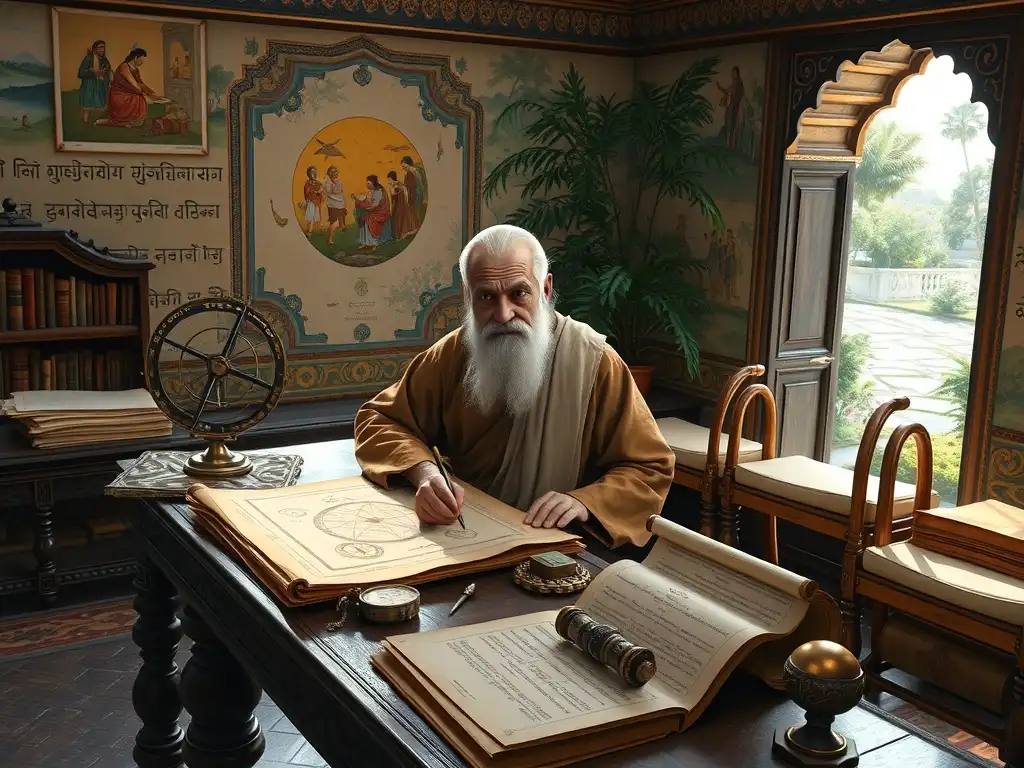
Welcome to Ancient India History, where we embark on an enthralling journey through time to uncover the rich and diverse tapestry of ancient Indian civilizations. In this exploration, we invite you to delve into the remarkable scientific advancements of the Gupta Empire, a period often hailed as a Golden Age of Discovery. What groundbreaking inventions and revolutionary ideas emerged from this era? Join us as we unravel the mysteries of a civilization that shaped the very foundations of science and knowledge, igniting your curiosity and inspiring you to discover more about this pivotal chapter in history.

Introduction to the Gupta Empire
The Gupta Empire, often heralded as a Golden Age of Indian civilization, emerged around the 3rd century CE and lasted until the 6th century CE. This period is renowned not only for its remarkable political stability and cultural flourishing but also for significant scientific advancements that laid the foundation for future discoveries.
The Gupta rulers, particularly under the reign of Chandragupta II, fostered an environment that encouraged intellectual pursuits, leading to groundbreaking achievements in various fields such as mathematics, astronomy, medicine, and metallurgy. As we delve into the Gupta Empire's contributions to science, it is crucial to understand the historical context and significance of this era within the broader tapestry of ancient Indian history.
Overview of the Gupta Empire's Historical Context
The Gupta Empire was established by Maharaja Sri Gupta and reached its zenith under Chandragupta I, who unified several smaller kingdoms. This empire is often considered a pivotal moment in Indian history, characterized by a resurgence of Hindu culture and the arts following centuries of foreign invasions. The empire's capital, Pataliputra (modern-day Patna), became a vibrant center for trade and cultural exchange, attracting scholars and thinkers from various regions. The relative peace and stability of the Gupta period facilitated the pursuit of knowledge and exploration of scientific ideas, setting the stage for extraordinary advancements.
Significance of the Gupta Empire in Ancient Indian History
The Gupta Empire holds a distinguished place in ancient Indian history due to its profound influence on culture, art, and science. It is during this period that we see the emergence of classical Indian literature, including the works of Kalidasa and Aryabhata.
Furthermore, the Gupta period witnessed the development of important concepts in mathematics, such as the use of zero and the decimal system, which would later influence global mathematical practices. The scientific advancements of the Gupta Empire not only enriched Indian civilization but also had a lasting impact on the world, making this era a cornerstone in the history of human achievement.
Gupta Empire Scientific Advancements
The scientific advancements during the Gupta Empire were a testament to the intellectual prowess of its scholars. Rooted in a rich tradition of inquiry and exploration, these advancements encompassed various fields, each contributing to a holistic understanding of the natural world.
Definition of Scientific Advancements in the Gupta Era
Scientific advancements in the Gupta era can be defined as significant contributions to knowledge and understanding across disciplines such as mathematics, astronomy, medicine, and metallurgy. These advancements were characterized by a systematic approach to observation, experimentation, and the application of theoretical concepts. The Gupta scholars built upon previous knowledge from earlier civilizations, synthesizing and expanding upon existing ideas to create a cohesive body of scientific thought.
Overview of Key Scientific Fields During the Gupta Empire
The Gupta Empire is noted for its remarkable achievements in several key scientific fields:
- Mathematics: Introduction of the concept of zero, development of the decimal system, and significant advancements in algebra.
- Astronomy: Accurate calculations of the solar year, theories about planetary motion, and the formulation of astronomical texts like Aryabhata's Aryabhatiya.
- Medicine: Advanced surgical techniques, detailed medical texts such as Sushruta Samhita, and an emphasis on herbal remedies and holistic health.
- Metallurgy: Innovations in metalwork, including the production of high-quality steel, exemplified by the famous Iron Pillar of Delhi.
These fields not only reflect the Gupta Empire's scientific achievements but also highlight the empire's commitment to fostering a culture of inquiry and innovation that would resonate through generations.
Mathematics in the Gupta Empire
The Gupta Empire, which flourished from approximately 320 to 550 CE, is often referred to as a golden age for mathematics in ancient India. Scholars during this period made significant advancements that laid the groundwork for modern mathematics. The Gupta mathematicians not only refined existing concepts but also introduced new ideas that would influence both eastern and western mathematical traditions.
One of the most remarkable contributions from this era was the development of the decimal system and the concept of zero as a numeral. This numeral system, which is the basis for the mathematics we use today, allowed for more complex calculations and greater numerical precision. The Gupta mathematicians also advanced arithmetic operations, algebra, and geometry, leading to more sophisticated mathematical theories.
Contributions to Mathematics by Gupta Scholars
Gupta scholars made numerous contributions that were foundational to the field of mathematics. Among these are:
- Decimal System: The introduction of the place-value system using ten numerals, including zero, revolutionized calculations and record-keeping.
- Algebra: Gupta mathematicians explored algebraic methods, including the solutions of linear and quadratic equations. This laid the groundwork for future algebraic development.
- Mathematical Texts: Works like the Aryabhatiya by Aryabhata and Brahmasphutasiddhanta by Brahmagupta contained important mathematical theories and techniques, including rules for arithmetic operations.
- Geometry: They also made significant strides in geometry, including the calculation of areas and volumes, which were essential for architecture and astronomy.
These contributions not only advanced the discipline of mathematics but also facilitated advancements in various scientific fields, including astronomy and engineering.
Notable Mathematicians of the Gupta Empire
During the Gupta Empire, several renowned mathematicians emerged, whose works would leave a lasting legacy:
- Aryabhata: Often regarded as one of the first major mathematicians and astronomers of the Gupta period, Aryabhata introduced concepts such as the approximation of π (pi) and methods for calculating square and cube roots.
- Brahmagupta: A prominent mathematician and astronomer, Brahmagupta is known for his work in algebra and his rules for arithmetic operations involving negative numbers. His text, Brahmasphutasiddhanta, is one of the earliest known works addressing algebra extensively.
- Varahamihira: While primarily known for his contributions to astrology, Varahamihira also made significant contributions to mathematics, particularly in trigonometry and the calculation of sine functions.
These mathematicians not only advanced the field but also influenced subsequent generations of scholars in India and beyond.
Astronomy and Astrophysics in the Gupta Period

The Gupta Empire was not only a beacon of mathematical advancement but also a significant period for astronomical research and discovery. The study of astronomy was deeply intertwined with religious practices and agricultural cycles, leading to a rich tradition of observation and calculation.
Gupta astronomers developed methods for predicting planetary movements and eclipses, contributing to a greater understanding of celestial phenomena. Their work laid the groundwork for later developments in both Indian and Islamic astronomy.
Gupta Empire's Approach to Astronomy
Astronomy in the Gupta Empire was characterized by a systematic approach to observation and calculation. Gupta scholars utilized sophisticated instruments for observing the stars and planets, and their studies often integrated mathematics with observational astronomy. Key aspects included:
- Planetary Motion: Gupta astronomers made significant strides in understanding the motion of celestial bodies, developing models that would predict their paths with remarkable accuracy.
- Eclipses: Detailed calculations for predicting solar and lunar eclipses were developed, showcasing the advanced understanding of celestial mechanics.
- Observational Techniques: The use of gnomons (devices for measuring the angle of the sun) and other observational tools were refined during this period, enhancing the accuracy of astronomical measurements.
The integration of mathematics and observational techniques signified a holistic approach that enriched the study of astronomy.
Influential Works and Texts
Several influential texts emerged during the Gupta period, which encapsulated the astronomical knowledge and methodologies of the time:
- Aryabhatiya: Composed by Aryabhata, this seminal work covers various topics, including arithmetic, algebra, and astronomy. It presents methods for calculating planetary positions and offers insights into the mathematical principles behind celestial phenomena.
- Brahmasphutasiddhanta: Written by Brahmagupta, this text is a comprehensive treatise on mathematics and astronomy. It provides detailed rules for calculating eclipses and planetary positions and discusses the mathematical principles underlying these calculations.
- Surya Siddhanta: An ancient text that provides a systematic treatment of astronomy, including calculations for eclipses and the positions of celestial bodies. It is one of the most influential works in the history of Indian astronomy.
Together, these texts not only influenced subsequent scholars in India but also played a crucial role in the transmission of astronomical knowledge to other cultures. The Gupta Empire's contributions to astronomy and mathematics represent a remarkable achievement in the history of science.
Medicine and Medical Advancements
The Gupta Empire, often regarded as a golden age of Indian civilization, made significant strides in the field of medicine. During this period, scholars and practitioners developed a robust medical system that combined empirical observations with theoretical knowledge. The emphasis on health and wellness led to advancements in various branches of medicine, including surgery, pharmacology, and the holistic approach encapsulated in Ayurveda.
The Gupta period witnessed the compilation of various medical texts that laid the foundation for future practices. Notable among these was the work of physicians like Charaka and Sushruta, whose texts provided detailed descriptions of diseases, diagnoses, and treatments. The systematic classification of diseases and the introduction of medicinal plants into treatment regimens emerged as key features of Gupta medical science, making it an era of profound advancements in healthcare.
The Role of Ayurveda in Gupta Science
Ayurveda, the ancient Indian system of medicine, played an integral role in the scientific advancements of the Gupta Empire. Rooted in the belief of balancing the body’s energies (doshas), Ayurveda emphasized prevention and holistic healing. During the Gupta period, Ayurveda was not merely a collection of herbal remedies but evolved into a sophisticated medical science.
Key texts, such as the "Charaka Samhita," were extensively studied and commented upon, leading to enhanced understanding of human anatomy, physiology, and pathology. Ayurvedic practitioners employed various diagnostic techniques, including pulse diagnosis and observation of symptoms, which showcased their empirical approach to medicine. Additionally, Ayurvedic pharmacology saw the introduction of numerous medicinal plants and their preparations, contributing to the vast compendium of herbal medicine that is still valued today.
Innovations in Surgery and Medical Techniques
The Gupta Empire is renowned for its remarkable innovations in surgical practices, largely credited to Sushruta, often referred to as the "father of surgery." His seminal work, the "Sushruta Samhita," is a comprehensive treatise detailing surgical techniques, instruments, and procedures. The text describes over 300 surgical operations, including complex surgeries like cataract removal and plastic surgery procedures.
Sushruta emphasized the importance of sterilization and cleanliness in surgical practices, which was a remarkable understanding for that era. Techniques such as the use of anesthesia, through herbal concoctions, and the development of surgical instruments further highlighted the sophistication of Gupta medical science. The emphasis on surgical precision and patient care set a standard that influenced later medical practices in both India and beyond.
Contributions to Physics and Chemistry
The Gupta Empire made notable contributions to the fields of physics and chemistry, marking significant progress in understanding the natural world. Scholars during this era engaged in theoretical explorations and practical applications that laid the groundwork for later scientific inquiries.
The engagement with philosophical ideas, particularly those of natural philosophy, fostered an environment where scientific thought could flourish. This era saw the integration of empirical observation with mathematical principles, leading to advancements that would influence both Indian and global scientific traditions.
Gupta Empire's Understanding of Basic Principles of Physics
During the Gupta period, scholars developed a foundational understanding of several basic principles of physics, particularly in mechanics and optics. Notable advancements included the study of motion and gravity, alongside the principles of leverage and buoyancy. The texts from this time reveal an understanding of these concepts, suggesting that scholars were beginning to explore the laws governing physical phenomena.
One of the notable figures, Aryabhata, was influential in this area, proposing theories about the motion of celestial bodies and the concept of zero, which was revolutionary for mathematics and physics. His work not only enhanced the understanding of planetary motion but also reflected a deep engagement with observational astronomy, which was critical for both timekeeping and navigation.
Advancements in Alchemy and Material Science
The Gupta Empire also saw significant advancements in alchemy and material science, which were intertwined with the goals of transforming base materials into valuable substances and understanding the properties of various elements. Alchemical practices during this time laid the groundwork for future developments in chemistry.
The concept of "rasa," referring to the essence or chemical nature of substances, was explored in various texts. Scholars conducted experiments with metals, minerals, and herbal mixtures, leading to the discovery of several new compounds and medicinal preparations. The meticulous documentation of these processes not only illustrated the scientific rigor of the time but also highlighted the Gupta commitment to advancing knowledge in the natural sciences. These explorations contributed to a broader understanding of the chemical processes that underpin both medicine and material science, influencing later developments in these fields.
Cultural and Educational Institutions Supporting Scientific Discovery

The Gupta Empire, often hailed as a golden age of scientific discovery, was characterized by a flourishing of cultural and educational institutions that created an environment conducive to intellectual pursuits. These institutions played a pivotal role in the advancement of various fields, including mathematics, astronomy, and medicine. The emphasis on education and scholarship during this period allowed for the collection, preservation, and dissemination of knowledge, fostering an atmosphere of innovation and exploration.
Prominent among these institutions was Nalanda University, which attracted scholars and students from across the Indian subcontinent and beyond. The university served as a center for learning, where subjects ranging from philosophy to the sciences were taught. The collaborative environment at Nalanda encouraged the exchange of ideas, leading to significant breakthroughs in various scientific fields. Additionally, other schools and monasteries across the Gupta Empire complemented Nalanda’s influence, contributing to a robust educational framework that supported scientific advancements.
Role of Nalanda University in Advancing Knowledge
Nalanda University, established in the 5th century CE, emerged as one of the oldest and most renowned educational institutions in the world. It played a crucial role in advancing knowledge during the Gupta Empire, attracting eminent scholars such as Aryabhata, who made profound contributions to mathematics and astronomy. The curriculum at Nalanda encompassed various disciplines, including mathematics, medicine, logic, and metaphysics, reflecting the holistic approach of the Gupta intellectual tradition.
The university’s extensive library was a treasure trove of manuscripts and texts, facilitating research and study. Scholars engaged in rigorous debates, leading to the refinement of ideas and theories. The collaborative environment fostered by Nalanda enabled the transmission of knowledge across cultures, influencing not only Indian thought but also the intellectual traditions of neighboring regions, including China and Tibet.
Patronage of Science by Gupta Rulers
The Gupta rulers were known for their active patronage of science and the arts, which played a significant role in fostering an atmosphere of innovation. Notable emperors like Chandragupta II and Kumaragupta I supported scholars and institutions, offering financial assistance and resources that allowed for extensive research and exploration in various scientific fields.
This royal patronage extended to the commissioning of texts and the establishment of observatories, which were crucial for astronomical studies. The Gupta rulers recognized the importance of science in governance and daily life, promoting advancements that could lead to improved agricultural practices, health care, and navigation. Such support not only enhanced the scientific landscape of the empire but also solidified the rulers' status as enlightened leaders, deeply invested in the welfare of their subjects.
Legacy of Gupta Empire Scientific Advancements
The scientific advancements made during the Gupta Empire left a profound legacy that shaped the future of science and mathematics in India and beyond. The contributions of scholars like Aryabhata and Varahamihira laid the groundwork for future generations of mathematicians and scientists. Their work in arithmetic, algebra, and astronomy influenced not only Indian scholars but also scholars in the Islamic Golden Age and the Renaissance.
The Gupta period is often credited with the introduction of the decimal system and the concept of zero, which revolutionized mathematics. The methodologies developed during this time provided the foundation for advanced calculations and the development of mathematical theories that would be built upon for centuries to come.
Lasting Impact on Science and Mathematics in India
The scientific advancements of the Gupta Empire had a lasting impact on both science and mathematics in India. The principles established during this era continued to be taught and refined by subsequent generations, ensuring that the knowledge gained during the Gupta period remained integral to Indian education and scholarship.
For example, the works of Aryabhata not only influenced mathematics but also laid the groundwork for advancements in astronomy, including the concepts of planetary motion and eclipses. His treatises became foundational texts in Indian astronomy, studied by scholars long after the decline of the Gupta Empire. This continuity of knowledge ensured that the scientific spirit of the Gupta period persisted, nurturing a rich tradition of inquiry and exploration.
Influence on Later Civilizations and Scientific Thought
The influence of Gupta Empire scientific advancements extended beyond the borders of India, impacting later civilizations and shaping scientific thought across the globe. The translation of Indian mathematical texts into Arabic during the Islamic Golden Age facilitated the spread of these ideas to the Middle East and Europe. The introduction of the decimal system and the concept of zero transformed mathematics in these regions, leading to significant developments in various scientific disciplines.
Furthermore, the Gupta legacy inspired scholars such as Al-Khwarizmi and Fibonacci, who drew upon Indian mathematical concepts to develop their theories. This cross-cultural exchange of knowledge fostered a more interconnected scholarly community, demonstrating the Gupta Empire's critical role in the evolution of global scientific thought. The contributions made during this golden age continue to resonate, underscoring the importance of the Gupta Empire in the history of science and mathematics.
Conclusion
The Gupta Empire, often heralded as a golden age in the annals of Indian history, stands out prominently for its remarkable contributions to science and mathematics. This era, spanning from the early 4th century to the late 6th century CE, not only fostered an environment of intellectual growth but also set the foundation for many scientific advancements that resonate even today. The achievements during this period were characterized by significant developments in various fields, including astronomy, medicine, and mathematics, which were instrumental in shaping the course of scientific inquiry in India and beyond.
Summary of the Gupta Empire's Contributions to Science
The Gupta Empire is renowned for several groundbreaking scientific contributions that have left an enduring legacy. Notable highlights include:
- Mathematics: The introduction of the concept of zero as a numeral, attributed to mathematicians like Aryabhata, revolutionized mathematical calculations. The decimal system, which became the backbone of modern mathematics, also flourished during this time.
- Astronomy: Gupta astronomers made significant strides in understanding celestial phenomena. Aryabhata proposed a heliocentric model of the solar system and accurately calculated the circumference of the Earth, showing remarkable foresight and observational skills.
- Medicine: Ancient texts such as the "Sushruta Samhita" compiled by Sushruta laid the groundwork for surgical procedures and medical practices. The emphasis on hygiene and surgical techniques during the Gupta period was unparalleled, influencing medical practices for centuries to come.
- Metallurgy: The Gupta Empire excelled in metallurgy, notably the production of high-quality iron and copper items, including the famous Iron Pillar of Delhi, which exhibits advanced knowledge of corrosion resistance.
These contributions not only reflect the scientific prowess of the Gupta period but also exemplify a culture that valued inquiry, knowledge, and innovation.
Reflection on the Importance of Preserving Ancient Scientific Knowledge
Preserving the scientific knowledge of the Gupta Empire is crucial for several reasons. Firstly, the advancements made during this period laid the groundwork for future innovations and provided a historical context for the evolution of scientific thought. By studying these ancient texts and discoveries, modern scholars can gain insights into early scientific methodologies and philosophies that continue to influence contemporary science.
Moreover, understanding the achievements of the Gupta Empire fosters a sense of pride and identity among descendants of this rich cultural heritage. It also serves as a reminder of the importance of intellectual curiosity and the pursuit of knowledge in shaping civilizations. As we face new scientific challenges today, revisiting the principles and discoveries of the past can inspire innovative solutions and encourage a holistic approach to science that values contributions from diverse cultures.
The Gupta Empire's legacy of scientific advancements remains an integral part of global history. By preserving and celebrating these ancient achievements, we honor not only the intellectual pursuits of our ancestors but also pave the way for future generations to build upon this rich foundation.
- Introduction to the Gupta Empire
- Gupta Empire Scientific Advancements
- Mathematics in the Gupta Empire
- Astronomy and Astrophysics in the Gupta Period
- Medicine and Medical Advancements
- Contributions to Physics and Chemistry
- Cultural and Educational Institutions Supporting Scientific Discovery
- Legacy of Gupta Empire Scientific Advancements
- Conclusion
Frequently Asked Questions
What were the major scientific advancements during the Gupta Empire?
The Gupta Empire is renowned for its significant scientific advancements in fields like mathematics, astronomy, and medicine, including the concept of zero and the decimal system.
How did the Gupta Empire contribute to mathematics?
The Gupta Empire saw the development of important mathematical concepts, such as arithmetic, geometry, and the introduction of algebra, which laid the groundwork for future mathematical studies.
What role did astronomy play during the Gupta Empire?
During the Gupta Empire, astronomers like Aryabhata made groundbreaking discoveries, including the heliocentric model and the calculation of the Earth's circumference, showcasing advanced understanding of celestial mechanics.
How did medicine progress in the Gupta Empire?
The Gupta Empire made remarkable strides in medicine, with texts like the Sushruta Samhita that detailed surgical techniques, herbal remedies, and the importance of hygiene in healthcare practices.
Why is the Gupta Empire referred to as a Golden Age?
The Gupta Empire is often called a Golden Age due to its remarkable achievements in arts, culture, and science, which influenced not only India but also the broader civilizations of the time.
Final Reflection: Embracing the Legacy of the Gupta Empire's Scientific Advancements
The Gupta Empire's remarkable contributions to science and innovation remain profoundly relevant today, as they remind us of the boundless potential of human intellect and creativity. In an age where technological advancements shape our daily lives, reflecting on the Gupta Empire's achievements in mathematics, astronomy, and medicine serves as a powerful reminder of the enduring impact of knowledge and inquiry. The brilliance of this golden age continues to inspire modern scholars and innovators, urging us to explore the depths of our own capabilities.
The legacy of the Gupta Empire is not merely a historical footnote; it is a vibrant thread woven into the fabric of our cultural and intellectual landscape. The advancements made during this period laid the groundwork for future generations, influencing various fields and fostering a spirit of inquiry that transcends time.
As we navigate the complexities of the modern world, it is essential to recognize that "the greatest discoveries are often born from the courage to question the status quo." > This sentiment encapsulates the essence of the Gupta Empire's spirit, encouraging us to embrace curiosity and challenge conventional wisdom.
As we reflect on the lessons of the Gupta Empire, let us carry forward the torch of curiosity and innovation in our own lives. I invite you to explore the realms of knowledge with the same fervor as the scholars of ancient India, to question, to learn, and to innovate. By doing so, we not only honor the legacy of the Gupta Empire but also pave the way for a future rich in discovery and understanding. Embrace the spirit of inquiry, and who knows what remarkable advancements you might contribute to the world!
Unveil the Wonders of the Gupta Empire!
Thank you for diving into the fascinating world of the Gupta Empire! We hope you enjoyed exploring how this remarkable period sparked extraordinary scientific discoveries that shaped our history. Now, it's time to take what you've learned and channel that inspiration into action!
Here are some engaging steps you can take next:
- Explore More: Delve deeper into the scientific advancements of ancient civilizations by checking out our related articles on ancient inventions and discoveries.
- Share Your Knowledge: Discuss the Gupta Empire's contributions with friends or on social media. Share interesting facts and spark a conversation about its relevance today!
- Join the Conversation: Share your thoughts on how the scientific achievements of the Gupta Empire influence modern science or what surprised you the most about this era.
As you reflect on this incredible journey, what aspect of the Gupta Empire inspires you to learn more or take action in your own life?