
The Impact of Gupta Scientific Achievements on the Arab World


Welcome to Ancient India History, where we embark on a fascinating journey through the rich tapestry of India's past! Dive into the remarkable scientific contributions of the Gupta Empire, a golden age that not only transformed the subcontinent but also left an indelible mark on the Arab world. What groundbreaking discoveries and innovations emerged during this era, and how did they influence the course of history? Join us as we unravel the profound impact of Gupta scientific achievements, inviting you to explore the legacy of ancient Indian civilizations that continues to resonate today.
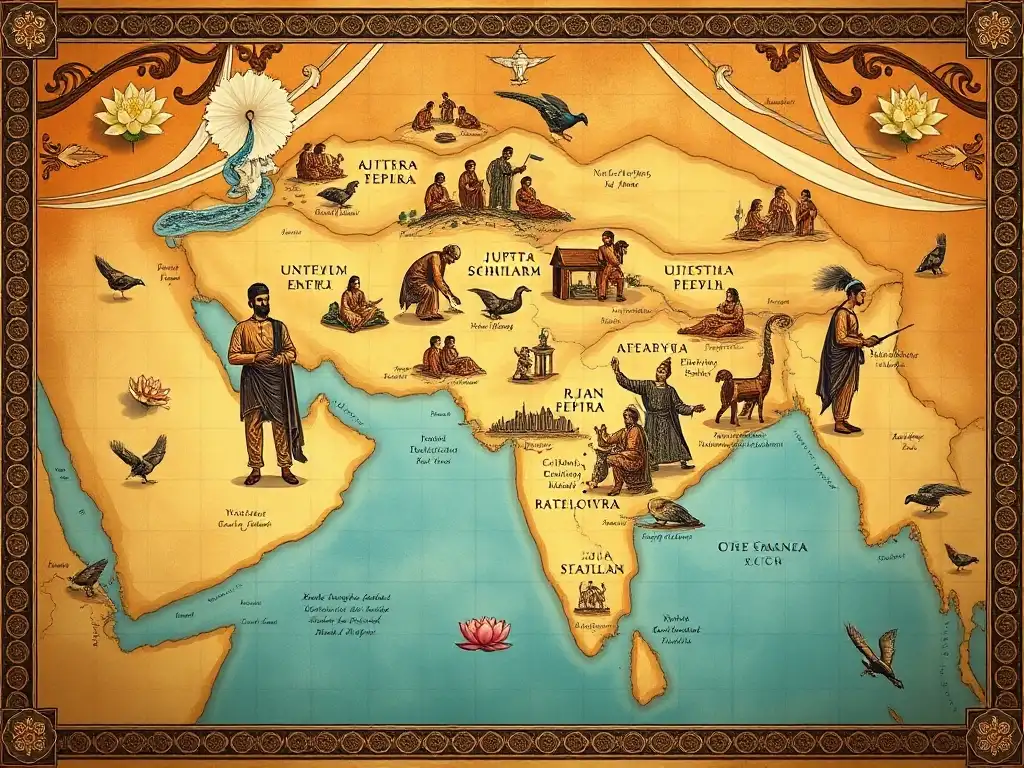
Introduction to the Gupta Empire Scientific Contributions
The Gupta Empire, which thrived from approximately 320 to 550 CE, is often heralded as a golden age in ancient Indian history, particularly in the fields of science and mathematics. This flourishing period not only enhanced the cultural and intellectual landscape of India but also had profound implications beyond its borders, notably influencing the Arab world.
The scientific contributions during this era established foundational principles that would ripple through time, shaping various disciplines and enriching the knowledge of subsequent civilizations. This article aims to delve into the remarkable achievements of the Gupta Empire and their enduring impact on scientific thought in the Arab world.
Overview of the Gupta Empire
The Gupta Empire was characterized by significant political stability and cultural prosperity. Under the reign of notable emperors such as Chandragupta I and Samudragupta, the empire expanded its territory, encompassing much of present-day India and parts of neighboring countries. This era saw the emergence of vibrant centers of learning, including the renowned Nalanda University, which attracted scholars from various regions. The Gupta period was not only a time of military conquests but also a renaissance of art, literature, and, most importantly, scientific inquiry.
Significance of Scientific Advancements in Ancient India
Scientific advancements during the Gupta Empire were pivotal in laying the groundwork for various fields of knowledge. Scholars such as Aryabhata, Varahamihira, and Sushruta made groundbreaking contributions in mathematics, astronomy, and medicine, respectively. Their works not only advanced their own disciplines but also served as crucial references for scholars in the Arab world and beyond. The synthesis of knowledge that occurred during this time highlights India’s role as a center of intellectual exchange, where ideas were developed and disseminated across cultures.
Key Scientific Contributions of the Gupta Empire
Mathematics Innovations
The Gupta Empire is renowned for its remarkable innovations in mathematics, most notably the concept of zero and the decimal system. Aryabhata, one of the empire's most influential mathematicians, introduced the idea of zero as a numeral and established rules for arithmetic operations. His seminal work, the Aryabhatiya, laid the foundation for algebra and trigonometry, influencing mathematicians in the Arab world, who later translated and expanded upon these concepts. The establishment of a base-10 numeral system facilitated more complex calculations and record-keeping, revolutionizing mathematical thought across cultures.
Advances in Astronomy
Astronomy flourished during the Gupta period, with significant advancements made in celestial observation and calculations. Aryabhata's theories on the rotation of the Earth and the calculation of solar and lunar eclipses were groundbreaking. His assertion that the Earth rotates on its axis was particularly innovative, challenging the prevailing geocentric views of the time. The translation of his works into Arabic allowed these astronomical principles to be embraced and further developed by Arab scholars, leading to advancements in navigation and timekeeping that were crucial for maritime exploration.
Contributions to Medicine
The Gupta Empire also made significant strides in the field of medicine, with texts such as the Sushruta Samhita detailing surgical techniques and medical ethics. Sushruta's contributions to surgery, including methods for performing cataract operations and plastic surgery, were revolutionary for their time. The principles outlined in his work permeated through the Arab world, where they were translated and adopted, thus influencing the practice of medicine for centuries. The Gupta emphasis on holistic health and surgical precision set a standard that would inform medical practices across various cultures.
The scientific contributions of the Gupta Empire not only enriched Indian civilization but also had a lasting influence on the Arab world, shaping the trajectory of various disciplines and fostering a legacy of knowledge exchange that continues to resonate today.
The Spread of Gupta Scientific Knowledge to the Arab World
The Gupta Empire, flourishing from approximately 320 to 550 CE, is often hailed as a golden age of science and mathematics in ancient India. During this period, significant advancements were made in various fields, including mathematics, astronomy, and medicine. The dissemination of this knowledge reached far beyond the Indian subcontinent, significantly impacting the Arab world.
The exchange of ideas and scientific knowledge occurred through multiple channels, including trade routes, cultural interactions, and the translation of texts. This flow of information laid the groundwork for a rich intellectual exchange between Indian and Arab scholars, which would later contribute to the Islamic Golden Age.
Trade Routes and Cultural Exchanges
Trade routes such as the Silk Road and maritime paths played a crucial role in fostering connections between the Gupta Empire and the Arab world. These routes not only facilitated the exchange of goods but also served as conduits for ideas, philosophies, and scientific knowledge.
- Silk Road: This ancient trade network linked India with Central Asia and the Middle East, allowing merchants and scholars to travel and share insights. The movement of people along these routes enabled the transfer of Indian mathematical concepts, particularly the use of the decimal system and zero, which were later adopted by Arab mathematicians.
- Maritime Trade: Indian ports, such as those in Gujarat, became hubs for maritime trade with the Arabian Peninsula. This interaction led to the exchange of texts and manuscripts, fostering a fertile ground for knowledge sharing.
These cultural exchanges were not merely transactional; they were transformative, enriching both Indian and Arab civilizations.
Translation of Texts and Knowledge Sharing
The translation of scientific texts from Sanskrit to Arabic was pivotal in transferring Gupta scientific achievements to the Arab world. Scholars such as Al-Khwarizmi and Al-Fazari played a significant role in this process, translating works on mathematics, astronomy, and medicine.
- Sanskrit to Arabic Translations: Indian texts on mathematics, particularly those detailing advancements in arithmetic and geometry, were translated into Arabic. This included works that introduced the concept of zero and algebraic methods, which would later influence the development of mathematics in the Arab world.
- Collaborative Efforts: Arab scholars traveled to India or corresponded with Indian mathematicians and astronomers, leading to collaborative efforts in translating and sharing knowledge. This cross-cultural interaction was instrumental in enriching the scientific corpus of the Islamic civilization.
Overall, the translation efforts and knowledge sharing ensured that Gupta scientific contributions were integrated into the broader intellectual landscape of the Arab world.
The Influence of Gupta Achievements on Arab Scholars
The scientific advancements of the Gupta Empire had a profound influence on Arab scholars, shaping their understanding of mathematics, astronomy, and medicine. As a result, the knowledge acquired from Gupta contributions not only enhanced their own scientific practices but also laid the foundation for future innovations during the Islamic Golden Age.
Impact on Arab Mathematics
The mathematical legacy of the Gupta Empire had a lasting impact on the development of mathematics in the Arab world. Key achievements included:
- Introduction of the Decimal System: Gupta mathematicians were pioneers in the use of the decimal system, including the concept of zero. This revolutionary idea was embraced by Arab scholars, who integrated it into their own mathematical frameworks.
- Algebra and Algorithms: The works of Indian mathematicians provided a basis for what would later be formalized as algebra. Al-Khwarizmi’s influential book, "Al-Kitab al-Mukhtasar fi Hisab al-Jabr wal-Muqabala," which translates to "The Compendious Book on Calculation by Completion and Balancing," is a testament to this lineage.
The adoption of these mathematical principles significantly advanced Arab mathematics, allowing scholars to solve complex problems and make further contributions to the field.
Influence on Astronomy in the Islamic Golden Age
Gupta scientific achievements also played a crucial role in shaping Islamic astronomy. Key influences included:
- Astronomical Calculations: Gupta scholars made significant strides in calculating planetary positions and eclipses. These techniques were adopted by Arab astronomers, who refined them and expanded their applications.
- Star Catalogs and Instruments: The Gupta period saw the development of various astronomical instruments, such as the astrolabe, which were later utilized by Arab scholars to enhance their observational capabilities. This led to improved navigation and understanding of celestial phenomena.
The integration of Gupta astronomical knowledge into Arab practices laid the groundwork for remarkable advancements during the Islamic Golden Age.
Contributions to Medicine and Health Practices
The Gupta Empire's contributions to medicine also left a significant mark on the Arab world. Key aspects of this influence include:
- Ayurvedic Medicine: The principles of Ayurveda, a traditional Indian system of medicine, were shared with Arab scholars, leading to the integration of herbal remedies and holistic health practices in Islamic medicine.
- Surgical Techniques: Indian surgical practices, particularly those outlined in texts by Sushruta, were translated and studied by Arab physicians. Techniques such as cataract surgery and wound treatment were adopted and further developed, enhancing medical knowledge and practices in the Arab world.
Through these contributions, Gupta medical knowledge was instrumental in shaping the field of medicine during the Islamic Golden Age, influencing practices that are still relevant today.
Lasting Legacy of Gupta Scientific Contributions

The Gupta Empire, which flourished from approximately 320 to 550 CE, is often referred to as a golden age of science and mathematics in ancient India. The contributions made during this period laid essential foundations that would resonate far beyond the subcontinent, particularly influencing the Arab world and later, Europe. The scientific advancements in mathematics, astronomy, medicine, and metallurgy established a legacy characterized by innovation and intellectual rigor.
Notably, the introduction of the decimal system and the concept of zero, attributed to mathematicians like Aryabhata, revolutionized the way numbers were understood and utilized. These concepts became instrumental in various fields, enabling more complex calculations and fostering advancements in both theoretical and applied sciences. The Gupta period's scholars meticulously documented their findings, ensuring that their knowledge would be preserved and disseminated across cultures.
Moreover, the advancements in medicine, including surgical techniques and herbal remedies detailed in texts like the Sushruta Samhita, were pivotal not only in Indian society but also laid groundwork for practices that would later be adopted by Arab physicians. Through translations and adaptations, Gupta scientific contributions became integral to the development of a global scientific dialogue, influencing various disciplines and cultures.
Long-term Effects on Islamic Science
The scientific achievements of the Gupta Empire had profound long-term effects on Islamic science, particularly during the Islamic Golden Age, which spanned from the 8th to the 14th centuries. Scholars in the Arab world, fascinated by the extensive knowledge from India, translated many texts, including mathematical treatises and astronomical observations.
The adoption of the decimal system and the concept of zero by Arab mathematicians significantly improved their arithmetic capabilities. Notable figures such as Al-Khwarizmi, who is often called the "father of algebra," built upon these ideas, introducing algorithms that facilitated complex calculations. This mathematical revolution eventually spread to Europe, where it transformed the educational landscape and commercial practices.
In astronomy, Gupta contributions also played a critical role. The works of Aryabhata and Brahmagupta were translated into Arabic and became essential references for Islamic astronomers, who expanded upon these ideas to further advance their understanding of celestial mechanics and navigation. The integration of Indian astronomical knowledge with Arab innovations led to more accurate models of planetary motion and enhanced navigational techniques, which were crucial for maritime trade routes.
Influence on European Renaissance
The influence of Gupta scientific contributions on the European Renaissance cannot be overstated. The Renaissance, a period of renewed interest in art and science in Europe from the 14th to the 17th century, was significantly shaped by the influx of knowledge that flowed from the Islamic world, which in turn had absorbed the Indian scientific advancements.
Through the translation movement in medieval Spain and Sicily, many texts containing Gupta mathematical concepts and astronomical models were introduced to European scholars. The introduction of the Hindu-Arabic numeral system, which included the zero, facilitated a major shift from the cumbersome Roman numeral system, enabling more sophisticated calculations and record-keeping.
Additionally, the medicinal practices and surgical techniques originating from Gupta texts found their way into European medicine. Translations of works like the Sushruta Samhita not only enriched the European medical canon but also encouraged a more empirical approach to medicine and surgery, paving the way for modern medical practices.
Conclusion: The Interconnectedness of Cultures
The interconnectedness of ancient cultures is vividly illustrated by the impact of Gupta scientific achievements on both the Arab world and Europe. The cross-cultural exchanges that occurred during and after the Gupta Empire underscore the importance of collaboration and knowledge sharing in the evolution of human thought.
Recap of Gupta Empire Scientific Contributions
The Gupta Empire was a pivotal force in laying the groundwork for significant scientific advancements. Their contributions in mathematics, astronomy, medicine, and metallurgy not only enriched Indian society but also provided a framework that would be built upon by subsequent civilizations. The dissemination of Gupta knowledge through translations and scholarly exchanges was instrumental in shaping the scientific landscapes of both the Arab world and Europe.
The Importance of Cross-Cultural Knowledge Transfer
The transfer of knowledge across cultures is a testament to the enduring legacy of the Gupta Empire's scientific contributions. By recognizing the value of diverse intellectual traditions, societies can foster innovation and progress. The intermingling of ideas from different cultures has consistently proven to be a catalyst for scientific and technological advancements, demonstrating that collaboration and mutual respect are essential for the growth of human understanding. The Gupta Empire's legacy serves as a reminder of the profound impact that cultural exchange can have on civilization's collective knowledge.
References and Further Reading on Gupta Empire Scientific Contributions
The Gupta Empire, often heralded as a golden age for science and mathematics in ancient India, has left an indelible mark on various fields, influencing not only contemporary Indian society but also the Arab world. To delve deeper into the Gupta Empire's scientific contributions, the following resources provide valuable insights and comprehensive information.
Suggested Books and Articles
- "The History of Science in Ancient India" by T. R. N. Rao
- This book explores the scientific advancements during the Gupta period, highlighting key figures and their contributions to mathematics, astronomy, and medicine.
- "Mathematics in India" by Kim Plofker
- Plofker’s work provides an extensive overview of the development of mathematics in ancient India, including the Gupta era, discussing notable mathematicians and their groundbreaking theories.
- "The Science of the Gupta Empire" by K. K. Sharma
- This article focuses on the technological and scientific innovations of the Gupta dynasty, analyzing how these achievements were disseminated and adopted by neighboring cultures, particularly in the Arab regions.
- "Ancient Indian Astronomy and its Influence on the Arab World" by M. I. Khan
- This article examines the astronomical discoveries made during the Gupta Empire and their subsequent impact on Arab astronomers and scientists.
- "The Golden Age of Indian Mathematics" by C. D. Sharma
- This book discusses the mathematical principles developed during the Gupta period and their influence on modern mathematics, including the transmission of knowledge to Arab scholars.
Online Resources for Ancient Indian History
- Ancient India: A Comprehensive Overview
- This website offers a wealth of information on various aspects of ancient Indian history, including the Gupta Empire, with specific sections dedicated to scientific achievements.
- Gupta Empire: The Golden Age of India
- An online resource that details the political, cultural, and scientific advancements of the Gupta Empire, featuring interactive timelines and profiles of significant figures.
- Indian Science and Technology in the Ancient World
- This digital archive contains articles, papers, and research documents focused on the contributions of Indian scholars during the Gupta period and their influence on global science.
- The Internet Archive
- A free digital library that houses a variety of historical texts and scholarly articles about the Gupta Empire's scientific contributions, accessible for research and reference.
- Academia.edu
- A platform where researchers share papers and articles. Users can find numerous studies on the scientific advancements of the Gupta Empire and their impact globally, especially on the Arab world.
These resources collectively provide a deeper understanding of the Gupta Empire's scientific contributions, their methodologies, and their far-reaching effects beyond the Indian subcontinent.
- Introduction to the Gupta Empire Scientific Contributions
- Key Scientific Contributions of the Gupta Empire
- The Spread of Gupta Scientific Knowledge to the Arab World
- The Influence of Gupta Achievements on Arab Scholars
- Lasting Legacy of Gupta Scientific Contributions
- Conclusion: The Interconnectedness of Cultures
- References and Further Reading on Gupta Empire Scientific Contributions
Frequently Asked Questions
What were the key scientific contributions of the Gupta Empire?
The Gupta Empire is renowned for its advancements in mathematics, astronomy, and medicine, which laid the groundwork for future scientific exploration.
How did Gupta scientific achievements influence the Arab world?
The scientific works from the Gupta Empire, particularly in mathematics and astronomy, were translated into Arabic, significantly impacting Islamic scholarship and the Renaissance.
Who were prominent scholars during the Gupta Empire?
Notable figures like Aryabhata and Sushruta made significant strides in mathematics and medicine, respectively, contributing to the empire's rich scientific legacy.
What role did trade play in the dissemination of Gupta knowledge?
Through trade routes, Gupta scientific knowledge spread to regions like the Middle East, fostering exchanges that enriched both cultures and expanded learning.
How is the Gupta Empire's legacy viewed today?
Today, the Gupta Empire's legacy is celebrated for its innovative contributions to science and culture, influencing many generations and shaping modern scientific thought.
Final Reflection: The Enduring Legacy of Gupta Scientific Contributions
The scientific achievements of the Gupta Empire resonate profoundly in today's world, shaping not only the foundations of various scientific disciplines but also influencing the cultural and intellectual landscapes of the Arab world. As we explore the intricate web of knowledge transfer that occurred during this period, it becomes evident that these contributions were not merely historical footnotes; they were pivotal in fostering a spirit of inquiry and innovation that continues to thrive. The Gupta Empire’s advancements in mathematics, astronomy, and medicine laid the groundwork for future generations, proving that the quest for knowledge knows no boundaries.
The impact of Gupta scientific contributions extends far beyond their time, weaving into the very fabric of cultural and social development. These achievements have inspired countless scholars and thinkers across civilizations, fostering a collaborative spirit that transcends geographical divides. The exchange of ideas between the Gupta Empire and the Arab world not only enriched scientific understanding but also cultivated a sense of shared intellectual heritage.
As the renowned scholar Ibn Khaldun once said, "> The past resembles the future more than one drop of water resembles another." This quote encapsulates the idea that the lessons learned from the Gupta Empire continue to echo in our present, reminding us of the importance of collaboration and the pursuit of knowledge.
As we reflect on the Gupta Empire's scientific contributions, let us embrace the call to action: to honor this legacy by fostering curiosity and collaboration in our own lives. In a world increasingly defined by division, we must seek to bridge gaps through shared knowledge and understanding.
I invite you to explore the realms of science and culture with an open mind, drawing inspiration from the Gupta Empire’s achievements to cultivate a spirit of inquiry and innovation in your own pursuits. Together, we can ensure that the legacy of the Gupta Empire not only endures but flourishes in the hearts and minds of future generations.
Unveil the Legacy of Gupta Achievements in the Arab World!
Thank you for diving into the fascinating intersection of Gupta scientific advancements and their profound influence on the Arab world. Your interest in this pivotal moment in history highlights the lasting impact of knowledge and innovation. Now, let’s take steps to further explore this rich legacy!
- Join a Discussion: Engage with fellow history enthusiasts in our forum to share your insights or questions about the Gupta period and its significance.
- Expand Your Knowledge: Read additional articles on ancient scientific breakthroughs to discover how these innovations continue to resonate today.
- Share Your Thoughts: Follow us on social media and help spread awareness about the remarkable achievements of the Gupta Empire—let’s keep the conversation going!
What aspect of Gupta scientific achievements do you find most intriguing, and how do you think it shaped cultural exchanges in the Arab world?