
The Indus Valley Civilization and Its Influence on Ancient Indian Writing

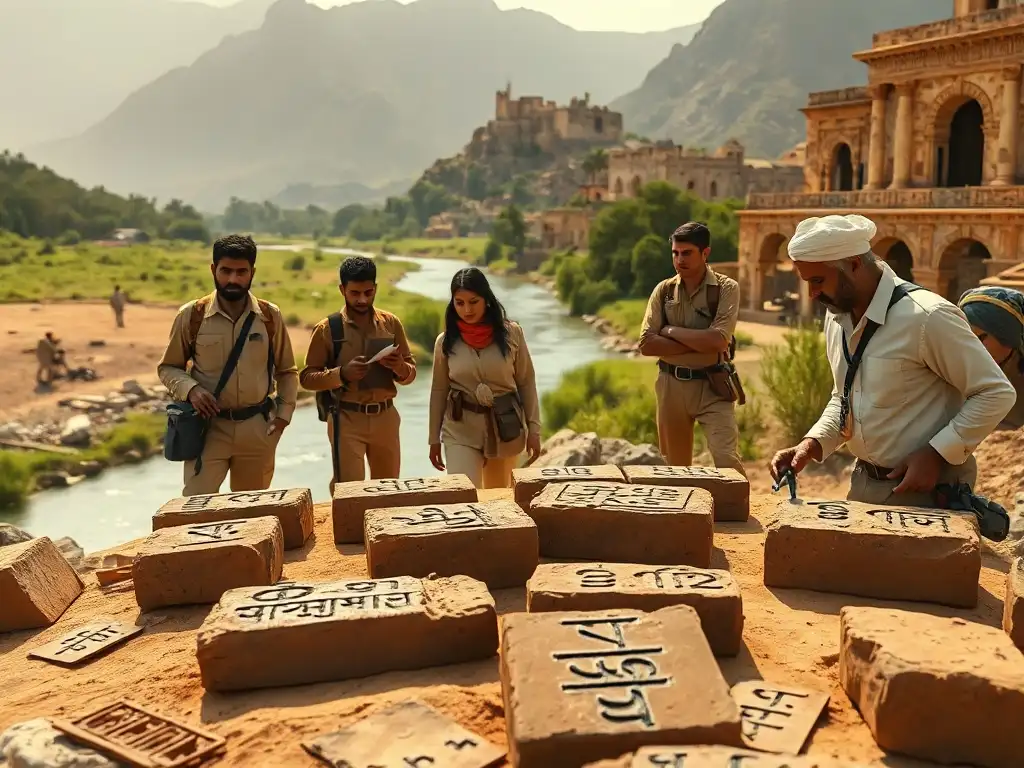
Welcome to Ancient India History, where we embark on a fascinating journey through the intricate tapestry of ancient Indian civilizations. Have you ever wondered how the early scripts of the Indus Valley shaped the course of writing in India? In our featured article, "The Indus Valley Civilization and Its Influence on Ancient Indian Writing," we delve into the groundbreaking contributions of this remarkable civilization and uncover the mysteries behind its ancient writing systems.
Join us as we explore the profound impact of the Indus Valley on the cultural and linguistic heritage of India, and prepare to be captivated by the stories that have shaped a nation. Your adventure into the past starts here!
Introduction to the Indus Valley Civilization
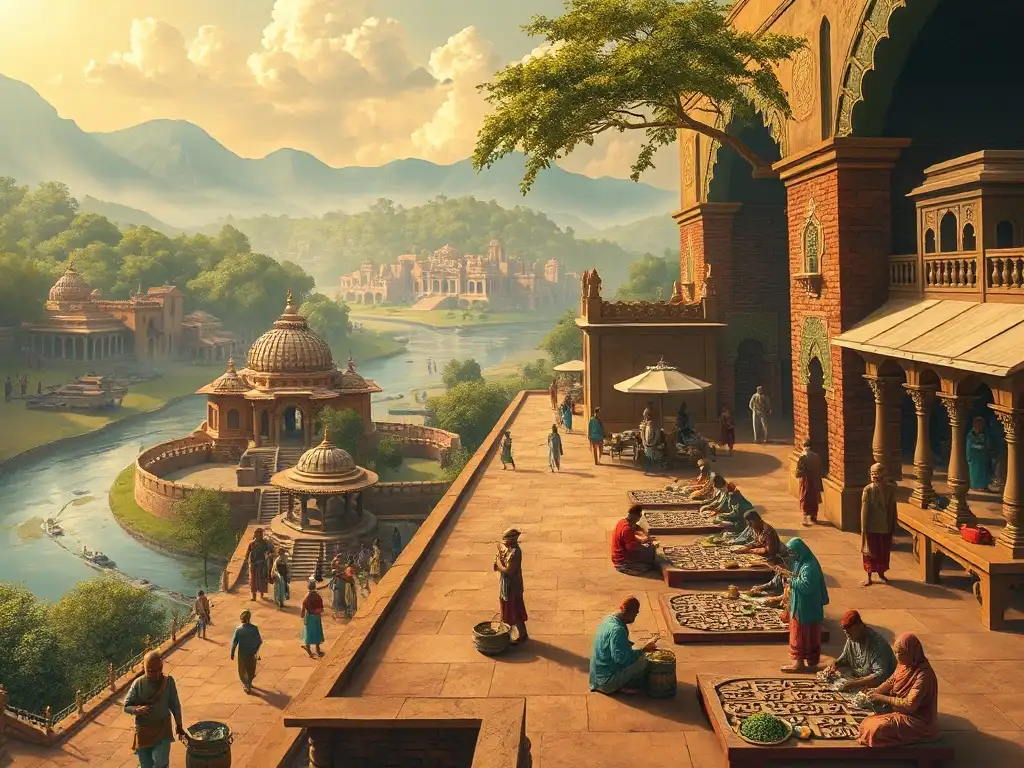
The Indus Valley Civilization (IVC), one of the world's earliest urban cultures, thrived between approximately 2600 BCE and 1900 BCE in what is now Pakistan and northwest India. Renowned for its advanced city planning, sophisticated drainage systems, and impressive architectural achievements, the IVC laid the foundation for many aspects of later Indian civilizations, including their writing systems.
This article delves into the significance of the IVC and its profound influence on ancient Indian writing, exploring how its innovations and cultural practices shaped the literary landscape of subsequent eras. By examining the connections between the Indus Valley and early forms of writing, we can gain insights into the broader implications of this civilization on India's historical narrative.
Overview of the Indus Valley Civilization
The Indus Valley Civilization was characterized by its remarkable urban planning and advanced societal organization. Major cities like Harappa and Mohenjo-Daro featured grid layouts, brick houses, and public baths, reflecting a high level of civic engineering and governance. The civilization engaged in extensive trade networks, both within the Indian subcontinent and with distant regions, including Mesopotamia.
Key features of the IVC include:
- Urban Centers: Well-planned cities with complex infrastructures.
- Trade: A thriving economy facilitated by trade routes that connected various regions.
- Craftsmanship: Skilled artisans produced pottery, jewelry, and textiles.
- Agriculture: Agricultural practices supported a stable food supply, allowing for population growth.
The civilization's influence extended beyond its geographical confines, impacting future generations and contributing to the cultural and literary heritage of ancient India.
Significance of Ancient Indian Writing
Ancient Indian writing is a critical component of the subcontinent's historical narrative. The emergence of writing systems allowed for the documentation of ideas, governance, trade, and cultural practices. The script used in the Indus Valley, known as Indus Script, remains undeciphered, yet it is believed to have played a pivotal role in communication and administrative functions within this advanced society.
The significance of ancient Indian writing can be summarized as follows:
- Record Keeping: Enabled the documentation of trade transactions, laws, and social norms.
- Cultural Expression: Provided a medium for artistic expression, poetry, and religious texts.
- Historical Continuity: Facilitated the transmission of knowledge and traditions across generations.
These attributes highlight the importance of writing in shaping the identity and continuity of Indian civilization.
Historical Context of Indus Valley Civilization
To fully appreciate the influence of the Indus Valley Civilization on ancient Indian writing, it is essential to understand its historical context, including the timeline of its development and the geographical landscape that shaped its culture.
Timeline of the Indus Valley Civilization
The Indus Valley Civilization can be divided into three primary phases:
- Early Harappan Phase (c. 3300–2600 BCE):
- Formation of agricultural communities and initial urban settlements.
- Mature Harappan Phase (c. 2600–1900 BCE):
- Peak of urban development, marked by the construction of major cities and extensive trade networks.
- Late Harappan Phase (c. 1900–1300 BCE):
- Gradual decline of urban centers, likely due to environmental factors and shifts in trade routes.
This timeline illustrates the evolution of the IVC and its eventual transformation, setting the stage for the emergence of subsequent Indian cultures.
Geographical Landscape and Its Impact on Culture
The geographical landscape of the Indus Valley, defined by fertile plains and proximity to the Indus River, played a crucial role in shaping its culture. The river provided water for irrigation, fostering agricultural productivity that supported urbanization.
Key geographical influences include:
- Fertile Soil: Contributed to the development of agriculture and settled communities.
- Trade Routes: Facilitated interaction with neighboring civilizations, promoting cultural exchange.
- Natural Resources: Abundant resources supported craftsmanship and trade.
These factors collectively influenced the cultural practices, trade activities, and eventually the writing systems that emerged from the Indus Valley, laying the groundwork for the literary traditions of ancient India.
Understanding Ancient Writing in the Indus Valley
The Indus Valley Civilization (IVC), which thrived between approximately 3300 and 1300 BCE, is renowned not only for its advanced urban planning and architecture but also for its unique system of writing. This ancient civilization, located in present-day Pakistan and northwest India, produced one of the earliest forms of writing known as the Indus script. Understanding the context and significance of this writing system is crucial for grasping how it influenced later forms of writing in ancient India.
The writing from the Indus Valley remains largely undeciphered, yet it is believed to have played a central role in administration, trade, and communication. The inscriptions found on seals, pottery, and other artifacts suggest that this early writing system had a complex structure, possibly reflecting a sophisticated society with organized governance. The study of Indus writing provides insights into the social, economic, and cultural aspects of the civilization, setting a foundation for the evolution of writing in subsequent Indian cultures.
Types of Writing Systems Used
Within the Indus Valley, multiple types of writing systems emerged, primarily centered around the Indus script. This script is characterized by:
- Logograms: Symbols that represent words or morphemes, indicating that the script may have had a syllabic or logographic nature.
- Bilingual inscriptions: Some seals feature repeated symbols, which may suggest the presence of bilingualism or multiple dialects within the civilization.
- Iconographic symbols: Many inscriptions were accompanied by pictorial representations, which may have provided contextual meanings to the written symbols.
Additionally, the use of different materials for writing, such as clay tablets, seals, and pottery, indicates a variety of contexts in which writing was employed—from religious to commercial. The diversity in the application of these writing forms illustrates the significance of written communication in the Indus Valley, highlighting its role in trade and administration.
Analysis of Indus Script: Characteristics and Features
The Indus script is notable for its distinct characteristics, which include:
- Symbol Count: Over 400 unique symbols have been identified, including various geometric shapes and animal figures.
- Directionality: Inscriptions have been found that read from right to left, left to right, and even vertically, suggesting a flexible approach to writing.
- Short Length: Most inscriptions are relatively short, typically consisting of a few symbols, making the full meaning elusive and complicating efforts at decipherment.
- Material Usage: The script primarily appears on seals, which were likely used for trade and administrative purposes, indicating that writing was linked closely to economic activities.
These characteristics reflect not only the complexity of the Indus writing system but also the cultural and administrative sophistication of the civilization itself. Scholars continue to explore these features in the hope of unlocking the meanings behind the Indus script, which may reveal further connections to later writing systems in ancient India.
The Influence of Indus Valley Writing on Ancient Indian Literature
The writing systems of the Indus Valley Civilization laid foundational elements that influenced subsequent literary traditions in ancient India. The evolution of writing from the Indus script into later forms demonstrates a continuity of communication and record-keeping that shaped the cultural landscape of the region.
Transition from Indus Valley Writing to Later Scripts
As the Indus Valley Civilization declined, its writing system gradually gave way to new scripts, notably the Brahmi and Kharosthi scripts that emerged in the first millennium BCE. The transition involved:
- Adaptation: Elements of the Indus script likely influenced the development of these new scripts, particularly in symbolic representation and administrative usage.
- Cultural Exchange: The spread of trade routes and interactions with neighboring cultures facilitated the exchange of ideas, leading to the incorporation of Indus writing elements into newer scripts.
- Preservation of Knowledge: As the Indus script fell out of use, the knowledge systems and administrative practices it supported were absorbed into the evolving literary traditions, ensuring continuity despite the change in writing systems.
This transition marks a pivotal moment in the history of Indian writing, highlighting how the legacy of the Indus Valley Civilization persisted in shaping communication practices.
Contributions to Vedic Literature and Sanskrit
The influence of the Indus Valley writing extends into the realm of Vedic literature and the development of Sanskrit. Although there is no direct evidence linking Indus writing to Vedic texts, several parallels can be drawn:
- Cultural Continuity: The traditions and practices that emerged from the Indus Valley may have contributed to the cultural milieu that shaped early Vedic society, including oral traditions that later found expression in written Sanskrit.
- Symbolism and Rituals: The symbolic and ritualistic aspects of Indus writing resonate with the themes found in Vedic literature, suggesting that the early writing practices may have influenced the spiritual and religious texts that followed.
- Language Evolution: The gradual shift from regional dialects to a more standardized form of Sanskrit likely reflects the administrative and communicative needs that were rooted in the earlier practices of the Indus Valley.
The Indus Valley Civilization's writing system not only served its immediate purposes but also laid the groundwork for the evolution of writing and literature in ancient India, influencing the trajectory of Indian culture for centuries to come.
Cultural Exchange and the Evolution of Writing
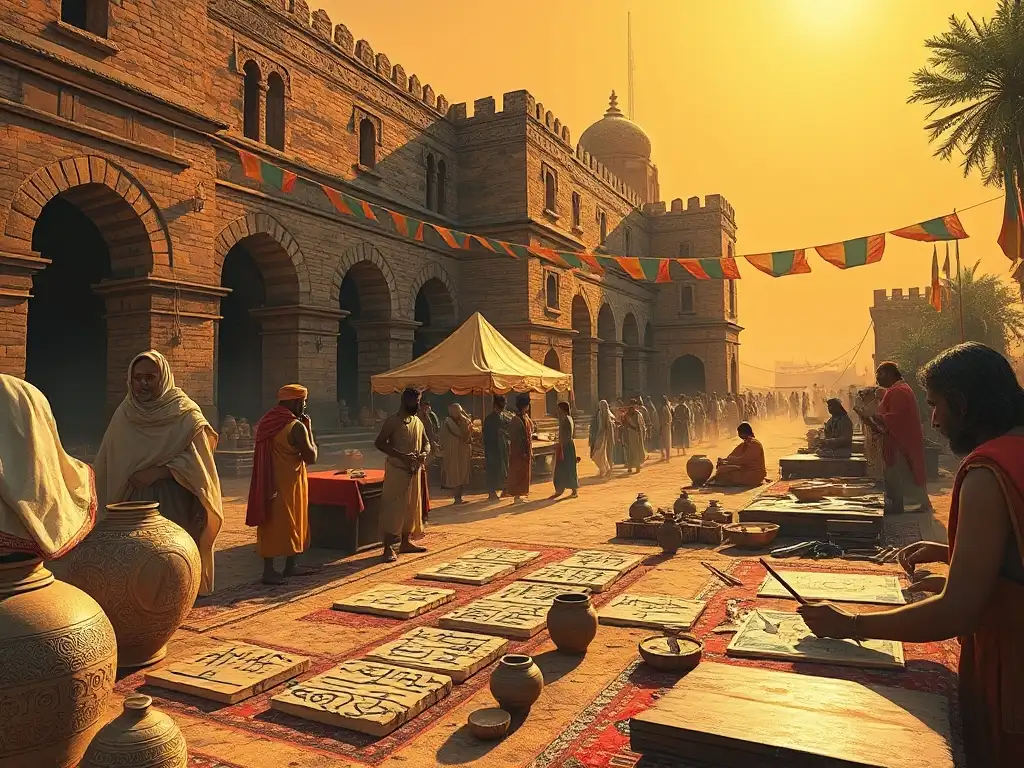
The Indus Valley Civilization (IVC), flourishing around 2500 BCE in what is now Pakistan and northwest India, thrived on cultural exchange that significantly influenced the development of writing systems in ancient India. The IVC was characterized by its well-planned urban centers, sophisticated drainage systems, and a rich tapestry of trade networks. These networks facilitated not only the exchange of goods but also ideas, technologies, and cultural practices, laying a foundation for the evolution of writing.
As the IVC interacted with neighboring civilizations, especially Mesopotamia and Persia, the exchange of knowledge became instrumental in shaping communication forms. The presence of seals engraved with script indicates that the people of the IVC had developed an early form of writing, possibly for trade and administrative purposes. This writing system likely contributed to subsequent scripts in the Indian subcontinent, showcasing how cultural exchange acted as a catalyst for the evolution of writing.
Trade and Communication: Connecting Civilizations
Trade was a vital aspect of the Indus Valley Civilization, serving as a means to establish connections with other cultures. The well-established trade routes extended from the IVC to Mesopotamia, the Arabian Peninsula, and beyond. Evidence suggests that goods such as cotton, jewelry, and pottery were exchanged, but more significantly, ideas and cultural practices were also traded.
Key Aspects of Trade and Communication:
- Seals and Script: The use of seals with inscriptions indicates a developed system of communication for trade, possibly encoding information related to transactions or ownership.
- Linguistic Exchange: The interaction with traders from different regions likely facilitated the exchange of linguistic elements, contributing to the development of regional dialects and writing.
- Cultural Practices: As merchants traveled, they carried not only goods but also stories, traditions, and techniques, enriching the cultural tapestry of the IVC and influencing neighboring civilizations.
This vibrant trade network exemplifies how the IVC was not an isolated civilization but rather a central hub of cultural exchange, significantly impacting the evolution of writing in ancient India.
Influence on Neighboring Cultures and Writing Systems
The influence of the Indus Valley Civilization extended beyond its geographical boundaries, notably impacting neighboring cultures and their writing systems. The connections fostered through trade, migration, and cultural exchange led to the diffusion of the IVC's innovative practices in writing and communication.
Influences on Neighboring Cultures:
- Emergence of Brahmi Script: The Brahmi script, one of the earliest writing systems in India, is believed to have drawn inspiration from the Indus script. The similarities in structure and symbols suggest a continuity in writing practices.
- Integration into Vedic Culture: As the Vedic culture began to rise around 1500 BCE, it absorbed various elements from the IVC, including aspects of administration and communication, which might have been influenced by the earlier civilization's practices.
- Regional Variants: The exchange of ideas resulted in various regional writing systems that emerged across the Indian subcontinent, demonstrating the lasting impact of the IVC's initial innovations.
The legacy of the Indus Valley Civilization serves as a testament to its pivotal role in shaping the writing landscape of ancient India.
Preservation and Interpretation of Indus Valley Writing
The writing of the Indus Valley Civilization, primarily found on seals and pottery, remains one of the most enigmatic aspects of this ancient culture. Its preservation and interpretation have been subjects of extensive archaeological research, offering insights into the civilization's administrative and cultural practices.
Archaeological Discoveries and Their Significance
Recent archaeological excavations have unearthed a wealth of artifacts inscribed with the Indus script, contributing to our understanding of this ancient writing system. The significance of these discoveries cannot be understated:
- Seals and Inscriptions: Thousands of seals bearing inscriptions have been found, indicating the possible use of writing for trade and administrative purposes. These artifacts suggest a complex society with sophisticated communication needs.
- Contextual Analysis: The context in which these artifacts were found—often in trade centers or urban locations—highlights their role in economic and administrative functions, reinforcing the importance of writing in the IVC.
- Cross-Cultural Connections: Discoveries in sites like Harappa and Mohenjo-Daro reveal connections to other ancient cultures, providing evidence of the IVC's influence on writing practices beyond its borders.
Each find adds another piece to the puzzle of understanding the Indus Valley's approach to writing and communication.
Challenges in Deciphering Indus Script: Current Research
Despite the wealth of archaeological evidence, the Indus script remains largely undeciphered, presenting significant challenges for researchers. Current efforts to understand this ancient writing system face several obstacles:
- Limited Corpus: The relatively small number of inscriptions limits the ability to fully decode the script, making it difficult to establish a comprehensive understanding of its syntax and semantics.
- Lack of Bilingual Texts: Unlike Egyptian hieroglyphs or Mesopotamian cuneiform, there are no known bilingual texts that could provide a comparative basis for deciphering the Indus script.
- Theoretical Approaches: Researchers have employed various theoretical frameworks, from linguistic analysis to statistical methods, yet consensus remains elusive. Ongoing studies are exploring connections with known languages and scripts, but definitive conclusions have not yet been reached.
Current research continues to strive for breakthroughs in understanding the Indus script, with each finding potentially illuminating the complexities of this ancient writing system and its influence on subsequent writing traditions in the region.
Legacy of the Indus Valley Civilization on Modern Writing
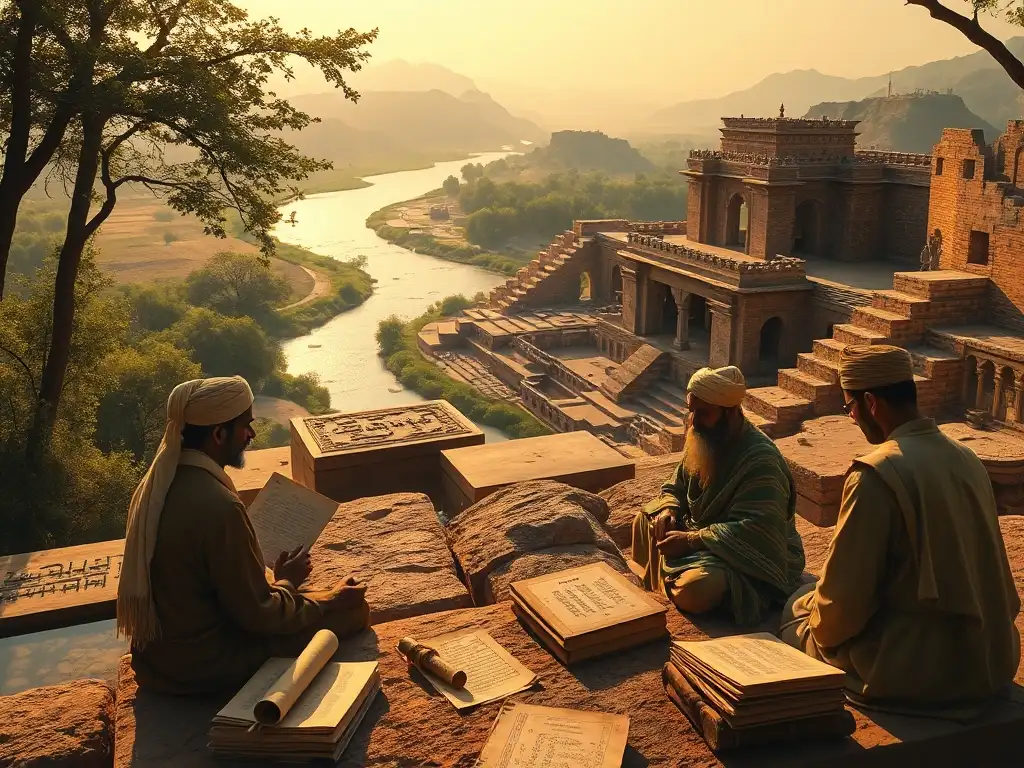
The Indus Valley Civilization (IVC), flourishing around 2500 BCE in present-day Pakistan and northwest India, is renowned for its advanced urban planning, trade systems, and notably, its script. The legacy of the IVC extends far beyond its architectural and economic achievements; it has profoundly influenced the development of writing in ancient India and its subsequent adaptations in modern languages and scripts. The enigmatic symbols of the Indus script, still undeciphered, have sparked scholarly interest and debate, leading to various theories about their significance and usage.
The influence of the IVC on ancient Indian writing systems is observed in the evolution of scripts like Brahmi and Kharosthi, which emerged later in Indian history. These scripts laid the foundation for many modern Indian languages, showcasing a continuity of cultural and intellectual heritage that traces back to the Indus Valley. By examining the connections between these ancient scripts and their later developments, we can appreciate the profound impact the IVC has had on the linguistic landscape of the Indian subcontinent.
Lasting Impact on Indian Languages and Scripts
The Indus Valley Civilization's writing system, while not fully understood, is believed to have contributed to the development of subsequent Indian scripts. The Brahmi script, which dates back to around the 3rd century BCE, showcases similarities in structure and form to the symbols found in the Indus script. This connection suggests a possible lineage or influence, indicating that the practices of writing and record-keeping initiated in the IVC may have persisted through generations.
Moreover, the phonetic elements of the Indus script could have played a role in shaping the linguistic framework of later languages such as Sanskrit and Prakrit. The adaptability of these scripts reflects the cultural exchanges and continuities that occurred in ancient India, emphasizing how the legacy of the IVC has been interwoven into the very fabric of Indian linguistic history.
The Role of Indus Valley Ancient Writing in Contemporary Studies
The study of Indus Valley ancient writing has significant implications for contemporary research across various disciplines, including archaeology, anthropology, and linguistics. Scholars and researchers utilize the Indus script to explore the socio-political and economic dynamics of the civilization, as well as its interactions with neighboring cultures. The script's undeciphered status adds a layer of intrigue, inviting various interpretations and methodologies in attempts to unlock its meanings.
Contemporary studies often employ advanced technologies, such as digital imaging and computational analysis, to examine the symbols and inscriptions found on seals, pottery, and other artifacts. This approach not only aids in deciphering the script but also contributes to a broader understanding of the IVC's influence on later Indian civilizations. By analyzing these ancient writings, researchers can gather insights into trade practices, religious beliefs, and social organization, further highlighting the importance of the Indus Valley in shaping the historical narrative of ancient India.
Conclusion: The Enduring Influence of the Indus Valley Civilization
The Indus Valley Civilization has left an indelible mark on the history of writing in ancient India, establishing foundational elements that resonate through time. Its legacy continues to inform our understanding of language development and cultural exchange in the Indian subcontinent.
Summary of Key Contributions to Ancient Indian Writing
To summarize, the Indus Valley Civilization contributed several key elements to the development of ancient Indian writing:
- Innovative Script: The creation of a complex writing system that laid the groundwork for future scripts.
- Cultural Continuity: The influence on subsequent scripts like Brahmi and Kharosthi, fostering a connection between ancient and modern languages.
- Scholarly Interest: The ongoing research surrounding the Indus script has prompted interdisciplinary studies, enhancing our understanding of ancient societies.
Reflection on the Importance of Understanding Ancient Cultures
Understanding ancient cultures like the Indus Valley Civilization is crucial for several reasons. It allows us to appreciate the rich tapestry of human history and the contributions of diverse civilizations to our collective heritage.
By studying the influence of the IVC on writing, we not only uncover the roots of modern Indian languages but also gain insights into the social, economic, and cultural dynamics that shaped ancient societies. This knowledge fosters a deeper respect for our shared history and highlights the importance of preserving and learning from ancient cultures, ensuring that their legacies continue to inform and inspire future generations.
References and Further Reading
To deeply understand the influence of the Indus Valley Civilization on ancient Indian writing, it is essential to explore a variety of resources. This section provides a curated list of suggested books, articles, and online resources that delve into the rich tapestry of ancient Indian history, particularly focusing on the Indus Valley's contributions to writing and culture.
Suggested Books and Articles on Indus Valley and Ancient Writing
-
"The Indus Civilization: A Contemporary Perspective" by Gregory L. Possehl
This book offers a comprehensive analysis of the Indus Valley Civilization, discussing its societal structure and contributions to writing systems.
-
"The Harappan Civilization: A Historical Overview" by R.S. Sharma
This article explores the historical context of the Harappan culture, emphasizing its advancements in communication and record-keeping.
-
"Indus Valley Writing: The Script and Its Context" by Iravatham Mahadevan
Mahadevan's work focuses on the undeciphered script of the Indus Valley, presenting theories on its significance and possible influences on later writing systems.
-
"The Archaeology of the Indus Valley Civilization" by Jane McIntosh
This book examines archaeological findings in the Indus Valley, shedding light on the civilization's urban planning, trade, and literacy.
-
"Writing and Script in Ancient India" by Richard Salomon
Salomon provides an in-depth look at the evolution of writing in India, tracing its origins back to the Indus Valley Civilization and its subsequent transformations.
Online Resources for Exploring Ancient Indian History
-
Harappa.com
This website offers a wealth of information about the Indus Valley Civilization, including articles, images, and discussions on its writing systems and cultural impact.
-
Indus Valley Civilization on Ancient History Encyclopedia
A detailed overview of the Indus Valley Civilization, covering major aspects such as society, economy, and writing in an easily accessible format.
-
The British Museum - Indus Valley Civilization
The British Museum provides resources and articles related to the artifacts found in the Indus Valley, with insights into their significance in writing and communication.
-
The Archaeological Survey of India
This official website contains reports, research papers, and updates on archaeological findings related to the Indus Valley, including studies on ancient scripts.
-
YouTube Channels
Channels such as "CrashCourse" and "History Time" offer engaging videos on the Indus Valley Civilization and its contributions to writing, making complex topics more digestible.
These resources serve as a gateway to exploring the profound influence of the Indus Valley Civilization on ancient Indian writing, allowing readers to appreciate the depth and breadth of this fascinating historical period.
- Introduction to the Indus Valley Civilization
- Historical Context of Indus Valley Civilization
- Understanding Ancient Writing in the Indus Valley
- The Influence of Indus Valley Writing on Ancient Indian Literature
- Cultural Exchange and the Evolution of Writing
- Trade and Communication: Connecting Civilizations
- Influence on Neighboring Cultures and Writing Systems
- Preservation and Interpretation of Indus Valley Writing
- Legacy of the Indus Valley Civilization on Modern Writing
- Conclusion: The Enduring Influence of the Indus Valley Civilization
- References and Further Reading
Frequently Asked Questions
What was the Indus Valley Civilization?
The Indus Valley Civilization was one of the world's earliest urban societies, flourishing around 2600 to 1900 BCE in present-day Pakistan and northwest India, known for its advanced cities and unique culture.
How did the Indus Valley influence ancient writing?
The Indus Valley ancient writing system, comprised of symbols and pictographs, significantly influenced later writing systems in ancient India, although it remains undeciphered.
What are the characteristics of Indus Valley writing?
The writing of the Indus Valley Civilization is characterized by its short inscriptions, often found on seals, which suggest a system of administration and trade.
Did the Indus Valley have any known scripts?
While there are numerous symbols attributed to the Indus Valley, the lack of a deciphered script means that its full linguistic context and significance remain a mystery.
How did the Gupta Empire relate to the Indus Valley?
The Gupta Empire, which thrived from around 320 to 550 CE, built upon the cultural foundations laid by earlier civilizations, including the Indus Valley, influencing literature and writing styles in ancient India.
Final Reflection: The Enduring Legacy of Indus Valley Ancient Writing Influence
The Indus Valley Civilization stands as a testament to the profound impact of ancient writing on culture and communication. Today, as we delve into the roots of our literary heritage, we recognize that the innovations of this ancient civilization laid the groundwork for future generations. The significance of their writing systems transcends mere historical curiosity; it is a reminder of how language shapes societies and preserves knowledge across time.
Clearly, the influence of the Indus Valley on ancient Indian writing is not just a relic of the past but a vibrant thread woven into the fabric of our cultural identity. The echoes of their sophisticated script and administrative prowess resonate in our contemporary literary practices and governance. As noted by historian R.S. Sharma, The script of the Indus Valley is a key to understanding the evolution of writing in the Indian subcontinent.
This acknowledgment of the Indus Valley's contributions invites us to appreciate the depth of our literary traditions and the interconnectedness of our histories.
As we reflect on the lessons from the Indus Valley Civilization, let us embrace the power of writing as a tool for expression, connection, and preservation. I encourage you to explore your own relationship with writing—whether through journaling, storytelling, or academic pursuits—and consider how your voice can contribute to the ongoing narrative of human experience. The legacy of the Indus Valley is not just in the artifacts left behind, but in the inspiration it provides for us to create, communicate, and connect in meaningful ways.
Unveil the Rich Legacy of Ancient Indian Writing!
Thank you for exploring the remarkable journey of the Indus Valley Civilization and its profound influence on ancient Indian writing. Your interest not only enriches your knowledge but also honors the legacy of this incredible civilization. Now, let’s take the next step to deepen our connection with this fascinating history!
Here’s how you can engage further:
- Dive deeper into ancient texts: Find a book on ancient Indian literature and immerse yourself in the writing styles that emerged from this vibrant civilization.
- Join a discussion group: Share your insights and learn from others by participating in online forums dedicated to ancient Indian history.
- Explore the artifacts: Take a virtual tour of a museum that showcases artifacts from the Indus Valley to experience these historical influences firsthand.
What new insights about ancient Indian writing inspire you the most? Share your thoughts below!