
The Influence of Gupta Philosophy on Later Indian Thinkers


Welcome to Ancient India History, where we embark on a fascinating journey through the rich tapestry of ancient Indian civilizations. In this exploration, we delve into the profound impact of Gupta philosophy on later Indian thinkers, a topic that unveils the intricate connections between ancient wisdom and its enduring legacy. As we navigate through the realms of thought, culture, and innovation, prepare to uncover the intellectual treasures that shaped not only India but also the world.
Join us in uncovering how the Gupta Empire's philosophical contributions continue to resonate through time, inspiring curiosity and deeper understanding. Your adventure into the depths of history begins here!
- Introduction to Gupta Philosophy and Its Significance
- Key Principles of Gupta Philosophy
- Major Indian Thinkers Influenced by Gupta Philosophy
- The Impact of Gupta Philosophy on Later Indian Thought
- Case Studies of Gupta Philosophy Influence
- Conclusion: Lasting Legacy of Gupta Philosophy on Indian Thought
- References
- Frequently Asked Questions
- Final Reflection: The Enduring Legacy of Gupta Philosophy on Thinkers
- Unveil the Influence: Take Action on Gupta Philosophy Today!
Introduction to Gupta Philosophy and Its Significance
The Gupta Empire, often referred to as the "Golden Age" of India, was a period marked by remarkable achievements in various fields such as art, science, mathematics, and philosophy. This era, which flourished from approximately the 4th to the 6th century CE, produced a rich tapestry of intellectual thought that would profoundly influence subsequent generations of Indian thinkers and scholars.
Gupta philosophy, characterized by its emphasis on rational inquiry, ethics, and metaphysics, laid the groundwork for many philosophical traditions that emerged later in India. Understanding the Gupta philosophy impact on thinkers is crucial for appreciating how these ancient ideas shaped modern Indian thought and contributed to the broader landscape of global philosophy.
Overview of Gupta Empire's Golden Age
The Gupta Empire is celebrated for its unprecedented advancements during its rule. This period witnessed significant developments in:
- Science and Mathematics: Innovations such as the concept of zero and the decimal system were pioneered during this time.
- Art and Literature: The creation of exquisite sculptures and the flourishing of classical Sanskrit literature, with luminaries like Kalidasa emerging.
- Philosophy and Religion: Gupta philosophers explored various schools of thought, including Buddhism, Jainism, and Hinduism, fostering a climate of intellectual exchange.
This cultural and intellectual prosperity not only solidified the Gupta Empire's legacy but also provided a fertile ground for philosophical discourse, influencing thinkers across various domains in subsequent centuries.
Definition and Scope of Gupta Philosophy
Gupta philosophy can be defined as a blend of indigenous Indian thought with influences from earlier philosophical traditions, notably the Vedic, Buddhist, and Jain schools. It encompasses a wide array of topics, including:
- Metaphysics: Exploration of existence, reality, and the nature of the self.
- Ethics: Examination of moral values, duties, and the concept of dharma.
- Epistemology: Inquiry into the nature and scope of knowledge.
The scope of Gupta philosophy is vast, covering both theoretical frameworks and practical applications. It not only addressed existential questions but also provided guidelines for ethical living, influencing not just scholars but also the lay populace.
Importance of Studying Gupta Philosophy Impact on Thinkers
Examining the Gupta philosophy impact on thinkers is essential for several reasons:
- Intellectual Heritage: Gupta philosophy forms a cornerstone of Indian intellectual heritage, influencing subsequent schools of thought, including Nyaya, Vaisheshika, and Advaita Vedanta.
- Cultural Integration: Understanding its impact reveals how Gupta thought synthesized various cultural and religious traditions, promoting a spirit of inquiry and tolerance.
- Modern Relevance: The philosophical underpinnings established during the Gupta period continue to resonate in contemporary discussions around ethics, epistemology, and metaphysics in India and beyond.
By exploring these dimensions, we can appreciate the depth and breadth of Gupta philosophy and its lasting influence on later thinkers, ensuring that this rich historical legacy remains relevant in today's philosophical discourse.
Key Principles of Gupta Philosophy
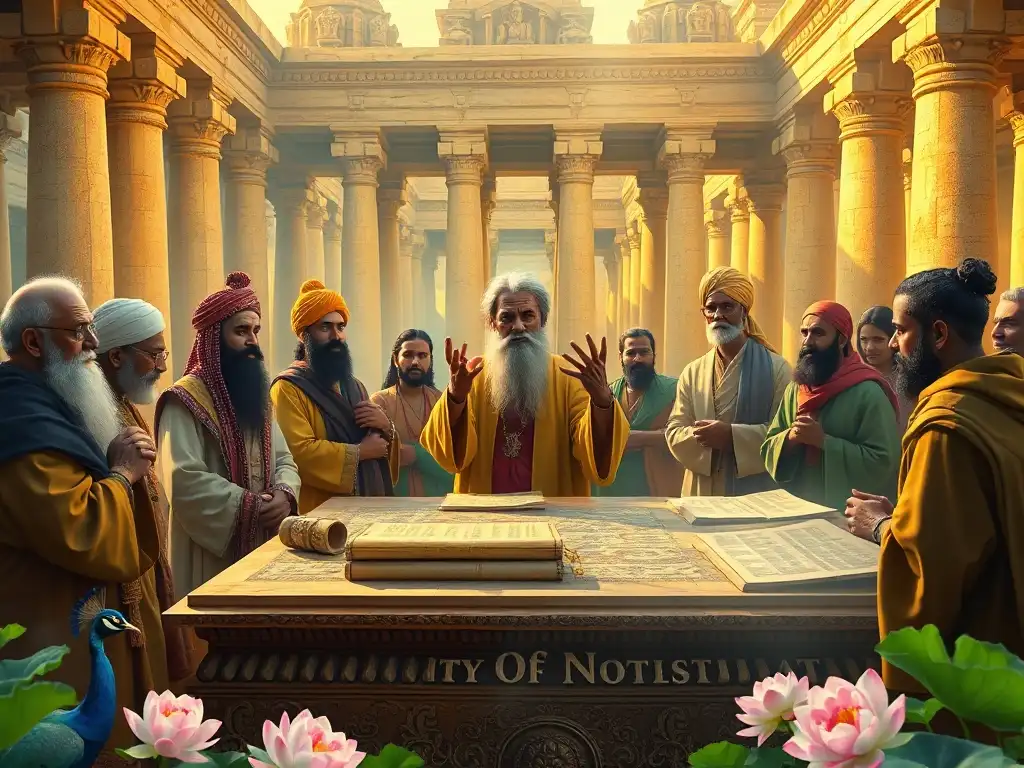
Gupta philosophy, flourishing during the Gupta Empire (approximately 320 to 550 CE), is marked by a synthesis of earlier philosophical traditions and the innovative thoughts that emerged during this period. Central to Gupta philosophy are the principles of dharma, karma, moksha, and the exploration of self and consciousness. These concepts not only shaped the philosophical landscape of ancient India but also provided a framework for later thinkers to build upon.
Core Concepts in Gupta Thought
The Gupta period saw the rise of several philosophical schools, each contributing unique ideas to the overarching framework of Gupta philosophy. Some key concepts include:
- Dharma (Righteousness): Central to Gupta thought, dharma signifies moral and ethical duties that govern individual behavior and social order. It emphasizes the importance of duty in maintaining harmony within society and the cosmos.
- Karma (Action and Consequence): The notion of karma plays a critical role in Gupta philosophy, suggesting that every action has consequences that affect the individual's future. This concept reinforced the significance of ethical conduct and personal responsibility.
- Moksha (Liberation): The ultimate goal in Gupta philosophy is moksha, or liberation from the cycle of birth and rebirth (samsara). This idea encouraged individuals to seek knowledge and self-realization as a means to attain spiritual liberation.
- Self and Consciousness: Gupta thinkers delved into the nature of self (atman) and consciousness. They explored the distinction between the material and spiritual realms, leading to profound insights about the nature of existence and the self's relationship with the universe.
These core concepts served as a foundation for subsequent philosophical dialogues and interpretations, allowing later thinkers to expand and refine the ideas introduced during the Gupta period.
The Role of Religion and Spirituality
Religion and spirituality were integral to Gupta philosophy, deeply influencing its development and dissemination. The Gupta Empire was characterized by a flourishing of Hinduism, as well as the coexistence of Buddhism and Jainism. The interplay between these religions contributed significantly to philosophical thought.
- Integration of Religious Texts: The Vedas, Upanishads, and Bhagavad Gita were pivotal texts that shaped philosophical discourse. Gupta philosophers often referenced these texts, interpreting and expanding upon their teachings.
- Spiritual Practices: The era emphasized yoga, meditation, and other spiritual practices as means to achieve self-realization and moksha. These practices were not just personal endeavors but also communal activities, enhancing the collective spiritual consciousness of society.
- Cosmic Order (Rta): Gupta philosophy also reflected a belief in the cosmic order, or rta, which posited that the universe operates according to a moral and ethical framework. This idea reinforced the importance of living in accordance with dharma, as individuals were seen as part of a larger, interconnected cosmic system.
The fusion of religion and philosophy during the Gupta period laid the groundwork for later Indian thinkers, who further explored these themes in their own works.
Influence of Earlier Philosophical Traditions
Gupta philosophy did not emerge in isolation; rather, it was significantly influenced by earlier philosophical traditions. The synthesis of ideas from various schools of thought shaped the philosophical discourse of the time.
- Samkhya and Yoga: The dualistic nature of reality proposed by Samkhya philosophy, which distinguishes between purusha (spirit) and prakriti (matter), greatly influenced Gupta thinkers. Additionally, the practical aspects of Yoga, particularly in terms of self-discipline and meditation, were integrated into Gupta philosophical thought.
- Buddhism: The impact of Buddhist philosophy is evident in the Gupta period. Concepts such as emptiness (śūnyatā) and the Middle Way influenced discussions on the nature of existence and the path to enlightenment, often blending with Hindu ideas.
- Jainism: Jain principles, emphasizing ahimsa (non-violence) and truth, also found their way into Gupta thought. The ethical dimensions of Jainism complemented the ideas of dharma and karma, enriching the philosophical landscape of the time.
The interaction and integration of these earlier philosophical traditions with Gupta innovations led to a rich tapestry of thought that would resonate through subsequent generations of Indian philosophers, shaping the trajectory of Indian philosophy for centuries to come.
Major Indian Thinkers Influenced by Gupta Philosophy

Introduction to Influential Thinkers
The Gupta Empire, often referred to as the Golden Age of India, was a period marked by remarkable advancements in various fields, including philosophy, mathematics, astronomy, literature, and art. The philosophical underpinnings developed during this era deeply influenced subsequent Indian thinkers, shaping their ideologies, works, and contributions. Gupta philosophy, characterized by a synthesis of various schools of thought, including Vedanta, Samkhya, and Buddhism, provided a rich intellectual framework that inspired thinkers for centuries to come. This section explores some of the notable Indian thinkers influenced by Gupta philosophy, examining how these ideas permeated their works and thoughts.
Aryabhata: Mathematics and Astronomy
Aryabhata (c. 476–550 CE) is one of the most eminent mathematicians and astronomers from the Gupta period, whose contributions significantly impacted later Indian thought. His seminal work, the "Aryabhatiya," laid the groundwork for mathematics and astronomy in India.
- Contributions to Mathematics: Aryabhata introduced concepts such as:
- Zero: He used a placeholder for zero, revolutionizing arithmetic.
- Algebra: He made significant advances in algebra, particularly in solving quadratic equations.
- Astronomical Insights:
- Aryabhata proposed that the Earth rotates on its axis, which was a groundbreaking idea for his time.
- He calculated the circumference of the Earth with remarkable accuracy, estimating it at approximately 39,968 kilometers.
Aryabhata’s emphasis on empirical observation and mathematical rigor exemplified the influence of Gupta philosophy, particularly its focus on logical reasoning and systematic inquiry. His innovative approach paved the way for future mathematicians and astronomers, including Brahmagupta and Bhaskara, who further developed his ideas.
Kalidasa: Literature and Aesthetics
Kalidasa (c. 4th–5th century CE) is celebrated as one of the greatest poets and dramatists in the history of Indian literature. His works, which include "Shakuntala," "Meghaduta," and "Raghuvamsa," reflect the profound philosophical influences of the Gupta period, particularly in their exploration of human emotions, nature, and aesthetics.
- Philosophical Themes in Literature:
- Kalidasa’s writing often intertwines natural beauty with human emotion, a hallmark of Gupta philosophical thought that sought to find unity between the individual and the cosmos.
- He employed metaphors and similes that draw upon the natural world, illustrating the interconnectedness emphasized by Gupta philosophy.
- Aesthetic Principles:
- His works embody the principles of Rasa (aesthetic experience) and Dhwani (suggestion), which were key components of Gupta-era aesthetics.
- The emotional depth and vivid imagery in Kalidasa's poetry reflect a sophisticated understanding of human psychology, influenced by the philosophical inquiries of his time.
Kalidasa’s legacy not only shaped the landscape of Indian literature but also influenced later thinkers and writers who sought to explore complex themes of existence, emotion, and aesthetic experience in their works. His ability to blend philosophical concepts with literary expression stands as a testament to the enduring impact of Gupta philosophy on Indian thought.
Varahamihira: Science and Astrology
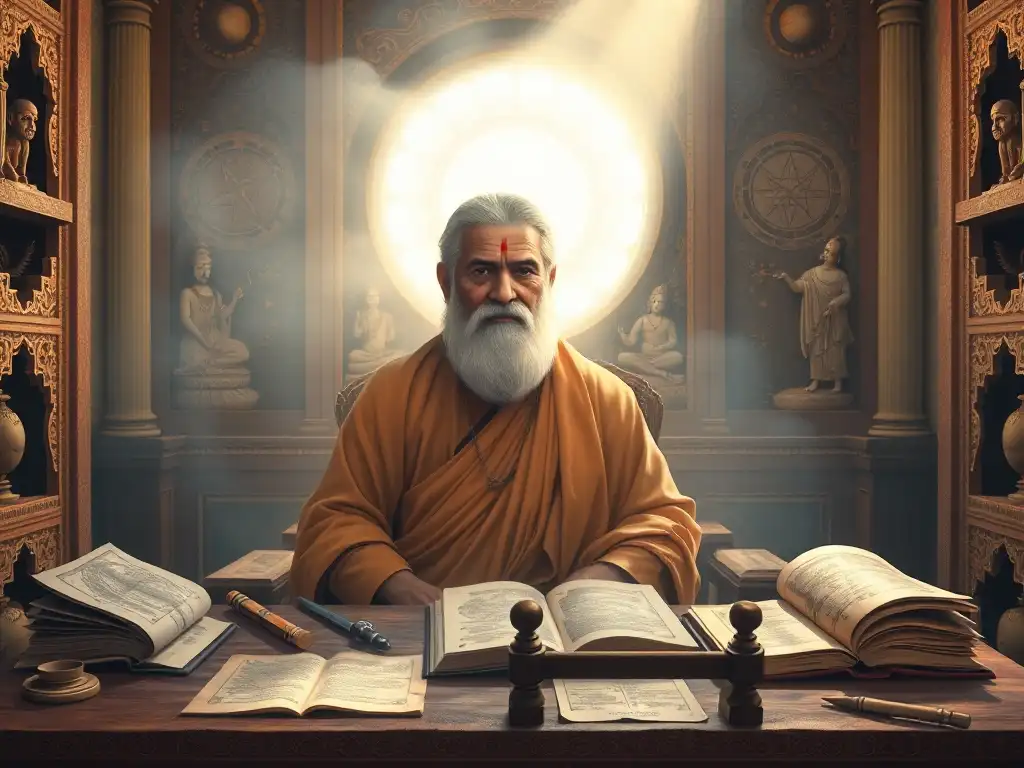
Varahamihira, a luminary of the Gupta period, epitomizes the synthesis of science and astrology that characterized Gupta philosophy. Born in the 6th century CE in Ujjain, he made significant contributions to various fields, including astronomy, mathematics, and astrology, reflecting the era's quest for knowledge and understanding of the cosmos. His work, Brihat Samhita, is one of the most comprehensive treatises that integrate astrology with scientific observations.
In Brihat Samhita, Varahamihira emphasized the importance of celestial bodies in influencing earthly events. He meticulously detailed astrological phenomena, the calculation of eclipses, and the movement of planets, showcasing the Gupta intellectual spirit that sought to harmonize empirical observation with mystical insights. His belief that understanding the cosmos could lead to better predictions about agriculture, health, and human affairs illustrates how Gupta philosophy deeply permeated the scientific discourse of the time.
Moreover, Varahamihira's influence extended beyond astrology into mathematics. He contributed to the advancement of trigonometry and geometry, which were crucial for astronomical calculations. His methods laid the groundwork for later mathematicians and astronomers in India and beyond, demonstrating the enduring impact of Gupta philosophy on subsequent generations of thinkers.
Dhanvantari: Medicine and Ayurveda
Dhanvantari is revered as the father of Ayurveda, the ancient Indian system of medicine, and his contributions during the Gupta period were pivotal in shaping the medical practices that followed. His works, particularly the Sushruta Samhita, serve as a cornerstone of Ayurvedic knowledge, blending philosophical principles with practical medical applications. Dhanvantari’s emphasis on holistic health reflects the Gupta philosophy that valued not just the physical, but also the spiritual and mental aspects of well-being.
In his writings, Dhanvantari outlined various surgical procedures, herbal remedies, and the importance of diet and lifestyle. His systematic approach to medicine emphasized the balance of bodily humors—vata, pitta, and kapha—aligning with the broader Gupta philosophical idea of harmony in nature and human life. This integration of philosophical thought into medical practice provided a comprehensive framework that influenced countless practitioners and scholars in the field of medicine.
Furthermore, Dhanvantari's teachings on preventive healthcare influenced later thinkers and practitioners, emphasizing the need for a proactive approach to health. His works inspired a lineage of Ayurvedic scholars and practitioners, ensuring that Gupta philosophy continued to resonate in the medical traditions of India for centuries. Through the lens of Dhanvantari's contributions, we see a clear example of how Gupta philosophy impacted not only individual thinkers but the broader landscape of Indian thought and practice in medicine.
The Impact of Gupta Philosophy on Later Indian Thought

Continued Evolution of Philosophical Ideas
The Gupta period, often referred to as the Golden Age of India, significantly contributed to the evolution of philosophical ideas that would shape the course of Indian thought for centuries. Gupta philosophy, characterized by its emphasis on rationalism, metaphysics, and ethics, laid a foundational framework that influenced later Indian thinkers.
- Rationalism and Logic:
- Philosophers like Vatsyayana, known for his work on logic and epistemology, introduced methodologies that encouraged critical thinking. His influence persisted in the works of later thinkers who further expanded on logic, such as Buddhaghosa and Jayadeva.
- The Nyaya school, which gained prominence during the Gupta era, emphasized the importance of reasoning and debate, paving the way for future scholars to engage in systematic analysis.
- Ethical Philosophy:
- The moral and ethical teachings found in texts from the Gupta era, such as the Kama Sutra, provided a blueprint for discussions on virtue and morality. These ideas influenced later philosophers like Adi Shankaracharya, who integrated ethical considerations into his advaita (non-dualism) philosophy.
- Metaphysical Concepts:
- Gupta thinkers explored profound metaphysical questions regarding the nature of reality, consciousness, and the self. This exploration is echoed in the works of later philosophers, such as Madhva, who built upon these concepts in their own metaphysical frameworks.
The philosophical lineage established during the Gupta period not only enriched Indian intellectual traditions but also inspired subsequent generations to continue refining and expanding upon these foundational ideas.
Cross-Pollination with Other Philosophical Systems
The Gupta Empire was a melting pot of cultures and ideas, leading to a unique cross-pollination of philosophical systems that enhanced the richness of Indian thought. This interaction was particularly evident in the following areas:
- Buddhism and Jainism:
- Gupta philosophy interacted dynamically with Buddhist and Jain thoughts, leading to a synthesis of ideas. For instance, the emphasis on compassion and non-violence in Buddhism influenced ethical discussions among Gupta philosophers.
- Key texts, such as the Mahāyāna Sutras, were interpreted through Gupta philosophical lenses, promoting a dialogue that enriched both traditions.
- Hellenistic Influence:
- Trade and cultural exchanges during the Gupta period brought Hellenistic ideas into the Indian philosophical sphere. Concepts of ethics and metaphysics from Greek philosophy, particularly Stoicism, found resonance in the writings of later Indian thinkers, such as Amartya Sen, who reflected on the moral implications of societal structures.
- Integration of Local Traditions:
- The blending of various local philosophies with Gupta thought resulted in a diverse intellectual landscape. This is exemplified in the works of thinkers like Maitreya, who integrated local spiritual practices and beliefs into philosophical discourse, enriching the overall narrative of Indian philosophy.
By fostering a dialogue between diverse philosophical traditions, Gupta philosophy not only influenced later Indian thinkers but also contributed to a broader understanding of human existence and morality.
Integration into Medieval Indian Philosophy
The philosophical foundations laid during the Gupta period had a lasting impact on medieval Indian philosophy, leading to the emergence of new schools of thought that built upon Gupta ideas. This integration can be seen in several key developments:
- Advaita Vedanta:
- The ideas of unity and non-duality that were present in Gupta philosophy were further developed in the Advaita Vedanta school by Adi Shankaracharya. His interpretation of the Upanishads reflected the metaphysical inquiries that began during the Gupta era, establishing a coherent philosophical system that emphasized the oneness of the individual soul (Atman) with the ultimate reality (Brahman).
- Vishishtadvaita:
- Ramanuja, a prominent medieval philosopher, drew inspiration from Gupta philosophical concepts to articulate his vision of qualified non-dualism (Vishishtadvaita). His emphasis on devotion and divine grace can be traced back to the ethical and metaphysical discussions prevalent during the Gupta period.
- Bhakti Movement:
- The Bhakti movement, which emerged in medieval India, also reflects the philosophical undercurrents initiated during the Gupta era. Thinkers like Kabir and Mirabai integrated Gupta philosophical ideas into their devotional practices, emphasizing personal experience and emotional connection to the divine.
The integration of Gupta philosophy into medieval Indian thought not only demonstrates its enduring influence but also illustrates the dynamic nature of philosophical discourse in India, where ideas evolved, adapted, and transformed across centuries.
Case Studies of Gupta Philosophy Influence

The Gupta Empire, often referred to as the "Golden Age" of India, was not only a period of remarkable political stability but also a flourishing of intellectual and cultural advancements. The philosophies that emerged during this time profoundly influenced later Indian thinkers and scholars. This section delves into notable case studies that illustrate the impact of Gupta philosophy on subsequent intellectual developments.
Example of Aryabhata's Contributions
Aryabhata (476-550 CE) is one of the most renowned mathematicians and astronomers of ancient India, whose works embodied the essence of Gupta philosophy. His seminal text, the Aryabhatiya, laid the foundations for mathematics and astronomy in India and beyond.
- Mathematical Innovations: Aryabhata introduced concepts such as:
- Place value system
- Zero as a number
- Approximation of π (pi) as 3.1416
- Astronomical Insights: His observations included:
- The rotation of the earth on its axis
- The explanation of solar and lunar eclipses through mathematical principles
Aryabhata's unique blend of empirical observation and theoretical mathematics was heavily influenced by Gupta philosophical ideals that emphasized rationality and systematic inquiry. His work inspired later mathematicians and astronomers, such as Brahmagupta and Bhaskara, who further built upon his legacy.
Analysis of Kalidasa's Works
Kalidasa, often hailed as the greatest Sanskrit poet and dramatist, exemplified the aesthetic philosophy of the Gupta period through his literary masterpieces. His works, such as Shakuntala and Meghaduta, reflect the philosophical themes prevalent during the Gupta era.
- Integration of Nature and Emotion: Kalidasa's poetry is notable for its intricate use of natural imagery to express human emotions. For instance:
- In Meghaduta, the cloud serves as a messenger, symbolizing love and longing, merging the natural and emotional worlds.
- Philosophical Undertones: His plays often explore themes of destiny, love, and dharma (duty), reflecting the philosophical inquiries of the Gupta period. The exploration of human experiences within the cosmic order indicates a deep engagement with the philosophical discourse of the time.
Kalidasa's influence permeated through subsequent generations, inspiring poets and playwrights like Bhasa and Jayadeva, who sought to capture the same blend of emotion and philosophical depth in their works.
Varahamihira’s Astrological Treatises
Varahamihira (505-587 CE), a polymath of the Gupta period, made significant contributions to astrology, astronomy, and the natural sciences. His works, particularly the Brihat Samhita, demonstrate the impact of Gupta philosophy on the integration of science and spirituality.
- Astrological Foundations: Varahamihira's treatises included:
- Detailed descriptions of celestial phenomena
- Methods for predicting weather patterns and agricultural cycles based on astrological calculations
- Philosophy of Science: His approach was characterized by a rational methodology, merging empirical observations with astrological beliefs, embodying the Gupta ideal of knowledge as a means to understand the universe. The synthesis of astrology with astronomy reflects a philosophical perspective that sought harmony between the cosmos and human existence.
Varahamihira's ideas significantly influenced later thinkers such as Bhaskara I and Brahmagupta, who further developed astrological and astronomical sciences, ensuring the continuity of Gupta philosophical thought in subsequent intellectual traditions.
The contributions of Aryabhata, Kalidasa, and Varahamihira showcase the profound impact of Gupta philosophy on later Indian thinkers. Their works not only shaped their respective fields but also laid the groundwork for future intellectual endeavors in India, demonstrating the enduring legacy of Gupta philosophical thought.
Conclusion: Lasting Legacy of Gupta Philosophy on Indian Thought

The Gupta Empire, often referred to as a golden age of Indian civilization, left an indelible mark on the philosophical landscape of India. The philosophical ideas that emerged during this period not only shaped the intellectual discourse of the time but also laid the groundwork for subsequent generations of thinkers. The interplay of various schools of thought, including Hinduism, Buddhism, and Jainism, during the Gupta era created a rich tapestry of philosophical inquiry that would influence later Indian scholars profoundly.
Summary of Key Impacts
The impact of Gupta philosophy on later Indian thinkers can be categorized into several key areas:
- Integration of Philosophical Schools:
- Gupta philosophers such as Adi Shankaracharya and Vasubandhu worked towards synthesizing various philosophical traditions.
- The dialogue between Advaita Vedanta and Buddhism led to a more nuanced understanding of metaphysical concepts, influencing later commentators and philosophers.
- Ethical Frameworks:
- The ethical teachings of Gupta philosophers emphasized dharma (righteousness) and karma (action and its consequences).
- This framework was pivotal for later thinkers, such as Chanakya, who integrated these principles into political philosophy.
- Influence on Logic and Epistemology:
- Gupta scholars made significant contributions to the field of logic and epistemology, particularly through the works of Dignaga and Dharmakirti.
- Their theories of perception and inference laid the foundation for later debates in Indian philosophy, notably influencing Navya-Nyaya scholars.
- Articulation of Consciousness:
- The exploration of consciousness by philosophers like Buddhaghosa during the Gupta period contributed to the development of psychological theories in later Indian thought.
- This inquiry paved the way for a deeper exploration of the mind, significantly influencing the development of Yoga philosophy.
- Cultural and Literary Impact:
- The Gupta era was not only a time for philosophical advancements but also for literary flourishing.
- Thinkers like Kalidasa integrated philosophical themes into their works, thus influencing the literary tradition and inspiring future generations of writers and philosophers.
Future Research Directions on Gupta Philosophy Influence
To fully understand the breadth of Gupta philosophy's impact on later Indian thinkers, several future research directions could be explored:
- Comparative Studies: Conducting comparative studies between Gupta philosophical texts and those from other cultures could reveal cross-cultural influences and the universality of certain philosophical ideas.
- Interdisciplinary Approaches: Researchers could benefit from an interdisciplinary approach that incorporates insights from history, anthropology, and sociology to analyze how Gupta philosophy shaped social structures and cultural practices in later periods.
- Examination of Lesser-Known Thinkers: Investigating the contributions of lesser-known Gupta philosophers could uncover a more diverse range of ideas that have influenced later thought, expanding our understanding of the philosophical landscape.
- Impact on Modern Indian Philosophy: Exploring how Gupta philosophical ideas resonate in contemporary Indian philosophical discourse could provide insights into the ongoing relevance of these ancient teachings.
- Philosophy and Science: Analyzing the connection between Gupta philosophy and the scientific advancements of the time could illuminate how philosophical thought informed scientific inquiry and vice versa.
The Gupta Empire's philosophical contributions continue to resonate in the fabric of Indian thought, bridging ancient wisdom with modern interpretations. The exploration of these influences offers a rich field for scholarly inquiry and underscores the enduring legacy of Gupta philosophy on later Indian thinkers.
References
The study of Gupta philosophy and its profound influence on later Indian thinkers is supported by a rich array of texts and scholarly analysis. These references provide crucial insights into the philosophical discourse that emerged during the Gupta Empire and its lasting impact on subsequent intellectual traditions in India.
Key Texts on Gupta Philosophy
- Brahmasutras: Attributed to Badarayana, this foundational text systematizes Vedanta philosophy and has been pivotal in shaping later interpretations of Indian metaphysics and epistemology.
- Yoga Sutras of Patanjali: This text outlines the principles of yoga and meditation, emphasizing mental discipline and ethical living. Its influence extends to numerous schools of thought, making it a cornerstone of Indian philosophy.
- Charaka Samhita: An ancient text on Ayurveda, it reflects the integration of philosophical principles with medical practices. The holistic approach to health in this text has inspired various philosophical inquiries into the nature of life and well-being.
- Nyaya Sutras: Composed by Gautama, this foundational text of the Nyaya school focuses on logic and epistemology, laying the groundwork for analytical thinking in Indian philosophy.
- Vishnu Purana: This ancient scripture offers insights into cosmology, mythology, and ethics, showcasing the interrelation between philosophy and religious thought during the Gupta era.
- Buddhist Texts (e.g., Abhidharma): Texts from the Buddhist tradition, particularly those developed during the Gupta period, contributed significantly to philosophical discussions on consciousness, perception, and reality.
Important Scholars and Their Contributions
The Gupta period was marked by the emergence of several influential thinkers whose works have left a lasting legacy on Indian philosophy. Here are some of the most notable scholars and their contributions:
- Adi Shankaracharya (c. 788–820 CE): A philosopher and theologian who consolidated the doctrine of Advaita Vedanta. His commentaries on the Upanishads and Brahmasutras revitalized earlier philosophical ideas and established a framework for monistic thought.
- Madhva (c. 1238–1317 CE): Though slightly post-Gupta, his philosophy of Dvaita (dualism) was influenced by earlier Gupta ideas and emphasized the difference between the individual soul and the supreme being, challenging non-dualistic perspectives.
- Vachaspati Mishra (c. 900 CE): A notable philosopher who wrote commentaries on the Brahmasutras and other key texts. His works elucidated the nuances of various philosophical debates, particularly in the context of Advaita Vedanta.
- Dignaga (c. 480–540 CE): A Buddhist logician whose theories on perception and inference further advanced logical reasoning in philosophy. His contributions were foundational to the development of Buddhist epistemology.
- Bhaskaracharya (c. 1114–1185 CE): An important mathematician and philosopher whose works, although later, were heavily influenced by Gupta-era thinkers. His integration of mathematics with philosophical thought showcased the interconnectedness of disciplines during this period.
- Vishnu Sharma: The author of the Panchatantra, a collection of fables that reflects moral and ethical lessons through storytelling. His work captures the essence of Gupta cultural and philosophical thought.
The impact of Gupta philosophy on later Indian thinkers is evident in the continuity and evolution of ideas across centuries, demonstrating a rich intellectual heritage that has shaped the landscape of Indian philosophy.
Frequently Asked Questions
What is Gupta philosophy?
Gupta philosophy refers to the intellectual and philosophical advancements that emerged during the Gupta Empire, characterized by a blending of spiritual and scientific ideas.
How did Gupta philosophy influence later Indian thinkers?
Gupta philosophy had a profound impact on later Indian thinkers by promoting rational thought, logic, and the integration of spirituality with intellectual pursuits.
What were some key contributions of the Gupta period?
The Gupta period is renowned for significant contributions in mathematics, astronomy, and literature, fostering an environment where philosophy thrived and influenced future generations.
Who were some notable thinkers influenced by Gupta philosophy?
Notable thinkers such as Adviata Vedanta proponents and Buddhist philosophers were greatly influenced by Gupta philosophy, particularly in their views on metaphysics and morality.
Why is Gupta philosophy important in the context of Indian history?
Gupta philosophy is important because it laid the foundation for intellectual traditions in India, influencing not only philosophy but also arts, sciences, and cultural practices that persisted for centuries.
Final Reflection: The Enduring Legacy of Gupta Philosophy on Thinkers
The exploration of Gupta philosophy's impact on thinkers reveals a profound connection between ancient wisdom and contemporary thought. As we navigate a world increasingly defined by rapid change and complexity, the insights derived from Gupta philosophy offer timeless guidance. The principles established during this golden age of Indian thought continue to resonate, reminding us that the foundations of our intellectual pursuits are often rooted in the past. This enduring legacy is not merely historical; it serves as a beacon for modern thinkers seeking clarity and depth in their understanding of the world.
The influence of Gupta philosophy extends far beyond its time, shaping the cultural and social landscape of India and beyond. It is fascinating to observe how these ancient ideas have permeated various domains of thought, inspiring generations of scholars and philosophers. The ripple effects of Gupta philosophy can be seen in the works of later Indian thinkers who drew upon its rich tapestry of ideas to address the challenges of their own eras.
As Mahatma Gandhi once said, "> The best way to find yourself is to lose yourself in the service of others." This sentiment echoes the ethical dimensions of Gupta philosophy, which emphasizes the interconnectedness of individual and collective well-being, a principle that remains vital in today's society.
As we reflect on the lessons of Gupta philosophy, let us consider how we can integrate these timeless teachings into our own lives. Take a moment to ponder how the principles of inquiry, ethics, and interconnectedness can influence your personal and professional journey. Embrace the opportunity to engage with these ideas, allowing them to inspire your own thinking and actions. In doing so, you not only honor the legacy of Gupta philosophy but also contribute to a richer, more thoughtful discourse in our ever-evolving world.
Unveil the Influence: Take Action on Gupta Philosophy Today!
Thank you for exploring the profound impact of Gupta philosophy on later Indian thinkers! By delving into this rich heritage, you've unlocked invaluable insights into the evolution of thought in ancient India. Now, it's time to embark on your own journey of discovery and application.
Here’s how you can connect with the teachings and influences that shaped future generations:
- Dive Deeper: Read key texts influenced by Gupta philosophy—explore works by notable philosophers and uncover their interpretations.
- Share Your Insights: Discuss your learnings with friends or on social media. Consider starting a local book club dedicated to ancient Indian philosophy.
- Engage with the Community: Join online forums or attend local seminars that explore ancient philosophies—connect with enthusiasts and experts alike!
What aspect of Gupta philosophy resonates most with you, and how do you see its reflections in today’s world?