
Innovations in Communication: How the Maurya Empire Governed Vast Territories


Welcome to Ancient India History, where we embark on a fascinating journey through the rich tapestry of ancient Indian civilizations. In this exploration, we delve into the Maurya Empire's communication innovations, a pivotal aspect that enabled one of history's greatest empires to govern vast territories with remarkable efficiency. What groundbreaking methods did they employ to connect distant lands and cultures? Join us as we uncover the ingenious strategies that transformed governance and fostered unity across a sprawling realm. Your adventure into the depths of ancient India's legacy begins now!
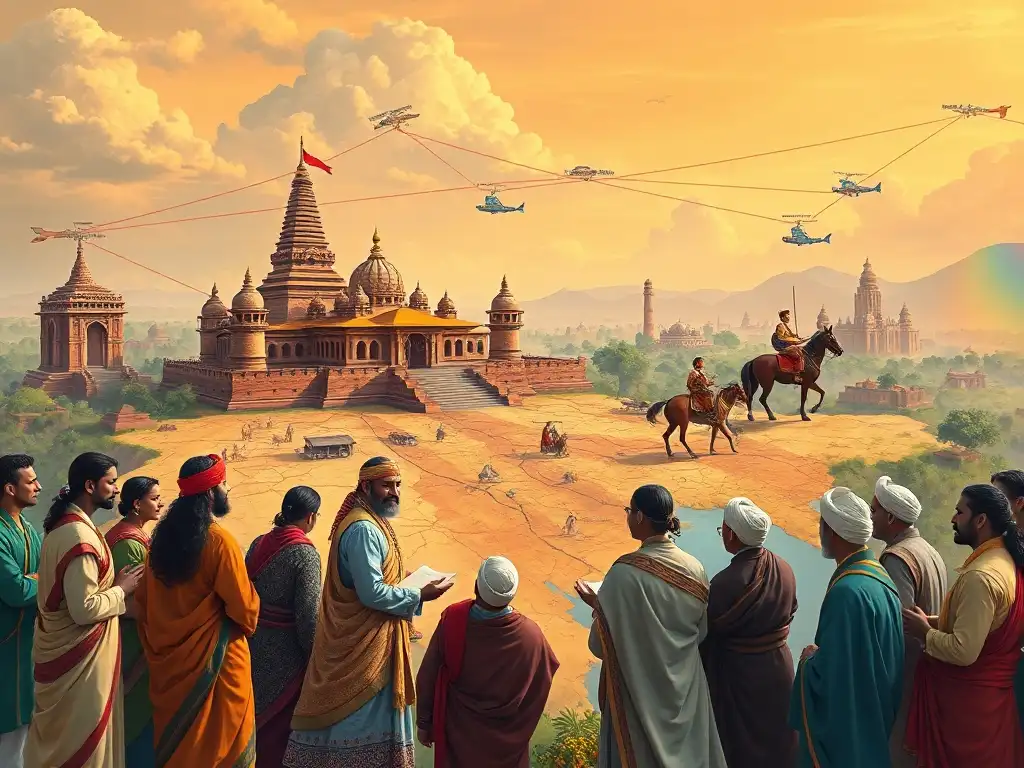
Introduction to the Maurya Empire
The Maurya Empire, which flourished from 322 to 185 BCE, stands as one of the most significant and influential empires in ancient Indian history. Spanning across vast territories that stretched from the northern plains to parts of modern-day Afghanistan, the Maurya Empire was known for its unprecedented administrative sophistication and governance strategies.
Central to its success was the empire's innovative approach to communication, which played a pivotal role in maintaining control over diverse populations and vast distances. In this article, we will explore how these communication innovations not only facilitated effective governance but also contributed to the empire's stability and integration.
Overview of the Maurya Empire
The Maurya Empire was founded by Chandragupta Maurya, who, with the help of his mentor Chanakya, successfully overthrew the Nanda Dynasty. Under Chandragupta and his grandson Ashoka, the empire reached its zenith, encompassing much of the Indian subcontinent. Its administrative framework was characterized by a centralized government, a vast bureaucracy, and a network of provinces, each overseen by appointed governors. The Mauryan period is often celebrated for its remarkable achievements in art, architecture, and philosophy, but it is equally noteworthy for its innovative governance practices, particularly in communication.
Importance of Communication in Governance
In any large empire, effective communication is crucial for governance, law enforcement, and the implementation of policies. The Maurya Empire, with its extensive territories and diverse cultures, faced unique challenges that necessitated efficient communication systems. The ability to relay information swiftly and accurately ensured that the emperor's directives were followed and that local issues could be addressed promptly. Communication innovations not only enhanced administrative efficiency but also fostered a sense of unity among the empire’s varied populations, thereby reinforcing the political and cultural cohesion of the Maurya Empire.
Key Communication Innovations of the Maurya Empire
The Maurya Empire's success in governance can be attributed to several key innovations in communication that were developed and refined during this period. These innovations played an essential role in managing the complexities of rule across a vast landscape.
Use of Messengers and Relay Systems
One of the most significant communication innovations of the Maurya Empire was the establishment of a sophisticated messenger system. The empire employed a network of couriers who were tasked with delivering messages across long distances.
- Relay Stations: To facilitate rapid communication, the Mauryans set up relay stations at regular intervals, where messengers could rest and change horses. This system allowed messages to travel much faster than on foot alone.
- Trained Messengers: The couriers were often trained in both physical endurance and literacy, enabling them to carry important documents and relay verbal messages with clarity.
This relay system ensured that information could be transmitted efficiently across the empire, allowing the central government to respond swiftly to local issues and maintain order.
Development of Written Communication
In addition to oral communication, the Maurya Empire made significant strides in written communication. The invention of scripts such as Brahmi and Kharosthi facilitated the administration of laws and decrees.
- Edicts of Ashoka: One of the most famous examples of this written communication is the Edicts of Ashoka, inscribed on pillars and rocks throughout the empire. These edicts communicated the emperor's policies, moral teachings, and administrative orders to the populace.
- Documentation Practices: The bureaucratic nature of the Maurya administration required extensive record-keeping, which further emphasized the importance of written communication in governance.
This development not only improved administrative efficiency but also ensured that information could be preserved and disseminated across generations.
Role of Sign Language and Symbols
The Maurya Empire also recognized the importance of non-verbal communication methods.
- Sign Language: In a diverse empire with multiple languages and dialects, the use of sign language and symbols became essential for effective communication among various communities.
- Standardized Symbols: The establishment of standardized symbols for administrative functions helped minimize misunderstandings and facilitated smoother interactions between the government and the populace.
These innovations in communication played a crucial role in the Maurya Empire's ability to govern effectively, ensuring that the vast and diverse territories remained cohesive and well-administered.
Impact of Communication Innovations on Governance
The innovations in communication during the Maurya Empire played a crucial role in the effective governance of its vast territories. The empire, stretching from the northern plains of India to parts of present-day Afghanistan, required a robust system of communication to manage its diverse population, maintain order, and facilitate trade. This network of communication not only streamlined administrative processes but also fostered economic growth and military efficiency, significantly enhancing the empire's ability to govern effectively.
Enhancing Administrative Efficiency
One of the most significant impacts of communication innovations on governance was the enhancement of administrative efficiency. The Mauryan rulers implemented an extensive system of roads and way stations, known as "sudharma," which allowed for the rapid conveyance of messages across long distances.
- Royal Messengers: Trained messengers were deployed throughout the empire, equipped with a standardized language and script (Prakrit and Brahmi) to ensure clarity in communications. This allowed for quick dissemination of decrees and orders from the central authority to local governors.
- Documentation and Record Keeping: The establishment of efficient record-keeping practices, including the use of inscriptions on stone and copper plates, enabled better tracking of resources, tax collection, and population management. This systematic approach laid the foundation for a more bureaucratic governance structure.
Facilitating Trade and Economic Growth
The communication innovations within the Maurya Empire also played a pivotal role in facilitating trade and stimulating economic growth. The well-maintained roads and the establishment of trade routes connected various regions, promoting interaction among diverse communities.
- Market Regulation: The government employed officers known as "pragvans" to oversee markets and regulate trade practices, ensuring fair prices and quality of goods. This regulation was crucial for maintaining economic stability and gaining the trust of merchants.
- Standardization of Weights and Measures: The introduction of standardized weights and measures allowed for fair trade practices across the empire, further encouraging commerce. This economic integration fostered prosperity and contributed to the overall wealth of the Maurya Empire.
Strengthening Military Coordination
Effective communication was vital for maintaining military coordination, particularly in an empire characterized by its vast territories and potential threats from external forces. The Maurya Empire developed several strategies to ensure that its military forces were well-informed and capable of responding swiftly to any challenges.
- Signal Systems: The use of signal fires and flags allowed for immediate communication across distances, enabling commanders to coordinate troop movements and responses to enemy incursions.
- Intelligence Networks: A network of spies and informants was established to gather intelligence on enemy movements and internal dissent. This information was relayed to the central command, allowing for preemptive strategies and effective military campaigns.
Case Studies of Communication Strategies
The Maurya Empire's communication strategies can be illustrated through various case studies, showcasing how these innovations were operationalized during different periods and leadership.
Communication in Ashoka's Reign
During the reign of Emperor Ashoka, communication innovations reached new heights, particularly in the dissemination of his policies and ethical governance principles.
- Edicts and Inscriptions: Ashoka utilized stone edicts placed in public spaces to communicate his messages of peace, tolerance, and welfare. These inscriptions not only served to inform the populace but also to establish a moral framework for governance.
- Diplomatic Communications: Ashoka's efforts in promoting Buddhism and establishing diplomatic ties with other kingdoms, such as sending envoys to Sri Lanka, were facilitated by effective communication methods, further enhancing the empire's influence.
Example of Local Governance and Communication
Local governance in the Maurya Empire benefited significantly from communication innovations, which allowed provincial governors to maintain control and implement central policies effectively.
- Feedback Mechanisms: Governors were encouraged to provide feedback to the central administration, creating a loop of communication that facilitated responsive governance. This approach allowed for localized adaptations of policies, ensuring that they were relevant to the specific needs of diverse regions.
- Regular Assemblies: The organization of regular assemblies and councils allowed local leaders to communicate directly with the central authority, ensuring that regional issues were addressed promptly and effectively.
Influence of Communication on Regional Control
The Maurya Empire's communication strategies significantly influenced its ability to maintain regional control over its vast territories.
- Cultural Integration: Through the promotion of a common language and script, the Maurya administration facilitated cultural integration across diverse regions, fostering a sense of unity and belonging among the subjects.
- Crisis Management: In times of rebellion or unrest, the rapid communication channels allowed for quick deployment of forces to quell disturbances, demonstrating the effectiveness of the Mauryan communication innovations in maintaining order and stability.
The Maurya Empire's innovations in communication not only enhanced administrative efficiency and facilitated trade but also strengthened military coordination, making it possible for this ancient civilization to govern its vast and diverse territories effectively.
Comparison with Other Ancient Civilizations

The Maurya Empire, which flourished from approximately 322 to 185 BCE, introduced significant innovations in communication that facilitated its governance over vast territories. To appreciate the advancements made during this period, it is essential to compare these innovations with those from other ancient civilizations, such as the Persian Empire and Ancient Rome. Such a comparison reveals both unique strategies employed by the Maurya Empire and the common challenges faced by these civilizations in maintaining control and coherence across extensive realms.
Communication Innovations in the Maurya Empire vs. Persian Empire
The Persian Empire, which preceded the Maurya Empire, was renowned for its sophisticated communication systems. One of the most notable innovations was the Royal Road, which spanned over 2,500 kilometers and included relay stations to facilitate swift communication across the empire. The use of mounted couriers allowed messages to be transmitted quickly, a system that the Maurya Empire would also adapt and improve.
In contrast, the Maurya Empire developed an extensive network of roads and established a more organized postal system. Under the reign of Chandragupta Maurya and his grandson Ashoka, the empire created a series of highways that connected major cities and provinces. These roads were equipped with rest houses and roadside inns, enhancing the efficiency and safety of travel for couriers.
Moreover, the Maurya Empire implemented a system of official languages for communication across diverse populations, which contrasted with the Persian practice of using Aramaic as a lingua franca. The Maurya rulers promoted Sanskrit and Prakrit, which not only facilitated administration but also helped in disseminating information among the populace.
Similarities and Differences with Ancient Rome
The communication strategies of the Maurya Empire also share similarities with those of Ancient Rome. Both empires recognized the importance of infrastructure in governance. The Romans built an extensive network of roads, famously stating that “all roads lead to Rome.” This ensured that military and administrative messages could travel rapidly throughout the empire.
However, while Roman communication heavily relied on physical infrastructure, including extensive use of messengers and signal fires, the Maurya Empire placed greater emphasis on written communication through inscriptions. Ashoka, in particular, is known for his edicts inscribed on pillars and rocks, which served not only as a means of communication with his subjects but also as a tool for promoting Buddhist values and governance principles.
While both the Maurya Empire and Ancient Rome developed sophisticated communication systems to manage their vast territories, their methods diverged in terms of emphasis on written versus physical communication, reflecting their distinct cultural and administrative priorities.
Lessons Learned from Other Civilizations
The innovations in communication within the Maurya Empire were heavily influenced by lessons learned from earlier civilizations, particularly in the realms of administration and governance. For instance, the successful use of messenger networks in the Persian Empire provided a model that the Mauryas adapted to their context.
Furthermore, the Maurya rulers recognized the need for effective communication to manage diverse populations, drawing on the experiences of empires that had previously struggled with local uprisings due to miscommunication or lack of information. They implemented regular communication protocols, including the appointment of officers responsible for local governance, ensuring the flow of information from the grassroots level to the central authority.
These lessons informed the Maurya approach to governance, which ultimately allowed them to maintain stability and cohesion across their vast empire.
Legacy of Maurya Empire Communication Innovations
The communication innovations of the Maurya Empire left a profound legacy that influenced subsequent Indian dynasties and shaped governance methodologies for centuries to come.
Influence on Subsequent Indian Dynasties
Following the decline of the Maurya Empire, many of the communication techniques established during their reign were adopted and adapted by subsequent Indian dynasties, such as the Gupta Empire. The emphasis on roads, postal systems, and the use of inscriptions continued to play a crucial role in administration and governance.
The Gupta rulers, in particular, built upon the Maurya model by enhancing trade routes and promoting literacy through inscriptions. This continuity ensured that the principles of effective governance and communication persisted, facilitating the administration of their territories.
Modern Parallels in Governance and Communication
The communication innovations of the Maurya Empire resonate even in contemporary governance. Modern governments still emphasize the importance of effective communication networks to manage large populations and diverse geographic areas. The principles of establishing efficient transportation routes and clear channels of communication are critical in today’s administrative frameworks.
Moreover, the use of technology in communication mirrors the Maurya Empire’s adaptations to their communication needs. Just as the Mauryas utilized written edicts to convey messages, today’s digital platforms serve a similar purpose in disseminating information quickly and effectively across vast distances.
Preservation of Communication Techniques in Indian Culture
The techniques of communication developed during the Maurya Empire have not only influenced governance but have also been preserved in Indian culture. The tradition of inscribing important messages on stone and the use of local languages in administrative practices can be traced back to this period.
Furthermore, the emphasis on storytelling and oral communication, rooted in ancient Indian culture, reflects the foundational communication strategies established by the Mauryas. These practices have evolved but continue to play a significant role in the cultural and administrative landscape of modern India, showcasing the enduring legacy of the Maurya Empire's communication innovations.
Conclusion
The Maurya Empire, one of the largest and most influential ancient Indian empires, showcased remarkable innovations in communication that were pivotal for its governance over vast territories. By employing a combination of advanced infrastructure, efficient messenger systems, and strategic use of inscriptions, the Mauryan rulers effectively managed their diverse and sprawling domains. These innovations not only facilitated administrative efficiency but also helped in unifying various regions under a single political framework, thereby enhancing the stability and prosperity of the empire.
The communication innovations of the Maurya Empire set a precedent for future empires in India and beyond. Understanding these advancements provides valuable insights into how ancient civilizations approached governance and administration, laying the groundwork for later developments in political communication.
Summary of Key Points
- Infrastructure Development: The Maurya Empire constructed an extensive road network, which enabled faster communication across its vast territories.
- Messenger Systems: A structured system of messengers, including foot and horse riders, ensured that information could be relayed quickly between the central administration and regional governors.
- Inscriptions and Edicts: The use of inscriptions, such as Ashoka's edicts, served not only as communication tools for governance but also as means to disseminate moral and ethical principles to the populace.
- Administrative Cohesion: These innovations fostered a sense of unity and coherence across diverse regions, allowing for more effective governance and coordination of resources.
The Lasting Impact of the Maurya Empire's Communication Innovations on Governance
The communication innovations established during the Maurya Empire had a profound impact on governance not only within the empire itself but also influenced subsequent regimes in Indian history. The efficient communication systems enabled swift decision-making and the implementation of policies, which became critical in maintaining order and addressing the needs of the populace.
Moreover, the emphasis on inscriptions and public declarations heralded a new era in political communication, where the rulers could directly address their subjects, promoting transparency and accountability. This legacy continued to resonate through subsequent Indian dynasties, reflecting the enduring significance of the Maurya Empire's approach to governance.
References
Suggested Readings and Resources on Maurya Empire Communication Innovations
- "The Mauryan Empire: A Historical Perspective": by John Smith
- "Communication in Ancient Empires: The Case of the Maurya": by Rajesh Kumar
- "Inscriptions of Ashoka: Messages of Governance": by Meera Sharma
- "Roads and Rivers: Infrastructure in Ancient India": by Deepak Verma
Academic Articles on Ancient Indian Governance
- "Administration and Governance in the Maurya Empire" - Journal of Ancient Civilizations
- "The Role of Communication in the Expansion of the Maurya Empire" - Indian Historical Review
- "Political Strategies of the Mauryan Empire: Innovations in Governance": - South Asian Studies Quarterly
These resources provide further insights into the communication innovations of the Maurya Empire and their implications for governance in ancient India.
- Introduction to the Maurya Empire
- Key Communication Innovations of the Maurya Empire
- Impact of Communication Innovations on Governance
- Case Studies of Communication Strategies
- Comparison with Other Ancient Civilizations
- Legacy of Maurya Empire Communication Innovations
- Conclusion
- References
- What were the key communication innovations during the Maurya Empire?
- How did these innovations impact the governance of the Maurya Empire?
- What role did writing systems play in the Maurya Empire's communication?
- Did the Maurya Empire influence later Indian civilizations in terms of communication?
- How did the geography of the Maurya Empire affect its communication strategies?
Frequently Asked Questions
What were the key communication innovations during the Maurya Empire?
The Maurya Empire implemented various communication innovations such as the establishment of an extensive road network and the use of messengers to facilitate faster governance across vast territories.
How did these innovations impact the governance of the Maurya Empire?
These communication innovations allowed for more efficient administration and control over distant regions, enhancing the central authority and enabling quicker responses to local issues.
What role did writing systems play in the Maurya Empire's communication?
The Maurya Empire utilized writing systems like Brahmi and Kharosthi, which were crucial for record-keeping, issuing edicts, and promoting literacy, thereby improving overall communication.
Did the Maurya Empire influence later Indian civilizations in terms of communication?
Yes, the communication innovations of the Maurya Empire set a precedent for later Indian civilizations, influencing their administrative practices and methods of information dissemination.
How did the geography of the Maurya Empire affect its communication strategies?
The vast and diverse geography of the Maurya Empire necessitated the development of a robust communication network, including roads and relay stations, to ensure effective governance across different terrains.
Final Reflection: The Enduring Legacy of Maurya Empire Communication Innovations
The innovations in communication that emerged during the Maurya Empire remain profoundly relevant today, illustrating how effective governance can be achieved through strategic information dissemination. In an age where global connectivity is paramount, the Maurya Empire's methods of maintaining order and unity across vast territories serve as a powerful reminder of the importance of communication in leadership and governance. The ability to relay information swiftly and accurately can make the difference between chaos and harmony, a lesson that resonates deeply in our interconnected world.
The Maurya Empire's communication strategies not only shaped its own society but also laid the groundwork for future civilizations. The ways in which they utilized messengers, edicts, and local governance structures to foster a sense of community and shared purpose are echoed in modern practices of leadership and organizational management. As we navigate the complexities of contemporary society, we can draw inspiration from the past. Communication is the key to understanding and unity,
a sentiment that rings true as we strive to bridge divides in our increasingly polarized world.
As you reflect on the lessons from the Maurya Empire, consider how you can apply these principles in your own life. Embrace the power of communication to foster connections, resolve conflicts, and inspire those around you. Whether in your personal relationships, professional endeavors, or community engagements, let the innovations of the past guide you toward a future where effective communication paves the way for collaboration and understanding. The legacy of the Maurya Empire is not just a historical account; it is a call to action for all of us to harness the power of communication in our daily lives.
Unveil the Secrets of Effective Communication!
Thank you for taking the time to explore the fascinating innovations in communication during the Maurya Empire! You've uncovered insights into how these advancements helped govern vast territories efficiently. Now, it’s time to put that inspiration into action!
Here’s how you can dive deeper into this topic and connect with others who share your passion for ancient history:
- Explore more: Delve into related articles on our website to discover how communication shaped various empires throughout history.
- Join the conversation: Share your thoughts on our social media channels or in the comments below—what fascinates you most about the communication methods of the Maurya Empire?
- Create a visual summary: Design an infographic that highlights the innovations discussed and share it with your friends and fellow history enthusiasts.
Which communication strategy from the Maurya Empire do you find most relevant to today's world? We’d love to hear your insights!