
The Maurya Empire's Approach to Political Reforms: Innovation or Tradition?


Welcome to Ancient India History, where we embark on a fascinating journey through the rich tapestry of ancient Indian civilizations. In this exploration, we delve into the Maurya Empire, a period marked by transformative political reforms that balanced innovation with tradition. Have you ever wondered how these changes shaped the very fabric of governance in ancient India? Join us as we unravel the complexities of the Maurya Empire's political reforms history, revealing insights that will deepen your understanding of this remarkable era. Prepare to be captivated as we guide you through the legacies that continue to influence us today!
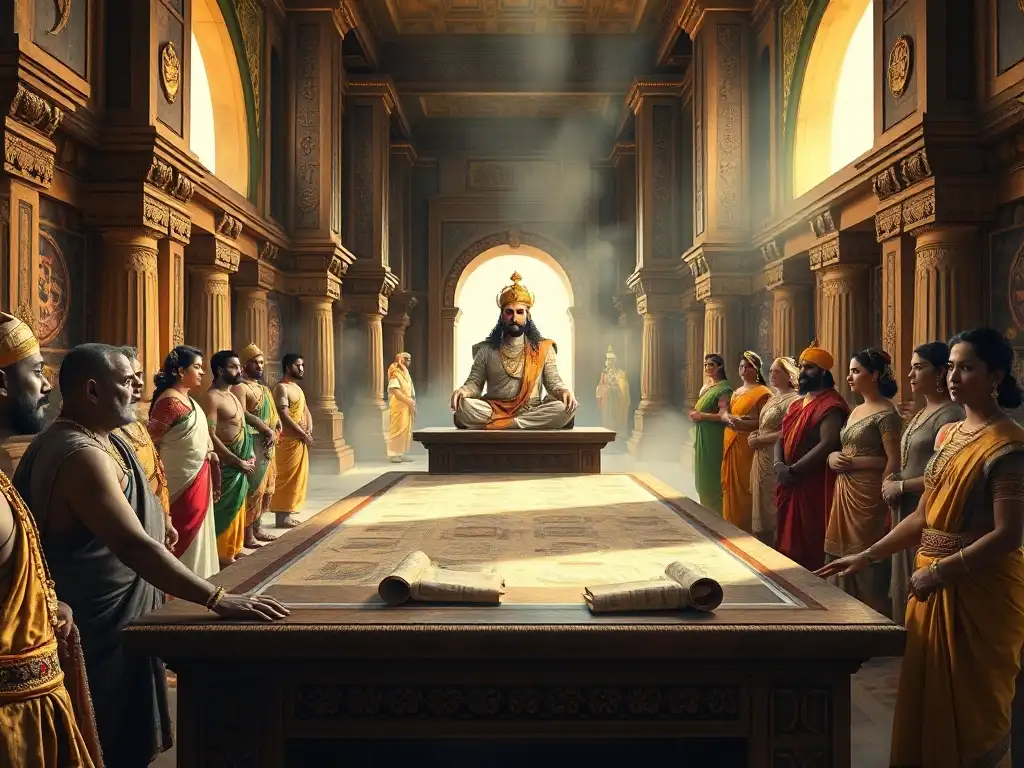
In examining the complexities of the Maurya Empire's political reforms, one must delve into the intricate balance between tradition and innovation that characterized this influential period in ancient Indian history. The Maurya Empire, established in the 4th century BCE under the leadership of Chandragupta Maurya, marked a significant turning point in India's political landscape.
With its vast territorial expanse and diverse population, the empire necessitated a robust political structure that could manage the varying needs of its subjects. This article explores the nuanced approach to political reforms within the Maurya Empire, evaluating whether these reforms represented a departure from tradition or a continuation of established practices.
Introduction to the Maurya Empire
Overview of the Maurya Empire's Historical Context
The Maurya Empire emerged against the backdrop of a fragmented India, previously dominated by smaller kingdoms and regional powers. Following the decline of the Nanda Dynasty, Chandragupta Maurya, with the strategic guidance of Chanakya, sought to unify the Indian subcontinent. This unification not only consolidated power but also laid the groundwork for a centralized administration that would influence political thought for centuries to come. The empire reached its zenith under Ashoka the Great, who is renowned for his unique governance and commitment to ethical principles.
Significance of Political Reforms in Ancient India
Political reforms during the Maurya Empire were crucial in shaping the governance of ancient India. These reforms aimed to:
- Strengthen centralized authority
- Enhance administrative efficiency
- Promote social welfare
The significance of these reforms lies in their lasting impact on subsequent Indian polities and their role in addressing the challenges posed by a culturally and linguistically diverse population. Examining these reforms also provides insight into the empire's innovative administrative practices, which balanced traditional governance with new ideas.
The Political Structure of the Maurya Empire
Key Features of the Maurya Empire's Governance
The political structure of the Maurya Empire was marked by several key features:
- Centralized Administration: A highly organized bureaucratic system that ensured efficient governance across vast territories.
- Provincial Governance: The division of the empire into provinces (Mahajanapadas), each overseen by a governor responsible for local administration.
- Legal Reforms: Codification of laws that aimed to standardize legal practices across the empire.
These features exemplify a blend of traditional practices with innovative reforms, creating a political framework that was both stable and adaptable.
Role of the Emperor in Political Reforms
The emperor played a pivotal role in shaping and implementing political reforms. Emperors like Chandragupta and Ashoka not only enacted laws but also set ethical standards for governance. Ashoka, in particular, is noted for his emphasis on Dharma (moral law) and his efforts to promote non-violence and religious tolerance, reflecting a departure from purely militaristic governance to one that prioritized moral and social imperatives.
This duality of tradition and innovation in the Maurya Empire's political reforms is essential to understanding its historical significance and lasting legacy in shaping the political landscape of ancient India.
Historical Context of Political Reforms in the Maurya Empire
The Maurya Empire, which flourished from approximately 322 to 185 BCE, represents a significant chapter in ancient Indian history marked by ambitious political reforms aimed at consolidating power and enhancing governance. The reforms initiated during this era were not merely reactions to immediate challenges but rather stemmed from a complex interplay of historical precedents, socio-political dynamics, and philosophical influences. Understanding the historical context is crucial to assessing whether these reforms were innovative or rooted in tradition.
Pre-Mauryan Political Landscape
Before the emergence of the Maurya Empire, the Indian subcontinent was characterized by a fragmented political landscape dominated by small kingdoms and republics. The notable kingdoms included Magadha, Kosala, and Avanti, each vying for power. The lack of central authority often led to instability, with frequent conflicts and power struggles. The prevailing political system was largely oligarchic in republics, while monarchies in larger kingdoms struggled with local autonomy.
The pre-Mauryan era also featured the influential Nanda dynasty, which ruled over a vast territory and laid the groundwork for Mauryan expansion. The Nandas implemented certain administrative practices but were often viewed as unpopular due to their heavy taxation and coercive governance. This dissatisfaction among the populace created a fertile ground for the Mauryan princes, particularly Chandragupta Maurya, to capitalize on public discontent and promote a new political vision.
Influences Leading to Political Reforms
Several influences contributed to the Maurya Empire's political reforms. The rise of Buddhism and Jainism introduced new ethical and moral frameworks that emphasized governance based on righteousness and social welfare. These philosophies encouraged rulers to adopt a more humane approach to governance, focusing on welfare and ethical conduct.
Additionally, the political dynamics of neighboring regions, especially the Persian Empire, played a role in shaping Mauryan administrative practices. The Mauryas adopted several bureaucratic structures and methods from Persian governance, including an extensive network of spies and a well-organized taxation system. This blend of indigenous and external influences led to the formulation of a unique political framework that aimed to unify and stabilize the vast empire.
Innovations in Political Reforms during the Maurya Empire
The Maurya Empire is often credited with introducing several groundbreaking political reforms that transformed its administrative and social landscape. These reforms were characterized by a blend of innovation and adaptation, reflecting a willingness to embrace change while drawing on traditional practices.
Administrative Innovations: The Role of Dhamma
One of the most notable innovations of the Maurya Empire was the introduction of Dhamma, a set of moral and ethical principles that guided governance. Championed by Emperor Ashoka, Dhamma emphasized non-violence, tolerance, and welfare for all subjects, regardless of their caste or creed. This approach redefined the relationship between the ruler and the ruled, fostering a sense of community and responsibility among citizens.
The administrative framework under Dhamma included the establishment of Dhamma Mahamatras, officials tasked with promoting ethical conduct and social welfare. These officials played a critical role in implementing reforms that addressed public grievances and ensured justice. This departure from traditional authoritarian rule towards a more benevolent governance model marked a significant innovation in political thought and practice.
Economic Reforms: Taxation and Trade Policies
Economic reforms during the Maurya Empire were pivotal in promoting trade and enhancing state revenue. The Mauryan administration implemented a structured taxation system, which was fairer and more efficient than its predecessors. Taxes were levied on agriculture, trade, and various economic activities, allowing for a stable revenue base that financed public works and welfare programs.
Moreover, the Mauryas recognized the importance of trade and commerce in fostering economic prosperity. They established trade routes and improved infrastructure, which facilitated the movement of goods across the empire. The Mauryan era saw the growth of urban centers and markets, leading to increased economic activity and integration of diverse regions within the empire. This focus on economic reforms demonstrated a forward-thinking approach that prioritized sustainable growth.
Social Reforms: Caste System and Inclusivity
The Maurya Empire also made strides in addressing social issues, particularly concerning the caste system. While the caste system was deeply entrenched in Indian society, the Mauryan rulers adopted policies aimed at promoting inclusivity and reducing social stratification. Ashoka's promotion of Dhamma encouraged respect for all individuals, irrespective of their social status.
Ashoka’s edicts, inscribed on pillars and rocks throughout the empire, advocated for the welfare of all people, including marginalized groups. These edicts emphasized compassion, non-discrimination, and the need for social harmony. This progressive stance was innovative for its time, as it sought to transcend traditional boundaries and foster a more equitable society.
The political reforms of the Maurya Empire represented a blend of innovation and tradition, shaped by historical context and philosophical influences. The administrative, economic, and social reforms initiated during this period laid a foundation for governance that prioritized welfare and ethical conduct, marking a significant evolution in the political landscape of ancient India.
Traditional Aspects of the Maurya Empire's Political Reforms

The Maurya Empire, which thrived from 322 to 185 BCE, is often viewed through the lens of its innovative political strategies. However, it is essential to recognize that many reforms introduced during this period were deeply rooted in the traditional governance practices of ancient India. The Mauryan rulers adeptly retained and adapted these long-standing customs to create a stable and effective administration.
Retention of Ancient Practices in Governance
The Maurya Empire’s political structure was heavily influenced by earlier Indian civilizations, particularly the concepts derived from the Vedic texts and the subsequent political philosophies. The use of Rajadharma, which delineated the king's duties and responsibilities towards his subjects, remained central to governance. This doctrine emphasized the moral and ethical obligations of the ruler, ensuring that the state was run with justice and righteousness.
Moreover, local governance structures, such as the grama (village) assemblies, continued to play a significant role in the administrative framework. The Mauryan officials, known as amatyas, often worked alongside these traditional local bodies, facilitating a blend of centralized authority with local autonomy. This retention of ancient practices not only fostered continuity but also provided legitimacy to the Mauryan rulers, reinforcing their connection with the cultural heritage of the region.
Continuity of Monarchical Power and Authority
Monarchical power was a defining feature of the Maurya Empire, and the political reforms implemented by its rulers did not undermine this authority. Instead, the reforms were designed to enhance the king's power while ensuring that it was exercised within a framework of traditional legitimacy. The Mauryan kings, particularly Chandragupta Maurya and his grandson Ashoka, emphasized the divine right of kingship, which was rooted in the belief that rulers were appointed by the gods.
This continuity of authority was evident in the administrative hierarchy, which mirrored earlier systems. The centralization of power under the emperor, while innovative in its scope, did not erase the traditional roles of noble families and local chieftains. Instead, the Mauryan administration co-opted these figures into the political system, reinforcing the emperor's position while maintaining the traditional power dynamics that had existed prior to the empire's rise.
Comparison of Innovation vs. Tradition in Political Reforms
The Maurya Empire stands out for its unique blend of innovative governance models alongside adherence to traditional practices. This dual approach allowed the empire to maintain stability and foster growth while ensuring that the populace remained connected to their cultural roots.
Analyzing the Balance between Reform and Tradition
The political reforms initiated during the Maurya Empire were not merely radical changes but rather strategic adaptations of existing practices. For instance, the introduction of a standardized administrative framework across the vast empire represented innovation, yet it was grounded in the established political systems of ancient India. This balance is crucial to understanding the Maurya Empire's success.
Ruler Ashoka, in particular, exemplified this balance. While he made significant strides in promoting policies of non-violence and welfare, he did so within the context of traditional Hindu and Buddhist values. His edicts, inscribed on pillars and rocks throughout the empire, echoed ancient moral teachings, thus aligning his progressive policies with the cultural sentiments of his subjects.
Case Studies of Successful Reforms: Examples from Ashoka's Reign
Ashoka's reign offers a compelling case study of how the Maurya Empire successfully navigated the interplay between innovation and tradition. His commitment to Dhamma, a moral code derived from Buddhist teachings, illustrated a significant reform in governance. By promoting principles of compassion, tolerance, and social welfare, Ashoka sought to redefine the relationship between the ruler and the ruled.
One notable example of his innovative approach was the establishment of public welfare programs that aimed at improving the living conditions of his subjects. These initiatives included the creation of hospitals, the planting of trees along roads, and the construction of wells. While these reforms were innovative in their execution, they were also deeply rooted in the traditional Indian value of seva (service to others).
Another significant reform was Ashoka's promotion of religious tolerance, which was a departure from the more exclusionary practices of earlier rulers. His edicts encouraged respect for all religions, fostering an environment of pluralism that was essential for the harmony of his diverse empire. This blend of innovation and adherence to traditional values not only solidified Ashoka's legacy but also laid the foundation for governance practices in subsequent Indian empires.
Impact of Political Reforms on the Maurya Empire's Society
The political reforms implemented during the Maurya Empire had a profound impact on the societal structure and cultural landscape of ancient India. These reforms, initiated primarily by Emperor Ashoka, aimed not only to establish a stable governance system but also to promote social welfare and moral values among the populace. The shift from a feudal, fragmented political system to a centralized administration allowed for more consistent enforcement of laws and policies, thereby enhancing societal cohesion and stability.
One of the key areas where these reforms manifested was in the legal system. The introduction of a standardized code of laws helped reduce corruption and arbitrariness in judicial matters. This legal uniformity fostered a sense of security among citizens, enabling them to engage in trade and commerce without fear of exploitation. Additionally, the promotion of Dhamma, or moral law, encouraged ethical behavior, leading to a more harmonious society.
Societal Changes Resulting from Political Innovations
The political innovations of the Maurya Empire triggered significant societal changes, particularly in terms of administration and social hierarchy. The introduction of a bureaucratic system meant that appointments were based on merit rather than birthright, allowing individuals from various backgrounds to ascend in social status. This meritocratic approach not only motivated skilled individuals to contribute to governance but also facilitated greater social mobility within the empire.
Moreover, the establishment of a vast network of roads and communication systems improved connectivity across the empire, enabling the exchange of ideas, culture, and goods. This infrastructural development spurred urbanization and contributed to the growth of cities, which became centers of trade and cultural exchange. The flourishing of trade routes, particularly along the Indian Ocean and the Silk Road, further enriched the social fabric by integrating diverse communities.
The Role of Political Reforms in Unifying the Empire

Political reforms played a crucial role in unifying the vast territories under Mauryan rule. By implementing a centralized administration and a uniform legal system, the Maurya Empire effectively bridged regional differences and fostered a sense of belonging among its diverse populations. The establishment of provincial governors, known as Mahamatras, ensured that local needs were addressed while still adhering to central authority, thereby balancing local governance with imperial oversight.
Furthermore, Ashoka's emphasis on non-violence and moral governance resonated across different social strata, encouraging loyalty to the empire rather than to local rulers. This ideological cohesion was instrumental in stabilizing the empire, allowing it to thrive for several centuries. The political reforms not only facilitated governance but also nurtured a shared identity among the citizens, reinforcing the notion of being part of a larger Mauryan community.
Legacy of the Maurya Empire's Political Reforms
The legacy of the Maurya Empire's political reforms extends far beyond its temporal existence. These reforms laid the groundwork for subsequent Indian political structures, influencing governance models for centuries to come. The centralized bureaucratic system introduced by the Mauryas served as a blueprint for later empires, including the Gupta Empire, which adopted and adapted many of these administrative practices to suit its own context.
Moreover, the emphasis on ethical governance and social welfare set a precedent that would resonate in various political philosophies throughout Indian history. The Maurya Empire's approach to governance, which prioritized the well-being of its citizens, inspired later rulers to consider the moral implications of their policies, thereby shaping the trajectory of Indian political thought.
Influence on Subsequent Indian Political Structures
The political reforms of the Maurya Empire had a lasting influence on subsequent Indian political structures. The principles of centralized administration and merit-based appointments were echoed in later empires, such as the Gupta and Mughal Empires, which recognized the importance of a structured bureaucratic system in maintaining control over vast territories.
Additionally, the Mauryan legal framework and emphasis on justice influenced the development of future legal systems in India. The idea of codified laws being accessible and applicable to all citizens became a cornerstone of Indian governance, promoting fairness and accountability.
Reflections on the Maurya Empire's Reforms in Modern Political Thought

In modern political thought, the Maurya Empire's reforms are often referenced as an early example of ethical governance and social responsibility. The principles espoused by Ashoka, particularly his commitment to Dhamma and non-violence, resonate with contemporary discussions on governance that prioritize human rights and social welfare.
Furthermore, the meritocratic elements of the Mauryan administration are mirrored in modern democratic ideals, where individuals are encouraged to contribute to governance based on their capabilities rather than their social standing. As contemporary societies grapple with issues of inequality and governance, the lessons from the Maurya Empire's political reforms remain relevant, highlighting the enduring legacy of this remarkable period in ancient Indian history.
Conclusion: The Maurya Empire's Political Reforms
The political reforms implemented during the Maurya Empire represent a significant blend of innovation and tradition, showcasing the complexity of governance in ancient India. The Mauryan rulers, particularly Chandragupta Maurya and his grandson Ashoka, adopted various strategies that shifted the political landscape while still respecting and incorporating traditional practices. This dual approach not only facilitated the governance of a vast and diverse empire but also laid the groundwork for future political systems in India.
Summary of Innovations and Traditional Practices
The Maurya Empire's political reforms can be categorized into two main areas: innovations in administrative practices and the retention of traditional structures. Innovations included the establishment of a centralized bureaucracy, which allowed for efficient tax collection and law enforcement across the empire. The introduction of a system of spies, known as the 'Dandakaranya', was a significant advancement that ensured the ruler's authority was maintained throughout the vast territories.
In contrast, traditional practices were preserved to facilitate governance among diverse populations. The Mauryas respected local customs and regional authority, which helped maintain stability. This fusion of innovation and tradition resulted in a more cohesive political structure that could adapt to various challenges while ensuring continuity in governance.
Final Thoughts on the Maurya Empire's Political Legacy
The legacy of the Maurya Empire's political reforms is profound, influencing subsequent Indian dynasties and political thought. The emphasis on a centralized administration and the integration of local governance models provided a template for future rulers. Moreover, Ashoka's promotion of Dharma and ethical governance set standards for leadership that resonated through the ages. Thus, the Maurya Empire's political reforms represent a critical juncture in Indian history, embodying a balance between progressive governance and respect for tradition.
References for Further Reading on Maurya Empire Political Reforms History
Recommended Books and Articles
- "A History of Ancient India" by R.S. Sharma - This comprehensive text offers insights into the political structure of ancient Indian empires, including the Mauryas.
- "The Mauryan Empire" by Romila Thapar - Thapar's work provides an in-depth analysis of the Maurya Empire's governance and reforms.
- "The Ashoka and the Decline of the Maurya Empire" by R.C. Majumdar - This book discusses the political reforms initiated by Ashoka and their implications on the empire's legacy.
- "Mauryan Administration: A Historical Study": - An article detailing the administrative innovations during the Maurya period and their historical context.
Online Resources for Ancient Indian Political History
- The Digital South Asia Library - A rich resource for historical documents and references related to ancient Indian civilizations.
- Ancient History Encyclopedia - Offers articles and definitions on various aspects of the Maurya Empire, including its political reforms.
- Indian History Congress Publications - A platform featuring research papers and articles on various historical topics, including the Maurya Empire's governance.
- YouTube Educational Channels - Channels like "CrashCourse" and "Kings and Generals" provide visual and engaging content on ancient Indian history, including the Maurya Empire's political structure.
- Introduction to the Maurya Empire
- The Political Structure of the Maurya Empire
- Historical Context of Political Reforms in the Maurya Empire
- Innovations in Political Reforms during the Maurya Empire
- Traditional Aspects of the Maurya Empire's Political Reforms
- Comparison of Innovation vs. Tradition in Political Reforms
- Impact of Political Reforms on the Maurya Empire's Society
- Societal Changes Resulting from Political Innovations
- The Role of Political Reforms in Unifying the Empire
- Legacy of the Maurya Empire's Political Reforms
- Influence on Subsequent Indian Political Structures
- Reflections on the Maurya Empire's Reforms in Modern Political Thought
- Conclusion: The Maurya Empire's Political Reforms
- References for Further Reading on Maurya Empire Political Reforms History
- What were the key political reforms introduced during the Maurya Empire?
- How did the Maurya Empire balance tradition and innovation in governance?
- Who were the notable leaders responsible for these reforms in the Maurya Empire?
- What impact did the Maurya Empire's political reforms have on later Indian states?
- How did the Maurya Empire's reforms contribute to its economic stability?
Frequently Asked Questions
What were the key political reforms introduced during the Maurya Empire?
The Maurya Empire implemented significant political reforms that included the establishment of a centralized administrative system and the promotion of justice and law through a codified legal framework.
How did the Maurya Empire balance tradition and innovation in governance?
The empire sought to blend traditional practices with new administrative techniques, ensuring that local customs were respected while implementing innovative policies to enhance efficiency and control.
Who were the notable leaders responsible for these reforms in the Maurya Empire?
Chandragupta Maurya and his grandson Ashoka were pivotal in shaping the empire's political landscape, with Ashoka particularly known for his ethical governance and promotion of Buddhist principles.
What impact did the Maurya Empire's political reforms have on later Indian states?
The political reforms of the Maurya Empire laid the groundwork for future Indian dynasties, influencing their governance structures and approaches to administration and law.
How did the Maurya Empire's reforms contribute to its economic stability?
By establishing a strong administrative system and implementing tax reforms, the Maurya Empire enhanced its economic stability, leading to improved trade and prosperity throughout the region.
Final Reflection: The Maurya Empire's Legacy of Political Innovation and Tradition
The exploration of the Maurya Empire's political reforms reveals a fascinating interplay between innovation and tradition that resonates profoundly in today's political landscape. As we navigate an era marked by rapid change and the need for effective governance, the lessons from the Maurya Empire's approach to political reforms remain strikingly relevant. The ability to balance tradition with progressive ideas is not just a historical curiosity; it is a vital strategy for contemporary leaders seeking to foster stability and growth in their societies.
The influence of the Maurya Empire's political reforms extends far beyond its historical context, shaping the cultural and social fabric of governance in the Indian subcontinent and beyond. Reflecting on the enduring impact of these reforms, we see how they laid the groundwork for future political systems. As noted by historian Romila Thapar, The Mauryan state was not merely a political entity; it was a complex tapestry of social, economic, and cultural threads that defined governance.
This observation underscores the importance of understanding the multifaceted nature of political reforms and their capacity to inspire modern governance models.
As we conclude this exploration, I invite you to reflect on how the principles of the Maurya Empire can inform your own understanding of leadership and governance. Consider how you might apply the balance of innovation and tradition in your personal or professional life. Embrace the challenge of fostering change while honoring the foundational values that guide us. By doing so, we not only honor the legacy of the Maurya Empire but also contribute to a more thoughtful and effective approach to the complexities of modern governance.
Discover Your Role in Shaping Political Reform!
Thank you for exploring the fascinating dynamics of the Maurya Empire's political reforms with us! You have gained valuable insights into how innovation and tradition intertwine, shaping governance throughout history. Now, it’s time to reflect on these powerful lessons and consider how you can apply them in your own community.
Take Action Today:
- Reflect on a local issue: Identify a political or societal challenge in your community and propose an innovative approach to address it.
- Share your insights: Discuss how ancient political reforms can inform modern governance on social media or within local community groups.
- Engage with history: Choose a significant political reform from the Maurya period and write a brief piece about how it could inspire change today.
How can the lessons learned from the Maurya Empire help you foster change in your community? We invite you to share your thoughts!