
The Role of Philosophy in Shaping the Political Landscape of the Maurya Empire


Welcome to Ancient India History, where we embark on a fascinating journey through the rich tapestry of ancient Indian civilizations. In this exploration, we delve into the profound impact of philosophy on Maurya Empire politics, uncovering how the great thinkers of the time shaped governance and societal norms. Prepare to be captivated by the intricate connections between philosophy and power that defined an era. Join us as we unveil the secrets of the past and inspire your curiosity to dig deeper into the cultural and intellectual legacies that still resonate today.

Introduction to Philosophy in Maurya Empire Politics
The Maurya Empire, one of the largest and most influential empires in ancient India, spanned from approximately 322 to 185 BCE. This era was marked not only by significant political and military achievements but also by profound philosophical underpinnings that shaped its governance and societal norms.
The interplay between philosophy and politics during this time is crucial for understanding how the Maurya rulers established their authority and maintained order across diverse regions. The keyword "Philosophy in Maurya Empire politics" encapsulates a rich tapestry of ideas that influenced the decision-making processes and ethical frameworks of Mauryan leaders, notably Chandragupta Maurya and his grandson, Ashoka the Great.
Definition of Political Philosophy in Ancient India
Political philosophy in ancient India is characterized by a blend of ethical, spiritual, and practical considerations that guided rulers and citizens alike. Key texts, such as the Arthashastra by Kautilya (Chanakya), provided not only strategies for statecraft but also reflections on justice, power, and the moral responsibilities of rulers. This philosophical framework emphasized the importance of dharma (righteousness) and artha (prosperity) in governance, establishing a balance between ethical conduct and pragmatic rule. The Maurya Empire saw the integration of various philosophical traditions, including Buddhism and Jainism, which further enriched this discourse.
Importance of Philosophy in Governance
Philosophy played a pivotal role in governance during the Maurya Empire by offering a lens through which rulers could assess their duties and responsibilities. It served not only as a foundation for laws and policies but also as a tool for legitimizing authority. Key points include:
- Moral Legitimacy: Philosophical doctrines provided rulers with a moral compass, guiding them in the administration of justice and the welfare of their subjects.
- Policy Formation: Philosophical insights informed policies on economic management, warfare, and diplomacy, ensuring that decisions were not merely reactionary but grounded in thoughtful consideration.
- Social Harmony: By promoting principles of tolerance and ethical governance, philosophy helped to maintain social cohesion in a diverse empire.
Historical Context of the Maurya Empire
The historical context of the Maurya Empire is essential to understanding its political philosophy. The empire emerged after the decline of the Nanda Dynasty and was characterized by its remarkable administrative structure and military prowess.
Overview of the Maurya Empire's Political Structure
The political structure of the Maurya Empire was highly centralized, with the emperor wielding significant power over various provinces and local rulers. This centralization was complemented by a sophisticated bureaucracy that facilitated governance across vast territories. The state was organized into various administrative units, each overseen by appointed officials who were responsible for law, order, and economic management. The emphasis on efficient governance was underpinned by philosophical theories that advocated for the welfare of the people and the moral obligations of leaders.
Key Philosophical Influences Before and During the Maurya Era
Several philosophical schools and traditions influenced the political landscape of the Maurya Empire:
- Brahmanical Tradition: The ancient texts, such as the Vedas and Upanishads, laid the groundwork for political thought, emphasizing the role of dharma in governance.
- Jainism and Buddhism: The rise of these religions introduced new ethical considerations, particularly the concepts of non-violence (ahimsa) and compassion, which significantly influenced rulers like Ashoka in their political decisions.
- Kautilya's Arthashastra: This text provided practical guidelines for statecraft, emphasizing realpolitik while also addressing moral considerations in governance.
By examining these influences, we can gain a deeper understanding of how philosophical ideas shaped the political strategies and ethical frameworks of the Maurya Empire, contributing to its legacy in ancient Indian history.
Major Philosophical Schools Influencing Mauryan Politics

The Maurya Empire, which flourished between the 4th and 2nd centuries BCE, was significantly shaped by various philosophical schools that influenced its political landscape. The interplay between philosophy and governance during this period created a unique framework that guided rulers in administering the vast empire. Three major philosophical traditions played a pivotal role: Jainism, Buddhism, and Hinduism. Each of these schools offered distinct perspectives on ethics, governance, and the relationship between the ruler and the ruled, which in turn informed the political practices of the Mauryan rulers.
- Jainism: Emphasizing non-violence and truth, Jainism advocated for a moral approach to governance. Its principles encouraged leaders to adopt ethical policies in their administration.
- Buddhism: With its focus on compassion and the welfare of all beings, Buddhism influenced the Mauryan rulers, particularly Emperor Ashoka, who embraced its tenets to promote a just and humane government.
- Hinduism: Rooted in ancient texts, Hindu philosophy provided concepts such as Dharma (righteousness) and Rajadharma (the duty of kings) that were integral to the political framework of the Maurya Empire, guiding rulers in their responsibilities toward their subjects.
These philosophical schools collectively contributed to the evolution of political thought in the Maurya Empire, establishing a rich tapestry of ideas that informed governance and statecraft.
The Role of Jainism in Political Thought
Jainism played a crucial role in shaping the political thought during the Maurya Empire, particularly through its core principles of ahimsa (non-violence) and satya (truth). The emphasis on non-violence not only influenced personal ethics but also extended to political governance. Rulers were encouraged to adopt peaceful methods in both domestic and foreign policies, leading to a more stable and harmonious society.
The Jain concept of renunciation also affected political strategies. Many rulers adopted a more ascetic lifestyle, prioritizing the welfare of their subjects over personal power. This philosophical approach fostered a sense of moral responsibility among leaders, pushing them to consider the consequences of their actions on the populace.
Additionally, Jain texts provided ethical guidelines that influenced administrative practices. The integration of Jain principles into the political framework helped establish a government that valued ethical governance, reinforcing the commitment of Mauryan leaders to uphold justice and righteousness in their rule.
Buddhism's Impact on Governance and Law
Buddhism, particularly under Emperor Ashoka, profoundly influenced the governance and legal frameworks of the Maurya Empire. Ashoka's conversion to Buddhism marked a significant shift in political ideology, as he sought to implement Buddhist principles within his administration. His reign is characterized by the promotion of Dhamma, a moral law that emphasized compassion, tolerance, and non-violence.
Ashoka's edicts, inscribed on pillars and rocks throughout the empire, serve as a testament to the integration of Buddhist philosophy into statecraft. These edicts called for ethical treatment of subjects, respect for all living beings, and the promotion of social welfare. This approach not only sought to maintain order but also aimed to cultivate a sense of community and belonging among the diverse populations of the empire.
The legal reforms initiated during Ashoka's reign mirrored Buddhist teachings, emphasizing restorative justice rather than punitive measures. Courts were encouraged to consider the moral implications of their judgments, leading to a system that prioritized rehabilitation and reconciliation. This focus on ethical governance laid the foundation for a political landscape that valued the welfare of citizens over mere authority.
Hindu Philosophical Concepts in Political Practices
Hindu philosophical concepts, deeply rooted in the Vedas and Upanishads, provided a framework for political practices within the Maurya Empire. The idea of Dharma, or righteous duty, was central to the political philosophy of the time, guiding rulers in their responsibilities toward their subjects.
The concept of Rajadharma, which delineated the duties and moral obligations of kings, was particularly significant. Rulers were expected to uphold justice, protect their subjects, and ensure the prosperity of their realm. This principle not only legitimized the authority of the rulers but also created an expectation of ethical governance, whereby the king was seen as a guardian of societal values.
Moreover, the caste system influenced political organization, with different groups participating in governance according to their roles and responsibilities. This hierarchical structure, while often criticized, provided a sense of order and stability within the empire.
The synthesis of these Hindu philosophical concepts with practical governance strategies contributed to a political environment where leaders were accountable to their subjects, fostering a sense of loyalty and mutual respect between the ruler and the ruled.
Notable Philosophers and Their Contributions
The Maurya Empire was home to several notable philosophers whose ideas significantly impacted its political landscape. Among them, Chanakya stands out as a prominent figure, while other thinkers also contributed to the political discourse of the time. Their writings and teachings helped shape the principles of governance and statecraft, leaving a lasting legacy on Indian political thought.
Chanakya and the Arthashastra: A Political Treatise
Chanakya, also known as Kautilya, was a key philosopher and strategist during the Maurya Empire, renowned for his seminal work, the Arthashastra. This ancient treatise on statecraft, economics, and military strategy is considered one of the earliest texts on political philosophy in India.
In the Arthashastra, Chanakya outlined pragmatic approaches to governance, emphasizing the importance of realpolitik. He advocated for the use of cunning, diplomacy, and strategic warfare to maintain and expand the empire. His ideas on the role of the king as a shrewd and decisive leader resonated with the Mauryan rulers, especially Chandragupta Maurya, whom Chanakya mentored.
Chanakya's insights into administration, taxation, and law provided a comprehensive framework for effective governance. His emphasis on the welfare of the state and the necessity of a strong central authority shaped the political practices of the Maurya Empire, influencing subsequent rulers and their approaches to leadership.
Other Influential Thinkers in Maurya Politics
In addition to Chanakya, several other influential thinkers contributed to the political philosophy of the Maurya Empire. While specific names may not be widely recognized, the collective wisdom of scholars, ascetics, and philosophers of the time played a vital role in shaping political discourse.
For instance, Buddhist monks often engaged in political discussions, advising rulers on ethical governance and the importance of compassion in leadership. Their teachings encouraged a more humane approach to politics, promoting policies that favored social welfare and justice.
Jain philosophers also contributed to political thought, emphasizing the necessity of moral integrity among leaders. Their influence advocated for policies that aligned with non-violence and truth, reinforcing the ethical dimensions of governance.
The collaborative efforts of these thinkers created a rich philosophical milieu that informed the political practices of the Maurya Empire, emphasizing the significance of moral and ethical considerations in governance. This legacy continues to resonate in contemporary discussions on political philosophy and ethics in leadership.
Philosophy as a Tool for Statecraft
Philosophy played a crucial role in the political landscape of the Maurya Empire, serving as a foundational tool for statecraft. The rulers of this empire, particularly Chandragupta Maurya and his grandson Ashoka, recognized the importance of philosophical thought in governance. This approach not only provided a moral framework for leadership but also helped in establishing legitimacy and stability within the diverse empire. Philosophical teachings were often intertwined with political strategies, guiding rulers in their decisions and policies.
The influence of philosophical schools, particularly those related to Buddhism and Jainism, shaped the ideological underpinnings of the Mauryan state. Rulers adopted principles derived from these philosophies to promote social harmony, ethical governance, and effective administration. By integrating philosophical concepts into statecraft, the Maurya Empire was able to foster a political environment that prioritized justice, morality, and the welfare of its citizens, marking a significant evolution in ancient Indian governance.
Ethical Governance: Philosophical Principles in Ruling
Ethical governance in the Maurya Empire was profoundly influenced by philosophical principles that emphasized morality and virtue. The rulers believed that a just and ethical approach to governance would lead to a stable and prosperous state. Chandragupta Maurya, for instance, was known to consult with his advisors, including the renowned philosopher Kautilya (Chanakya), whose work, the Arthashastra, laid out principles of political ethics and statecraft.
Kautilya advocated for a pragmatic approach to governance, emphasizing the necessity of dharma (righteousness) in the conduct of rulers. This ethical framework guided Mauryan leaders in their decision-making, ensuring that policies reflected the moral values of society. The emphasis on ethical governance helped legitimize the authority of the rulers and fostered loyalty among the populace, as citizens felt their rulers were committed to their welfare and the greater good.
Furthermore, Ashoka's reign marked a transformative phase in ethical governance, as he embraced Buddhist principles that promoted compassion and non-violence. His dedication to dharma is evident in his edicts, which urged his subjects to practice moral virtues, thereby creating a more harmonious society.
The Use of Philosophy in Diplomacy and Warfare
Philosophy significantly influenced the Maurya Empire's approach to diplomacy and warfare. Rulers utilized philosophical concepts to inform their diplomatic strategies and military campaigns, leading to both expansion and consolidation of power. The teachings of Kautilya were particularly instrumental in shaping the empire's diplomatic practices. His emphasis on realpolitik taught rulers the importance of strategy, negotiation, and sometimes deception in maintaining power and achieving political objectives.
In matters of diplomacy, philosophical principles guided rulers in forming alliances and managing relations with neighboring states. The Mauryan approach often favored peaceful negotiations and treaties, reflecting a preference for diplomatic solutions over military confrontation whenever possible. This philosophical stance not only avoided unnecessary bloodshed but also fostered trade and cultural exchange.
Conversely, when warfare was deemed necessary, philosophical teachings provided a moral justification for military actions. The principles of dharma were invoked to legitimize campaigns, ensuring that the rulers framed their wars as righteous endeavors aimed at protecting the empire and its ideals. Thus, philosophy served as a dual tool in the Maurya Empire, shaping both peaceful and aggressive political maneuvers.
Case Studies of Philosophical Applications in Maurya Politics
Ashoka's Edicts and Their Philosophical Underpinnings
Ashoka's edicts represent a profound application of philosophical thought in Maurya politics, showcasing how he integrated Buddhist principles into governance. After the Kalinga War, which led to significant loss of life, Ashoka underwent a transformation, embracing non-violence and compassion. His edicts, inscribed on pillars and rocks throughout the empire, communicated his vision for ethical governance based on dharma.
These edicts emphasized key philosophical tenets such as respect for life, tolerance of different faiths, and the importance of moral conduct among his subjects. By promoting these values, Ashoka aimed to create a just society where the welfare of all beings was prioritized. His philosophical approach to governance fostered a sense of unity and identity among the diverse populations within the empire, reinforcing the legitimacy of his rule.
Moreover, Ashoka’s edicts serve as historical documents that reflect the philosophical ethos of the Maurya Empire, illustrating the practical implementation of abstract ideas in the realm of politics.
The Administration of Justice: Philosophy in Legal Frameworks
The Maurya Empire's administration of justice was significantly influenced by philosophical doctrines that shaped its legal frameworks. The principles of dharma were central to the legal system, guiding the rulers in creating laws that promoted fairness, equity, and moral integrity. The integration of philosophical thought into legal practices ensured that justice was not merely punitive but also restorative in nature.
Ashoka, in particular, advocated for a humane legal system that considered the welfare of all citizens. His edicts called for the appointment of officials who would oversee the administration of justice, ensuring that laws were enforced in a manner consistent with ethical principles. This approach aimed to reduce suffering and promote societal well-being, reflecting the influence of Buddhist philosophy on legal matters.
Furthermore, the Maurya Empire's emphasis on ethical governance extended to the treatment of prisoners and the conduct of trials, aiming to uphold the dignity of individuals involved in the judicial process. By embedding philosophical principles in the legal framework, the Maurya rulers established a legacy of justice that resonated throughout ancient Indian civilization.
Conclusion: The Lasting Impact of Philosophy on Mauryan Political Systems
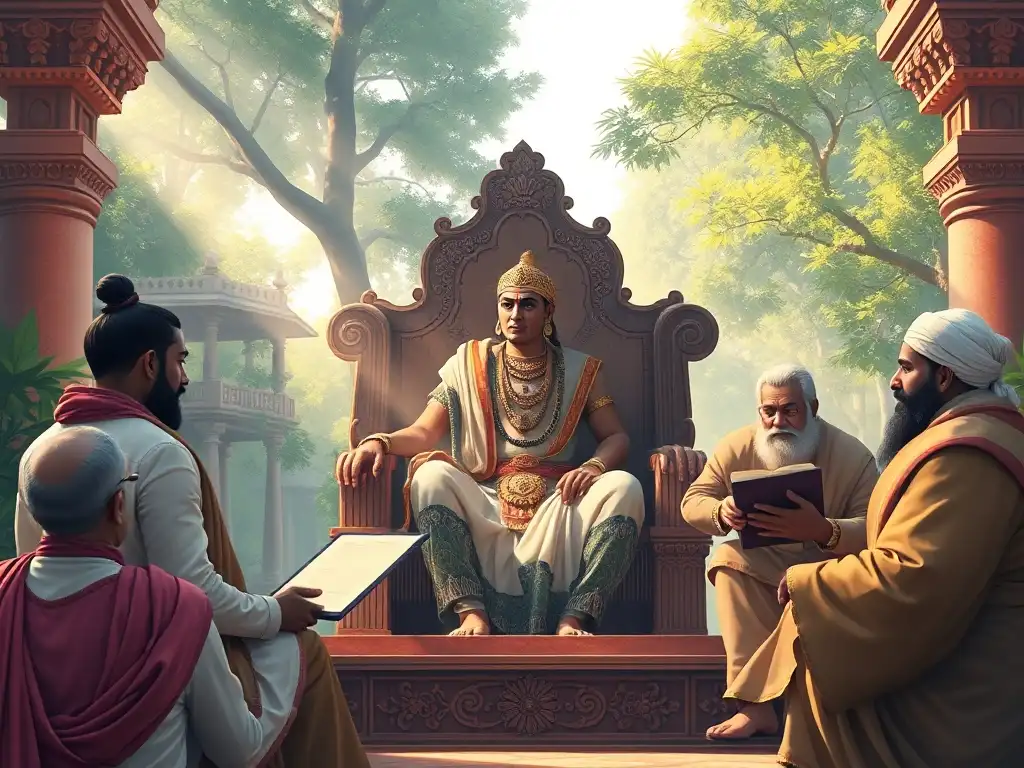
The Maurya Empire, renowned for its political sophistication and administrative prowess, was profoundly influenced by philosophical thought. The integration of philosophy into the political landscape facilitated the establishment of a governance model that emphasized ethical leadership, social welfare, and the pursuit of dharma. Philosophers such as Chanakya, with his seminal work Arthashastra, articulated principles that not only guided political strategy but also shaped the moral fabric of governance.
The impact of these philosophical tenets extended beyond the Mauryan period, influencing subsequent Indian dynasties and their rulers. The emphasis on a ruler's duty to uphold justice and the welfare of the masses can be traced back to the philosophical underpinnings of the Maurya Empire. Aspects of these teachings continue to resonate in contemporary discussions regarding leadership and governance, highlighting the enduring legacy of Mauryan political philosophy.
Reflections on Philosophy in Contemporary Political Thought
In contemporary political discourse, the philosophies that emerged during the Maurya Empire offer valuable insights into the nature of governance, ethics, and the role of the state. The principles of dharma and the moral responsibilities of leaders are particularly relevant today, as societies grapple with issues of justice, equity, and the balance of power.
Philosophers like Chanakya advocated for a pragmatic approach to governance, emphasizing the importance of strategy and ethical considerations. These reflections can serve as a guide for modern political leaders, illustrating the necessity of combining ethical governance with practical decision-making. Furthermore, the emphasis on social welfare found in Mauryan philosophy aligns with contemporary ideals of democratic governance, where the well-being of citizens is paramount.
Future Research Directions in Ancient Indian Political Philosophy
The exploration of political philosophy during the Maurya Empire opens several avenues for future research. Scholars can delve deeper into the texts and teachings of figures like Chanakya and Ashoka, examining how their philosophies shaped the political landscape and influenced subsequent Indian thought.
Additionally, comparative studies between Mauryan political philosophy and other ancient political systems, such as those of Greece and China, could yield insights into the universality of certain political principles. Investigating the role of religion and spirituality in Mauryan governance can also provide a richer understanding of how these elements intertwined with political authority.
Lastly, interdisciplinary approaches that incorporate archaeology, sociology, and anthropology could illuminate the practical applications of philosophical ideas in the daily lives of citizens during the Maurya Empire. By expanding the scope of research, scholars can contribute significantly to the understanding of how ancient Indian political philosophy continues to inform modern governance.
- Introduction to Philosophy in Maurya Empire Politics
- Definition of Political Philosophy in Ancient India
- Importance of Philosophy in Governance
- Historical Context of the Maurya Empire
- Major Philosophical Schools Influencing Mauryan Politics
- Notable Philosophers and Their Contributions
- Philosophy as a Tool for Statecraft
- Case Studies of Philosophical Applications in Maurya Politics
- Conclusion: The Lasting Impact of Philosophy on Mauryan Political Systems
- Reflections on Philosophy in Contemporary Political Thought
- Future Research Directions in Ancient Indian Political Philosophy
- What was the significance of philosophy in the Maurya Empire?
- How did Ashoka incorporate philosophical ideas into his rule?
- What philosophical schools influenced the Maurya Empire?
- In what ways did philosophy affect the administration of the Maurya Empire?
- Can you provide examples of philosophical texts from the Maurya period?
Frequently Asked Questions
What was the significance of philosophy in the Maurya Empire?
Philosophy played a crucial role in shaping the political landscape of the Maurya Empire by influencing the rulers' governance and ethical decision-making, thereby promoting justice and welfare.
How did Ashoka incorporate philosophical ideas into his rule?
Ashoka embraced Buddhist philosophy, promoting non-violence and compassion, which significantly impacted his policies and led to the spread of Buddhism across the empire.
What philosophical schools influenced the Maurya Empire?
The Maurya Empire was influenced by various philosophical schools, including Buddhism, Jainism, and Hinduism, each contributing to the moral and ethical frameworks of governance.
In what ways did philosophy affect the administration of the Maurya Empire?
Philosophy affected the administration by encouraging rulers to adopt policies that were just and equitable, leading to enhanced social stability and economic prosperity.
Can you provide examples of philosophical texts from the Maurya period?
Key philosophical texts from the Maurya period include the Edicts of Ashoka, which convey his moral principles, and the Arthashastra by Kautilya, detailing political strategy and governance.
Final Reflection: The Enduring Influence of Philosophy in Maurya Empire Politics
The interplay between philosophy and politics in the Maurya Empire remains profoundly relevant today, as it showcases how ideological frameworks can shape governance and societal values. In an age where political discourse often feels fragmented and ideologically charged, revisiting the philosophical underpinnings of one of history's greatest empires reminds us that thoughtful governance is rooted in deeper ethical considerations. The insights drawn from this era challenge us to reflect on the principles that guide our own political systems and the importance of philosophical inquiry in fostering a just society.
The philosophical discourse of the Maurya Empire has left an indelible mark on the cultural and social landscape, influencing not only the governance of its time but also the moral compass of future generations. The teachings of figures like Chanakya resonate even today, as they emphasize the necessity of wisdom and ethics in leadership. The greatest conqueror is he who conquers himself.
This quote encapsulates the essence of self-governance and introspection that is crucial for any political leader, reminding us that the true strength of a society lies in its ability to reflect on its values and actions.
As we move forward, let us take a moment to reflect on the lessons from the Maurya Empire and the role of philosophy in shaping political landscapes. Consider how the principles of ethical leadership and philosophical inquiry can be applied in your own life and community.
Engage in discussions that challenge your perspectives, advocate for thoughtful governance, and strive to embody the values that promote a more equitable society. The legacy of philosophical thought in politics is not merely a historical account; it is a call to action for each of us to contribute to a more enlightened and just world.
Unveil New Perspectives on Political Philosophy!
Thank you for diving into the intricate role of philosophy within the political landscape of the Maurya Empire! We hope you found enlightening insights that inspire you to explore how thought shapes governance.
Now, it’s time to take action and deepen your understanding of this fascinating topic:
- Dive deeper into philosophical texts from the era; consider reading the **Arthashastra** to grasp the blend of strategy and ethics in governance.
- Engage in discussions! Join online forums or local study groups to share ideas and perspectives on the influence of philosophy in politics.
- Explore related historical contexts—how did other cultures approach governance? Investigate philosophical movements in neighboring regions during the same period.
What philosophical concept do you believe has the most profound impact on modern political ideologies today? Share your thoughts below!