
The Science of Time: How Gupta Innovations in Astronomy Changed Calendars


Welcome to Ancient India History, where we embark on a fascinating journey through the rich tapestry of India's past. Dive deep into the remarkable world of Gupta innovations in astronomy, a pivotal chapter that not only shaped the scientific landscape of ancient civilizations but also transformed our understanding of time itself. Curious about how these advancements influenced modern calendars? Join us as we unravel the brilliance of the Gupta Empire and explore their groundbreaking contributions to astronomy that continue to resonate through the ages. Your adventure into the depths of ancient wisdom awaits!
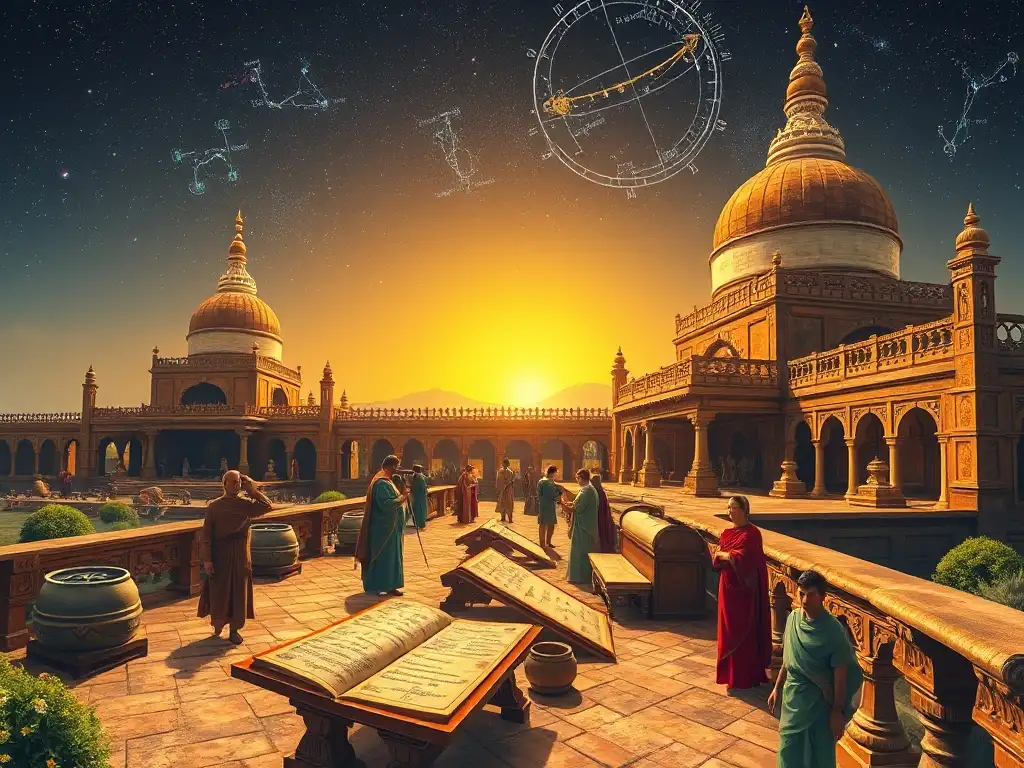
In ancient India, the understanding and measurement of time played a crucial role in various aspects of life, from agriculture to religious rituals. During the Gupta Empire, a golden age of cultural and scientific advancements, significant innovations in astronomy emerged, particularly in how time was perceived and recorded.
This article delves into the remarkable contributions of Gupta scholars to the field of astronomy, examining how their innovations transformed calendars and timekeeping practices. By exploring the intersection of science and culture during this era, we can appreciate the profound impact these developments had on not only Indian civilization but also on the broader world of astronomy.
Introduction to Gupta Innovations in Astronomy
The Gupta Empire (circa 320–550 CE) is often celebrated for its extraordinary advancements in various fields, including mathematics, literature, and art. However, one of the most significant yet often overlooked contributions was in the realm of astronomy. Gupta scholars, such as Aryabhata and Varahamihira, made substantial strides in understanding celestial phenomena and refining timekeeping methods. Their work laid the foundation for more accurate calendars, enhancing agricultural planning and religious observance.
Overview of Gupta Empire Contributions to Science
The Gupta Empire was a period marked by remarkable intellectual achievements. Key contributions to science included:
- Mathematics: Introduction of the concept of zero and advancements in arithmetic.
- Astronomy: Development of precise astronomical calculations and models.
- Medicine: Innovations in surgical techniques and herbal medicine.
These contributions were not isolated; they were interconnected, with astronomy influencing other scientific disciplines.
Importance of Astronomy in Ancient Indian Culture
Astronomy held a revered place in ancient Indian culture. It was intertwined with religious practices, agriculture, and navigation. The accurate tracking of celestial bodies allowed for:
- Religious Festivals: Timing of festivals based on lunar and solar calendars.
- Agricultural Cycles: Planning sowing and harvest seasons according to astrological events.
- Navigation: Guiding maritime activities and trade routes.
The Gupta innovations in astronomy not only enhanced these aspects but also reflected a sophisticated understanding of the cosmos.
Historical Context of Timekeeping in Ancient India
To fully appreciate Gupta innovations, it is essential to understand the historical context of timekeeping in ancient India. This includes the evolution of early calendars and the influence of Vedic astronomy.
Early Calendars Used in Ancient Civilizations
Before the Gupta period, various ancient Indian civilizations employed different calendars. Notable examples include:
- Lunar Calendars: Based on the phases of the moon, they were widely used for religious and agricultural purposes.
- Solar Calendars: These calendars revolved around the sun, providing a more stable framework for timekeeping, particularly in agriculture.
These early calendars laid the groundwork for the more sophisticated systems developed during the Gupta Empire.
Influence of Vedic Astronomy on Time Measurement
Vedic astronomy, which predates the Gupta Empire, played a vital role in shaping the understanding of time. The Vedic texts contained:
- Astronomical Observations: Detailed accounts of celestial movements and their significance.
- Cosmological Theories: Frameworks that linked cosmic events with earthly phenomena.
The Gupta astronomers built upon this foundational knowledge, integrating it with their own observations and calculations, leading to more accurate and systematic approaches to timekeeping.
In the following sections, we will explore specific Gupta innovations in astronomy, their methodologies, and their lasting impact on timekeeping practices both in India and beyond.
Key Gupta Innovations in Astronomy
The Gupta Empire, often referred to as the Golden Age of India, witnessed significant advancements in various fields, including astronomy. Scholars during this period made notable contributions that not only enhanced the understanding of celestial phenomena but also laid the groundwork for future astronomical studies. Key innovations include the development of sophisticated instruments, mathematical techniques, and a deeper understanding of planetary motions.
Prominent astronomers such as Aryabhata and Varahamihira emerged during this era, pushing the boundaries of knowledge. Aryabhata, in particular, is credited with formulating the concept of zero and introducing a place-value system that revolutionized mathematical calculations used in astronomical predictions. His work "Aryabhatiya" encapsulated various astronomical principles, including the Earth's rotation and the calculation of eclipses.
Additionally, the Gupta period saw advancements in observational astronomy, with scholars employing more accurate instruments to measure celestial bodies' positions. These innovations significantly enhanced the precision of astronomical data, influencing calendar systems and agricultural practices throughout the empire.
Development of Mathematical Astronomy
Mathematical astronomy flourished under the Gupta Empire, where scholars began to rigorously apply mathematics to celestial observations. Aryabhata's contributions were pivotal; he introduced algorithms for calculating the positions of planets and the timing of eclipses, which were essential for accurate calendar creation. His trigonometric methods, based on the properties of sine and cosine, allowed for more precise angular measurements of celestial bodies.
Another significant figure, Varahamihira, expanded on Aryabhata's work by compiling extensive astronomical tables that included calculations for planetary positions. His treatise, "Brihat Samhita," served as a critical reference for astrologers and astronomers alike, blending astronomy with astrology—a prevalent practice in ancient India.
The emphasis on mathematical precision not only advanced theoretical knowledge but also had practical implications, such as improving navigation and agricultural planning. The systematic approach to astronomy during this time laid the foundation for future astronomical research in India and beyond.
Innovations in Celestial Observations
The Gupta period is marked by remarkable innovations in celestial observations that enhanced the understanding of the universe. Observatories, known as "Jantar Mantar," were established, where astronomers could observe celestial phenomena with greater accuracy. These observatories featured instruments like the gnomon, which helped measure the sun's altitude and shadow length, facilitating the calculation of time and seasonal changes.
The Gupta astronomers also developed the concept of "Graha," which referred to celestial bodies influencing earthly events. This included detailed studies of the movements of the sun, moon, and planets. By observing the regularity in their cycles, scholars could predict astronomical events such as eclipses, which were significant for both scientific and religious purposes.
Moreover, the meticulous records of celestial observations from this period contributed to a deeper understanding of planetary motion and the complexities of the cosmos, influencing subsequent generations of astronomers not only in India but also in the Islamic Golden Age.
The Impact of Gupta Innovations on Calendar Systems
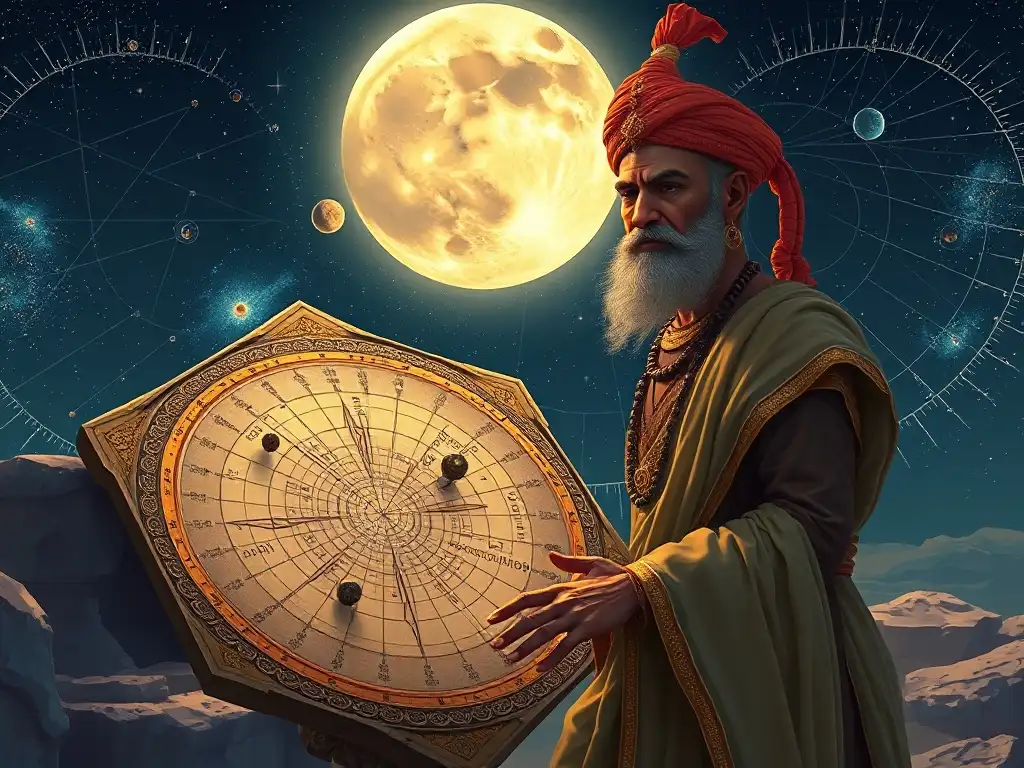
The innovations in astronomy during the Gupta Empire had a profound impact on calendar systems, transforming how time was measured and understood. The integration of mathematical principles and celestial observations allowed for the creation of more accurate and reliable calendars, which were crucial for agricultural cycles, religious festivals, and daily life.
Transition from Lunar to Solar Calendars
Historically, Indian calendars were predominantly lunar, relying on the moon's phases to mark time. However, the advancements made during the Gupta period facilitated a significant transition toward solar calendars. Aryabhata's work emphasized the solar year, leading to the development of a calendar that aligned more closely with the solar cycle.
This transition was essential for agricultural practices, as it allowed farmers to time their sowing and harvesting more effectively. The new solar calendar provided a more stable framework for planning events and festivals, reducing the discrepancies that often arose with lunar calendars. As a result, the solar calendar became widely adopted, influencing various regional calendars that emerged in subsequent centuries.
Standardization of Time Measurement
The Gupta innovations in astronomy also paved the way for the standardization of time measurement across the empire. With the introduction of precise mathematical calculations and celestial observations, scholars were able to develop a more uniform system of timekeeping. This standardization was crucial for coordinating activities within the vast empire, from trade to religious observances.
The use of sundials and water clocks became more common, allowing for accurate time measurement throughout the day. By establishing a consistent framework for timekeeping, the Gupta Empire laid the groundwork for future developments in time measurement, influencing not only Indian practices but also serving as a model for other civilizations.
The Gupta innovations in astronomy significantly altered the understanding and measurement of time, leading to advancements in calendar systems that had lasting effects on Indian civilization and beyond.
Comparison of Gupta Calendar Systems with Other Civilizations
The Gupta Empire, spanning from approximately 320 to 550 CE, was a golden age for science and mathematics, particularly in the field of astronomy. The calendar systems developed during this period were sophisticated and reflected a deep understanding of celestial movements. When comparing Gupta calendar systems with those of other ancient civilizations, such as the Babylonians, Egyptians, and Mayans, several distinct patterns and innovations emerge.
The Gupta calendar systems primarily utilized a lunisolar approach, integrating both lunar months and solar years. This dual system allowed for adjustments based on the lunar cycle while keeping track of the solar year, which was essential for agricultural practices. In contrast, the Babylonian calendar was predominantly lunar, leading to discrepancies with the solar year, necessitating periodic intercalation to realign the calendar with the seasons.
Similarities with Other Ancient Calendars
Despite the differences, there are notable similarities between the Gupta calendar systems and those of other civilizations. For instance:
- Lunar Influence: Like the Babylonians and the Islamic calendar, the Gupta calendar incorporated lunar months, which were approximately 29.5 days long. This alignment with the moon's phases was common in many ancient cultures, facilitating a connection with agricultural cycles.
- Solar Year Alignment: Similar to the Egyptian calendar, the Gupta system recognized the importance of the solar year. The Egyptians had a civil calendar of 365 days that aligned with the annual flooding of the Nile, just as the Gupta calendar accounted for seasonal changes crucial for farming.
- Cultural and Religious Observances: Many ancient calendars, including those of the Gupta, were designed to mark significant cultural and religious events, which was a common practice across civilizations. For example, festivals and harvests were often aligned with specific lunar or solar events.
Unique Features of Gupta Calendar Innovations
The Gupta Empire introduced several unique features in their calendar systems that distinguished them from other ancient civilizations:
- Mathematical Precision: The Gupta astronomers employed advanced mathematical techniques, such as trigonometry, to calculate the lengths of months and the solar year accurately. This level of precision was not seen in many ancient calendars and allowed for more reliable timekeeping.
- Intercalation Techniques: The Gupta calendar systems devised effective intercalation methods to reconcile the lunar and solar months. This practice ensured that seasonal and agricultural events remained consistent with the calendar, a complexity often insufficiently addressed in other civilizations.
- Standardization: The Gupta period saw the standardization of calendar observances across the empire, promoting a unified system that was vital for administration and trade. This was particularly innovative compared to the often localized calendar systems of other cultures.
Legacy of Gupta Innovations in Astronomy
The Gupta innovations in astronomy not only influenced contemporary practices but also left a lasting legacy that shaped future developments in both Indian and global contexts. These advancements showcased the Gupta Empire's role as a pivotal player in the history of science.
Lasting Effects on Later Indian Astronomy
The astronomical innovations of the Gupta period laid the groundwork for subsequent Indian astronomers, such as Aryabhata and Brahmagupta. Their works built upon the Gupta methods of calculation, further refining astronomical observations and calendar systems. Notable impacts include:
- Continued Use of Mathematical Techniques: The mathematical tools developed during the Gupta era were adopted and expanded upon in later texts, influencing the astronomical calculations of the medieval period in India.
- Integration of Logic and Astronomy: The Gupta emphasis on logical reasoning in astronomical calculations fostered a culture of scientific inquiry that persisted in Indian astronomy, leading to significant advancements in the understanding of celestial phenomena.
Influence on Global Scientific Communities
The Gupta Empire's contributions to astronomy were not confined to India; they resonated across the globe, influencing various scientific communities:
- Transmission of Knowledge: As trade routes expanded, Gupta texts and methodologies spread to other civilizations, notably influencing Islamic astronomy. Scholars like Al-Khwarizmi utilized Gupta techniques, which were instrumental in developing the astronomical systems used in the Islamic Golden Age.
- Cultural Exchange: The interactions between Gupta scholars and foreign astronomers facilitated a rich exchange of ideas. This cross-cultural dialogue led to the integration of Gupta innovations with other scientific traditions, enhancing the global understanding of astronomy.
The Gupta innovations in astronomy significantly advanced the study of timekeeping and calendars, leaving an indelible mark on both Indian and global scientific landscapes. Their sophisticated approaches to integrating lunar and solar cycles not only improved agricultural practices but also fostered a legacy that would influence generations of astronomers.
Conclusion: The Lasting Significance of Gupta Innovations in Astronomy

The Gupta Empire, often regarded as the Golden Age of India, made remarkable contributions to various fields, with astronomy standing out as a pivotal area of advancement. The innovations during this period not only enhanced the understanding of celestial phenomena but also laid the groundwork for subsequent developments in science and mathematics. The Gupta scholars' ability to integrate observational astronomy with mathematical calculations revolutionized how time was measured and recorded, leading to the creation of more precise calendars. This precision was crucial for agriculture, religious observances, and daily life, facilitating better planning and organization within society.
Moreover, the Gupta innovations in astronomy reflected a profound understanding of the cosmos that intertwined with cultural practices and philosophical thought. The establishment of the solar calendar, which recognized the importance of the sun's position in relation to seasons, showcased the Gupta's advanced comprehension of celestial mechanics. This legacy continues to resonate today, as the principles established during this period still influence contemporary astronomical practices and calendar systems.
Reflection on the Importance of Astronomy in Ancient Indian History
Astronomy played a fundamental role in ancient Indian civilization, serving not just as a scientific discipline but also as a framework for cultural and philosophical inquiries. The Gupta era marked a significant phase where astronomy was deeply ingrained in various aspects of life, from agriculture and trade to religious rituals and navigation. The meticulous observations made by Gupta astronomers, such as Aryabhata and Varahamihira, contributed to a holistic understanding of the universe, including the cycles of time, planetary movements, and eclipses.
The significance of these astronomical advancements is further underscored by their applications in creating calendars that were vital for societal functioning. Accurate timekeeping allowed communities to synchronize agricultural activities with seasonal changes, ensuring food security and economic stability. Additionally, the celestial observations often informed religious calendars, determining auspicious dates for ceremonies and festivals. Thus, the scientific innovations in astronomy during the Gupta Empire were not merely academic; they had practical implications that shaped the everyday lives of people across ancient India.
Final Thoughts on the Evolution of Calendars through Time
The evolution of calendars is a testament to humanity's quest to understand and organize time. The Gupta innovations in astronomy marked a transformative period in this evolution, as they introduced methodologies that significantly improved calendar accuracy. By aligning calendars with astronomical events, such as solstices and equinoxes, Gupta scholars established systems that were not only reliable but also reflective of the natural world.
As time progressed, the principles derived from Gupta astronomy influenced various cultures, leading to the adoption and adaptation of these calendar systems throughout history. The legacy of the Gupta Empire's astronomical innovations remains evident today, as modern calendars still pay homage to the foundational work of ancient Indian astronomers. This continuous thread through time underscores the enduring significance of the Gupta contributions, as they not only shaped the past but also paved the way for future advancements in our understanding of time and celestial phenomena.
- Introduction to Gupta Innovations in Astronomy
- Historical Context of Timekeeping in Ancient India
- Key Gupta Innovations in Astronomy
- The Impact of Gupta Innovations on Calendar Systems
- Comparison of Gupta Calendar Systems with Other Civilizations
- Legacy of Gupta Innovations in Astronomy
- Conclusion: The Lasting Significance of Gupta Innovations in Astronomy
- Reflection on the Importance of Astronomy in Ancient Indian History
- Final Thoughts on the Evolution of Calendars through Time
Frequently Asked Questions
What were the Gupta innovations in astronomy?
The Gupta innovations in astronomy included advancements in the understanding of planetary movements, the development of new astronomical instruments, and improvements in calendar systems, which were pivotal for timekeeping.
How did Gupta astronomers impact calendar systems?
Gupta astronomers refined calendar systems by introducing more accurate methods of tracking celestial events, which allowed for better agricultural planning and religious observances based on seasonal changes.
Who were the prominent figures in Gupta astronomy?
Notable figures included Aryabhata, who made significant contributions to mathematics and astronomy, and Varahamihira, known for his work in astrology and the compilation of astronomical knowledge.
How did the science of time evolve during the Gupta period?
The science of time evolved through the integration of mathematical concepts with observational astronomy, leading to the creation of more precise calendars and a deeper understanding of celestial phenomena.
What legacy did Gupta astronomy leave for future civilizations?
The legacy of Gupta astronomy influenced not only Indian scientific thought but also Islamic and European astronomy, paving the way for future discoveries and innovations in the field.
Final Reflection: The Enduring Legacy of Gupta Innovations in Astronomy
The exploration of Gupta innovations in astronomy reveals a profound connection between ancient wisdom and modern understanding of time. Today, as we navigate our fast-paced lives, the significance of accurate timekeeping and calendar systems has never been more apparent. The advancements made during the Gupta period not only laid the groundwork for future astronomical studies but also remind us of the intricate relationship between science, culture, and the human experience.
The impact of these innovations transcends mere historical significance; they continue to shape our cultural and social landscapes. From the way we organize our days to the rituals we observe, the principles established by Gupta astronomers resonate in our contemporary lives. As we reflect on this legacy, we are reminded of the words of the great astronomer Aryabhata: Time is the most precious resource; it is the essence of life.
This statement encapsulates the importance of understanding time, urging us to appreciate the meticulous work of those who came before us.
As we move forward, let us take a moment to reflect on how we perceive and utilize time in our own lives. Consider how the lessons from the Gupta period can inspire you to cultivate a deeper appreciation for the rhythms of life, encouraging you to balance productivity with mindfulness. By embracing the wisdom of the past, we can create a more harmonious relationship with time, ensuring that we honor both our heritage and our future.
Unlock the Secrets of Time and Change Your Perspective!
Thank you for diving into the fascinating world of Gupta innovations in astronomy with us! Your interest in how ancient scientists shaped our understanding of calendars not only enriches your knowledge but also connects you to a legacy that still influences us today. Now, it's time to take that knowledge further!
Here are some exciting actions you can take right now:
- Explore the celestial wonders: Dive deeper into astronomy by visiting a local observatory or planetarium to witness how ancient techniques are still relevant today.
- Share your insights about Gupta astronomy with friends on social media to spark discussions. You might inspire someone else to learn more about this incredible topic!
- Create your own calendar inspired by ancient methods! Use historical techniques to design a personalized version that celebrates important dates in your life.
What aspect of ancient calendar innovations intrigues you the most, and how do you think it impacts our understanding of time today?