
The Concept of Dharma in the Vedas and Upanishads

Welcome to Ancient India History, where we embark on an enlightening journey through the rich and diverse tapestry of ancient Indian civilization. Today, we delve into the intriguing concept of Dharma in the Vedas and Upanishads—a pivotal theme that shaped the moral and ethical framework of Indian society. What does Dharma truly mean, and how has it influenced the spiritual landscape of ancient India?
As we unravel the profound teachings contained in these sacred texts, prepare to discover insights that resonate through time, inviting you to explore the depths of ancient Indian religions. Join us as we unlock the secrets of the past and illuminate the path for the future!
Introduction to Dharma in Ancient Indian Texts
The concept of Dharma holds a pivotal place in ancient Indian philosophy, particularly within the sacred texts of the Vedas and Upanishads. As a multifaceted term, Dharma encompasses not only the moral and ethical dimensions of life but also the duties, rights, and responsibilities that govern individual behavior in society.
This article delves into the rich tapestry of Dharma as presented in these foundational texts, exploring its implications for both personal conduct and societal order. Understanding Dharma is essential for comprehending the broader landscape of Hindu philosophy and spirituality, making it a crucial element in the study of ancient Indian religions.
Definition of Dharma in Hindu Philosophy
In Hindu philosophy, Dharma is often translated as "righteousness," "moral duty," or "law." It embodies the principles that guide individuals towards a path of virtue, harmony, and balance in their lives. The term is not static; rather, it varies according to context, including:
- Personal Dharma (Svadharma): The duties and responsibilities unique to an individual based on their age, caste, gender, and circumstances.
- Social Dharma (Samanya Dharma): Universal moral principles that apply to all individuals, promoting values like truthfulness, non-violence, and compassion.
- Cosmic Dharma (Rita): The natural order that governs the universe, influencing the cycles of nature and life.
The Vedas, composed around 1500–500 BCE, represent some of the earliest texts to codify these concepts, presenting Dharma as integral to maintaining cosmic and social order.
Importance of Dharma in Vedic Literature
Dharma is a recurring theme throughout Vedic literature, serving as a guiding principle for both individuals and society. The Vedas articulate various aspects of Dharma through hymns, rituals, and philosophical discourses. Key points include:
- Rituals and Sacrifice: The Vedas emphasize the role of rituals (Yajnas) in fulfilling one's Dharma, which not only benefits the individual but also sustains the cosmic order.
- Ethical Guidelines: Texts such as the Rigveda provide ethical guidelines that inform personal conduct and societal norms.
- Spiritual Growth: Dharma is viewed as essential for spiritual development, leading individuals towards liberation (Moksha).
Through these dimensions, the Vedas establish a framework where adhering to Dharma is synonymous with fulfilling one's purpose in life.
Historical Context of the Vedas and Upanishads
Overview of the Vedic Period
The Vedic period (approximately 1500–500 BCE) marks a significant era in ancient Indian history characterized by the composition of the Vedas, the oldest sacred texts of Hinduism. This period witnessed the formulation of social structures, religious practices, and philosophical inquiries that would later influence Indian civilization. The Vedas, divided into four collections—Rigveda, Samaveda, Yajurveda, and Atharvaveda—emphasize the importance of Dharma as a foundational element in both religious and societal contexts.
Emergence of the Upanishads and Their Significance
Following the Vedic texts, the Upanishads emerged around 800–200 BCE as a philosophical extension of Vedic thought. These texts delve deeper into the metaphysical aspects of Dharma, exploring concepts such as the nature of reality (Brahman) and the individual soul (Atman). The Upanishads shift the focus from ritualistic practices to introspective inquiry, underscoring the importance of understanding one's own Dharma in relation to the universe. This transition represents a significant evolution in Hindu philosophy, where personal realization and ethical living play crucial roles in the pursuit of knowledge and liberation.
The exploration of Dharma in the Vedas and Upanishads reveals its profound significance in shaping the ethical, spiritual, and social fabric of ancient Indian civilization. Understanding these texts offers valuable insights into the enduring influence of Dharma on contemporary Hindu thought and practice.
Core Concepts of Dharma as Presented in the Vedas
The Vedas, the oldest sacred texts of Hinduism, present a multifaceted view of Dharma, which can be understood as the ethical and moral duties that govern individual behavior in accordance with cosmic law. Central to the Vedic understanding of Dharma is the notion of Rita, which represents the order of the universe. It is through understanding and aligning oneself with Rita that individuals can fulfill their Dharma.
In the Vedas, Dharma is not merely a set of rules but is deeply intertwined with the concept of Svadharma (one's own duty). This emphasizes the importance of performing one's prescribed duties based on one's social and personal circumstances. The notion of Dharma also reflects a broader commitment to societal harmony, where each individual's actions contribute to the welfare of the community and the cosmos at large.
Additionally, the Vedas highlight the balance between the material and spiritual aspects of life, suggesting that fulfilling one's Dharma leads to social stability and personal fulfillment. This holistic view underscores the significance of Dharma as foundational to both individual and collective well-being.
Types of Dharma: Svartha and Parartha
Within the framework of Dharma as articulated in the Vedas, two primary types emerge: Svartha and Parartha.
- Svartha refers to personal Dharma, emphasizing individual responsibilities and duties that pertain to one’s own life. It encompasses the actions one must undertake for personal growth, well-being, and salvation. For example, a student’s duty to study and gain knowledge is an expression of Svartha.
- Parartha, on the other hand, focuses on social Dharma, which concerns duties towards others and the community. It highlights the interdependence of individuals within society and the importance of selflessness and service to others. Examples include a king's duty to protect his subjects or a parent’s responsibility to care for their children.
Understanding these two types of Dharma is crucial for navigating the complexities of life and ensuring that personal ambitions do not overshadow societal responsibilities. The balance between Svartha and Parartha is essential for achieving harmony both within oneself and in the larger community.
The Role of Dharma in Rituals and Sacrifices
In Vedic tradition, Dharma plays a pivotal role in the performance of rituals and sacrifices ( yajnas). These rituals are not only acts of worship but also embody the principles of Dharma, as they are performed to uphold cosmic order and ensure prosperity.
The Vedas prescribe specific rituals for various occasions, each aligned with the individual's Dharma, reinforcing the connection between ethical conduct and divine favor. For instance, a householder's duty includes performing daily rituals to honor the deities and ancestors, which in turn fosters societal stability and personal growth.
Moreover, the concept of Dharma in rituals extends to the intention behind the actions. The purity of intent is paramount; the performer must adhere to the prescribed norms and guidelines, reflecting their understanding of Dharma. Thus, participating in these rituals is both a personal duty and a communal act, reinforcing the interconnectedness of individuals within the cosmic framework.
The Upanishadic Perspective on Dharma
The Upanishads, which delve into the philosophical underpinnings of the Vedic texts, offer a more introspective perspective on Dharma. They move beyond the ritualistic aspects and focus on the inner dimensions of ethical living and the pursuit of truth. Here, Dharma is seen as a pathway to understanding the ultimate reality, Brahman.
In the Upanishadic tradition, Dharma is intricately linked to the concepts of Satya (truth) and Ahimsa (non-violence), establishing a moral foundation for ethical living. The idea is that by adhering to Dharma, individuals can attain higher states of consciousness and ultimately realize their unity with Brahman.
This philosophical interpretation invites individuals to reflect deeply on their actions and responsibilities, encouraging a pursuit of knowledge and self-realization as integral to fulfilling one's Dharma.
Philosophical Interpretations of Dharma
The Upanishads present various philosophical interpretations of Dharma, emphasizing its dynamic nature. They explore how Dharma is not static but rather evolves with the individual's understanding and circumstances. This adaptability is crucial, as it allows for a personalized approach to ethical living.
Key thoughts include:
- Dharma as a Universal Principle: The Upanishads suggest that Dharma is not confined to societal norms but is a universal principle that resonates with the cosmic order. It transcends individual situations and is rooted in the nature of existence itself.
- Introspection and Knowledge: The texts advocate for introspection and self-inquiry as means to discern one's Dharma. By understanding the self, individuals can align their actions with their true nature, which is essential for personal and collective harmony.
- Interconnectedness of All Beings: The Upanishads highlight the interconnectedness of all life, suggesting that Dharma must be practiced with an awareness of its broader implications for the community and the universe. This holistic approach encourages individuals to consider the impact of their actions on all beings.
Thus, the philosophical interpretations of Dharma in the Upanishads promote a deeper understanding of ethical conduct, urging individuals to seek wisdom and insight as they navigate their responsibilities.
Dharma and the Pursuit of Moksha
In the context of the Upanishads, Dharma is not only about ethical behavior but is also intricately linked to the pursuit of Moksha, or liberation from the cycle of birth and death ( samsara). The texts articulate that fulfilling one's Dharma is essential for attaining Moksha, as it cultivates the virtues necessary for spiritual growth.
The relationship between Dharma and Moksha can be summarized as follows:
- Moral Conduct as a Means to Liberation: The Upanishads assert that living in accordance with Dharma purifies the mind and fosters spiritual insight, which is crucial for realizing one's true nature and achieving Moksha.
- Detachment from Results: A significant teaching is the need for detachment from the fruits of one's actions. By performing Dharma without attachment, individuals can transcend desires and ego, moving closer to liberation.
- Integral Pathway: The Upanishads propose that Dharma serves as an integral pathway to Moksha, where ethical living, knowledge, and devotion intertwine. This holistic approach emphasizes that true liberation arises from a life lived in harmony with Dharma.
The Upanishadic perspective underscores that the pursuit of Moksha is intricately linked to an understanding and practice of Dharma, establishing a profound relationship between moral duty and spiritual liberation.
Comparative Analysis: Dharma in the Vedas vs. Upanishads
The concept of Dharma—a pivotal element in ancient Indian philosophy—manifests uniquely in the Vedas and Upanishads. While both texts originate from the Vedic tradition, their approaches to Dharma reflect differing contexts, purposes, and philosophical depths.
Key Differences in Understanding Dharma
In the Vedas, Dharma is primarily understood as ritualistic duty and adherence to cosmic order. The focus is on performing rituals, sacrifices, and following the societal norms prescribed by the scriptures. This aspect of Dharma emphasizes external actions and communal responsibilities, aiming to maintain societal balance and cosmic harmony.
Conversely, the Upanishads delve into a more philosophical interpretation of Dharma. Here, it transcends mere ritualistic obligations and becomes intertwined with the concepts of truth, spirituality, and self-realization. The Upanishads suggest that true Dharma is rooted in understanding one's nature and the ultimate reality (Brahman). This shift reflects a transition from the external practice to internal contemplation and ethical living.
Similarities in Ethical Implications
Despite the differences in emphasis, both the Vedas and Upanishads advocate for ethical living and moral conduct as fundamental aspects of Dharma. They both recognize Dharma's role in fostering social harmony and personal integrity. Key ethical principles such as truthfulness, non-violence, and compassion are present in both texts, establishing a moral framework that governs individual conduct.
Moreover, both texts stress the importance of duty. In the Vedic context, fulfilling one's prescribed duties (Svadharma) is vital for societal stability. In the Upanishadic context, adherence to Dharma leads to spiritual liberation (Moksha), reinforcing the idea that ethical behavior is paramount for both societal and spiritual well-being.
Practical Applications of Dharma in Ancient Indian Society
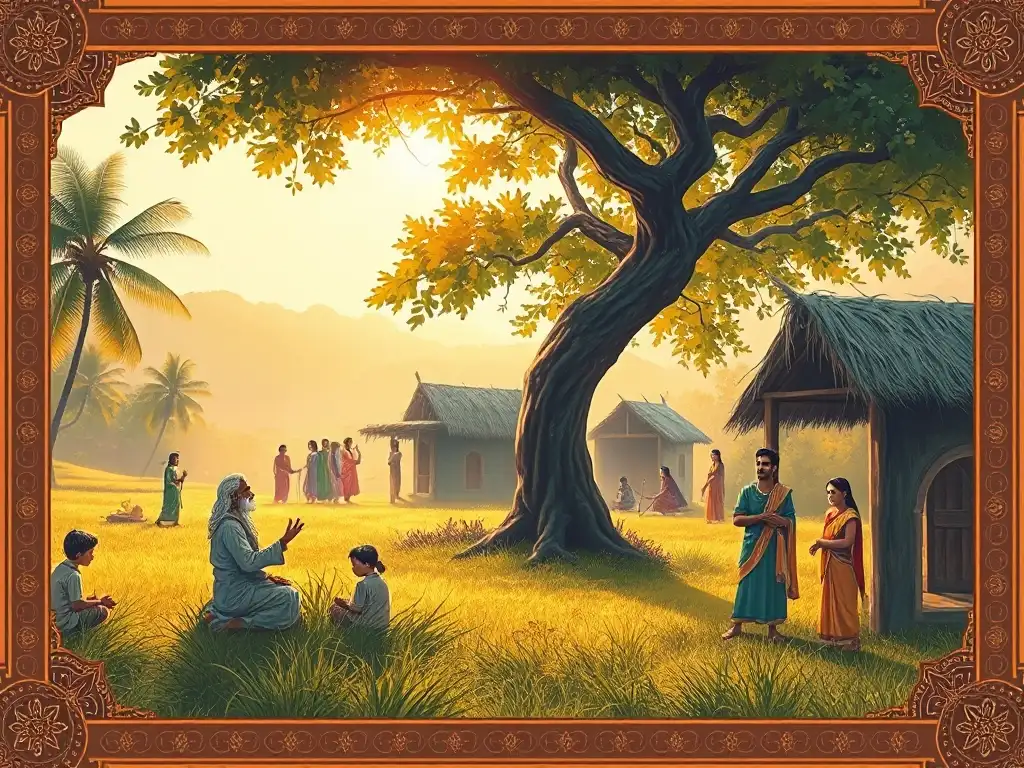
The applications of Dharma in ancient Indian society were essential for maintaining social order, governance, and individual conduct. The interpretation of Dharma influenced everyday life and societal structures, shaping the moral ethos of ancient civilizations.
Dharma in Social Order and Varna System
One of the most significant roles of Dharma in ancient India was its application to the varna system, which categorized society into four primary groups: Brahmins (priests), Kshatriyas (warriors), Vaishyas (traders), and Shudras (laborers). Each varna had specific duties and responsibilities dictated by Dharma.
For instance, Brahmins were tasked with performing rituals and preserving sacred knowledge, while Kshatriyas were responsible for protection and governance. This division was believed to maintain cosmic order and social stability. The adherence to one's Dharma within the varna system reinforced societal roles and hierarchies, leading to a structured and organized community.
Influence of Dharma on Law and Governance
Dharma also played a crucial role in the development of laws and governance in ancient India. Ancient texts, such as the Manusmriti, draw heavily from Vedic principles to formulate legal guidelines that reflect Dharma's ethical dimensions. These laws addressed various aspects of life, including family, property, and interpersonal relations, ensuring that societal norms aligned with moral duties.
The rulers were often expected to embody Dharma, governing justly and ensuring that their subjects adhered to ethical conduct. This concept of Dharma Rajya (rule of Dharma) emphasized the idea that a ruler's legitimacy depended on their commitment to righteous governance, further embedding the significance of Dharma in the fabric of ancient Indian politics and society.
Challenges and Misinterpretations of Dharma
The concept of Dharma in the Vedas and Upanishads is often subject to various challenges and misinterpretations. One of the primary issues arises from the complexity and multidimensional nature of Dharma itself. Traditionally, Dharma encompasses not only moral and ethical duties but also social responsibilities, cosmic order, and individual conduct. This broad definition can lead to misunderstandings, as individuals may focus on only one aspect while neglecting others.
Another significant challenge is the contextual interpretation of Dharma. The Vedas and Upanishads were composed in specific historical and cultural contexts, and their teachings must be understood within those frameworks. For instance, what was considered Dharma in the Vedic period may not align perfectly with contemporary interpretations or practices. This temporal gap often results in confusion, as modern practitioners may impose their values onto ancient texts without acknowledging the evolution of societal norms.
Furthermore, the rigid application of Dharma can lead to ethical dilemmas. For example, the caste system, which has been historically linked to the concept of Dharma, has faced severe criticism in modern times. Misinterpretations of these texts have sometimes justified social inequalities, creating a divide that contradicts the fundamental essence of Dharma as promoting righteousness and balance.
Common Misconceptions about Dharma in Hinduism
Several misconceptions about Dharma persist within both scholarly and lay discussions of Hinduism. One common misunderstanding is that Dharma is synonymous with law or duty alone. While duty is a component of Dharma, the term encompasses a broader spectrum of meaning, including righteousness, morality, and the larger cosmic order. This narrow interpretation often simplifies the profound philosophical discussions found in the Vedas and Upanishads.
Another misconception is that Dharma is static and universally applicable. In reality, Dharma is dynamic and contextual. It varies according to an individual's stage of life (as per the Ashrama system), their social role (Varna), and the specific circumstances they find themselves in. This adaptability is central to the concept of Dharma, yet it is often overlooked, leading to rigid applications that can distort its essence.
Moreover, there is a false belief that adherence to Dharma is purely an external obligation. In truth, the Vedas and Upanishads emphasize the internalization of Dharma, which involves personal reflection, moral reasoning, and individual conscience. This internal aspect is crucial for true adherence to Dharma and distinguishes it from mere compliance with societal norms.
The Evolution of Dharma Through Ages
The concept of Dharma has evolved significantly from the Vedic period through the emergence of the Upanishads and into modern interpretations. In the early Vedic texts, Dharma was closely tied to ritualistic practices and the maintenance of cosmic order. The emphasis was on performing rituals correctly to uphold societal and cosmic balance, reflecting an understanding of Dharma as a duty to both society and the cosmos.
As philosophical thought progressed with the Upanishads, the understanding of Dharma began to shift towards more abstract principles. The Upanishads introduced the idea of personal Dharma, focusing on self-knowledge and the pursuit of truth (Brahman). This transition marked a significant evolution in how Dharma was perceived—moving from external adherence to ritual practices to internal moral and ethical inquiry.
In the following centuries, with the rise of various schools of thought, including Vedanta and Jainism, interpretations of Dharma became even more nuanced. These schools emphasized the importance of compassion, non-violence, and the pursuit of liberation (moksha) as essential components of Dharma.
Today, the concept of Dharma continues to adapt to contemporary societal changes, influencing discussions on ethics, justice, and social responsibility. This ongoing evolution underscores Dharma's relevance and flexibility within Hindu thought, allowing it to remain a central tenet for guiding conduct across time.
Conclusion: The Enduring Legacy of Dharma in Hindu Thought
The legacy of Dharma in Hindu thought is profound and enduring. Rooted in ancient texts like the Vedas and Upanishads, it shapes not only individual conduct but also the broader ethical landscape of society. The multifaceted nature of Dharma—encompassing duty, morality, and cosmic order—has allowed it to permeate various aspects of life, influencing everything from personal relationships to governance.
As we reflect on the historical context of Dharma, it becomes evident that its interpretation has been fluid, adapting to the changing needs and values of society. This adaptability has ensured that the concept remains a vital part of Hindu philosophy and practice, providing guidance for ethical decision-making and social harmony.
Relevance of Dharma Today
In contemporary society, the relevance of Dharma is more pronounced than ever. As individuals navigate complex moral dilemmas and societal challenges, the principles of Dharma offer a framework for ethical conduct. Issues such as environmental sustainability, social justice, and personal integrity can all be approached through the lens of Dharma, encouraging individuals to consider their responsibilities to themselves, others, and the planet.
Furthermore, the revival of interest in traditional Indian philosophies in a globalized world has led to a renewed exploration of Dharma. Many people are seeking to understand how ancient wisdom can inform modern life, making Dharma a topic of significant relevance in discussions about ethics and morality today.
Future Perspectives on Dharma in Contemporary Hinduism
Looking ahead, the future of Dharma in contemporary Hinduism appears promising yet complex. As Hindu communities around the world continue to grapple with modernity, globalization, and intercultural exchanges, the interpretation of Dharma will likely evolve further. The challenge will be to maintain the core values of Dharma while adapting to new social realities and ethical dilemmas.
Moreover, as younger generations engage with their heritage, they may reinterpret traditional concepts of Dharma in ways that resonate with contemporary values, such as inclusivity and social justice. This reinterpretation can lead to a richer understanding of Dharma that honors its historical roots while embracing the complexities of modern life.
In essence, the journey of Dharma is far from over. Its enduring legacy will continue to shape and inform the spiritual and ethical landscape of Hinduism, guiding individuals and communities towards a more just and harmonious existence.
- Introduction to Dharma in Ancient Indian Texts
- Definition of Dharma in Hindu Philosophy
- Importance of Dharma in Vedic Literature
- Historical Context of the Vedas and Upanishads
- Core Concepts of Dharma as Presented in the Vedas
- The Upanishadic Perspective on Dharma
- Comparative Analysis: Dharma in the Vedas vs. Upanishads
- Practical Applications of Dharma in Ancient Indian Society
- Challenges and Misinterpretations of Dharma
- Conclusion: The Enduring Legacy of Dharma in Hindu Thought
Frequently Asked Questions
What is Dharma in the context of the Vedas and Upanishads?
Dharma refers to the moral law or duty that governs individual conduct and is essential for maintaining harmony in society. It is a central theme in both the Vedas and Upanishads.
How do the Vedas define Dharma?
In the Vedas, Dharma is often associated with rituals, sacrifices, and the cosmic order. It emphasizes the importance of performing one’s duties in accordance with societal and cosmic principles.
What role do the Upanishads play in understanding Dharma?
The Upanishads explore Dharma more philosophically, focusing on the inner moral compass and the spiritual path. They emphasize the importance of understanding one’s true self and the universe's interconnectedness.
How has the concept of Dharma evolved over time?
Over the centuries, the understanding of Dharma has evolved from strict ritualistic practices to a broader interpretation that includes personal ethics and social responsibility, as reflected in later texts and traditions.
Why is the study of Dharma in the Vedas and Upanishads important?
Studying Dharma in these texts is crucial for grasping the foundational principles of Indian philosophy and culture, and it provides insight into the ethical and moral frameworks that guide human behavior.
Final Reflection: Embracing Dharma in Our Lives Today
The concept of Dharma in the Vedas and Upanishads remains profoundly relevant in our contemporary world, guiding us toward ethical living and personal responsibility. As we navigate the complexities of modern life, the ancient wisdom encapsulated in these texts serves as a beacon, reminding us of the importance of aligning our actions with a greater purpose. The teachings of Dharma encourage us to reflect on our roles within our families, communities, and the broader universe, urging us to act with integrity and compassion.
Cultural and social landscapes are continually shaped by our understanding of Dharma, influencing everything from personal choices to societal norms. The principles derived from the Vedas and Upanishads resonate deeply, fostering a sense of duty and interconnectedness among individuals. As Mahatma Gandhi once said, "> The best way to find yourself is to lose yourself in the service of others." This sentiment echoes the essence of Dharma, highlighting how our commitment to serving others not only enriches our lives but also uplifts those around us.
As we conclude this exploration of Dharma, I invite you to reflect on how these ancient teachings can be woven into the fabric of your daily life. Consider the ways in which you can embody the principles of Dharma, making choices that reflect your values and contribute positively to the world. Embrace the opportunity to live with purpose, allowing the wisdom of the Vedas and Upanishads to inspire you to create a meaningful legacy rooted in compassion and responsibility.
Embrace Your Dharma Today!
Thank you for diving into the profound world of Dharma as explored in the Vedas and Upanishads. Your curiosity is the first step toward understanding the principles that can guide your life. Now, it's time to take this knowledge to the next level!
Here’s how you can embody the teachings of Dharma in your daily routine:
- Reflect on Your Purpose: Spend a few moments today journaling about your personal path. What values and responsibilities resonate most with you?
- Engage with Your Community: Share this article with friends or family and spark a conversation about Dharma! Discuss how their views align with yours.
- Seek Further Wisdom: Explore a local or online class focused on ancient philosophies to deepen your understanding and practice of Dharma.
What aspect of Dharma resonates most with your life, and how will you take action this week? We can't wait to hear your thoughts!