
The Cycle of Samsara: Life, Death, and Rebirth in Hindu Philosophy

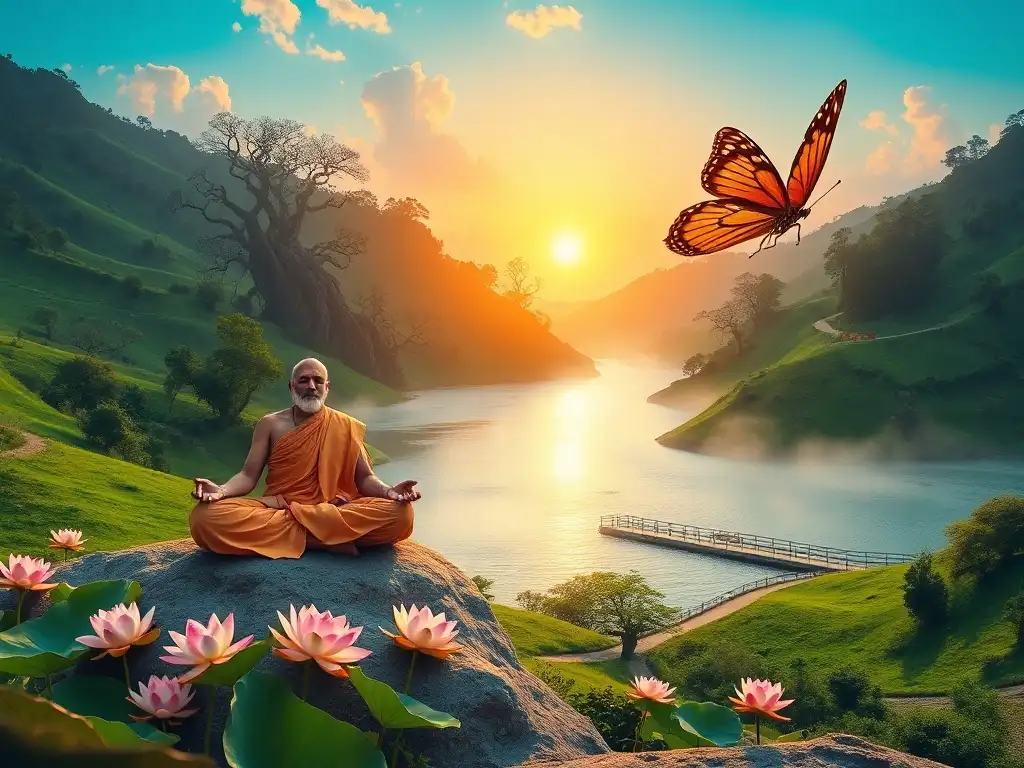
Welcome to Ancient India History, where we delve into the rich tapestry of civilizations that shaped the subcontinent from the Indus Valley to the Gupta Empire. Today, we invite you to explore the profound concept of Samsara in Hindu philosophy, a pivotal idea that encapsulates the cycles of life, death, and rebirth. What secrets does this ancient belief hold about existence and the human experience? Join us on this enlightening journey as we unravel the layers of meaning behind Samsara and its impact on the spiritual landscape of ancient India.
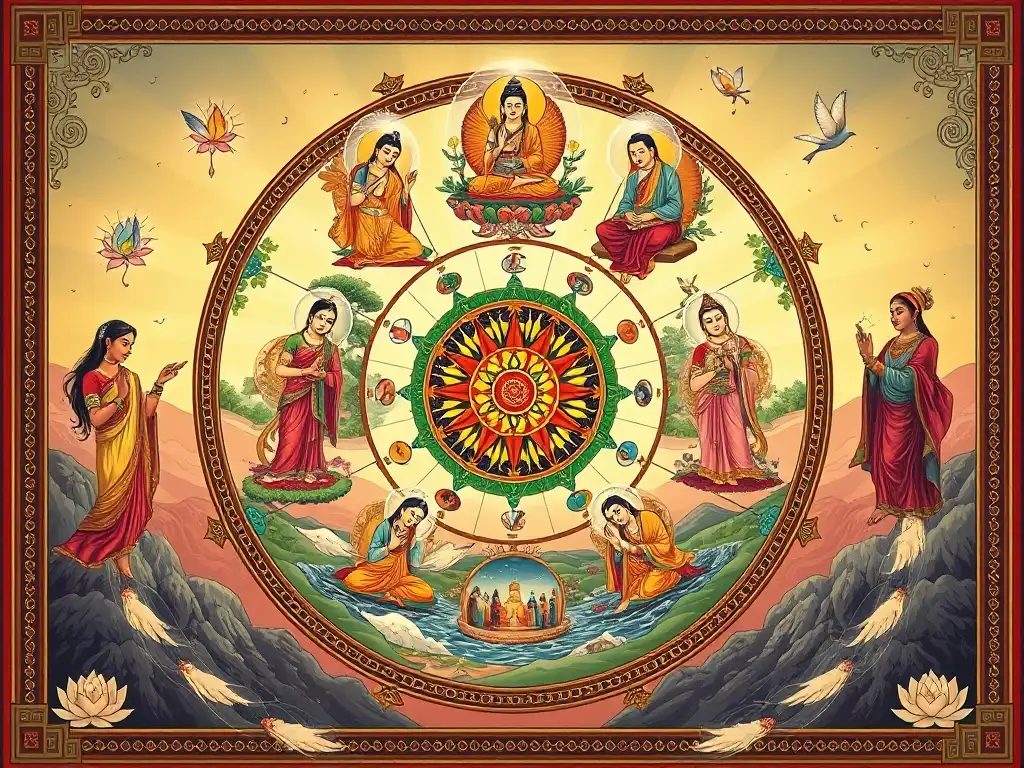
Introduction to Samsara in Hindu Philosophy
The concept of Samsara holds a central place in Hindu philosophy, embodying the intricate beliefs surrounding the cycles of life, death, and rebirth. This philosophical framework is not merely a narrative of existence but a profound understanding of the human experience and the journey of the soul. In Hinduism, Samsara represents the continuous cycle of birth (janma), life (jīvana), death (marana), and rebirth (punarjanma), which is deeply intertwined with the notions of karma—the law of moral causation—and moksha, the ultimate liberation from this cycle.
The examination of Samsara in Hindu philosophy unveils the rich tapestry of ancient beliefs that have shaped spiritual practices and moral conduct throughout the centuries. It invites individuals to reflect on their actions and the inevitable consequences they entail, urging a quest for understanding and enlightenment. Through this exploration, we will delve into the definition, significance, historical context, and evolution of the concept of Samsara, providing a comprehensive overview of its place in Hindu thought.
Definition of Samsara
Samsara, derived from the Sanskrit word meaning "to flow together," refers to the repetitive cycle of life and death experienced by all sentient beings. In this context, it encapsulates the journey of the soul through various realms of existence, influenced by the accumulated karma from previous lives.
- Key Elements of Samsara:
- Birth (Janma): The beginning of life in a new form.
- Life (Jīvana): The period in which one experiences existence, makes choices, and accumulates karma.
- Death (Marana): The end of physical existence, marking the transition of the soul.
- Rebirth (Punarjanma): The soul's re-entry into a new physical form based on past actions.
The cyclical nature of Samsara illustrates the belief that life is an ongoing process where the soul undergoes multiple incarnations, each presenting opportunities for growth, learning, and spiritual advancement.
Importance of Samsara in Hindu Beliefs
Samsara is not viewed as a mere cycle of existence; rather, it is integral to understanding the moral and spiritual framework of Hinduism. This concept emphasizes the significance of individual actions and their repercussions on future lives. The belief in Samsara encourages adherents to engage in righteous living (dharma) and to perform good deeds, as these choices directly influence their journey through the cycle.
- Moral Implications:
- Karma: Every action has consequences, creating a moral responsibility to lead an ethical life.
- Spiritual Growth: The soul evolves through experiences gained in different lifetimes, striving toward ultimate liberation.
- Pursuit of Moksha: The desire to break free from the cycle of Samsara drives individuals to seek spiritual enlightenment and union with the divine.
Thus, Samsara serves as a motivational force, shaping the ethical and spiritual aspirations of individuals within Hindu society.
Historical Context of Samsara
Understanding Samsara requires a look into its historical origins and the evolution of its interpretation throughout ancient texts. The concept has been a fundamental aspect of Hindu thought, influencing various religious and philosophical traditions.
Origins of the Concept of Samsara
The roots of Samsara can be traced back to the early Vedic texts, where the concept of reincarnation began to take form. Initially, ideas surrounding life after death were somewhat rudimentary, focusing primarily on the continuation of the soul.
- Vedic Period: The early scriptures hinted at the idea of an afterlife but lacked a structured understanding of Samsara.
- Upanishads: By the time of the Upanishads, philosophical discussions became more profound, establishing the groundwork for the understanding of the cycle of rebirth and karma.
This evolution marked a significant transition from a simplistic view of existence to a more comprehensive philosophical framework that integrated morality, ethics, and the nature of the soul.
Evolution of Samsara Through Ancient Texts
As Hindu philosophy matured, the depiction of Samsara evolved through various sacred texts, each contributing to a richer understanding of the cycle.
- Bhagavad Gita: This text emphasizes the importance of performing one's duty while embodying the principles of karma yoga, reinforcing the significance of actions in the context of Samsara.
- Puranas: These scriptures elaborate on the cosmological aspects of Samsara, detailing the journey of souls and the nature of the universe.
This ongoing discourse within ancient texts highlights the dynamic nature of Hindu philosophy, illustrating how the understanding of Samsara has been shaped by cultural, spiritual, and ethical considerations throughout history.
Key Elements of Samsara
Samsara, the cycle of life, death, and rebirth, is a fundamental concept in Hindu philosophy that describes the perpetual journey of the soul through various states of existence. This cycle is not merely an endless loop; rather, it reflects the intricate relationship between life experiences, moral actions, and spiritual growth. The key elements of Samsara include life, death, and rebirth, each playing a crucial role in the soul's evolution and its quest for ultimate liberation.
Life: The Journey of the Soul
In Hindu philosophy, life is viewed as a journey where the soul, or atman, traverses through various forms and experiences. Each life is considered an opportunity for the soul to learn, grow, and evolve. This journey is influenced by the actions taken in previous lives, which shape the current life circumstances. The experiences of joy and suffering are essential for the soul's development, as they provide lessons that contribute to spiritual maturity.
The teachings of the Bhagavad Gita emphasize the transient nature of life, encouraging individuals to perform their duties without attachment to the results. This perspective cultivates a sense of detachment and helps individuals navigate the challenges of life, recognizing that each experience contributes to the broader journey of the soul.
Death: Transition and Liberation
Death in the context of Samsara is not viewed as an end, but rather as a significant transition that leads to the next phase of existence. It is the point at which the soul leaves the physical body, shedding its earthly limitations. This moment is often associated with the culmination of one's life experiences and the resolution of accumulated karma.
In Hindu belief, the manner of one's death can influence the soul's next destination. A peaceful death, accompanied by spiritual practices and detachment from worldly desires, can lead to a favorable rebirth, while a tumultuous death may result in a more challenging next life. Additionally, death can also represent an opportunity for liberation ( moksha) if the soul has achieved sufficient purity and detachment from material existence.
Rebirth: The Cycle Continues
Rebirth, or punarjanma, is a central aspect of Samsara, reflecting the notion that the soul is eternally cycling through various lives. After death, the soul is reborn into a new body based on the karma accrued in previous lives. This process is not random; rather, it is guided by the moral and ethical decisions made throughout one's existence.
The cycle of rebirth continues until the soul achieves moksha, or liberation. The experiences in each life serve as stepping stones towards this ultimate goal, with each incarnation providing the soul with opportunities to rectify past mistakes, cultivate virtues, and progress towards spiritual enlightenment. The teachings of Hindu philosophy encourage individuals to be mindful of their actions in this life, as they directly influence future existences.
The Philosophical Underpinnings of Samsara
The concept of Samsara is deeply intertwined with the philosophical principles of karma, dharma, and moksha. These elements help to elucidate the mechanisms that govern the cycle of life, death, and rebirth, providing a comprehensive framework for understanding one's existence within the grand tapestry of the universe.
Karma: The Law of Cause and Effect
Karma is a pivotal concept in Hindu philosophy that describes the law of cause and effect governing the actions and consequences in one's life. Every action, whether good or bad, generates a corresponding reaction that influences the current and future states of the soul. This intricate web of actions determines the circumstances of rebirth and the experiences encountered in subsequent lives.
The principle of karma instills a sense of moral responsibility, encouraging individuals to engage in righteous actions and avoid harmful behaviors. It serves as a guiding principle for ethical living, emphasizing that the quality of one's life is shaped by the choices made throughout one's existence.
Dharma: The Role of Duty in Samsara
Dharma refers to the moral and ethical duties that individuals are obligated to uphold in their lives. It encompasses the responsibilities based on one's social position, stage of life, and personal circumstances. In the context of Samsara, fulfilling one's dharma is essential for spiritual growth and contributes positively to one's karma.
Adhering to dharma ensures that individuals act in harmony with the cosmic order, promoting a balanced and just society. When individuals engage in their duties with sincerity and dedication, they create a positive impact not only on their own lives but also on the lives of others, leading to a more favorable rebirth and progress towards liberation.
Moksha: Liberation from the Cycle of Samsara
Moksha represents the ultimate goal of Hindu philosophy—the liberation from the cycle of Samsara. It is the state of eternal bliss and union with the divine, where the soul transcends the limitations of physical existence and the burdens of karma. Achieving moksha requires a deep understanding of the self and the realization of one's true nature, which is inherently divine.
The path to moksha involves various spiritual practices such as meditation, devotion, selfless service, and the pursuit of knowledge. By cultivating detachment from material desires and the ego, individuals can break free from the cycle of rebirth. Numerous texts, including the Upanishads and the Bhagavad Gita, provide insights into the nature of moksha and the practices that lead to this profound state of liberation.
The cycle of Samsara in Hindu philosophy intricately connects life, death, and rebirth through the principles of karma, dharma, and moksha, offering a profound understanding of existence and the soul's journey toward ultimate liberation.
Different Interpretations of Samsara in Hindu Schools of Thought
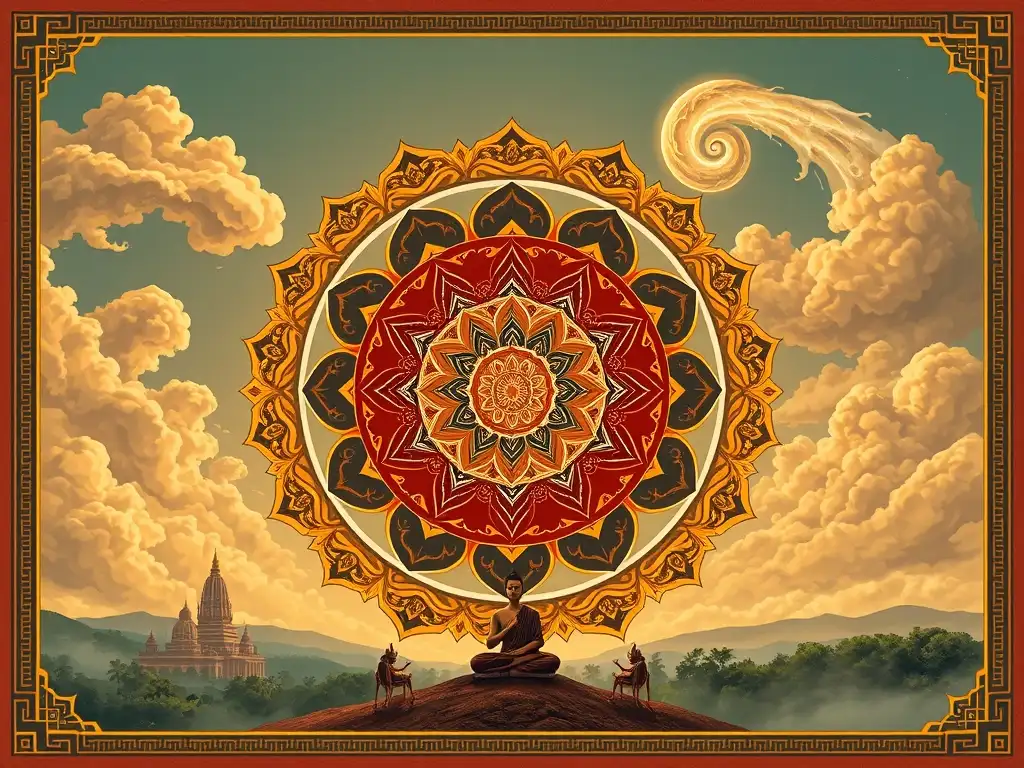
Samsara, the cycle of life, death, and rebirth, is a fundamental concept in Hindu philosophy that is interpreted differently across various schools of thought. These interpretations shape the understanding of existence and the ultimate goal of human life, which is often viewed as liberation (moksha) from this cycle.
- Vedanta - Emphasizes the oneness of the soul (Atman) with the ultimate reality (Brahman) and views Samsara as an illusion (Maya) that distracts individuals from realizing their true nature.
- Samkhya - Distinguishes between the conscious self (Purusha) and the material world (Prakriti), suggesting that Samsara is a consequence of the entanglement of the self with material existence and ignorance.
- Yoga - Focuses on practical methodologies to transcend Samsara, advocating for mental and physical discipline to attain higher states of consciousness and ultimately liberation.
The diversity in interpretations reflects the rich philosophical tapestry of Hinduism, where each school provides unique insights into the nature of existence and the means to transcend the cycle of Samsara.
Vedanta Perspective on Samsara
The Vedanta school, rooted in the Upanishads, offers a profound interpretation of Samsara as an illusory cycle. According to Vedanta, the ultimate reality is Brahman, the unchanging, infinite source of all. The individual soul (Atman) is fundamentally one with Brahman, but ignorance (Avidya) leads to the false perception of individuality and separation.
In this perspective, Samsara is characterized by suffering and the perpetual cycle of rebirth, driven by karma—the accumulated actions and their consequences from past lives. Liberation (moksha) is achieved through knowledge (jnana), self-realization, and the dissolution of ignorance, allowing individuals to transcend the cycle and recognize their inherent unity with Brahman.
The teachings of prominent Vedanta philosophers, such as Adi Shankaracharya, emphasize the importance of discernment (Viveka) between the real and the unreal as a path to liberation from Samsara.
Samkhya Philosophy and Its View on Samsara
Samkhya philosophy presents a dualistic framework that differentiates between the Purusha (the conscious self) and Prakriti (the material world). In this view, Samsara arises from the entanglement of the Purusha with Prakriti, leading to the cycle of birth and rebirth based on ignorance and attachment.
Samkhya posits that the material world is governed by the three gunas (qualities): sattva (purity), rajas (activity), and tamas (inertia). The interplay of these qualities influences human experience and karma, determining the conditions of future births. Liberation is attained through self-knowledge, where one realizes their true nature as Purusha, distinct from the transient aspects of Prakriti.
This philosophical stance underscores the significance of understanding the nature of reality and the self to escape the cyclical nature of existence.
Yoga and the Path to Understanding Samsara
Yoga, as a practical discipline, provides tools for individuals to navigate the complexities of Samsara. The various paths of yoga—Bhakti (devotion), Jnana (knowledge), Karma (action), and Raja (meditation)—offer distinct approaches to understanding and transcending the cycle of rebirth.
- Bhakti Yoga emphasizes devotion to God as a means to surrender the ego and attain liberation.
- Jnana Yoga focuses on the pursuit of knowledge and wisdom to realize the illusory nature of Samsara.
- Karma Yoga teaches selfless action, encouraging individuals to perform their duties without attachment to the results, thereby purifying their karma.
- Raja Yoga employs meditation and ethical practices to cultivate inner awareness and control over the mind, guiding practitioners toward enlightenment.
Through these practices, yoga aims to help individuals understand the nature of Samsara and ultimately attain liberation, fostering a profound connection with the self and the universe.
Cultural Representations of Samsara
Cultural representations of Samsara in ancient India manifest in various artistic and literary forms, reflecting the philosophical depth of this concept. These representations serve not only as expressions of religious beliefs but also as tools for teaching and preserving the understanding of life, death, and rebirth.
Artistic Depictions of Samsara in Ancient India
Artistic representations of Samsara can be observed in various forms, including sculpture, painting, and temple architecture. These artworks often illustrate the cyclical nature of existence through intricate motifs and narratives.
- Sculptures: Temples frequently feature sculptures depicting scenes from the cycle of life and death, representing deities, animals, and mythical figures in dynamic poses that symbolize rebirth and transformation.
- Murals and Paintings: Frescoes in ancient cave temples, such as those in Ajanta and Ellora, vividly portray the themes of Samsara, illustrating the journey of souls through various realms and the consequences of karma.
- Symbols: The lotus flower, which blooms beautifully despite growing in muddy waters, is often used to symbolize the soul's journey through Samsara toward enlightenment.
These artistic expressions not only serve aesthetic purposes but also embody the philosophical teachings of Hinduism, encouraging viewers to contemplate their own existence and the cycle of life.
Samsara in Literature and Oral Traditions
In literature and oral traditions, the concept of Samsara is richly woven into the narratives, epics, and folklore of ancient India.
- Epics: Texts like the Mahabharata and Ramayana explore the themes of duty, righteousness, and the moral dilemmas faced by characters, illustrating how their choices affect their karma and future rebirths.
- Puranas: These texts offer stories of gods and goddesses that exemplify the principles of Samsara, often detailing the cyclical nature of creation, preservation, and destruction.
- Fables and Folktales: Oral traditions frequently convey moral lessons about the consequences of actions, serving as allegories for the cycle of rebirth and the importance of ethical living.
Through these literary forms, the concept of Samsara is transmitted across generations, enriching the cultural landscape of ancient India and providing insights into the human condition.
The Relevance of Samsara in Contemporary Hinduism
Samsara, the cycle of life, death, and rebirth, holds significant relevance in contemporary Hinduism, acting as a cornerstone of belief systems and cultural practices among modern Hindus. This cycle is not merely a philosophical concept; it embodies the understanding of existence and the moral framework guiding individual behavior. In the context of today's world, where rapid changes and globalization often challenge traditional belief systems, the concept of Samsara provides a grounding perspective on life’s impermanence and the continuity of the soul.
Many modern Hindus still embrace the idea of karma, closely linked to Samsara, which posits that every action has consequences that affect future rebirths. This belief encourages ethical living and personal responsibility, as individuals seek to improve their karmic standing in the hope of achieving a more favorable rebirth. Furthermore, the emphasis on spiritual practices aimed at transcending Samsara, such as yoga and meditation, continues to flourish, reflecting a blend of ancient philosophy with contemporary lifestyle choices.
Modern Interpretations of Samsara
In recent times, interpretations of Samsara have evolved, influenced by both traditional texts and contemporary thinkers. Many modern Hindus view Samsara not just as a literal cycle of birth and rebirth but as a metaphor for personal growth and transformation. This perspective emphasizes the importance of self-awareness and spiritual evolution, aligning with the broader themes of mindfulness and well-being prevalent in contemporary society.
Books, workshops, and online courses focusing on Hindu philosophy often explore Samsara in the context of self-improvement and psychological resilience. The idea that life’s challenges can be seen as opportunities for learning and spiritual advancement resonates widely, allowing individuals to navigate their lives with a sense of purpose and direction. By framing Samsara as a journey of the soul, modern interpretations encourage a more holistic understanding of existence that transcends fear of death and fosters a deeper appreciation for life.
The Impact of Samsara on Hindu Practices Today
Samsara profoundly influences various Hindu practices today, shaping rituals, festivals, and daily life. For instance, the celebration of festivals like Diwali, which symbolizes the victory of light over darkness, is often linked to the themes of rebirth and renewal inherent in the concept of Samsara. Many rituals performed during these festivals embody the principles of purification and the hope for a better future, reflecting the cyclical nature of existence.
Additionally, the concept of Samsara informs the approach to death and mourning in Hindu culture. The rituals surrounding death, such as cremation and the subsequent mourning period, emphasize the transition of the soul and the belief in rebirth. This understanding helps the bereaved navigate their grief, reinforcing the notion that death is not an end but a continuation of the soul’s journey.
Conclusion: The Significance of Understanding Samsara in Hindu Philosophy
Understanding Samsara is crucial for grasping the broader philosophical and spiritual dimensions of Hindu thought. It encapsulates the essence of existence, offering insights into the nature of life, the importance of ethical conduct, and the ultimate goal of liberation (moksha). This awareness fosters a deeper connection to one’s heritage and encourages individuals to engage with their spiritual journey more meaningfully.
Reflections on Life, Death, and Rebirth
Through the lens of Samsara, individuals are encouraged to reflect on their lives, considering their actions, relationships, and spiritual aspirations. The cyclical nature of existence prompts a deeper contemplation of the impermanence of life and the interconnectedness of all beings. This reflection can lead to a greater appreciation for the present moment, motivating individuals to live with intention and compassion.
Moreover, the acknowledgment of a cyclical existence can alleviate the fear of death, allowing individuals to embrace it as a natural part of life. This perspective encourages a sense of peace and acceptance, fostering resilience in the face of life’s inevitable challenges.
The Enduring Legacy of Samsara in Indian Thought
Samsara has left an indelible mark on Indian thought, influencing not only Hindu philosophy but also Sikhism, Buddhism, and Jainism. The concept has inspired countless philosophical discourses, artistic expressions, and spiritual practices throughout history. Its legacy is evident in literature, art, and the continued emphasis on ethical living and spiritual development in Indian culture.
As modern society grapples with existential questions, the teachings surrounding Samsara remain relevant, offering timeless wisdom that resonates with contemporary issues. The enduring legacy of Samsara serves as a reminder of the interconnectedness of life, the importance of personal growth, and the ultimate quest for liberation from the cycle of rebirth.
- Introduction to Samsara in Hindu Philosophy
- Historical Context of Samsara
- Key Elements of Samsara
- The Philosophical Underpinnings of Samsara
- Different Interpretations of Samsara in Hindu Schools of Thought
- Cultural Representations of Samsara
- The Relevance of Samsara in Contemporary Hinduism
- Conclusion: The Significance of Understanding Samsara in Hindu Philosophy
Frequently Asked Questions
What is Samsara in Hindu philosophy?
Samsara refers to the cycle of life, death, and rebirth that souls undergo in Hindu belief, influenced by karma from past actions.
How does karma relate to Samsara?
Karma plays a crucial role in determining the circumstances of rebirth within Samsara. Good deeds can lead to a favorable rebirth, while bad deeds can result in suffering.
What is the ultimate goal in relation to Samsara?
The ultimate goal is to achieve moksha, or liberation from Samsara, allowing the soul to reunite with the divine and escape the cycle of rebirth.
How do different Hindu texts address Samsara?
Various Hindu texts, such as the Upanishads and the Bhagavad Gita, explore the concept of Samsara, providing insights into its significance and the path to liberation.
Can understanding Samsara enhance one's life?
Yes, understanding Samsara can promote a deeper awareness of one's actions and their consequences, encouraging a more mindful and purposeful approach to life.
Final Reflection: Embracing the Cycle of Samsara in Our Lives
The concept of Samsara in Hindu philosophy is not just an ancient belief; it resonates profoundly with our contemporary understanding of existence. As we navigate the complexities of life, death, and rebirth, we are reminded that our experiences are interconnected, shaping our spiritual journey. The cyclical nature of Samsara invites us to reflect on the impermanence of life and the lessons we can glean from each phase of our existence. Understanding this cycle empowers us to find meaning in our struggles and joys alike.
Samsara has significantly influenced our cultural and social landscapes, encouraging a deeper appreciation for the interconnectedness of all beings. The teachings surrounding Samsara remind us that our actions have consequences that extend beyond our immediate lives, fostering a sense of responsibility and compassion. Life is a cycle of birth, death, and rebirth, where every action we take reverberates through the universe.
This perspective encourages us to live mindfully, recognizing that each moment is an opportunity for growth and transformation.
As you reflect on the teachings of Samsara, I invite you to consider how you can apply these insights to your own life. What lessons can you draw from your past experiences, and how can they guide your future actions? Embrace the journey of life with an open heart, knowing that every ending is merely a new beginning. Let the wisdom of Samsara inspire you to live fully, love deeply, and contribute positively to the world around you.
Embrace the Journey: Ignite Your Path to Understanding Samsara
Thank you for exploring the profound concepts of Samsara within Hindu philosophy! You've taken a significant step towards enhancing your understanding of life, death, and rebirth. Now, let's transform that knowledge into meaningful action.
Here’s how you can deepen your connection with these transformative ideas:
- Reflect on Your Own Journey: Take a moment to journal about how the ideas of life, death, and rebirth influence your personal experiences and choices.
- Share Your Insights: Engage in discussions with friends or family about what you've learned—initiate conversations that can foster deeper understanding for everyone involved.
- Explore Further: Delve into additional resources, such as books or documentaries on Hindu philosophy, to broaden your knowledge even more.
As you contemplate these themes, consider this: How does the concept of rebirth challenge or affirm your views on life's purpose?