
The Development of Hindu Philosophical Schools Through Historical Context

Welcome to Ancient India History, where we embark on a captivating journey through the vibrant tapestry of India's past! Here, you'll discover the profound history of Hindu philosophical schools, tracing their development through the rich cultural and spiritual landscapes of ancient Indian civilizations. From the innovative thinkers of the Indus Valley to the intellectual heights of the Gupta Empire, each era offers unique insights into the evolution of thought that shaped not only a nation but also the world.
Curious to learn how these philosophical schools emerged and influenced society? Dive into our latest article to uncover the intriguing connections between philosophy and history in ancient India!
- Introduction to Hindu Philosophical Schools History
- The Origins of Hindu Philosophical Schools
- Major Hindu Philosophical Schools
- Historical Context of Hindu Philosophical Development
- Key Figures in Hindu Philosophical History
- Evolution and Adaptation of Hindu Philosophical Schools
- Contemporary Significance of Hindu Philosophical Schools
- Conclusion: The Enduring Legacy of Hindu Philosophical Schools
-
Frequently Asked Questions
- What are the main Hindu philosophical schools?
- How did historical events influence the development of Hindu philosophy?
- What is the significance of the Indus Valley civilization in Hindu philosophy?
- How do the Gupta Empire contributions relate to Hindu philosophy?
- What role do texts like the Upanishads play in Hindu philosophy?
- Final Reflection: The Enduring Legacy of Hindu Philosophical Schools
- Embrace the Wisdom of Hindu Philosophy Today!
Introduction to Hindu Philosophical Schools History
The development of Hindu philosophical schools represents a significant aspect of the intellectual landscape of ancient India. Spanning centuries, these schools emerged from a rich tapestry of cultural, spiritual, and intellectual traditions, each contributing uniquely to the broader discourse of Indian philosophy.
Understanding the history of Hindu philosophical schools is essential not only for grasping the evolution of ideas such as metaphysics, ethics, and epistemology, but also for appreciating the profound impact these philosophies had on the social and religious fabric of ancient Indian society. This article delves into the historical context that shaped these schools, examining how various factors such as textual traditions, cultural exchanges, and socio-political dynamics influenced their development.
Overview of Hindu Philosophy
Hindu philosophy encompasses a vast range of ideas and schools of thought, traditionally categorized into six orthodox (āstika) systems and several heterodox (nāstika) schools. The six orthodox schools include:
- Nyaya: Focused on logic and epistemology.
- Vaisheshika: Concerned with metaphysics and atomism.
- Samkhya: A dualistic framework exploring the relationship between consciousness and matter.
- Yoga: Emphasizing physical and mental practices for spiritual development.
- Mimamsa: Centered on ritualistic and ethical aspects of the Vedas.
- Vedanta: Engaging with the philosophical interpretations of the Upanishads.
Each school offers a distinct perspective on reality, knowledge, and the self, contributing to a holistic understanding of Hindu thought.
Importance of Historical Context in Understanding Hindu Philosophical Schools
The historical context is vital for understanding the evolution of Hindu philosophical schools, as it reveals how external influences and internal developments shaped the discourse. Key factors include:
- Textual Traditions: The Vedas, Upanishads, and later texts such as the Bhagavad Gita play a crucial role in the formulation of philosophical ideas.
- Cultural Exchanges: Interactions with other philosophical traditions, including Buddhism and Jainism, led to significant dialogues and debates that enriched Hindu philosophy.
- Socio-Political Dynamics: The rise and fall of empires, such as the Maurya and Gupta, influenced the patronage of philosophical schools and the dissemination of ideas.
Understanding these contexts not only enhances our comprehension of Hindu philosophical schools but also illustrates their relevance in contemporary discussions on philosophy and spirituality.
The Origins of Hindu Philosophical Schools
Early Texts and Their Influence on Philosophy
The roots of Hindu philosophical schools can be traced back to ancient texts, which laid the foundational ideas that would shape the intellectual discourse in India. These texts include not only the sacred scriptures but also various commentaries and treatises that emerged over centuries. The early philosophical thought was predominantly centered around cosmological, metaphysical, and ethical inquiries, heavily influenced by the socio-religious context of the time.
- Vedic Literature: The earliest texts that influenced Hindu philosophy are the Vedas, composed around 1500 to 500 BCE. These texts, consisting of hymns, rituals, and chants, provided the initial framework for spiritual practices and philosophical thought.
- Sutras and Shastras: Following the Vedas, the Brahmanas and Aranyakas served as commentaries that delved deeper into the rituals, while the Sutras, such as the Brahma Sutra, began to systematize philosophical concepts, paving the way for later schools.
- The Role of Gurus: The transmission of knowledge through oral tradition by gurus or sages was pivotal. The discussions and debates among these thinkers helped in refining philosophical ideas, leading to the emergence of distinct schools of thought.
The interplay between these texts and the evolving cultural landscape facilitated the rise of various philosophical schools, each interpreting the original concepts in unique ways, thus enriching the tradition of Hindu philosophy.
The Vedas: Foundations of Hindu Thought
The Vedas represent the oldest layer of sacred literature in Hinduism and serve as the bedrock of Hindu philosophical thought. Comprising four main texts—Rigveda, Samaveda, Yajurveda, and Atharvaveda—the Vedas encompass a wide range of knowledge, from hymns to rituals and philosophical reflections.
- Rigveda: The oldest of the Vedas, it contains hymns dedicated to various deities, reflecting early metaphysical concepts and the nature of existence. The philosophical implications of creation (Sṛṣṭi) and the nature of reality (Brahman) can be found within its verses.
- Yajurveda: This text focuses on the practical aspects of rituals, outlining the procedures of sacrifices. It also introduces philosophical themes concerning the relationship between the material and spiritual worlds.
- Atharvaveda: While primarily concerned with magic and rituals, it also addresses philosophical issues such as the nature of the self (Atman) and the universe, indicating a shift towards more introspective thought.
The Vedas not only inspired religious practices but also encouraged philosophical inquiry that would later give rise to various schools, each interpreting the Vedic knowledge through their unique lenses.
Upanishads and the Shift to Philosophical Inquiry
The Upanishads, composed later than the Vedas (around 800 to 200 BCE), mark a significant evolution in Hindu philosophical thought, representing a transition from ritualistic practices to a focus on metaphysics and spirituality. These texts emphasize direct experience and introspection over external rituals.
- Philosophical Themes: The Upanishads explore profound questions regarding the nature of reality (Brahman) and the individual soul (Atman), articulating the concept of their unity (Tat Tvam Asi - "That Thou Art"). This synthesis of the macrocosm and microcosm laid the groundwork for various philosophical schools.
- Influence on Schools: The ideas presented in the Upanishads directly influenced later philosophical systems like Vedanta, which centers on the interpretation of these texts. The emphasis on meditation and self-realization became core components of later Hindu philosophies.
- Diversity of Thought: Different Upanishads present varying perspectives, leading to the emergence of multiple interpretations and schools, such as Advaita (non-dualism) and Dvaita (dualism). This diversity illustrates the rich tapestry of thought that characterizes Hindu philosophy.
The Upanishads represent a critical juncture in the development of Hindu philosophical schools, marking a shift towards more abstract and analytical thinking that would profoundly influence subsequent philosophical discourse in ancient India.
Major Hindu Philosophical Schools
The development of Hindu philosophical schools is a rich tapestry woven through centuries of thought, debate, and cultural evolution. Within the vast landscape of Hindu philosophy, six principal schools, known collectively as the Darshanas, emerged as foundational systems of thought that directly engage with the nature of reality, ethics, epistemology, and the ultimate purpose of life. Each school presents unique perspectives and methodologies, contributing to the broader understanding of the Hindu philosophical schools history.
Overview of the Six Darshanas
The six orthodox (āstika) schools of Hindu philosophy are:
- Nyaya: Focuses on logic and epistemology.
- Vaisheshika: Emphasizes atomism and the nature of reality.
- Samkhya: Proposes a dualistic framework of existence.
- Yoga: Advocates for practices of meditation and discipline.
- Mimamsa: Concentrates on ritual and interpretation of the Vedas.
- Vedanta: Explores the nature of ultimate reality and liberation.
These schools not only offer diverse philosophical insights but also reflect the intellectual currents of their times, marking significant milestones in the evolution of Hindu thought.
Nyaya: The Logic School
The Nyaya school, founded by Gautama, is primarily concerned with the principles of logic and epistemology. It emphasizes the importance of valid reasoning and debate in the quest for knowledge.
- Key Concepts:
- Pramanas (means of knowledge): Nyaya identifies four primary sources: perception, inference, comparison, and testimony.
- Logic and Debate: The methodology of Nyaya involves rigorous analysis and argumentation, aiming to arrive at the truth through dialectical exchanges.
Nyaya has significantly influenced not only Hindu philosophy but also the development of logic in Indian thought, providing foundational tools for philosophical inquiry.
Vaisheshika: The Atomistic School
The Vaisheshika school, attributed to Kanada, offers a unique perspective on the nature of reality, proposing that everything is composed of indivisible particles (anu).
- Key Concepts:
- Atomism: The belief that all material objects are made up of atoms, which combine in various ways to form the material world.
- Categories of Existence: Vaisheshika identifies several categories (padarthas) such as substance, quality, action, and generality, establishing a systematic approach to understanding the nature of the universe.
This school laid the groundwork for later scientific inquiries in India, emphasizing a methodical approach to studying the natural world.
Samkhya: The Dualistic Philosophy
Samkhya, traditionally attributed to Kapila, is a dualistic philosophy that posits two fundamental realities: Purusha (consciousness) and Prakriti (matter).
- Key Concepts:
- Dualism: The distinction between the eternal, unchanging consciousness and the ever-changing material world.
- Evolution of the Universe: Samkhya outlines a systematic account of how the universe evolves from the interaction of Purusha and Prakriti, leading to the manifestation of diverse forms of life.
This philosophical system has had a profound impact on Hindu thought, influencing various other schools, notably Yoga and Vedanta.
Yoga: The Path of Meditation
The Yoga school, largely represented by the Yoga Sutras of Patanjali, emphasizes the practice of meditation and self-discipline as a means to achieve liberation (moksha).
- Key Concepts:
- Eight Limbs of Yoga (Ashtanga): A comprehensive framework including ethical precepts (Yama and Niyama), physical postures (Asana), breath control (Pranayama), sensory withdrawal (Pratyahara), concentration (Dharana), meditation (Dhyana), and ultimate absorption (Samadhi).
- Goal of Liberation: Yoga teaches that through disciplined practice, one can transcend the material world and unite with the divine.
Yoga remains a significant aspect of Hindu spirituality and has gained global recognition for its health benefits and spiritual depth.
Mimamsa: The Ritual Exegesis School
Mimamsa, often associated with Jaimini, focuses on the exegesis of the Vedas, particularly the ritual aspects of Vedic texts.
- Key Concepts:
- Ritual Performance: The central tenet of Mimamsa is that correct performance of rituals leads to positive outcomes, both in this life and the next.
- Interpretation of Texts: The school emphasizes the importance of understanding Vedic texts to perform rituals accurately, fostering a deep engagement with the sacred literature.
Mimamsa has greatly influenced Hindu rituals and has shaped the interpretation of sacred texts throughout history.
Vedanta: The End of the Vedas
Vedanta, which translates to "the end of the Vedas," is a philosophical system that seeks to understand the ultimate nature of reality as described in the Upanishads.
- Key Concepts:
- Brahman and Atman: Vedanta posits that the ultimate reality (Brahman) is identical to the individual soul (Atman), advocating for a non-dualistic perspective.
- Paths to Liberation: Various schools within Vedanta, such as Advaita (non-dualism) and Dvaita (dualism), propose different methods for realizing this unity, including knowledge (jnana), devotion (bhakti), and meditation (dhyana).
Vedanta remains one of the most influential schools in Hindu philosophy, shaping the spiritual landscape of India and inspiring countless seekers of truth.
The Hindu philosophical schools history is marked by profound insights and diverse approaches to understanding existence, ethics, and the divine. Each school contributes uniquely to the ongoing dialogue within Hindu philosophy, reflecting the complexities and richness of ancient Indian thought.
Historical Context of Hindu Philosophical Development
The Socio-Political Landscape of Ancient India
The historical development of Hindu philosophical schools cannot be understood in isolation from the socio-political context of ancient India. From the early settlements of the Indus Valley civilization to the rise of the Maurya and Gupta empires, various political entities played a crucial role in shaping philosophical thought.
- Indus Valley Civilization (circa 2500–1900 BCE): The earliest urban centers in ancient India laid the groundwork for religious and philosophical thought. While concrete evidence of philosophical schools is scarce, archaeological findings suggest a complex society with spiritual beliefs that would later influence Hinduism.
- Vedic Period (circa 1500–500 BCE): The arrival of the Indo-Aryans marked a significant shift. The Vedas, composed during this period, not only served as religious texts but also introduced various philosophical concepts, such as Dharma (duty) and Karma (action). This era witnessed the emergence of early philosophical inquiries into the nature of existence and the self.
- Mahajanapadas (circa 600–300 BCE): With the establishment of the Mahajanapadas, or great kingdoms, there was increased interaction and debate among various schools of thought. The rise of influential thinkers like Gautama Buddha and Mahavira further diversified the philosophical landscape, challenging orthodox Vedic traditions and giving rise to new schools.
- Maurya Empire (circa 322–185 BCE): The Mauryan period saw the consolidation of power under rulers like Ashoka, who promoted Buddhism and non-violence. This political stability allowed for the flourishing of intellectual discourse, including the development of various Hindu philosophical schools, such as Nyaya and Vaisheshika.
- Gupta Empire (circa 320–550 CE): Often referred to as the Golden Age of India, this period was marked by significant advancements in science, literature, and philosophy. The Gupta rulers were patrons of learning, which fostered the growth of Hindu philosophical schools, culminating in the synthesis of various ideas, including those from Buddhism and Jainism.
The interplay between these socio-political dynamics facilitated the evolution of Hindu philosophical schools, leading to a rich tapestry of thought that explored fundamental questions about existence, ethics, and the nature of reality.
Influence of Regional Variations on Philosophical Schools
The evolution of Hindu philosophical schools was also significantly influenced by regional variations across ancient India. Each region contributed unique perspectives and interpretations, enriching the overall philosophical discourse.
- North India vs. South India: The philosophical traditions in North India, particularly around the Ganges, were heavily influenced by Vedic texts and later by the teachings of figures like Adi Shankaracharya. In contrast, South India saw the emergence of distinct schools such as the Dvaita and Advaita Vedanta, which emphasized different interpretations of the Upanishads.
- Cultural Interactions: The interactions between various ethnic and cultural groups led to the incorporation of diverse philosophical ideas. For example, the contact with Hellenistic thought during the Mauryan period encouraged syncretism, resulting in new interpretations of established schools.
- Local Beliefs and Practices: Regional deities, rituals, and folk traditions also played a role in shaping philosophical thought. The integration of local beliefs with Vedic principles led to the development of schools like the Shaiva and Shakta traditions, which emphasized different aspects of divinity and cosmology.
- Language and Literature: The use of regional languages and dialects in philosophical texts allowed for a wider dissemination of ideas. Texts like the Tamil Tirukkural and various Puranas contributed to the philosophical dialogue by incorporating local wisdom and ethics.
These regional variations highlight the plurality of thought within Hindu philosophy, illustrating how distinct cultural contexts influenced the development of philosophical schools, leading to a rich diversity in interpretations and teachings.
Interactions with Other Philosophical Traditions
The history of Hindu philosophical schools is marked by dynamic interactions with other philosophical traditions, both within India and beyond its borders. These exchanges were instrumental in shaping the evolution and diversification of Hindu thought.
- Buddhism and Jainism: The emergence of Buddhism and Jainism during the 6th century BCE introduced alternative perspectives on concepts like Dharma and Moksha (liberation). These schools challenged the authority of the Vedas and provided a critical framework for Hindu philosophers to refine their own ideas. For instance, the Nyaya school developed rigorous logical methods to counter Buddhist arguments.
- Greek Philosophy: The arrival of Greek thinkers in India following Alexander the Great's conquests facilitated the exchange of ideas. Concepts from Greek philosophy, such as ethics and metaphysics, influenced Indian philosophers, leading to a cross-pollination of thoughts that enriched Hindu philosophical discourse.
- Islamic Philosophy: The advent of Islamic rule in India introduced new philosophical perspectives, particularly during the medieval period. Scholars like Al-Biruni and Ibn Rushd engaged with Hindu philosophical texts, prompting Indian thinkers to reassess and articulate their positions in relation to Islamic thought.
- Modern Interpretations: The colonial period brought Western philosophical ideas into contact with Hindu philosophy. Thinkers like Swami Vivekananda and Mahatma Gandhi integrated Western concepts of individualism and social justice with traditional Hindu philosophy, leading to a re-evaluation of ancient ideas in a modern context.
These interactions underscore the adaptive nature of Hindu philosophical schools, demonstrating their ability to engage with and incorporate diverse influences while maintaining their foundational principles. This ongoing dialogue has resulted in a rich and complex philosophical tradition that continues to evolve.
Key Figures in Hindu Philosophical History
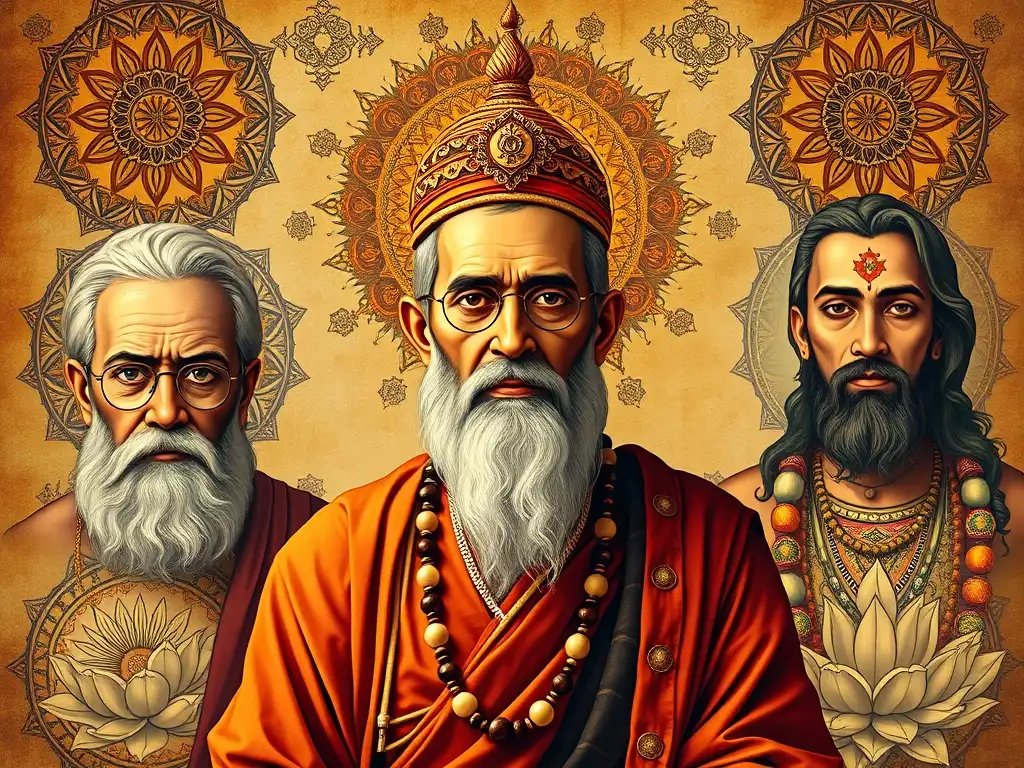
Contributions of Adi Shankaracharya
Adi Shankaracharya, an 8th-century philosopher and theologian, is a pivotal figure in the history of Hindu philosophical schools, particularly in the Advaita Vedanta tradition. His contributions span both doctrinal and practical realms, solidifying his influence on subsequent generations of thinkers.
- Advaita Vedanta: Shankaracharya is renowned for promoting Advaita (non-dualism), which posits that the ultimate reality, Brahman, is singular and that the individual soul (Atman) is identical to Brahman. This philosophical stance challenged the dualistic interpretations prevalent at the time.
- Commentaries on Scriptures: He composed extensive commentaries on key texts, such as the Upanishads, Bhagavad Gita, and Brahma Sutras. His precise interpretations emphasized the importance of direct experience of the divine and encouraged self-inquiry (Atma Vichara).
- Establishment of Monastic Orders: Shankaracharya established four major mathas (monastic institutions) across India, promoting the study and practice of Vedanta. These institutions played a crucial role in preserving and disseminating Hindu philosophy, particularly in regions that later became centers of learning.
- Philosophical Debates: Engaging in philosophical debates with proponents of various schools, including Buddhism and Mimamsa, Shankaracharya effectively articulated the principles of Advaita and defended it against critiques. His dialectical skill not only clarified his own positions but also encouraged a more rigorous philosophical discourse in ancient India.
Role of Ramanuja in Vedanta
Ramanuja (1017-1137 CE) was another towering figure in Hindu philosophical history, celebrated for his advocacy of Vishishtadvaita (qualified non-dualism). His contributions significantly shaped the landscape of Vedanta and enriched the understanding of the divine.
- Vishishtadvaita Philosophy: Ramanuja's core teaching posited that while Brahman is the ultimate reality, it possesses qualities and attributes that manifest in the world. This nuanced view allowed for the coexistence of individuality and unity, emphasizing a personal relationship with the divine.
- Commentary on Brahma Sutras: His commentary on the Brahma Sutras, the "Sri Bhashya," is considered one of the most important texts in Vedanta. In it, he refuted Shankaracharya's non-dual interpretation and provided a robust defense of his qualified non-dualism.
- Emphasis on Bhakti: Ramanuja highlighted the importance of devotion (bhakti) and grace in attaining liberation (moksha). This perspective shifted the focus from mere intellectual understanding to a more heartfelt approach to spirituality, paving the way for the Bhakti movement.
- Establishment of Temples: He played a crucial role in establishing temples and promoting rituals that celebrated the worship of personal deities, thus integrating philosophy with practice. His teachings inspired a multitude of followers, leading to the flourishing of devotional sects in South India.
Impact of Madhva and Dvaita Philosophy
Madhvacharya (1238-1317 CE) was the founder of the Dvaita (dualism) school of Vedanta, which introduced a distinctive approach to understanding the relationship between the individual soul and the supreme being, Krishna.
- Dvaita Philosophy: Madhva's core belief is that there is an eternal distinction between the individual soul (jiva) and the supreme being (Vishnu/Krishna). This dualistic perspective emphasizes that while the ultimate reality is personal and transcendent, individual souls retain their distinct identities.
- Critique of Monism: Madhva strongly opposed Advaita Vedanta, arguing that its non-dualistic view undermined the personal nature of God. His critiques were foundational in establishing Dvaita as a legitimate philosophical alternative within Hindu thought.
- Scriptural Authority: Madhva’s interpretations of key texts, including the Upanishads and the Bhagavad Gita, reinforced his dualistic stance. His works, such as the "Brahma Sutra Bhashya," provided a comprehensive framework for understanding Dvaita philosophy.
- Philosophical Schools and Influence: Madhva’s teachings inspired a vast array of followers and established a vibrant tradition of dualistic worship and philosophy. His influence is evident in various devotional movements that emerged in India, particularly in Karnataka and surrounding regions.
The contributions of key figures like Adi Shankaracharya, Ramanuja, and Madhvacharya illustrate the rich tapestry of Hindu philosophical schools throughout history. Each thinker brought unique perspectives that have shaped the understanding of spiritual and philosophical inquiry in ancient India.
Evolution and Adaptation of Hindu Philosophical Schools
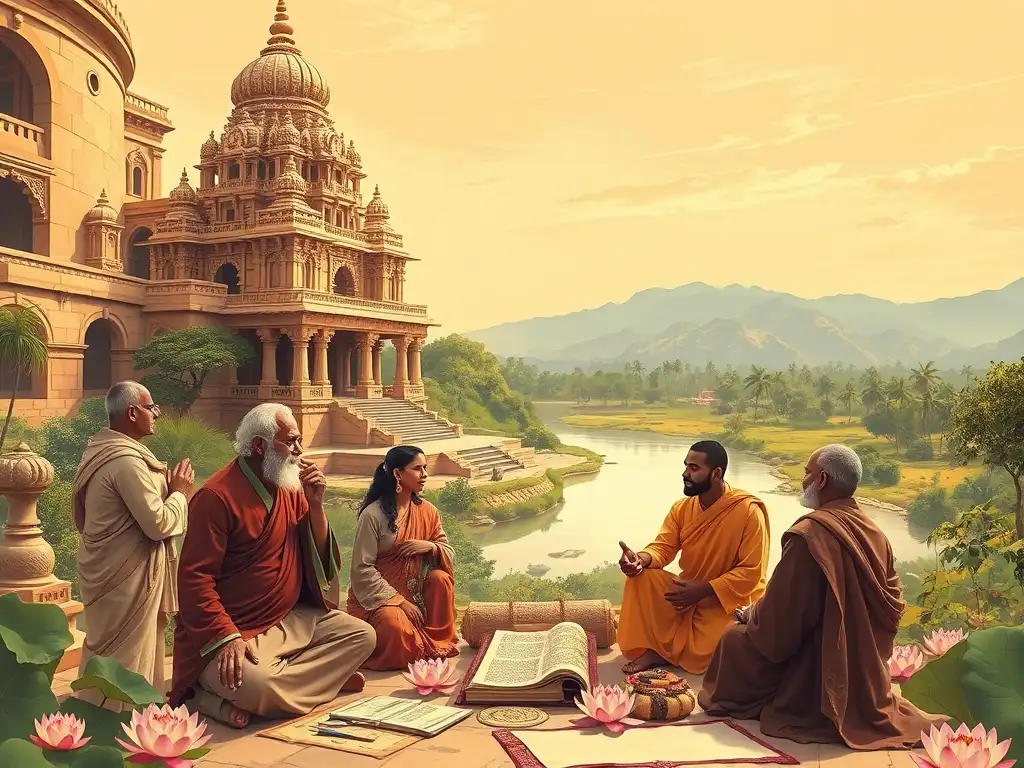
Response to Buddhism and Jainism
The emergence of Buddhism and Jainism in the 6th century BCE marked a pivotal moment in the history of Hindu philosophical schools. Both these religions presented critiques of Vedic traditions, emphasizing personal spiritual experience over ritualistic practices. This led to significant transformations within Hinduism as it sought to respond to these challenges.
- Addressing Key Doctrines:
- Atman and Anatman: While Hinduism posits the existence of an eternal self (Atman), Buddhism introduces the doctrine of Anatman, denying a permanent self. This philosophical divergence prompted Hindu thinkers to reevaluate and articulate the nature of the self more rigorously.
- Karma and Rebirth: Both religions share a belief in karma and the cycle of rebirth (samsara), but interpret them divergently. Hindu philosophers began to emphasize the moral implications of karma more profoundly, framing it within the context of dharma (righteous duty).
Hindu philosophers responded by developing new schools of thought, such as the Advaita Vedanta, which sought to reconcile the existence of an individual soul with the universal consciousness of Brahman, emphasizing that the ultimate goal is liberation (moksha) from the cycle of rebirth.
Integration of Local Beliefs and Practices
As Hindu philosophical schools evolved, they also incorporated local beliefs and practices, which enriched their framework and broadened their appeal across diverse cultures in ancient India.
- Regional Influences:
- Various regions of India had unique spiritual practices and deities, which were absorbed into Hinduism. For instance, the worship of local nature deities and fertility gods was integrated into the broader Hindu pantheon, allowing for a more inclusive religious experience.
- The Bhakti Movement, which emerged in medieval India, exemplified this integration. It emphasized personal devotion to a god and often included local customs and languages, making spirituality accessible to the masses.
This adaptability contributed to the formation of a more pluralistic and syncretic Hindu philosophy, leading to the development of various sects, such as Shaivism and Shaktism, which brought together diverse elements from different local traditions while maintaining core Hindu philosophical principles.
The Influence of Islamic Philosophies
The arrival of Islamic thought in India, particularly during the medieval period, further influenced the evolution of Hindu philosophical schools. The interaction between Hindu and Islamic philosophies led to a rich exchange of ideas and concepts.
- Philosophical Dialogues:
- Thinkers such as Madhusudana Saraswati engaged with Islamic philosophers, exploring themes of monotheism and the nature of God. This resulted in a deeper understanding of the divine across both traditions.
- The mystical traditions of Sufism also found resonance within Hindu philosophy, particularly in the Bhakti movement, emphasizing direct personal experience of the divine.
- Syncretism and Coexistence:
- The blending of Hindu and Islamic thought is evident in the works of philosophers like Kabir, who expressed ideas that transcended religious boundaries, advocating for a universal spirituality that resonated with followers of both faiths.
- The architectural and artistic expressions of this syncretism can be observed in the intricate designs of temples and mosques, highlighting a shared cultural heritage.
The historical context of Hindu philosophical schools reveals a dynamic interplay with other religious traditions, showcasing their evolution, adaptability, and the profound impact of external influences, which collectively shaped the rich tapestry of Hindu philosophy as we understand it today.
Contemporary Significance of Hindu Philosophical Schools

Hindu philosophical schools have played a pivotal role in shaping not only ancient Indian thought but also contemporary cultural and intellectual landscapes. The relevance of these ancient philosophies transcends mere historical interest; they continue to influence modern society in profound ways.
Relevance of Ancient Philosophies in Modern India
In modern India, the teachings of various Hindu philosophical schools, such as Vedanta, Samkhya, and Yoga, serve as guiding principles for many individuals and communities. These philosophies emphasize concepts such as dharma (duty), karma (action and its consequences), and moksha (liberation), which resonate deeply in the contemporary moral and ethical framework.
- Cultural Identity: Hindu philosophical teachings contribute significantly to the cultural identity of India. Festivals, rituals, and practices rooted in these philosophies foster a sense of belonging and continuity among diverse communities.
- Mindfulness and Well-being: The rise of yoga and meditation, which are deeply rooted in Hindu philosophy, has gained global traction as tools for mental well-being. Modern wellness culture often integrates these ancient practices, highlighting their relevance in combating contemporary stressors.
- Socio-political Thought: Philosophical tenets derived from Hindu texts inform socio-political ideologies in India. Concepts of justice, governance, and social responsibility found in texts like the Bhagavad Gita inspire modern political leaders and movements.
- Interfaith Dialogue: The inclusive nature of Hindu philosophical schools encourages dialogue among different faiths. This characteristic is increasingly important in a globalized world where inter-religious understanding is vital for peace and coexistence.
Influence on Global Philosophical Discourse
The impact of Hindu philosophical schools extends beyond India, influencing global philosophical discourse in various ways:
- Comparative Philosophy: Scholars around the world engage in comparative studies between Hindu philosophies and Western philosophical traditions. This exploration enriches global philosophical frameworks, fostering a broader understanding of human existence and ethics.
- New Thought Movements: Hindu philosophical concepts have inspired numerous New Thought movements, particularly in the West, where ideas surrounding consciousness, the nature of reality, and the interconnectedness of all beings are gaining popularity.
- Academic Inquiry: Universities worldwide are increasingly incorporating Hindu philosophies into their curricula. This academic interest leads to a deeper appreciation of the complexities and nuances of these ancient systems of thought.
- Cultural Exchange: The globalization of culture has facilitated the exchange of ideas, where Hindu philosophy is integrated into various fields such as psychology, art, and literature. This cross-pollination results in innovative expressions of ancient wisdom.
The contemporary significance of Hindu philosophical schools is marked by their enduring influence on modern society and global thought. Their teachings continue to inspire individuals and shape collective identities, making them a vital part of both historical and current discourse.
Conclusion: The Enduring Legacy of Hindu Philosophical Schools
The development of Hindu philosophical schools has left an indelible mark on the intellectual and spiritual landscape of India and beyond. These schools, each with their unique interpretations and teachings, have evolved through centuries, influenced by various historical, cultural, and social contexts. From the early Vedic texts to the later commentaries and dialogues, the evolution of these schools reflects the dynamic nature of Hindu thought and its responses to existential questions.
Summary of Historical Influences
The history of Hindu philosophical schools can be traced back to the Vedic period, where the foundational texts laid the groundwork for various schools of thought. The Upanishads, emerging around 800-400 BCE, introduced profound metaphysical concepts that led to the emergence of several philosophical systems.
- Vedic Influence: The Vedas established the initial understanding of dharma (duty/righteousness) and moksha (liberation), which became central themes in subsequent philosophical inquiries.
- Buddhism and Jainism: The rise of Buddhism and Jainism during the 6th century BCE prompted Hindu thinkers to re-evaluate and refine their philosophical positions, leading to the development of schools such as Vedanta and Samkhya.
- The Gupta Period: This era saw a flourishing of philosophical discourse, with key figures like Adi Shankaracharya synthesizing various schools into a cohesive Vedantic framework, further influencing Hindu thought and practice.
These historical influences shaped the diverse schools within Hindu philosophy, such as Nyaya, Vaisheshika, and Mimamsa, each contributing to the richness of the broader tradition. The interplay between these schools and external influences ensured a vibrant discourse that continues to resonate today.
Future Directions in the Study of Hindu Philosophy
As scholars and practitioners delve deeper into the study of Hindu philosophical schools, several future directions are emerging that promise to enrich our understanding of this vast and intricate tradition:
- Interdisciplinary Approaches: Combining insights from history, anthropology, and comparative philosophy can yield a more nuanced understanding of the evolution of Hindu thought.
- Global Context: With the increasing interest in Eastern philosophies worldwide, examining the global implications and adaptations of Hindu philosophical schools can provide new perspectives on their relevance in contemporary discussions.
- Technology and Access: The digital age offers unprecedented access to ancient texts and modern interpretations, facilitating a broader engagement with Hindu philosophy across diverse audiences.
The enduring legacy of Hindu philosophical schools continues to inspire inquiry and dialogue, reflecting the adaptability and depth of Hindu thought. As we explore the historical context and future directions, it becomes clear that the study of Hindu philosophical schools history is not just an examination of the past, but a vibrant and ongoing conversation that engages with fundamental questions of existence, ethics, and the nature of reality.
Frequently Asked Questions
What are the main Hindu philosophical schools?
The primary Hindu philosophical schools include Vedanta, Sankhya, Yoga, Nyaya, and Mimamsa, each offering unique perspectives on metaphysics, epistemology, and ethics.
How did historical events influence the development of Hindu philosophy?
Historical events such as the rise of empires, cultural exchanges, and foreign invasions significantly shaped the development of Hindu philosophy, leading to diverse interpretations and practices.
What is the significance of the Indus Valley civilization in Hindu philosophy?
The Indus Valley civilization laid the groundwork for early spiritual practices and cultural beliefs that would later influence the development of Hindu philosophical schools.
How do the Gupta Empire contributions relate to Hindu philosophy?
During the Gupta Empire, there was a revival of Hindu thought, with significant advancements in philosophy, literature, and arts, which helped to codify and expand various philosophical schools.
What role do texts like the Upanishads play in Hindu philosophy?
The Upanishads are crucial to Hindu philosophy, providing foundational concepts and theories that shaped ethical thought, spirituality, and the nature of reality in various philosophical schools.
Final Reflection: The Enduring Legacy of Hindu Philosophical Schools
The exploration of Hindu philosophical schools through historical context reveals their profound relevance in today's world. As we navigate an era marked by rapid change and cultural exchange, the wisdom embedded in these ancient teachings offers invaluable insights into the nature of existence, ethics, and the pursuit of knowledge. The enduring legacy of these schools is not merely a relic of the past; it is a living tradition that continues to shape contemporary thought and spirituality.
Hindu philosophical schools have significantly influenced not only Indian culture but also the global philosophical landscape. Their teachings encourage us to question our assumptions and engage in deeper self-inquiry. As we witness the resurgence of interest in mindfulness and holistic living, the principles derived from these schools resonate more than ever. Philosophy is the highest music,
said Plato, reminding us that the harmony of thought can lead to a more profound understanding of life itself. This ongoing dialogue between ancient wisdom and modern challenges invites us to reflect on our own beliefs and values.
As we conclude this exploration, I invite you to reflect on how the teachings of Hindu philosophical schools can enrich your own life. Consider how these ancient insights can guide your journey toward self-discovery and ethical living. Embrace the opportunity to learn from this rich heritage, allowing it to inspire your thoughts and actions in a world that often feels fragmented. By integrating these timeless philosophies into our daily lives, we can foster a deeper connection with ourselves and the universe around us.
Embrace the Wisdom of Hindu Philosophy Today!
Thank you for diving into the fascinating world of Hindu philosophical schools with us! We hope you’ve gained valuable insights into their historical context and evolution. Now, it’s time to take what you’ve learned and apply it to your life and discussions.
Here are a few steps you can take to deepen your understanding and share this wisdom:
- Engage in a discussion group on Hindu philosophy—whether online or in person—where you can explore different interpretations and their relevance today.
- Share your favorite insights from this article with friends and family on social media, inviting them to join the conversation about the impact of philosophy on our lives.
- Reflect on a philosophical school that resonates with you and consider implementing its principles in your daily routine—this could lead to profound personal growth!
What aspect of Hindu philosophy are you most eager to explore further, and why do you think it matters in today’s world?