
The Evolution of Hindu Philosophy: From Vedas to Upanishads

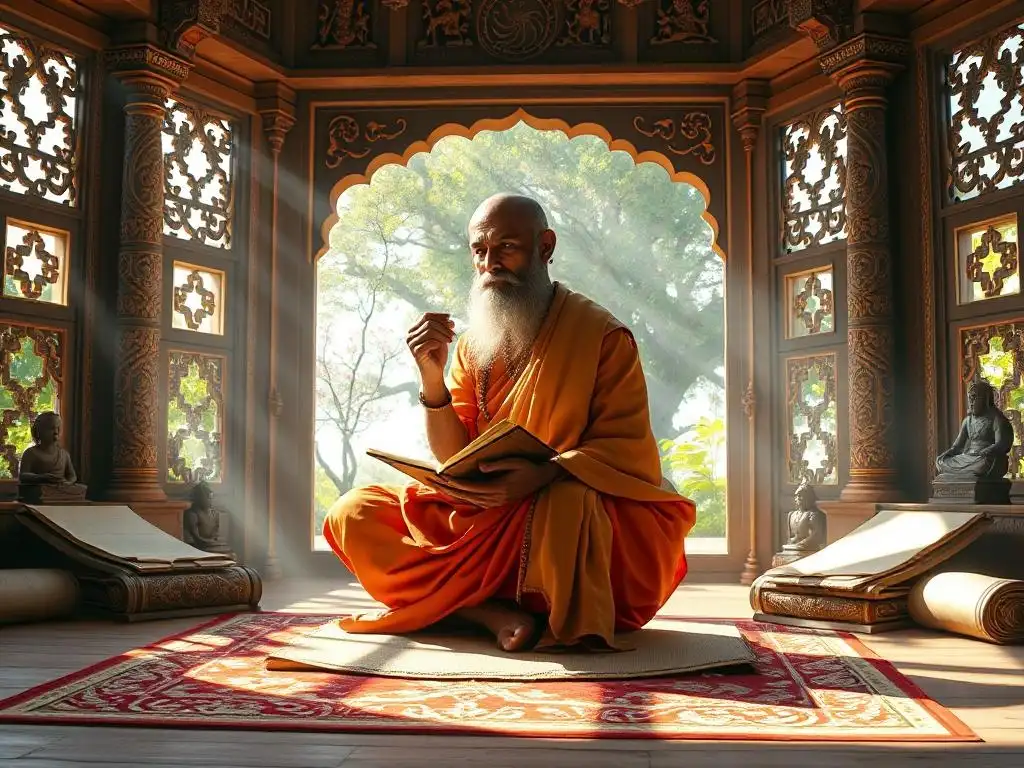
Welcome to Ancient India History, where we embark on a fascinating journey through the vibrant tapestry of ancient Indian civilizations. Delve into the Evolution of Hindu Philosophy, a profound exploration that traces the transformative ideas from the Vedas to the Upanishads. As we uncover the philosophical underpinnings that shaped not only a culture but also the spiritual essence of millions, you'll find yourself captivated by the depth and complexity of these ancient texts. Prepare to unravel the mysteries of thought and belief that have influenced generations—your adventure into the heart of ancient Indian religions starts here!

Introduction to the Evolution of Hindu Philosophy
The Evolution of Hindu Philosophy is a profound journey that traverses centuries, reflecting the profound thoughts, beliefs, and practices of ancient Indian civilization. From the early Vedic texts, which laid the groundwork for spiritual and philosophical inquiry, to the introspective and metaphysical explorations found in the Upanishads, this evolution embodies a rich tapestry of ideas that have shaped Hindu thought and influenced countless generations.
The transition from the Vedas to the Upanishads marks a significant shift in focus—from external rituals and societal norms to internal contemplation and the nature of existence. Understanding this evolution not only illuminates the historical context of Hinduism but also provides insights into the philosophical underpinnings that continue to resonate in contemporary discourse.
Understanding Hindu Philosophy in Ancient India
Hindu philosophy is not merely a collection of beliefs; it is a comprehensive framework that seeks to address fundamental questions about life, existence, and the universe. This framework evolved through various stages, with the Vedas serving as the initial source of knowledge. Ancient Indian thinkers engaged in rigorous discourse, pondering concepts such as dharma (duty), karma (action), and moksha (liberation). These discussions laid the groundwork for a rich tradition of inquiry that would ultimately lead to the development of diverse philosophical schools.
- Key Schools of Thought:
- Vedanta: Focuses on the end of the Vedas and the nature of reality.
- Sankhya: Emphasizes knowledge and the distinction between consciousness and matter.
- Yoga: Centers on practice and meditation for spiritual growth.
The evolution of these schools illustrates the dynamic nature of Hindu philosophy, adapting and responding to cultural and social changes throughout history.
Importance of Vedas and Upanishads in Hindu Thought
The Vedas and Upanishads are central to understanding Hindu philosophy, each serving distinct yet complementary roles. The Vedas, composed around 1500-500 BCE, primarily focus on rituals, hymns, and societal laws, while the Upanishads, emerging around 800-400 BCE, delve into metaphysical concepts and the nature of reality. Together, they form a continuum that encapsulates the spiritual journey of ancient India.
The Vedas: The Foundation of Hindu Philosophy
Overview of the Vedic Texts
The Vedas, consisting of four primary texts— Rigveda, Samaveda, Yajurveda, and Atharvaveda—are considered the oldest sacred scriptures of Hinduism. They encompass a vast array of knowledge, including hymns, chants, rituals, and philosophical discourses. Each Veda serves a unique purpose, contributing to the comprehensive understanding of the universe and humanity's place within it.
| Veda | Content Type | Purpose |
|---|---|---|
| Rigveda | Hymns and prayers | Worship of deities and cosmic principles |
| Samaveda | Melodic chants | Musical recitation for rituals |
| Yajurveda | Ritual instructions | Guidance on ceremonial practices |
| Atharvaveda | Spells and incantations | Practical knowledge and healing |
Key Concepts and Themes in the Vedas
The Vedic texts introduce several key concepts that are foundational to Hindu philosophy:
- Brahman: The ultimate reality, representing the cosmic spirit that pervades all existence.
- Atman: The individual self or soul, which is seen as a fragment of Brahman.
- Rituals and Sacrifice: Emphasizing the importance of rituals to maintain cosmic order and achieve personal and societal goals.
These themes reflect the Vedas' dual focus on both the external and internal aspects of spirituality, guiding adherents toward a deeper understanding of their existence.
Influence of Vedic Philosophy on Later Texts
The philosophical and ritualistic foundations established in the Vedas significantly influenced later texts, including the Upanishads. This influence is evident in several ways:
- Philosophical Concepts: The notion of Brahman and Atman found in the Upanishads builds upon Vedic ideas.
- Rituals: While the Upanishads emphasize meditation and introspection, the foundational rituals of the Vedas remain integral to Hindu practice.
- Cultural Continuity: The Vedas set the stage for ongoing philosophical inquiry, fostering a continuous dialogue that has shaped Hindu thought through the ages.
The evolution of Hindu philosophy from the Vedas to the Upanishads represents a significant transition in understanding the cosmos and the self, highlighting the depth and complexity of ancient Indian thought.
Transition to Upanishadic Thought
The transition from Vedic to Upanishadic thought marks a significant evolution in Hindu philosophy, reflecting a shift from ritualistic practices to introspective inquiry and metaphysical speculation. This transformation occurred around the 8th century BCE, during a time when the socio-political landscape of ancient India was undergoing profound changes. The Upanishads emerged as a response to the limitations perceived in Vedic rituals, emphasizing the importance of inner knowledge and direct experience of the ultimate reality, Brahman.
The Upanishads introduced a more individualistic approach to spirituality, encouraging seekers to explore the nature of the self (Atman) and its relationship with Brahman. This shift laid the groundwork for later philosophical schools, such as Vedanta, which would further elaborate on the concepts introduced in the Upanishads. The transition signifies not just a philosophical evolution but also a broader cultural movement towards introspection and the search for a deeper understanding of existence.
Historical Context of the Upanishads
The historical context of the Upanishads is crucial for understanding their philosophical significance. The period in which the Upanishads were composed was marked by the decline of the dominant Vedic ritualism that had characterized earlier times. The socio-economic structures were changing, with the rise of urban centers and the emergence of new philosophical schools. This environment fostered diverse thoughts and spiritual practices, leading to a questioning of established norms.
The Upanishads were likely composed over several centuries, with some dating back to as early as the 8th century BCE and others continuing into the early centuries of the Common Era. They were written in Sanskrit and are considered part of the larger corpus known as the Vedanta, which literally means "the end of the Vedas." This title reflects their position as the culmination of Vedic thought, focusing on the ultimate truths that lie beyond ritualistic practices.
Key Differences Between Vedic and Upanishadic Philosophy
The key differences between Vedic and Upanishadic philosophy can be summarized as follows:
- Nature of Knowledge: Vedic philosophy prioritizes external knowledge gained through rituals and chants, while Upanishadic philosophy emphasizes internal knowledge and self-realization.
- Approach to Spirituality: Vedic texts advocate ritualistic practices to appease deities, whereas Upanishads focus on meditation, contemplation, and understanding the nature of reality.
- Concept of the Divine: In Vedic thought, the divine is often personified as multiple gods representing natural forces. In contrast, Upanishadic philosophy presents a more abstract understanding of the divine as a singular, all-encompassing reality (Brahman).
- Role of the Individual: Vedic texts community-centered practices, whereas the Upanishads highlight the individual's journey towards self-discovery and liberation.
These differences illustrate a pivotal shift in Hindu philosophy from an external focus on rituals and deities to an internal quest for knowledge and understanding of the self and the universe.
The Upanishads: A New Era in Hindu Philosophy
The Upanishads represent a new era in Hindu philosophy, characterized by profound inquiries into the nature of existence, consciousness, and the ultimate reality. They are often regarded as the philosophical foundation of Hinduism, offering insights that have shaped spiritual thought for centuries. The texts encourage seekers to transcend superficial understandings of life and delve into the core questions of existence.
This new era is marked by a transition from a ritual-based framework to one that values personal experience and introspection. The Upanishads emphasize the importance of direct realization of the truth, advocating for a philosophy that is accessible to all, regardless of social status or background.
Overview of Major Upanishadic Texts
Several major Upanishadic texts have significantly influenced Hindu philosophy. Among them are:
- Brihadaranyaka Upanishad: One of the oldest Upanishads, it explores themes of creation, the nature of the self, and the concept of Brahman.
- Chandogya Upanishad: This text delves into the idea of the Atman and its unity with Brahman, presenting critical philosophical arguments and parables.
- Taittiriya Upanishad: Known for its teachings on the nature of bliss and the layers of the self, it provides a systematic approach to understanding human existence.
- Mandukya Upanishad: This text discusses the nature of reality through the symbolism of the syllable "Om," presenting a unique perspective on consciousness and perception.
These texts collectively embody the philosophical depth of the Upanishads and continue to inspire spiritual seekers and scholars alike.
Core Philosophical Concepts in the Upanishads
Core philosophical concepts in the Upanishads include:
- Brahman: The ultimate reality, described as eternal, unchanging, and the source of all existence. Brahman transcends physical forms and is the essence of everything.
- Atman: The individual self or soul, which is considered an extension of Brahman. The realization of the unity between Atman and Brahman is central to Upanishadic thought.
- Maya: The concept of illusion, which signifies the deceptive nature of the material world that distracts individuals from realizing their true nature.
- Karma: The law of cause and effect, which underscores the ethical implications of actions and their impact on one's spiritual journey.
These concepts form the bedrock of Upanishadic philosophy, guiding seekers toward a deeper understanding of existence and ultimate liberation.
The Concept of Moksha in Upanishadic Philosophy
The concept of Moksha—or liberation—is a fundamental theme in Upanishadic philosophy. Moksha refers to the liberation from the cycle of birth and death (samsara) and the realization of one's true nature as Atman, which is fundamentally one with Brahman. This state of liberation is characterized by profound peace, bliss, and the cessation of all suffering.
The Upanishads depict Moksha as attainable through various paths, including:
- Knowledge (Jnana): The realization of the unity of Atman and Brahman through deep philosophical inquiry and meditation.
- Meditation (Dhyana): Practicing meditation to quiet the mind and experience the divine essence of reality.
- Ethical Living (Dharma): Performing one's duties and living a life aligned with righteousness, which purifies the mind and prepares the seeker for higher truths.
Moksha represents the ultimate goal of human existence in Upanishadic thought, encouraging individuals to transcend worldly attachments and realize their true, divine nature.
The Interconnection Between Vedas and Upanishads

The Vedas and Upanishads represent two cornerstone texts in the evolution of Hindu philosophy, embodying a continuum of thought that shapes spiritual and metaphysical discourse in ancient India. The Vedas, composed around 1500 BCE to 500 BCE, serve as the foundational scriptures of Hinduism, consisting of four collections: Rigveda, Samaveda, Yajurveda, and Atharvaveda. They primarily focus on rituals, hymns, and the worship of deities, underscoring the importance of ritualistic practices in connecting with the divine.
In contrast, the Upanishads, which emerged later, around 800 BCE to 200 BCE, delve deeper into the philosophical implications of the Vedic texts. They transition from the external rituals of the Vedas to internal, meditative practices, emphasizing knowledge (jnana) over mere ritualistic observance. This shift indicates a significant transformation in thought, wherein the Upanishads explore themes such as the nature of reality (Brahman), the self (Atman), and the relationship between the two.
Thus, the interconnection between the Vedas and Upanishads reflects a dynamic evolution of Hindu philosophy, where foundational ideas are revisited and reinterpreted, paving the way for a more profound understanding of existence and consciousness.
How Upanishads Expand Vedic Ideas
The Upanishads expand upon Vedic ideas by introducing concepts that deepen the philosophical inquiry established in the Vedas. While the Vedas emphasize rituals and collective worship, the Upanishads focus on the individual's spiritual journey and the quest for ultimate truth. Key themes such as Brahman (the ultimate reality) and Atman (the individual self) are thoroughly examined, underscoring the belief in their inherent unity.
- Brahman and Atman: The Upanishads propose that Atman is not merely the individual soul but is fundamentally identical to Brahman, the universal spirit. This realization marks a philosophical shift towards monism, presenting a more integrated view of existence.
- Meditative Practices: The Upanishads advocate for meditation and introspection as means to attain self-realization. This emphasis on personal experience and inner knowledge signifies a departure from the ritualistic focus of the Vedas, encouraging seekers to explore their consciousness.
- Philosophical Dialogues: Many Upanishads are structured as dialogues between teacher and student, illustrating the transmission of wisdom through inquiry. This pedagogical approach encourages critical thinking and personal exploration of profound truths.
Through these expansions, the Upanishads not only build on Vedic ideas but also lay the groundwork for subsequent philosophical developments in Hindu thought, fostering a rich tradition of inquiry and understanding.
Continuity and Change in Hindu Philosophical Thought
The evolution of Hindu philosophy, particularly from the Vedas to the Upanishads, exemplifies both continuity and change. While the Vedas establish a framework of ritualistic practices and cosmological understanding, the Upanishads transform this framework into a more introspective and philosophical discourse.
- Continuity: Core concepts from the Vedic texts, such as the notion of dharma (righteousness) and the cyclical nature of existence (samsara), are retained and further elaborated upon in the Upanishads. This continuity ensures that the foundational beliefs of Hinduism remain intact even as philosophical ideas evolve.
- Change: The shift from ritual-based practices to a focus on personal meditation and enlightenment in the Upanishads marks a significant change in the trajectory of Hindu thought. Philosophers began to question the efficacy of rituals without understanding their deeper meanings, leading to a revaluation of spiritual practices.
This interplay of continuity and change illustrates the dynamic nature of Hindu philosophy, revealing how it adapts over time while still remaining rooted in its ancient origins. The dialogues between the Vedas and Upanishads reflect a broader philosophical landscape that continues to influence contemporary thought.
Conclusion: The Lasting Impact of Vedic and Upanishadic Philosophy
The philosophical evolution from the Vedas to the Upanishads has left an indelible mark on Hindu thought and spiritual practices. This progression not only shaped ancient Indian philosophy but also influenced various other philosophical traditions that emerged later, contributing to a rich tapestry of intellectual discourse.
Reflections on the Evolution of Hindu Philosophy
Reflecting on the evolution of Hindu philosophy reveals a profound journey from ritualistic adherence to the exploration of existential questions. The transition from the Vedic emphasis on external worship to the Upanishadic focus on self-realization underscores the dynamic nature of these texts. This evolution illustrates the ability of Hindu philosophy to adapt and grow, addressing the changing needs and understandings of its practitioners.
Influence on Later Philosophical Traditions in India
The insights garnered from the Vedas and Upanishads significantly influenced later philosophical traditions in India, including Buddhism and Jainism, which emerged around the 5th century BCE. These traditions adopted and reinterpreted concepts like karma, samsara, and liberation (moksha), illustrating the foundational role of Vedic and Upanishadic thought in shaping broader philosophical discussions.
The evolution of Hindu philosophy from the Vedas to the Upanishads is a testament to the rich intellectual heritage of ancient India, revealing a continuous quest for understanding the self, the universe, and the ultimate reality. This legacy continues to inspire and inform spiritual seekers and philosophers alike.
Further Reading and Resources on Hindu Philosophy
The evolution of Hindu philosophy is a profound journey that spans centuries, encompassing a vast array of texts and interpretations. For those looking to delve deeper into this rich intellectual tradition, several resources can provide invaluable insights and comprehensive understanding.
Recommended Texts and Translations
- The Vedas
- Rigveda: The oldest of the four Vedas, it is a collection of hymns that lay the foundation for many philosophical concepts.
- Samhitas: These are the core texts of the Vedas, containing mantras and rituals essential for Vedic rituals.
- Yajurveda: It focuses on the practical aspects of rituals and sacrifices.
- The Upanishads
- Brihadaranyaka Upanishad: One of the principal Upanishads, it discusses metaphysical concepts such as Brahman (the ultimate reality) and Atman (the self).
- Chandogya Upanishad: This Upanishad emphasizes the importance of meditation and the nature of sound and language in understanding reality.
- Katha Upanishad: A dialogue between a young boy and Yama (the god of death) that explores the nature of the self and immortality.
- Commentaries and Analyses
- The Philosophy of the Upanishads by S. Radhakrishnan: This book offers interpretations of the Upanishads, exploring their philosophical implications.
- A History of Indian Philosophy by Surendranath Dasgupta: A comprehensive overview of the evolution of Indian philosophical thought, including the Vedic and Upanishadic traditions.
- The Essence of the Upanishads by Swami Sivananda: A concise summary of the main teachings of the Upanishads, making them accessible to modern readers.
- Modern Interpretations
- The Bhagavad Gita: While not a part of the Vedas or Upanishads, this text is a crucial philosophical work that synthesizes various aspects of Hindu thought.
- The Heart of the Upanishads by Eknath Easwaran: A modern translation that provides clarity and context for contemporary readers.
Online Resources for Deepening Understanding of Hindu Philosophy
- Digital Libraries and Archives
- Internet Archive: A vast repository of texts, including translations of the Vedas and Upanishads, available for free access.
- Project Gutenberg: Offers a collection of public domain translations of key Hindu texts.
- Educational Platforms
- Coursera: Various courses on Hindu philosophy are available, often provided by esteemed universities, allowing learners to engage with the material interactively.
- edX: Similar to Coursera, it offers courses that cover the philosophical notions within Hindu scriptures.
- Online Lecture Series
- YouTube Channels: Various channels, such as "The School of Life" and "Philosophy Tube," provide engaging video content on Hindu philosophy and its evolution.
- Podcasts: Programs like "The History of Philosophy Without Any Gaps" often feature episodes dedicated to Hindu philosophy, offering insights in an accessible format.
- Discussion Forums and Communities
- Reddit: Subreddits such as r/Hinduism and r/Philosophy often host discussions on texts, interpretations, and philosophical concepts found within the Vedas and Upanishads.
- Quora: A platform where questions about Hindu philosophy can be posed and answered by knowledgeable individuals, providing diverse perspectives.
By exploring these texts and resources, readers can gain a deeper understanding of the evolution of Hindu philosophy, tracing its roots from the ancient Vedas through to the transformative ideas presented in the Upanishads.
- Introduction to the Evolution of Hindu Philosophy
- The Vedas: The Foundation of Hindu Philosophy
- Transition to Upanishadic Thought
- The Upanishads: A New Era in Hindu Philosophy
- The Interconnection Between Vedas and Upanishads
- Conclusion: The Lasting Impact of Vedic and Upanishadic Philosophy
- Further Reading and Resources on Hindu Philosophy
- What are the Vedas in the context of Hindu philosophy?
- How did the Upanishads contribute to the evolution of Hindu philosophy?
- What is the significance of the evolution of Hindu philosophy?
- How do the Vedas and Upanishads differ in their approach to philosophy?
- What impact did the evolution of Hindu philosophy have on later Indian philosophies?
Frequently Asked Questions
What are the Vedas in the context of Hindu philosophy?
The Vedas are the oldest sacred texts of Hinduism, composed around 1500-500 BCE. They serve as foundational texts, outlining rituals, hymns, and philosophical concepts that influenced later developments in Hindu thought.
How did the Upanishads contribute to the evolution of Hindu philosophy?
The Upanishads, emerging around 800-200 BCE, mark a significant shift towards metaphysical inquiry and contemplation. They explore concepts such as Brahman (the ultimate reality) and Atman (the soul), deepening the philosophical foundations of Hinduism.
What is the significance of the evolution of Hindu philosophy?
The evolution of Hindu philosophy reflects a transition from ritualistic practices to deeper spiritual and ethical inquiries. This evolution has shaped the ethical frameworks and worldview of millions of practitioners throughout history.
How do the Vedas and Upanishads differ in their approach to philosophy?
While the Vedas emphasize rituals and sacrifices, the Upanishads focus on meditative practices and spiritual knowledge. This shift illustrates a broader philosophical evolution within Hindu thought.
What impact did the evolution of Hindu philosophy have on later Indian philosophies?
The evolution of Hindu philosophy laid the groundwork for various Indian philosophical schools, influencing Buddhism, Jainism, and later Vedanta. This cross-pollination enriched the intellectual landscape of ancient and modern India.
Final Reflection: The Everlasting Journey of Hindu Philosophy
The evolution of Hindu philosophy is not merely a historical account; it is a vibrant tapestry that continues to shape our understanding of existence today. As we trace the journey from the Vedas to the Upanishads, we uncover profound insights that resonate with contemporary seekers of truth.
The fundamental questions posed by these ancient texts about the nature of reality, the self, and the universe remain as relevant now as they were thousands of years ago. In a world increasingly fragmented by differing ideologies, the wisdom of Hindu philosophy offers a unifying perspective that invites us to explore the depths of our consciousness and the interconnectedness of all life.
Hindu philosophy has profoundly influenced not only spiritual practices but also cultural and social paradigms across the globe. The teachings of the Vedas and Upanishads encourage introspection and a quest for knowledge that transcends mere intellectual understanding. As we engage with these texts, we find ourselves part of a larger dialogue that has persisted through the ages, shaping ethical frameworks and inspiring movements for social justice and personal transformation. The Upanishads are the culmination of the Vedic thought, leading us to the ultimate truth of existence.
This ongoing influence reminds us that the evolution of Hindu philosophy is not static; it is a living tradition that continues to inspire and challenge us.
As you reflect on the evolution of Hindu philosophy, consider how its teachings can be woven into the fabric of your own life. Embrace the invitation to explore your inner self, challenge your perceptions, and seek a deeper understanding of your place in the universe. Let the wisdom of the Vedas and Upanishads guide you on your journey, encouraging you to cultivate compassion, mindfulness, and a sense of unity with all beings. In doing so, you contribute to the ongoing evolution of this rich philosophical tradition, ensuring that its light continues to shine brightly for generations to come.
Unveil the Depths of Hindu Thought Today!
Thank you for embarking on the captivating journey of Hindu philosophy with us! You've gained valuable insights into how the Vedas and Upanishads have shaped profound spiritual ideas. Now, it’s time to extend that knowledge and take meaningful actions that resonate with your personal journey!
Here’s how you can continue your exploration of this rich philosophical tradition:
- Dive deeper into a specific text: Select a Veda or Upanishad and commit to reading a chapter or verse each week to deepen your understanding.
- Engage with others: Initiate a discussion group with friends or join online communities to share your insights and explore different perspectives.
- Practice reflection: Dedicate a few minutes each day to meditate on a concept from the texts and consider how it applies to your life.
What new insights or realizations have you discovered about yourself through the lens of Hindu philosophy? We invite you to share your thoughts below!