
How Ancient Indian Philosophers Addressed the Nature of Knowledge

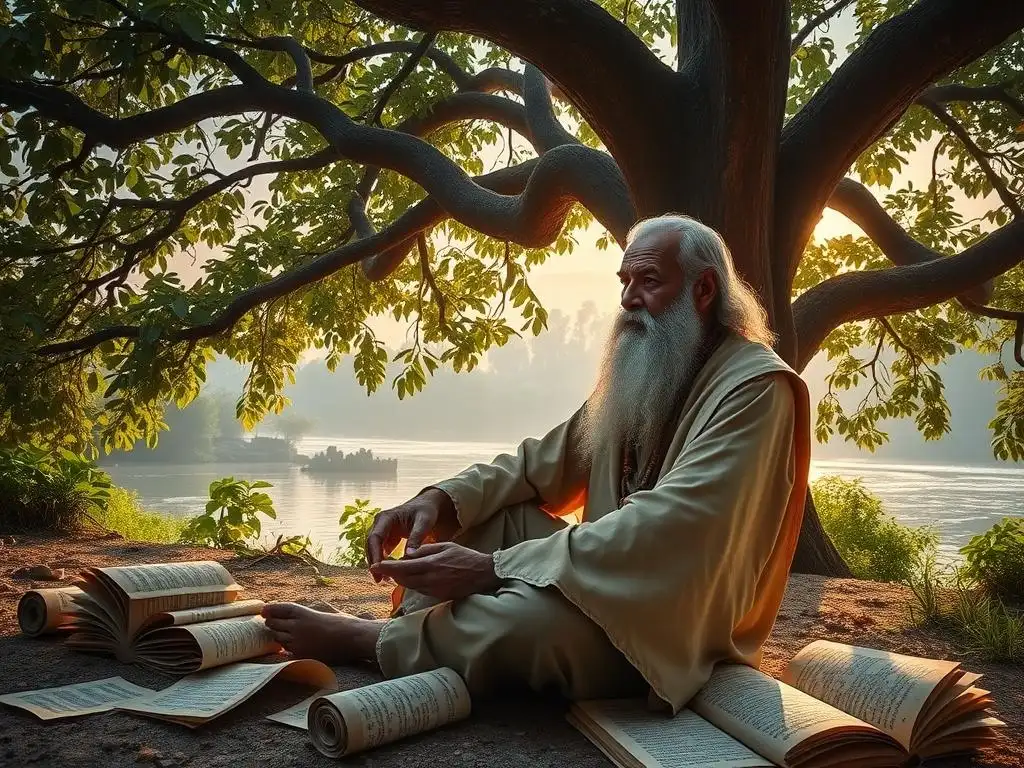
Welcome to Ancient India History, where we embark on an enriching journey through the tapestry of time, uncovering the profound wisdom and innovation of ancient Indian civilizations. Delve into our featured article on the Ancient Indian philosophy of knowledge, where we explore how brilliant philosophers from the Indus Valley to the Gupta Empire grappled with the very essence of understanding and existence.
Prepare to be intrigued as we unveil the intricate connections between knowledge and spirituality that have shaped not just a culture, but the very foundations of thought itself. Join us in this exploration, and let your curiosity lead you deeper into the captivating world of ancient Indian religions!
- Introduction to Ancient Indian Philosophy of Knowledge
- The Concept of Knowledge in Hinduism
- Major Schools of Thought in Ancient Indian Philosophy
- The Practical Implications of Ancient Indian Philosophy of Knowledge
- Conclusion: The Legacy of Ancient Indian Philosophy of Knowledge
-
Frequently Asked Questions
- What is the significance of Ancient Indian philosophy of knowledge?
- Who were some key figures in Ancient Indian philosophy?
- How did ancient Indian thinkers approach the concept of knowledge?
- What are the main schools of thought in Ancient Indian philosophy?
- How does the ancient Indian view of knowledge compare to Western thought?
- Final Reflection: Embracing the Wisdom of Ancient Indian Philosophy of Knowledge
- Unveil the Wisdom of Ancient Knowledge!
Introduction to Ancient Indian Philosophy of Knowledge

Ancient Indian philosophy of knowledge is a profound and intricate field that has shaped the intellectual landscape of not only India but also the broader philosophical discourse worldwide. This captivating domain explores the various ways in which ancient Indian thinkers grappled with fundamental questions about the nature, acquisition, and significance of knowledge. From the early insights of the Indus Valley Civilization to the sophisticated arguments presented during the Gupta Empire, the evolution of thought in ancient India reveals a rich tapestry of ideas that reflect the culture, spirituality, and values of the time.
In this article, we will delve into how ancient Indian philosophers addressed the nature of knowledge, focusing on their unique approaches and contributions. By examining key philosophical traditions, we aim to illuminate the diverse perspectives that emerged in ancient India, ultimately enriching our understanding of the ancient Indian philosophy of knowledge.
Overview of Ancient Indian Philosophical Traditions
Ancient Indian philosophy comprises a variety of schools of thought, each contributing distinct perspectives on the nature of knowledge. The primary traditions include:
- Vedanta: Emphasizing the relationship between the self (Atman) and the ultimate reality (Brahman), Vedanta explores knowledge as a means to attain liberation.
- Nyaya: This school focuses on logic and epistemology, offering systematic methodologies for acquiring valid knowledge through perception, inference, and testimony.
- Buddhism: With its emphasis on the Four Noble Truths and the Eightfold Path, Buddhist philosophy presents a unique understanding of knowledge as a tool for overcoming suffering.
- Jainism: Jain thinkers advocate for a nuanced understanding of reality through the concept of anekantavada (non-absolutism), emphasizing multiple perspectives in the pursuit of knowledge.
Each of these traditions offers insights into the nature of knowledge, addressing questions such as: What constitutes valid knowledge? How do we acquire it? And what role does it play in our pursuit of truth and liberation?
Importance of Knowledge in Ancient Indian Thought
Knowledge in ancient Indian thought is not merely an intellectual pursuit; it is intrinsically linked to spiritual growth and ethical living. Ancient Indian philosophers posited that true knowledge leads to moksha (liberation), which is the ultimate goal of human existence.
Key aspects highlighting the significance of knowledge include:
- Moral and Ethical Framework: Knowledge is viewed as essential for cultivating virtues such as truthfulness, compassion, and non-violence, which are foundational to a harmonious society.
- Practical Application: Philosophers emphasized the importance of applying knowledge in daily life, bridging the gap between theory and practice.
- Interconnectedness: Understanding the interconnectedness of all beings fosters a sense of responsibility and compassion, encouraging individuals to seek knowledge not just for personal gain but for the betterment of society.
The exploration of ancient Indian philosophy of knowledge reveals a rich interplay between intellectual inquiry and spiritual practice, highlighting the profound impact of these ideas on both personal development and societal values.
The Concept of Knowledge in Hinduism
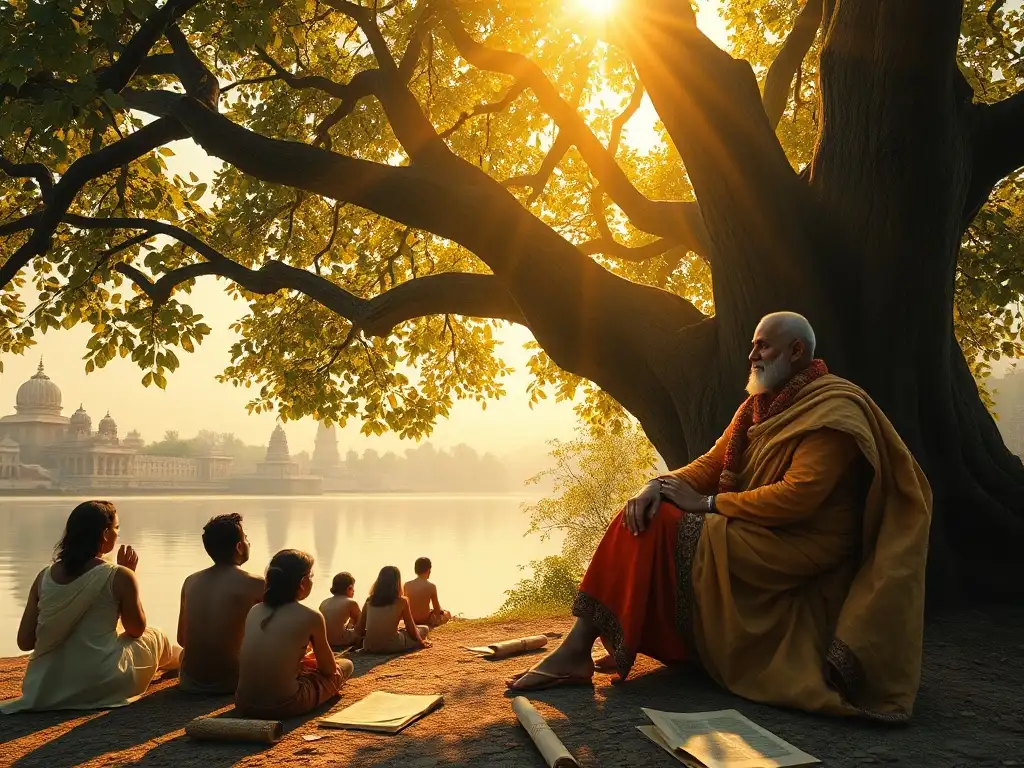
The concept of knowledge, or Jnana, holds a significant position in Hindu philosophy, serving as a cornerstone for understanding the nature of reality and the self. In ancient Indian thought, knowledge is not merely an accumulation of facts or information but an experiential understanding that leads to enlightenment and liberation (moksha). This perspective on knowledge intertwines with various philosophical schools, including Vedanta, Samkhya, and Yoga, each offering unique insights into the nature of Jnana.
In Hinduism, knowledge encompasses both empirical and transcendent forms. Empirical knowledge (pratyaksha) refers to what can be perceived through the senses, while transcendent knowledge (aparoksha) pertains to direct, intuitive understanding beyond sensory experience. The journey toward acquiring Jnana often involves rigorous self-discipline, meditation, and ethical living, as these practices cultivate the mind and prepare it for deeper insights.
Definition of Knowledge (Jnana) in Hindu Philosophy
In Hindu philosophy, Jnana is defined as profound wisdom that transcends ordinary learning. It is characterized by the following key aspects:
- Experiential Understanding: Jnana is often described as an experiential realization of the ultimate truth (Brahman). This understanding is not merely intellectual but involves a deep, personal recognition of one’s unity with the cosmos.
- Types of Knowledge:
- Aparoksha: This is direct, intuitive knowledge, gained through personal experience, often associated with spiritual awakening.
- Paroksha: This refers to indirect knowledge obtained through scriptures, teachings, and the experiences of others.
- Relation to Ignorance (Avidya): Avidya is considered the root cause of suffering and bondage in the cycle of birth and death (samsara). Jnana is the antidote to avidya, illuminating the mind and leading to liberation.
- Path to Knowledge: The pursuit of Jnana often includes practices such as meditation (dhyana), self-inquiry (atma vichara), and the study of sacred texts, which guide practitioners toward deeper understanding.
The ultimate goal of acquiring Jnana in Hindu philosophy is to realize the non-dual nature of existence, where the distinction between the individual self (Atman) and the universal spirit (Brahman) dissolves.
Sacred Texts Addressing Knowledge: Vedas and Upanishads
Ancient Indian philosophy of knowledge is primarily derived from sacred texts, notably the Vedas and Upanishads. These texts provide foundational insights into the nature of knowledge and its implications for human existence.
Vedas
The Vedas, composed between 1500 and 500 BCE, are the oldest sacred texts of Hinduism and are considered the source of all knowledge. They are divided into four primary collections:
- Rigveda: Contains hymns and praises, addressing the divine and the cosmos.
- Yajurveda: Focuses on rituals and the proper execution of sacrifices.
- Samaveda: Comprises melodies and chants for rituals.
- Atharvaveda: Includes spells, incantations, and practical knowledge.
Each Veda emphasizes the importance of knowledge in understanding the relationship between the individual and the universe. The Vedic hymns often explore metaphysical questions, laying the groundwork for later philosophical inquiries.
Upanishads
The Upanishads, often referred to as Vedanta (the end of the Vedas), delve deeper into the philosophical aspects of knowledge. Composed between 800 and 400 BCE, they shift the focus from ritualistic practices to metaphysical contemplation. Key themes include:
- Brahman and Atman: The Upanishads elucidate the idea that the ultimate reality (Brahman) is identical to the individual soul (Atman). This realization is central to the concept of Jnana.
- Paths to Knowledge: The texts outline various paths to attain knowledge, including the path of knowledge (Jnana Yoga), devotion (Bhakti Yoga), and disciplined action (Karma Yoga).
- Concept of Maya: The Upanishads introduce the concept of Maya, the illusion that veils the true nature of reality, emphasizing the need for knowledge to pierce this veil.
The exploration of knowledge in Hindu philosophy, through the prism of the Vedas and Upanishads, reveals a rich tapestry of thought that seeks to understand the nature of existence and the self. The ancient Indian philosophy of knowledge continues to influence contemporary discussions on epistemology, ethics, and spirituality, reflecting its timeless relevance.
Major Schools of Thought in Ancient Indian Philosophy
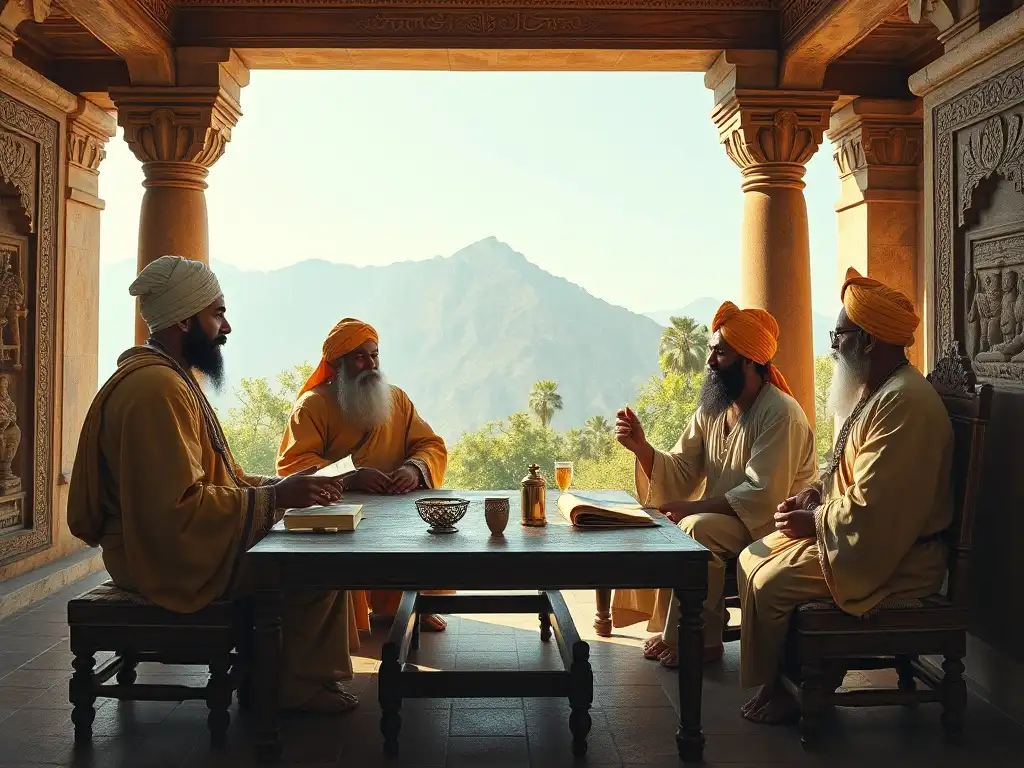
Ancient Indian philosophy is marked by a rich tapestry of thought that explores the nature of knowledge, reality, and existence. Central to this discourse are two significant schools: Nyaya and Vaisheshika. Each of these schools offers distinct perspectives on how knowledge is acquired and understood, influencing the broader landscape of ancient Indian thought.
Nyaya: The Logic of Knowledge
Nyaya philosophy, primarily attributed to the ancient sage Gautama, emphasizes logic and epistemology. It serves as a foundational framework for understanding the methods through which knowledge is attained and validated.
Central Tenets of Nyaya Philosophy
The Nyaya school posits that knowledge (jnana) is essential for liberation (moksha) and is categorized into four types: perception (pratyaksha), inference (anumana), comparison (upamana), and testimony (sabda). Each of these methods contributes to a comprehensive understanding of the world.
- Perception (Pratyaksha): This refers to knowledge gained through direct sensory experience. Nyaya philosophers argue that perception is the most reliable source of knowledge.
- Inference (Anumana): This involves deriving knowledge from known facts and logical reasoning. For instance, if one sees smoke, one infers the presence of fire.
- Comparison (Upamana): This method allows individuals to acquire knowledge by relating unfamiliar concepts to familiar ones, enhancing understanding through analogy.
- Testimony (Sabda): This form of knowledge is obtained through reliable sources, such as scriptures or authoritative figures, playing a crucial role in the transmission of knowledge.
The Role of Perception and Inference in Acquiring Knowledge
In Nyaya, perception and inference are pivotal in the epistemological process.
- Perception is regarded as the primary means of acquiring knowledge. It is immediate and unmediated, providing a foundation upon which other forms of knowledge can build. Nyaya philosophers meticulously analyze the conditions under which perception is valid, identifying obstacles such as illusions or misinterpretations that can lead to erroneous conclusions.
- Inference, on the other hand, expands the scope of knowledge beyond direct experience. It allows for the understanding of phenomena that are not immediately observable. Nyaya philosophers developed a systematic approach to inference, delineating the necessary conditions for a valid inference. This includes the establishment of a universal connection between cause and effect, thereby reinforcing the reliability of inferential knowledge.
Vaisheshika: Atomism and Knowledge
The Vaisheshika school, founded by the sage Kanada, intertwines metaphysics with epistemology, proposing a unique understanding of reality through atomism.
Understanding the Nature of Reality and Knowledge
Vaisheshika posits that all substances are composed of indivisible particles called atoms (anu). This perspective leads to a distinct way of understanding knowledge, as it emphasizes the material composition of reality.
- Substance and Attributes: Vaisheshika categorizes reality into substances, qualities, and actions. Knowledge is seen as the recognition of these attributes and their interrelations.
- Categories of Knowledge: The school identifies several categories (padarthas) that encompass different aspects of reality. These categories include substance, quality, action, generality, particularity, and inherence. Knowledge, therefore, is achieved by comprehending these categories and their interplay.
The Relationship Between Substance and Knowledge
The relationship between substance and knowledge in Vaisheshika is intricate, as knowledge is viewed as a means of understanding the fundamental nature of reality.
- Epistemological Framework: Vaisheshika asserts that knowledge arises from the interaction of the mind with the external world through perception and inference, similar to Nyaya. However, it emphasizes a more materialistic approach, focusing on the atomic structure of reality.
- Pragmatic Implications: This philosophy has practical implications for how knowledge is used in daily life. Understanding the nature of substances and their properties allows individuals to navigate the material world effectively, making informed decisions based on the inherent qualities of objects.
Both Nyaya and Vaisheshika contribute significantly to the ancient Indian philosophy of knowledge, each presenting a unique lens through which to explore the complexities of understanding and existence.
Samkhya: Dualism and the Nature of Knowledge
Samkhya is one of the foundational schools of Indian philosophy, characterized by its dualistic approach to understanding the nature of reality and knowledge. Developing around the 1st millennium BCE, Samkhya presents a unique perspective that distinguishes between two fundamental entities: Purusha (consciousness) and Prakriti (matter). This dualism forms the cornerstone of its philosophical inquiry into the nature of knowledge, epistemology, and the path to liberation.
The Samkhya philosophy asserts that true knowledge arises from understanding the relationship between Purusha and Prakriti. It posits that while Purusha is the eternal observer, Prakriti is the dynamic material world that is subject to change and evolution. This distinction is crucial as it leads to the comprehension that knowledge must be discerned through the lens of both the observer and the observed. Thus, the nature of knowledge in Samkhya is not merely an accumulation of information but a profound realization of the interaction between the self and the universe.
The Distinction Between Purusha and Prakriti
The distinction between Purusha and Prakriti is essential for grasping the Samkhya worldview. Purusha represents pure consciousness, the unchanging reality that underlies all existence. It is non-material, eternal, and transcendent. On the other hand, Prakriti is the material nature, the source of all physical phenomena, and is characterized by three gunas (qualities): sattva (purity), rajas (activity), and tamas (inertia). This interplay of gunas shapes the material world, leading to the manifestation of various forms and experiences.
In the context of knowledge, this dualism emphasizes that understanding does not solely arise from external stimuli or intellectual efforts; rather, it requires an internal realization of the nature of the self (Purusha) in relation to the material world (Prakriti). This insight fosters a deeper comprehension of existence, allowing individuals to discern the transient nature of worldly experiences and move towards a more profound awareness of the eternal self.
How Samkhya Influences Knowledge Acquisition
Samkhya's dualistic framework significantly influences the process of knowledge acquisition. The philosophy advocates for a rational approach to understanding reality, promoting the use of reason and critical analysis. Knowledge, as per Samkhya, is categorized into right knowledge (prama), wrong knowledge (viparyaya), imagination (arthapatti), and suspension of judgment (anupalabdhi). Each category reflects different pathways to understanding, emphasizing that true knowledge must arise from direct experience rather than mere speculation.
Moreover, Samkhya encourages practitioners to engage in self-inquiry and introspection, allowing individuals to rise above the limitations of the material world. This emphasis on personal experience aligns closely with the notion that knowledge is not static; rather, it evolves through continuous engagement with both the self and the external world. By fostering a deeper awareness of the interplay between Purusha and Prakriti, Samkhya provides a framework for individuals to cultivate transformative knowledge that leads to liberation (moksha).
Yoga: Knowledge through Experience
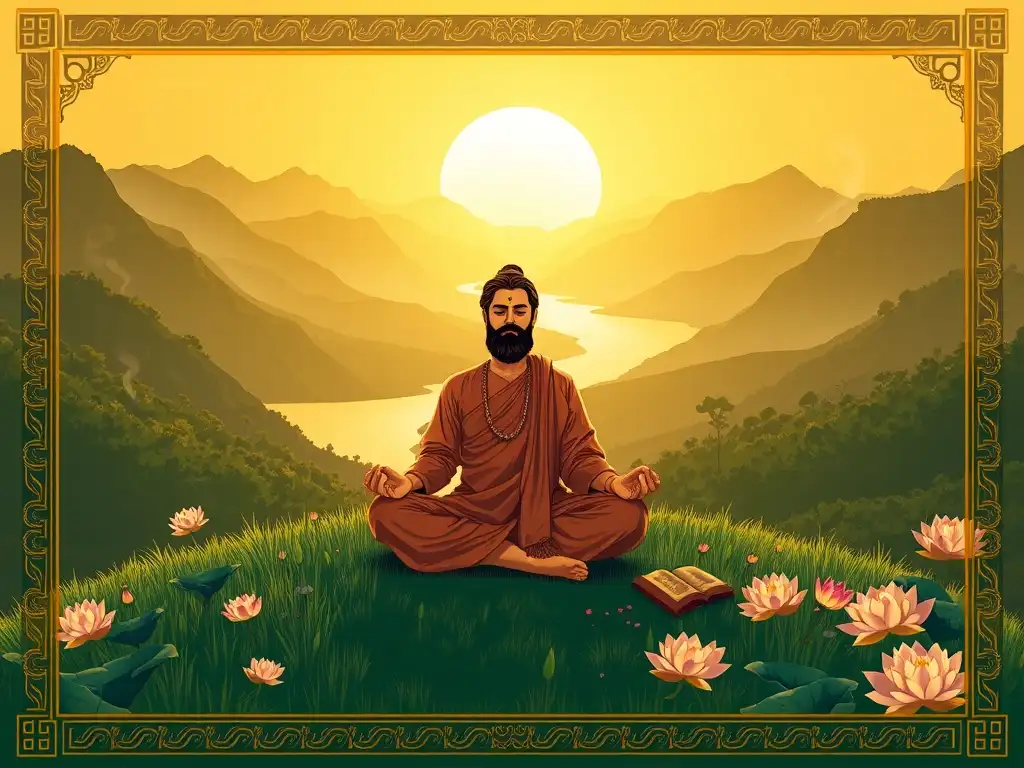
Yoga, closely related to Samkhya, presents a practical methodology for acquiring knowledge through direct experience. While Samkhya offers a theoretical understanding of reality, Yoga emphasizes the experiential aspect of knowledge, advocating for practices that facilitate personal transformation and insight. The Yoga philosophy outlines a structured path towards achieving higher states of consciousness and understanding the nature of existence.
This school of thought is rooted in the idea that knowledge is not merely intellectual but deeply experiential. By engaging in practices such as meditation, breath control (pranayama), and physical postures (asanas), individuals can transcend the limitations of the mind and body, leading to a more profound understanding of reality. The transformative nature of Yoga fosters a holistic approach to knowledge that integrates body, mind, and spirit.
The Path of Meditation and Its Impact on Knowledge
Meditation is a fundamental practice within Yoga that significantly impacts the acquisition of knowledge. Through consistent meditation, practitioners cultivate a state of inner stillness and heightened awareness, allowing for deeper insights into the nature of the self and the universe. This process involves quieting the mind and turning inward, facilitating a direct experience of consciousness that transcends ordinary understanding.
The impact of meditation on knowledge is profound. As practitioners reach deeper states of concentration (dharana) and absorption (dhyana), they begin to experience a dissolution of the ego and a merging with the object of contemplation. This state of unity fosters a realization of the interconnectedness of all beings and the illusion of separation, leading to a more expansive understanding of reality. Thus, meditation becomes a powerful tool for unlocking the mysteries of existence and enhancing one's grasp of knowledge.
The Role of Intuition in Understanding Knowledge
Intuition plays a pivotal role in the Yoga philosophy of knowledge. As practitioners delve deeper into their meditative practices, they often experience moments of intuitive insight that transcend rational thought. This intuitive understanding is seen as a direct pathway to knowledge, guiding individuals towards profound truths that may not be accessible through conventional intellectual means.
In Yoga, intuition is regarded as a higher form of awareness that arises from the purification of the mind and heart. It enables individuals to perceive reality as it is, free from the distortions of conditioning and ego. By cultivating intuition, practitioners can navigate the complexities of life with clarity and wisdom, allowing for a more authentic engagement with knowledge. This integration of intuition within the broader landscape of knowledge underscores the holistic approach of Yoga, wherein experiential understanding is as vital as intellectual comprehension.
Advaita Vedanta: Non-Dualism and Knowledge
Advaita Vedanta is one of the most significant schools of thought within ancient Indian philosophy, primarily attributed to the philosopher Adi Shankaracharya in the 8th century CE. The term "Advaita" means "non-dual," emphasizing the idea that the ultimate reality is singular and undivided. In this context, knowledge is not merely an accumulation of facts but rather an understanding of the profound unity of existence. According to Advaita Vedanta, the distinction between the individual self (Atman) and the ultimate reality (Brahman) is an illusion, leading to the principle that true knowledge arises when one realizes their inherent oneness with Brahman.
This school posits that the perception of duality—of oneself as separate from the universe—is a product of ignorance (Avidya). Advaita Vedanta teaches that through disciplined philosophical inquiry and meditation, one can transcend this ignorance and achieve a state of liberation (Moksha). Thus, knowledge in this framework is transformative, leading to the realization of the essential non-duality of existence, where the self and the universe are seen as one.
The Concept of Brahman and Atman
At the core of Advaita Vedanta is the relationship between Brahman and Atman. Brahman is defined as the ultimate, unchanging reality that is the source of all existence, while Atman refers to the individual soul or self. In Advaita Vedanta, Brahman is described as Sat-Chit-Ananda, which translates to existence (Sat), consciousness (Chit), and bliss (Ananda). This characterization underscores the idea that the essence of both Brahman and Atman is fundamentally the same.
The realization that Atman is, in fact, Brahman forms the basis of spiritual awakening within this philosophical framework. A famous statement that encapsulates this teaching is "Tat Tvam Asi," meaning "That Thou Art," which suggests that the individual self is intrinsically linked to the universal spirit. This understanding fosters a profound sense of unity and interconnectedness, encouraging individuals to seek knowledge as a means to awaken to their true nature and the nature of reality itself.
Knowledge as Liberation: The Role of Ignorance (Avidya)
In Advaita Vedanta, knowledge is intimately connected to the concept of liberation. The school asserts that ignorance (Avidya) is the root cause of human suffering and the cyclical nature of existence (Samsara). This ignorance manifests as a false identification with the body and mind, leading individuals to perceive themselves as separate from the divine essence of Brahman.
The process of acquiring true knowledge involves the removal of this ignorance through various means, including study (Shravana), reflection (Manana), and deep meditation (Nididhyasana). Through these practices, individuals come to understand the illusory nature of their separateness and the truth of their unity with Brahman. It is this transformative knowledge that leads to liberation (Moksha), allowing individuals to transcend the limitations imposed by ignorance and experience a state of eternal bliss and peace.
Advaita Vedanta presents a compelling philosophical framework where knowledge is not simply intellectual but a profound realization that leads to liberation from the cycle of birth and death. This non-dualistic perspective encourages seekers to pursue knowledge as a pathway to understanding their true nature and achieving lasting spiritual fulfillment.
The Practical Implications of Ancient Indian Philosophy of Knowledge
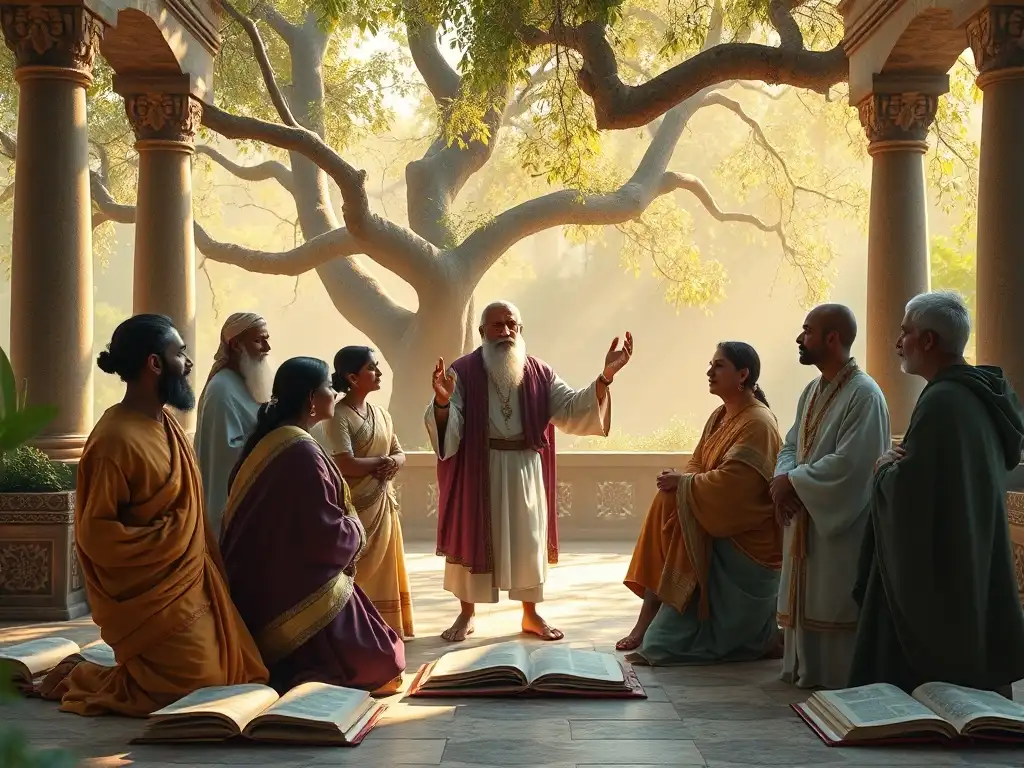
Knowledge in Daily Life: Ethics and Morality
Ancient Indian philosophy of knowledge, particularly as articulated in texts such as the Upanishads and the Bhagavad Gita, emphasizes the profound connection between knowledge and ethical living. This relationship manifests in various ways, guiding individuals on how to navigate life's complexities while adhering to moral principles.
- Concept of Dharma: Central to ancient Indian thought is the concept of Dharma, which refers to the moral and ethical duties that individuals must uphold in their lives. Knowledge is not merely theoretical; it is fundamentally practical, influencing how one acts in accordance with Dharma. For instance, the Bhagavad Gita teaches that understanding one's role in society and fulfilling one's duties leads to a harmonious life.
- Self-Knowledge and Ethics: Ancient Indian philosophers like Adi Shankaracharya posited that true knowledge begins with self-awareness. This self-knowledge fosters ethical behavior, as individuals recognize their interconnectedness with others. Such awareness encourages compassion, altruism, and fairness, essential virtues in daily interactions.
- Knowledge as Liberation: The pursuit of knowledge is seen as a pathway to liberation (Moksha). This understanding encourages individuals to seek wisdom not for personal gain but for the betterment of society. The ethical implications of this pursuit suggest that knowledge should be used to alleviate suffering and promote social justice.
- Education and Moral Development: Ancient Indian educational systems, such as the Gurukula, integrated moral education with academic learning. Students were taught not only facts but also the ethical implications of their knowledge, ensuring that they became responsible and moral citizens.
The Influence of Ancient Indian Knowledge on Modern Thought
The legacy of ancient Indian philosophy of knowledge extends far beyond its historical context, significantly influencing contemporary thought in various fields, including philosophy, psychology, and education.
- Philosophical Inquiry: The ancient Indian approach to epistemology has inspired modern philosophers to explore the nature of knowledge and reality. Concepts such as Pramana (means of knowledge) and Anumana (inference) continue to be pivotal in discussions surrounding the philosophy of science and logic. Scholars today draw parallels between Indian epistemology and Western philosophical traditions, enriching global discourse.
- Psychology and Consciousness: The ancient insights into consciousness and the mind have found resonance in modern psychological theories. The exploration of states of consciousness in texts like the Yoga Sutras has led to a deeper understanding of meditation and mindfulness practices, which are now recognized for their psychological benefits.
- Education Systems: The emphasis on holistic education in ancient India, which combines knowledge with ethical and moral training, has influenced contemporary educational philosophies. Modern educators are increasingly recognizing the importance of character education, drawing inspiration from ancient Indian practices that foster both intellectual and moral development.
- Interdisciplinary Approaches: Ancient Indian knowledge systems encourage interdisciplinary learning, integrating philosophy with science, art, and spirituality. This holistic perspective is gaining traction in modern academia, promoting a more comprehensive understanding of knowledge that transcends disciplinary boundaries.
The ancient Indian philosophy of knowledge provides invaluable insights into the ethical implications of knowledge in daily life and continues to influence modern thought across various domains, demonstrating its enduring relevance and applicability.
Conclusion: The Legacy of Ancient Indian Philosophy of Knowledge
The ancient Indian philosophy of knowledge, deeply embedded in the spiritual and intellectual traditions of the subcontinent, has left an indelible mark on the evolution of philosophical thought globally. The works of ancient philosophers such as Adi Shankaracharya, Ramanuja, and the thinkers of the Nyaya and Vaisheshika schools have contributed significantly to the discourse on epistemology, metaphysics, and ethics. This legacy is not merely historical; it continues to influence contemporary philosophical debates, offering insights into the nature of reality, perception, and the pursuit of truth.
The ancient Indian perspective on knowledge is characterized by a holistic approach, integrating various dimensions of human existence. The synthesis of rational inquiry with spiritual exploration has fostered a unique epistemological framework that emphasizes experiential knowledge, intuition, and direct perception (pratyaksha) as crucial avenues for understanding. This multidimensional view invites modern scholars to revisit these ancient texts and philosophies, recognizing their potential to enrich current discussions on knowledge and reality.
Reflections on the Relevance of Ancient Knowledge Today
In today's world, where information is abundant yet often superficial, the ancient Indian philosophy of knowledge presents a compelling case for depth over breadth. The emphasis on introspection and self-awareness in ancient Indian thought resonates with contemporary movements that advocate for mindfulness and holistic living. Philosophers like Nagarjuna and Kant, despite their geographical and temporal differences, share a common ground in questioning the nature of reality and the limits of human understanding.
Moreover, the principles of epistemology developed in ancient Indian philosophy, such as the methods of inquiry found in the Nyaya school, remain relevant in fields like cognitive science and artificial intelligence. The consideration of subjective experience in understanding knowledge can inform our approach to these modern disciplines, leading to a more integrated perspective that values both empirical evidence and intuitive understanding.
Future Directions for Research in Ancient Indian Philosophy
The exploration of ancient Indian philosophy of knowledge opens several avenues for future research. Scholars can delve into comparative studies that examine the intersections between ancient Indian thought and other philosophical traditions, such as Western philosophy or Chinese Daoism. Such inquiries could reveal shared themes and divergent approaches to understanding knowledge, reality, and existence.
Additionally, interdisciplinary research that incorporates insights from psychology, neuroscience, and education can further illuminate the practical applications of ancient philosophical ideas. For example, examining how concepts of knowledge and learning from ancient Indian texts can inform modern pedagogical practices could yield valuable insights into fostering critical thinking and ethical reasoning in contemporary education.
Finally, as global interest in sustainability and ethical living intensifies, the ethical dimensions of ancient Indian philosophy warrant deeper exploration. The teachings of ancient sages on the interconnectedness of all life and the moral implications of knowledge can provide critical guidance for addressing modern challenges such as climate change and social justice.
The ancient Indian philosophy of knowledge not only enriches our understanding of the past but also serves as a vital resource for navigating the complexities of the present and future. By continuing to explore and engage with these rich philosophical traditions, we can foster a deeper appreciation for the pursuit of knowledge and its implications for human flourishing.
Frequently Asked Questions
What is the significance of Ancient Indian philosophy of knowledge?
The Ancient Indian philosophy of knowledge is significant as it offers deep insights into the nature of reality, perception, and understanding, shaping various fields such as science, mathematics, and spirituality.
Who were some key figures in Ancient Indian philosophy?
Key figures include Adi Shankaracharya, who contributed to Advaita Vedanta, and Gautama Buddha, who provided profound insights into perception and the mind, influencing subsequent philosophical thought.
How did ancient Indian thinkers approach the concept of knowledge?
Ancient Indian thinkers approached knowledge through various means, including empirical observation, logical reasoning, and introspection, emphasizing the importance of experience and meditation in understanding reality.
What are the main schools of thought in Ancient Indian philosophy?
The main schools include Nyaya, focused on logic and epistemology, Vaisheshika, dealing with metaphysics, and Mimamsa, which emphasizes rituals and texts, each contributing uniquely to the discourse on knowledge.
How does the ancient Indian view of knowledge compare to Western thought?
The ancient Indian view of knowledge often emphasizes subjectivity and interconnectedness, contrasting with the Western focus on objectivity and individualism, leading to diverse philosophical dialogues across cultures.
Final Reflection: Embracing the Wisdom of Ancient Indian Philosophy of Knowledge
The exploration of ancient Indian philosophy of knowledge remains profoundly relevant today, as it challenges us to rethink our understanding of wisdom and learning. In an era dominated by rapid technological advancements and information overload, the insights of ancient thinkers remind us that true knowledge transcends mere data accumulation; it is about cultivating awareness, discernment, and a deeper connection to our inner selves. The wisdom of these philosophers serves as a beacon, guiding us through the complexities of modern life.
The teachings of ancient Indian philosophers have not only shaped the intellectual landscape of their time but continue to resonate in contemporary discussions about education, ethics, and personal growth. Their emphasis on experiential learning and self-inquiry invites us to engage with knowledge in a holistic manner. As Mahatma Gandhi once said, Live as if you were to die tomorrow. Learn as if you were to live forever.
This perspective underscores the importance of lifelong learning and the pursuit of knowledge as a means to enrich our lives and contribute positively to society.
As we reflect on the lessons imparted by these ancient sages, let us take a moment to consider how we can integrate their philosophies into our daily lives. I invite you to embrace the journey of knowledge not just as an academic pursuit but as a transformative experience that shapes your character and worldview. By fostering curiosity, humility, and a commitment to self-discovery, we can honor the legacy of ancient Indian philosophy and cultivate a deeper understanding of ourselves and the world around us.
Unveil the Wisdom of Ancient Knowledge!
Thank you for exploring the profound ideas of ancient Indian philosophers with us! By diving into their perspectives on knowledge, you've gained valuable insights into the essence of understanding and wisdom. Now, it's time to take your journey further and apply these lessons in your own life.
Here are a few ways you can deepen your engagement with this remarkable legacy:
- Reflect and Write: Start a journal to document your thoughts on how ancient wisdom can influence your daily decision-making.
- Share and Discuss: Engage with friends or on social media by sharing a quote or idea that resonated with you from the article. Spark a conversation about its relevance today!
- Explore Further: Research a specific philosopher who intrigued you and delve deeper into their teachings or writings to enrich your understanding.
What insights from ancient philosophy do you believe can transform our perception of knowledge today? Share your thoughts below!